Don’t say ‘Happy Yom Kippur’: How to greet someone observing the Jewish Day of Atonement

Yom Kipper Hebrew greeting for those celebrating Yom Kippur that reads G’mar Chatima Tova

Yom Kippur, which is observed from sundown Tuesday to sundown Wednesday, is considered the holiest day of the year in Judaism. It’s a high holiday that follows Rosh Hashanah, the Jewish New Year.

by Carly Mallenbaum, USA TODAY

But it’s not exactly a “happy” holiday. So don’t tell someone “Happy Yom Kippur.”

“This isn’t a day of raucousness and partying,” says Becky Sobelman-Stern, the chief program officer at the Jewish Federation of Greater Los Angeles. “Yom Kippur is not about being happy. It’s about thinking. It’s about self examination.”

Yom Kippur translates from Hebrew to English as Day of Atonement. Traditionally, Jews spend the holiday fasting and reflecting on sins committed over the past year. 

Even if you’re not Jewish, you can acknowledge the holiday, and it is indeed respectful to share well wishes to your friends and colleagues who do observe. 

So, what should you say or write? There are some options.

The traditional Yom Kippur greeting

“G’mar chatima tova” is the customary greeting on Yom Kippur. In English, it means “May you be sealed in the Book of Life.”

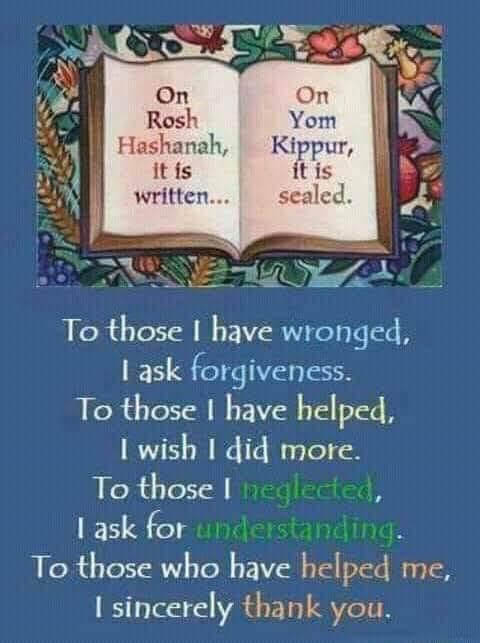
According to Jewish tradition, one’s fate is decided on Rosh Hashanah and sealed on Yom Kippur.

“Our lives are in the balance between Rosh Hashanah and Yom Kippur depending on how we act,” says Rabbi Andrea London of Beth Emet synagogue in Evanston, Illinois.

“The fully righteous are inscribed (in the Book of Life) for the year, the wholly evil are not inscribed and the rest of us need to work to make amends and make sure we have more good deeds than bad, if we want to be sealed for another year of life,” she adds.

Rabbi Sarah Krinsky of Adas Israel Congregation in Washington, DC, says “not many moderns hold this literal theology.” She’s among them, but that doesn’t stop her from sending the message “g’mar chatima tova” for Yom Kippur.

Of note: The “ch” sound in “chatima” is not pronounced like the English word “chat.” Instead, it should sound more like guttural utterance from the throat because it comes from the Hebrew letter Chet. “G’mar hatima tov” is also acceptable to say.
Israel Laws are NOT Apartheid

Israeli laws are designed to assure Israel will remain a Jewish state.  Non-Jews are free to go anywhere they wish and live where ever they want.  Intermarriage between Jews and others is permitted.  Intermarriage has always been considered unacceptable as best displayed in the play “Fiddler on the Roof”. European Jews viewed anyone marrying a non-Jews the equivalent to a death.

During most of the 20th century, South Africa was ruled by a system called Apartheid, an Afrikaans word meaning ‘apartness,’ which was based on a system of racial segregation.

An Israeli human rights group has put up billboards in the occupied West Bank with a stark message for President Joe Biden, saying “this is apartheid.”

Israel was created as a Jewish State. The country was created as a homeland for Jews.  Jews have experienced discrimination and in some instances faced death in almost every country in the world.

The Holocaust (6 million Jews were killed) was the seed for creating Israel.  Jewish Israelis have arranged their nations laws to protect their rule over their country.

There is no other way to write this or say this reality.  Israel will always be a Jewish state. If that fact changes, Israel’s purpose to exist will end.

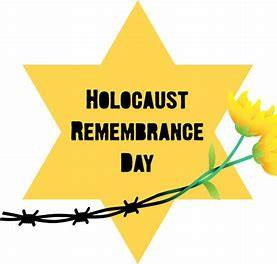
Israel halts for Holocaust day, honors 6 million Jews killed

TEL AVIV, Israel (AP) — Sirens blared across Israel early Thursday as the country came to a standstill in an annual ritual honoring the 6 million Jews murdered during the Holocaust.

People halted where they were walking, and drivers stopped their cars to get out of the vehicles as people bowed their heads in memory of the victims of the Nazi genocide. Ceremonies were planned throughout the day at Israel’s national Holocaust memorial, parliament and elsewhere.

Israel was founded in 1948 as a sanctuary for Jews in the wake of the Holocaust. About 165,000 survivors live in Israel, a dwindling population that is widely honored but struggling with poverty.

Ushering in Holocaust memorial day at Yad Vashem, Israel’s memorial, Prime Minister Naftali Bennett late Wednesday called on the world to stop comparing the Holocaust to other events in history. He spoke after the presidents of both Ukraine and Russia drew parallels between their ongoing war and the genocide during World War II.

“As the years go by, there is more and more discourse in the world that compares other difficult events to the Holocaust. But no,” he said. “No event in history, cruel as it may have been, is comparable to the extermination of Europe’s Jews by the Nazis and their collaborators.”

He also warned the country against allowing its deep differences to tear the nation apart. The speech, coming on one of Israel’s most solemn days of the year, came in a deeply personal context as well. On Tuesday, his family received a letter with a live bullet and a death threat. Israeli authorities tightened security around the premier and his family and were investigating.

“My brothers and sisters, we cannot, we simply cannot allow the same dangerous gene of factionalism dismantle Israel from within,” Bennett said.

Israel makes great effort to memorialize the victims of the Holocaust and make heroes of those who survived. Restaurants and places of entertainment remain closed on Holocaust memorial day, radios play somber music and TV stations devote their programming to documentaries and other Holocaust-related material..

For them, challenges loom. This year’s ceremony comes as Israel and much of the world emerges from the coronavirus pandemic, which confronted Holocaust survivors in particular with increased health risks as well as widespread loneliness and despair.

Additionally, about a third of Israel’s Holocaust survivors live below the poverty line, with many sustained by government stipends and donations, according to a group that represents survivors.

Despite their experience and widespread education programs, antisemitism rose worldwide during the pandemic, according to a report released Wednesday.

It pinned the fuel for the anti-Jewish surge on lockdowns, social media and a backlash against Israel’s punishing air raids on the Gaza Strip during last year’s 11-day war.

In addition to speeches by Bennett, Israeli President Isaac Herzog and others, Wednesday’s ceremony featured survivors lighting six torches — for the 6 million murdered by the Nazis and their collaborators. The speaker of Germany’s parliament, Baerbel Bas, also attended as a special guest.

7 Classic Christmas Songs Written By Jews

From ‘White Christmas’ to ‘Winter Wonderland,’ some of the most famous songs of the season are by members of the Tribe. Yes Jews call themselves part of a tribe. That is a significant difference between Christians and Jews.

American Jews were prominent in the songwriting business of the 20th century, and even if they didn’t celebrate Christmas, they were happy to write for the popular Christmas market. Below are some of the most famous Christmas songs written by Jews. The link will enable to see the singers and her the songs on Youtube.

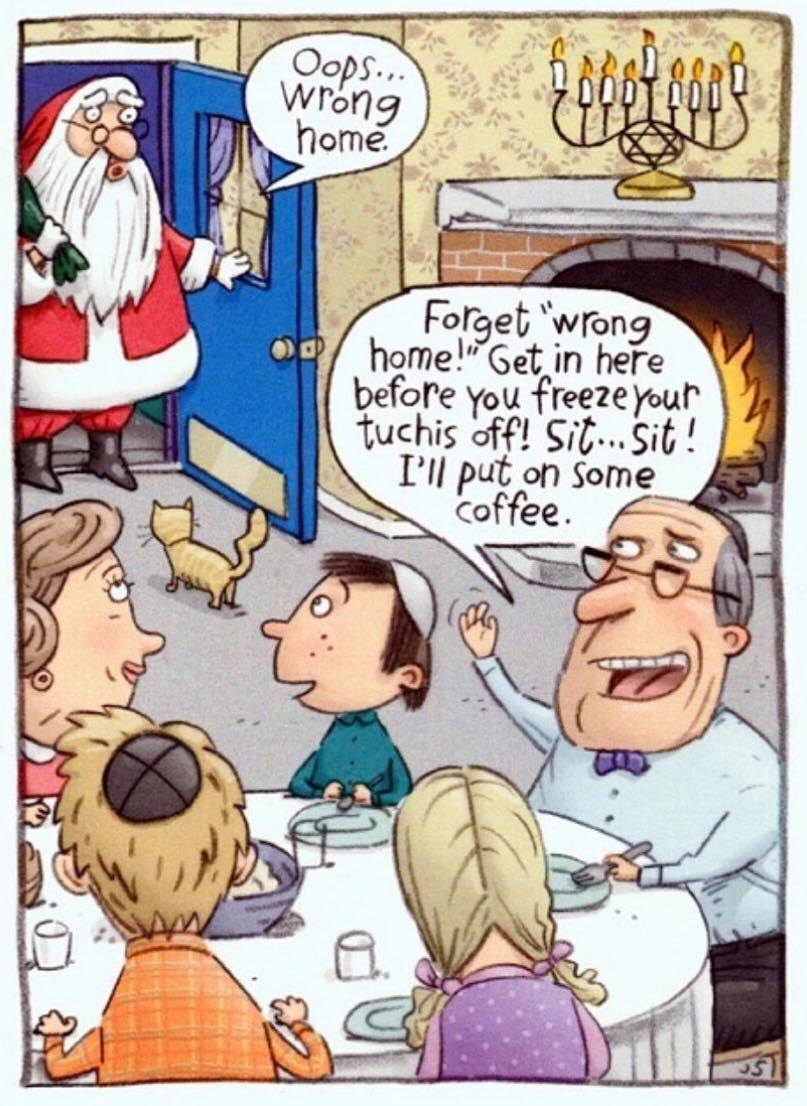
By the way have you noticed that orthodox Jews have Santa Claus like beards. Could it be that Santa Claus is really a religious Jew?

“White Christmas”

Irving Berlin

“Rockin’ Around the Christmas Tree”

Johnny Marks

“Rudolph the Red-Nosed Reindeer”

Johnny Marks

“Let It Snow, Let It Snow, Let It Snow”

Sammy Cahn and Jule Styne

“Silver Bells”

Jay Livingston and Ray Evans

“The Christmas Song” (Chestnuts Roasting on an Open Fire)

Mel Torme

“Walkin’ In a Winter Wonderland”

Felix Bernard and Richard B. Smith

Last Known Jew Leaves Afghanistan

Most of us know there is a large Jewish population in the United States, Canada, and France but did you know that there is a Jewish community in 99 countries. The last known member of Afghanistan’s Jewish community has just left the country.

Historical evidence suggests Afghanistan was once home to a sizable Jewish community. It reached 40,000 in the mid-19th century and began declining around 1870 with the passage of anti-Jewish measures, according to the American-Israeli Cooperative Enterprise, a nonprofit group. Most of the remaining members of the country’s Jewish community left following Israel’s creation in 1948 and then in 1979 after the Soviet invasion, the group said. The last Jew just left that country on the first day of Rosh Hashana, September 6. He was the caretaker of the synagogue in Kabul.

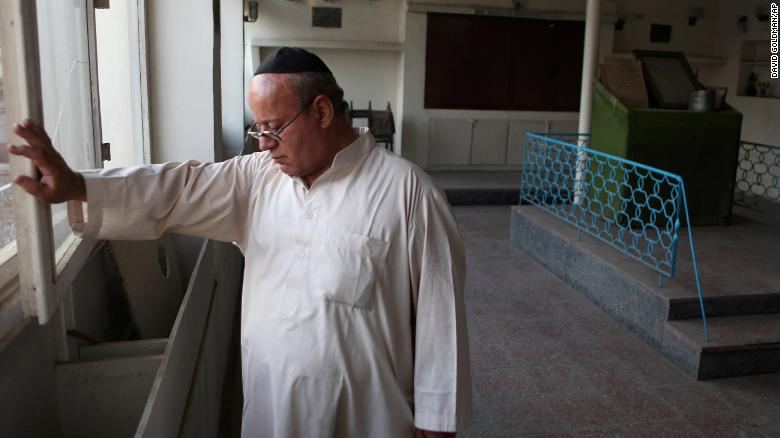
Zebulon Simentov, the last known Jewish person living in Afghanistan, closes the window to the synagogue he cares for in his Kabul home on August, 29, 2009.

I knew two Jewish people who were born in China.  Their families had left Europe in the 1930s as Hitler started his campaign against Jews.  I know a lady whose family was ejected from Egypt by their dictator Gamal Abdel Nasser.

The Berman Jewish DataBank at Stanford University list all the countries with Jewish residents.  Twenty of those 99 countries have only about 100 Jews.

Why am I obsessed with this subject you may ask.  My father moved our family into a community where anti-Semetism was prominent.  I promised myself I would only live in a community where there is a prominent Jewish population.  The article about the last Jew in Afghanistan on CNN web site prompted me to post this.    

Rosh Hashana

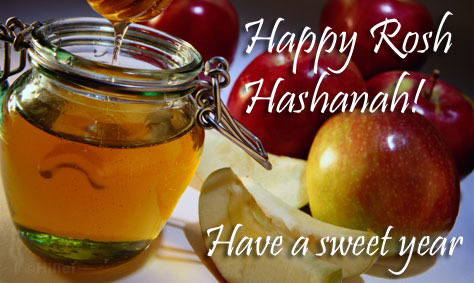
Rosh Hashana starts tonight at sundown.

Rosh Hashanah, literally meaning “head [of] the year”, is the Jewish New Year. The biblical name for this holiday is Yom Teruah, literally “day of shouting or blasting.” It is the first of the Jewish High Holy Days specified by Leviticus 23:23–32 that occur in the early autumn of the Northern Hemisphere.

It is Hebrew Year 5782.

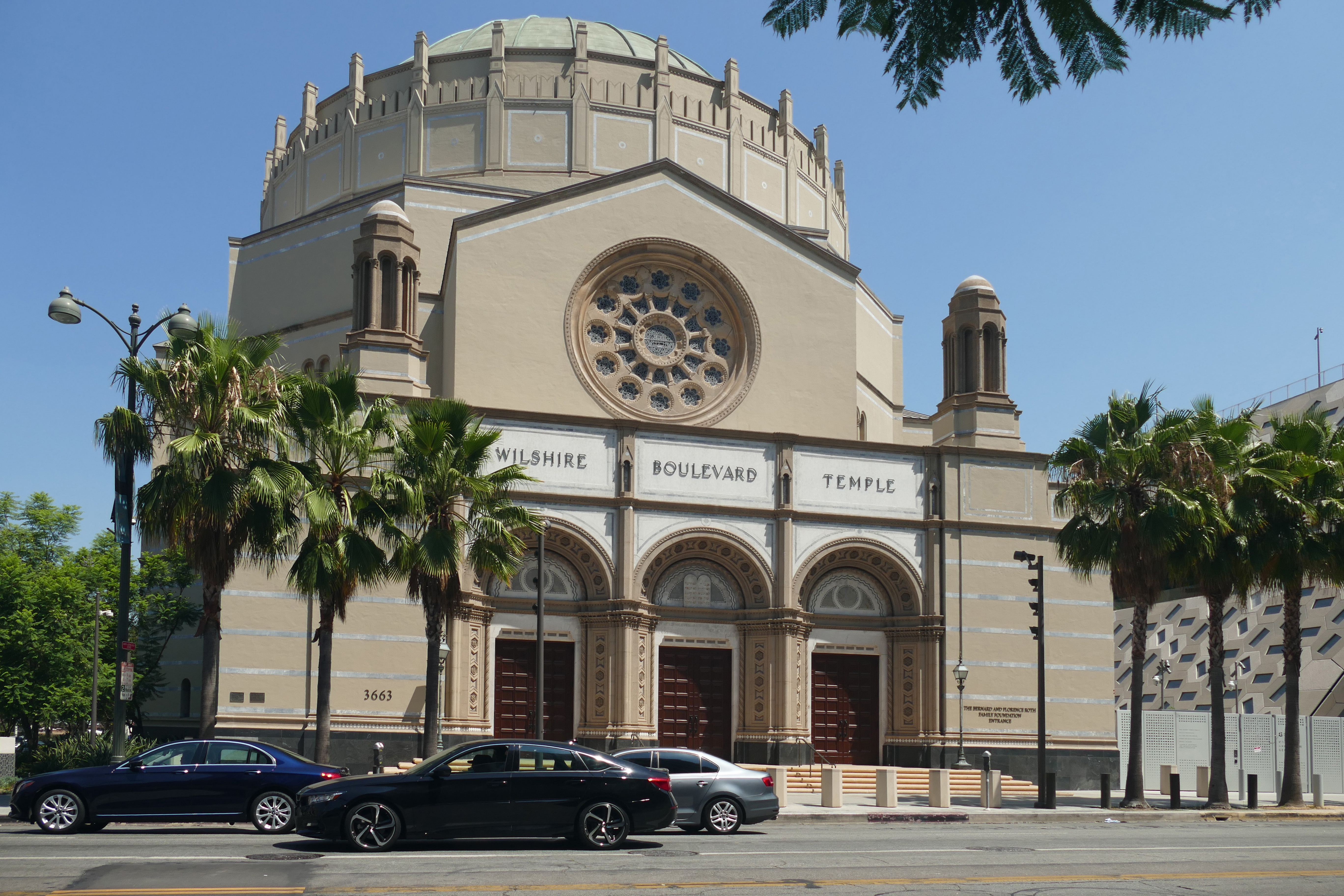
Wilshire Boulevard Temple

I assigned myself the project of photographing the interesting buildings of Wilshire Boulevard in Los Angeles.  The photo collection includes office buildings, theaters, and places of worship.  Thus far I have a collection of photos in what is generally called the mid-Wilshire area that primarily is also called Koreatown.  I have photos of the property once known  as the Ambassador Hotel, that should have been preserved, the Wiltern Theater and the Bullock’s building (a famous upscale department store now long gone).  It has taken three trips to the area and as I am quite old the walking has been difficult.

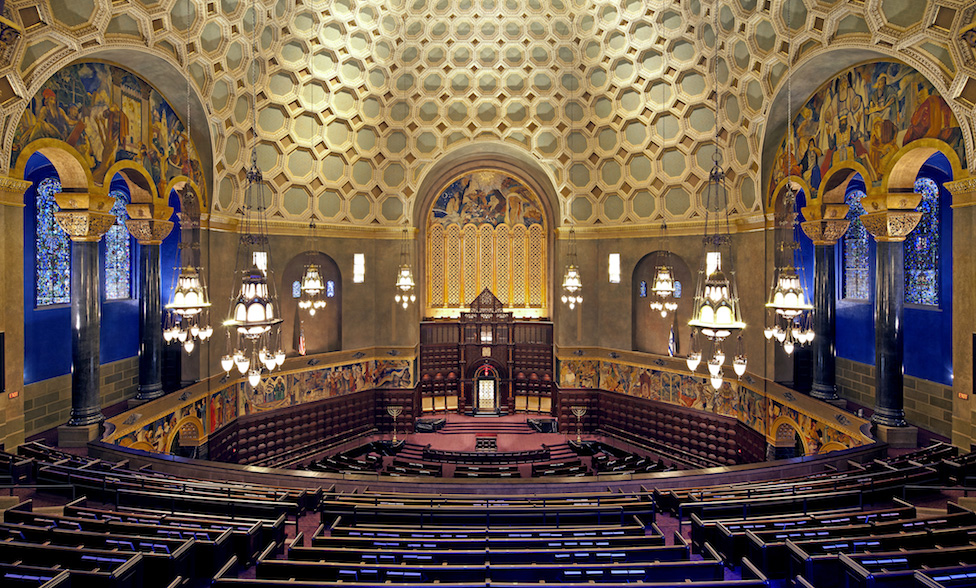
Included in that area is the Wilshire Boulevard Temple (Jewish Reform).  The doors were locked and tours are by appointment only according to the temple’s website.  It is an enormous structure topped by a large a  Byzantine revival dome.  Today’s Jewish community primarily lives in West Los Angeles and the San Fernando Valley although most areas of the city do have synagogues.

Wilshire Boulevard Temple serves as the third home of the Congregation B’nai B’rith, which was founded in 1862 and is the oldest Jewish congregation in Los Angeles. The congregation left each of its first two synagogues, both located downtown and both now demolished, as its size grew and as the city moved westward. The congregation purchased property at the corner of Wilshire and Hobart Boulevards in 1921.

At the time, the Mid-Wilshire area was an upper-class suburban enclave with great commercial promise, sometimes called the “Fifth Avenue of the West.” Religious organizations of all denominations followed their members here as they moved west from downtown, and most of the churches were grand and impressive.  That accounts for the fact that other religious organizations also build beautiful churches in that immediate area.

Because the immediate surrounding community is now primarily Korean and Hispanic the synagogue has decided to retain the facility but provide services for the non-Jewish. The community outreach has been recognized by local leaders, who hope it will become a model for other organizations as well.

The photo of the exterior is mine.  The interior photo posted by the temple.