I was the Shabbes Goy of Sterling Place and Utica Ave.

by Joe Velarde

(Joe Velarde became the fencing coach of Columbia University in the 1940’s-50s and was an early advocate of civil rights in sports, eventually retiring to California.)

Snow came early in the winter of 1933 when our extended Cuban family moved into the Williamsburg section of Brooklyn . I was ten years old. We were the first Spanish speakers to arrive, yet we fit more or less easily into that crowded, multicultural neighborhood. Soon we began learning a little Italian, a few Greek and Polish words, lots of Yiddish and some heavily accented English.

I first heard the expression ‘Shabbes is falling’ when Mr. Rosenthal refused to open the door of his dry goods store on Bedford Avenue . My mother had sent me with a dime to buy a pair of black socks for my father. In those days, men wore mostly black and Navy blue. Brown and gray were somehow special and cost more. Mr. Rosenthal stood inside the locked door, arms folded, glaring at me through the thick glass while a heavy snow and darkness began to fall on a Friday evening. “We’re closed, already”, Mr.Rosenthal had said, shaking his head, “can’t you see that Shabbes is falling? Don’t be a nudnik! Go home.” I could feel the cold wetness covering my head and thought that Shabbes was the Jewish word for snow.

My misperception of Shabbes didn’t last long, however, as the area’s dominant culture soon became apparent; Gentiles were the minority. From then on, as Shabbes fell with its immutable regularity and Jewish lore took over the life of the neighborhood, I came to realize that so many human activities, ordinarily mundane at any other time, ceased, and a palpable silence, a pleasant tranquility, fell over all of us. It was then that a family with an urgent need would dispatch a youngster to “get the Spanish boy, and hurry.”

That was me. In time, I stopped being nameless and became Yussel, sometimes Yuss or Yusseleh. And so began my life as a Shabbes Goy, voluntarily doing chores for my neighbors on Friday nights and Saturdays: lighting stoves, running errands, getting a prescription for an old tante, stoking coal furnaces, putting lights on or out, clearing snow and ice from slippery sidewalks and stoops. Doing just about anything that was forbidden to the devout by their religious code.

Friday afternoons were special. I’d walk home from school assailed by the rich aroma emanating from Jewish kitchens preparing that evening’s special menu. By now, I had developed a list of steady “clients,” Jewish families who depended on me. Furnaces, in particular, demanded frequent tending during Brooklyn ‘s many freezing winters. I shudder remembering brutally cold winds blowing off the East River . Anticipation ran high as I thought of the warm home-baked treats I’d bring home that night after my Shabbes rounds were over. Thanks to me, my entire family had become Jewish pastry junkies. Moi? I’m still addicted to checkerboard cake, halvah and Egg Creams (made only with Fox’s Ubet chocolate syrup).

I remember as if it were yesterday how I discovered that Jews were the smartest people in the world. You see, in our Cuban household we all loved the ends of bread loaves and, to keep peace, my father always decided who would get them. One harsh winter night I was rewarded for my Shabbes ministrations with a loaf of warm challah (we pronounced it “holly”) and I knew I was witnessing genius! Who else could have invented a bread that had wonderfully crusted ends all over it — enough for everyone in a large family?

There was an “International” aspect to my teen years in Williamsburg . The Sternberg family had two sons who had fought with the Abraham Lincoln Brigade in Spain . Whenever we kids could get their attention, they’d spellbind us with tales also introduced us to a novel way of thinking, one that embraced such humane ideas as ‘From each according to his means and to each according to his needs’. In retrospect, this innocent exposure to a different philosophy was the starting point of a journey that would also incorporate the concept of Tzedakah in my personal guide to the world.

In what historians would later call The Great Depression, a nickel was a lot of mazuma and its economic power could buy a brand new Spaldeen, our local name for the pink-colored rubber ball then produced by the Spalding Company. The famous Spaldeen was central to our endless street games: stickball and punchball or the simpler stoop ball. On balmy summer evenings our youthful fantasies converted South Tenth Street into Ebbets Field with the Dodgers’ Dolph Camilli swinging a broom handle at a viciously curving Spaldeen thrown by the Giants’ great lefty, Carl Hubbell. We really thought it curved, I swear.

Our neighbors, magically transformed into spectators kibitzing from their brownstone stoops and windows, were treated to a unique version of major league baseball. My tenure as the resident Shabbes Goy came to an abrupt end after Pearl Harbor Day, December 7, 1941. I withdrew from Brooklyn College the following day and joined the U.S. Army. In June of 1944, the Army Air Corps shipped me home after flying sixty combat missions over Italy and the Balkans. I was overwhelmed to find that several of my Jewish friends and neighbors had set a place for me at their supper tables every Shabbes throughout my absence, including me in their prayers. What mitzvoth! My homecoming was highlighted by wonderful invitations to dinner. Can you imagine the effect after twenty-two months of Army field rations?

As my post-World War II life developed, the nature of the association I’d had with Jewish families during my formative years became clearer. I had learned the meaning of friendship, of loyalty, and of honor and respect. I discovered obedience without subservience. And caring about all living things had become as natural as breathing. The worth of a strong work ethic and of purposeful dedication was manifest. Love of learning blossomed and I began to set higher standards for my developing skills, and loftier goals for future activities and dreams. Mind, none of this was the result of any sort of formal instruction; my yeshiva had been the neighborhood. I learned these things, absorbed them actually says it better, by association and role modeling, by pursuing curious inquiry, and by what educators called “incidental learning” in the crucible that was pre-World War II Williamsburg. It seems many of life’s most elemental lessons are learned this way.

While my parents’ Cuban home sheltered me with warm, intimate affection and provided for my well-being and self esteem, the group of Jewish families I came to know and help in the Williamsburg of the 1930s was a surrogate tribe that abetted my teenage rite of passage to adulthood. One might even say we had experienced a special kind of Bar Mitzvah. I couldn’t explain then the concept of tikkun olam, but I realized as I matured how well I had been oriented by the Jewish experience to live it and to apply it. What a truly uplifting outlook on life it is to be genuinely motivated “to repair the world.”

In these twilight years when my good wife is occasionally told, “Your husband is a funny man,” I’m aware that my humor has its roots in the shticks of Second Avenue Yiddish Theater, entertainers at Catskill summer resorts, and their many imitators. And, when I argue issues of human or civil rights and am cautioned about showing too much zeal, I recall how chutzpah first flourished on Williamsburg sidewalks, competing for filberts (hazelnuts) with tough kids wearing payess and yarmulkes. Along the way I played chess and one-wall handball, learned to fence, listened to Rimsky-Korsakov, ate roasted chestnuts, and read Maimonides .

I am ever grateful for having had the opportunity to be a Shabbes Goy.


Mario Cuomo, Colin Powell & Pete Hamill were also shabbos goyim


You will be Happier without Jewish Food

If you are not Jewish all this may be meaningless to you. All the Jewish people I know only eat these delicacies on special occasions. Jewish people eat at BJ’s, McDonald’s, KFC, and all the places you know. The exception being the Bagels.

Latkes A pancake-like structure, not to be confused with anything a first-class health restaurant would put out. In a latke the oil remains inside the pancake. It is made with potatoes, onions, eggs and matzo meal. Latkes can be eaten with applesauce but COULD also be used to comb your hair, shine your shoes or lubricate your automobile. There is a rumor that in the time of the Maccabees, they lit a latke by mistake and it burned for eight days. What is certain is that you will have heartburn for the same amount of time. It tastes GREAT but will stop your heart if the grease gets cold.

Note: Eggs are not necessary since the potatoes will bind the pancake when they cook. Also it is not necessary to fry it in much oil. Use Pam or the like or a Teflon pan.

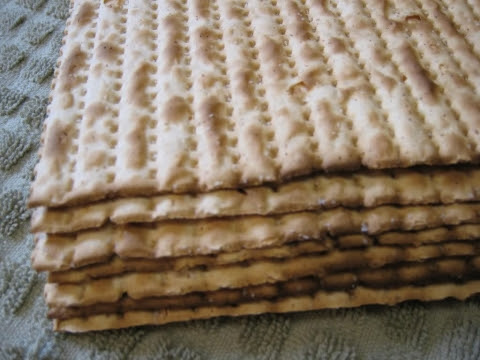
Matzoh Israel ‘s punishment for escaping slavery. It consists of a simple mix of flour and water – no eggs or flavor at all. When made especially well, it could actually taste like a cardboard box recycled from the Tel Aviv city dump. Its redeeming value is that it does fill you up and stays with you for a long time–sometimes far too long–and you are advised to eat lots of prunes with it. If the prunes do not work, try castor oil, or even gun powder as a last resort before a surgeon has to mine it out.

For eight days every year religious Jews must eat matzoh.  No bread. It is part of the Passover tradition that will start on the evening of April 10, 2017.

Eggs are not necessary and the constipation can be avoided by eating whole wheat matzos.


Kasha Varnishkes  One of the little-known “delicacies” that is even more difficult to pronounce than it is to cook. It has nothing to do with varnish, but is basically a mixture of buckwheat and bowtie noodles (not macaroni). Why bowties? Many sages in the Old Testament discussed this and agreed that an ancient Jewish mother must have decided, ‘Son, you can’t come to the table without a tie or, god forbid, place your elbow on the table.” If Mamma said ‘bowties,’ you better believe that’s what the family used, even if they had to invent them on the spot.


Blintzes  Not to be confused with the German war machine’s ‘blintzkreig.’ Can you imagine the Jerusalem Post in ’39 with huge headlines announcing: ‘Germans drop tons of cheese and blueberry blintzes on Poland. Shortage of sour cream expected’? Basically, this is the Jewish answer to Crepe Suzettes. They are actually offered on the menu at the local International House of Pancakes, but no one there knows what the hell they are. In ignorant bliss, they often serve them frozen from the blintz factory. No modern woman will take time to make them if she can find a grocery store selling frozen ones (assuming she can find someone in that store who knows where they are kept). 


Kishke You know from Scottish Haggis? Well, this it ain’t. Remember what I say if you should go to the Highlands . You do not want to eat Haggis, no matter how much Scotch you’ve downed. In the old days they would take an intestine and stuff it to make kishkewe use parchment paper or plastic (made in China). And what do you stuff it with? Carrots, celery, onions, flour, and spices. The skill is not to cook it alone, but to add it to the cholent (see below) and let it simmer for 24 hours until there is no chance whatsoever that there is any nutritional value left. The gravy can be purchased in bulk at any southern Bisquitville drive-thru.


Kreplach They sound worse than they taste. There is a rabbinical debate on their origins. One Rabbi claims they began when a Chinese fortune cookie fell into the chicken soup. Another claims they started in an Italian restaurant, where the owner yelled at the chef, ‘Disa pasta tastes like-a krep!’ Either way it can be soft, hard, or soggy, and the amount of meat inside depends on whether it is your mother or your mother-in-law who cooked it. Tastes best if made in a Manhatten deli where they serve the soup by the barrel-load.


Cholent This combination of noxious gases had been the secret weapon of Jews for centuries. The unique combination of beans, barley, potatoes, and bones or meat is meant to stick to your ribs and anything else it comes into contact with. Precursor of Superglue. At a fancy Mexican restaurant (kosher, of course) I once heard this comment from a youngster who had just had his first taste of Mexican refried beans: ‘What, they serve leftover cholent here too?” A Jewish American Princess once came up with something original for her guests (her first and probably last cooking attempt at the age of 25). She made cholent burgers for night supper. The guests never came back. The dogs ate the burgers but later threw up and had to be taken by ambulance to the pet emergency room.


Gefilte Fish A few years ago, an Israeli politician had problems with the filter in his fish pond and a few of his fish got rather stuck and mangled. His son (5 years old at the time) looked at them and asked, “Is that why we call it ‘ge-filtered fish?” Originally it was a carp stuffed with a minced fish and vegetable mixture. it usually is comprised of small fish balls eaten with horseradish (pronounced ‘chrain’ to rhyme with ‘insane,’ which you have to be to inflict it on your innards) and is judged on its relative strength in bringing tears to your eyes at 100 paces. The VERY NAME OF THIS DISH FRIGHTENS FULLY GROWN AND SOPHISTICATED GENTILES and they actually run when it is merely mentioned.


Bagels How can we finish without the quintessential Jewish defense weapon, the bagel? Like most foods there are legends surrounding the bagel, although I don’t know any other than it was first discovered when unsugared donuts accidentally petrified. There have been persistent rumors that the inventors of the bagel were the Norwegians who couldn’t get anyone to buy smoked salmon (Lox). Think about it: Can you picture yourself eating smoked salmon or trout on white bread? Rye? A cracker? Naaa! The Israel Defense Forces research lab looked for something hard and almost indigestible which could take the spread of cream cheese and which doesn’t take up too much room in desert-maneuvers ration kits. And why the hole? The truth is that many philosophers believe the hole is the essence and the dough is only there to indicate where the hole is placed.

Some say the wheat bagel is less constipating.  I love onion bagels.  I am especially fond of the bagels from Western Bagel.

David Bancroft

Nazi Laws were Based on Racist American Statutes

There is no back up information to support this opinion writer’s contentions.  However, as I have written previously, the United States has a history of discrimination against minorities.  The latest desecration of a Jewish cemetery in Missouri and the threatened attacks on mosques and Jewish community centers is no surprise to me. White American Christians have viewed all others as a threat to America since its founding.  What troubles me about posting this opinion piece is its impact on those outside the United States that are reading the commentary.  I hope some of you post some responses.

When the Nazis wrote the Nuremberg laws, they looked to racist American statutes

By James Q. Whitman, Los Angeles Times opinion page, February 22, 2017

The European far right sees much to admire in the United States, with political leaders such as Marine le Pen of France and Geert Wilders of the Netherlands celebrating events — such as the recent presidential election — that seem to bode well for their brand of ethno-nationalism. Is this cross-Atlantic bond unprecedented? A sharp break with the past? If it seems so, that’s only because we rarely acknowledge America’s place in the extremist vanguard — its history as a model, even, for the very worst European excesses.

In the late 1920s, Adolf Hitler declared in “Mein Kampf” that America was the “one state” making progress toward the creation of a healthy race-based order. He had in mind U.S. immigration law, which featured a quota system designed, as Nazi lawyers observed, to preserve the dominance of “Nordic” blood in the United States.

The American commitment to putting race at the center of immigration policy reached back to the Naturalization Act of 1790, which opened citizenship to “any alien, being a free white person.”  But immigration was only part of what made the U.S. a world leader in racist law in the age of Hitler.

Then as now, the U.S. was the home of a uniquely bold and creative legal culture, and it was harnessed in the service of white supremacy. Legislators crafted anti-miscegenation statutes in 30 states, some of which threatened severe criminal punishment for interracial marriage.  And they developed American racial classifications, some of which deemed any person with even “one drop” of black blood to belong to the disfavored race. Widely denied the right to vote through clever devices like literacy tests, blacks were de facto second-class citizens. American lawyers also invented new forms of de jure second-class citizenship for Filipinos, Puerto Ricans and more.

European racists followed these toxic innovations with keen interest. Of course they were well aware that America had strong egalitarian traditions, and many of them predicted that American race law would prove inadequate to stem the rising tide of race-mixing. Hitler, however, was cautiously hopeful about America’s future as a white supremacist state, and after he took power in 1933 his Nazi Party displayed the same attitude.

This is the background to a disturbing story: the story of the American influence on the Nuremberg Laws, the notorious anti-Jewish legislation proclaimed amid the pageantry of the Nazi Party Rally at Nuremberg in September of 1935.

At a crucial 1934 planning meeting for the Nuremberg system, the Minister of Justice presented a memorandum on American law.  According to a transcript, he led a detailed discussion of miscegenation statutes from all over the United States. Moreover it is clear that the most radical Nazis were the most eager advocates of American practices. Roland Freisler, who would become president of the Nazi People’s Court, declared that American jurisprudence “would suit us perfectly.”

And the ugly irony is that when the Nazis rejected American law, it was often because they found it too harsh.  For example, Nazi observers shuddered at the “human hardness” of the “one drop” rule, which classified people “of predominantly white appearance” as blacks.  To them, American racism was sometimes simply too inhumane.

That may sound implausible — too awful to believe — but in their early years in power, the Nazis were not yet contemplating the “final solution.” At first, they had a different fate in mind for the German Jewry:  Jews were to be reduced to second-class citizenship and punished criminally if they sought to marry or engage in sexual contact with “Aryans.”  The ultimate goal  was to terrify Germany’s Jews into emigrating.

And for that program, America offered the obvious model — even if, as one Nazi lawyer put it in 1936, the Americans had “so far” not persecuted their Jews.  Of course the Nazis did not simply do a cut-and-paste job, in part because much of American law avoided open racism. (Laws intended to keep blacks from the polls did not explicitly name their target.) But American anti-miscegenation law was frankly racist, and the Nazi criminalization of intermarriage followed the American lead.

In a sense, this ugly tale about the history of American racism is also about American innovation gone awry. Today, we’re leaders in the creation of corporate law; back then, it was race law. Other countries, such as Australia, put legislative obstacles in the way of mixed marriages, but the United States went so far as to threaten long prison terms.

And we must not forget how tenaciously the racist rulebook that the Nazis admired held on in the United States. Anti-miscegenation laws were only struck down at the tail end of the civil rights era, in 1967. Race-based immigration policies did not fully end until 1968 — long after the Greatest Generation stormed the beaches of Normandy and liberated Nazi death camps.

James Q. Whitman is a professor of comparative and foreign law at Yale Law School. He is the author of “Hitler’s American Model: The United States and the Making of Nazi Race Law.”  

History Repeats Itself – 900 Jewish Refugees Died


sisters-that-tried-to-flee-the-nazis

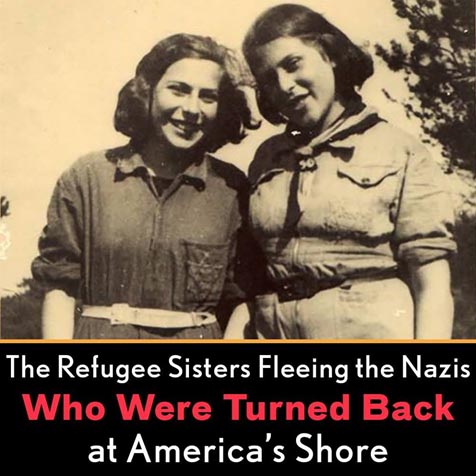
On May 13, 1939, a cruise liner, the MS St. Louis, carrying over 900 Jewish refugees desperate to escape the Nazis set off from Hamburg, Germany. Among their numbers were the two teenage girls pictured here, Sibyll and Ruthild Grünthal, who were traveling with their parents, Margarete and Walter. The St. Louis’ original destination was Havana, Cuba where the passengers hoped to seek refuge. But, anti-Semitic protests and editorials were cropping up all over the country and, by the time the ship arrived two weeks later, only a handful of passengers were allowed to disembark; the rest of the asylum seekers were told to take their pleas to the American government. This effort too would be in vain when the ship was blocked from docking at the port of Miami, their pleas for refuge going unanswered from all levels of the government. The ship’s captain, Gustav Schröder, even considered running the ship aground to allow the refugees to escape but U.S. Coast Guard vessels shadowed it to prevent it from approaching the shore. After also being denied refuge in Canada, the ship was eventually forced to return to Europe and many of the refugees it carried later died in the Holocaust, including both Sibyll and Ruthild, who were murdered at Auschwitz and Theresienstadt respectively.

In the United States at the time, the fear of the “other” was being used to stoke Americans’ paranoia and build support for repressive measures justified in the name of “national security.” At the time, government officials argued that refugees posed a security threat, with stories appearing in the media about German spies sneaking in among the refugees. Historians now believe that the concern about refugee spies or their threats to national security were blown far out of proportion but the damage at the time was done. The US shut the door on refugees in need like the ones on the St. Louis, and within two years, the anti-foreigner hysteria would even turn inward as over 100,000 Japanese-Americans were rounded up and sent to live for years in desert detention camps.

The voyage of the St. Louis and the shame such actions cast on American history have new potency today in light of the Administration’s permanent ban on Syrian refugees — of whom, in the United States, 75% are women and children under 14. As University of Michigan law professor James Hathaway observes, the St. Louis is just one example of “what happened when people slam doors shut on refugees.” Syria, he continues, is “probably the easiest example in the world today of people being massacred by a political tyrant. That we would not read the tea leaves of history and understand that the people fleeing are the enemies of our enemy is beyond comprehension to me.” The irrationality of banning refugees for security reasons given the extreme vetting they already undergo was even pointed out by the conservative think tank the Cato Institute which asserted: “[T]errorists who are intent on attacking U.S. soil have myriad other options for doing so that are all cheaper, easier, and more likely to succeed than sneaking in through the heavily guarded refugee gate. The low level of current risk does not justify the government slamming that gate shut.”

Enacting such a ban on last Friday’s Holocaust Remembrance Day has been viewed by many as shamefully symbolic. As Jewish educator Russel Neiss, who launched an education project focused on the St. Louis last week, told the Atlantic: “People always say that if you forget history then you will be doomed to repeat it. This is one of those moments where history gives us an opportunity to think about where we are now. When folks say ‘never again’ or ‘we remember,’ it is important for us to actually do so.” And, he reflects, “There’s something just about remembering the humanity of people that is getting lost in this debate. And when we talk about the importance of refugees being welcomed, we’re not talking about people who are coming here because they want to come here on vacation. We’re talking about people who are coming here because they’re fleeing for their lives. And if we escape that, if we ignore that, if we can’t remember that, then I don’t know what our humanity is really all about.”

Several civil rights groups are already taking legal action against the Administration’s illegal ban. To support these organizations’ legal fight with your donations and advocacy, visit the ACLU Nationwide (https://www.aclu.org/) and the National Immigration Law Center (https://www.nilc.org/). To learn more about how to take a stand as an individual, visit the Indivisible Guide (https://www.indivisibleguide.com/).

Discrimination in America

Despite the erection of the Statue of Liberty in New York harbor the United States has had a streak of discrimination against minorities that dates back to colonial times.  Those of you non-Americans reading this blog may find this recitation disappointing.  Americans have read all this before but not in this concise summary.

The First Group to face discrimination were Native Americans, who most Americans now call Indians or American Indians.

Europeans believed the original inhabitants of America were heathens and savages who needed to be civilized through Christianity and European culture. This led to genocide, mass murder, stolen land, attempts to wipe out Native American traditions, as well as forced assimilation through institutions like residential schools and the establishment of “Indian reservations”.  To this day the term “redskin” is used to describe Native American.

Historians call the Bear River Massacre of 1863 the deadliest reported attack on Native Americans by the U.S. military—worse than Sand Creek in 1864, the Marias in 1870 and Wounded Knee in 1890.  This link to a Wikipedia List of Indian Massacres will make most people sick.

Searching for cheap labor, early American colonists brought slavery to this continent by kidnapping Africans and bringing them to North America to work in their fields.

Many of the Africans brought to America starting in the 17th century arrived as slaves, kidnapped from their homelands in various parts of Africa. A number of them were known to be royalty and literate. African men, women, and children were stripped of their names and identities, forced to “Christianize”, whipped, beaten, tortured, and in many cases, lynched or hanged at the whims of their white masters, for whom slavery was key to maintaining their vast properties and land. Families were separated through the process of buying and selling slaves. While not all Africans in America were slaves, a large number were, particularly in the southern states. For those Africans in America who were free, discriminatory laws that barred them from owning property and voting, for example, as well as the belief in the intrinsic inferiority of dark-skinned peoples by the dominant white majority, held them back from full equality in the United States.

The Union victory in the Civil War may have freed African Americans but their lives were no picnic. Southern state legislatures passed restrictive “black codes” to control the labor and behavior of former slaves and other African Americans. Outrage in the North over these codes eroded support for the approach known as Presidential Reconstruction and led to the triumph of the more radical wing of the Republican Party. During Radical Reconstruction, which began in 1867, newly enfranchised blacks gained a voice in government for the first time in American history, winning election to southern state legislatures and even to the U.S. Congress. In less than a decade, however, reactionary forces–including the Ku Klux Klan–would reverse the changes wrought by Radical Reconstruction in a violent backlash that restored white supremacy in the South.

Disenfranchisement after the Reconstruction Era in the United States of America was based on a series of laws, new state constitutions, and practices in the South that were deliberately used to prevent black citizens from registering to vote and voting. These measures were enacted by former Confederate states at the turn of the 20th century. Their actions defied the intent of the Fifteenth Amendment to the United States Constitution, ratified in 1870, which was intended to protect the suffrage of freedmen after the American Civil War.

The sharp and sweeping rise of racial segregation in 20th century America is now subsiding but is still a reality for African Americans in many communities throughout the United States.  Police stopping and harassing Black car operators has been well documented in recent years.  The most obvious segregation were separate but equal schools (they weren’t equal), separate drinking fountains and toilet facilities, and housing segregation.  Black Americans were denied employment and housing just because they were dark skinned.

The first significant Chinese immigration to North America began with the California Gold Rush of 1848–1855 and it continued with subsequent large labor projects, such as the building of the First Transcontinental Railroad. During the early stages of the gold rush, when surface gold was plentiful, the Chinese were tolerated, if not well received.  As gold became harder to find and competition increased, animosity toward the Chinese and other foreigners increased. After being forcibly driven from the mines, most Chinese settled in enclaves in cities, mainly San Francisco, and took up low-wage labor, such as restaurant and laundry work. With the post-Civil War economy in decline by the 1870s, anti-Chinese animosity became politicized by labor leader Denis Kearney and his Workingman’s Party as well as by California Governor John Bigler, both of whom blamed Chinese “coolies” for depressed wage levels.

The Chinese Exclusion Act was a United States federal law signed by President Chester A. Arthur on May 6, 1882, prohibiting all immigration of Chinese laborers. The act followed the Angell Treaty of 1880, a set of revisions to the US–China Burlingame Treaty of 1868 that allowed the US to suspend Chinese immigration. The act was initially intended to last for 10 years, but was renewed in 1892 with the Geary Act and made permanent in 1902. The Chinese Exclusion Act was the first law implemented to prevent a specific ethnic group from immigrating to the United States. It was repealed by the Magnuson Act on December 17, 1943.

The Irish people faced much prejudice, racism and discrimination after their immigration to the United States because they were poor, uneducated, less skilled, considered disruptive and were Catholics in a land of Protestant dominance.  The common perception was that the Irish were drunkards. From 1820 to 1860, 1,956,557 Irish arrived, 75% of these after the Great Irish Famine of 1845–1852 struck.

With Japan’s December 1941 bombing of Pearl Harbor in Hawaii, racism against Japanese-Americans intensified. Like Muslims after the 9/11 attacks, Japanese-Americans were targets of harassment, discrimination, and government surveillance. Members of the community lost homes, jobs, and businesses. But the worst blow was the February 1942 Executive Order signed by President Franklin D. Roosevelt that authorized the internment of Japanese-Americans. They were now deemed enemies of the state. Over half of the 120,000 Japanese-Americans sent to the camps were born and raised in the U.S. and had never set foot in Japan. Half of those sent to the camps were children.

Although Jews first arrived in America over 300 years ago and enjoyed a certain level of religious freedom, anti-Semitism was acceptable and common socially, as well as legally in some cases. For example, some states in the late 18th century barred those who were not Christian from voting or holding public office.

Job and housing discrimination were common throughout the 20th century.  Examples are Father Charles Coughlin’s anti-Semitic radio rants in the 1930’s and Charles Lindbergh’s isolationist speeches accusing the Jews of pushing America into World War II. Henry Ford’s “The International Jew,” was published in his newspaper, The Dearborn Independent, which excerpted the infamous anti-Semitic forgery, “The Protocols of the Learned Elders of Zion.”

Henry Ford asserted that there was a Jewish conspiracy to control the world. He blamed Jewish financiers for fomenting World War I so that they could profit from supplying both sides. He accused Jewish automobile dealers of conspiring to undermine Ford Company sales policies. In 1919, he purchased a newspaper, the Dearborn Independent. He installed Charles Pipp as editor and hired a journalist, William J. Cameron, to listen to his ideas and write a weekly column, “Mr. Ford’s Page,” to expound his views. For a year, editor Pipp resisted running anti-Jewish articles, and resigned rather than publish them. Ford closed the Independent in December 1927.  Ford died in 1947, apparently unrepentant.

Islamophobia is the term that has been coined to describe the current hostility toward Islam and Muslims in the United States, manifested in prejudice, harassment and discrimination.  There is an anti-Muslim hate crime epidemic. Attacks on Muslim Americans have come in four waves since 9/11, said Corey Saylor, director of CAIR’s department to monitor and combat Islamophobia. According to the FBI, in 2001 anti-Islamic hate crimes spiked by 1,600 percent with 481 incidents.  At least six mosque projects across the U.S., not just in New York, have faced bitter opposition in 2010.  Now President Trump has stopped the entry of anyone from seven predominately Muslim nations.  The president denies that his focus is on Muslims.  He says it is an effort to deny terrorists entry into the United States.  No terrorists have been identified from those seven nations.

Why there is No Peace between Israelis and Palestinians

This posting is motivated by the United Nations Security Council condemnation of Israel’s decision to build new housing in Israel occupied West Bank.

The story is old but people reading this blog need to understand how Israelis and Palestinians have come to this sorry place in history.  This is not a complete history of all the wars fought between Arabs and Israel. Nor is there any reference to Hamas and Hezbollah in this discussion, who are both sworn enemies of Israel.

  • When the state of Israel was created by an action of the United Nations in 1948 the Arab population in that area refused to recognize the creation of a Jewish state. Immediately after Israel declared itself a state the surrounding nations attacked.  Arabs lost that war.
  • In 1967 the Arab nations surrounding Israel gathered armies on the borders of Israel in preparation to invade. Those countries were Syria, Jordan, and Egypt.  The Israelis actually started the war before the Arab countries attacked.  Israel won that war driving the Syrians out of the immediately adjoining area, pushing the Jordanians to the east of the Jordan River and taking all of the Sinai Peninsula from Egypt and occupying all the land of Egypt to the Suez Canal.  In the process Israel also occupied parts of southern Lebanon.
  • Israel reached an agreement with Egypt to withdraw from all of the land they had won in the 1967 War in exchange for Egyptian recognition of the State of Israel. The EgyptIsrael Peace Treaty was signed in Washington, D.C., United States on 26 March 1979, following the 1978 Camp David Accords.
  • The Jordan-Israel Peace Treaty was signed on October 26, 1994, at the southern border crossing of Wadi ‘Araba. The treaty guaranteed Jordan the restoration of its occupied land (approximately 380 square kilometers), as well as an equitable share of water from the Yarmouk and Jordan rivers. Moreover, the treaty defined Jordan’s western borders clearly and conclusively for the first time.
  • Israel remains in control of what was part of Jordan, the area west of the Jordan River, and Gaza, a small strip of land along the Mediterranean Sea that had previously been controlled by Egypt, and the Golan Heights that were previously part of Syria.
  • Israel withdrew its settlements in Gaza in 2005. That amounted to about 8,500 people being relocated in the hopes of bringing some peace to that area. Repeated missile attacks from Gaza into Israel’s pre-1967 territory has resulted in repeated bombing of the area by the Israeli Defense forces.  The most recent bombing occurred in 2014.
  • Efforts to create a two state solution between Israel and the occupied Arab territories have been unsuccessful primarily because the leadership of the Palestinians refuse to recognize Israel’s right to exist.
  • Israelis take the position that the spoils of war is they get to decide what happens in the areas they occupy. Thus building Jewish communities in areas that are primarily Palestinians is a fair consequence of the wars they have won.  The rest of the world through the United Nations disagrees.
  • Neither Israelis nor Palestinians trust their opponents to honor their words.

Hatred makes a peace agreement an unlikely outcome in the next few years.  New leadership for both Israel and the Palestinians is the only hope for a settlement and permanent peace.

Happy New Year

David Bancroft

The Future of Jews in America

Historically, when a country has economic issues the leadership frequently blames the Jewish population.  It is a convenient scape goat that is usually a small part of the total population.

‘Hail Trump’: That’s how a group of white nationalists saluted the November 8 victory of the president-elect this weekend at the annual conference of the National Policy Institute, as seen in an exclusive video filmed by The Atlantic. The disturbing scene came during an after-dinner speech by alt-right leader Richard Spencer, who among other anti-Semitic and racist statements described America as “a white country designed for ourselves and our posterity.” His audience cheered, and many raised their arms in Nazi salutes. Trump has not endorsed these statements, of course, nor has he asked white nationalist groups for their support. But the sentiment is alarming.

Meanwhile Congressman Keith Ellison is the leading candidate to head Democratic National Committee.  A growing number of pro-Israel activists and Jewish community figures are expressing concern that Minnesota’s U.S. Rep. Ellison will turn the Democratic Party away from Israel if he is elected party chairman.

While I am not a Zionist I do appreciate the fact that Israel is the only majority Jewish nation in the world.  “Hail Trump” frightens me and so does a congressman who has a history of relations with Louis Farrakhan’s Nation of Islam movement. The Jewish News Service reports on Ellison’s relationship with Farrakhan in detail.

My family thinks I am too involved with politics and my fears are unfounded.  Sadly history seems to support my fears.

Jewish Pirates? Are You Kidding Me?

Many have theorized that Christopher Columbus was a Jew.  The basis for that is the fact that the Spanish Inquisition was in process in 1492.  The theory goes that Columbus and his crew were Jews escaping the Inquisition.  There is no proof to support that idea.  The following article may be factual or not.  My daughter does have a Jewish friend whose family did emigrate from Jamaica to the United States.

Source of this story: http://www.aish.com/jw/s/8-Little-Known-Facts-about-Jewish-Pirates.html?s=mm 

—-

8 Little-Known Facts about Jewish Pirates

pirate-ships Some Jews turned to piracy as a way to fight against Spain and Portugal, the hosts of the brutal Inquisition.

Jewish pirates? It’s not a joke. Turns out, some of the most well-known and respected buccaneers in previous centuries were Jews. These captains were not the dreaded pirates of popular imagination; many worked in the employ of Britain, the Netherlands, and other maritime powers, protecting those nations’ coasts and seas.

While many of the details of these captains’ lives are mysterious, historians have pieced together some details of their lives, giving us a glimpse into the little-known world of Jewish pirates. Here are eight interesting facts about Jews and piracy.

Abraham Henriques Cohen and the World’s Biggest Heist

Abraham Henriques Cohen started life as a secret Jew living under the Inquisition in his native Portugal. One of the most prominent merchants in Lisbon, he was discovered to be a practicing Jew in 1605 and publicly tortured, along with 150 other hidden Jews. This experience apparently led Cohen to decide to work against Spain and Portugal, the hosts of the brutal Inquisition.

After escaping to Amsterdam, Cohen seemingly became a secret agent for the Dutch navy, and made his way to the New World, settling in Jamaica, which was then a haven for Jews. He worked on behalf of the Netherlands to attack Spanish ships and frustrate Spain’s colonial designs in the New World.

Cohen teamed up with one of the most feared pirates of the time, Sir Henry Morgan, with the tacit backing of both the Dutch and British governments. In 1628, along with Dutch folk hero Admiral Piet Pieterszoon Hein, Cohen captured a Spanish treasure fleet off the coast of Cuba. The ships were carrying gold and silver worth 11,509,524 guilders, around $1 billion today. It was the largest theft in the history of the Spanish fleet.

Cohen gave up piracy in old age when Sir Henry Morgan became Lieutenant Governor of Jamaica, and pardoned his longtime friend. The two lived out their days in Jamaica, their pirate ways behind them for good.

Jean Laffite, War Hero and Pirate

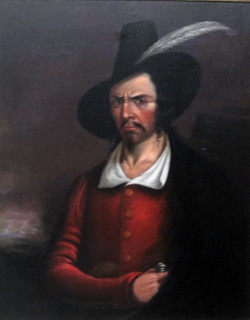
jean-laffite-war-hero-and-pirate One of the most fabled and swashbuckling pirates of all time, Jean Laffite, was born in France in about 1780. He later wrote that his grandparents were Jews who were tortured by the Inquisition. This sparked a lifelong disdain for Spain in young Jean, and inspired him to turn to piracy to attack Spanish holdings in the New World where the Inquisition held sway.

Moving to the French colony of New Orleans, Jean Laffite and his brother Pierre founded a blacksmith shop, but they had a second secret profession as well: they held commissions from the Republic of Cartagena (in modern day Colombia) to intercept Spanish boats. They carried on this secret activity from a secluded colony in Barataria Bay, off the coast of New Orleans.

During the War of 1812, Laffite warned American troops of British invasion plans. He offered the help of his pirate gang to Gen. Andrew Jackson in the defense of New Orleans in exchange for a pardon for their pirate activities. Gen. Jackson agreed and Laffite’s gang fought with distinction. Jackson later called Laffite “one of the ablest men” of the Battle of New Orleans.

A few years later, in 1817, Laffite once again turned to piracy, taking nearly a thousand followers with him to the site of present-day Galveston, Texas. Until his death in about 1825, Jean Laffite remained one of the most feared pirates of the “Spanish Main,” the eastern coast of Spain’s holdings in the New World.

“Brotherhood of the Black Flag” and Buried Treasure

Sudel Deul, a 16th Century Jewish physician, was an early explorer of the Americas and is credited with introducing the potato to Europeans. His son Subatol found fame in a very different route: becoming one of the most feared pirates in the world.

Subatol formed an alliance with another son of a famous explorer who’d also turned to piracy: Henry Drake, son of the great British explorer Sir Francis Drake. Together the two buccaneers formed the “Brotherhood of the Black Flag”, leading a band of pirates in attacking Spanish ships off the coast of present-day Chile. It is said that the duo buried 6,000 pounds of Spanish gold and an even greater amount of silver near the Guayacan harbor in present-day Chile. No one has found the buried treasure yet, though seekers have discovered documents written partly in Hebrew, possibly written by Subatol.

Pirate Gravestones in a Jewish Cemetery

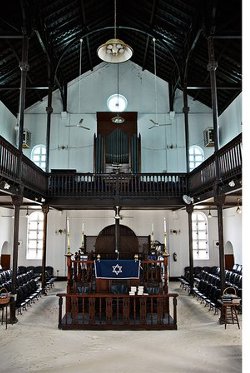
jamaicas-sole-synagogue

The island nation of Jamaica was once crawling with pirates; it seems that some of these were Jews. Seven gravestones in the old Hunt’s Bay Cemetery in Kingston bear unusual markings above Hebrew writing can be seen the familiar skull and crossbones of the pirate insignia. Similarly marked graves have also been found in Bridgeport, in the Bahamas, and in the old Jewish cemetery of Curacao.

Those buried in Hunts Bay were carried across the Cagway Bay from Port Royal, once called the Wickedest City in the World. These seven Jewish denizens might have helped contribute to that fearsome reputation with their pirate activities.

The Pirate Rabbi

thepiraterabbisamuel-pallache Although Samuel Pallache trained as a rabbi in the late 1500s in Fez, Morocco, he preferred the seafaring life, eventually working as a privateer for both the Dutch government and for the Sultan of Barbary, in Morocco. Pallache negotiated one of the very first treaties between European and Middle Eastern nations: the 1610 agreement guaranteeing peace between the Netherlands and Morocco.

In 1614, Morocco and Spain were at war, and Pallache led a small Moroccan fleet that captured Spanish ships. Arrested by the Spanish ambassador, Pallache was tried for piracy. A letter to Dudley Carleton, British ambassador to Venice at the time, described the dashing Jewish buccaneer: “Here is a Jew Pirate arrested that brought three prizes of Spaniards into Plymouth . . . he shall likely pass out of here well enough for he has league and license under the King’s hand for his free egress and regress which was not believed until he made proof of it.”

Indeed, Pallache was eventually acquitted of piracy and set free. When he died in 1616, he was given a hero’s funeral. Every member of Amsterdam’s Jewish community marched in his funeral procession and they were joined by city elders and Prince Maurice of Nassau.

The “Great Jew”

hayreddinbarbarossaflag Sinan Reis and his family fled the Spanish Inquisition in the early 1500s, settling in the city of Smyrna, in what is today Izmir, Turkey. There, Sinan became the right-hand man of one of the most famed pirates of all time, Hayreddin Barbarossa, who eventually became a sultan and commander in the Ottoman navy. The two sailed under a flag bearing a six-sided star, much like the Jewish Star of David.

The pair’s greatest victory came in 1538, in the Battle of Preveza, off the coast of Greece, when Ottoman forces led by Reis and Barbarossa defeated a flotilla of armed ships from Christian countries assembled by Pope Paul III, ensuring Ottoman dominance on the Mediterranean for generations to come. Sinan’s great bravery in that battle earned him the sobriquet “The Great Jew” from his Spanish enemies. The Ottoman Empire rewarded him by appointing him Supreme Naval Commander.

At the end of his life, Barbarossa dictated his memoirs to Sinan Reis, who created five hand-written volumes that are exhibited today in the Topkapi Palace in Istanbul and in the Istanbul University Library.

Israel Connections in the Caribbean

The Jewish homeland was never far from the thoughts of some Jewish seafarers. Yaakov Koriel worked as a buccaneer in the Caribbean in the early 1600s, until he changed his ways, moved to Israel, and studied Torah and Kabbalah in the Israeli city of Safed. He’d buried in that city, near the grave of his the famous Rabbi Isaac Luria, whose works he studied.

Another Jewish seafarer in the Caribbean, David Abrabanel, shared his name with a famous rabbi, Isaac Abrabanel. After his family was murdered in South America in the early 1700s, David adopted the nickname “Captain Davis” and sailed with British privateers. He eventually commanded his own ship, which he named The Jerusalem.

Israelis Fighting Pirates Today

The days of Jewish pirates on the high seas is over. Today instead, Israeli security teams are world leaders in opposing piracy and protecting cargo and passenger ships from modern-day pirates.

One such Israeli anti-piracy company, Mano International Security, gained international attention in 2009, when its Israeli guards fought off a daring attempt by Somali pirates to take over the Italian cruise ship Melody, which was sailing within a few hundred miles of the pirate-infested coast of Somalia with 1,500 passengers and crew on board. According to ship captain Ciro Pinto, Israeli guards fired shots over the heads of the bandits, eventually scaring them off.

“It was the first time we have encountered resistance” one of the Somali pirates was quoted as saying after the attack. “The guys acted exactly according to the regulations and I’m proud of them” Mano Nik, the company owner said.

Are boycotts against Israel anti-Semitism or free speech?

Free speech in America means saying what you want to say no matter who is offended.  That translates to the KKK and other extremist groups having the right to hold rallies in public places.  That results in demonstrations in big cities by groups wanting to express their demands or frustrations.

Thus the above question posted on KPCC, the large audience NPR, FM station, in Los Angeles.  following is their explanation of a proposed law in the California legislature.  Although the intent might be pleasing to some people, the proposed law strikes me as unconstitutional.  At the end of the article on KPCC’s web site there were comments both for and against the law.


A California state bill that would punish companies participating in the boycott, divestment, and sanction (BDS) movement against Israel recently passed the California state Senate Judiciary Committee.

The controversial movement calls on individuals and companies to boycott Israel until it ends occupying “all Arab lands.” Rather than punish boycotts directly, AB 2844 targets “violations of existing anti-discrimination laws that take place under the pretext of a boycott or other ‘policy’ aimed at ‘any sovereign nation or people recognized by the government of the United States, including, but not limited to, the nation and people of Israel,’” according to a Los Angeles Times editorial. It also requires those seeking state government contracts to certify that they haven’t engaged in discrimination through such a policy.

There is disagreement about the strength of the current bill, as language directly referencing BDS has been removed in favor of more general assertions that reference the existing Unruh Civil Rights Act and California Fair Employment and Housing Act.

This has not mitigated the controversy surrounding the legislation.

Proponents of the bill seek to portray the BDS movement as anti-Semitic. Dillon Hosier, senior political adviser for the nonprofit advocacy organization Israeli-American Nexus, said that it has created an insidious anti-Jewish environment across California.

“Californians are being targeted who have zero connection to the government of Israel,” Hosier said. “What BDS has become is not ‘boycott, divestment and sanctions,’ [but rather] ‘bigotry, discrimination and anti-Semitism.’”

Opponents of the legislation argue the bill violates the First Amendment.

Estee Chandler is a founding member of the Los Angeles Chapter of Jewish Voice for Peace, an organization that seeks to end Israel’s presence in the Gaza Strip, the West Bank and East Jerusalem. She finds the California legislature’s actions against BDS  “deeply troubling,” saying she sees what the Legislature is doing as punishing political speech.

“From the start, AB 2844 was introduced to single out, stigmatize and suppress the political speech of Californians who criticized … Israeli and U.S. policies,” Chandler said. “Denying state business to an otherwise qualified contractor based solely on their views about Israel and their participation in a legal boycott … goes beyond government exercising its speech, and it impedes on our constitutional rights.”

AB 2844 passed an initial vote in the Assembly, and last week it passed through the Senate Judiciary Committee. Next, it heads to a vote in the Appropriations Committee in early August.

Assembly Bill 2844

Bernie Sanders: If you don’t like Israel don’t ask me for money!

Mr. Sanders:

You continually send me e-mails asking me to send you money so that you can be elected to be the President of the United States.

I am Jewish and I fear for the safety and future of Jews in the world, especially when Iran is launching missiles – dedicating to the eradication of the State of Israel.

I will not vote for you because I believe that you do not know the difference between good and evil.  You have spokespeople, like Linda Sarsour, who decry the State of Israel and liken it to white supremacists and say that it is an apartheid state.

 After the Germans, Arabs and Japanese conspired to conquer the world and wipe out every Jew in the world in World War 2, the world (at the U.N.) voted to divide Palestine into Arab-land and Jew-land (this was after Great Britain gave 80% of Palestine to Jordan in 1922).

Israel agreed to accept the “partition” plan and the Arabs refused, claiming that they wanted 100% of the land – that the Jews could live in the Mediterranean.  After the war of 1948, the borders were fixed; except that the Arabs again refused to honor those borders or acknowledge that the Jews had any right to live anywhere.

In 1967, the Arabs launched another offensive against Israel.  Israel won that war too.   Israel ended up with more territory.  They gave most of the “gains” back to Egypt in order to make peace with Egypt.

They offered to give the “West Bank” back to Jordan to make peace, but Jordan refused to take it – because Jordan hates the Palestinians (the Jordanians have kept the Palestinians in camps for the past 60 years – rather than accept them as Jordanian citizens).

Israel kept, accepted and made citizens of the Israeli Arabs.  I’m sure that you know that 20% of Israelis are Arabs …. and 20% of Israeli medical students are Arabs.  Did you know that the new assistant head of the Police is an Arab (named yesterday)?

Your outrageous lying statement that the Israelis overreacted in the Gaza conflict is immoral.  No fighting army (against Hamas terrorists who use human shields and launch missiles from schools and mosques) has EVER acted with such restraint and morality as the Israeli’s.

Shame on you Bernie that you cannot tell good from bad; morality from evil.  You are turning your back on the only democracy in the Middle East.  You are turning your back on the country that is the nicest and best place for Palestinians to live (Syria, Lebanon and Jordan have them locked up in camps).  You support those whose motto is “From the River to the Sea” (meaning that ALL of Israel should be Arab … and the Jews should live in the Sea).  You just don’t understand the real world.  You have bought into Arab propaganda and turned against the only Jewish country in the world.

written by Michael Waterman, teacher at Temple Beth Am in Los Angeles