Is Ted Cruz Anti-Semitic or Just Anti-New York?

On today’s The Situation Room, CNN Legal analyst Jeffrey Toobin slammed Cruz’s comments about “New York values” as a “derogatory term ” about Jews which amounted to nothing more than an “old-fashioned” “anti-semitic trope” from “a hundred years” ago.

When Jeffrey Toobin, who also happens to be Jewish and NYC resident, says the New York values comment by Ted Cruz is code for an anti-Semitic slur, I must recognize his opinion. Personally I did not know the meaning of Cruz remark.

Surprisingly, Wolf Blitzer, who also is Jewish, pushed back clarifying Cruz’s comments, but that wasn’t enough to satisfy Toobin.

WOLF BLITZER: Well, he says he was referring to liberal politicians in New York state.

TOOBIN:  Oh, really? [sarcastically]

BLITZER  And he mentioned Cuomo, he mentioned Charlie Rangel, Anthony Weiner. You heard the list of the people he mentioned today.

TOOBIN: But they have nothing to do with money and media. Money and media is Jews. This is just an old-fashioned anti semitic stereotype derogatory term and everybody understands it.

Jennifer Rubin writing in The Washington Post tried to understand Cruz’s meaning but the best she could offer is New Yorkers are materialistic and liberals. Rubin is Jewish but grew up in California so she her perspective, like mine, isn’t New Yorker. She may not have ever been the victim of Anti-Semitism.

 Cruz has voiced unending support for Israel. That is a significant qualifier for Republican mega-donor Sheldon Adelson. I wonder what Adelson makes of the Cruz remarks about New Yorkers. Adelson is from Boston.  Other wealthy Jewish Republicans could also be upset about the Cruz comments.

The fight at the GOP convention will be wild.

The Lady Plumber

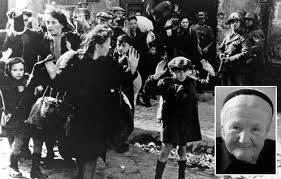
Irena Sendler

Irena Sendler
Died: May 12, 2008 (aged 98) Warsaw, Poland

Irena Sendler Memorial


During WWII, Irena, got permission to work in the Warsaw ghetto, as a Plumbing/Sewer specialist. She had an ulterior motive.
Irena smuggled Jewish infants out in the bottom of the tool box she carried.   She also carried a burlap sack in the back of her truck, for larger kids.

Irena kept a dog in the back that she trained to bark when the Nazi soldiers let her in and out of the ghetto.

The soldiers, of course, wanted nothing to do with the dog and the barking covered the kids/infants noises.

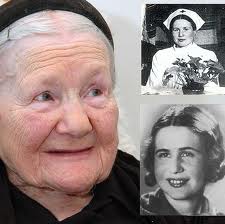
Irena Sendler 1942 and at age 98


During her time of doing this, she managed to smuggle out and save 2500 kids/infants.
Ultimately, she was caught, however, and the Nazi’s broke both of her legs and arms and beat her severely.

Irena kept a record of the names of all the kids she had smuggled out,  In a glass jar that she buried under a tree in her back yard.  After the war, she tried to locate any parents that may have survived and tried to reunite the family. Most had been gassed.   Those kids she helped got placed into foster family homes or adopted.

Irena Sendler composite photo


In 2007 Irena was up for the Nobel Peace Prize. She was not selected. Al Gore won, for a slide show on Global Warming.

Later another politician, Barack Obama, won for his work as a community organizer for ACORN.

In MEMORIAM – 65 YEARS LATER I’m doing my small part by posting this message.  I hope you’ll consider doing the same.     It is now more than 65 years since the Second World War in Europe ended.   In memory of the 6 million Jews, 20 million Russians, 10 million Christians and 1,900 Catholic priests who were murdered, massacred, raped, burned, starved and humiliated!

Now, more than ever, with Iran, and others, claiming the HOLOCAUST to be ‘a myth’, It’s imperative to make sure the world never forgets,   Because there are others who would like to do it again.

The MatzoBall Is the Season’s Hottest Not-Christmas Party

’Twas the night before Christmas, and all through the house, all the chosen were dancing—and looking for a spouse …

By , BusinessWeek, December 17, 2015 — 11:14 AM PST

Matzoball Martini

God’s callings are mysterious. Sometimes he asks you to free your people from slavery and walk through a sea. Sometimes he commands you to kill your son. Sometimes he tells you to gather your people in a darkly lit club, pump up the jams, and get them wasted.

“I’m in the business of making Jewish babies,” says Andy Rudnick, founder of the MatzoBall, a series of Christmas Eve parties for Jewish singles. “I’m a key factor in stopping the assimilation effect.” The first MatzoBall was held in 1987 in Boston. This year there will be 18 parties across the country, with a total of about 25,000 people paying $30 to $50 at the door. Rudnick says that once he started throwing parties, he never went home alone on a Christmas Eve. “Never. Never. That would be like owning a restaurant and not eating.” Now 51, he met his wife, Catherine, at a MatzoBall in 1997.

There had long been gatherings for the People Chosen to Have Nothing to Do on Christmas Eve, but they typically involved name tags, bar mitzvah bands, and synagogue community rooms. Rudnick figured that cool clubs would be happy to give him their space on a night they were closed. “I said, ‘Let’s deliver the hottest nightclub in a given city that happens to be all Jews,’ ” he explains. He was ruthless about keeping out “nebs,” or nebbishy guys he feared would kill the vibe, and still keeps older folks away by creating “MatzoBall Plus” events for people older than 35. The parties have been such a success that about 20 percent of the clubgoers aren’t Jewish. In Boston last year, Rudnick set up a private room for New England Patriot and famous Jewish sports legend Julian Edelman. The wide receiver was joined by regular MatzoBall attendee Rob Gronkowski, a gentile teammate. “He just loves the Jewish girls,” Rudnick says.

The party’s success begat imitators, leading to the great MatzoBall wars of the mid-’90s. Promoting became Rudnick’s full-time job, supplanting his earlier career in real estate. He battled other Jewish get-togethers by giving out free tickets while chasing away rival promoters who would hand out fliers to people in line for his events. He called himself the Jew Who Stole Christmas, taking on competing parties such as Washington’s Gefilte Fish Gala, Chicago’s Rockmitzvah, Seattle’s Latkepalooza, Tampa’s Vodka Latke, and the multicity Heebonism, which, at one gathering in Palm Springs, Calif., featured Jewish porn stars and strip dreidel.

Rudnick expanded to a monthly schedule, including a June Schmooze Cruise, which had a Clio-winning print ad: Moses stands in front of the Red Sea holding a staff and says, “This time, we have a boat.” He had a quarterly magazine, the Jewish Professional. (His girlfriend at the time was often the cover model.) Rudnick even started a video dating service—1-900-36-YENTA. He scaled back the business in 1997, when he started making more money selling the now-banned diet drug fen-phen, which led him to open a chain of nine plastic surgery centers. He had to sell his Sleek Medical Spas in 2012 when he found himself overleveraged.

He’s still in the medical business—Rudnick sells a health-care credit card—but he’s back to expanding MatzoBall and working to bring Jews together throughout the year. He’s about to release a dating app to compete with JDate, called MatzoMatch. Instead of using Facebook profiles, the app will connect to LinkedIn accounts and allow users to sort potential dates by college or industry. There will also be a matchmaking service for a fee, just like in the old country.

Rudnick is also starting a series of Jewish after-work networking events around the country, called MatzoMingles, and organizing a group trip to Israel next year. And for the second year, he’s selling a block of 200 rooms at Miami’s Fontainebleau hotel for a package that includes a Christmas Eve party at the nightclub LIV and a pool party the next day. Some of the attendees, he was surprised to learn last year, were the children of couples who met at MatzoBalls. Including, to his even greater surprise, his 16-year-old, 5-foot-8-inch identical twin daughters, who’d somehow sneaked into the club. “I didn’t know until I saw pictures of the MatzoBall,” he says. “They shouldn’t have been there.”

Five myths about Hanukkah

I found this article on line.  Written by Jennifer Bleyer

At nightfall on Sunday, Jews everywhere began the eight-day observance of Hanukkah by lighting candles, singing songs, showering their children with gifts and stuffing themselves with potato latkes. What’s not to love about a happy, home-based festivity involving fried food? It’s no wonder that Hanukkah is the most widely celebrated holiday among American Jews: According to the last National Jewish Population Survey, in 2001, 72 percent of Jews in the United States light Hanukkah candles — more than partake of any other Jewish rite, including attending a Passover seder or fasting on Yom Kippur. Yet a lot is commonly misunderstood about the holiday’s significance, both now and historically. Let’s consider some of the biggest misconceptions about the festival of lights.


1. Hanukkah is an important Jewish holiday.

It’s easy to get the impression that Hanukkah is a marquee event of the Jewish year, falling as it coincidentally does right around the time of that other blockbuster December occasion and likewise seeming to revolve around presents, parties and recollections of a miracle long ago. The sense of Hanukkah’s importance is further stoked by lively decorations, beautiful menorahs, delectable feasts and even, nowadays, kitschy sweaters and tongue-in-cheek competitions.

But as any rabbi would be quick to explain, Hanukkah is one of the least important occasions on the Hebrew calendar. Unlike major holidays such as Passover, Sukkot and the weekly Sabbath — all of which include extensive ritual requirements as well as prohibitions against work — Hanukkah is categorized as a minor festival whose only real decree is to light candles for eight nights. Everything else is custom or adaptation.

That’s not to say, however, that all the hubbub around Hanukkah is accidental. Its elevation to its current status in the United States goes back to the 19th century, when rabbis concerned about Jewish children feeling envious of their Christian neighbors realized that Hanukkah could let kids indulge in a joyous occasion around the same time of year. As Jewish historian Dianne Ashton recounts in her book “Hanukkah in America,” the holiday’s “timing in the midst of the Christmas season offered a way [for people] to perform their Jewish commitment through the holiday’s rite and, for a moment, to resolve the ambiguity of being an American Jew.”

2. Hanukkah celebrates a fight for religious freedom.

The story of Hanukkah commemorates events in the 2nd century B.C., when the Syrian king Antiochus, whose Greek-influenced Seleucid empire ruled over ancient Judea, issued decrees outlawing traditional Jewish practices, which provoked the uprising of a family of country priests called the Maccabees. They ultimately triumphed, regained control of the Jewish Temple in Jerusalem and rededicated it according to their beliefs. As Rabbi Joshua Sherwin expounded at the White House Hanukkah party in 2013, the “true meaning” of the holiday is to celebrate “strengthening religious freedom in our days, just as the Maccabees did in ancient ones.”

But the idea that theirs was a fight for religious freedom is a myth, as is the notion that their revolt was exclusively against their Gentile oppressors. At the time, many Jews readily welcomed aspects of the dominant Greek culture, with its emphasis on reason, wisdom and art. These Hellenistic Jews advocated for the reformation of their own primitive belief system according to Greek values — the modernization of a faith founded in the Bronze Age. The Maccabees opposed their Hellenized counterparts, and according to some scholars, their revolt really began as a bitter internal fight between religious fundamentalists and reformers.

“The Maccabees were fighting for the ability to observe their own laws and the ability to coerce other Jews to observe their laws,” says Albert Baumgarten, an emeritus professor of Jewish history at Bar-Ilan University in Israel. “It meant a very strong fight against the Hellenistic Jews and the establishment of what we would today call a theocratic state.” Some contemporary commentators have even deigned to call the Maccabees fanatics and zealots.


3. The Jews’ victory in the Hanukkah story halted assimilation.

Today, the Maccabees are extolled for having put a hard stop, after their recapture of Jerusalem in 164 B.C., to Hellenism’s threat to swallow traditional Judaism. “Hanukkah celebrates the rescue of Judaism itself from the clutches of cultural assimilation,” Ron Wolfson, an education professor at the American Jewish University in Los Angeles, writes in “Hanukkah: The Family Guide to Spiritual Celebration,” nodding to why this story speaks so deeply to modern diaspora Jews. “In our own day,” he writes, “living in a completely open society, we too must battle the forces of cultural assimilation to retain our Jewish identities.”

But as rulers who subsequently established the Hasmonean dynasty, these rebels quickly realized that their survival involved playing the game of regional politics — and the way to do that was by none other than adopting Hellenism. “It was a kind of necessity,” Baumgarten says. “The Seleucid dynasty to which Antiochus and his successors belonged was split between two rival families that were fighting each other over generations, and the Maccabees had to play one branch off each other. If you backed the wrong horse in this ongoing civil war, you could end up losing your status and your head. . . . So although the Maccabees started as opponents of Hellenism, they soon become among its most enthusiastic admirers and adopters.”

 This meant, for instance, aping Greek models of government and negotiation, and establishing an assembly to vote a ruler into power — a practice with no precedent in Jewish tradition. Their realpolitik also helped them learn to “negotiate the different tensions between being part of the Jewish world and the larger world,” Baumgarten says, which was critical to Jewish survival.


4. The oil burned for eight days and eight nights.

The ritual lighting of Hanukkah candles is traced to what’s known as the miracle of the oil: After the Maccabees reclaimed the Temple, the story goes, they found a small amount of oil permissible for lighting the sacred sanctuary lamp — enough for just one day. Miraculously, it lasted eight. Jews thus light candles on eight successive nights to recall this great miracle.

Yet whether the miracle really happened is questionable, and not just because of the empirically proven limits of combustible liquid. As scholars have long noted, there’s no reference to the miracle in early sources based on firsthand accounts, including the first book of Maccabees, an insider history written to glorify the new dynasty and its achievements, nor the second book of Maccabees, also a historical account written close to the time of the revolt, although from the diaspora.

The miraculous-oil story seems to be a rabbinic invention transmitted hundreds of years after it allegedly occurred. After the Romans destroyed Jerusalem in 70 A.D., the Jews were expelled, and religious authority was transferred from Temple priests to diaspora rabbis, who came to codify the Babylonian Talmud as a central text of Jewish law, ethics and customs. In the middle of the Talmudic tractate discussing the proper way to light candles on the Sabbath, as a footnote that seems almost an afterthought, the rabbis included a discussion of Hanukkah candle-lighting along with a telling of the miracle of the oil. It’s this written account that made the story last.


5. Latkes are the traditional Hanukkah food.

Latkes, or potato pancakes, are the much-salivated-over centerpiece of most Hanukkah celebrations in America. Consisting of grated potatoes mixed with matzo meal and eggs, and fried in oil to a golden crisp, they are the holiday’s iconic food, fueling vociferous debates about which topping is superior — sour cream or applesauce — and enabling the endless creativity of modern cooks, who include ingredients their ancestors probably never heard of, from Swiss chard to zucchini, from chipotle to feta cheese and artichokes.

But latkes originated in Eastern Europe, not ancient Israel. And they were first made with curd cheese rather than potatoes, Gil Marks writes in the “Encyclopedia of Jewish Food.” Although they are certainly a traditional holiday food, they are by no means the traditional holiday food. For centuries, as Marks details, Jewish communities around the world have celebrated with other delicacies that acknowledge the role of oil in the Hanukkah story. Greek Jews eat fried fish with ajada, an adaptation of an ancient Mediterranean sauce akin to garlic mayonnaise; they also serve fried apple rings and apple fritters. The Cochin Jews of India enjoy neyyappam, a kind of fried sweet cake containing semolina, almonds, cashews, dates, apricots and cardamom, as well as bonda, fried potato fritters coated in chickpea flour and served with chutney. Syrian and Lebanese Jews celebrate with atayef, cheese-filled pancakes deep-fried and topped with sugary syrup or thick cream, while Sephardic Jews have traditionally feasted on ojaldre, an ancient Spanish form of puff pastry also stuffed with cheese. The Jews of Italy, meanwhile, nibble on frittelle di Chanukah, yeast fritters flavored with anise.

Hungry yet?

Twitter: @jennypencil

No Matter What the Jews Do They will be Blamed!

First view and read this: http://www.thenewcivilrightsmovement.com/davidbadash/fox_news_psychiatrist_blames_jews_for_surrendering_guns_to_Nazis

“In other words while Ben Carson was only implying that Germany’s Jews were responsible for their own deaths, Fox News’ Keith Ablow went all the way there:

If Jews in Germany had more actively resisted the Nazi party or the Nazi regime and had diagnosed it as a malignant and deadly cancer from the start, there would, indeed, have been a chance for the people of that country and the world to be moved to action by their bold refusal to be enslaved.

In other words: We didn’t fail Europe’s Jews in the Holocaust, the Jews failed us. Good to know.”The Weekly Sift

It seems that no matter what Jews do or don’t do they are to blame. Millions of Jews did as they were told and were killed before and during WWII. Many people continue to say they did not stand up to the Germans and that cost more lives than simply following orders. Of course that is not entirely accurate. Jews did fight against the Nazis while being held in the Warsaw Ghetto. Jews did join underground efforts against the Nazi war machine. At the end of WWII they fought to the British in Palestine before the state of Israel became a reality. The tactics used by those Jews in Palestine were condemned by many people.

Israel has received military hardware to defend itself from the United States but no participation of U.S. military. When they are attacked they continue to conduct their own defense in their own way. They are condemned for their tactics.

So what is it you want from Israel? Surrender and be killed or fight with every tool you have. That is the choice. The Israelis have chosen to fight. I am not an Israeli but if I was, I would fight.

Priest blessing the people at the Kotel on Sukkot

The Priestly Blessing of Sukkot at the Western Wall


Western Wall during Sukkot Priestly Blessing

Western Wall

35,000 Jewish people reportedly gathered at the Western Wall on the day of the priestly blessing during Sukkot this year.  The priestly blessing is the time, twice a year, when those of Aaronic lineage stand at the base of the Western Wall and bless the Israelites.

The Four Species

Moses said concerning the feast of Sukkot, “On the first day you shall take the product of hadar trees, branches of palm trees, boughs of leafy trees, and willows of the brook, and you shall rejoice before the Lord your God seven days” (Lev 23:40; JPS).


Man with four species of Sukkot

Man during prayers of Sukkot

The Prayers

The Jewish people have interpreted these four species to be the etrog (citron) – yellow fruit, the lulav (palm branch), hadas (avot tree branch), and aravah (willows of the brook).  They carry these with them throughout the week to their prayers in the synagogue.

Time of Rejoicing

As the verse above says, this is a week of joy, and the Israelites were literally commanded to rejoice all week!  Part of the joy would have been over God’s provision – this festival takes place “after you have gathered the crops of the land” (Lev 23:39).

Sukkot Priestly blessing prayers

Man with gun during Sukkot prayers

Security

As noted many times in the biblical narrative, the harvest was not necessarily a time of security (see the Book of Judges, for instance).  Israel today experiences uncertain times.  It doesn’t mean that you don’t rejoice, but neither does it mean you don’t carry a gun.

The Torah

The center of Jewish life was and is the Torah – the five books of Moses.  During a part of the prayer ceremony on this day, the Torah was brought out by each group represented and became the focus of attention.

The Torah Scroll by the Western Wall

Man reading prayer book

The Prayer Book

The prayer book contains the liturgy for the various feasts and prayer times.  This one makes a good picture because it’s the “large-print” edition.  The prayers of course are in Hebrew, as they always have been.

YOU Said Nothing!

When we were led into the gas chamber, YOU said nothing.

When we were forcibly converted, YOU said nothing.

When we were thrown out of a country just for being Jews, YOU said nothing.

When we now defend ourselves all of a sudden, YOU have something to say.

How did we take our revenge on the Germans for their Final Solution?

How did we take revenge on the Spanish for their Inquisition?

How did we take revenge on Islam for being Dhimmi?

How did we take revenge on the lies of the Protocols of Zion?

We studied our Torah.

We innovated in medicine.

We innovated in defense systems.

We innovated in technology.

We innovated in agriculture.

We made music.

We wrote poetry.

We made the desert bloom.

We won Noble prizes.

We founded the movie industry.

We financed democracy.

We fulfilled the word of Hashem by becoming a light unto the Nations of the Earth.

So World when you criticise us for defending our heritage and our ancestral homeland we the Jew’s of the World do exactly what you did, we ignore you.

You have proven to us for the last 2,000 years that when the chips are down you don’t care.

Now leave us alone and go sort out you own back yard whilst we continue our 5775-year old mission, enhancing the World we share.

Author unknown

Killing the Iran deal could backfire

If Israeli Prime Minister Benjamin Netanyahu succeeds in getting Congress to kill President Obama’s deal with Iran, “it may be a Pyrrhic victory, said Ben-Dror Yemini in Yedioth Ahronoth (a national daily newspaper published in Tel Aviv, Israel). Of course the agreement to limit Iran’s nuclear programs in exchange for lifting of sanctions is terrible. The draft deal is full of loopholes and will lend legitimacy to the Islamic Republic’s repressive and dangerous theocracy. Most Arab countries are against the deal and privately support Netanyahu’s position rather than Obama’s. But America is still our most important ally and an even more open rift with the Obama administration could hurt. “Humiliating the president of the United States could evoke anti-Semitic blast waves” by seeming to give evidence to those who argue that rich Jews manipulate world events.

Even in the U.S., there is “an anti-Zionist coalition radical left and radical right” that would ramp up its anti-Semitic propaganda to frightening heights.” Instead of publicly defeating Obama by lobbying Congress, Netanyahu do far better to persuade the president to “climb down,” perhaps by pointing out that Iran’s Ayatollah Ali Khomeini is already backtracking from the deal as framed. Netanyahu needs to remember that while “Obama is wrong, he isn’t an enemy.”