Putting Your Money Where Your Mouth Is

This is applicable where ever there are high paid politicians, executives, and all those other public speakers. They all talk about what society should be doing for the less well off. Not the homeless but the working poor and middle class who are trying to sustain their way of life and perhaps just get somewhat ahead.

Now a university president is putting his money where his mouth is. Raymond Burse, who leads Kentucky State University as interim president, will give up $90,000 of his salary so that 24 low wage workers on campus can earn $10.25 an hour.

Burse, whose annual income is about $350,000, said he thought for about eight weeks about the decision to take the pay cut and then brought it to the university’s board. He described the board’s reaction as “shock’ when they found out.

Asked whether he thought that his decision to cut his own salary might start a trend with other university heads, Burse said, “I don’t know. I did it as an individual thing and I can afford to do it.” All the details here.

Raymond Burse-kentucky-state-university-interim presidentKentucky State University’s president was the youngest of 13 children and said he learned the value of hard manual work and education from his parents.

So where is Michael Bloomberg, George Soros, the Clintons, all the other well to do “liberals” in America who talk about their concern for the less well off? They are nowhere to be found.

Why is that?

As they say, “talk is cheap.” We need more Raymond Burses in this world.

Middle Class and Working Class Have No Voice

“Total nonfarm payroll employment rose by 288,000, … the number of unemployed persons, at 9.8 million, decreased by 733,000.” These statements were copied from yesterday’s Employment Situation Summary issued by the U.S. Bureau of Labor Statistics.

The difference of 445,000 are the former workers who have decided to stop looking for work. The issue is not what their source of income will be. The issue for this discussion is the .4% drop in unemployment. At 6.3% the Federal Reserve can now say the goal of 6.5% has been achieved. We can now further reduce our bond buying (quantitative easing) program. The program goal is to keep interest rates low as an aid to business to encourage borrowing.

Did private enterprise respond as desired? It appears business saw the advantage of outsourcing manufacturing to other nations as the preferred business choice.

Congressional actions did not support the Federal Reserve. Rather than imposing taxes on companies that outsource or providing funds to build infrastructure congress did nothing.

Many reading this believe that congress did the right thing by not taking any action. That is the reason our economy is in its current condition.

The rich are happy! The poor? Well, they have no voice.

Unemployed – Explained by two eminent economists

So how can over 873,000 people come off the unemployment line when there were only a little over 114,000 jobs created?

Luckily I found a transcript of a conversation between two eminent economists discussing this very
question!

Abbott & Costello explain unemployment


Here we go, the recent unemployment report explained —

COSTELLO: I want to talk about the unemployment rate in America.


ABBOTT: Good Subject. Terrible Times. It’s 7.8%.


COSTELLO: That many people are out of work?


ABBOTT: No, that’s 14.7%.


COSTELLO: You just said 7.8%.


ABBOTT: 7.8% Unemployed.


COSTELLO: Right 7.8% out of work.


ABBOTT: No, that’s 14.7%.


COSTELLO: Okay, so it’s 14.7% unemployed.


ABBOTT: No, that’s 7.8%.


COSTELLO: WAIT A MINUTE. Is it 7.8% or 14.7%?


ABBOTT: 7.8% are unemployed. 14.7% are out of work.


COSTELLO: If you are out of work you are unemployed.


ABBOTT: No, Obama said you can’t count the “Out of Work” as the unemployed. You have to look for work to be unemployed.


COSTELLO: BUT THEY ARE OUT OF WORK!!!


ABBOTT: No, you miss his point.


COSTELLO: What point?


ABBOTT: Someone who doesn’t look for work can’t be counted with those who look for work. It wouldn’t be fair.


COSTELLO: To whom?


ABBOTT: The unemployed.


COSTELLO: But ALL of them are out of work.


ABBOTT: No, the unemployed are actively looking for work. Those who are out of work gave up looking and if you give up, you are no longer in the ranks of the unemployed.


COSTELLO: So if you’re off the unemployment roles that would count as less unemployment?


ABBOTT: Unemployment would go down. Absolutely!


COSTELLO: The unemployment just goes down because you don’t look for work?


ABBOTT: Absolutely it goes down. That’s how the current administration gets it to 7.8%. Otherwise it would be 14.7%. Our govt. doesn’t want you to read about 14.7% unemployment!


COSTELLO: That would be tough on those running for reelection.


ABBOTT: Absolutely.


COSTELLO: Wait, I got a question for you. That means there are two ways to bring down the unemployment number?


ABBOTT: Two ways is correct.

COSTELLO: Unemployment can go down if someone gets a job?


ABBOTT: Correct.


COSTELLO: And unemployment can also go down if you stop looking for a job?


ABBOTT: Bingo.


COSTELLO: So there are two ways to bring unemployment down, and the easier of the two is to have administration supporters stop looking for work.


ABBOTT: Now you’re thinking like the Economy Czar.


COSTELLO: I don’t even know what the hell I just said!


ABBOTT: Now you’re thinking like Obama.

Continuing High Unemployment

Today’s employment report for February is another set of contradictory results.  175,000 jobs were added to payrolls.  The number of long term unemployed has remained stubbornly high at 37% (or even higher) of the total unemployed since January of last year.  There were two months when the number dropped below this level but they were most likely statistical errors as they were not consecutive months.

Other nations would be happy with the unemployment rate that the USA is experiencing, 6.7%. That is not a fair comparison.  Americans are used to an unemployment rate of 5%.   That is a number that was last seen in April 2008.

Despite government optimism there is nothing on the horizon that says we will see any number near 5% in 2014.

Two issues make changes in unemployment likely. 1) Low cost labor in other countries.  2) Technology has reduced the need for so many workers.  Those long term unemployed need re-training into new careers that are experiencing labor shortages.

Conservative politicians won’t allow government funding of those kinds of programs.  They complain about welfare and long term unemployment benefits but won’t allow themselves to see the benefits of re-training programs.  If there was a conservative president making a case for re-training a conservative congress would enact the needed legislation.  Since Barack Obama is a Democrat no programs will be enacted.  It’s all about politics.

Where do we go from here? No where as long as there is a divided government.  Look for changes in 2017.  It makes me sad and dismayed.

Free Trade Brings Creative Destruction

The Trans Pacific Partnership (TPP) is a brainchild of Barack Obama.  Consider this posting I made on February 22, 2014.

Creative destruction occurs when something new kills something older. A great example of this is personal computers.  Free Trade is another example.

NAFTA was President Bill Clinton’s naive plan to increase American trade while helping our neighbors.  It has not worked out as promised.


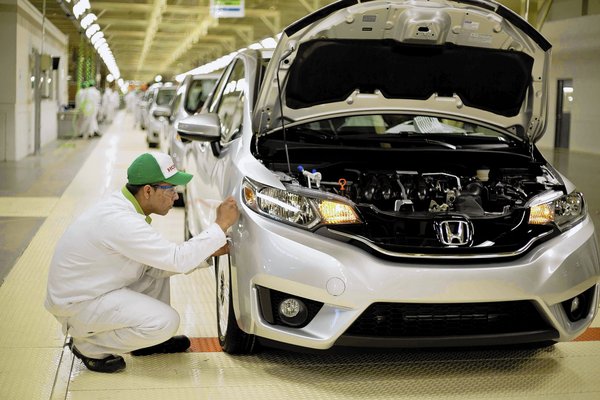
Mexico becoming a driving force in auto production

Honda Fit rolls off the assembly line at a new $800 million factory near Celaya, Mexico

Mexico, with its low labor costs, has been the beneficiary of the free trade agreement.  More products have entered the United   States from Mexico than ever before.    In 2013, according to our census bureau, $226 Million in products were exported and $280 Million were imported.  That number is on a path to increase dramatically over the next few years.  The reason is that Mexico has become the assembly floor for many products made in other countries.  The Los Angeles Times article titled “Mexico becoming a driving force in auto production” tells of the average hourly labor cost in their assembly plants of $8 versus an average hourly rate in the United States of $37.  These are the kinds of pay rates that drove American manufacturers to southern states in the USA.

What is the United States doing about this financial advantage?  Nothing!  Rather, the president of the United States, the Prime Minister of Canada, and the President of Mexico have just had meetings in Mexico at a town named Toluca (home of the Fiat 500 assembly plant), near Mexico City, discussing ways to further the NAFTA agreement.

Barack Obama claims to be concerned about the poorest in our nation and enhancing middle class opportunities.  How are more free trade agreements bringing jobs to the non-tech workers that assemble cars, refrigerators, and televisions?  They are not.  It’s creative destruction at work.

The Rich are even richer than you Thought!

Monopoly Game Box

The Week magazine reports that the combined net worth of the 300 richest people in the world climbed by $524 Billion in 2013. This was an analysis by the Bloomberg Billionaires Index. Those 300 people now have a combined total wealth of $3.7 Trillion. That is more than the gros domestic product of every country in the world except the U.S.A. and China.

Bill Gates is now worth $78.5 Billion.

Instead of raising the minimum wage why not cap the maximum earnings for any individual? Forty years ago top executives earned about 20 to 30 times the average worker. That discrepancy is now 200 times or more.

The answer is obvious. The rich have the money to influence the laws. The Poor? Honestly they have nothing to offer.

Obama: Unemployed aren’t ‘lazy,’ they just need a hand

Obama: Unemployed aren’t ‘lazy,’ they just need a hand
http://www.latimes.com/nation/politics/politicsnow/la-pn-obama-unemployment-benefits-congress-20140107,0,6811727.story#ixzz2pplnAM47

The president is correct. The unemployed do need a hand. Is unending employment insurance the solution?

The total number of people unemployed for more than 26 weeks is estimated to be over 4 million. The number is decreasing very slowly. 1.3 million of those people no longer collect unemployment insurance aid. That number will increase to include all the long term unemployed by the end of 2014.

The likelihood of those unemployed for a year obtaining new jobs in their old profession is remote.

The question is, are they really unemployed or are they just going through the motions of job search to qualify for the aid? I know there are some in that category. The obvious reason is they were ready to retire when they experienced a layoff. A second reason is that they are not ready to retire but have an alternate source of income.

The remaining long term unemployed may be searching for jobs in vocations that now have limited opportunities. That situation has been created by outsourcing and automation.

Those people who really are part of the long term unemployed need re-training in a new profession. Unless they are willing to participate in a re-training program they should be denied unemployment compensation. The cost of that re-training will have to be supported by the government.

Will their new profession result in a lower annual income then they are accustomed to? Most likely the answer is “Yes.” This may not seem fair to some but in a free enterprise society there is no requirement that those with an income must support those not working for an indefinite period of time.

That is my idea. Where are the president’s ideas? Where are the Congress’s ideas? “No” to unemployment aid is not an idea.

Where the jobs are

When I post a column it does not receive the attention of a recognized commentator. Perhaps this piece appearing in today’s print edition of the Los Angeles Times will make the desired impression. This isn’t something new. I have posted the same observations. I am just not as creative a writer.

Jeff Danziger is a political cartoonist and author of “Rising Like the Tucson,” a novel about the Vietnam War.

By Jeff Danziger
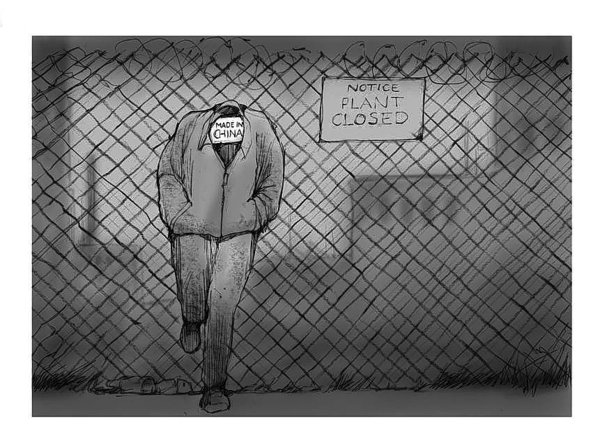
LA  la-oe-0102-placeholderBillions of workers around the world now compete with American workers to make stuff and offer services. (Jeff Danziger / For The Times / December 31, 2013)

January 2, 2014

Yes, there’s an explanation for why the U.S. is choking on the dust of China, India and others. But break it to the kids gently.

A friend recently got stuck when he tried to explain to his son, who was struggling to find a job, how our economy got to be the way it is. He asked my help since I am a well-known crank on the matter. I offered him three short anecdotes:

Last summer I was in a Home Depot standing in front of a veritable mountain of new air conditioners. They were all from China, which was no surprise. But to be annoying I asked a passing clerk where they were made. He was a young man, hired more for the spring in his step than his knowledge of international sourcing. We both looked at the boxes, piled in a pyramid, eight levels high. The boxes didn’t say anything about China. But they did say “Made in PRC.”

“Are these from China?” I asked.

He paused a moment. “No, they’re from Puerto Rico.”

Or consider this example from last month: A textile factory in Italy caught fire and seven workers were killed. They were all imported Chinese nationals working for Chinese companies operating in Italy so they could put a “Made in Italy” label on their cloth.

A third example: The city of New York decreed a few years ago that each bedroom in the city must have a carbon monoxide detector. There are roughly 11 million bedrooms in New York City, so the law created a huge market. Further, the devices have a life of five years, after which they must be replaced, so the continuing market was also guaranteed. A manufacturing enterprise could hardly find a surer customer base.

But was there a rush of companies here in the United States gearing up to manufacture 11 million devices for this guaranteed sale? No. Almost all the detectors were made in China or Taiwan.

Over the last 20 years, countries around the world have ditched their communist governments, or at least turned their backs on strict communist economic principles. At the same time, India and other Asian nations have rapidly moved into global trade. This has meant billions more workers around the world competing with American workers to make stuff and offer services. At the same time, shipping has become more efficient and economical, and international communication has become cheap, instantaneous and simple. And since the international workers are willing to accept extremely low wages, they have the advantage. Around the world, subsistence farmers have transformed themselves into subsistence factory workers.

And during this entire period, what did the United States government do to meet this challenge? Nothing. Our clueless, bellowing national leaders from both parties took no action to meet the effect of this new competition. Many American companies embraced the changes, happy to make profits off underpaid Asian workers while allowing huge swaths of American industry to die.

Two observations are often made to justify this disruptive period. The first is that the situation is an inevitable outgrowth of globalization and natural economic laws. In this scenario, nothing that the foreign manufacturers have done to U.S. workers differs from what American manufacturing did to the older economies in Europe. Lower costs and cheaper goods will always gain market share. Sometimes that share will be 100%.

A second explanation holds that what we are seeing is the necessary cost of the death of communism. Under this logic, communism was held in place by violence and oppression, and sooner or later it would have to be maintained by wars. Countries that depend on each other economically are less likely to go to war, not wanting to fight with their customers or suppliers. Thus the resulting pain of unemployment is preferable to wholesale conflict.

But are those two observations valid? To assess them, we have to understand our history. War, it is said, is God’s way of teaching Americans geography. Perhaps unemployment is how we learn economics. Are Americans, whose jobs have been shipped overseas, the walking wounded in the war against Marxist totalitarianism? That’s a stretch, but perhaps it will make lawmakers feel better when they vote to cut off unemployment benefits. If you’re keeping score, they can shout, capitalism has defeated communism. We won. Oh, by the way, don’t bother to show up for work Monday.

It’s hard to explain all this to younger Americans, who are generally a hopeful and cheerful lot. It means hinting that a great deal, maybe all, of what they have been taught so far in school is wrong, or at best useless. It means offering a full explanation of human nature, including its awful and miserable characteristics, its meanness and its fearful avarice.

That information is no fun to deliver. The worst human traits should be broken to the young in small pieces, so the facts can be digested and compared with what they already know.

My friend invited me over to talk to his son, suggesting I could explain the new economic realities more clearly than he could.

No, thanks, I said. He’s your kid. You do it.

http://www.latimes.com/opinion/commentary/la-oe-danziger-economics-manufacturing-20140102,0,5173795.story#ixzz2pHFEnMJ5

We Don’t Need You – We have a Robot!

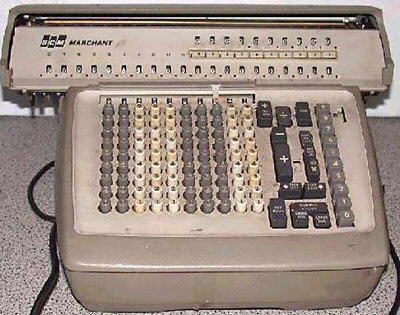
 Marchant Electric CalculatorEvery weekend for 7½ years I spent my Sunday afternoons poring over next week’s production schedule. There were no desktop computers. Marchant and Monroe mechanical calculators were still in use.

Today that job is performed faster and more accurately by a desktop computer. It’s done in minutes.

Lettuce Bot

Inventors have now developed a lettuce picking machine that will replace 20 farm workers (in one field alone). Amazon has a computer fulfillment system installed at three distribution centers that may eventually reduce the need to hire tens of thousands of workers. A company called LabCorp is hard at work developing machines to sort and split blood samples, which is just one of hundreds of thousands of menial laboratory jobs that pay decent money but could more efficiently be done by robots. A company in Mumbai, India remotely adjusted my laptop computer that was not sending print messages to my Hewlett-Packard printer.

So many jobs are gone. Manual labor has been reduced. Complex calculations are quickly solved using a computer.

Not everyone has the comprehension to learn the skills that the 21st century demands. How will they earn a living in this environment? No commentators, no wise men, no one has a solution.

As we enter 2014 it appears we will be feeding, clothing, and housing those that cannot perform the jobs of the new century. Some will object but our humanity will dominate.

Source for part of this posting: http://www.dailynews.com/technology/20131225/do-robots-make-us-more-productive-or-steal-our-jobs

Raising the Minimum Wage is No Solution

Remember when cars cost $3,500 and a house cost $30,000?  Inflation raised your pay, the cost of that car, and houses are still just as unaffordable.

Over my many working years I have benefited from the increased minimum wage rates as well as the union won rate increases.  I have always been part of the administrative staff and always on a salary.  Some were weekly rates, some were monthly rates, and there was once even an annual salary.  I receive no overtime pay but my high pay rate is supposedly offset by better pay than the hourly employees.  Not true.

Huffington Post reports that 13 States Will Raise Their Minimum Wage For The New Year It seems like a good idea.  After all who could argue with the idea of increasing the pay for those least paid who clearly are in a world of hurt?  Many need food stamps and housing subsidies to survive.

Those salaried jobs of mine have not brought me to wealth.  So I can relate to the poorest paid.

The problem for me is that a pay hike for everyone still leaves the poorest paid at the bottom of the pyramid. Now they face proportionately higher cost for rent, food, and the other necessities of life.  They will be no better off than they had been before the pay increase.  Inflation will destroy their gains.

San Francisco is a city with a minimum rate of $10.55 per hour. The new rate in January will be $10.74.  The cost of living in San Francisco is 164% of the national average.  How has the high minimum rate helped the lowest paid workers?  It hasn’t!

Is there a solution?  I know of none.