Patrick Soon-Shiong, the billionaire who purchased the Los Angeles Times for $500 million in 2018, said Monday he is taking the ailing newspaper public.
Speaking on “The Daily Show,” Soon-Shiong told host Jon Stewart the newspaper will take the company public over the course of the next year. The billionaire did not clarify when that would happen.
“We literally are going to take the LA Times public and allow it to be democratized and allow the public to have the ownership of this paper,” Soon-Shiong told Stewart. “We think over the next year we will. I’m working through (that) with an organization that’s putting that together right now.”
The move follows years of trouble at the Times. In early 2024, The Times cut 20% of its workforce, approximately 115 reporters, following the departure of the paper’s top editor, Kevin Merida.
In October, the Times came under fire after Soon-Shiong blocked the paper’s endorsement of then-Vice President Kamala Harris over Donald Trump for president, prompting the resignation of the paper’s editorial board editor, Mariel Garza.
Since then, the Times’ entire editorial board has resigned, with the last departure coming in February. According to NPR, around 20,000 subscribers canceled their digital subscriptions.
“Whether you’re right, left, Democrat or Republican, you’re an American,” he said on Monday.
Over the past year, the billionaire has criticized his own paper for what he described as veering “very left” and said he would balance the paper’s editorial board with voices that “trend right.”
The paper has had high-profile missteps in its transformations, such as a briefly-introduced AI-imbued tool that sympathized with the Ku Klux Klan.
Who would invest in a losing newspaper is a mystery to me.
Today is Flag Day but it has turned into Sad Day as the president has an Army Parade, people are demonstrating calling this No Kings Day, and thousands of Hispanics have fear of arrest and deportation.
The lawn was not cut. I called the gardener. His wife said he feared for arrest and told me he is in hiding.
Hotel workers, restaurant workers, farm workers and many other groups are living in fear.
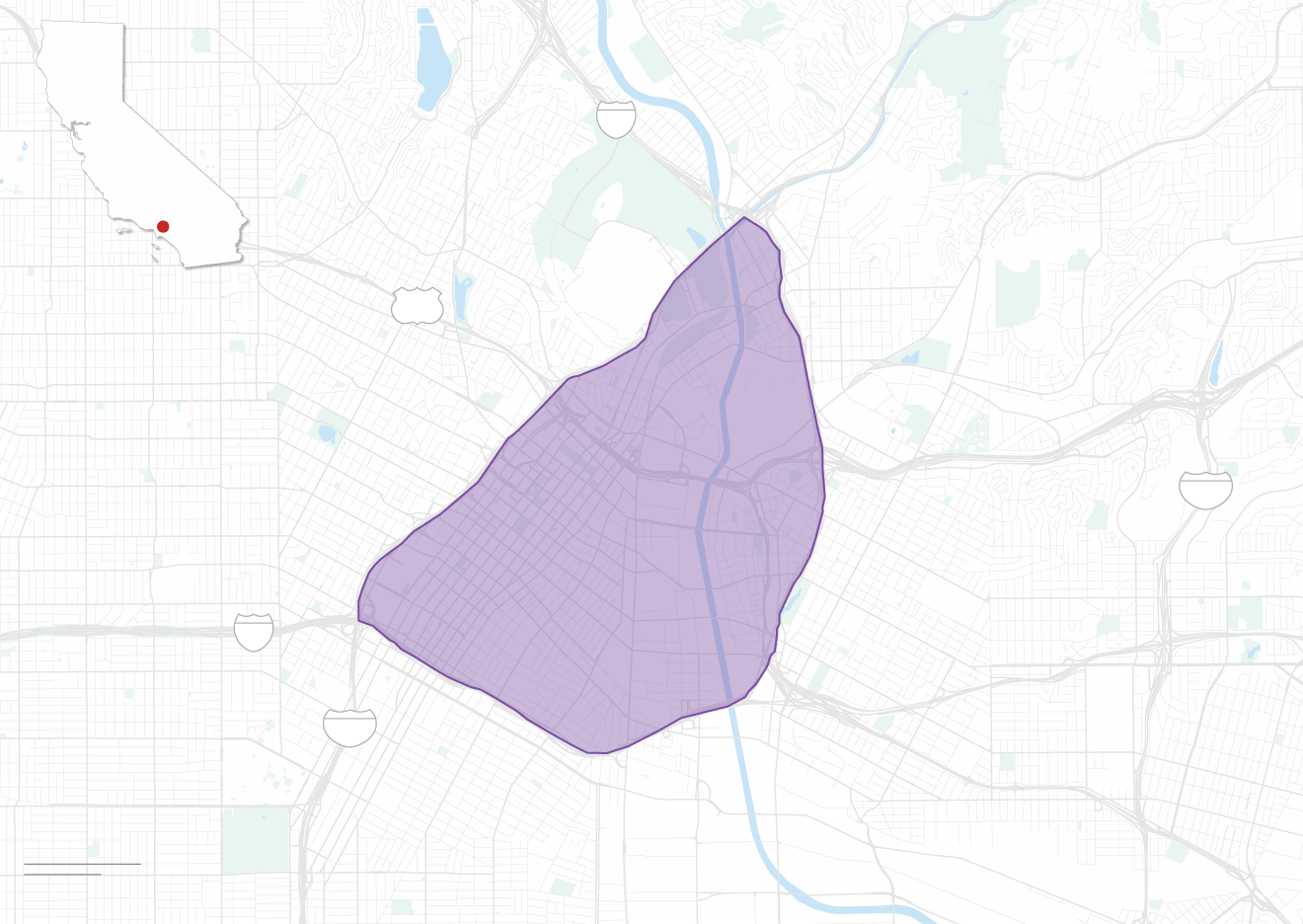
A map of Los Angeles. Near the area labeled “downtown” on the map is a tiny red dot. That represents the area where protests are happening and that are being shown on TV. The dot is so small it would not be noticeable if an arrow had not been drawn towards it.
Below is a map of part of metropolitan LA followed by a map of the downtown area.
Copied from today’s Los Angeles Times. This is a beautifully written article.
I’ve lived in Los Angeles long enough to know that this city weathers fire, quake and fury and still manages to bloom. We grow food in our backyards, paint our pain on walls and find beauty in the struggle. But right now, there’s a pressure in the air thicker than smog, a national fear winding through our streets, and its name is Donald Trump (“National Guard arrives in Los Angeles as fallout from immigration raids continues,” June 8).
The helicopters overhead aren’t just news choppers anymore. They’re echoes of something ancient and dangerous: Fascism rising on American soil. I never thought I’d say this in my lifetime, but we’re watching a man try to bring down a republic with the smug grin of a game show host who already knows the final answer.
President Trump, you can stop now. Turn on your TV. Watch what you’ve done. You will not be remembered as a patriot. You will not be remembered as a liberator. You will be remembered as the worst leader this country has ever produced. A divider. A destroyer.
We write, we paint, we protest and we plant seeds of hope in cracked concrete. But we are exhausted. We need moral leadership, not messianic delusion. What do we tell our children when their leaders praise dictators, vilify the press and mock the weak? That chaos is power? That empathy is weakness?
Mr. Trump: History is not on your side and neither is Los Angeles.
California climate is delightful. Many people or their parents move here to escape the humidity, the cold, the hurricanes and the tornadoes found everywhere else in the United States. The price we pay for this has finally become too much for most of us.
In Central Phoenix, the average list price for single-family homes is $455 per square foot.
The median sale price of a home in Los Angeles is $1.1M, and the median sale price per square foot is $643, according to Redfin.
Gasoline in California, according to AAA, which tracks national gas prices daily, costs an average of about $4.78, compared with $3.16 nationally. The cost of electricity in the state is now the highest in the continental U.S., at 30.22 cents per kilowatt hour.
The notoriously high cost of gas in the state is the result of a lot of factors — we tax gas to pay for road infrastructure and a less-polluting fuel mix in the summer months. Last year, Sacramento decided to move harder, faster toward its goal of a carbon-less future, adding disincentives for refineries and incentives for EVs that the California Air Resources Board has predicted will add 47 cents a gallon at the pump.
Overall, California’s zero-carbon climate policies — pushing EVs as your next car purchase and heat pumps to cool and heat your house — rely largely on electricity that in turn depends on expensive, and intermittent, energy sources, such as wind and solar. Come hell or high water, California’s leaders are trying to regulate, tax and incentivize their way to electricity that is 100% carbon-free by 2045.
In fact, recent analyses say California will face “acute electricity shortages” over the coming decade. Not least among the reasons: a dragged-out, exorbitantly expensive and unpredictable permitting process; the difficulty in finding appropriate locales for wind turbines and solar farms; and, ironically, objections from locals and environmentalists who don’t want renewable facilities in their backyards. Case in point: Moss Landing, where a toxic fire in a battery plant, coupled with plans for offshore wind turbines, have turned locals against green policies.
California can only prosper if it can develop affordable, reliable energy from all sources, including the state’s fossil fuel supplies. Without a change of direction, the trajectory is building toward a neo-feudal future — a state widely divided between the few rich and the many struggling.
Source for some of this article from a Joel Kotkin column in the Los Angeles Times.
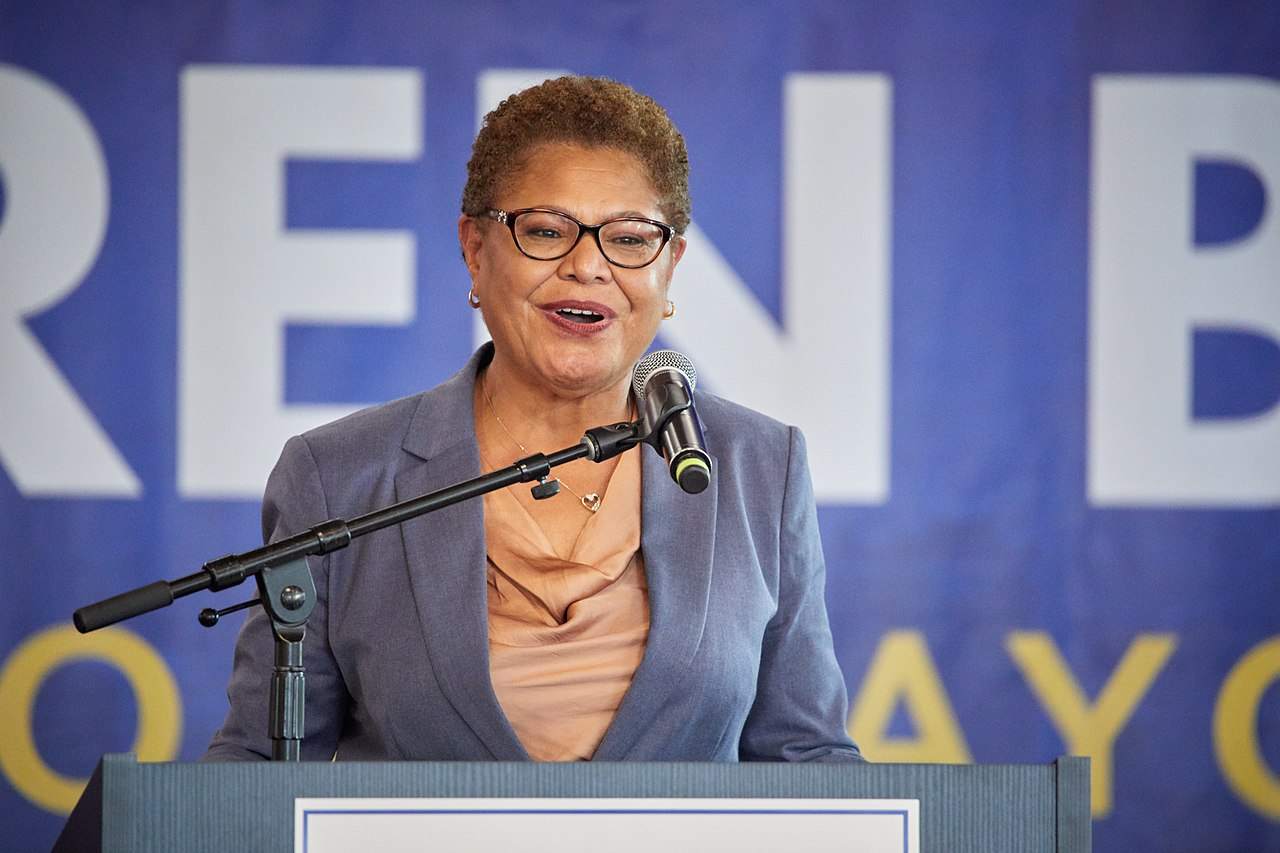
LOS ANGELES — Call it the Karen Bass special: a shot of optimism, followed by a bitter budget chaser. You could see this coming if you live in Los Angeles.
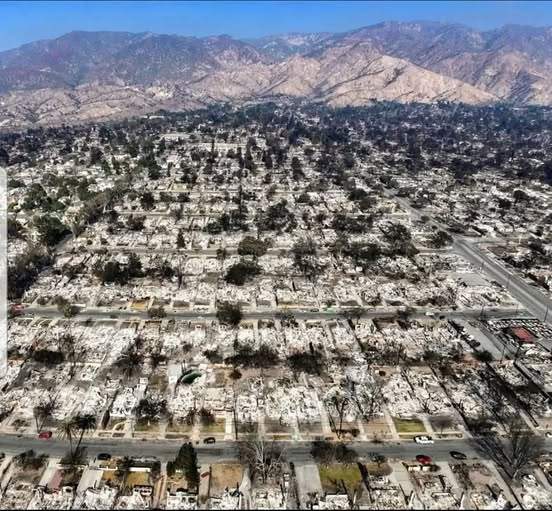
The Pacific Palisades (a district in the city) fire showed how the city was unprepared. There was a shortage of manpower. There was a shortage of functioning firefighting equipment. There was a lack of water pressure. There was a nearby reservoir that was empty due to a damaged lid.
That was the incongruous combination the Los Angeles mayor debuted on Monday, when she presented an upbeat outlook in her annual State of the City address, only to drop a gloomy spending proposal that could result in 1,600 layoffs.
The bracing split-screen is a result of the city’s cascade of disasters: historically devastating wildfires, a perennial homelessness crisis and a bleak budget outlook made worse by global economic upheaval. It lays bare the daunting climb awaiting Bass, whose flat-footed initial fire response has left her more politically vulnerable than ever as she seeks reelection in 2026.
Throughout her midday speech, Bass recounted Los Angeles’ woes in her typically sunny cadence, presenting the challenges as an opportunity to further transform the nation’s second-largest city.
“The state of our city is this: Homelessness is down, crime is down. These are tough challenges and they show that we can do so much more,” Bass said. “We still have a long way to go. We need a citywide turnaround, and we need a fundamental overhaul of city government to deliver the clean, safe and orderly neighborhoods that Angelenos deserve — and to reverse decades of failure on homelessness. ”When it came to the city’s fiscal crisis, though, Bass kept it simple and blunt: “Los Angeles, we have a very difficult budget to balance.”
That acknowledgement kicked off in earnest crunch time in charting the city’s coming fiscal year. On Monday, the deadline for Bass to unveil her budget proposal, the mayor released a $13.95 billion spending plan.
The proposal closed the nearly $1 billion deficit that Bass and city leaders had telegraphed in previous weeks. To do so, it proposes 1,600 layoffs, a move the mayor said was a “decision of absolute last resort.”
The layoffs would represent nearly 5 percent of the 32,405 positions currently filled in the city’s workforce.
City officials, who were granted anonymity to speak before the details of the budget were released publicly, said no sworn officers from the police or fire departments would lose their jobs and that Bass will seek to avoid layoffs through negotiations with labor unions.
“We’re also hoping to get some support from state government in order to mitigate or minimize the impact of layoffs on the budget,” one official said. Bass will be traveling to Sacramento later this week to make her case.
Bass is also proposing to find savings by eliminating several commissions, including an advisory Health Commission and another for Climate Emergency Mobilization; consolidating city departments for aging, economic and workforce development and youth development into one department; and delaying certain capital projects.
The city’s financial woes predate the recent turmoil in global markets. Liability payments have tripled, and revenues from business, sales and hotel taxes have lagged.
Bass, speaking of the fiscal crisis, called for “fundamental change” in the city’s operations and endorsed reforms such as multi-year budgeting and a capital improvement plan. She also restated her commitment to reform the city’s charter — an effort that caught momentum after a series of scandals in City Hall but had stalled after the mayor failed to appoint members to a commission to tackle the issue. Bass said she would soon announce an executive director for the commission and name her appointees, with the goal of getting the panel going by the end of the month.
Elsewhere in the speech, the mayor walked a finely calibrated line between boosterism and realism. She extolled the recovery from January’s Palisades fire as “the fastest in California history,” while acknowledging the impatience of fire victims for rebuilding to happen at a quicker clip.
“For those who have lost a home, each and every day is a day too long,” Bass said. “We want to be fast, we want to be safe and we want to be resilient.” She announced a trio of additional efforts on Monday to streamline the rebuilding process, including calling on city council to back a measure to waive all plan check and permit fees.
Elsewhere, there were glimpses of the speech she would be giving if not for the fires’ destruction, as she touted double-digit percentage drops in crime and homelessness — two issues that Bass had invested significant political capital in tackling during her initial years in office.
She acknowledged that Inside Safe, her signature program to move people out of street encampments and into motel rooms and other interim shelter, was not financially sustainable. But she had a pointed message for critics who said that she was spending too much on her priority cause.
“For me, housing these folks, saving lives and ending encampments that have been there for years and years — that is worth the cost,” she said. “Because the cost of leaving an encampment on the street impacts everyone around … It is clear that the cost of doing nothing is not just inhumane, it is also financially unsustainable.”
After roughly an hour of recounting the uphill climb that her city faces, Bass ended her speech playing the role of booster-in-chief, insisting that even a town as beset by obstacles in Los Angeles could, in just three years, be in the international limelight as the host the Summer Olympics.
“The games at its best are more than sport,” she said. “They are a stage for courage, for potential, for dreams. So, LA — let’s go win.”
Mariel Garza, the editorials editor of the Los Angeles Times, resigned on Wednesday after the newspaper’s owner blocked the editorial board’s plans to endorse Vice President Kamala Harris for president.
“I am resigning because I want to make it clear that I am not okay with us being silent,” Garza in a conversation with Columbia University School of Journalism. “In dangerous times, honest people need to stand up. This is how I’m standing up.”
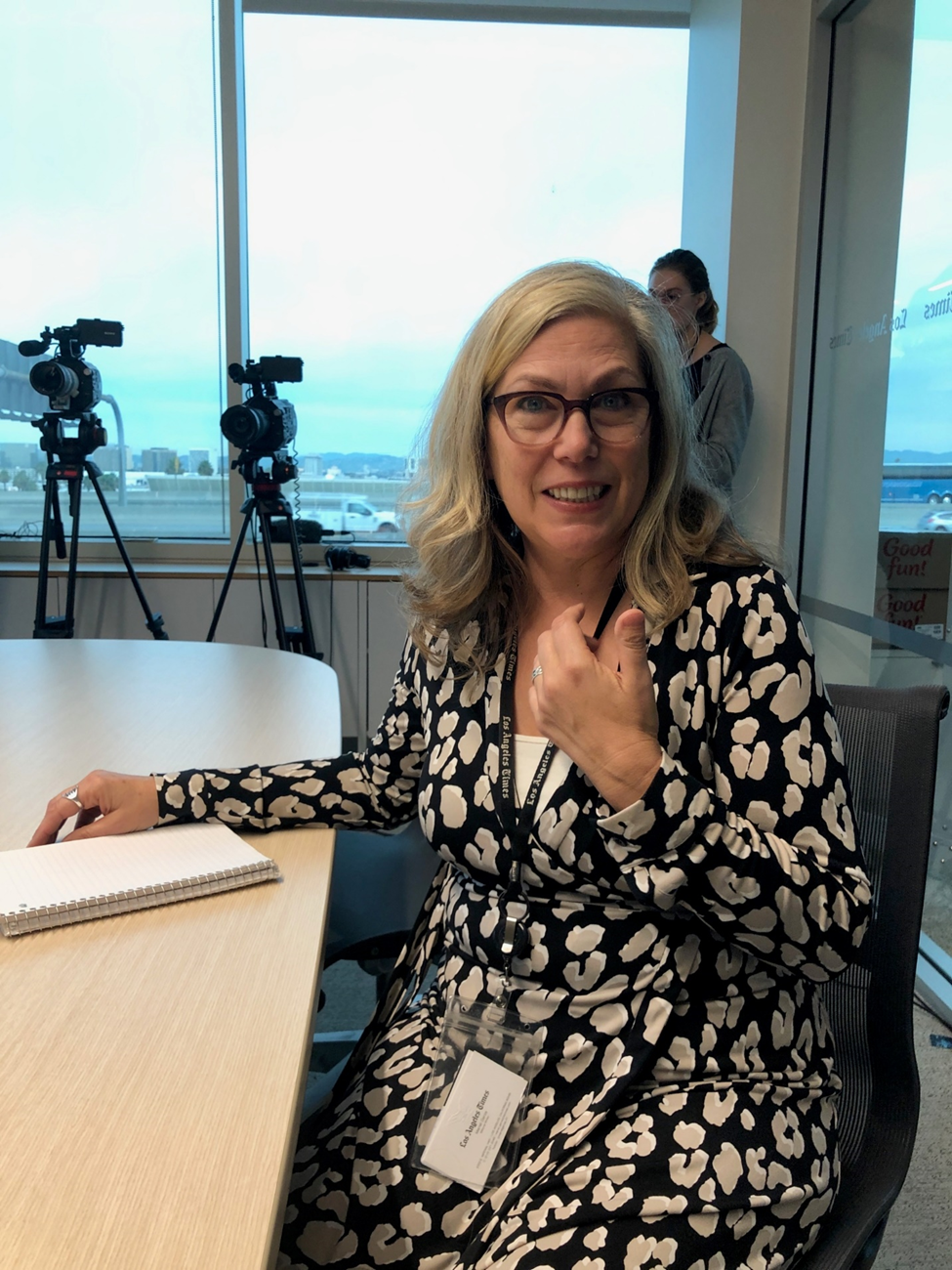
Terry Tang is Executive Editor, Los Angeles Times.
Terry,
Ever since Dr. Soon-Shiong vetoed the editorial board’s plan to endorse Kamala Harris for president, I have been struggling with my feelings about the implications of our silence.
I told myself that presidential endorsements don’t really matter; that California was not ever going to vote for Trump; that no one would even notice; that we had written so many “Trump is unfit” editorials that it was as if we had endorsed her.
But the reality hit me like cold water Tuesday when the news rippled out about the decision not to endorse without so much as a comment from the LAT management, and Donald Trump turned it into an anti-Harris rip.
Of course it matters that the largest newspaper in the state—and one of the largest in the nation still—declined to endorse in a race this important. And it matters that we won’t even be straight with people about it.
It makes us look craven and hypocritical, maybe even a bit sexist and racist. How could we spend eight years railing against Trump and the danger his leadership poses to the country and then fail to endorse the perfectly decent Democrat challenger—who we previously endorsed for the US Senate?
The non-endorsement undermines the integrity of the editorial board and every single endorsement we make, down to school board races. People will justifiably wonder if each endorsement was a decision made by a group of journalists after extensive research and discussion, or through decree by the owner.
Seven years ago, the editorial board wrote this in its series about Donald Trump “Our Dishonest President”: “Men and women of conscience can no longer withhold judgment. Trump’s erratic nature and his impulsive, demagogic style endanger us all.”
I still believe that’s true.
In these dangerous times, staying silent isn’t just indifference, it is complicity. I’m standing up by stepping down from the editorial board. Please accept this as my formal resignation, effective immediately.
While I am sad to read of the landslides in Palos Verdes apparently the people living there want the government to fight mother nature. The On January 10, 2005, a landslide struck the community of La Conchita in Ventura County, California, destroying or seriously damaging 36 houses and killing 10 people. This was not the first destructive landslide to damage this community, nor is it likely to be the last reported the U.S. Geological Survey. From a landslide in Sonoma County to intense floods in San Diego the cliffs and hills near the beach communities are common. Amtrak announced the tracks are unexpectedly closed due to debris on the rails in the San Clemente area. A landslide caused by recent weather events was identified as the culprit, as reported by the L.A. Times. Anger will not solve this problem. If there was a solution to the landslides in Palos Verdes the government would have already taken that action.
I noticed that one news outlet called Palos Verdes the richest area in the country so money to fight the landslides is not an issue.
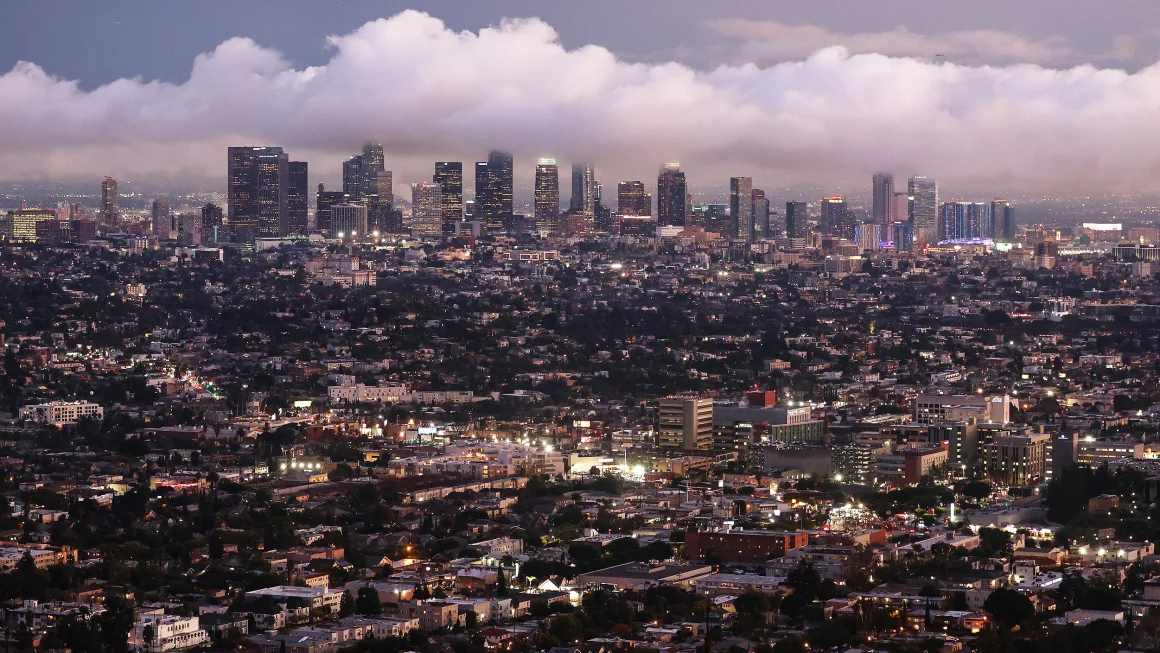
The downtown skyline of Los Angeles, California as seen on January 22, 2024 Mario Tama/Getty Images/File
US cities on the West Coast and Hawaii occupied five of the top 10 most unaffordable places, according to the annual Demographic International Housing Affordability report, which has been tracking house prices for 20 years.
Perhaps unsurprisingly, the most expensive US cities to buy home are in California, where San Jose, Los Angeles, San Francisco and San Diego have all made the top 10.
Top 10 “impossibly unaffordable” cities
Hong Kong
Sydney
Vancouver
San Jose, California
Los Angeles
Honolulu
Melbourne
San Francisco/Adelaide
San Diego
Toronto
I am living in a house in Los Angeles that I bought over 40 years ago. So I am old and now the Los Angeles Department of water and Power just sent me a notice that my monthly bill will increase by 31% effective July 1.
I now take my wife food shopping and the usual weekly bill is about $150. Happily I do not drive my car great distances because the cost of gas is now about $4.50 per gallon.
Should I move to Nevada or Arizona? A cousin of mine moved to the Phoenix area this past summer.


 Coast Contact