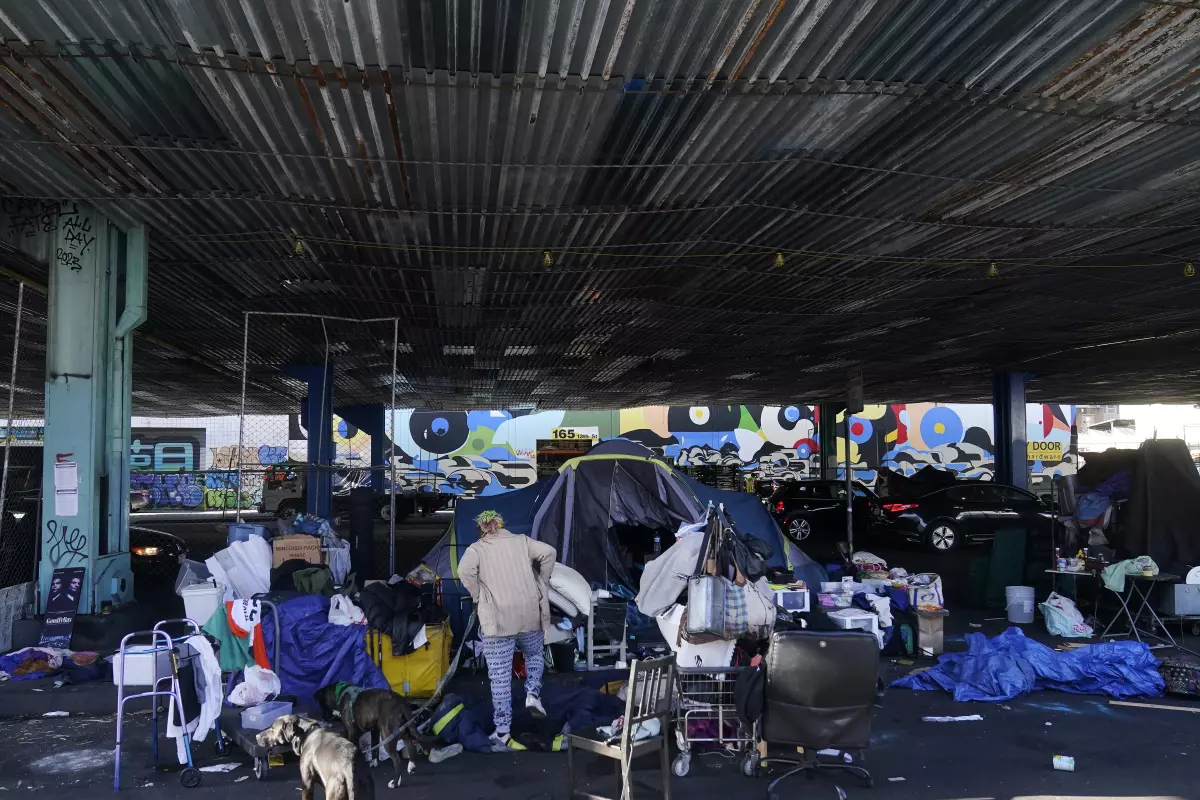
California has failed to adequately monitor the outcomes of its vast spending on homelessness programs, according to a state audit released earlier this month. It was reported that $20 Billion in the past five years have been spent on the homeless. Much of that money was spent on shelters and subsidizing rent. Still, homelessness grew 6% in 2023 from the year prior, to more than 180,000 people. This was reported in the Los Angeles Times on April 9, 2024.
A homeless encampment in San Francisco in 2023. (Jeff Chiu / Associated Press)
Now, Los Angeles Mayor Karen Bass is asking L.A.’s wealthiest Angelenos for help. On Monday in her State of the City address, she unveiled a new campaign that asks business leaders, philanthropic organizations and others to donate millions of dollars to an effort to acquire buildings so they can be used as apartments for the city’s homeless population.
Clearly the programs to help the homeless have failed. More money for programs that have not worked is a waste of money. Who is asking what are the causes of homelessness? Publicly no one. Simply throwing more money at the problem in the same fruitless way will not stop this growing problem.
I do not know the answer. We do not need politicians taxing us for programs that do not work.
District attorneys in Sacramento, Fresno, San Joaquin, San Bernardino and San Diego counties are using similar blueprints: going after alleged fentanyl dealers for homicide rather than drug sales, in hopes that the threat of harsher criminal penalties will ease an opioid crisis that killed more than 7,300 Californians in 2022.
The Los Angeles County District Attorney says nothing about fentanyl dealers or the rash of smash and burglaries.
Karen Bass is running against Rick Caruso for mayor of Los Angeles. Her problem is she has hitched her wagon to President Joe Biden’s pitch about protecting abortion rights. On her website, abortion is highlighted. “Women’s reproductive rights are under attack,” it says. “Join Karen’s fight to defend legal abortion in L.A.”
Bass isn’t alone in highlighting abortion rights. Bob Hertzberg is running for Los Angeles County 3rd district supervisor. His flyer says Working to expand women’s reproductive freedom.
Abortion rights is a national issue and a state issue. California’s ballot has the issue covered in its Measure 1 that amend the state’s constitution as a right.
The right to an abortion is not among the primary issues confronting Los Angeles. For all the problems the next mayor of Los Angeles will face — discrimination, homelessness, affordable housing, violent crime, corruption, jobs, and potholes to name just a few are the issues that need attention.
Where is Bass’s solution to those problems? They are not on her campaign flyers. They are on her web site. You have to hunt for her answers. Her answer for homelessness is too vague for me. From her campaign site: Karen Bass will bring leadership, accountability and action to dramatically reduce homelessness and end street encampments in Los Angeles. Here is the home page. https://karenbass.com/
If this is the best Bass and Hertzberg can offer they will not get my vote and I am telling everyone I know that we need a mayor and a supervisor that will attack the problems in this city and county.
When is merger of two large competing businesses a restraint of trade? I say that this merger will impact the grocery business in a negative way. Finally I am not alone.
The proposed $25 billion Kroger-Albertsons grocery giant merger is already running into significant opposition from progressive lawmakers and others. It’s no wonder. Most of the grocery stores in Los Angeles are owned by Kroger and Albertsons.
Sen. Elizabeth Warren of Massachusetts on Wednesday called on the Federal Trade Commission to block the deal. “More mergers and less competition would mean even higher prices—and layoffs for employees,” Warren said on Twitter.
Sen. Bernie Sanders of Vermont has also urged the regulators to reject the deal. And the Senate Judiciary’s antitrust subcommittee announced Tuesday that it will hold a hearing next month to scrutinize the merger.
“We have serious concerns about the proposed transaction between Kroger and Albertsons,” Senators Amy Klobuchar of Minnesota and Mike Lee of Utah said in a joint statement. “We will hold a hearing focused on this proposed merger and the consequences consumers may face if this deal moves forward.”
Senators Klobuchar, Richard Blumenthal of Connecticut and Cory Booker of New Jersey urged FTC chair Lina Khan Tuesday to investigate the merger, saying it “raises considerable antitrust concerns.”
The proposed merger, which the companies expect to complete in 2024, would combine two of the largest grocers in the United States. Kroger currently owns nearly two-dozen chains, including Ralphs, Dillons, Food 4 Less, Fred Meyer, Mariano’s and QFC. Albertsons, meanwhile, owns 24, such as Safeway, Vons, Jewel-Osco, Shaw’s and Acme.
The companies said the merger will benefit shoppers, workers and local communities and make the US food system more equitable.
With grocery prices already a concern for many shoppers, the companies said that they would be able to use $500 million in cost savings from the deal to reduce prices for shoppers and tailor promotions and savings. They also said they will invest $1.3 billion in Albertsons, which would include lowering prices.
But the new grocery empire would worsen the problem of grocery access, particularly in low-income areas in cities and rural towns, say some competition experts, small business advocates and researchers.
They believe the merger would drive out rival smaller grocers and independent stores, squeeze suppliers, and set off a vicious cycle of consolidation among supermarkets and suppliers, further entrenching the problem.
To satisfy regulators, Kroger and Albertsons have said they will divest hundreds of stores in areas where they overlap.
But FTC chair Khan has been critical of such divestitures in the past as a remedy for antitrust concerns, saying they were an ineffective remedy to preserve competition., and she has has pointed to Albertsons itself as a prime example.
In 2015, Albertsons merged with Safeway and sold off 146 stores to Haggen, a smaller chain, to appease regulators.
But Haggen struggled to integrate the Safeway stores and soon spiraled into bankruptcy. Albertsons then bought back dozens of the same stores it had previously sold to Haggen in bankruptcy court.
Khan, in a 2017 law review article, called it a “spectacular” failure and said the remedy was “[hard] to fathom.”
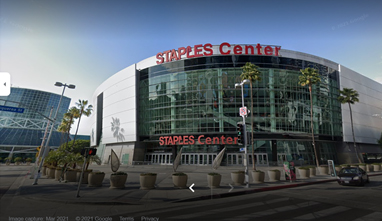
L.A. Live is an entertainment complex that adjoins the Staples Center and it too is owned by AEG. So what is the big deal over its name? Absolutely nothing. Staples stationary paid for the naming but their naming rights contract has expired.
It’s not the first theater complex to have its name changed. Kodak Theater in Hollywood next to the Chinese Theater became the Dolby Theater when Kodak went out of business. We survived that name change.
The Los Angeles Memorial Coliseum became United Airlines Field at Los Angeles Memorial Coliseum in 2019 That helped to fund a $315 million renovation.
It’s obvious. Money talks! We’ll soon adjust to Crypto.com Arena.
Jose Huizar former Los Angeles city councilman seeks to gut corruption case, says alleged $1.5 million in gifts were not bribes. They were just little gifts of appreciation says his lawyer.
Former Los Angeles City Councilman Mitchell Englander was sentenced in January 2021 to 14 months in prison for lying to federal authorities about his dealings with a businessman who provided him $15,000 in secret cash payments and a debauched night in Las Vegas.
Marilyn Louise Flynn, 83, was dean of USC’s School of Social Work when she allegedly paid off Mark Ridley-Thomas, now an L.A. city councilman, when he was on the county Board of Supervisors.
Englander, Huizar and now Ridley-Thomas. The council is a cesspool of corruption. The battle over which district includes USC and the surrounding area has something to do with prestige and probably some kind of kick back in an area ripe for development. After all it is the city council that finally approves every new development. Since there is little development in the mid San Fernando Valley no one even wants to represent that area since there is little likelihood of new development.
As Pat Morrison wrote in her October 26, 2021 Los Angeles Times column “In 2015, as civic guru Rick Cole was departing his post as deputy mayor in L.A., he explained to me that “a lot of checks and balances are built into the system to avoid corruption and half-baked ideas, but … ironically, most were designed by reformers [who] were petrified of abuse of power. The charter was designed to prevent corruption, not to enable effectiveness. They took effective government for granted. So when you ask questions like, “Who’s responsible for the miserable state of L.A. streets?” you can blame anyone, because almost anybody has a piece of the problem and almost no one has the power to fix it. To avoid one problem, we so diffused power and hamstrung accountability, it’s no wonder we have the results we all complain about.”
Los Angeles (CNN) Jolinn Bracey slept in her Toyota Corolla for five years until she put homelessness in her rearview mirror by moving into a tiny home.
Bracey, 48, is one of 41 residents of The Chandler Boulevard Bridge Home Village in North Hollywood, California, which provides transitional housing for the homeless.
“This has given me a place to reconfigure myself and build up to my new home,” Bracey told CNN. “It put me back into practice of being consistent in the normal things that you do. It grounds you.”
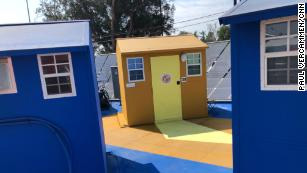
Bracey moved into the 64-square-foot home in February. It features a bed, air conditioner, racks to hang her colorful clothes and, most importantly, a door that locks.
“It’s the first time in a long time that I don’t feel like someone is going to come up on me,” said Bracey.
She said a fire in a house she once owned and an unfair eviction at a place she rented led her into homelessness.
There are more than 41,000 homeless people in the city of Los Angeles, according to the last count by the Los Angeles Homeless Services Authority, an independent, joint powers authority created by the Los Angeles County Board of Supervisors and the Los Angeles mayor and City Council.
Villages like Chandler aim to chip away at that number by placing formerly homeless people in protected, fenced-off communities.
At Chandler, case managers can offer residents help for anything from drug and alcohol abuse and mental health issues, to navigating the complexities of job applications, health insurance and more.
“We’re dealing with people at the worst moment of their lives,” said Rowan Vansleve, president of Hope of the Valley, the non-profit that operates Chandler and other tiny home villages in the Los Angeles area.
“It’s really humbling to say, ‘I can’t feed myself. I can’t house myself. I can’t get a hot shower.'”
Vansleve says new residents revel in that first shower on site and calls hot water and great soap “magic” that helps residents feel like a better person.
The residents are also fed three meals a day.
“We do everything we can to make this site welcoming. We call it the ‘Love Club,'” Vansleve added.
Despite the nickname, the village does have rules. At the top of the list is no weapons or drugs allowed on campus, and paraphernalia must be checked at a locker outside.
Hope of the Valley says residents live in the homes for free and can stay as long as they are on a pathway to permanent housing, which counselors estimate takes three to six months.
Vansleve said the strategy is to take people off the streets within just a few miles of the tiny home village, not from other parts of Southern California, such as Skid Row.
“That way, people in the neighborhood see less homeless, less trash, less crime, fewer drug users roaming around,” he added. “I think these villages should spread across the country like Starbucks — be in every community.”
Vansleve says the tiny home villages are built on small parcels, many repurposed city properties. The Chandler complex sits on just half an acre.
An Everett, Washington, company called Pallet, which specializes in small shelter homes for homeless or temporary housing, built the homes for the Chandler village. The company estimates the minimum cost of each home to be $5,495.
Pallet reports it has helped build 44 tiny home villages, most on the West Coast, with 13 projects in the pipeline.
Hope of the Valley aims to house more than 900 people by November, Vansleve said.
Completely out of view from any passersby, Chandler resident Todd Dumanski loaded his laundry at the row of stacked washers and dryers
.”I’ve been a heroin abuser and polysubstance abuser almost my entire life,” Dumanski said.
Dumanski, 36, said he once amassed a net worth of well over a million dollars by founding a vitamin and supplement company in the Philadelphia area. But he said business misfortune and his drug use eventually put him on the streets after a move to Los Angeles.
“I’m one of the lucky ones,” he said, “because a lot of people (addicts) died.”Dumanski described a dark homeless underworld filled with debilitating or lethal drug abuse, rampant theft, all forms of violence including sexual assault against women and men, and bullets flying.
“I got shot at six times, by a revolver, by three gang members,” Dumanski said.”They were young, maybe 18 to 24 years old. They shot at me because they wanted my spot for one of their friends who would soon become homeless.”
Dumanski said he had built an elaborate shelter near the 170 Freeway, hidden from view, and he had rigged up a grill.
Now, Dumanski lives in a tiny home less than a mile away, with little more than his bed, toiletries and a huge water jug with a handle that he lifts to add to his workouts.
“I like to throw everything in one backpack,” Dumanski said. “I don’t attach emotions to material stuff. Technically from the outside I have nothing, but I feel I have everything. “
Dumanski once had a house and a BMW — but also feelings of depression and suicide, he said.”
You give me tens of thousands of dollars, that isn’t going to help me right now,” Dumanski said. “I’m right where I want to be right now. I know what I have to do moving forward. This place has been a game changer, man.”
Each tiny home is different. The interior style ranges from Dumanski’s minimalist white to Bracey’s kaleidoscopic flickers of purples, reds, aqua and more.
“My décor is just me — I’m colorful, funky,” Bracey declared. “I think outside the box.
“Inside her tiny home, Bracey dreamed out loud about getting a bachelor’s degree and spinning all the good will she found at Chandler onto people who are currently homeless.
She says she’s two classes away from finishing up an associate degree at Los Angeles Valley Community College.”
I just want to help everybody not go through what I went through,” Bracey said.
At the end of the month, Bracey said, she plans to move into an apartment. It will be just down the street, not far from the parking garage where she used to sleep in her car.
Being mayor of Los Angeles is all about public service. There are no rewards.
Mayor Eric Garcetti
Mayor Eric Garcetti cannot run again in 2022 due to being termed out. Thank goodness for term limits.
Los Angeles City Councilman Kevin de León is the latest local household name jumping into the fight to become the city’s next mayor, joining an already crowded field.
De León is joining an already long list of candidates.
Fellow City Councilman Joe Buscaino has been campaigning for months. So has L.A. City Attorney Mike Feuer.
Jessica Lall, of the L.A.-based Central City Association, recently announced her candidacy. As has San Fernando Valley real-estate broker Mel Wilson.
Congresswoman Karen Bass is said to be considering a run at the mayor’s office. Billionaire developer Rick Caruso is reportedly also considering a run. Austin Beutner, the former superintendent of the L.A. Unified School District, is also being mentioned as another candidate for mayor.
While being mayor of the second largest city in the country in the most populous county in the country (10 million people) might seem like a powerful position, the mayor has limited authority. The city council holds the power.
The issues are homelessness, lack of affordable housing, poor maintenance of streets, high crime, high unemployment (9.7%). Why anyone would want this job is a mystery to me. It has not been a stepping stone to a more significant position.
So why pursue the job? Very good salary ($308,214) and prestige.
I assigned myself the project of photographing the interesting buildings of Wilshire Boulevard in Los Angeles. The photo collection includes office buildings, theaters, and places of worship. Thus far I have a collection of photos in what is generally called the mid-Wilshire area that primarily is also called Koreatown. I have photos of the property once known as the Ambassador Hotel, that should have been preserved, the Wiltern Theater and the Bullock’s building (a famous upscale department store now long gone). It has taken three trips to the area and as I am quite old the walking has been difficult.
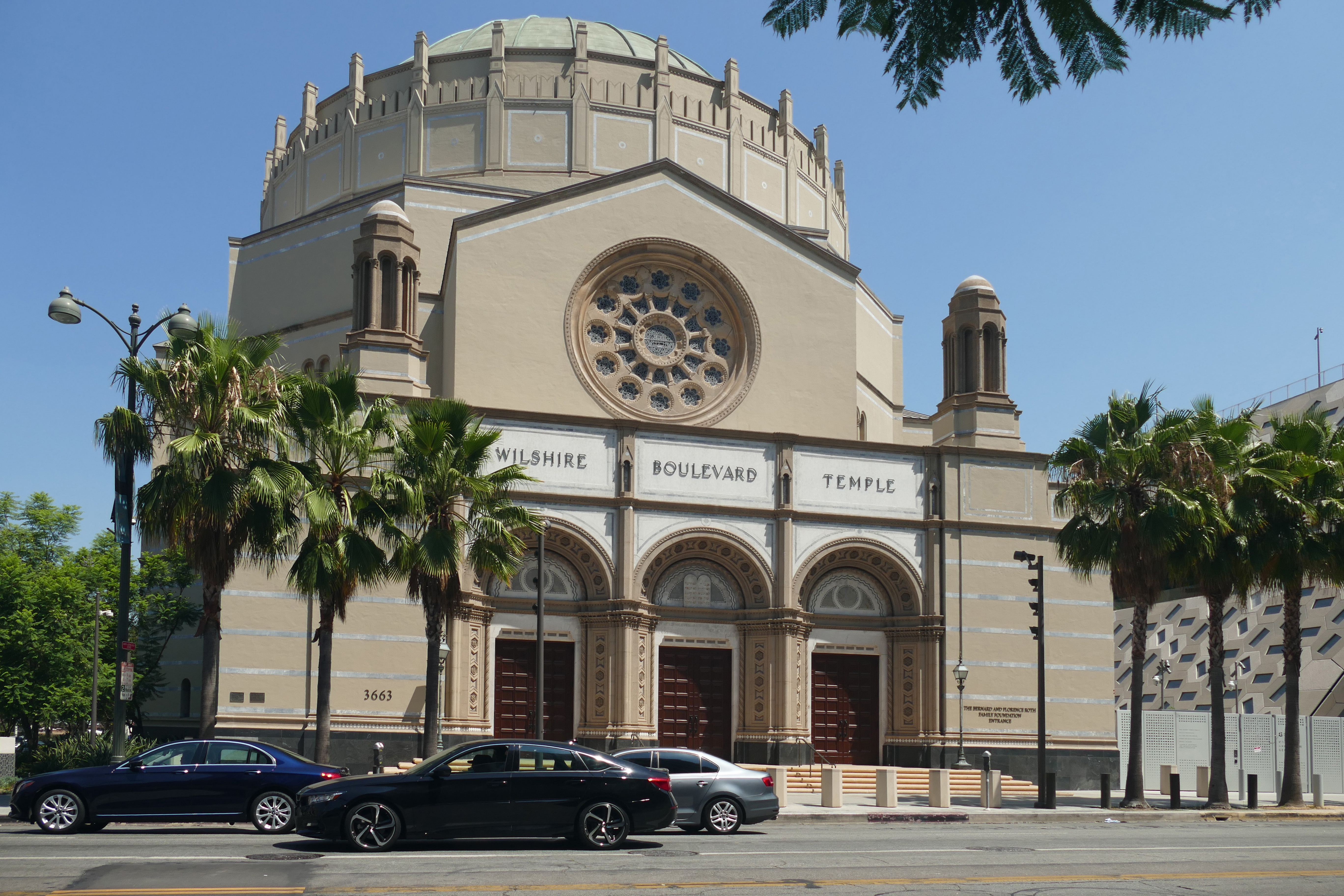
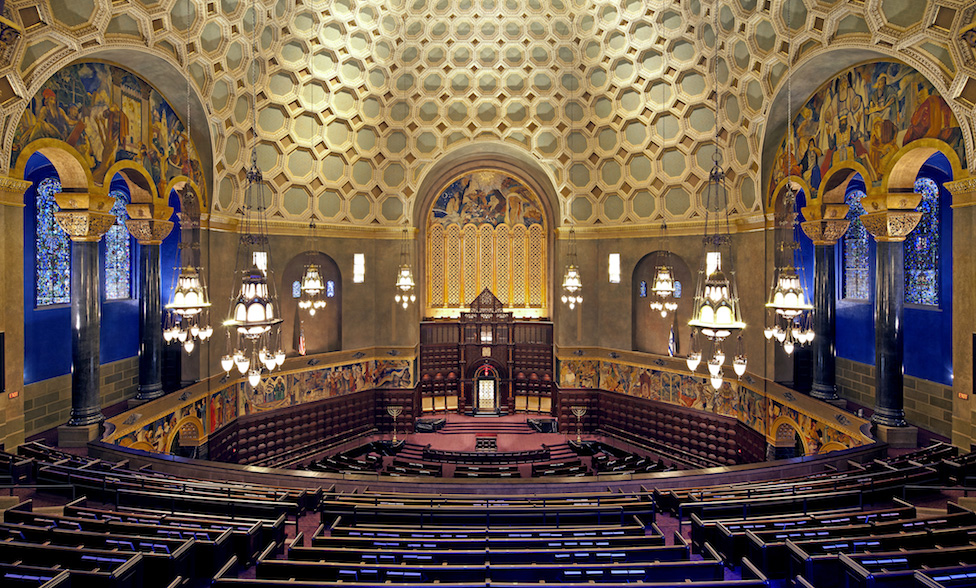
Included in that area is the Wilshire Boulevard Temple (Jewish Reform). The doors were locked and tours are by appointment only according to the temple’s website. It is an enormous structure topped by a large a Byzantine revival dome. Today’s Jewish community primarily lives in West Los Angeles and the San Fernando Valley although most areas of the city do have synagogues.
Wilshire Boulevard Temple serves as the third home of the Congregation B’nai B’rith, which was founded in 1862 and is the oldest Jewish congregation in Los Angeles. The congregation left each of its first two synagogues, both located downtown and both now demolished, as its size grew and as the city moved westward. The congregation purchased property at the corner of Wilshire and Hobart Boulevards in 1921.
At the time, the Mid-Wilshire area was an upper-class suburban enclave with great commercial promise, sometimes called the “Fifth Avenue of the West.” Religious organizations of all denominations followed their members here as they moved west from downtown, and most of the churches were grand and impressive. That accounts for the fact that other religious organizations also build beautiful churches in that immediate area.
Because the immediate surrounding community is now primarily Korean and Hispanic the synagogue has decided to retain the facility but provide services for the non-Jewish. The community outreach has been recognized by local leaders, who hope it will become a model for other organizations as well.
The photo of the exterior is mine. The interior photo posted by the temple.
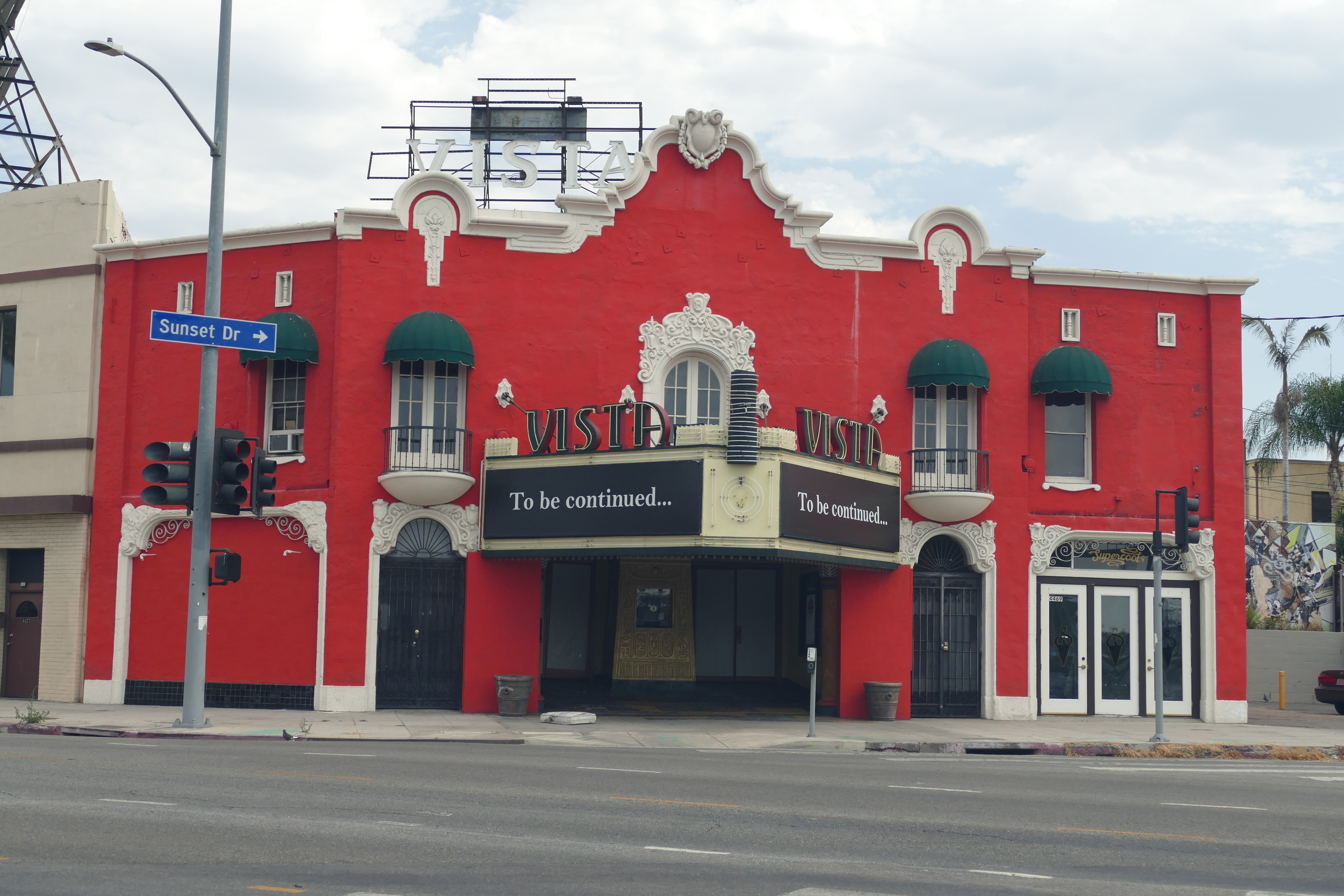
Vista Theatre is a historic single-screen movie theater in Los Angeles, California, located in East Hollywood on the border with Los Feliz. The neighborhood is not a tourist destination. It is mostly an area for working class residents.
Despite that fact Quentin Tarantino, the film director, has purchased the property. The building is closed. He told the news media he plans to reopen the theater by the end of this year. With a reported capacity of 400 seats the theater it is not likely to be divided into a complex.
Tarantino told a local TV channel he was planning to open the theater by around Christmas. He already owns the New Beverly in the Fairfax district that has an extremely dedicated fanbase partly because of Tarantino’s involvement in programming the movies shown at the revival house, which only shows movies on film, not with digital projection. Of the Vista, Tarantino said, “And again, only film.”
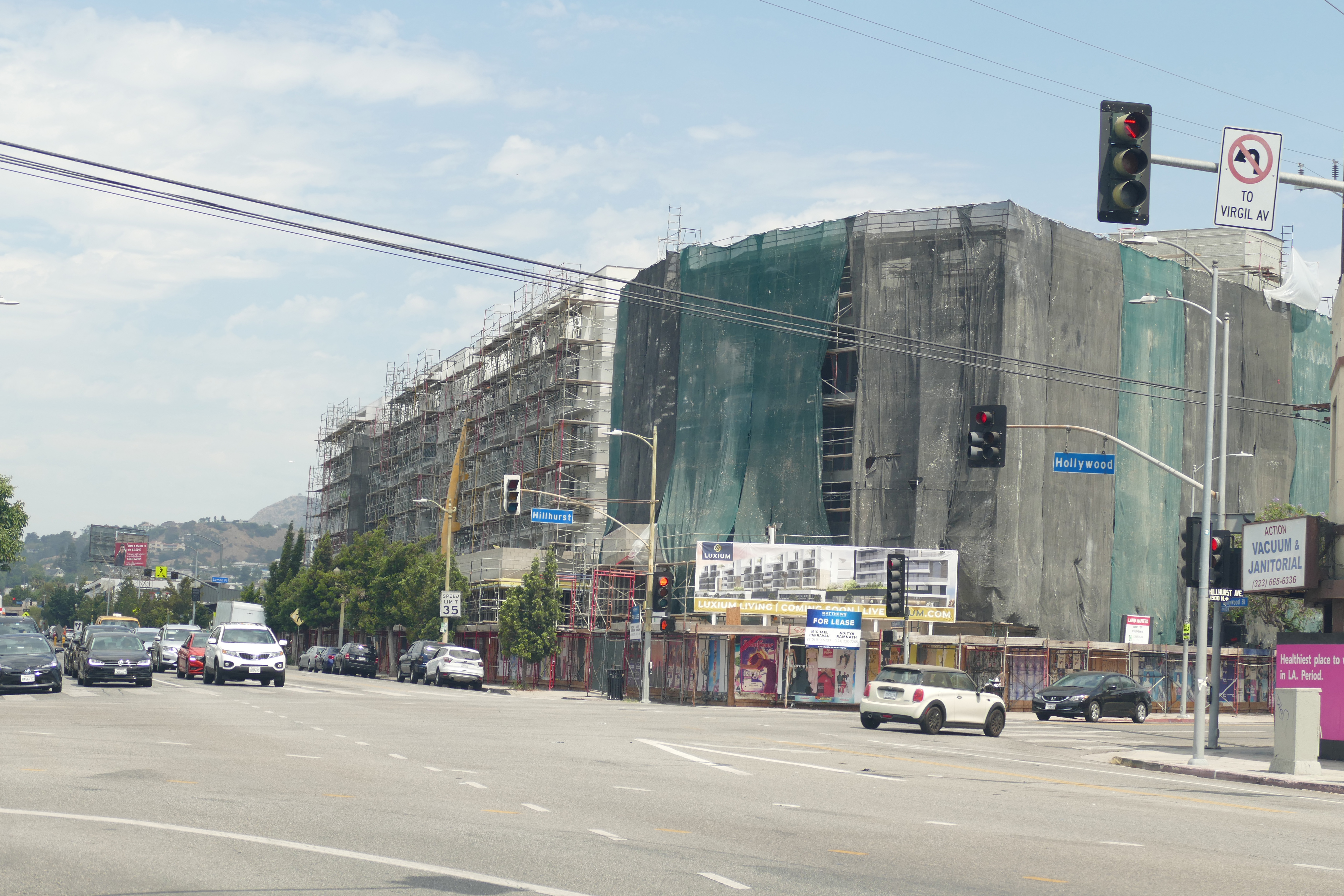
This location is adjoining the eastern end of Hollywood Boulevard where it intersects with Sunset Boulevard. A new luxury apartment house is under construction abut the only benefit would be its easy drive to other parts of central Los Angeles from downtown to Hollywood. A five minute walk to the many hospitals near Sunset Blvd and Vermont Avenue. Just a mile from Griffith Park.
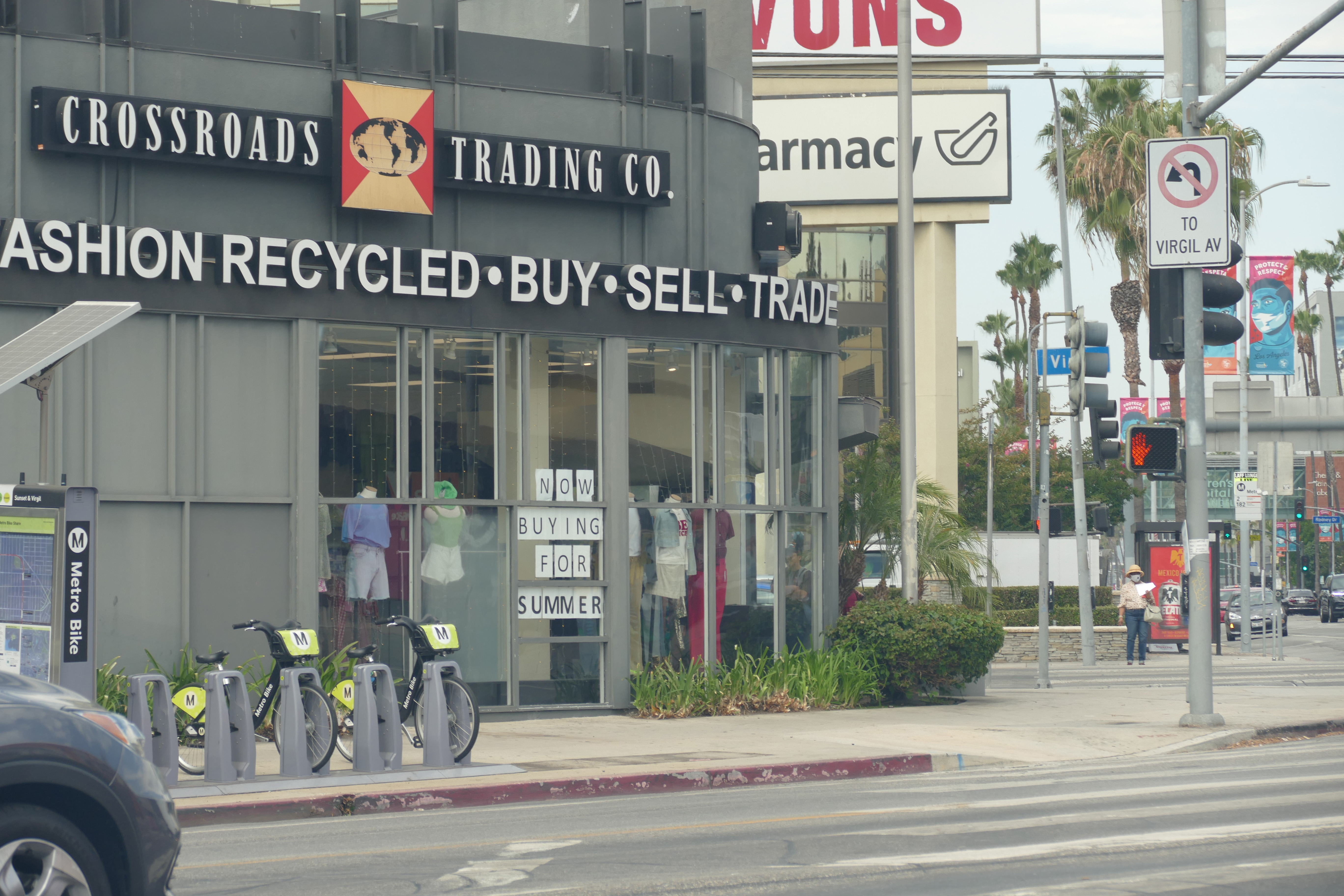
That is a supermarket, pharmacy and used clothing across the street from the theater

 Coast Contact