Companies that Benefit from War

A Review of an Aug 28, 2013 post. Look at all the money those war material manufacturers will be making. Is this Obama’s job stimulus program? Green is for m-o-n-e-y.


It was no surprise that the stock market dropped yesterday.  A 1.59% drop in one day on the S&P 500.  After all the threat of the United States at war in Syria could have an additional impact on our country.  Most likely it will impact every country as the cost of oil and other commodities increases.

Then today the stock markets in the United   States have risen by .3%.  How can that be? Why would the stock market rise when the threat of war is still so prominent?

MSN Money seems to have the answer. “Sales for the world’s 100 largest arms producers amounted to $411 billion in 2010, according to the Stockholm International Peace Research Institute. That was up 1% from the year before, a modest rise that was held in check by the drawdown of foreign forces in Iraq.”

The top ten listed below.

United Technologies

  • Arms sales in 2010 $11.4 billion

L-3 Communication

  • Arms sales in 2010 $13.1 billion

Finmeccanica

  •  Arms sales in 2010 $14.4 billion

EADS

  •  Arms sales in 2010 $16.4 billion

Raytheon

Tomahawk_300px_Block_IV_cruise_missile_-crop

Arms sales in 2010 $23 billion.

  • Raytheon’s web site says, “The combat-proven Tomahawk is the world’s  most capable cruise missile and is ideally suited for critical long-range, precision-strike missions against high-value with minimal collateral damage.”
  • Arms sales as percent of total revenue: 91%.
  • Total Number of Employees: 72,400.

 General Dynamics

  • Arms sales in 2010 $23.9 billion

Northrop Grumman

  • Arms sales in 2010 $28.2 billion

Boeing

  • Arms sales in 2010 $31.4 billion

BAE Systems

  • Arms sales in 2010 $32.9 billion

Lockheed Martin

  • Arms sales in 2010 $35.7 billion
  • Among Lockheed’s major products are the Trident missile and the F-16 and F-22 fighter jets.
  • Arms sales as percent of total revenue: 78%

Is this the impact of the Military–industrial complex?

A Growing Welfare Class in the United States

I hear the constant drum beat that 47 million Americans pay no taxes.  That those people are on the dole.  All those people don’t really want to work.  The argument goes they are happy sitting in their homes doing nothing.

Is this all really true? If so, how did this happen?

A Google search [percentage of Americans paying income taxes] confirms that about one half of all Americans do not pay income taxes.  The sites How Stuff Works, Fox News, The Washington Post, Reuters, and others all offer their take on why this is fact and some offer arguments about changing the taxing system.  All the postings do affirm that everyone pays Social Security and Medicare taxes.

From How Stuff Works: So who are the 49 percent of Americans who don’t pay income taxes? The vast majority are the lowest income households, the elderly and young working families with children.

The reason this situation exists and is becoming worse was clearly defined in a Market Watch article posted on April 24, 2012.

Manufacturing employment as a fraction of total employment has been declining for the past half century in the United States and the great majority of other developed countries. A 1968 book about developments in the American economy by Victor Fuchs was already entitled “The Service Economy.”

Although the absolute number of jobs in American manufacturing was rather constant at about 17 million from 1969 to 2002, manufacturing’s share of jobs continued to decline from about 28% in 1962 to only 9% in 2011.

From CNN: A very large portion of U.S. apparel imports comes from Bangladesh. Many companies have been shifting orders there, because labor costs in the country are so low. Bangladesh is on track to surpass China within the next seven years as the largest apparel manufacturer in the world.

It is already the third biggest exporter of apparel to the U.S., behind China and Vietnam. The value of clothing imported from Bangladesh into the U.S. has quadrupled over the last decade to $4.5 billion annually, according to the apparel group.

Go into any store in the United States and you will find most products have been made in another country.  Talking to a lady at Trader Joe’s just yesterday and she complained that the fresh produce is primarily from Mexico.

Back in 2007 the total unemployed that included part time workers and those who have given up searching for a job was below 8.5% of the likely working population.  Today that number is 13.9%.  That is the BLS number referred to as U6 on the monthly reports.  It’s an improvement from the maximum number of 17.1% reached in October 2009.

I can’t prove it but I believe no one wants to live poorly when they see the things they can have with an income.  Unfortunately the poor are also the least educated.  That condition of poor education is partially lack of opportunity and partially lack of capability.  Not all of us are capable of working in Silicon Valley or performing surgery at the Mayo Clinic.  Those less technical jobs have been sent to the places where labor costs less.  Every company has the right to lower their costs.  Middle class and blue collar America has paid the price for those off shored jobs.

So the wealthy of America (they pay most of the taxes) have concluded that welfare is a cheap price to pay to keep peace in the United States.  It’s the thing the royalty of France and Russia did not understand.  We all know how that worked out.  There is no royalty in the United States but there is a wealthy class that is the equivalent of royalty.  Once again the U.S. leads the list with 442 billionaires the most of any nation in the world says Forbes magazine.  The New York Daily News reports that there are 9 million members of the millionaires club in the U.S.

My prediction is that the welfare class will continue to exist in the United States and is likely to grow throughout the 21st century. This is not negative. It is reality.

America’s Dying Industries

Shoe Manufacturing

This comes as no surprise.  Still it hurts to see these numbers.  As you read each of these items you know the reason for the decline in business.  This was published on Huffington Post.  The reasons are as follows:

  1. The photofinishing decline was the result of the digital camera era and the sharing of photos on internet web sites.
  2. The high cost of labor now makes appliance repair more expensive than buying a new item.
  3. Advertising revenue has declined at most newspaper and magazine publications thanks to the internet and smartphones.
  4. Manufacturing of consumer products is now cheaper in most other nations of the world.

Photofinishing

Revenue decline 2002 to 2012  -70%.  $15.509 million to $897 million

Recordable Media Manufacturing

Revenue decline 2002 to 2012  -53.6%.  $4.144 billion to $3.311 billion

Money Market and Other Banking

Revenue decline 2002 to 2012  -51.2%.  Industry revenue in 2012 $834 million

DVD, Game and Video Rentals

Revenue decline 2002 to 2012  -49.6%.  Industry revenue in 2012 $5.894 billion

Newspaper Publishing

Revenue decline 2002 to 2012  -48.1%.  Industry revenue in 2012 $29.302 billion

– Women’s/Girls’ Apparel Manufacturing

Revenue decline 2002 to 2012  -57.7%.  Industry revenue in 2012 $8.603 billion

Costume/Team Uniform Manufacturing

Revenue decline 2002 to 2012  -49.9%.  Industry revenue in 2012 $986 million

Appliance Repair

Revenue decline 2002 to 2012  -44.5%.  Industry revenue in 2012 $3.684 billion

Hardware Manufacturing

Revenue decline 2002 to 2012  -44.5%.  Industry revenue in 2012 $7.484 billion

Shoe/Footwear Manufacturing

Revenue decline 2002 to 2012  -39.6%.  Industry revenue in 2012 $1.712 billion

Manufacturing Megatrends That Will Change Your World

How fast is the world changing?  This interesting article points out the rapidity. 

By Paul Tate on the http://www.manufacturing-executive.com web site on March 19, 2013.

 A quick snapshot of the companies listed in the Fortune 500 ten years ago is a sobering exercise. Over half of those organizations have now either disappeared off the list, or no longer exist, at least in their original form, notes Frost and Sullivan (A business consulting firm that offers market analysis, market research, and reports) vice president and Megatrends analyst Richard Sear.

So how do you avoid becoming one of the world’s lost companies over the next ten years?

The most critical role any business leader must perform is to identify and plan a successful path forward for the future of the enterprise. That means identifying and understanding the trends that are going to transform your business in the years ahead.

The problem is that anticipating the future in today’s world, where the speed of change is so rapid and sudden, innovative disruptions are so common, may seem like an impossible task.

There are essentially two approaches to grappling with this difficult task. The first is simply to sit back and allow new technology and business models to converge into your business and then react as best as you can. The second is a proactive stance to understand and embrace change, and therefore be in a position to capture growth opportunities faster and more fully. What’s your risk profile?

 Frost and Sullivan’s Sear has identified a series of global megatrends that he believes are set to fundamentally transform the world we live in over the next decade or so — and which will have a major impact on the future of manufacturing and its growth prospects.

They are:

 * The City as a Customer: The emergence of new megacities around the world, especially in Asia and Latin America, linked by highly urbanized corridors of development. These will become the world’s key centers of economic growth, creating new and different markets for manufactured products and creating significant logistics challenges for delivery to customers.

* Social Change: The combination of an aging workforce in many western economies, with the growth of demanding, impatient and tech-savvy Generation Y consumers who expect higher degrees of personalization in both products and services.

* Technology: The increasing development of virtual worlds, augmented realities, big data, and pervasive robotics will change the way both manufacturing companies and consumer markets operate and develop new ideas.

* Smart: Extensive embedded intelligence in physical assets and products – often call The Internet of Everything – will see a significant shift towards smarter, more connected products with vast supporting networks and real-time applications.

* New Business Models: These fundamental global shifts will require companies to re-assess how they do business, and how they deliver value in the future – resulting in more collaborative operating models with a greater emphasis on delivering ‘Value for Many’ and frugal engineering approaches.

 * Infrastructure: How will you be affected by a greater focus on how the world harnesses its energy resources, and creates new, more sustainable and lower cost ways to store and utilize future energy?

 * Beyond BRIC: The rapid rise in new markets and fast-growing emerging economies around the world in the decade ahead will create new markets, new global competitors, and new manufacturing opportunities that will force companies to re-asses their global production strategies and footprints. Where will the hot spots be and how will they change your future plans?

 Manufacturing seems destined to play a key role in both reshaping existing industries and enabling others to emerge as these megatrends push the world beyond the end of this decade.

The companies that make the effort to understand and plan effectively for this future, change the way they make decisions, redefine the value they create, and restructure how they deliver that value, are likely to be the ones that will survive and thrive.

So how are you now seeking to better understand the disruptive long-term trends that could determine the future of your business?

Are you adopting internal strategies that will make your enterprise more adaptable to the fundamental economic, social, technological and industrial changes ahead?

 What other megatrends do you think will impact your business future?

Impact of Technology on the U.S. Economy

If only businesses would start re-hiring all those people who lost their jobs in the Great Recession everything would be as it was.  It won’t happen like that!  Globalization and technology have changed everything.

The Mobile World Congress is a show of the latest cell phone and tablet technologies.  It will occur February 24 to February 28 in Barcelona, Spain.  The facility used is a new state of the art convention centre called Fira Gran Via consisting of eight halls.  With over 1,500 exhibits, it is a reminiscent of CES and Comdex that have been held at the Las Vegas Convention CenterThis is a wake-up call that the United States is not necessarily the center for new technologies.

  Fira Gran Via, Barcelona Spain

  The Gran Via Convention Centre

 Fira Gran Via mwc_carousel_networking gardens_final                                                                                


No business will hire employees in the western world when the job can be done for far less in developing countries.  Workers in China, Mexico, and elsewhere are willing to work for $1USD an hour.  Workers in the United States, Canada, U.K., Germany and other industrialized nations cannot pay their bills on that rate of pay.

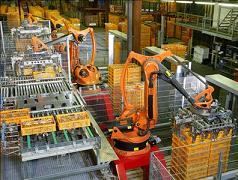
Businesses of all types try to solve their employment needs by looking for automated equipment rather than hiring.  The benefit is lower cost for services rendered where ever labor is needed.

  factory-robots

From cars to bread, robots dominate modern production

On-line Digital Camera Review owner/editor Jeff Keller, “The smartphone became the preferred photo tool for many.”  The web site closed down effective December 31, 2012.

Newsweek’s final print publication mailed out on December 24, 2012.  The final issue is dated December 31, 2012.  The cause was a decline in advertising revenue.  The magazine’s owner will attempt a digital version that will be available only to subscribers.

Borders bookstores have closed.  Barnes and Noble stores are closing too.  E-readers are this year’s sought after device.  Barnes and Noble’s Nook is one of those readers.

Modern manufacturing isn’t based on human labour; it’s based on the robot. Still, most people cannot grasp the breadth of automation in factories. We still picture plants full of human workers toiling to make our cars and furniture, just as we imagine our meat comes from animals in a barn. The truth is much more awe-inspiring, perhaps even frightening. The factories of today have some human workers, but huge portions of assembly lines are 100% mechanized. The US Bureau of Labor Statistics expects automotive jobs to decline 18% by 2018 despite expected increases in production. Robots eliminate the need for more workers.

What is the United States doing to sustain its lead in technology and grow its economy?  Arguing about gun control, immigration, and government debt.

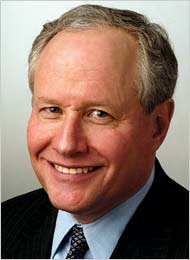
Bill Kristol, Fox News Pundit, Questions Tax Cut for the Wealthy

Back in 2001 and 2003 President George W. Bush pushed his income tax reduction laws through Congress.  The theory behind those tax reductions was the government was running a surplus and the economy needed a boost.  What was the result?  Higher net income for business and the loss of American jobs to China, India, and other nations.  The result is that business leaders tell the American people we are no longer a manufacturing society, we are now a service society.   Those services translate to lower paying jobs for the middle class.  What middle class?  Those jobs are the jobs of the poor!

Even Bill Kristol is now questioning the idea of even lower taxes for business.

By Igor Volsky of Think Progress on Aug 11, 2012 at 3:42 pm

Bill Kristol, who had predicted that Mitt Romney would name Paul Ryan as his vice presidential running-mate, expressed some concern Saturday morning that Republicans may have a hard time defending the GOP budget, which disproportionately cuts taxes for the rich.

“It’s the tax cuts for the wealthy, where Republicans have not done a particularly good job of defending it and I think you’ll see Democratic attacks focus on that side of the equation,” he said. The Wall Street Journal’s Stephen Moore agreed, but noted, “who’s better to defend those policies that Paul is, I mean he knows this stuff better than anyone.”

Paul Ryan’s infamous budget — which Romney embraced — replaces “the current tax structure with two brackets — 25 percent and 10 percent — and cut the top rate from 35 percent.” Federal tax collections would fall “by about $4.5 trillion over the next decade” as a result. To avoid increasing the national debt, the budget proposes massive cuts in social programs and “special-interest loopholes and tax shelters that litter the code.”

 But 62 percent of the savings would come from programs that benefit the lower- and middle-classes, who would also experience a tax increase. That’s because while Ryan “would extend the Bush tax cuts, which are due to expire at the end of this year, he would not extend President Obama’s tax cuts for those with the lowest incomes, which will expire at the same time.” Households “earning more than $1 million a year, meanwhile, could see a net tax cut of about $300,000 annually.”

Manufacturing in the U.S.A.

Can manufacturing thrive in the United   States? Consider the cost of labor in China, Mexico, Indonesia, and Vietnam.  Hourly rates are 50 cents USD to $1.00 USD.  My contention is that even with lowered income taxes those other countries will continue to provide products that cannot be put together in the USA at competitive costs.

However, PC World has run this article that indicated there is a possibility the USA can still compete.

By Karen Haslam, Macworld-U.K.    Jun 30, 2012  1:15 pm

Apple’s been criticized in the past for not manufacturing its products in the U.S., and has given a number of excuses when pressed on the matter. However, Google has now proven that high-tech goods can be produced in the U.S., the company’s new Nexus Q is “Designed and Manufactured in the USA” according to the inscription on the device.

There are a number of reasons why Apple manufacturers products in factories in China and other Far East countries, not only are workers cheaper, but overseas factories offer more flexibility, diligence and industrial skills. A report has also claimed that Apple has to manufacturer the iPad in China in order to get access to rare earth materials.

When asked why Apple isn’t manufacturing the iPhone in the US, Apple’s late-CEO Steve Jobs told U.S. President Barack Obama in February 2011: “Those jobs aren’t coming back,” complaining that there is a massive skills shortage in the US prohibiting the manufacturer of such goods there.

Google’s Andy Rubin said that the company had made a conscious effort to test the possibility of manufacturing in the U.S. with this product: “We’ve been absent for so long,” he said, referring to manufacturing not happening in the U.S., and added: “We decided, ‘Why don’t we try it and see what happens?'”

The report in the New York Times notes that consumer electronics manufacturers will be closely watching this case, to see if it disproves the accepted wisdom that consumer electronics products can no longer be made in the United States.

However, Google’s device has a high price than similar devices manufactured outside of the country, notes the report. The report also notes that Google is not disclosing details about where components of the device were manufactured.

A Perfect Example of Economic Darwinism

Do you remember the Helms Bakery delivery trucks in Los Angeles?  Almost everyone had started going to super  markets.  That change in behavior ended one of the largest bakery businesses in the country.


From The Wall Street Journal

Eastman Kodak Co.’s effort to draw interest in the sale of its digital patent portfolio is flagging, people familiar with the matter said, complicating the 132-year-old photography pioneer’s chances of emerging from bankruptcy court.

The people said the company hasn’t been able to attract what’s known as a stalking-horse bidder, one who agrees ahead of time to purchase the assets for a certain price, a tactic that can push prices higher. As a result, those people said, Kodak is preparing to hold a “naked” auction for the patents, one in which no suitor makes an opening bid before the auction begins.  More of this article here.

It is truly sad to watch a once proud vibrant company collapse. This is not the first American company to dissolve before our eyes.  I can think of a few others without any research. MGM(Metro Goldwyn Mayer), Bethlehem Steel, United States Steel, Douglas Aircraft, and Zenith Electronics are the ones I remember.  The list is much longer than this.  Remember Polaroid Camera?  How about Nash and Hudson that morphed into American Motors?

No one can change this reality.  No president, no congress, and no buy out specialist.

Kodak simply doesn’t have a product that substitutes for the income stream provided by the sale of millions of rolls of film.

The milk man is part of our past and so is Good Humor Ice Cream and Helms Bakery.

Self Annihilation

We visited a Loew’s Home Improvement store to check their table lamp selection.  My wife’s idea.  She found precisely what she wanted.  The price for each lamp was $14.97 and included a light bulb.  The shades cost about the same price.  The lamps and shades are made in China.  It is an astonishingly low price.  I would have been willing to pay twice that amount.

Can you imagine the pay rate for those working in the factory that manufactures those lamps and shades?  Probably on the order of 50 cents an hour.  That is the pay rate in Mexico.

So we Americans buy low cost products manufactured in China and that makes us feel good.  Think about this.  Those lamps and shades were formerly made in the U.S.A.  We get bargains that put our neighbors out of work.

What is the American policy (or for that matter the policy in any other country) regarding the export of our jobs?

Personally I would gladly pay more for the lamps if I knew that Americans have the income that takes them off the unemployment rolls and welfare rolls.  Am I wrong?