Even England’s royal family press office can make an error. It is a lesson for all photographers.
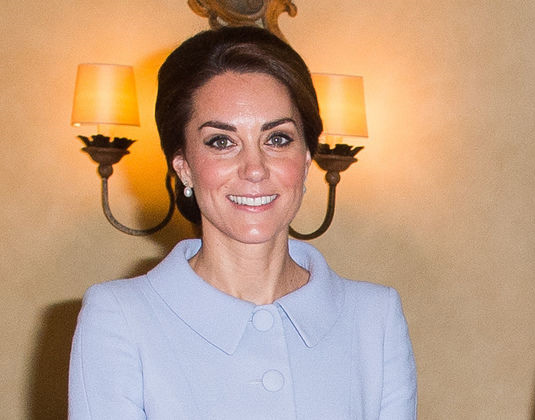
Kate Middleton is not wearing lamp earings Or is she?
Even England’s royal family press office can make an error. It is a lesson for all photographers.
Kate Middleton is not wearing lamp earings Or is she?
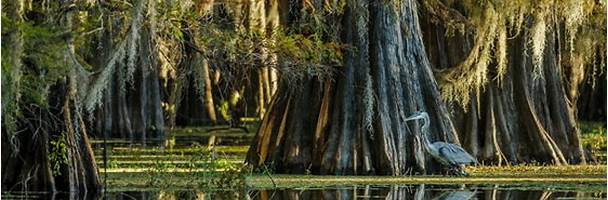
One of the largest freshwater lakes in Texas, Caddo Lake is so big it spills over into Louisiana. This 25,400-acre lake was first created by a cataclysmic log jam that formed over centuries, dubbed the Great Raft. We’re visiting the Texas side of Caddo Lake along with our friend here, a great blue heron. Other creatures share this labyrinth of flooded cypress forests, including numerous species of bass (good for fishing); turtles, armadillos, and frogs (good for photographing); and snakes and alligators (good for avoiding).
I have visited these garden three times. The garden has creeks and large man-made lakes and ponds. The 6½ acre (2.6 ha) park uses the reclaimed water from the adjoining Donald C. Tillman Water Reclamation Plant.
The water from the reclamation facility can only be used for irrigation and is not cycled into the general water supply. The facility purifies waste water, removing it from the sewer system. This reclaimed water from the West San Fernando Valley is also used to fill Lake Balboa in the adjoining park as well as providing year round water to the LA River.
The reclamation facility has also been used as a backdrop in films and TV, including Star Trek‘s Starfleet Academy and Soilent Green.


More photos of the garden at https://www.flickr.com/photos/coastcontact/
or click here

From DPReview by Dan Bracaglia
Franklin D. Roosevelt was president of the United States of American when the first issue of Popular Photography Magazine hit newsstands in May of 1937. Now, nearly 80 years later, one of the world’s most widely circulated photography print publications is closing.
The upcoming March/April issue will be the last, and as of Friday, March 10th, no new content will be published on PopPhoto.com. This news comes after the publication switched to a bi-monthly print schedule about six months ago.
Pop Photo’s sister publication, American Photo Magazine, had been Web-only for the past couple of years; it will also stop updating its website as of this coming Friday.
Eric Zinczenko, the CEO of Bonnier, parent company of both titles, made the announcement earlier today via a company-wide email.
This news hits especially close to home, as I had the distinct privilege of starting my career as an intern, and later an assistant and associate editor at Popular Photography and American Photo magazines. And I know first hand how dedicated and passionate the staff of these titles is. After all, they’re what made me first fall in love with this industry. So go get yourself a nice hoppy beer (PP tech editor Phil Ryan’s favorite) and take a long deep gulp, because the photography world just got dimmer by a stop.
DPREVIEW is still going very strong. It is my “go to web” site for all things photography.
The last Firefall was on Thursday, January 25, 1968. Since it was winter, no crowd was present. The cameras I owned in those days could not capture the image. The Firefall was a daily event that occurred in Yosemite Valley. Traffic stopped and so did everything else at 9 PM every night. It took an hour for the traffic to clear. It was a pollution problem for Yosemite National Park,
The Yosemite Firefall was a summer time event that began in 1872 and continued for almost a century, in which burning hot embers were spilled from the top of Glacier Point in Yosemite National Park to the valley 3,000 feet below. From a distance it appeared as a glowing waterfall. The owners of the Glacier Point Hotel conducted the firefall. History has it that David Curry, founder of Camp Curry, would stand at the base of the fall, and yell “Let the fire fall,” each night as a signal to start pushing the embers over.
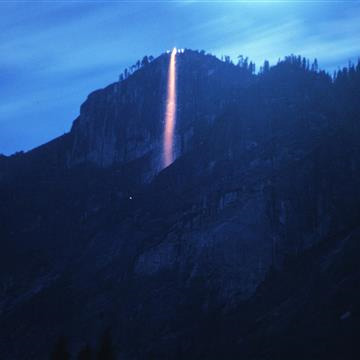
Now to replicate the past artificial lighting has brought back the effect. It is a challenge for photo hobbyists. It is claimed that it is a natural phenomenon.
Look! You cannot take all you have saved with you to the next dimension. I know, you want to leave your children and grandchildren an inheritance. Unless your children are seniors themselves, they are more likely to spend that inheritance than save it for a rainy day.
Consider just one or two splurges before your time to check out has come. I am not suggesting you spend your money at a casino. I know, Las Vegas makes an enticing place to spend a few days. There is more than that spending trap.
You can still walk, although slowly. You can still appreciate beautiful art and architecture.
Trafalgar offers some easy walking tours of London and Paris. Actually they take you to the door of many of the most famous places in those cities. Seven day cruises on the Mediterranean Sea can take you to some of Europe’s most famous cities.
Careful planning will not break the bank on those tours.
Bring you camera or smartphone and capture the memories.
Some of the Best Photo Spots in the world are in Europe.
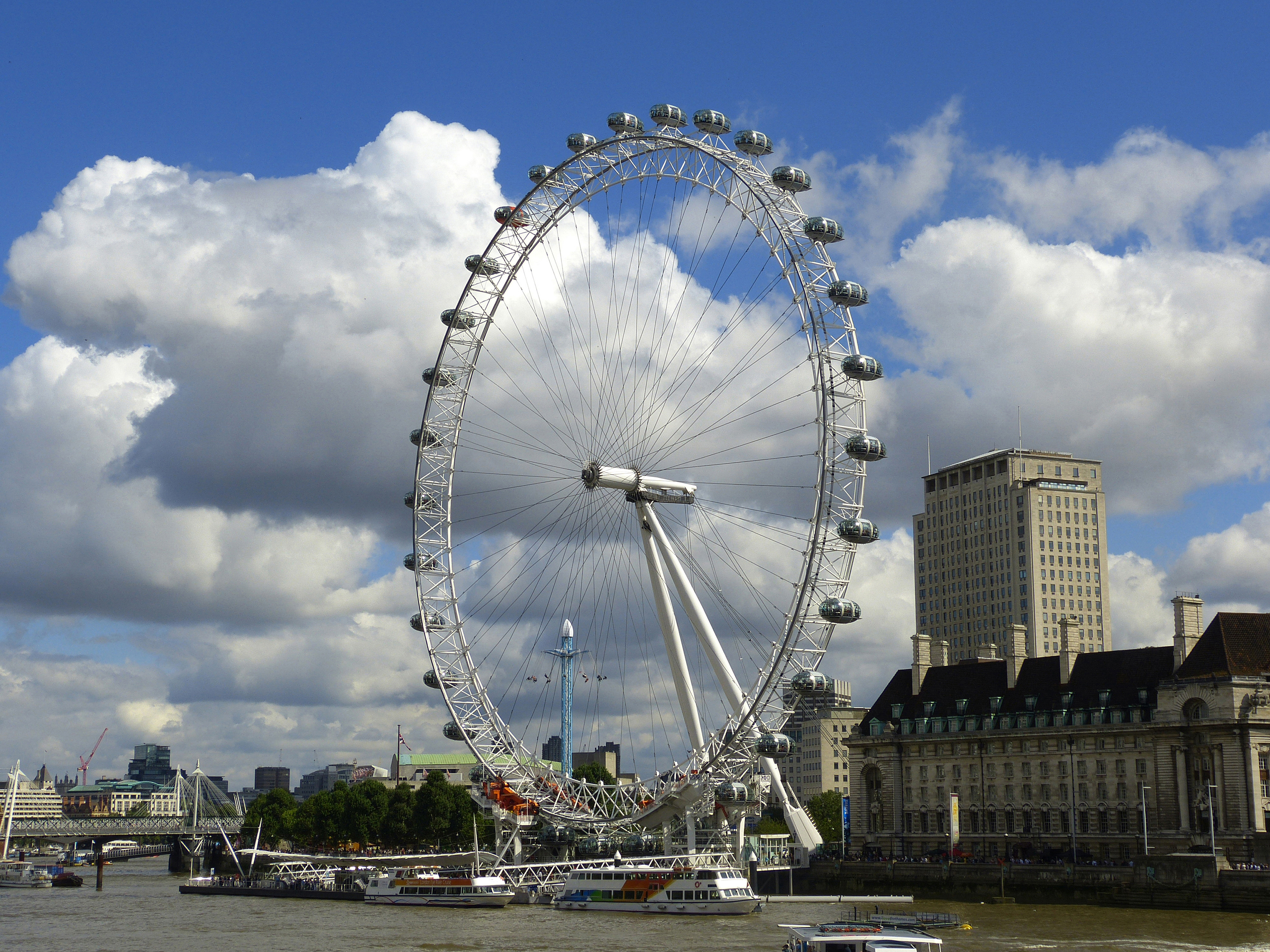
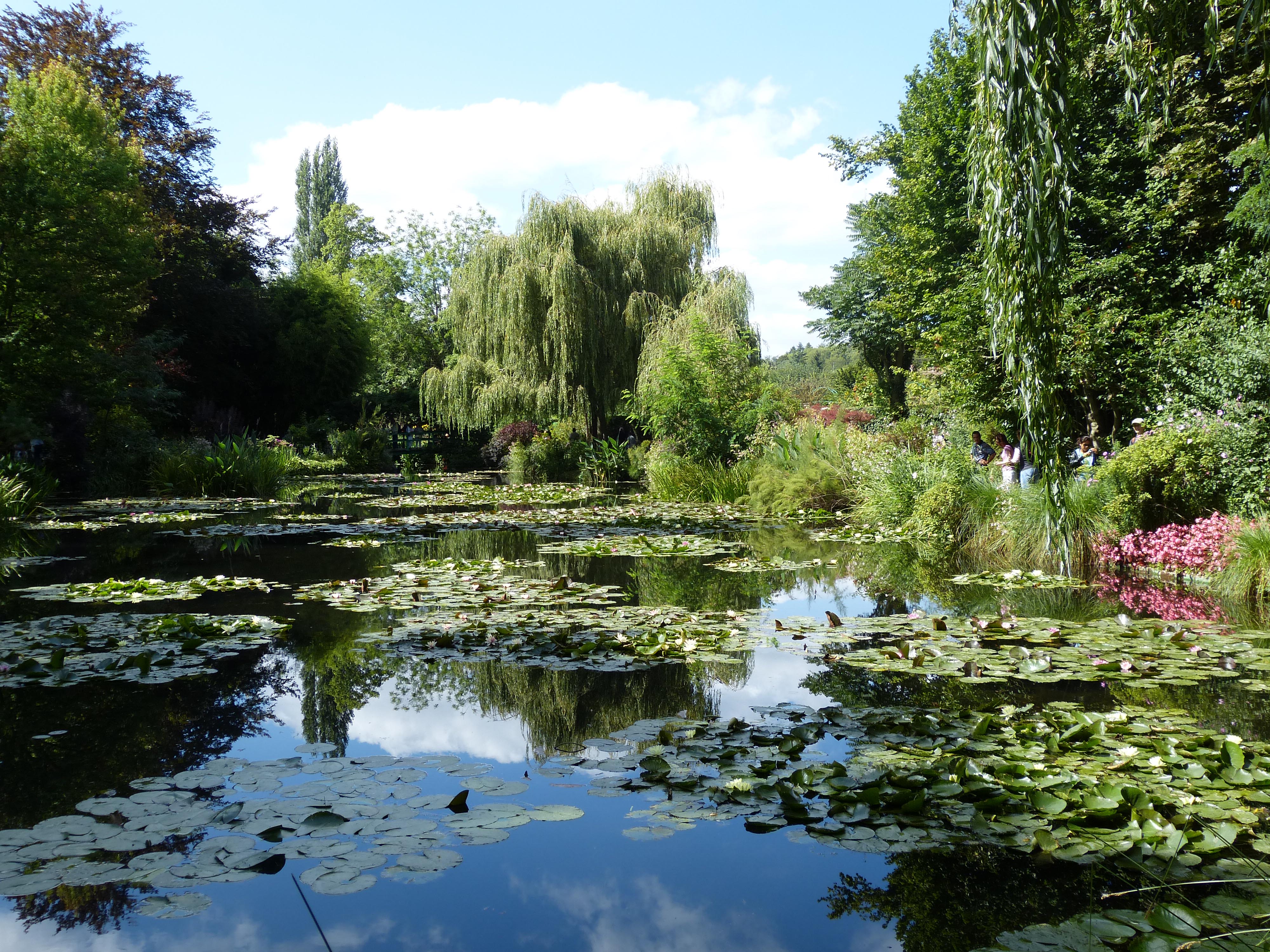
Claude Monet’s Garden near Paris
Taking some of the most iconic shots is a snap when you book your one trip.
• London Eye, London
• Eiffel Tower, Paris
• Trevi Fountain, Rome
• Lagagrada Familia, Barcelona
• Santorini, Greece
• Tower of Pisa, Pisa
5 Tips for Taking the Best Vacation Photos
With a few tricks up your sleeve, the kids will be fighting over who gets to see your photos first.
1. Aim for natural light and try to avoid using flash
2. Don’t pose every shot – make candid photos of people having fun your aim
3. Capture the atmosphere by photographing food, street scenes, and the locals
4. Don’t be self-conscious – these are your memories!
5. Get a good photo editing app for your smartphone and lose the bulky camera bag
We took the Trafalgar tour in 2012 and now we are planning the cruise this coming summer.
Despite what others may say, this program is not easily used beyond crop and changing brightness/contrast of a photo. Thanks to a class at my local community college I have learned enough to make significant changes to a photo and now can understand the book I bought that was supposed to be the answer to “how to.” The class is a Photoshop hands on experience not a Photoshop Elements class. However everything that was taught is in Photoshop Elements. With a little effort I have found most of the tools.
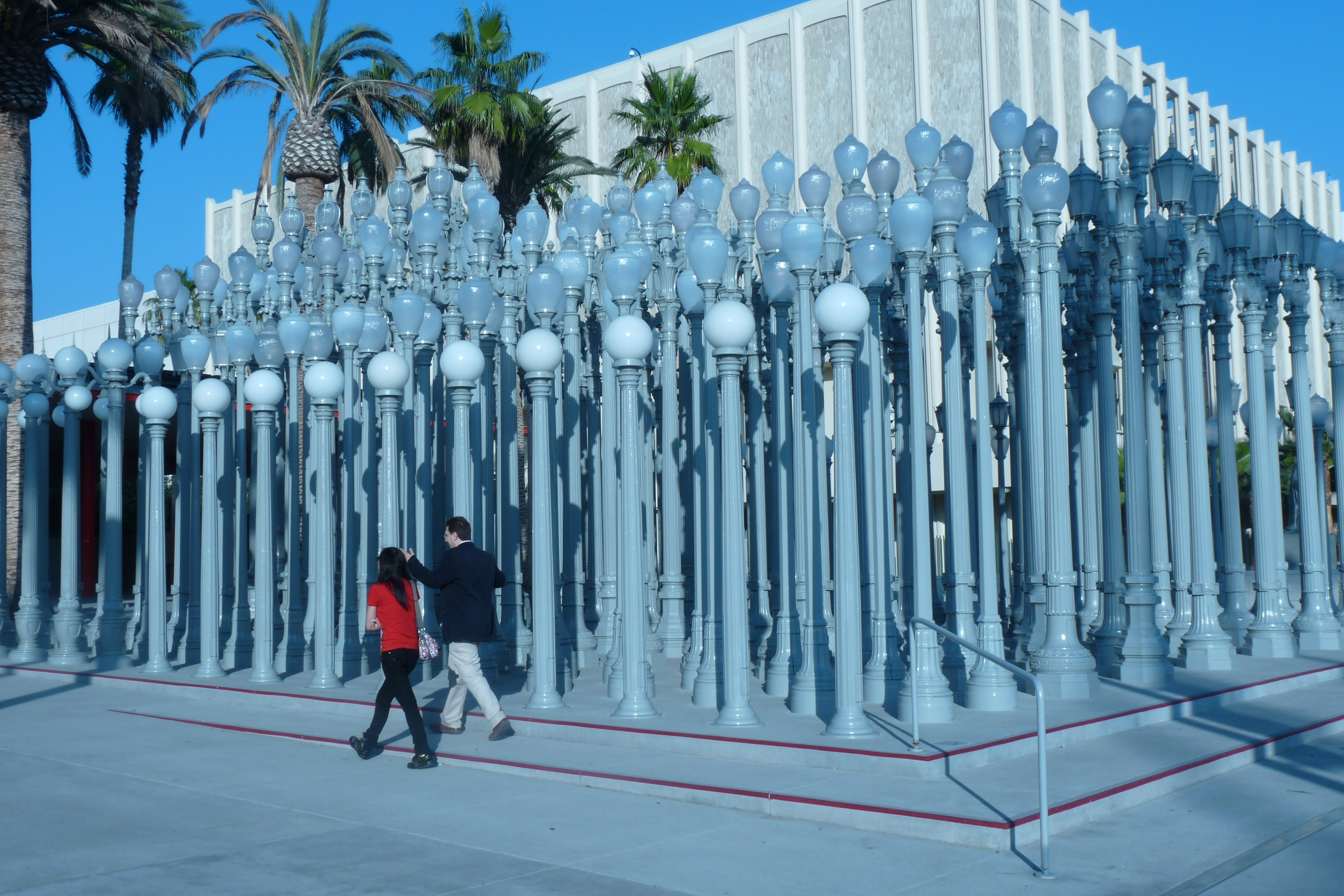
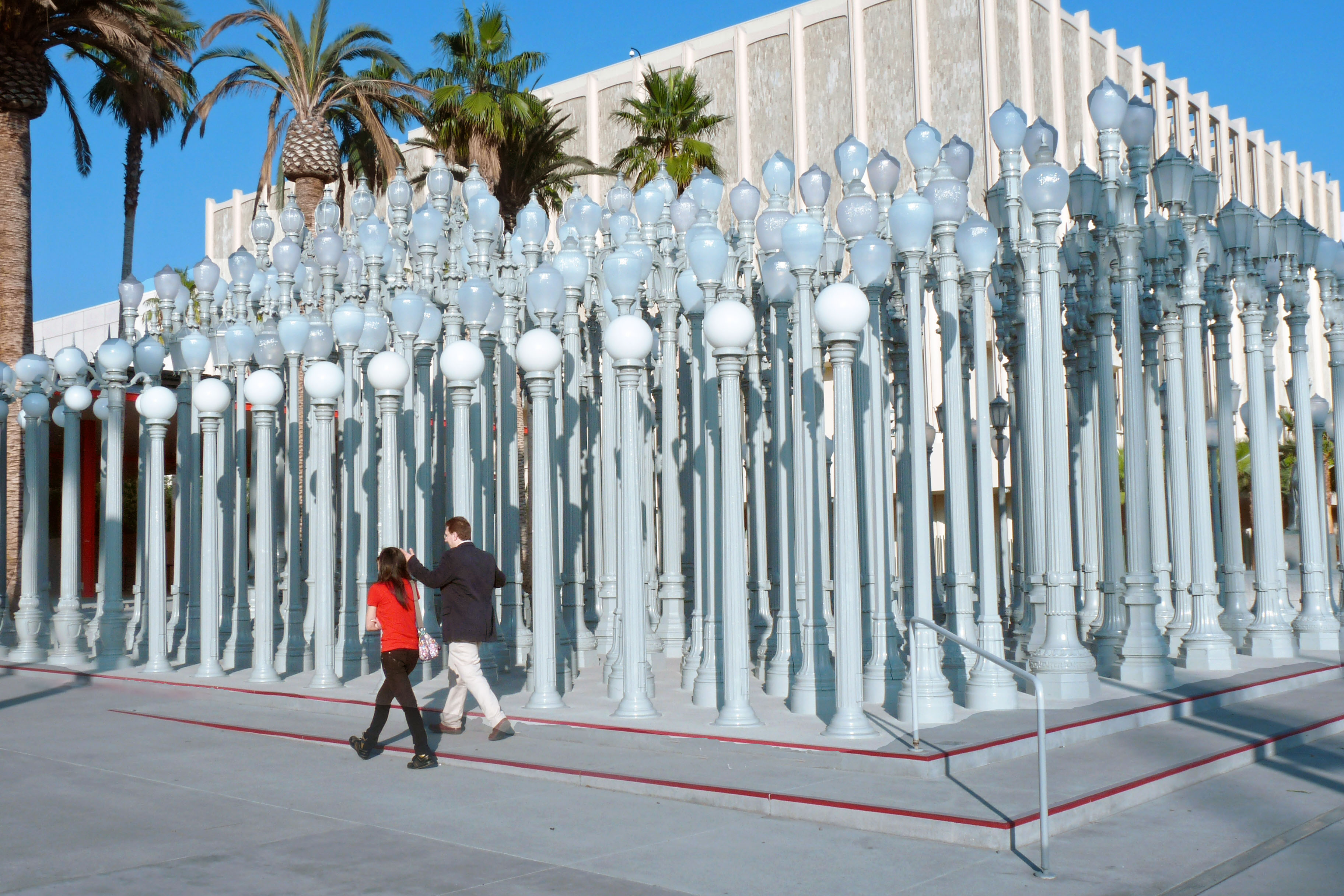
Artist Chris Burden was the creator of this amalgamation of Los Angeles city street lights. The lights really do turn on every night. Mr. Burden collected and restored dozens of city street lamps at his Topanga Canyon studio. Eventually they became his installation at LACMA (Los Angeles County Museum of Art).
My photo was taken in the afternoon when shadows really darkened the entire display. The first photo below is the original. The second is my efforts using Photoshop Elements. I outlined and lightened just the lights and then lightened the entire photo a little more. The squiggly line along the outside base show the boundary of the outlined area. The red line was not there at the far left side in the original photo (probably a step safety marker).
This video is not pornographic! It is about love and passion.
This article came to me via an e-mail. I do not know the original origin or author. There is a Wikipedia entry titled Leica Freedom Train.
David Bancroft
The Leica is the pioneer 35mm camera. It is a German product – precise, minimalist, and utterly efficient.
Behind its worldwide acceptance as a creative tool was a family-owned, socially oriented firm that, during the Nazi era, acted with uncommon grace, generosity and modesty. E. Leitz Inc., designer and manufacturer of Germany ‘s most famous photographic product, saved its Jews.
And Ernst Leitz II, the steely-eyed Protestant patriarch who headed the closely held firm as the Holocaust loomed across Europe, acted in such a way as to earn the title, “the photography industry’s Schindler.”
As soon as Adolf Hitler was named chancellor of Germany in 1933, Ernst Leitz II began receiving frantic calls from Jewish associates, asking for his help in getting them and their families out of the country. As Christians, Leitz and his family were immune to Nazi Germany’s Nuremberg laws, which restricted the movement of Jews and limited their professional activities.
To help his Jewish workers and colleagues, Leitz quietly established what has become known among historians of the Holocaust as “the Leica Freedom Train,” a covert means of allowing Jews to leave Germany in the guise of Leitz employees being assigned overseas.
Employees, retailers, family members, even friends of family members were “assigned” to Leitz sales offices in France, Britain, Hong Kong and the United States, Leitz’s activities intensified after the Kristallnacht of November 1938, during which synagogues and Jewish shops were burned across Germany.
Before long, German “employees” were disembarking from the ocean liner Bremen at a New York pier and making their way to the Manhattan office of Leitz Inc., where executives quickly found them jobs in the photographic industry.
Each new arrival had around his or her neck the symbol of freedom – a new Leica camera.
The refugees were paid a stipend until they could find work. Out of this migration came designers, repair technicians, salespeople, marketers and writers for the photographic press.
Keeping the story quiet The “Leica Freedom Train” was at its height in 1938 and early 1939,delivering groups of refugees to New York every few weeks. Then, with the invasion of Poland on Sept. 1, 1939, Germany closed its borders.
By that time, hundreds of endangered Jews had escaped to America, thanks to the Leitzes’ efforts. How did Ernst Leitz II and his staff get away with it?
Leitz, Inc. was an internationally recognized brand that reflected credit on the newly resurgent Reich. The company produced cameras, range-finders and other optical systems for the German military. Also, the Nazi government desperately needed hard currency from abroad, and Leitz’s single biggest market for optical goods was the United States.
Even so, members of the Leitz family and firm suffered for their good works. A top executive, Alfred Turk, was jailed for working to help Jews and freed only after the payment of a large bribe.
Leitz’s daughter, Elsie Kuhn-Leitz, was imprisoned by the Gestapo after she was caught at the border, helping Jewish women cross into Switzerland . She eventually was freed but endured rough treatment in the course of questioning. She also fell under suspicion when she attempted to improve the living conditions of 700 to 800 Ukrainian slave laborers, all of them women, who had been assigned to work in the plant during the 1940s. (After the war, Kuhn-Leitz received numerous honors for her humanitarian efforts, among them the Officer d’honneur des Palms Academic from France in 1965 and the Aristide Briand Medal from the European Academy in the 1970s.)
Why has no one told this story until now? According to the late Norman Lipton, a freelance writer and editor, the Leitz family wanted no publicity for its heroic efforts. Only after the last member of the Leitz family was dead did the “Leica
Freedom Train” finally come to light.
It is now the subject of a book, “The Greatest Invention of the Leitz Family: The Leica Freedom Train,” by Frank Dabba Smith, a California-born Rabbi currently living in England .
Thank you for reading the above, and if you feel inclined as I did to pass it along to others, please do so. It only takes a few minutes.
Memories of the righteous should live on.

This comes as no surprise. Still it hurts to see these numbers. As you read each of these items you know the reason for the decline in business. This was published on Huffington Post. The reasons are as follows:
– Photofinishing
Revenue decline 2002 to 2012 -70%. $15.509 million to $897 million
– Recordable Media Manufacturing
Revenue decline 2002 to 2012 -53.6%. $4.144 billion to $3.311 billion
– Money Market and Other Banking
Revenue decline 2002 to 2012 -51.2%. Industry revenue in 2012 $834 million
– DVD, Game and Video Rentals
Revenue decline 2002 to 2012 -49.6%. Industry revenue in 2012 $5.894 billion
– Newspaper Publishing
Revenue decline 2002 to 2012 -48.1%. Industry revenue in 2012 $29.302 billion
– Women’s/Girls’ Apparel Manufacturing
Revenue decline 2002 to 2012 -57.7%. Industry revenue in 2012 $8.603 billion
– Costume/Team Uniform Manufacturing
Revenue decline 2002 to 2012 -49.9%. Industry revenue in 2012 $986 million
– Appliance Repair
Revenue decline 2002 to 2012 -44.5%. Industry revenue in 2012 $3.684 billion
– Hardware Manufacturing
Revenue decline 2002 to 2012 -44.5%. Industry revenue in 2012 $7.484 billion
– Shoe/Footwear Manufacturing
Revenue decline 2002 to 2012 -39.6%. Industry revenue in 2012 $1.712 billion
 Coast Contact