Los Angeles – Long Beach Harbors Resume Operations

Work resumed today, Wednesday, at the nation’s busiest port complex after a crippling strike was settled, ending an eight-day walk-off that affected thousands of jobs and billions of dollars in cargo.

Is everybody Happy?  Today the answer is YES but the future is looking bleak for these import facilities.  This is a serious situation for the 10,000 dock workers.

Los Angeles Cargo Terminal

Los Angles cargo terminal, photo taken on April 29, 2011 at 2:30PM . 1/50 second at f7.1 using Panasonic DMC FZ28 camera.  The sky was that blue and cloud free.  The sea was that blue.  Hey, It’s Los Angeles! 

The immediate effect was the redirection of ships to other ports.  One of those ports is Ensenada, Mexico. Ensenada is in Baja California lying 125 kilometers (78 mi) south of San Diego on the Baja   California Peninsula.  With a population of more than 279,000 people a major part of its economy depends upon tourism.  It also has a deep water port for commercial shipping that received more than 3 million metric tons of freight in 2010.  When cargo is unloaded in Ensenada it is not done using unionized workers.  Truckers are not unionized. When the goods are transported into the USA there are no tariffs thanks to NAFTA.  So why won’t some shipping companies continue to use Ensenada rather than the Los Angeles area ports now that the ships have been diverted?

Currently Hyundai makes shipboard cargo containers and truck trailers at its nearby Tijuana plant, and two other Korean conglomerates–Samsung and Daewoo–make TVs and other electronic products at plants in Tijuana and San Luis Rio Colorado near Yuma, Arizona.  Daewoo and Samsung have announced plans to expand their manufacturing operations in Baja California, and Hyundai has told the Mexican delegation that it is mulling the possibility of building a steel plant in Mexico.

I am guessing that ever more business will not be returning to the California ports.

There is another more serious threat to the Los Angeles-Long Beach port facilities. The Panama Canal Overhaul.  When completed some of the largest ships in the world will be able to traverse the canal.  The canal’s new set of locks will allow a ship with a 160-foot beam to pass with ease.  The current canal can accommodate only ships that are no more than 106 feet wide and 965 fee long.  Some of the largest ships in this category, with containers stacked seven-deep on their decks, look like they’re barely able to squeeze through today’s locks.  Currently vessels traversing the canal can carry a maximum of 5,000 20-foot containers.  With the new locks completed the canal will be able to handle ships three football fields long that hold 13,000 containers.

The result of the enlarged canal locks will mean ships from China, Japan and other Asian nations can more easily set their destination on the Atlantic and Gulf costs of the United States.  When those Panama Canal improvements have been completed who will be shipping their cargo to California?

5 Photography Techniques Everyone Should Know

from http://electronics.howstuffworks.com/

by

Photography has never been easier. Modern point-and-shoot cameras give amateurs access to many of the same techniques that professionals use to produce high-quality pictures.

And these cameras are growing more capable every year. High-capacity memory cards let you store hundreds of pictures. Zoom lenses offer versatility. Even 3-D cameras are starting to become available. Today, a relatively inexpensive point-and-shoot can give you all the tools you need to take top-notch photos. What’s more, digital-editing programs offer you a virtual darkroom on your computer.

Technology has made many aspects of photography automatic. Cameras focus for you, set the color balance and determine the exposure. Some adjust for your shaky hand or identify and focus on the faces of people in your picture.

But remember that photography is about more than equipment. It’s not your equipment that takes good pictures, any more than it’s your pots and pans that cook a great meal. You, the photographer, are what makes a good picture — or a bad one. How you use your camera’s features is more important than the technology itself, and your eye is the most valuable tool you have.

We’re going to be focusing on digital photography here for a simple reason: Taking pictures with film has become a thing of the past for most amateur photographers.  But remember that many of the same techniques apply whether you’re shooting digital or film.

Read on for five easy techniques that will make you a better photographer.

 1: Read Your User’s Manual

Reading the user’s manual or guide may not seem like much of a technique. Most of us would rather run out and shoot pictures rather than wade through 150 pages of instructions. But reading about and understanding the features of your camera can make you a far better photographer.

To begin with, it will familiarize you with all those buttons, dials and menus. Most cameras today have a host of useful functions. You’ll probably never use all of them, but many can be valuable for improving your picture taking:

  • Learning about aperture priority can help you to control the depth of field, bringing a large range into focus or blurring the background when you want to.
  • Changing the ISO setting can make your camera more sensitive to  light, and it can also reduce picture quality.
  • Adjusting the white balance will yield better pictures when you’re shooting in artificial or colored light.
  • Exposure bracketing means taking three pictures: one at      the correct exposure, one underexposed and one overexposed. This technique is helpful in difficult lighting situations.

Remember that just reading the manual is not enough. You need to experiment with each of the features and see how they affect the pictures you take. But don’t try to master the whole thing at once; read up on one feature and use it before moving on.

  2: Learn the Rule of Thirds

The rule of thirds is a technique that was developed long before photography was invented and is still used today in other visual arts, like painting.

It’s a basic skill for improving the composition of your pictures. And a thoughtful composition is the main difference between amateur snapshots and professional-quality photographs.

Imagine a grid of four lines, two horizontal and two vertical, that divides the picture plane into thirds.  You end up with nine equal sections. Try to place your main subject at one of the four spots where the lines intersect. That means not in the middle and a bit higher or lower than center.

When shooting a landscape, put the horizon at one of the horizontal lines. Use the upper one if you want to emphasize the foreground. Place the horizon at the lower line to make the background more prominent. Align buildings or other straight objects with one of the vertical lines.

You need to be aware of the rule of thirds, not obsess over it. Sometimes breaking the rule will give you a great picture, too. But knowing the principle lets you analyze pictures and see how they could be improved.

3: Learn to Use a Tripod

A tripod is one of the most valuable pieces of equipment for amateur photographers and, because they mean carrying around an extra piece of equipment, one of the most neglected.

Start using a tripod and you’re almost guaranteed to take better photos. There are many lightweight and inexpensive models to choose from, including tabletop varieties and ones that are little more than a clamp with a camera attachment.

One reason that tripods are useful is that digital camerasare generally quite light in weight. That’s handy, but it also makes them harder to hold absolutely steady when you press the shutter. And while some digital cameras can compensate for hand shake, a tripod lets you take the clearest pictures possible.

Tripods are great for shooting in low light. They let you take much longer exposures. This gives you crisper pictures and means you can increase your depth of field, the area that’s in focus, by narrowing the camera’s aperture. Taking pictures in low light without a flash can give you dramatic results.

A tripod also comes in handy when shooting with a telephoto lens, or when your zoom lens is on its maximum telephoto setting. A telephoto lens magnifies the image, but it also exaggerates any camera movement

Another big advantage of a tripod is that it forces you to slow down and look at the composition of your picture. You can set up the picture then adjust the lighting, change the focus or rearrange your subject. A tripod even enables you to get into the shot yourself, eliminating the “missing photographer” syndrome. Simply set the self-timer and move in front of the camera.

4: Master the Focus Lock

The feature that comes with most cameras makes picture taking easy. But it can ruin your photos as well as improve them. The problem is that the camera usually focuses on an area in the center of the scene you’re framing. If your subject happens to be off to one side, oops. Learn how your autofocus works. On many cameras, you can adjust the setting, moving the focus area off dead center. Then experiment with focus lock.  Point the camera at your main subject and depress the shutter release halfway. Hold it there. Move the camera until you have the composition you want. Push the button the rest of the way. Your subject will remain in focus and will be properly exposed. If you become adept at this technique, you will avoid those pictures in which the background is sharp but your main subject is fuzzy Focus lock also speeds picture taking. After you press the shutter to take a picture, there’s a slight delay while the camera adjusts the focus. Holding the button halfway down leaves you ready to take the picture instantly, which can be important with action shots. Make sure that you determine how far away the subject will be when you take the picture and lock the focus on that distance.

5: Adjust the Light

Think about it: What is a photograph? It’s a record of light, nothing more or less. Many amateur photographers take light for granted. In fact, judging and adjusting the light is the key to taking good pictures.
Diffuse light is better for picture taking than direct sunlight, which creates shadows and glare that can ruin a photo. Photographers love to shoot in early morning or evening when the sun is low. A cloudy day is better than a sunny one. If you have to shoot at midday, move your subject into the shade.

A flash can help if you use it properly. The pop-up flash on your camera is most valuable as a fill flash.  Use it to light your foreground subject when the background is already bright. It will eliminate shadows and give the subject the correct exposure. Be careful when using a flash in low light: It bleaches colors and washes out your subject. And keep in mind that the light from most built-in flashes reaches less than 15 feet (nearly 5 meters).


You can shoot indoors without a flash. Just move your subject near a window. A bright, north-facing room is ideal.  Use a piece of white poster board to reflect light onto the subject and improve your picture.

Photography is Ever Evolving


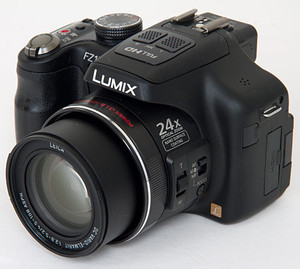
As good as the Panasonic Lumix DMC-FZ28 camera is, there is always room for improvement.  Thus I have purchased a Panasonic Lumix DMC-FZ150.

This will most likely be the last camera I will buy.  It has all the features of the FZ28 but has a somewhat longer lens, much faster shooting burst speed (12 fps), a faster focusing system, and my favorite Photo Style option (STANDARD / VIVID (Brilliant effect with high saturation and contrast.) / NATURAL (Soft effect with low contrast.) / MONOCHROME / SCENERY (An effect appropriate for scenes with vivid blue skies and greens) / PORTRAIT (An effect appropriate for portrait picture with a healthy and beautiful skin tone.) There are many other addtional features too numerous to list here.

The advanced manual is 202 pages long.  No wonder they chose to provide it in an Adobe reader format.

I bought the camera with a 30 day return privilege and that time has now passed.

Two problems with the camera are:

1. Like the FZ28 indoor pictures has a yellowish cast that is apparent when there is no outdoor sunlight.  The issue seems eliminated by using a polarizing filter.  Note the camera will take 52mm threaded filters without an adadpter.

2. The camera is bulkier than the FZ28 and weighs 18.62 ounces.  The FZ28 weighs 14.71 ounces.  You definitely will notice the difference.  My compensation is using a wider cloth neck strap rather than the supplied leather strap.

Although they have seen the camera sold out at most locations it appears they have discontinued manufacture of this model.  My guess is they want to add a longer zoom and connectivity to the internet in their next iteration.

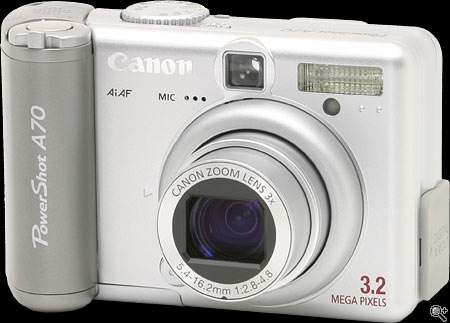
Point and Shoot Cameras will beat your Cell Phone

Joshua Goldman writing for c/net offers ten reasons that even an inexpensive point and shoot camera will do a better job of capturing the photo you want to remember.  Following are some of the most important reasons.

Optical zoom
For a lot of people, optical zoom is the biggest feature missing from smartphones; with rare exceptions, the only option on mobile devices is image-destroying digital zoom. A good zoom lens, of course, can be used to bring distant subjects closer. But it can also be used for several other things, such as changing the relative size of subjects or compressing the distance between them, or, in the case of this photo, creating an out-of-focus background — no dSLR or software needed.

Macro
Even a sub-$100 point-and-shoot can take better macro photos than a smartphone. Many models can focus at less than half an inch from a subject and, depending on the quality of the camera’s high-resolution photos, you can enlarge them and view sharp fine details. Plus, with a camera’s slightly larger sensors, you’re actually able to create a shallow depth of field.

Shooting performance
Anyone who’s tried to capture a picture of a fast-moving child or pet with a smartphone knows how tricky it can be. Even when you think you’ve gotten the shot, chances are if you look at it larger, it’s blurry, soft, noisy, or all of the above. Camera makers have been improving all aspects of shooting performance, though; startup time, shutter lag, and shot-to-shot times are much better than they were even a couple years ago. Plus, since cameras have a shutter release button, it’s easier to hold the camera and quickly prefocus again and again until you get the shot you want. That’s not exactly easy to do when you’re trying to hold your phone and tap a screen.

Burst shooting
One of my favorite Android camera apps is Fast Burst Camera, which lets you fire off shots at up to 30 frames per second. However, that’s at a significantly reduced resolution, whereas a camera like the Sony Cyber-shot DSC-HX9V can shoot 10fps at its full 16-megapixel resolution. The Panasonic Lumix DMC-ZS20 is even better, shooting at up to 60fps at reduced resolutions, 10fps at full resolution, and up to 5fps with autofocus.

Battery life
Obviously, if you’re only going to take a couple snapshots or a 30-second movie clip, it won’t eat up too much of your smartphone’s battery. But if you’re out shooting at an event, on vacation, or simply while out and about for the day, using your phone’s camera will drain your battery.

Storage
If you’re just taking the occasional snapshot or movie clip, it’s not a big deal. But if your smartphone’s become your only camera, it’s something to consider. With a dedicated camera, you can shoot as much as you want without worrying about running out of space on your phone.

Optical or sensor-shift image stabilization
Smartphones only have digital image stabilization, which, like digital zoom, degrades image quality. Cameras, except really low-end ones, have either optical or sensor-shift image stabilization to help with camera shake, and it has no impact on photo quality and is much more effective. In fact, image stabilization has gotten so good that manufacturers are able to offer longer lenses that are actually usable handheld.

Read the rest of the article at http://news.cnet.com/8301-17938_105-57414697-1/10-ways-a-point-and-shoot-camera-beats-your-phones/

Diseases That Plague Photographers

This factual and entertaining column on the Mansurovs Photography blog is only telling the truth about picture taking geeks.  We want the latest and best equipment even if it’s just to take a picture in the backyard.  It as bad as any addiction you can imagine.

Read all about it at http://mansurovs.com/diseases-that-plague-photographers.  Mansurovs Photography blog has been added to the ENERGY listing on the right side of this page.

On This Day Iwo Jima

On Feb. 19, 1945, during World War II, some 30,000 United States Marines landed on the Western Pacific island of Iwo Jima, where they encountered ferocious resistance from Japanese forces. The Americans took control of the strategically important island after a month-long battle.

Do your remember this picture?  The photo also appeared on a U.S. postage stamp.

 Joe Rosenthal’s Pulitzer Prize-winning photograph taken on the Pacific island of Iwo Jima is one of the best-known war images ever made. The Allies  invaded  the island, more than six hundred miles off the coast of Japan, on February 19, 1945, hoping to establish a staging area for bombers. Rosenthal, a photographer for the Associated Press, landed under gunfire three hours after the invasion began. The Marines fought their way to the top of Mount Suribachi on February 23 and raised a small flag.  Later that same day, five Marines and a naval medicine corpsman raised this second, larger flag at the summit and were recorded  by Rosenthal. Contrary to popular belief, the moment was not staged. In thirty-one days of brutal fighting, 6,821 Americans died, including  three of the flag-raisers. Rosenthal inscribed this print to Wyoming  Democratic Senator Joseph O’Mahoney.

Explanation from the Library of Congress.

Say Goodbye to Point & Shoot Cameras

Ladies may carry a camera in their bag or purse but men usually don’t carry those things.  The cell phone is enough baggage for us guys.  Read this report from CES.

“AT&T will also sell Sony’s Xperia ion 4G LTE smartphone as the first smartphone to be sold under the Sony brand in the United   States. Launching in the second quarter, the Xperia ion is based on Gingerbread, and has a 4.6-inch HD display and a 12-megapixel camera.”  The source for this item is http://www.cioinsight.com/c/a/Latest-News/CES-ATT-Verizon-Sprint-Tout-Android-Smartphones-638610/?kc=CIOMINUTE01112012STR1TOC