Category: Politics
California Proposition 1 will probably make homelessness in California worse
Story by The Editorial Board, The Orange County Register
No one disputes that California is struggling to deal with a spiraling homelessness crisis. Our state has more than 181,000 homeless people — a number that has increased a mind-bending 40% since 2019, per a CalMatters report. Whatever the state government is doing, it’s not working.
And what it’s doing, mainly, is throwing money at the problem. Figures from last year peg state homeless spending at $7.2 billion a year, or $42,000 per homeless person. That number accounts only for state spending and not the myriad local costs, including the amount of public-safety and public-works budgets that pay for related costs.
Instead of rethinking the state’s failed approach, Gov. Gavin Newsom wants to throw more money at the problem and give state agencies — rather than local governments, which generally have done a better job — more power to control funding. He wants voters to approve Proposition 1.
Modeled on Los Angeles’ failing Project Roomkey, the March 5 ballot initiative would run up $6.38 billion in debt to fund specific mental-health-related services. The general approach is understandable, given most homeless people suffer from mental-health and addiction issues. As always, details matter.
And Prop. 1’s details can make one’s head spin. As AP reported, it is “one of the most complicated and lengthy measures in recent years” and “takes up 68 pages” of the voter guide. As this editorial board explained, Prop. 1 is a “bureaucratic power grab that robs counties of mental health services funding” and runs up debt — even though a lack of funding isn’t the main problem.
Other news outlets are echoing these concerns. Another AP report quoted local officials who fear the measure “would worsen the problem.” That’s because it empowers the state to meddle in how counties spend nearly $3 billion in annual revenue funded by a 2004 tax on millionaires. If Prop. 1 passes, the state would take 10% of these mental-health funds, leaving less for programs that keep people out of homelessness.
Nearly a third of the Prop. 1 money would fund local-government efforts to build affordable housing via motel conversions and new construction. But that money would have to conform to California’s official — and misguided — “Housing First” policy that prioritizes construction of permanent housing, rather than temporary housing combined with social services.
The bottom line: “Housing First” diverts money from programs that could help the homeless get back on their feet toward a utopian concept that views homelessness mainly as a housing matter. Given the mental-health and addiction issues that are a main reason many people are homeless, it’s unwise to base state policy on the idea that the main solution is just giving them a permanent home. Even if it were a sound approach, the state has shown itself incapable of building affordable housing quickly and cost effectively, with many projects costing $800,000 or more a unit. There’s not enough money in the state budget to make a dent in homeless numbers at that rate.
There is no easy fix for California’s homelessness crisis, but the starting point, as always, is to do no more harm. Proposition 1 is a big-spending blank check that could indeed worsen the situation. By voting no, voters will help prod state officials to embrace programs that might actually work.
I Predict Joe Biden Will Not be Running for Re-Election
Democratic strategist James Carville said President Biden not sitting for an interview before the Super Bowl is a “sign” of his administration having little confidence in him.
“It’s the biggest television audience, not even close, and you get a chance to do a 20, 25-minute interview on that day, and you don’t do it, that’s a kind of sign that the staff or yourself doesn’t have much confidence in you, there’s no other way to read this,” Carville said in a February 10 interview on CNN’s “Smerconish.”
This will be the second year in a row that the president has not sat for an interview before the big game. Biden’s decision not to participate comes as he’s been facing bad press in the wake of the release of a special counsel report on his handling of classified documents.
On that same program Michael Smerconish asked viewers his weekly survey question “Should Jill Biden suggest to her husband that he should not seek re-election?” Two thirds of almost 36,000 viewers voted Yes.
This is not the first time a sitting president has not run for re-election. LBJ (Lyndon Johnson) announced in March of the year he was heading to election that he chose not to run. By 1968, Lyndon B. Johnson knew he was unlikely to win another presidential election; his increase of American involvement in the Vietnam War, as well as rising American casualties in Vietnam, had made him deeply unpopular. After Senator Eugene McCarthy and Robert Kennedy declared their candidacies for the Democratic presidential nomination, Johnson announced that he would not seek another term and would, instead, retire.
Enjoy your retirement Joe.
Is it time to remove President Joe Biden from Office?
Special Counsel Robert Hur was appointed to oversee the investigation of President Biden’s alleged mishandling of classified documents during his time as Vice-President.
Hur described President Biden as a “sympathetic, well-meaning, elderly man with a poor memory,” and said he would bring no criminal charges against the president after a months-long investigation into his improper retention of classified documents related to national security.
Hur’s report was made public Thursday afternoon.
Hur has been investigating Biden’s improper retention of classified records since last year. Those records included classified documents about military and foreign policy in Afghanistan, among other records related to national security and foreign policy which Hur said implicated “sensitive intelligence sources and methods.”
Hur, in the report, said the special counsel’s team “also considered that, at trial, Mr. Biden would likely present himself to a jury, as he did during our interview of him, as a sympathetic, well-meaning, elderly man with a poor memory.”
“Based on our direct interactions with and observations of him, he is someone from whom many jurors will want to identify reasonable doubt,” the report states. “It would be difficult to convince a jury that they should convict him—by then a former president well into his eighties—of a serious felony that requires a mental state of willfulness.”
Biden’s “memory also appeared to have significant limitations” according to the report, and during conversations with his ghostwriter, recorded in 2017, his conversations were “painfully slow, with Mr. Biden struggling to remember events and straining at times to read and relay his own notebook entries”
Hur’s report pointed out that Biden’s memory was “worse” during an interview with the Special Counsel’s office.
During the interview, Biden “did not remember when he was vice president, forgetting on the first day of the interview when his term ended (‘if it was 2013 – when did I stop being Vice President?’), and forgetting on the second day of the interview when his term began (‘in 2009, am I still Vice President?’)”
“He did not remember, even within several years, when his son Beau died. And his memory appeared hazy when describing the Afghanistan debate that was once so important to him. Among other things, he mistakenly said he ‘had a real difference’ of opinion with General Karl Eikenberry, when, in fact, Eikenberry was an ally whom Mr. Biden cited approvingly in his Thanksgiving memo to President Obama,” Hur’s report said.
During hastily scheduled remarks at the White House, Biden blasted special prosecutor Robert Hur for saying he did not remember when his son Beau died. But minutes after defending his memory, he mistakenly referred to Egyptian President Abdel Fattah el-Sisi as the president of Mexico.
One GOP representative Rep. Claudia Tenney is calling for the Cabinet to “explore” the use of the Constitution’s 25th Amendment to remove President Biden from office, following Special Counsel Robert Hur’s “alarming” report.
Of course Democrats will rally around the president. But should they?
American presidents who owned slaves
The United States may have been founded on the idea that all men are created equal, but during the late 18th and early 19th centuries, slaveholding was common among the statesmen who served as president.
Slavery was legal in the United States from its beginning as a nation. During the late 18th and early 19th centuries, slaveholding was common among the statesmen who served as president. In all, 12 chief executives enslaved people during their lifetime; of these, eight owned slaves while in office. The Thirteenth Amendment to the United States Constitution formally abolished slavery in 1865, but the history of the American presidency’s relationship to slavery remains an uncomfortable one. So, who are these White House incumbents that were also enslavers?
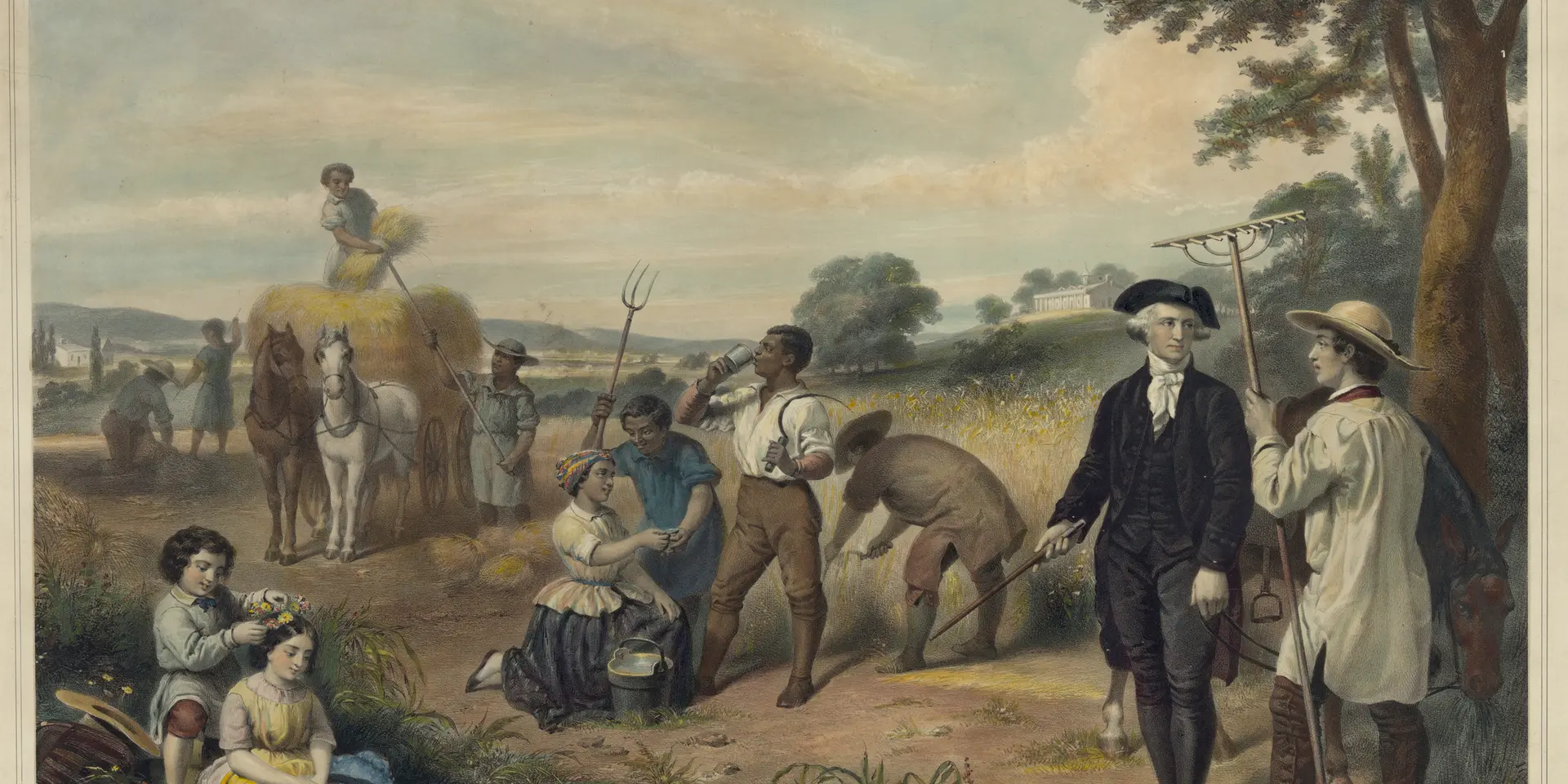
Picture from history.com
President George Washington
A Founding Father of the United States and the country’s first president, George Washington kept over 300 enslaved people at his Mount Vernon plantation.
As president of the United States, Washington oversaw the implementation of the 1787 Northwest Ordinance, which banned slavery north of the Ohio River. But in 1793 he signed the Fugitive Slave Law, which empowered a slaveowner or his agent to seize or arrest any enslaved person on the run. His views on slavery took another turn the following year, when he wrote into law the Slave Trade Act of 1794, which prohibited the export of slaves from the United States to any foreign place or country.
President Thomas Jefferson
Thomas Jefferson, the third president of the United States, owned more than 600 slaves during his adult life. Jefferson’s slaves were held captive at his main residence, Monticello, near Charlottesville, Virginia. It was here that he fathered several children with an enslaved woman called Sally Hemmings.
President James Madison
James Madison kept several enslaved people—he came from a large slaveholding family. By 1801, Madison’s slave population at Montpelier, his plantation estate, was slightly over 100. That figure eventually numbered over 300.
Like Thomas Jefferson, James Monroe outwardly condemned the institution of slavery as evil, and advocated its gradual end. But he, too, still owned many slaves.
President Andrew Jackson
Like most planters in the South, Andrew Jackson used forced labor. Over his lifetime, he owned a total of 300 slaves, most of whom were put to work in the cotton fields of his plantation, The Hermitage, near Nashville, Tennessee.
President Martin Van Buren
Martin Van Buren was ensconced in the White House during the Amistad Case, a freedom suit that resulted from the successful rebellion of African slaves on board the Spanish schooner La Amistad in 1839. Van Buren viewed abolitionism as the greatest threat to the nation’s unity, and he resisted the slightest interference with slavery in the states where it existed. Later in life, Van Buren belonged to the Free Soil Party, which opposed the expansion of slavery into the Western territories, but not immediate abolition.
President John Tyler
William Henry Harrison owned several inherited enslaved people before becoming president in 1841.
John Tyler owned as many as 50 slaves throughout his lifetime, including during his tenure as White House incumbent. In 1845, Tyler oversaw the annexation of Texas as a slave state.
President James K. Polk
President James K. Polk was generally tolerant of slavery. He owned several plantations and even purchased enslaved people during his term in office. His will provided for the freeing of his slaves after the passing of his wife, Sarah Childress, though the Emancipation Proclamation and the Thirteenth Amendment to the United States Constitution ended up freeing them long before her death in 1891.
President Zachary Taylor
Zachary Taylor owned slaves throughout his life. In fact, of the other presidents who owned slaves, Taylor benefited the most from slave labor.
Taylor had enslaved servants in the White House, and it was in Washington where he also supervised his Mississippi plantation’s operations. As president, however, he generally resisted attempts to expand slavery in the territories, and he vowed to veto the Compromise of 1850, which granted enslavers greater authority to seize supposed fugitive slaves in Northern states, as well as other extremely controversial measures.
President Andrew Johnson
Assuming the presidency following the assassination of Abraham Lincoln, Andrew Johnson was one of the last US presidents to personally own slaves. Despite being an enslaver, Johnson had been chosen as vice president by Lincoln as a gesture of unification, with Johnson supporting many of Lincoln’s policies, although he did lobby for Lincoln to exclude Tennessee from the Emancipation Proclamation. But as President Johnson, his Reconstruction goals were to reunify the Union by readmitting former Confederates as citizens of the United States and to limit emancipated people’s civil rights.
President Ulysses S. Grant
The last president to personally own enslaved people was Ulysses S. Grant. As the former commanding general of the Union Army, Grant had kept one enslaved black man named William Jones. He was freed in 1859.
Hitler became German Chancellor
Today in History: January 30, 1933 Hitler becomes German chancellor
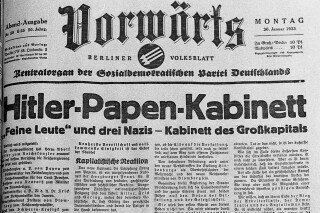
In a March 1, 2016 Vanity Fair article it reported that “Trump Kept a Volume of Hitler’s Speeches By His Bedside.”
Words from Trump Appointees in His First Term in Office
From former Vice President Pence to Bill Barr, former Attorney General these are quotations worth readings.
“Anyone who puts himself over the Constitution should never be president of the United States . . . President Trump demanded that I Choose between him and the Constitution.”
Mike Pence, Vice President
.
“He puts himself before country. His actions are all about him and not about the country.”
Mark Esper, Secretary of Defense
.
“THE DEPTHS OF HIS DISHONESTY IS JUST ASTOUNDING. TO ME … HE IS HE MOST FLAWED PERSON I HAVE EVER MET IN MY LIFE.”
John Kelly, Secretary of Homeland and White House Chief of Staff
.
“His understanding Of global events, his understanding of global history, his understanding of U.S. history was really limited.”
Rex Tillerson, Secretary of State
.
“He will always put his own interests, and gratifying his own ego, ahead of everything else, including the country’s interests.”
Bill Barr, Attorney General
.
“President Trump and other officials have repeatedly compromised our principles in pursuit of partisan advantage and personal gain.”
H. R. McMaster, National Security Adviser
.
“Trump has this impression that foreign leaders, especially adversaries, hold him in high regard, that he got a good relationship with Xi Jinping, Vladimir Putin, Kim Jong Un. In fact, the exact opposite is true. I have been in those rooms with him when he’s met with those leaders. I believe they think he is a laughing fool.”
John Bolton, National Security Adviser
.
“THE PRESIDENT HAS VERY LITTLE UNDERSTANDING OF WHAT IT MEANS TO BE IN THE MILITARY, TO FIGHT ETHICALLY OR TO BE GOVERNED BY A UNIFORM SET OF RULES AND PRACTICES.”
Richard V. Spencer, Security of the Navy
.
“He is more dangerous than anyone could imagine.”
James Mattis, Secretary of Defense
Los Angeles Times Endorses Rep Adam Schiff to be California’s next Senator
“Over his nearly three-decade political career representing Los Angeles and San Gabriel Valley communities, Schiff (D-Burbank) has been known as a staid, amiable legislator who digs into the details to come up with practical solutions and a reliable advocate for local needs. He served four years in the state Legislature before he was elected to the House in 2001. Before running for office, he was an assistant U.S. attorney and he never shed the methodical, controlled demeanor of a prosecutor.”
I had already decided to vote for him in the upcoming primary election. A few more significant endorsements could settle choice in the primary. All he needs is 50% of the voters plus one vote.
Apparently Nikki Haley Needs a History Lesson. Here It Is.
Almost 160 years after the Civil War — Nikki Haley, a leading contender for the GOP presidential nomination and former governor of South Carolina couldn’t answer the simple question “What was the cause of the Civil War?” Her disjointed response was “basically how government was going to run — the freedoms and what people could and couldn’t do.”
The Constitution Center provides this history. “The victory of Republican presidential candidate Abraham Lincoln in the 1860 elections convinced South Carolina legislators that it was no longer in their state’s interest to remain in the Union. South Carolina declared its secession from the United States. Citing “an increasing hostility on the part of the non-slaveholding states to the institution of slavery,”
Sadly in my own experience in the South is that Southerners are still in denial. That is the reason they still fly the Confederate flag in many places. Haley is not alone.
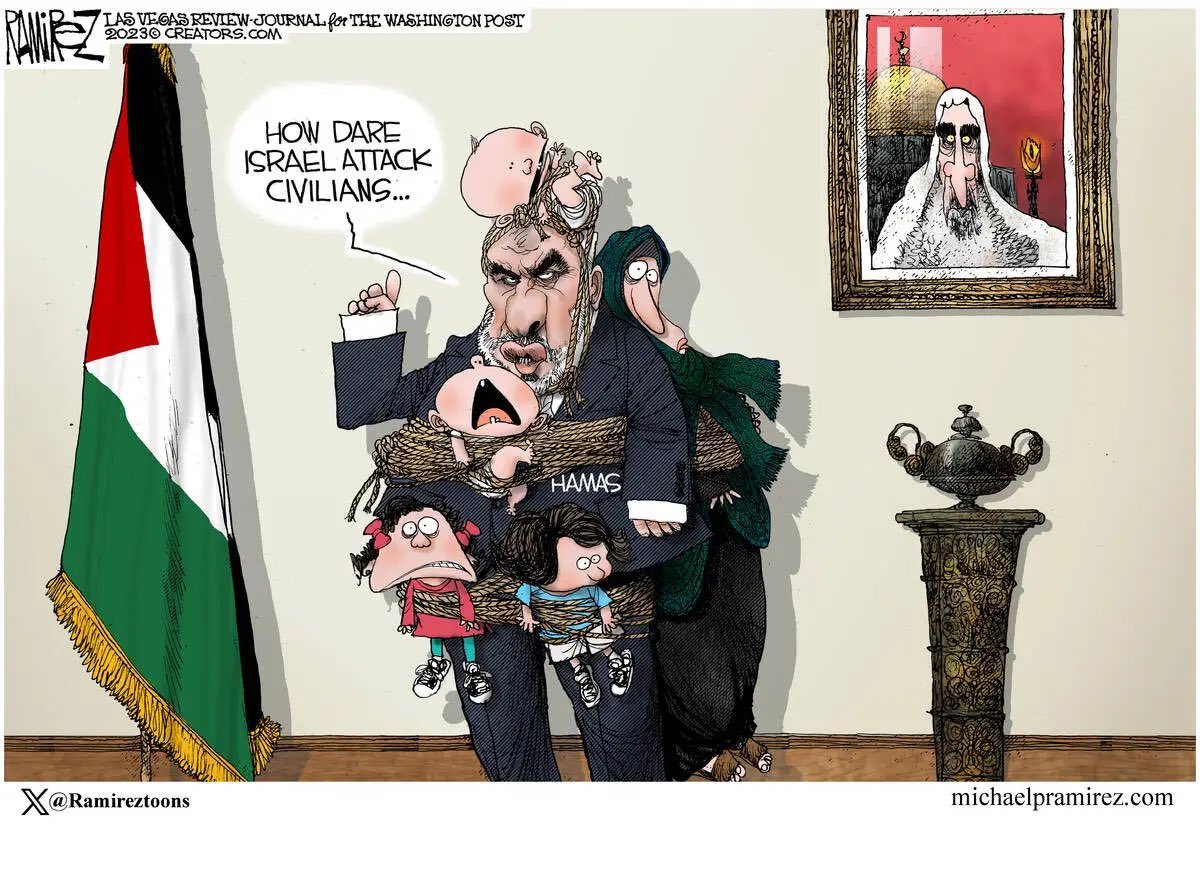
CARTOON: What Hamas is really doing
This editorial cartoon, titled “Human Shields” by Michael Ramirez, was removed by the Washington Post. The Las Vegas Journal-Review also ran the same cartoon but did not delete it. 84% of Michael Smerconish’s CNN viewers voted that the Washington Post should not have deleted the cartoon.
What is your opinion?
 Coast Contact