Is Age a Criteria for Holding Public Office?

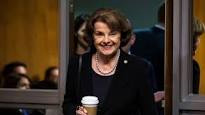
U.S. Sen. Dianne Feinstein ended months of speculation Monday when she said she was running for re-election in 2018. “I’m all in!” she tweeted and wrote in a Facebook post. At age 84, is Feinstein too old to run again? (If she won, her term would extend past her 91st birthday.)

My question is why should she be denied another term in office because of her age? I have seen her on many Sunday morning news shows and she is obviously able to hold her own against those that question her on the topic of the day. Her big issue is gun control and her responses to Chuck Todd on Meet the Press and Chris Wallace on Fox News Sunday are always very well spoken.

Robert Byrd was the longest-serving Senator in United States history. In addition, he was, at the time of his death, the longest-serving member in the history of the United States Congress. That record was later surpassed by Representative John Dingell of Michigan. Byrd died at 92 still holding the office of senator from West Virginia.

Age should not be a criteria for holding public office. Donald Trump is now 71. If he holds office for eight years he will be 79 when he departs Washington. Ronald Reagan was 69 when he was inaugurated.

5 DACA Myths Debunked

Summary from CNN

Myth 1: It’s a pathway to citizenship

DACA gives beneficiaries a temporary reprieve from deportation, allowing them to stay lawfully in the country, granting them work permits and allowing them to obtain driver’s licenses. And it stops there.

“This is not amnesty. This is not immunity. This is not a path to citizenship. It’s not a permanent fix,” Obama said when he announced the program five years ago. “This is a temporary stopgap measure.”

Myth 2: They don’t pay taxes

DACA recipients have paid about $2 billion in state and local taxes, the Institute on Taxation and Economic Policy estimates.  If they work they also pay income tax.

Myth 3: They get Medicaid and Obamacare

Some types of immigrants living in the United States have health insurance through the Affordable Care Act, but under DACA, Dreamers are not eligible. DACA grantees cannot get Medicaid, either.

The only way for Dreamers to get health insurance is by receiving it from an employer, being a spouse’s dependent, going to a community clinic or purchasing it on their own outside the exchange, paying the entire premium.

Myth 4: They are going to college for free

It depends. DACA opened the doorway for undocumented immigrants to enroll in college, pay in-state tuition and, in some cases, gain access to financial aid packages.

While DACA students are not eligible for federal financial aid, some states let them pay in-state tuition, and a few offer them state-sponsored aid.

Myth 5: They are stealing jobs from American citizens

There’s actually a shortage of qualified workers in the United States, the Federal Reserve said in a survey of businesses across the country released in July.

“Land of the Free – Home of the Brave”

“Land of the Free – Home of the Brave” we are not quite there.

5 key quotes from Trump’s DACA statement

President Trump just released a lengthy statement following Attorney General Jeff Sessions’ announcement that the administration would rescind DACA. Here are the key lines:

•”I do not favor punishing children, most of whom are now adults, for the actions of their parents. But we must also recognize that we are nation of opportunity because we are a nation of laws.”

•”This is a gradual process, not a sudden phase out. Permits will not begin to expire for another six months, and will remain active for up to 24 months. Thus, in effect, I am not going to just cut DACA off, but rather provide a window of opportunity for Congress to finally act.”

•”Few in Washington expressed any compassion for the millions of Americans victimized by this unfair system. Before we ask what is fair to illegal immigrants, we must also ask what is fair to American families, students, taxpayers, and jobseekers.”

•”We will resolve the DACA issue with heart and compassion – but through the lawful Democratic process – while at the same time ensuring that any immigration reform we adopt provides enduring benefits for the American citizens we were elected to serve.”

•”It is now time for Congress to act!”

Has anyone recently read the words of Emma Lazarus that are inscribed on the Statue of Liberty?

“Keep ancient lands, your storied pomp!” cries she
With silent lips. “Give me your tired, your poor,
Your huddled masses yearning to breathe free,
The wretched refuse of your teeming shore.
Send these, the homeless, tempest-tost to me,
I lift my lamp beside the golden door!”

Pride in Southern Heritage Does Not Require the Confederate Flag

Associated Press Report:
Robert Castello literally wears his Southern pride. The visor, suspenders and ring he donned Thursday were all emblazoned with the familiar design of the rebel battle flag.

Castello, whose Dixie General Store sells Confederate-themed hats, shirts, stickers and signs in rural eastern Alabama, said he doesn’t have any use for overtly racist groups like the Klan. Continue reading “Pride in Southern Heritage Does Not Require the Confederate Flag”

White Supremacist America

White supremacists have been an issue for the United States since its inception. When “all men are created equal” was written into the Declaration of Independence apparently not everyone was in total agreement. It seems that some thought those words only applied to White Christians. Thus the alternate idea was written into our constitution when it was determined that Black slaves would count in the population as three-fifths of a person.  Chinese came to America to help build the railroads but were not granted citizenship.  Similarly Latin Americans were denied citizenship in the 1800s.

To this day millions of White Christian Americans believe they are superior to all other people. That belief is the source of discrimination in America today. It is not just discrimination against Black people. It is discrimination against all other races and religions.

Thus it is no surprise that the KKK and Nazi groups are flourishing in this country.

Donald Trump has evaluated this situation and placed a bet that there are enough White supremacists in this country to sustain his re-election in 2020. Therefore there is no need to condemn the riot in Charlottesville, Virginia. There is no need to condemn the KKK and Nazi groups.

Sadly I believe Mr. Trump has correctly come down on the side of the electoral majority. The message to all non-White and Non-Christian emigrants is ‘You are not welcome in America’. Oh! Wait! We will welcome you to do the jobs we consider beneath us.

Senator John McCain on the Floor of the Senate on July 25, 2017

Senator John McCain has served our nation well both as a fighter pilot in the Vietnam War and as a U.S. senator for 30 years.  While I have frequently disagreed with his opinion I encourage you to listen the words he spoke today on the floor of the Senate.   Everyone elected to our congress in both houses should be putting America’s best interest ahead of party politics.

Treason

Russia wants to destroy western democracies. Not just the United States. There has been media reports of Russia’s efforts to impact elections in France, Germany, Belgium, and other nations. Their reason, I believe, is that Vladimir Putin is a dictator and the success of western democracies is demonstration to his countryman that the will of the people results in a more successful nation. National leaders like Nicolás Maduro of Venezuela, Recep Tayyip Erdoğan of Turkey, and Hassan Rouhani of Iran are the dictatorial leaders that Putin admires.

I believe that Donald Trump, his son Donald Junior, his son-in-law Jared Kushner, and ex-campaign manager Paul Manafort are all guilty of treason. They all colluded with the Russian government in the 2016 presidential and have continued to collude since Donald Trump’s election. I suspect their reason for the collusion is to earn money for themselves. They have little or no regard for American democracy.

Update 7-18-2017:

Trump and Putin spoke a second time for nearly an hour at G20 summit, White House says. Apparently the only people at that meeting were Trump, Putin, and a Russian translator. As this was not a meeting that Trump wanted to be known, isn’t this another piece of proof of collusion?

Trump’s repeated claims of fake news and his contention that everyone does the things he and his inner circle have done are all part of politics strains credulity beyond what any reasonable person would expect.

Read this definition of treason from thefreedictionary.com
n. the crime of betraying one’s country, defined in Article III, section 3 of the U. S. Constitution: “Treason against the United States shall consist only in levying war against them, or in adhering to their enemies, giving them aid and comfort.” Treason requires overt acts and includes the giving of government security secrets to other countries, even if friendly, when the information could harm American security. Treason can include revealing to an antagonistic country secrets such as the design of a bomber being built by a private company for the Defense Department. Treason may include “espionage” (spying for a foreign power or doing damage to the operation of the government and its agencies, particularly involved in security) but is separate and worse than “sedition” which involves a conspiracy to upset the operation of the government.

I know that as of today the Republican Party is not ready to charge Trump or his inner circle with treason. I predict that the day is coming.

Garcetti for president in 2020?

This letter sent to the Los Angeles Times conveys my opinion.  I would only add that the likelihood of a Jew being elected president of the United States is as likely that a buffoon like Donald Trump being elected.  Wait a minute I guess anything is possible.

July 5, 2017  9:30 AM

To the editor: Excuse me, but what has Los Angeles Mayor Eric Garcetti actually accomplished to be added to a short list of presidential wannabes? Is the Democratic Party’s bench so lacking that a mediocre-at-best mayor can be inserted into a serious presidential conversation for 2020? (“On the eve of Garcetti’s inauguration, soaring ambition meets a sober reality,” July 1)

Garcetti won a second term in an election in which few Angelenos voted and no one bothered to seriously challenge him. As for serious accomplishments, homelessness and gentrification are out of control, and Los Angeles has become known for high rents, anemic job growth and a seriously deficient municipal infrastructure.

Given his incessant and annoying public service announcements at LAX, Garcetti seems to be auditioning for talk radio, not higher office.

Nicholas J. Antonicello, Venice Beach

Oregon’s History Of White Supremacy

I have visited Oregon at least three times.  All were wonderful experiences.  From the Oregon Caves to the Columbia River it is all beautiful scenery.  I never gave a thought about their racial make up or their apparent hate history.  I was upset over the stabbing in Portland as were most people.  Even more upsetting is Oregon’s History Of White Supremacy.  It was reported on my local NPR radio station.

Portland Train Murders Highlight Oregon’s History Of White Supremacy

4:40 PM ET
Heard on All Things Considered

NPR’s Ari Shapiro talks with Randy Blazak, chair of the Oregon Coalition Against Hate Crime, about the state of white supremacy in the Portland area and the state of Oregon.

ARI SHAPIRO, HOST:

We now turn to the chair of the Oregon Coalition Against Hate Crime, Randy Blazak. He teaches criminology at the University of Oregon and has been tracking the white supremacist movement in the state for more than 20 years. Welcome.

RANDY BLAZAK: Hello.

SHAPIRO: While Portland has a reputation for being progressive, it is also the whitest big city in America. Tell us about Oregon’s history with racist policies.

BLAZAK: Well, we’ve kind of got a long history that goes back to the founding of the state. I mean the Oregon Trail was – the Land Donation Act was for white settlers only. The state was founded in 1859 as a white-only state, and then that was on the books until 1922. Portland and Oregon had the largest Klan west of the Rockies, the largest per capita actually in the whole country.

SHAPIRO: That’s amazing.

BLAZAK: So…

SHAPIRO: Oregon had the largest per capita Klan membership in the entire country.

BLAZAK: That’s right. It was very active. They elected a governor, Governor Pierce, who went to work outlawing Catholic churches as one of his first duties, which was soon overturned by the Supreme Court. But it was a very active Klan state. And it’s a part of the explanation about why Portland is as white as it is in the year 2017 – is this long racial history the state has.

SHAPIRO: Has Oregon ever taken steps to address or undo legacies of its racist past?

BLAZAK: Sure. I mean it’s had to rewrite some parts of the Constitution that had words like colored people and mulattoes in the constitution. That was only taken out about a decade ago. There has been an attempt to redress or at least acknowledged some of its history, but it’s kind of woven into it up into the modern-day issues around gentrification where we see minority people being pushed out of neighborhoods to make room for incoming moneyed whites. I mean it’s sort of this long story that’s been told that has many chapters. And this unfortunately is just the latest chapter in our history.

SHAPIRO: Well, what do you see in today’s chapter that’s different from what we’ve seen in the past?

BLAZAK: You know, we’ve certainly had racial violence, including the murder of an Ethiopian immigrant by skinheads in 1988 in Portland. But this version is…

SHAPIRO: I remember that. I was in school at the time in Portland.

BLAZAK: Yes, Mulugeta Seraw – I mean many people still remember that incident that – you know, this brings about the role of the Internet, the role of online radicalization and the way that this subculture has sort of morphed into this more invisible world. I mean there used to be physical places that you would go to Klan rallies or to skinhead meetings. And now it kind of takes place online, and people express those views more openly. And so it’s a new version of an old phenomenon. But in a way, it’s more insidious because it sort of exists in the ether and not in a physical place.

SHAPIRO: We just heard about the debate in the city over whether this so-called Trump free speech rally with alt-right groups should be allowed to go forward. Are you concerned that there could be more violence if these happen?

BLAZAK: There’s a lot of tension that’s been building. It’s been building in this city for a long time. I mean Portland became known as skinhead city in the 1990s because of, like, rival factions of racist skinheads and anti-racist skinheads going at it. And so we’re seeing a new version of this. But it’s been kind of magnified by the election politics and the rhetoric of the alt-right and the ability to kind of rally the troops fairly quickly over the Internet. And I think the city is sort of bracing itself for something that might turn quite ugly.

SHAPIRO: Do you go into the chat rooms and other places where these communities gather online? And…

BLAZAK: Yeah.

SHAPIRO: Can you describe how they’ve been reacting to this stabbing?

BLAZAK: You know, both sides have been talking about this incident. There are members of people on the right-wing side of the spectrum that would like to see more of this violence and have vilified the victims as sort of the people who prop up the status quo and defend multiculturalism and the Islamification of America, as they’ve called it.

The people on the left side are concerned that the police are overly protective of what they’re calling fascists in the streets of Portland and are not doing enough to shut down these folks who of course have a First Amendment right but also are causing concern around the issue of agitating more right-wing violence. So it’s really – it depends on where you’re standing what the perspective on the city’s role on this issue is.

SHAPIRO: That’s Randy Blazak, chair of the Oregon Coalition Against Hate Crime. Thanks for joining us.

BLAZAK: My pleasure.

(SOUNDBITE OF THE WEAKERTHANS SONG, “ELEGY FOR GUMP WORSLEY”)

Copyright © 2017 NPR. All rights reserved. Visit our website terms of use and permissions pages at www.npr.org for further information.

NPR transcripts are created on a rush deadline by Verb8tm, Inc., an NPR contractor, and produced using a proprietary transcription process developed with NPR. This text may not be in its final form and may be updated or revised in the future. Accuracy and availability may vary. The authoritative record of NPR’s programming is the audio record.

Obfuscate

To obscure, muddy, cloud, and conceal.  Those were the objectives of two guests on ‘This Week with George  Stephanopoulos.”  US National Security Advisor H. R. McMaster and Newsmax Media CEO Christopher Ruddy who is now as an ABC News contributor.

I have put in bold what I think are some of the most interesting parts of this interview program.

RUDDY: So many stories, fake news stories, are becoming fact here. Where in the Russia investigation has there ever been an allegation that the president had done anything wrong with the Russians? Where is there any evidence?

Or in other words the New York Times and The Washington Post are creating fake news.

The real thing to read is the transcript of  Stephanopoulos talking to McMaster today, May 21, 2017 his Sunday morning talk show.

STEPHANOPOULOS: General McMaster, thanks for joining us today. I want to get to the trip, but first some questions about that meeting you all had with the Russian foreign minister. “New York Times”, as you know, reporting that here’s what the president said in the meeting. “I just fired the head of the FBI. He was crazy, a real nut job. I faced great pressure because of Russia. That’s take off.”

Is that what the president said?

H.R. MCMASTER, NATIONAL SECURITY ADVISER: Well I don’t remember exactly what the president said. And the notes that there apparently have I do not think are a direct transcript. But the gist of the conversation was that the president feels as if he is hamstrung in his ability to work with Russia to find areas of cooperation because this has been obviously so much in the news. And that was the intention of that portion of that conversation.

STEPHANOPOULOS: Did you know he was going to report that to the Russians? And what did you think when you heard it?

MCMASTER: Report what, George?

STEPHANOPOULOS: The — what you he said about James Comey. That he fired him and why.

MCMASTER: Well, the firing had been in the news. But I didn’t know in advance that the president was going to raise it, but as I mentioned he raised it in the context of explaining that that he has been — feels as if he’s been unable to find areas of cooperation with Russia, even as he confronts them in key areas where they’re being disruptive, like Syria for example, and the subversive activities across Europe. Their support for the — not only the Assad regime but for Iran and its activities across the Middle East.

STEPHANOPOULOS: Did you understand how this might look though to an average American right no? You have the President of the United States telling the Russian foreign minister, in their first meeting, that that the pressure is off because he’s fired the FBI director investigating Russian interference in the campaign. Does that seem appropriate to you?

MCMASTER: As you know, it’s very difficult to take a few lines, to take a paragraph out of what are — what appear to be notes of that meeting. And to be able to see the full context of the conversation.

As I mentioned last week, the really purpose of the conversation was to confront Russia on areas, as I mentioned, like Ukraine and Syria, their support for Assad and their support for the Iranians.

We’re trying to find areas of cooperation in the area of counterterrorism and the campaign against ISIS.

And so that was the intent of that conversation was to say what I’d like to do is move beyond all of the Russia news so that we can find areas of cooperation.

STEPHANOPOULOS: So, did the president confront them on their interference in our election? This was their first meeting?

MCMASTER: Well, there already was too much that’s been leaked from those meetings. And one of the things that I’m most concerned about is the confidence, the confidentiality of those kind of meetings, as you know, are extremely important. And so, I am really concerned about these kind of leaks, because it undermines everybody’s trust in that kind of an environment where you can have frank, candid, and often times unconventional conversations to try to protect American interests and secure the American people.

STEPHANOPOULOS: I understand your concern about leaks, but I could an see the — the feeling of perhaps someone likely on your staff or in your community who leaked this thinking they had a duty to leak it because you have this apparent contradiction.

The president disparaging the person who was investigating the Russians, but not confronting the Russians who interfered in our election.

MCMASTER: Well, as you know, the initial leak that came out was a leak about concerns about revealing intelligence source and methods, information that’s not even part of the president’s briefing. And so in a concern about divulging intelligence, they leaked actually not just the information from the meeting, but also indicated the sources and methods to a newspaper? I mean, it doesn’t make sense, George.

STEPHANOPOULOS: I take your point on that, although there’s also the question of whether or not it was right for the president to give that information to the Russians. But I just asked a direct question. Did the president confront the Russians on their interference in our election?

MCMASTER: Well, I’m not going to divulge more of that meeting. Those meetings, as you know, are supposed to be privileged. They’re supposed to be confidential. They’re supposed to allow the president and other leaders to have frank exchanges.

STEPHANOPOULOS: Well, let me ask just one final question, then, on that meeting. Sean Spicer has spoken out, the president’s press secretary. He said by grandstanding and politicizing the investigation into Russian’s actions, James Comey created unnecessary pressure on our ability to engage and negotiate with Russia.

You’re the president’s national security adviser, do you agree that the former FBI’s director grandstanding and politicizing, those are Sean Spicer’s words, hurt our ability to deal with Russia?

MCMASTER: I think what’s been hurting our ability to deal with Russia more than any other factor, has been Russia’s behavior. But since President Trump has taken action in Syria, we think that there may be opportunities to find areas of cooperation in places like Ukraine, places like Syria in particular.

STEPHANOPOULOS: After your first press conference on that meeting, your friend and former colleague, retired Colonel John Neagle told NPR that you’re in an impossible situation, because the president expects you to defend the indefensible. What’s your reaction to that?

MCMASTER: I don’t think I’m in an impossible situation. I think what the president expects and what is my duty to do as national security adviser and as an officer in our army is to give my best advice, to give my best, candid advice. Nobody elected me to make policy. What my job is, is to give the president options, to integrate the efforts across all of our agencies and departments. And then once the president makes decisions, to help him execute those decisions to protect and advance the interests of the American people.

So, I find no difficulty at all serving our nation and serving the president in my current capacity.

STEPHANOPOULOS: But if the president did put you in that position as you wrote about with President Johnson and Vietnam, would you resign? Would you push back?

MCMASTER: Well, you know there was middle ground there during the Vietnam period. What occurred in that period is many of the president’s senior advisers, civilian, and military, didn’t give their best advice, because they concluded that what would be appropriate for them to do given what Johnson expected, President Johnson expected, was to tell him the advice he wanted to hear. I don’t think the president expects that from me, and certainly I don’t think I’d be fulfilling my duties and responsibilities unless I gave him not just my candid advice, that’s really not my job either — is to integrate and coordinate across the departments and agencies to give him the best advice from across our government and with our key multinational partners.

STEPHANOPOULOS: But it sounds like one of the difficulties of this meeting –and I do want to get on to the trip — is that when the president disparaged James Comey, when he gave that information to the Russians who had interfered in our campaign, when he apparently did not confront the Russians over this, he didn’t even ask your advice.

MCMASTER: Well, George, what I’d like to talk about is where I am right now, in Saudi Arabia. I mean I think I answered the questions concerning the media and I’d like to move on while we still have time.

STEPHANOPOULOS: We definitely will have time. So, you — did the president ask your advice about this before he talked about James Comey?

MCMASTER: The president always asks for advice before these sorts of sessions, but the subject of the FBI investigation to my recollection didn’t come up. But really, that conversation, although I don’t want to talk about any more of the specifics from within it, covered a broad range of subjects, most of which had to do with areas in which we think Russia’s behavior’s been unacceptable and is increasing risk to international security, is supporting those who are helping to create a humanitarian crisis in Syria and across the region. That would be the Assad regime and Iran. But then also look for areas where we can cooperate and begin to move toward a resolution of conflicts in Ukraine, in Syria, and then to be able to cooperate more effectively in our counter terrorism campaigns.

STEPHANOPOULOS: Let’s talk broadly about the goal of this trip. The president said you had a very good start. What exactly do you want to accomplish?

MCMASTER: Well, really three main things. The first is to advance the security of the American people. And to recognize that to do that, America needs allies and partners to deal with the very complex problems that we are dealing with. And of course in this region, those are two main and interconnected problems, the problem of transnational terrorist organizations, some of which now, like ISIS, control territory and populations and resources. But then how that problem is connected more broadly to the problem of Islamist extremism and the brainwashing of youths with really an irreligious ideology that is meant to foment hatred and justify violence against innocents.

And the second problem of Iran and Iran’s actions across the region, which we believe are aimed at keeping the Arab world perpetually weak and mired in a very destructive civil war. And you see that in Syria, obviously, a great human cost, but you see it in Yemen as well. You see it to a certain extent in Iraq.

And so security, cooperation, counterterrorism, but also counter-extremism is a big part of it.

STEPHANOPOULOS: As you know, the Saudis…

MCMASTER: The second part of it…

STEPHANOPOULOS: Go ahead

MCMASTER: The second part of it is economic cooperation, being able to get better access to markets, develop trade relationships, to create American jobs. There are a lot of important signings that happen in that connection.

And the third is to foster — this is just for this leg of the trip — better defense cooperation in the region and to encourage additional burden-sharing, responsibility-sharing with allies and partners so Americans don’t foot the full bill for security in this region and globally as well.

STEPHANOPOULOS: The Saudis have been in the past consistent backers of extremists around the world, around the region and around the world. Are you convinced that they’re truly ready to change?

MCMASTER: Well, we’re going to ask them to convince us. And so there’s some very good first steps being taken with the establishment of the center for combating global extremism, or terrorist extremism. We’ll have to see what the results are.

But I think the willingness to talk about it is somewhat different than it has been in the past. And as you know ,the record is poor going back to the ’60s and ’70s and beyond. And even today. And so what we need is we need to convene leaders across all religions, and that is a big theme of this trip, is to promote tolerance and cooperation across our religions to identify these terrorists for who they are — the enemies of all civilized people, irreligious criminals who use a perverted interpretation of religion to advance their criminal and political agendas.

And that’s the tone and tenor of the conversations that occurred today, which I think that is encouraging. Now I think there have to be concrete steps taken. Funding has to be cut off to these madrassas and mosques that are fomenting hatred and intolerance. Funding has to be cut off to terrorist organizations through effective threat finance measures, and that’s a big part of the initiative as well.

And so we’ll see. I mean, I think the expectation is that there — results — that we deliver results together. That’s what we’ve said that we expect of each other, and that will be a big part of the conversation tomorrow when the group of leaders expands dramatically to include not only the Gulf Cooperation Council but also about 50 nations of predominately Muslim and Islamic populations.

STEPHANOPOULOS: General McMaster, thanks for your time this morning.

MCMASTER: Thank you, George.

(END VIDEOTAPE)