Think Different

Hope and change.  It was the thing that Barack Obama had promised in his first run for the presidency.   We all hoped but change never came.  In the last presidential election his theme was “forward.”  I did not understand that theme and I doubt many others understood it.

Americans never learn.  We just switch back and forth between Democrats and Republicans hoping that there will be change.  It just never happens.  Whether it’s domestic issues (IRS investigations and the confiscation of AP phone records are the latest) or foreign affairs (the question is who knew what about Benghazi) the number one action in Washington D.C. is politics.

Most of us simply turn off those news items because they offer little accurate information unless you are interested in raising up one political party at the expense of the other.

Americans are being manipulated as usual.  We repeatedly fall for the same foolishness.  Thinking differently means not participating in group think.  It’s doubtful very many people will follow my advice.

Too Big to Fail, Too Big to Exist

When the Federal government rescued the banking industry in 2008 there were 734 banks involved according to CNN.  The list is here.  You may recall that the idea of bailing out the banks was based upon a proposal submitted by then Treasury Secretary Henry Paulson near the end of the Bush administration.  Initially the proposal was rejected by the congress.  After the stock market took a significant drop the proposal was passed.  Many people, primarily Republicans, opposed the bail out.  Many condemned the idea of “too big to fail.”

This past April 9 Congressman Brad Sherman (CA – D) and Senator Bernie Sanders (VT – I) introduced bills in both houses to define too big to fail financial institutions with the purpose of breaking them into smaller units that could fail without impacting the country.

There are no cosponsors to these bills.  According to govtrack.us there is a 2% chance the proposal will get past a committee review and a 0% chance of enactment.

So where are all the indignant people who voiced their dismay in government bailouts?

I am not a reporter and I do not have the resources to walk through the offices of senators and congressional members.

This lack of concern does tell us that on camera pronouncements mean nothing.

What will happen when the next bank failure occurs?

The 1% aren’t like the rest of us

This Op-Ed from the Los Angeles Times is really worth the read.   I admit to being part of the 47% that Mitt Romney mocked.  The findings of this survey confirm what I always knew.

Monopoly Game Box

The ultra-rich share few of the priorities of most Americans, but their access to policymakers is greater, a study finds.

By Benjamin I. Page and Larry M. Bartels

March 22, 2013

Over the last two years, President Obama and Congress have put the country on track to reduce projected federal budget deficits by nearly $4 trillion. Yet when that process began, in early 2011, only about 12% of Americans in Gallup polls cited federal debt as the nation’s most important problem. Two to three times as many cited unemployment and jobs as the biggest challenge facing the country.

So why did policymakers focus so intently on the deficit issue? One reason may be that the small minority that saw the deficit as the nation’s priority had more clout than the majority that didn’t.

We recently conducted a survey of top wealth-holders (with an average net worth of $14 million) in the Chicago area, one of the first studies to systematically examine the political attitudes of wealthy Americans. Our research found that the biggest concern of this top 1% of wealth-holders was curbing budget deficits and government spending. When surveyed, they ranked those things as priorities three times as often as they did unemployment — and far more often than any other issue.

If the concerns of the wealthy carry special weight in government — as an increasing body of social scientific evidence suggests — such extreme differences between their views and those of other Americans could significantly skew policy away from what a majority of the country would prefer. Our Survey of Economically Successful Americans was an attempt to begin to shed light on both the viewpoints and the political reach of the very wealthy.

While we had no way to measure directly the political influence of those surveyed, they did report themselves to be highly active politically.

Two-thirds of the respondents had contributed money (averaging $4,633) in the most recent presidential election, and fully one-fifth of them “bundled” contributions from others. About half recently initiated contact with a U.S. senator or representative, and nearly half (44%) of those contacts concerned matters of relatively narrow economic self-interest rather than broader national concerns. This kind of access to elected officials suggests an outsized influence in Washington.

On policy, it wasn’t just their ranking of budget deficits as the biggest concern that put wealthy respondents out of step with other Americans. They were also much less likely to favor raising taxes on high-income people, instead advocating that entitlement programs like Social Security and healthcare be cut to balance the budget. Large majorities of ordinary Americans oppose any substantial cuts to those programs.

While the wealthy favored more government spending on infrastructure, scientific research and aid to education, they leaned toward cutting nearly everything else. Even with education, they opposed things that most Americans favor, including spending to ensure that all children have access to good-quality public schools, expanding government programs to ensure that everyone who wants to go to college can do so, and investing more in worker retraining and education.

The wealthy opposed — while most Americans favor — instituting a system of national health insurance, raising the minimum wage to above poverty levels, increasing the Earned Income Tax Credit and providing a “decent standard of living” for the unemployed. They were also against the federal government helping with or providing jobs for those who cannot find private employment.

Unlike most Americans, wealthy respondents opposed increased regulation of large corporations and raising the “cap” that exempts income above $113,700 from the FICA payroll tax. And unlike most Americans, they oppose relying heavily on corporate taxes to raise revenue and oppose taxing the rich to redistribute wealth.

Some of the differences between the political views of the wealthy and other Americans may be explained by differences in the two groups’ economic experiences and self-interest. The wealthy are likely to have better information about the costs of government programs (for which they pay a lot of taxes) than about the benefits of those programs. They don’t usually have to rely on Social Security, for example, let alone food stamps or unemployment insurance.

Another possibility is that the wealthy — who tend to be highly educated, well informed and committed to charitable giving — seek the common good as they see it, and in fact know better than average Americans what sorts of policies would benefit us all. On the issue of federal deficits, for example, the public has come to see government debt as an increasingly important problem over the last two years, reducing the gulf between their views and those of the wealthy. Is that because the wealthy were ahead of the curve, or because their concern helped stimulate a steady drumbeat of deficit alarmism in the media and in Washington?

Our pilot study included a relatively small number of wealthy citizens, and they were all from a single metropolitan area. A larger-scale national study is needed to pin down more precisely the views of wealthy Americans about public policy. We need to understand how they formed the preferences they have, and how wealthy people from different regions, industries, and social backgrounds differ in their political views and behavior. We also need to understand more about their political clout.

Our initial results suggest the wealthy have very different ideas than other Americans on a variety of policy issues. If their influence is far greater than that of ordinary people, what does that mean for American democracy?

Benjamin I. Page is a political science professor at Northwestern University and co-author of “Class War? What Americans Really Think About Economic Inequality.” Larry M. Bartels is a political science professor at Vanderbilt University and author of “Unequal Democracy: The Political Economy of the New Gilded Age.”

// Copyright © 2013, Los Angeles Times

Democracy in Decline

16.1% of registered voters in Los   Angeles actually participated in yesterday’s city election.  It is a sad commentary on the belief that democracy works.  The message from the voters is that whoever they vote for the results will not change anything in city management.  We were all taught that elections mattered.  Apparently we have learned it just isn’t so.  Why vote if the outcome makes no difference?

This may not signal the end of democracy in the next few years.  However when I watch the Congress not doing its job it reinforces my suspicion that even at the highest levels of our society democracy is stumbling.

Those of you in other nations reading about the United   States and believing that we have the answers to making government work should consider our current performance.  Think twice or perhaps three or four times before joining this madness.

Politicians Use Fear to Get Their Way

Politicians use fear to motivate each other and the general public.

The President is wrong to use fear to motivate Congress!

In California the governor, Jerry Brown, used fear to motivate voters to vote for a .25% sales tax increase and an income tax increase on the wealthy.  It worked!  Now there are indications that the state may be able to restore many programs that had been canceled and save others that were scheduled for major reductions.  The problem is that the additional state income may be spent on unnecessary new programs.

The city of Los Angeles wants voters to approve another .5% sales tax increase to bail out their shortfall.  Their fear motivation is that the city will go bankrupt without the higher tax. That will be decided in a March 5 election.

President Obama is using the same tactic in his campaign to stop sequestration.  The threat is long lines at airports, reduced food inspection, criminal illegal aliens will be let out onto our streets, companies doing business with the government may have to layoff half of their employees, we can’t send patrol ships to the Persian Gulf, etc.  All of this the result of a 2.4% reduction in this year’s budget that must be absorbed in the next seven month.

The stock market is not panicked and we can only hope that it doesn’t panic.  There are no demonstrations in the streets.  Mr. President, you are alienating the public when you use fear as a tactic to get your way!

Sequestration to Make You Feel Guilty

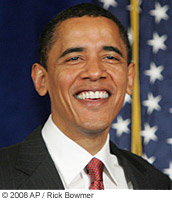
Barack Obama is a master politician!

Barack Obama #3

President Barack Obama wants to shock Congress into not implementing sequestration.  To motivate Congress he has directed cut backs in employment of workers and critical military support just to get your attention.

Federal spending for both 2012 and 2013 is planned at $3.8 Trillion for each year.  Ten percent of that number is $380 Billion.  The Budget Control Act (called sequestration) of 2011 imposed caps on discretionary programs that will reduce their funding by more than $1 trillion over the ten years from 2012 through 2021.  That does not mean $1 trillion in 2013.  It means one tenth of that amount each year or $100 Billion a year.

Somehow Congress decided the first year’s reduction must be $109.3 Billion.  That works out to 2.8763% of $3.8 Trillion budget.  Is this a big deal?  NO.  However to make it a big deal the administration has decided to do as much damage as possible by layoffs and furloughs that will make everyone in Congress feel guilty.  This is all in the hope that Congress will enact laws that will defer the cuts to some date in the distant future.

When hundreds of thousands of people receive their reduced paychecks in March, thanks to a four day work week, the anguished crying heard at congressional offices will receive immediate attention. Congress will cave into the Obama idea of finding another way to reduce spending.  Then again perhaps his objective is no reduced spending.  Either way he is likely to get his way.

Bar Joke

Robot BartenderGuy goes into a bar in Louisiana where there’s a robot bartender! The robot says, “What will you have?” The guy says, “Whiskey.” The robot brings back his drink and says to the man, “What’s your IQ?” The guy,” 168.” The robot then proceeds to talk about physics, space exploration and medical technology.

The guy leaves, . . . but he is curious . . . So he goes back into the bar. The robot bartender says, “What will you have?” The guy says, “Whiskey.” Again, the robot brings the man his drink and says, “What’s your IQ?” The guy says, “100.” The robot then starts to talk about Nascar, Budweiser, the Saints and LSU Tigers.

The guy leaves, but finds it very interesting, so he thinks he will try it one more time. He goes back into the bar. The robot says, “What will you have?” The guy says, “Whiskey,” and the robot brings him his whiskey. The robot then says, “What’s your IQ?” The guy says, “Uh, about 50.”

The robot leans in real close and says, “SO, . . . you people . . . still happy . . . with Obama?”

Los Angeles Mayoral Race

This article in the Los Angeles Daily News tells that  “Traditionally, voter turnout for mayoral elections is less than 40 percent for runoffs and less than that for primaries. Some city elections have drawn less than 10 percent of the 1.7 million eligible voters.”

Why vote when the likely winner for mayor is someone who cares more about the labor unions than about the city? I took the 2013 Los Angeles Budget Challenge at the city web site and to my dismay learned that the city has projected revenues of almost $4.7 billion and still cries for more. I have not heard one candidate for mayor talk about living within our means. That of course would require some straight talk and no one wants to do that. The public is disgusted and a majority see no worthwhile candidates.

My highest priorities are police and fire protection.  Everything else is one, two or three steps below those priorities.  At the end of the survey the results are provided with the most favored allocation of money to my choices and the current budget plans.

My choices resulted in a lower spending plan than the most favored choice and well below the current plan.  Still my ideas would leave the city with a deficit of $50.1 million.

So what are the candidates for mayor and city council saying?  Nothing about balancing the budget.  Even worse they lack any vision for the city. The leading candidates for mayor are One Republican with no city government experience and Three Democrats all with city experience are all tied to their past and all with connections to city labor unions.

Is it any wonder that turn outs for city elections rarely exceed 50% of registered voters.

Republican Party Tearing Itself Apart

 We are watching the Republican Party going through some very troubling times.  Democrats could not be happier.  Those in the “progressive” party should not be watching with glee.  The commentators on MSNBC ought to do more reporting and less celebrating.  The two party system has worked well for most of this nation’s history.

I find it surprising that I would back Karl Rove for anything.  Compared to the Tea Party he is a moderate.  There are no photos of Tea Party leaders.  I do not know who their leaders are. And finally Huffington Post has created a Karl Rove page that is at least fun to read.

I subscribe to the Tea Party Patriots e-mail letter system to keep abreast of their thinking and campaign plans. This morning I received this plea for money (every organization does that) and their campaign against Karl Rove.  I have deleted the money pleas lines but the rest of the e-mail tells me that the GOP may be about to break into two parties.  The highlighting, underlining, and bold font is theirs.

Dear Patriot,
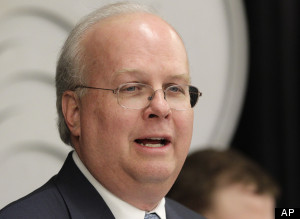
Karl RoveKarl Rove’s new “Conservative Victory Project” is nothing but an anti-Tea Party hit team that is gunning for our candidates.

So, grassroots conservatives must now all band together and fight back. We must defend the Tea Party!

We formed this brand new PAC to help Tea Party candidates challenge entrenched big-government Republicans for the nomination.

But, in light of recent events, we need to also be ready to defend our conservative incumbents as well.

The establishment is gunning for us. They want to crush our movement. We have to fight back!

Just last month a former top GOP aide in the House called for the purge of Tea Party-supporting congressmen from the Republican Party.

Then, last week an anonymous senior Republican declared to the Politico news website that their plan was to “marginalize the cranks, haters and bigots — there’s a lot of underbrush that has to be cleaned out.”

That’s what the liberal GOP establishment thinks of people like you and me. They believe that ordinary citizens who dare to stand up and fight for our country are “cranks, haters and bigots.” To them, their fellow Americans are “underbrush” that needs to be cleaned out!

Karl Rove and his cronies say they are now going to “pick” our Republican nominees. He said in a Fox News interview that he’ll even try to drive incumbent conservatives out of politics if he personally doesn’t consider them electable enough!

The Republican establishment is going to spend millions on private investigators, opposition researchers and a torrent of negative ads aimed at destroying every Tea Party conservative candidate or elected official in America.

Rove will target their personal lives, he’ll dig into their family backgrounds. And, if necessary, he’ll simply make up some dirt to smear any Tea Party candidate who gets in his way.

He’ll never debate issues. He’ll never provide solutions to the big-government mess he and his establishment buddies helped create.

Rove and his liberal allies only believe in the politics of hate and division, and they want to crush the Tea Party!

If Karl Rove and his cronies have their way Rand Paul, Michele Bachmann, Steve King, Mike Lee, and Tim Scott will all be driven out of Washington on a rail so that Rove and his big-government buddies can continue to enrich themselves at the expense of you and me!

Patriot, the fate of our movement is at stake. We must be prepared to fight back. Our country cannot survive much more of this.
We will support good conservatives who want to shake up Washington against entrenched liberal Republicans who want to continue to ruin America.

And, if necessary, we’ll support any Tea Party incumbents who are targeted for defeat by the establishment’ political goons.

Unfortunately, our opponents have lots of money. They’ll raise millions from liberals who share their goal of destroying the Tea Party. And they’ll raise even more from special interests that benefit from big government.

We can’t hope to compete with Rove or allies in the spending race. But we can out organize and out hustle them. However, I need your help to do just that.

We are going to organize and train local Tea Party groups to win primary elections.

We are going to support good conservative candidates who will go to Washington and help fix our fiscal mess.

And we are going to call out “Republicans” who vote like liberal Democrats with ad campaigns that blanket their districts or states.

Once again, we are on our own. It’s the Tea Party versus the corrupt Republican establishment. And the fate our great nation is at stake.

President Obama’s 2013 State of the Union Speech

It’s easy to listen to a one hour speech and believe you understand every word.  Reading the president’s words at your own pace might provide further more complete comprehension of his meaning.  He said, “nothing I’m proposing tonight should increase our deficit by a single dime.”  You should read his proposals and try to understand how that is possible.

The complete transcript is here.

 Liberals must be thrilled.  Moderates are less enthralled and conservatives are most likely appalled.  I am in the less than thrilled category.  Obama appears to be a replica of LBJ.  Remember the “war on poverty?”  Lyndon Johnson also brought us the Vietnam War.  Obama appears to be bringing us the Drone Wars.