Next week, on Tuesday, January 27, we will mark International Holocaust Remembrance Day to honour the six million Jewish lives taken during the Holocaust.
This was posted by a Canadian web site. I wonder what Americans will be posting.
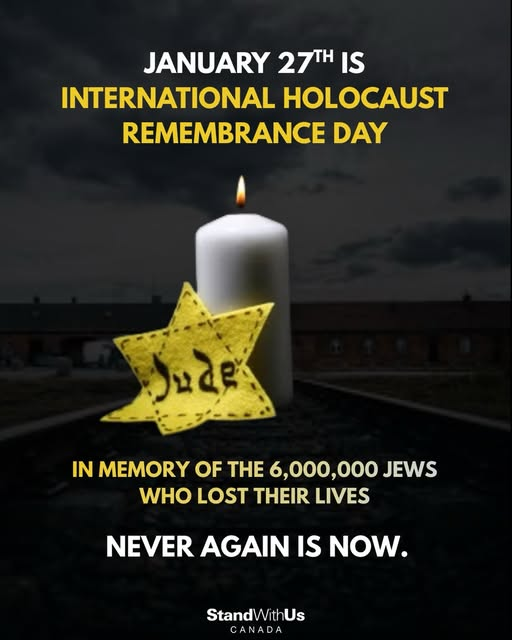
Next week, on Tuesday, January 27, we will mark International Holocaust Remembrance Day to honour the six million Jewish lives taken during the Holocaust.
This was posted by a Canadian web site. I wonder what Americans will be posting.
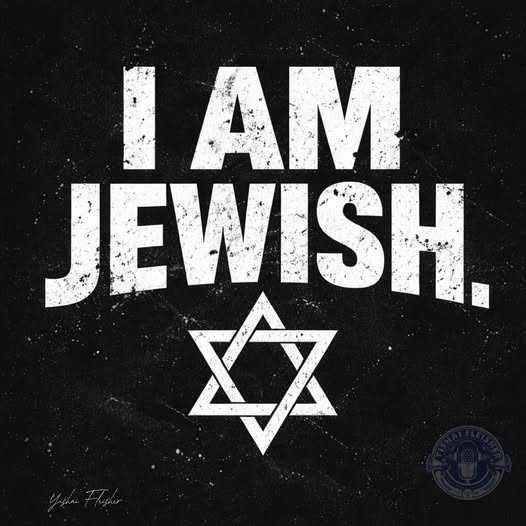
Say it loud, say it proud. And never back down.
By PETER SMITH Associated Press Updated 4:08 AM PST, December 12, 2025
Hanukkah — also spelled Chanukah or other transliterations from Hebrew — is Judaism’s “festival of lights.” On eight consecutive nightfalls, Jews gather with family and friends to light one additional candle in the menorah — a multibranched candelabra.
In Hebrew, Hanukkah means “dedication.” The holiday marks the rededication of the Temple in Jerusalem nearly 2,200 years ago after a small group of Jewish fighters liberated it from occupying foreign forces.
With the tiny supply of ritually pure oil that they found in the temple, they lit the menorah. According to the Talmud, it miraculously remained lit for eight days. The ritual of lighting a nightly candle and the emphasis on cooking foods in oil, such as potato pancakes called latkes, memorialize this holiday.
Hanukkah always begins on the 25th day of the Jewish month of Kislev.
But the Jewish calendar, which is based on lunar cycles, is not in sync with the commonly used Gregorian calendar. Depending on the year, Hanukkah falls at various times between late November and late December.
This year, Hanukkah starts at sundown on Sunday, Dec. 14, and lasts through Dec. 22.
Traditionally, Hanukkah has not been a major holiday on the Jewish calendar, but it has taken on cultural prominence because it occurs at a time when many other people are preparing for Christmas.
Jews across the religious observance spectrum — from Reform to Conservative to Orthodox — focus on the same theme of bringing light into the darkness and emphasizing that even a small, against-the-odds effort can have a transforming effect.
The Talmud, an ancient compendium of commentary and teachings on Jewish law, customs and Scripture, reflects a dispute over the order of lighting. But most people start with one candle and increase the lighting by an additional candle each night while reciting or chanting special blessings.
The candles are added from right to left, but lit from left to right on the menorah, thus always starting with the newest light. The special menorah used for Hanukkah has eight branches, with a ninth place for the candle called shamash from which all others are lit.
The tradition calls for candles with a real flame, although some also use electric ones in public displays, such as in hospitals, for safety reasons.
A menorah is lit in each household and traditionally is placed where it can be seen from the outside, such as a doorway or windowsill, to symbolize the spreading of God’s light to all nations.
The lighting of menorahs in city streets and parks has become more prominent in recent years in countries around the world, including in front of public landmarks.
In addition to menorah lightings, giving to charity and social works are also part of the celebration for many, reflecting the belief that the Jewish people are called by God to help make the world better for all.

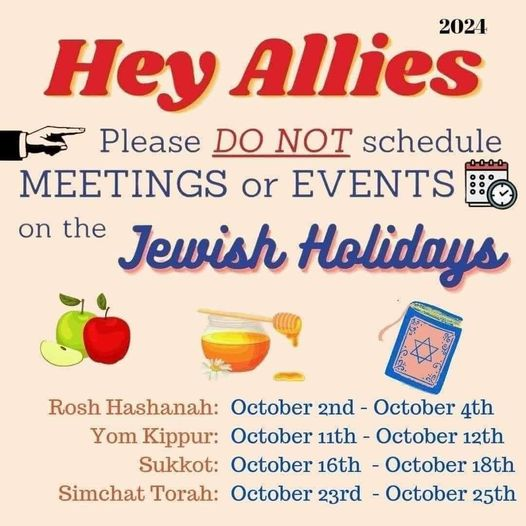
Yom Kippur 2025 begins at sundown on Wednesday, October 1, and ends at nightfall on Thursday, October 2. But it is not just a date. It is the climax of the Jewish spiritual calendar. It’s the final chance to change your judgment for the coming year.
If Rosh Hashanah is the day we are “written” in the Book of Life or Death, Yom Kippur is the day the ink dries.
Jews all over the world will fill synagogues, yes, even the secular ones who only show up once a year. Something deep in the Jewish heart knows that Yom Kippur matters. It is the only 25-hour period when the entire nation of Israel, religious, secular, rich, poor, Mizrahi, Ashkenazi – all stand together in front of God.
In life, Kirk spoke of what he called a “spiritual battle” being waged in the United States between Christians and a Democratic Party that “supports everything that God hates.”
In death, Kirk, one of the Republican Party’s most influential power brokers, is being hailed by conservative evangelical pastors and GOP politicians as a Christian killed for his religious beliefs.
Kirk — who rallied his millions of online followers to vote for Trump in the 2024 election — declared that God was on the side of American conservatives and that there was “no separation of church and state.” He was also known for his vitriol against racial and religious minorities, LGBTQ+ people, childless women, progressives and others who disagreed with him.
Kirk called transgender people “a throbbing middle finger to God.” He said the Civil Rights Act of 1964 was “a huge mistake” and called the Rev. Martin Luther King Jr. “awful.” On his podcast, he called with a smirk for “some amazing patriot out there in San Francisco or the Bay Area [who] wants to really be a midterm hero” to bail out of jail the man who attacked then-House Speaker Nancy Pelosi’s husband with a hammer in their home in 2022.
Is this the country you want?
Kirk was known to be a gun owner himself and regularly spoke out on the issue, including on behalf of the National Rifle Association in the aftermath of the massacre at Marjory Stoneman Douglas High School in Parkland, Florida, in February 2018.
At a Turning Point event in Salt Lake City in April 2023, he said, “It’s worth it to have a cost of, unfortunately, some gun deaths every single year so that we can have the Second Amendment.”
Kirk adopted a traditional Christian conservative stance in his approach to many contemporary issues, telling an audience at a Trump election rally in Georgia last fall that Democrats “stand for everything God hates” and adding: “This is a Christian state. I’d like to see it stay that way.”
He also lashed out at the gay community, denouncing what he called the “LGBTQ agenda,” expressing opposition to same-sex marriage and suggesting that the Bible verse Leviticus 20:13, which endorses the execution of homosexuals, serves as “God’s perfect law when it comes to sexual matters.”
Generally Kirk was loyal to Trump, whom he saw as key to establishing the conservative Christian America he wanted to help realize, one in which abortion is heavily restricted to cases of medical emergency in which the mother’s life cannot be saved by any other means, women enter higher education to find husbands and “woke” ideologies play no part in public life.
Political analyst Matthew Dowd lost his contributor role at MSNBC because of comments he made about Charlie Kirk after the young right-wing activist was murdered Wednesday.
Shortly after Kirk was shot to death while speaking on stage at Utah Valley State University, Dowd told MSNBC anchor Katy Tur that “hateful thoughts lead to hateful words which then lead to hateful actions.”
The angry reaction on social media was immediate after Dowd’s comments suggested that Kirk’s history of incendiary remarks led to the shooting.
This on a Sunday
 Coast Contact