Are robots about to replace humans?

Last week, Treasury Secretary Steven Mnuchin said he wasn’t worried at all about advancing artificial intelligence taking over jobs anytime soon. In fact, he said, he wouldn’t be worried about it for another 50 to 100 years.

That was a surprising commentary considering the advance of AI (artificial intelligence) and the advances in robotics. New York developer Rockefeller Group is building two warehouses in Riverside County, California that will span 1.45 million square feet. The purpose of those warehouses is to be a distribution point for goods received at the ports of Long Beach/Los Angeles.

Giant cranes unload those cargo container ships far faster than the longshoreman directed activities of the past. Thanks to bar code technology the location of every widget in a warehouse can be identified and fetched by robots that can lift and move 3,000 pounds with ease. That means fewer jobs for operators of large fork lifts.

Recent studies from McKinsey and the economists Carl Benedikt Frey and Michael A. Osborne estimate that around 45 percent of workers currently perform tasks that could be automated in the near future. And the World Bank estimates that around 57 percent of jobs could be automated within the next 20 years.
Robots install rivets on a 2015 Ford F-150

Automobile welding as car move down assembly lines have become so common that photos of the action no longer attract too much attention.

Sellafield, on the coast of the Irish Sea, more than 300 miles north (and a bit west) of London, at the dawn of the Cold War; the U.K. chose this site as the place to begin enriching uranium for its first nuclear weapon. But in the country’s haste to build a bomb, little thought was given to disposing of the waste. The U.K. government is spending about £2 billion ($2.5 billion) a year at Sellafield to contend with the nuclear waste. A new model of a cleanup robot “will make its own decisions” in dealing with the waste.

The technology already exists to make long haul trucks self-driving. There are 8.7 million trucking-related jobs in the United States. It is easy to understand why the changeover to those autonomous trucks will take time. It is not going to take 50 to 100 years.

This Robotic Sex Doll Isn’t Just Looking For A One Night Stand, She Wants To Meet Your Parents.
Fake News or is the Messiah coming?

This is not fake news. It was reported on NPR.

Scientists predict that a pair of stars in the constellation Cygnus will collide in 2022, give or take a year, creating an explosion in the night sky so bright that it will be visible to the naked eye.

If it happens, it would be the first time such an event was predicted by scientists.

Calvin College professor Larry Molnar and his team said in a statement that two stars are orbiting each other now and “share a common atmosphere, like two peanuts sharing a single shell.”

They predict those two stars, jointly called KIC 9832227, will eventually “merge and explode … at which time the star will increase its brightness ten thousand fold, becoming one of the brighter stars in the heavens for a time.” That extra-bright star is called a red nova. They recently presented their research at a meeting of the American Astronomical Society in Grapevine, Texas.

The following was an explanation on the Daily Beast.

For six months this new star will—to the naked eye—be the brightest in the heavens. Given that this is the first time that people will be able to witness a moment like this without technology, it’s a significant event in human history, but it may be much more than that. According to one rabbi, this new star is a sign of the coming of the Messiah.

Rabbi Yosef Berger, a rabbi of King David’s Tomb on Mount Zion, has proposed that the star is a fulfillment of a Biblical prophecy from the book of Numbers, in which a star precedes the arrival of an important military leader: “a star shall come out of Jacob, and a scepter shall rise out of Israel; it shall crush the borderlands of Moab, and the territory of all the Sethites” (NRSV Num 24:17)

What Price Will You Pay to See?

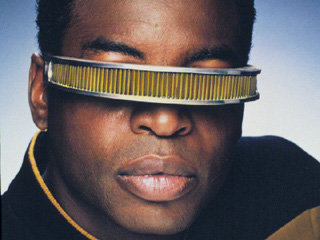
Geordi La Forge, Star Trek Commander

A Science Fiction Idea is Becoming Reality

Lieutenant Commander Geordi La Forge was the blind man character in Star Trek: The Next Generation. The story line was that due to a birth defect, he was born blind. He uses technological devices that enables him to see.

If only such a device could exist in the real world.

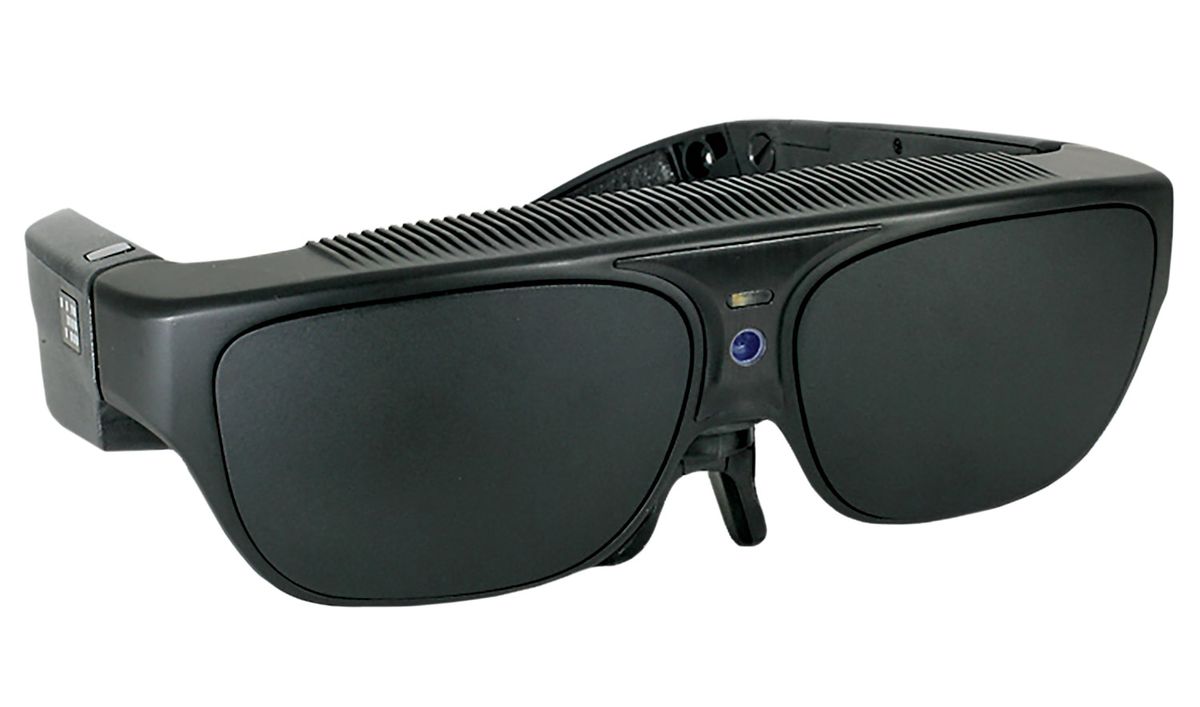
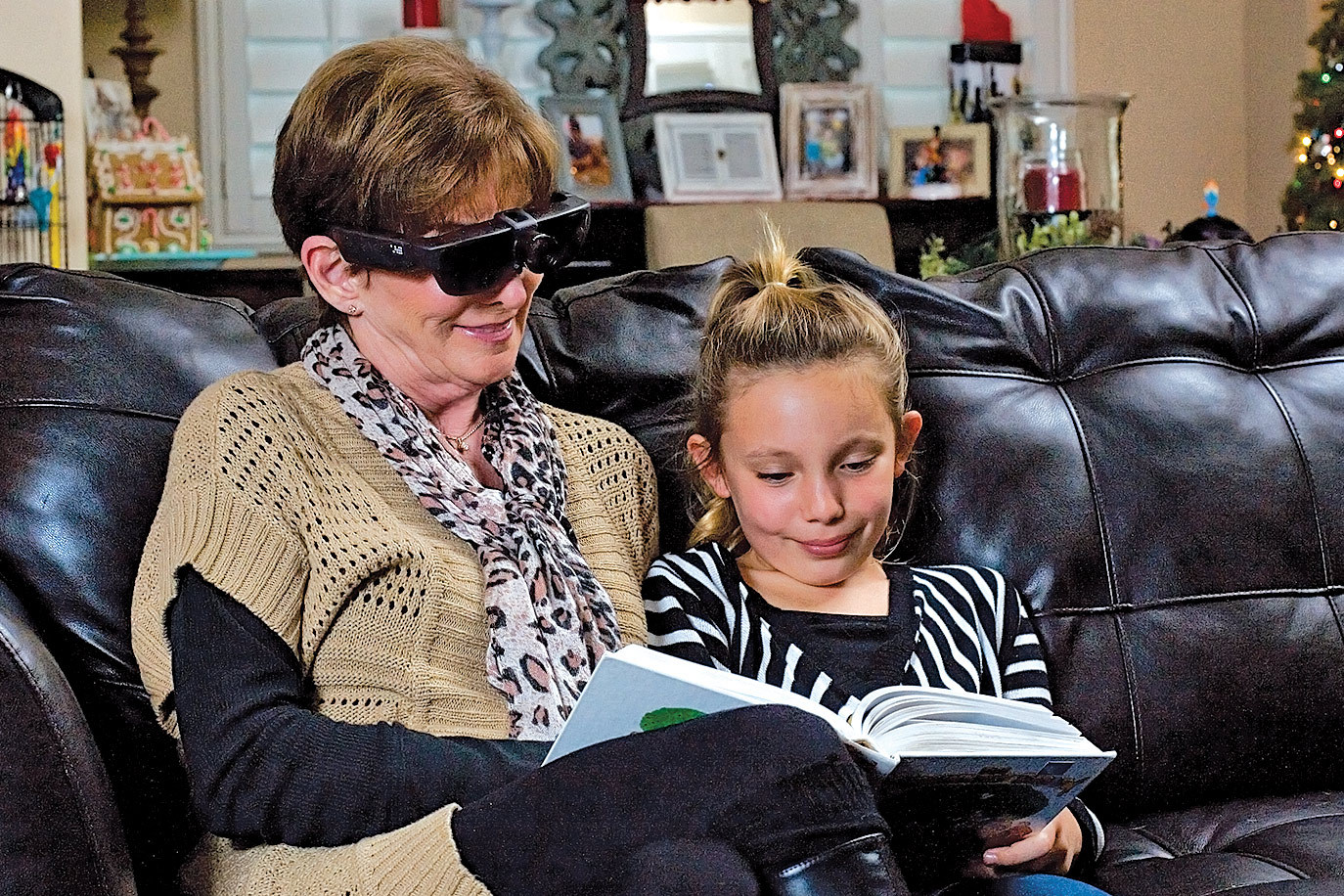
Now such progress in the real world has actually happened. Innovator Mark Greget has invented a combination of custom software and smart glasses that is designed to restore sight to people with serious vision loss. A camera on the front of the blacked-out glasses acts as eyes. Captured images are projected on the lenses.


NuEyes Glasses

People with significant loss of vision from macular degeneration, glaucoma, and retinitis pigmentosa can benefit from the glasses. The product became available this past April at a cost of $6,000. Called NuEyes they have been making patients “very happy.” Veterans Affairs have been placing orders for the device.

NuEyes Glasses #2

Summer in February

The trees and other spring blooming plants at my home are confused. Everything is blooming. American Robins were in the front yard splashing in the water from the sprinklers. It was supposed to be one of the wettest Februaries on record. Instead, by one measure at least, it became the hottest on record. We turned on the air conditioning for about 30 minutes this afternoon as the temperature approached 90°F. Underground Weather reports the temperature reached 94°F. The forecast is for a rainy period with temperatures in the 60s starting Sunday.

Robins in water 2-24-16 #1 Robins in water 2-24-16 #2 Robins in water 2-24-16 #3 Robins in water 2-24-16 #4

All photos taken with Panasonic FZ200 camera

The downside of this summer weather in February is my concern that next summer’s temperatures will be beyond healthy extremely hot. That might be a good excuse to head to the mountains or the beach for cooler weather. It’s foggy in Newport Beach, California today. Is this part of El Niño/La Niña? The weather bureau seems to be unable to provide reliable information.

‘Godzilla El Nino’ May Be Coming to California – a Big Maybe

There have been a total of eight seasons beginning in years (1952, 1953, 1958, 1969, 1976, 1977, 2004, 2006, 2013) classified as “weak” El Niños, eight years (1951, 1963, 1968, 1986, 1991, 1994, 2002, 2009) as “moderate”, four years (1957, 1965, 1972, 1987) as “strong” and two years (1982, 1997) as “very strong” El Niños.

Of the 10 costliest flood years in California since 1950, only four happened during a season when there was an El Niño. Two others occurred during seasons with La Niña, and the final four were when the temperature of the tropical Pacific was near normal.

I have been collecting rain measurement in my backyard since the beginning of the 1997 El Niño year. That year the rain accumulation was 48.3 inches in my backyard. That was the highest annual total since I started collecting data. However the highest single 24 hour period was March 11, 2011. In that year rainfall amounted to 26.2 inches of rain.  Heavy rain that previous December, 2010 totaled more than 9.6 inches and the news media called the heavy rain a “pineapple express.” That was not declared an El Niño year.

The annual rain fall in southern California is so erratic that averages are worthless. They predict nothing. The year following the 26.2 inches only 13.6 inches fell.

Let’s not hold our breath. We should plan for the worst. In other words plan for drought and hope for more rain.

Cancer Research, Cures, and Making Money

AbigailNabbyAdams Smith (July 14, 1765 – August 15, 1813) was the firstborn of Abigail and John Adams, founding father and second President of the United States.

In 1810, Nabby was diagnosed with breast cancer, followed by a mastectomy in 1811. … The cancer continued to spread throughout her body, and she died, aged 48. That was 200 years ago.

ABCNews.com says that $415 Million is spent annually by Medicare for the treatment of breast cancer.

Total average Medicare spending per patient for initial phase care of breast cancer (2 months prediagnosis–365 days postdiagnosis) was $21,000 (2002 US$) in 2002 (Figure 2).4 Surgery and radiation cost little on a per-patient basis: $5700 and $4500 (2002 US$), respectively, and were used in 91% and 51% of patients, respectively. In contrast, chemotherapy and other inpatient services were used in about 25% of patients, but at a higher per patient cost ($12,800 [2002 US$]). If the data used for this analysis were expanded to include continuing care and end-of-life care, there would be a marked difference in spending patterns. The United States spent an estimated $62,900 to $94,300 per person for end-of-life breast cancer care during 2010 – See more at: http://www.ajmc.com/publications/evidence-based-oncology/2012/2012-2-vol18-n1/the-economics-of-cancer-care-in-the-united-states-how-much-do-we-spend-and-how-can-we-spend-it-better#sthash.BSrLsaip.dpuf.

So millions of dollars are spent treating people with this horrible disease. Billions more are spent on research for a cure. The National Cancer Institute’s (NCI) budget for FY 2013 was approximately $4.8 billion. Overall, NCI’s budget has been relatively flat in recent years. During the period from 2005 through 2013, the NCI budget averaged $4.9 billion per year.

Lots of people making lots of money.   

How dare I suggest this thought? Isn’t cancer cures and cancer research an industry that makes large amounts of money? Lesley Stahl on 60 Minutes discovers the shock and anxiety of a cancer diagnosis can be followed by a second jolt: the astronomical price of cancer drugs.


If you had a cure for just one of those cancers, breast cancer, how many people would need to find another job?  How many companies would be earning less money?

Another Los Angeles Earthquake

The Southern California Earthquake Data Center (SCEDC) operates at the Seismological Laboratory at Caltech and is the primary archive of seismological data for southern California. They list 233 significant faults in this area. The Puente Hills fault is not listed. How many more faults are not identified? Obviously no one knows.

The Los Angeles metropolitan area is built on an active earthquake zone. I live in the west end of the San Fernando Valley. A distance of about 55 miles (Yes, Los Angeles Metro area is even bigger than that!) The 5.1 quake in La Habra resulted in a two to three second jerk motion at my home. If you were in motion you most likely did not even notice the movement. ABC television network news gave the impression that the entire city was impacted. That is an incorrect report.

Are earthquakes frightening? YES. Are earthquakes memorable? Rarely.

A Real Replay of “Inherit the Wind”

How did the United States become so backward?

Inherit the Wind poster Inherit the Wind is a play by Jerome Lawrence and Robert Edwin Lee. The play, which debuted in 1955, is a story that fictionalizes the 1925 Scopes “Monkey” trial. The trial resulted in John T. Scopes‘s conviction for teaching Charles Darwin‘s theory of evolution to a high school science class, contrary to a Tennessee state law.  The movie version starred Spencer Tracy, Fredric March, Gene Kelly, and Dick York.

Today the Associated Press reports that TV’s “Science Guy” , Bill Nye and the leader of a Kentucky museum who believes in creationism are debating a question that has nagged humankind: “How did we get here?”

Ken Ham is the head of the Creation Museum. He believes the Earth was created 6,000 years ago by God and is told strictly through the Bible.

Perhaps the world is flat.  Most intellectuals of the Roman Empire took for granted that the Earth was flat.  Many of the great thinkers and philosophers of the 16th century accepted that Earth was flat, since most of them couldn’t conceive of any other shape.  Are the people in Kentucky and Tennessee living on another planet?

All the television networks will have great fun with this nonsense.  It is sad!