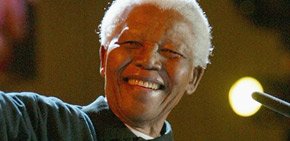
Nelson Mandela

nelson-mandela-timelineThe overwhelming tribute to this man was a colossal mistake. I have attempted to read every article written about this man.  Not one article I have read tells us anything more than he was incarcerated for 27 years.  That he was a leader in the African National Congress.  That he was an inspiration to the Black people of South Africa.  He did not look for revenge but sought reconciliation.  All good things but do those things make him a great leader?  I do not believe that his contributions deserve the accolades that has received. I am not alone in this opinion. 

South Africa is in tatters.  Most of the black township areas consist of poor people who do not appear to have any path to better lives.  Thousands of White people have emigrated to other nations.

The New York Times March 22, 2012 article only begins to tell the story.  Anthony Bordain’s Parts Unknown on CNN shows some of the poverty.  Without an educated society there is little chance for progress.

Great speeches, smiles, and friendliness are wonderful attributes.  They alone do not make a great person.  This man’s accomplishments were few.  Black Africa needs a leader.  Perhaps this memorial will motivate someone to step forward to fill that position.

Sandy Hook Anniversary

This is the one year anniversary of the now well documented shooting at Sandy Hook, Connecticut.

Since the Sandy Hook tragedy (20 children and six adults killed by a deranged young man) there have been at least 19 similar events.  In addition gun violence in big cities continues.  All this in what many people say is the greatest nation in the world.  Apparently the access to guns and the “right” to have a gun takes priority to making the United States the safest nation in the world.

The Great American Society

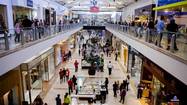
Black Friday at the mallWhat a great society we live in, in the United States.  The Associated Press reported that Consumer borrowing rose $18.2 billion in October.

The article is a celebration of American’s willingness to go into further debt.  For October the report says seasonally adjusted debt has reached $3.08 trillion.

It’s all because we are a consumption society.  Whatever we want we buy.  We simply hand our credit card over to the clerk or enter the card number as we buy on-line.  All is well until the bank sends out our bill.  No problem that we spent six thousand dollars.  The minimum payment is only $129.00 per month.  We can handle that.

Businesses in the United States rely on this behavior.  Even as the economy was crashing in 2008 and 2009, the manufacturers and retailers knew that this troubled time would pass.

So here we go again.  After all it’s the poorly educated that continue on the same path.  Society does not know how to resolve the problem.  The Poorly Educated is partly the result of bad habits handed down from one generation to the next and the capabilities of those who are poor.  Not all of us can learn to be a doctor or do computer coding.  Not all of us are willing to put in the long hours necessary to make a small business thrive.  Few of us have the capabilities and good fortune to be a Bill Gates or Warren Buffett.

What we all can do is control our desire to spend so that we can provide our families with some financial security when the bad stuff happens.

Enjoying the Stock Market Rise? Now might be the Time to Sell!

Revised December 2, 2013

The marvelous thing about the stock market is you can find someone, an expert, who will say the words you want to hear.  Thus if you believe the stock market will continue to go up there are plenty of stock market advisers who will tell you that the end of the rise is no where in sight.  However, if you are skeptical about the continued rise in stock market shares then you will listen to those who say now is the time to sell.

After all, buy low sell high demands you get out now!  Frankly it looks like a bubble to me.

Economist Caution: Prepare For ‘Massive Wealth Destruction’

Starts with these two paragraphs.

Take immediate steps to protect your wealth . . . NOW!

That’s exactly what many well-respected economists, billionaires, and noted authors are telling you to do — experts such as Marc Faber, Peter Schiff, Donald Trump, and Robert Wiedemer. According to them, we are on the verge of another recession, and this one will be far worse than what we experienced during the last financial crisis.

Most of the above group are known bear market advisers.  How about Oaktree Chairman, Howard Marks?  He has a bundle of funds to manage.  He posted this article on Morningstar.  Not a bear market web site.

The Race is On

. . . there’s a race
to the bottom going on, reflecting a widespread reduction in the level of
prudence on the part of investors and capital providers.  No one can prove at
this point that those who participate will be punished, or that their long-run
performance won’t exceed that of the naysayers.  But that is the usual
pattern.

I know, you want to squeeze every last drop out of the unbelievable rise in the stock market.  After all the S&P 500 is up over 25% this year alone.  The problem is that when it drops, the falls seem to come fast and furious.  Just remember, mutual fund trades occur at the end of the day.  In just one day the market lost 777.68 or 6.98%. That was not in 1929.  That was September 29, 2008.

Oh well that was 2008 you are saying.  That was the start of the Great Recession.  What about the 15% drop in August 2011?  That occurred between August 4 and August 10.

Don’t be greedy!

A Jewish Sephardic leader dies – an Israeli ayatollah

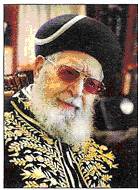
Ovadia YosefMore than 700,000 Israelis, many rending their clothes, packed the streets of Jerusalem two weeks ago to mourn Ovadia Yosef (died October 7,2013), the ultra-Orthodox rabbi who once led Israel’s Sephardic Jews. Yosef, 93, founded the influential Shas party to speak for working-class Jews from the Middle East, who had less clout in Israel than Ashkenazi Jews from Europe. A polarizing figure, he paved the way for peace with Egypt by ruling that territorial concessions were permissible, yet he also denounced Muslims as “ugly” and “stupid,” and said Jews who died in the Holocaust were being punished for ancestral sins. Non-Jews, he said in a 2010 sermon, “were born only to serve us.”

Jeffrey Goldberg, a Bloomberg columnist, called Yosef “the Israeli Ayatollah.”  Goldberg went on to write:

In the manner of the crudest fundamentalists everywhere, Yosef blamed misfortune and death on apostasy, irreligiosity and homosexuality (gay people, in his eyes, were “completely evil”). About Israeli soldiers who fell in battle, Yosef once said, “Is it any wonder if, heaven forbid, soldiers are killed in a war? They don’t observe the Sabbath, they don’t observe the Torah, they don’t pray, they don’t put on phylacteries every day. Is it any wonder that they’re killed? It’s no wonder.” Even more famously, he blamed the deaths of Jews during the Holocaust on the spiritual deficiencies of their ancestors.

In 2005, he argued that Hurricane Katrina was God’s punishment for the Gaza withdrawal and for the alleged godlessness of the black residents of New Orleans. “There was a tsunami and there are terrible natural disasters, because there isn’t enough Torah study,” he said. “Tens of thousands have been killed. All of this because they have no God.” He went on to argue — if that’s the word for it — that the deaths were also punishment directed at President George W. Bush for pressuring Sharon to remove Jewish settlers from the Gaza Strip. “It was God’s retribution,” he said. “God does not short-change anyone.”

Sorry, no: Prejudice is prejudice, whether it comes from an imam in Qatar or from the man whose Jewish critics labeled him, correctly, the “Israeli ayatollah.”

David Bancroft

Which 100 global fashion brands signed the accord to beef up safety in Bangladesh?

From the Toronto Star

There are two shocks from this article.

1) A nine year old working in a garment factory.

2) Where is Hudson’s Bay, Wal-Mart and Target?

Meem, 9, at work in a Bangladesh garment factory

Meem, 9, at work in a Bangladesh garment factory. (Raveena Aulakh/Toronto Star)

Six months after the devastating Rana Plaza collapse in Dhaka, Bangladesh, 100 of the world’s leading garment brands and retailers have signed a binding, 5-year legal agreement aimed to drastically improve safety conditions for workers.

The Bangladesh Fire and Safety Accord now covers 2 million workers in 1,600 factories used by 100 brands, the Swiss-based union IndustriALL announced on Thursday along with the UNI Global Union.

Both unions are working with the brands and other non-governmental organizations to implement the accord, which will bring inspections to all the 1,600 factories within 9 months. If factories are found to have fire, electrical or structural problems, the brands must work with the factory owners to pay for the needed upgrades. All inspections will eventually be posted on the accord’s website.

“We are delighted to reach this  landmark figure. With this support we can make a difference on the ground. We  are sending a strong message to all the companies that stand outside of the  Accord: sign up and get engaged,” said UNI general secretary Philip Jennings in a release.

The Star sent reporters Raveena Aulakh and Rick Westhead to Bangladesh to chronicle the state of the garment industry in the series the Clothes on Your Back.

Who has signed the Accord? Check out the list below:

Abercrombie & Fitch
Ahlens
Aldi South
Aldi North
American Eagle Outfitters
Arcadia Group
Auchan
Belotex
Benetton
Bestseller (CHB)
Bonmarche
Brands Fashion
C&A
Camaieu
Carrefour
Casion Global
Charles Vogele
Chicca
Comtex
Colombus Textilvertrieb GmbH
Coop Danmark
Cotton On
Dansk Supermarked
Datex
Debenhams
Distra
DK Company
El  Corte Ingles
Ernsting’s Family
Esprit
Fashion Linq
Fat Face
Forever New
GEBRA
Groupe Casino
G-Star
H&M
Helly  Hansen
Hema
Hemtex
Hess Natur-Textilien GMBH
Horizonte
IC  Companys A/S
ICA Sverige
Inditex
JBC
Jogilo
John Lewis
Jolo Fashion
Juritex
K-Mart (Australia)
KappAhl
Karstadt
Kik
Klaus Herding GmbH
LC Waikiki
Leclerc
Lidl
Loblaw
Mango
Marks and Spencer
Matalan
Metro Group
Mothercare
Multiline Group
N Brown
New Look
Next
O’Neill Europe BV
Otto Group
Primark
Puma
PVH
PWT Group A/s (Texman)
REWE  Group
River Island
s.Oliver
Sainsbury’s
Schmidt Group
Scoop  NYC/Zac Posen
Sean John Apparel
Shop Direct Group
Speciality  Fashions (Aust)
Stockmann Switcher
Target (Australia)
Tchibo
Tesco
Topgrade International Uncle Sam GmbH
UNIQLO
Van Der  Erve
Vaner Group
Voice Norge AS
We Europe BV
Woolworths
Wünsche Group
Zeeman

Demagogue

A demagogue or rabble-rouser is a political leader in a democracy who appeals to the emotions, fears, prejudices, and ignorance of the less-educated citizens in order to gain power and promote political motives. Demagogues usually oppose deliberation and advocate immediate, violent action to address a national crisis; they accuse moderate and thoughtful opponents of weakness. Demagogues have appeared in democracies since ancient Athens. They exploit a fundamental weakness in majoritarian democracy: because power is held by the most numerous group of people, one who appeals to the lowest common denominator attitudes of a large enough segment of the population can obtain power from them.  This is a Wikipedia definition.

Infamous recent demagogues

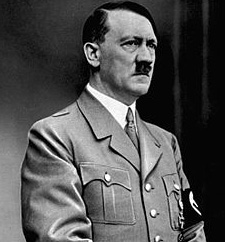
Adolph Hitler - 1937

Adolph Hitler, led the Nazi party to power in Germany by appeals to ethnic pride and conspiracy theories that blamed Jews for the nation’s economic troubles.

Joseph_McCarthyU.S. Senator Joseph McCarthy, famous for accusing many people in government and the entertainment industry of being communists.

Ted Cruz

U.S. Senator Ted Cruz, famous anti-government crusader whose obejctive seems to be to dismantle the U.S. Federal government.

The Richest 1% Own Nearly Half of all Global Wealth

By David Lazarus, Los Angeles Times, October 11, 2013

David Lazarus, Los Angeles Times

The richest 1% own nearly half of all global wealth.

Let’s get our heads around that. Only a tiny fraction of the roughly 7 billion people in the world accounts for 46% of the estimated $241 trillion in money, prop­erty and other material resources available.

The richest 10%, mean­while, can claim 86% of global wealth, leaving 90% of the world’s population to divvy up whatever’s left.

These extraordinary figures were included in a report this week from Credit Suisse Research Institute. It found that the gravy train is chugging along, but with relatively few passengers.

Former Labor Secretary Robert Reich has been sounding the alarm over wealth inequality for years. He’s at the center of a recent documentary, “Inequality for All,” which explains the problem in frightening detail.

“When so much of the purchasing power, so much of the economic gain, goes to the very top,” Reich told me, “there’s simply not enough purchasing power in the rest of the economy.”

That has profound impli­cations. In the United States, consumer spending accounts for about 70% of all economic activity. If most consumers are getting by with less, the inevitable outcome is that they’ll have fewer dollars to pump into the economy.

Reich noted that wealth inequality was greatest in this country in 1928 and 2007. In both years, the top 1% represented about a quarter of total income.

And shortly thereafter, in 1929 and again in 2008, the U.S. economy tanked, drag­ging down the rest of the world with it.

Other nations, Reich said, have taken steps to address wealth inequality. They’ve invested more in infrastructure and educa­tion in an effort to create more economic opportuni­ties throughout the social spectrum.

The United States, for its part, has been content to let the problem grow.

“We are far more unequal than any other advanced society in the world, and we are surging toward greater and greater inequality,” Reich said.

The Credit Suisse report bears that out. Average adult wealth in Switzerland is $513,000, the world’s high­est, followed by Australia ($403,000), Norway ($380,000) and Luxembourg ($315,000).
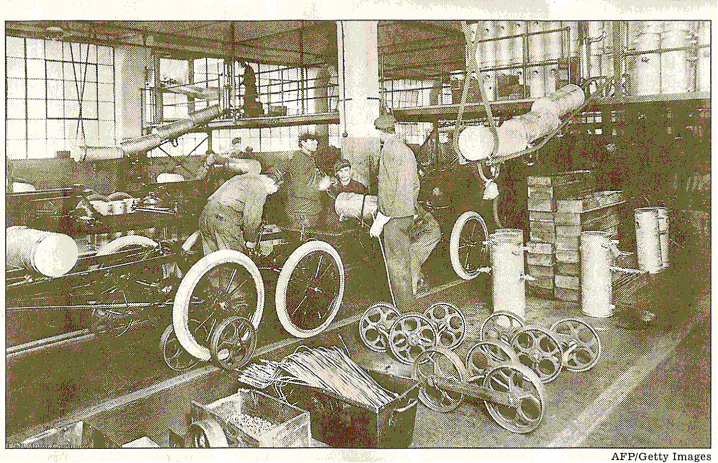
Ford Factory - 1913

IN 1914, HENRY FORD more than doubled factory workers’ minimum pay so they could afford to buy Ford cars. Above is the Highland   Park plant in 1913.

——————————————————————————————————

Average adult wealth in the United States is $301,000, but that number is heavily skewed by the fact that this country has, by far, the greatest number of “ultra-high net worth” indi­viduals, with personal as­sets exceeding $50 million.

According to the report, the United States accounts for 46% of all such super­wealthy people worldwide. Coming in a distant second is China, which boasts 6% of the world’s super rich.

Being successful, obvi­ously’ isn’t a bad thing. There’s much to be said for the whole land-of-opportu­nity idea, in which people are rewarded for a job well done.

But that’s not what’s actually happening. The rich are gaming the system so they can accumulate a greater share of wealth to the detriment of others.

They do this by using their financial (and hence political) clout to reduce their share of taxes, thus placing a greater burden on the rest of society to fund government programs and the public sector’s investment in economic growth.

The top marginal tax rate for much of the 1920s was 25%. It was 35% in 2007. At both times, wealth in­equality was at record levels.

Compare that with the 1950s when, under then­ President Dwight Eisen­hower, a Republican, the top marginal tax rate was 91%. Were the upper classes barely scraping by with such an onerous tax load?

Hardly. This period was one of the most prosperous in American history. Not coincidentally, wealth in­equality was at a low as almost everyone shared in the economy’s and the country’s good fortune.

In contemporary terms, job creators were paying much higher taxes than working stiffs, and – guess what? – there were still plenty of jobs being created.

“I’m sure the rich in the 1950s would have preferred a 10% tax rate,” said Gregory Clark, an economist at UC Davis. “But there’s no em­pirical evidence that taxing the rich slows down eco­nomic growth.”

Just the opposite. Since consumer spending is re­quired for growth, placing more money in the hands of consumers would seem crucial to fueling economic expansion, which, it goes without saying, has the ancillary benefit of helping the rich get richer.

Henry Ford recognized this. In 1914, he more than doubled factory workers’ minimum pay to $5 a day ($1l7 in today’s dollars). In part, this was to halt costly employee turnover. But it was also to provide workers with enough cash to buy the cars they were making.

“It is our belief that social justice begins at home,” said James Couzens, Ford’s treasurer at the time. “We want those who have helped us to produce this great institution and are helping to maintain it to share our prosperity.

“We want them to have present profits and future prospects,” he said. “Believ­ing as we do that a division of our earnings between capital and labor is unequal, we have sought a plan of relief suitable for our busi­ness.”

U. S. chief executives made an average of$12.3 million last year, or 354 times what the average rank-and-fIle worker pulled down, according to the AFL-CIO. Thirty years ago, the average CEO was paid 42 times what ordinary workers received.

The Credit Suisse report shows that the number of millionaires worldwide has risen by almost 2 million since the middle of last year. There are now about 99,000 individuals worth more than $50 million apiece.

Yet two-thirds of all other adults have assets worth less than $10,000. Put another way, two-thirds of all adults worldwide repre­sent no more than 3% of global wealth.

Credit Suisse forecasts that global wealth will rise almost 40% over the next five years. That’s the good news.

The bad news is that you, and billions of other hard­working people, will see little if any of those gains.

The Melted Pot

Growing up in the United States (I was born in Canada) I learned that this country is a “melting pot” where everyone mixed together to form one great nation.  I was taught to believe that it made no difference where you came from. Religion, race, or ethnicity was not consequential.  Everyone has the same chance and the same opportunity in America.

Where I was born was different.  I was told Canada is not a “melting pot.”  It is a mosaic where every group can co-exist.  I was shocked by that and happy to be in the United States.

Then I grew up.  As I did so I realized that the “melting pot” did not really exist except in the minds of dreamers.  Mexicans, Jews, and Blacks all had their own separate cultures and were kept separated by neighborhood.

Even after equal rights and affirmative action proliferated, the Canadian format of mosaic has accelerated.  Everyone is identified with his religious, ethnic, and cultural background.  Jewish-Americans, Mexican-Americans, Afro-Americans, etc., etc., etc.  Every news media emphasizes everyone’s race, religion, and family national origin.

Consider these inexplicable contradictions.

  • Miss America is not really an American because her family is from India.

julie chen - thetalk_host

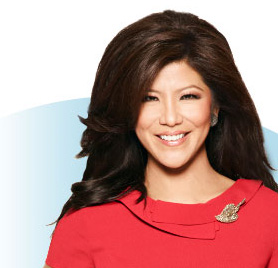
  • Julie Chen, host and moderator of THE TALK, CBS’s daily daytime talk television show had eye lid surgery to look more American.
  • Our own president is the child of a White Christian American and a Black Kenyan and has been called an illegal president because he may have been born outside of the United States (despite his birth certificate).

Ted_Cruz,_official_portrait,_113th_Congress

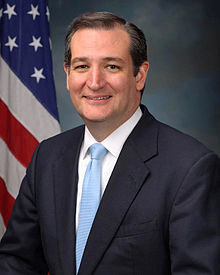
  • However, Senator Ted Cruz, whose mother is an American and father is a Cuban, was born in Canada but could legally become president of the United States.  He looks like a White American.

Meanwhile the rest of the world looks on and laughs.