Dilbert on Apple

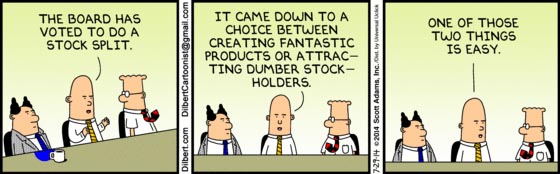
Today’s cartoon immediately struck a chord with me.  Apple Computer (Apple Inc – AAPL) split every share into seven.  The value of those split shares has not increased by any significant amount.  The new technology from Apple?  Well there has not been any of late.  Their last new idea was the iPad.

Dilbert by Scott Adams

Dilbert 7-29-14  Shot at Apple


California set for more exports, strong manufacturing


Los Angeles Harbor
Los Angeles Harbor

Click on above photo to see a full screen view of ship unloading operations

The outlook for growth in California is optimistic, according to a Beacon Economics report predicting expansion in manufacturing and exports and a job market recovery driven by more than low-wage work.

The report, conducted for City National Bank, notes that 56% of new jobs created in the state in the last year are in industries with average annual wages above $50,000. Most of those positions, according to the report, are full-time.

The findings seem to challenge other economists’ assertions that wages aren’t keeping pace with the job recovery. More low-wage positions will be created or opened by 2020 in Southern California than will mid-level or high-paying jobs, according to the Center for Continuing Study of the California Economy.

But according to Beacon, employers in the professional and business services field added 24,300 new jobs statewide since the fourth quarter. That’s more than half of the 44,200 net nonfarm job gains made in the state in the same period.

That’s more than half of the 44,200 net nonfarm job gains made in the state in the same period. The industry pays $29.11 an hour on average as of May, according to the Bureau of Labor Statistics.

The Beacon report also said that California’s 1.2% job growth in the first quarter trailed the 1.5% nationwide rate.

But Los Angeles and Orange counties each created 12,200 new jobs in the first quarter, helping pull the statewide unemployment rate down 0.3 percentage point from the fourth quarter to 8.1%.

And the Central Valley, often maligned as an economic dead zone, is showing surprising strength, according to Beacon.
The south San Joaquin Valley, which includes Fresno, Tulare and Kern counties, has boosted nonfarm employment by more than 50% in the last 25 years. The population has also swelled at nearly double the overall state rate.

The workforce participation rate in the state ticked up to 62.6% from 62.4% the previous quarter and the proportion of people working part-time due to economic reasons fell 0.6 percentage point to 6.8%, according to the report.

Beacon added that California’s growth slowed slightly in the first quarter due to the frigid, stormy weather bedeviling the rest of the country earlier this year.

Real gross state product, a metric of economic output, grew just 2.8% after surging 4.2% during the fourth quarter, according to the report. But manufacturing, thought by many experts to be a shriveling industry, continues to support a generous portion of the California economy.

The state is responsible for producing a quarter of the computers and electronics made in the country, according to the report. The products, which constitute nearly half of all California manufacturing output, are centered in Silicon Valley and, to a lesser degree, in the Los Angeles metropolitan area.

Beacon estimates that exports leaving California rose 2.8% in the first quarter from the fourth. The effects of a weak dollar, slower growth in China, Europe shaking off its recession and Japan emerging from a decade-long stagnancy will likely propel increasing outbound trade for the rest of the year.

Copyright © 2014, Los Angeles Times

Los Angeles Harbor


If It Ain’t Broke Don’t Fix It!

Bill Gates Introduces Windows XP Oct 25, 2001

Bill Gates introduces Windows XP October 25, 2001

Windows XP was the most widely used operating system until August 2012. On April 8, 2014, Microsoft will no longer support Windows XP according to its life-cycle policy, focusing on Windows 7 instead. While users can still run XP after Tuesday. Microsoft says it will no longer provide security updates, issue fixes to non-security related problems or offer online technical content updates.

This operating system was originally released in 2001 but remains very popular. Many people have refused to update because the system functioned so well.

More recently Vista and the newest touch screen system (8.0/8.1) are glaring evidence of how so-called improvements have proven disastrous. I personally have delayed upgrading from Vista with a new CPU because the “tile version” of windows requires a complete relearning of the operating system. My experience my wife’s year old lap top has been a challenge.

XP appealed to a wide variety of people and businesses that saw it as a reliable workhorse and many chose to stick with it instead of upgrading to Windows Vista, Windows 7 or 8.

Windows 9 is rumored to be released in April of 2015. Googling “windows 9.0” results in little in recent information. Desktop users might well be disappointed. Either way April 2015 seems a long way off.

We Don’t Need You – We have a Robot!

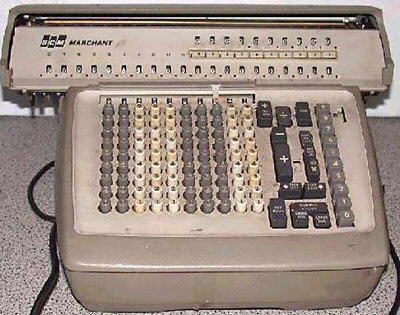
 Marchant Electric CalculatorEvery weekend for 7½ years I spent my Sunday afternoons poring over next week’s production schedule. There were no desktop computers. Marchant and Monroe mechanical calculators were still in use.

Today that job is performed faster and more accurately by a desktop computer. It’s done in minutes.

Lettuce Bot

Inventors have now developed a lettuce picking machine that will replace 20 farm workers (in one field alone). Amazon has a computer fulfillment system installed at three distribution centers that may eventually reduce the need to hire tens of thousands of workers. A company called LabCorp is hard at work developing machines to sort and split blood samples, which is just one of hundreds of thousands of menial laboratory jobs that pay decent money but could more efficiently be done by robots. A company in Mumbai, India remotely adjusted my laptop computer that was not sending print messages to my Hewlett-Packard printer.

So many jobs are gone. Manual labor has been reduced. Complex calculations are quickly solved using a computer.

Not everyone has the comprehension to learn the skills that the 21st century demands. How will they earn a living in this environment? No commentators, no wise men, no one has a solution.

As we enter 2014 it appears we will be feeding, clothing, and housing those that cannot perform the jobs of the new century. Some will object but our humanity will dominate.

Source for part of this posting: http://www.dailynews.com/technology/20131225/do-robots-make-us-more-productive-or-steal-our-jobs

Your complaining about healthcare.gov/

WordPress is one of the web sites that rarely goes down.  Since starting this blog in July 2007 I have had two instances when the site did not function.  I was back on line within a few hours.

However, my bank sent me home because their system was down.  They advised me to return in two days.  I was unable to deposit my paycheck.  They had no problem honoring the checks I had written.

My employer’s e-mail was invaded by a virus that took three days to repair. The Wall Street Journal and the New York Times web sites were hacked.

In California the Los Angeles Department of Water and Power currently is contending with a broken new computer system that has sent out bills that are either double the actual usage or one half the actual usage.  The expected time to repair the computer glitches is likely to be two months.

The California Employment Development Department (they send out unemployment checks) tried to implement a new computer system.  They said they did test it.  The system has been out of order for a month.  Few unemployment checks are being sent out.  There has not been a date announced for the system to become operational.

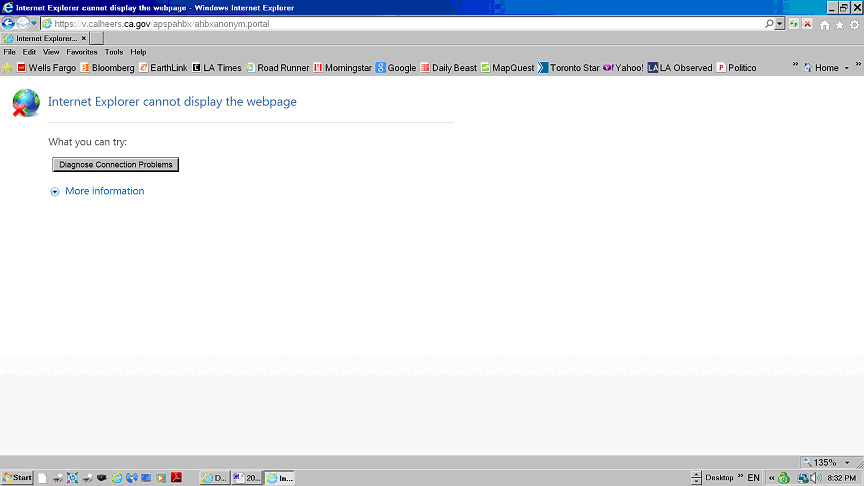
I am complaining about Covered California.  It’s linked to the healthcare.gov/ web site. When you click the start button on the home page you see the following:

Internet Explorer cannot display the webpage

Welcome to the Technology of the 21st Century!

WELCOME TO THE TECHNOLOGY OF THE 21ST CENTURY!

 
 Our Phones ~ Wireless 

 Cooking ~ Fireless

 Cars ~ Keyless 

 Food ~ Fatless 

 Tires ~ Tubeless 

 Dress ~ Sleeveless 

 Youth ~ Jobless  

 Leaders ~ Shameless   

 Relationships ~ Meaningless 

 Attitude ~ Careless

 Wives ~ Fearless 

 Babies ~ Fatherless 

 Feelings ~ Heartless 

 Education ~ Valueless 

 Children ~ Mannerless 

 Our Congress is ~ Clueless

 Our President is ~ Worthless 

 And this leaves me ~ Speechless

Microsoft Beyond the PC

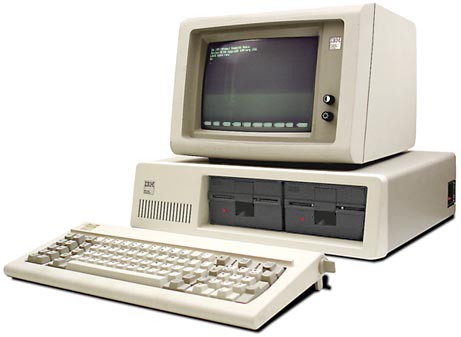
IBM PC I have had a Microsoft based computer since the first clones were being built.  I had a 5 ¼” two floppy disk machine using the first MS operating system MS-DOS 1.1

In the 1980s and 1990s Microsoft overwhelmed all competitors in computer technology.  Between their operating system and Office products there were none that could compare.  By focusing on software only they enrolled hardware manufacturers to adopt their vision.  Thus, hardware company after company joined in to a vision of spreading the use of computers to both home users and businesses.  They succeeded.  From banks to law offices to manufacturing everyone converted their systems from manual to computers.

Then Google came along in 1996 and the domain google.com was registered on September 15, 1997. They formally incorporated their company, Google Inc., on September 4, 1998 at a friend’s garage.  Search engines existed before founders Larry Page and Sergey Brin had hit upon a name that was an instant success.  Their Algorithms made them the dominate force.  I remember being told to use Google in the year 2000 for answers to my questions.  Early companies such as Lycos, Altavista, and WebCrawler were lost in the dust.

Google went on to acquire YouTube and develop the Android operating system for smart phones that is now used in more phones than any other.

Where was Microsoft while the world was changing?  Nowhere to be seen.

Bing, Microsoft’s search engine, did not appear until 2009.  Microsoft’s touch panel operating system for smartphones, dubbed Windows 8, was released to manufacturing on August 1, 2012, and was released for general availability on October 26, 2012.  Neither of these systems has been a hit.  In fact tech radio host Leo Laporte has advised his listeners to find PCs with Windows 7 operating systems if you are in the market for a new computer.

So is it any wonder that Steve Balmer, CEO of Microsoft, will be leaving the company within the next 12 months?  At 57 years old, he is not ready to retire.  Although not said publicly, it is a sure bet that the Microsoft board has asked for his resignation.

Given the lead that Apple and Google have in the smart phone arena it is hard to imagine how Microsoft can regain its lead.

We are spying on You

The price of modern technology.

Try researching for a new car, a television, a camera, or a new home theater system.  The result is that within hours there will be advertising popping up on your smartphone or computer  for that very same product.

Just yesterday I was researching for a new home theater system.  Today I saw multiple ads for those systems across the top of my screen and just below the Google search window.  Six months ago I was searching for a new camera bag.  There were multiple offers for bags from different retailers.

Adam Levin blogs on Huffington Post that there are 9 Household Items That Could Be Spying on You.

Which of these do you have in your house?

  • Your television (thanks to the internet)
  • Your Cable Box (your provider knows what you ar watching)
  • Your Dishwasher, Clothes Dryer, Toaster, Clock Radio and Remote Control (thanks to smartphone interface)
  • Your Lights (thanks to the power  company’s new monitoring system)
  • Your Heat an A/C (thanks to The Nest thermostat that tracks homeowners’ heat and air-conditioning habits)
  •  Security alarms (those services know when you’re not at home)
  • Insulin Pumps and Pacemakers (White Hat hacker Barnaby Jack proved he could kill a diabetic person from 300 feet away by ordering an insulin pump to deliver fatal doses of insulin. This summer he announced he could hack pacemakers and implanted defibrillators)
  • Smartphones (that same technology that provides mapping directions also tells those with access where you are)

America’s Dying Industries

Shoe Manufacturing

This comes as no surprise.  Still it hurts to see these numbers.  As you read each of these items you know the reason for the decline in business.  This was published on Huffington Post.  The reasons are as follows:

  1. The photofinishing decline was the result of the digital camera era and the sharing of photos on internet web sites.
  2. The high cost of labor now makes appliance repair more expensive than buying a new item.
  3. Advertising revenue has declined at most newspaper and magazine publications thanks to the internet and smartphones.
  4. Manufacturing of consumer products is now cheaper in most other nations of the world.

Photofinishing

Revenue decline 2002 to 2012  -70%.  $15.509 million to $897 million

Recordable Media Manufacturing

Revenue decline 2002 to 2012  -53.6%.  $4.144 billion to $3.311 billion

Money Market and Other Banking

Revenue decline 2002 to 2012  -51.2%.  Industry revenue in 2012 $834 million

DVD, Game and Video Rentals

Revenue decline 2002 to 2012  -49.6%.  Industry revenue in 2012 $5.894 billion

Newspaper Publishing

Revenue decline 2002 to 2012  -48.1%.  Industry revenue in 2012 $29.302 billion

– Women’s/Girls’ Apparel Manufacturing

Revenue decline 2002 to 2012  -57.7%.  Industry revenue in 2012 $8.603 billion

Costume/Team Uniform Manufacturing

Revenue decline 2002 to 2012  -49.9%.  Industry revenue in 2012 $986 million

Appliance Repair

Revenue decline 2002 to 2012  -44.5%.  Industry revenue in 2012 $3.684 billion

Hardware Manufacturing

Revenue decline 2002 to 2012  -44.5%.  Industry revenue in 2012 $7.484 billion

Shoe/Footwear Manufacturing

Revenue decline 2002 to 2012  -39.6%.  Industry revenue in 2012 $1.712 billion

Manufacturing Megatrends That Will Change Your World

How fast is the world changing?  This interesting article points out the rapidity. 

By Paul Tate on the http://www.manufacturing-executive.com web site on March 19, 2013.

 A quick snapshot of the companies listed in the Fortune 500 ten years ago is a sobering exercise. Over half of those organizations have now either disappeared off the list, or no longer exist, at least in their original form, notes Frost and Sullivan (A business consulting firm that offers market analysis, market research, and reports) vice president and Megatrends analyst Richard Sear.

So how do you avoid becoming one of the world’s lost companies over the next ten years?

The most critical role any business leader must perform is to identify and plan a successful path forward for the future of the enterprise. That means identifying and understanding the trends that are going to transform your business in the years ahead.

The problem is that anticipating the future in today’s world, where the speed of change is so rapid and sudden, innovative disruptions are so common, may seem like an impossible task.

There are essentially two approaches to grappling with this difficult task. The first is simply to sit back and allow new technology and business models to converge into your business and then react as best as you can. The second is a proactive stance to understand and embrace change, and therefore be in a position to capture growth opportunities faster and more fully. What’s your risk profile?

 Frost and Sullivan’s Sear has identified a series of global megatrends that he believes are set to fundamentally transform the world we live in over the next decade or so — and which will have a major impact on the future of manufacturing and its growth prospects.

They are:

 * The City as a Customer: The emergence of new megacities around the world, especially in Asia and Latin America, linked by highly urbanized corridors of development. These will become the world’s key centers of economic growth, creating new and different markets for manufactured products and creating significant logistics challenges for delivery to customers.

* Social Change: The combination of an aging workforce in many western economies, with the growth of demanding, impatient and tech-savvy Generation Y consumers who expect higher degrees of personalization in both products and services.

* Technology: The increasing development of virtual worlds, augmented realities, big data, and pervasive robotics will change the way both manufacturing companies and consumer markets operate and develop new ideas.

* Smart: Extensive embedded intelligence in physical assets and products – often call The Internet of Everything – will see a significant shift towards smarter, more connected products with vast supporting networks and real-time applications.

* New Business Models: These fundamental global shifts will require companies to re-assess how they do business, and how they deliver value in the future – resulting in more collaborative operating models with a greater emphasis on delivering ‘Value for Many’ and frugal engineering approaches.

 * Infrastructure: How will you be affected by a greater focus on how the world harnesses its energy resources, and creates new, more sustainable and lower cost ways to store and utilize future energy?

 * Beyond BRIC: The rapid rise in new markets and fast-growing emerging economies around the world in the decade ahead will create new markets, new global competitors, and new manufacturing opportunities that will force companies to re-asses their global production strategies and footprints. Where will the hot spots be and how will they change your future plans?

 Manufacturing seems destined to play a key role in both reshaping existing industries and enabling others to emerge as these megatrends push the world beyond the end of this decade.

The companies that make the effort to understand and plan effectively for this future, change the way they make decisions, redefine the value they create, and restructure how they deliver that value, are likely to be the ones that will survive and thrive.

So how are you now seeking to better understand the disruptive long-term trends that could determine the future of your business?

Are you adopting internal strategies that will make your enterprise more adaptable to the fundamental economic, social, technological and industrial changes ahead?

 What other megatrends do you think will impact your business future?