Heart of Hollywood – Temple Israel Of Hollywood

Warner Brothers, Metro Goldwyn Mayer, 20th Century Fox, Universal Studios and other long forgotten movie studios all had one thing in common.  They were the all the creation of Jews.  To this day Jews are a prominent part of the Hollywood scene.  Geffen, Katzenberg, Iger, Spielberg are all Jews.  There are others too who do not have common Jewish surnames.

David Bancroft

Click here!
http://youtu.be/VDp_KZvyXNo

Impact of Technology on the U.S. Economy

If only businesses would start re-hiring all those people who lost their jobs in the Great Recession everything would be as it was.  It won’t happen like that!  Globalization and technology have changed everything.

The Mobile World Congress is a show of the latest cell phone and tablet technologies.  It will occur February 24 to February 28 in Barcelona, Spain.  The facility used is a new state of the art convention centre called Fira Gran Via consisting of eight halls.  With over 1,500 exhibits, it is a reminiscent of CES and Comdex that have been held at the Las Vegas Convention CenterThis is a wake-up call that the United States is not necessarily the center for new technologies.

  Fira Gran Via, Barcelona Spain

  The Gran Via Convention Centre

 Fira Gran Via mwc_carousel_networking gardens_final                                                                                


No business will hire employees in the western world when the job can be done for far less in developing countries.  Workers in China, Mexico, and elsewhere are willing to work for $1USD an hour.  Workers in the United States, Canada, U.K., Germany and other industrialized nations cannot pay their bills on that rate of pay.

Businesses of all types try to solve their employment needs by looking for automated equipment rather than hiring.  The benefit is lower cost for services rendered where ever labor is needed.

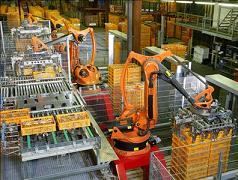
  factory-robots

From cars to bread, robots dominate modern production

On-line Digital Camera Review owner/editor Jeff Keller, “The smartphone became the preferred photo tool for many.”  The web site closed down effective December 31, 2012.

Newsweek’s final print publication mailed out on December 24, 2012.  The final issue is dated December 31, 2012.  The cause was a decline in advertising revenue.  The magazine’s owner will attempt a digital version that will be available only to subscribers.

Borders bookstores have closed.  Barnes and Noble stores are closing too.  E-readers are this year’s sought after device.  Barnes and Noble’s Nook is one of those readers.

Modern manufacturing isn’t based on human labour; it’s based on the robot. Still, most people cannot grasp the breadth of automation in factories. We still picture plants full of human workers toiling to make our cars and furniture, just as we imagine our meat comes from animals in a barn. The truth is much more awe-inspiring, perhaps even frightening. The factories of today have some human workers, but huge portions of assembly lines are 100% mechanized. The US Bureau of Labor Statistics expects automotive jobs to decline 18% by 2018 despite expected increases in production. Robots eliminate the need for more workers.

What is the United States doing to sustain its lead in technology and grow its economy?  Arguing about gun control, immigration, and government debt.

Print versus the Tablet

When I visit a doctor or dentist I always look at their selection of magazines.  Hoping that their selection isn’t merely the magazines I subscribe to.

I received my last print edition of Newsweek yesterday.  My subscription expires March 12, 2013.  So the final 2½ months will available to me on their website.  Try taking those issues to the kitchen table or the bathroom (one of my favorite places to read).  For that matter I can’t give the magazines I have read to my friends.  Most of Newsweek’s really outstanding reporters and writers have been laid off so the quality of the magazine has been mediocre at best over the past year or two.  The newspapers have been shrinking in size and quality too.

That leaves me with those shrunken newspapers and just two periodicals.  Bloomberg Businessweek and The Week.  I anticipate their days are numbered too.  Both of them are publicizing their “apps” for the iPad and other e-tablets.

Perhaps the lovers of the horse and buggy were horrified when they saw their easily controlled mode of transportation replaced by those new fangled horseless carriages.

Going back in time to 1439, Johannes Gutenberg, a German blacksmith, invented a printing press with movable type and brought literacy to the world.  The use of movable type marked the end of the handwritten manuscript, which was the existing method of book production.

Perhaps the development of e-readers will bring literacy to even more people than ever before.  I can only hope.

Tablet ReaderAs for me I will be in the bathroom with my e-reader, pocket size version.

Japan’s Technology is Impacting the World

Bloomberg Businessweek sells advertising that looks like its columns.  Companies and countries use this methodology to promote their business friendly atmosphere.  The sections are clearly marked as “advertising section.”  In one edition the United Arab Emirates bought pages that promoted the business opportunities in those nations.  The information was presented in a format that leads readers to believe the articles were being presented by the magazine.  The font sizes and the presentations give the appearance that they are indeed being presented by the magazine publisher.

In the October 22, 2012 edition there was a 13 page presentation that was sponsored by Japanese companies.  It is impressive and informative.  It makes me realize how far other counties have developed compared to the United   States.  The article is long but is worth your time.  I was especially impressed by the fact that a Japanese company is updating the British railway system.  Another has developed quick set up homes for people who have been displaced by natural disasters (think the homes damaged by Hurricane Sandy).

Following is very abridged version of the article with significant statements in bold text.

A new market for Japanese rail technology is the U.K., the original home of railways. Hitachi Ltd. has formed a consortium with a British company to supply a total of nearly 600 high-speed rail carriages, and the supporting maintenance infrastructure, starting delivery in 2017. The Hitachi Super Express trains will be manu­factured in a newly built factory in the north of England. The total value of the project. including the maintenance and repair centers to be constructed throughout the U.K., is estimated at between ¥400-¥500 billion ($5.1-$6.3 billion).

These new trains will replace the U.K.’s aging Intercity fleet on the East Coast Main Lines and the Great Western Main Lines. The lightweight construction of the trains (between 15 and 40 percent weight reduction per seat) lowers energy consumption of the bi­mode units, and this light weight also helps reduce the travel time for the growing number of passengers on the routes where these trains will be operated.

High-speed shelters

Following the Great East Japan Earthquake, over 340,000 people were displaced, with most taking refuge in emergency shelters, such as school gymnasiums, until more permanent housing could be arrangec for them. The lack of privacy for extended periods (blankets or tempo­rary cardboard partitions were often the only divisions between family groups) caused severe additional emotional stress to many survivors.
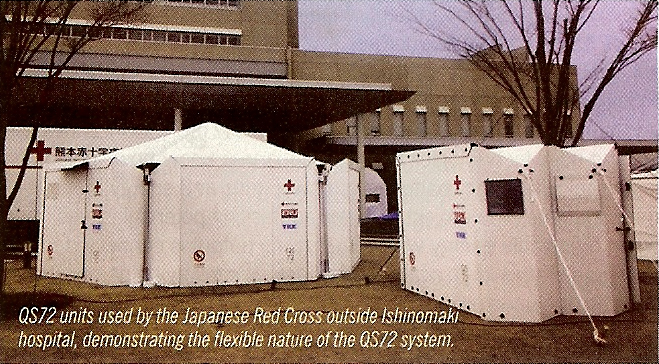
Photo was scanned from Businessweek

Accordingly, a need was perceived for lightweight flexible structures that can be quickly transported and erected to provide such spaces. Enter the QS72 from Daiichikensetsu Ltd., with “QS” standing for “Quick Space” and “72” representing the number of hours within which such components can be deployed to provide floors, walls and roofs for meeting rooms, emergency clinics, toilets and other areas, in the time when disaster survivors are at their most vulnerable psychologically.

Constructed of polypropylene, the system requires only a few people and no tools to assemble. Using a lightweight construction method providing thermal insulation, the units can be linked together in a variety of ways to serve various needs of a displaced community. The basic construction recalls the principles of origami in the way the different parts fold and unfold to create the spaces. A single unit can temporarily accommodate a small family until more permanent accommodations can be arranged and constructed. Following this, the unit can be combined with others and reused as a community space, for example, or a store or medical center. Indeed, following the March 2011 quake, 100 units were donated to the Japanese Red Cross, and used as general purpose structures in lshinomaki, supplementing the existing hospital facilities.

Keeping in touch during disasters

A key issue following a disaster is the effective dissemination of information. Making use of one of the best IT infrastructures in the world, the Japanese government has developed Disaster Guide­lines and Action Plan for IT, with a twopronged emphasis on the preservation of life and the well-being of the survivors.

First, the safety of inhabitants of the affected area, and the status of emergency services, is confirmed. Following this immediate response, the system changes to provide information to survivors about vital infrastructure elements (utilities, communications and transportation). The rapid growth of smartphone use in Japan al­lows for rapid and easy sharing of information. Already, earthquake early-warning systems are incorporated into the cellular network, and internet sites designed for smartphones are planned that will allow parents to check on the safety of their children at school, as well as to use the newly developed J-anpi system to check on others’ safety and reassure friends and family of their own.

Lessons learned from the March 11 disaster that have been incorporated into the plan include the use of alternative channels (websites, email and social network services) beyond the usual emergency number. These channels can also disseminate information, using cloud services to ensure continuity of service, and supplement radio and TV broad­casts. The Prime Minister’s Office also operates a Twitter account, allowing the government to “push” up-to-the-minute information to millions of smartphone users.

In the event of future disasters, Japan hopes to save lives, and to improve the lives of survivors through such implementations of technology, and to share these techniques and technologies with other nations. – H.A.


Tablet Computers are the New “Must have” Device

This blog is still written using MS Word and I still love my 19″ desktop computer. That is not likely to change.

There were e-readers before the iPad but Apple made tablets the new ‘need to have” category.  Suddenly Amazon’s Kindle and Barnes & Noble’s Nook had taken on new value.  Actually the iPad did both of those devices a favor.  They spurred them to improve the quality and capabilities.

We saw some Europeans in San   Diego last summer (2011) with their tablets.  I realized they knew where the restaurants were located and could obtain other worthwhile info you were on vacation.  Dragging a 17” laptop to London and Paris this past summer was no fun.  It’s old and slow too and that made it even more unpleasant.

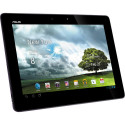
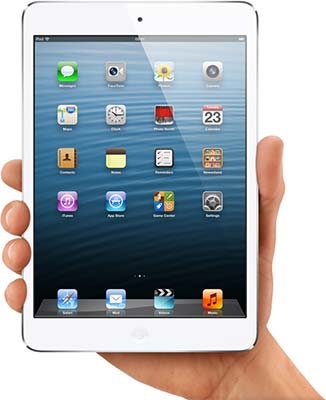
When Microsoft announced their new Surface tablet this past August I knew I would have to consider this new connection to the world.  Now Apple has announced their new iPad Mini that does not include a mini price tag.

Many potential iPad buyers may have been contemplating the purchase during this coming Christmas buying season. They might now buy the Mini to save some money.  Apple will have diverted buyers and that means less profit.  From a shareholder viewpoint this decision will impact the bottom line.

The challenge for me is to determine the size and capabilities that will fulfill my immediate needs and what future needs I might have.

Top 25 U.S. Cities by Household Income

The following data was extracted from a MarketWatch news item and modified to indicate city population.  Detroit at the bottom of the list was no surprise but Philadelphia and Memphis coming in at 23rd and 24th place is a surprise.  The vlaue of this information is the indicator of where you don’t want to live.  You might not be able to live in San Francisco or San Jose but living nearby will provide the benefits that come with a wealthier community such as hopitals, doctors, arts, and entertainment.

I personally know there are lower cost housing opportunities in San Jose as well as Los Angeles.

CITY INCOME 2011 Estimated   Population
(IN $)
1 San Jose 76,593
967,487
2 San Francisco 69,894
812,826
3 District of Columbia 63,124
617,996
4 Seattle 61,037
620,778
5 San Diego 60, 797
1,326,179
6 Charlotte 50, 177
751,087
7 Austin 49,987
820,611
8 New York City 49,461
8,244,910
9 Boston 49,081
625,087
10 Fort Worth 47,399
758,738
11 Denver 47,371
619,968
12 Los Angeles 46,148
3,819,702
13 Jacksonville 44,802
827,908
14 Phoenix 43,960
1,469,471
15 Chicago 43,628
2,707,120
16 Houston 42,877
2,145,146
17 San Antonio 42,613
1,359,758
18 El Paso 40,702
665,568
19 Dallas 40,585
1,223,229
20 Columbus 40,463
797,434
21 Indianapolis 39,015
827,609
22 Baltimore 38,721
619,493
23 Memphis 34,960
652,050
24 Philadelphia 34,207
1,536,471
25 Detroit 25,193
706,585
Source: Census   Bureau

Newsweek -Final print edition is December 31, 2012

Newsweek to cease print edition after 80 years

I don’t remember precisely when I started reading Newsweek but I do have the July 28, 1969 edition with a transmitted photo of the walk on the Moon.   I considered the magazine the alternate to the too conservative Time.  The magazine has provided worthwhile insight to the world’s problems.

Just a few years ago a commentator in BusinessWeek forecasted the end of much of the print media.  That was just before McGraw-Hill sold that money losing weekly to Bloomberg.  So none of this is a surprise.

I myself have been evaluating the myriad of tablet computers this past week.

Goodbye old friend!!

Where is the American Vision?

The United States provided the motivation to build a trans-continental railroad system.  Then we went on to build the Panama Canal.  We built the U.S. highway system and then went on to build the interstate super highway system.  This is the nation that set the standards for acceptable aircraft safety design that became the standard for the world.  While that was going on we landed a man on the moon (more than once!).  It was American technology that created the computer age and higher productivity for everyone.

Then something happened.  We started fighting among ourselves about how the government should function.  We now argue about private matters relating to abortion, inter-marriage, and other personal behaviors that really are not the responsibility of government.

The president’s vision for America is providing a climate where everyone can succeed.  His opponent vision is “freedom.”  Are those visions for where the nation should go in the decade ahead?  They are not my idea of a “vision.”

I want a vision on the order of JFK’s putting a man on the moon.

The infrastructure on the United States is falling apart.  We are no longer the leading nation in education.  Unemployment is really about 15% of the adult population.  47 million people are on food stamps or other financial aid.  Trade unions are fighting over the remains of government and private enterprise as the middle class of America dissolves.

There is no evidence that either Obama or Romney have the skills to bring this nation together.  Reince Priebus, Chairman of the Republican National Committee,  appearing on This Week on ABC said the GOP Plan Has ‘Specifics Coming Out Of Our Eyeballs’ but the ideas are all about cutting the size of government. The details have never been spelled out.  There is no talk about a vision or a plan to re-build the nation. This feels like we are adrift.  This feels like a ship without a rudder.

How can these two men hold themselves out as worthwhile leaders?  When I vote on November 6, I will stamp the ballot with one hand while holding my nose with the other.

Surface by Microsoft coming October 26

I can hardly wait!  As a dedicated PC user, I have been disappointed by the offerings of the primary PC manufacturers.

Apple’s iPad tablet computer is reported to hold 70% of market share.  None of the competitors have been able to come even close to making a dent in Apple’s dominance.  H-P has dropped out of the market entirely and Dell offers a tablet but I do not know anyone with the unit.

Thus the entry of the Surface by Microsoft might bring on even more sales and a significant migration from the laptop format.  To add extra spice it is rumored that a low cost 7 inch version may be offered at $199.  That could be the reason that Apple is reportedly introducing its own 7” iPad.

On our recent trip to Europe I did see a few people carrying tablet computers.  The really are too big to use as a camera.  However, for finding your way around New York, London, Paris, Rome, etc. they would be a great benefit.  Of course they will be an easy way to update your blog.

Manufacturing in the U.S.A.

Can manufacturing thrive in the United   States? Consider the cost of labor in China, Mexico, Indonesia, and Vietnam.  Hourly rates are 50 cents USD to $1.00 USD.  My contention is that even with lowered income taxes those other countries will continue to provide products that cannot be put together in the USA at competitive costs.

However, PC World has run this article that indicated there is a possibility the USA can still compete.

By Karen Haslam, Macworld-U.K.    Jun 30, 2012  1:15 pm

Apple’s been criticized in the past for not manufacturing its products in the U.S., and has given a number of excuses when pressed on the matter. However, Google has now proven that high-tech goods can be produced in the U.S., the company’s new Nexus Q is “Designed and Manufactured in the USA” according to the inscription on the device.

There are a number of reasons why Apple manufacturers products in factories in China and other Far East countries, not only are workers cheaper, but overseas factories offer more flexibility, diligence and industrial skills. A report has also claimed that Apple has to manufacturer the iPad in China in order to get access to rare earth materials.

When asked why Apple isn’t manufacturing the iPhone in the US, Apple’s late-CEO Steve Jobs told U.S. President Barack Obama in February 2011: “Those jobs aren’t coming back,” complaining that there is a massive skills shortage in the US prohibiting the manufacturer of such goods there.

Google’s Andy Rubin said that the company had made a conscious effort to test the possibility of manufacturing in the U.S. with this product: “We’ve been absent for so long,” he said, referring to manufacturing not happening in the U.S., and added: “We decided, ‘Why don’t we try it and see what happens?'”

The report in the New York Times notes that consumer electronics manufacturers will be closely watching this case, to see if it disproves the accepted wisdom that consumer electronics products can no longer be made in the United States.

However, Google’s device has a high price than similar devices manufactured outside of the country, notes the report. The report also notes that Google is not disclosing details about where components of the device were manufactured.