A Wish for You in 2015

May peace break into your home and may thieves come to steal your debts 

May the pockets of your jeans become a magnet for $100 bills. 

May love stick to your face like Vaseline and may laughter assault your lips!

May happiness slap you across the face and may your tears be that of joy

May the problems you had, forget your home address

In simple words …………

May 2015 be the best year of your life!!

2015

Happy Face 

Happy New Year!!

The New Year could be one of the best for Americans. There are many indicators to support this forecast. That would not include Nouriel Roubini. He has a history of negative forecasts so I wouldn’t pay attention to him.

Beaconomics forecasts Incomes, Consumer Spending on the Rise: As job growth continues, worker incomes are expected to expand in 2015, something that will keep consumer spending growing and encourage those who have dropped out of the workforce to re-enter.

The GDP for the third quarter of 2014 initially reported growth of 3.5% and subsequently has raised that number to 5%. Unemployment is now reported at 5.8% which is not great but is definitely going in the right direction. The stock market has set new records this year and is now at a new high that won’t help everyone but will motivate people to spend and perhaps hire more people.  Gasoline is at unbelieveably low prices.

Goldman Sachs’s chief economist Jan Hatzius just published answers to what he believes are the eight top questions for next year.

Here’s a list of the questions asked by Business Insider and a quick summaries of his thoughts:

  1. Will the US economy continue to grow above trend? Yes. Domestic strength should offset weakness from other economies.
  2. Will the dollar appreciation weigh on growth? Yes, but it’s manageable in the short term because of lower oil prices.
  3. Will the housing recovery accelerate? Yes, especially in the single-family sector. Household formation should improve as young adults move out of their parents’ homes.
  4. Will consumer spending growth accelerate? Yes, as real disposable income increases because of lower oil prices.
  5. Will capital spending growth accelerate further? No. Business capital spending does not look depressed relative to the long-term fundamentals and the decline in oil prices is likely to take a toll on energy sector.
  6. Will wage growth move into the 3%-4% range identified by Chair Yellen as “normal”? No. There’s still slack in the labor market as measured by the U6 underemployment rate.
  7. Will core inflation rise toward the Fed’s 2% target?No. The dollar is strong, wage growth is low, and depressed oil prices should have a negative impact.
  8. Will the Fed hike rates by the June FOMC meeting? No, because inflation probably won’t hit the 2% target. “Based on our below-consensus forecasts for wage and price inflation we expect the first funds rate hike to occur after June 2015; our base case is September,” Hatzius said.

So in summary, the US economy will grow together with the dollar, faster than its global peers. But inflation below the Fed’s target will push its rate hike back to at least September, and the impact of lower oil prices will continue to be felt throughout the economy.

Read more: http://www.businessinsider.com/jan-hatzius-top-questions-for-2015-2014-12#ixzz3NFdpC9as

Walk Around Downtown L.A.

 Downtown LA 7-25-09 053 enhanced

Inside the Bradbury Building opened in 1893

functioning elevator on right side behind the staircase

Four hours of walking will help you sleep at night. I spent Tuesday, December 23, walking around the north end of downtown Los Angeles and still did not see it all.  The trip was made with two other photo hobbyists with really expensive cameras.  Mine is the Panasonic Lumix FZ150.  Lunch at Grand Central Market was really bad.  Definitely not something to photograph and barely eatable.  That said I have posted my pictures on flickr – look for the “Walk Around Downtown L.A.” album or click here.

https://www.flickr.com/photos/48969186@N04/sets/72157649521818338/

“1984” Revisited

George Orwell’s 1984 was a classic tale of a world where the government watched everyone all of the time. Televisions were everywhere and every one of them had a camera that spied on everyone no matter where they were. If that wasn’t horrible enough, the government redefined everything and required everyone to accept their definitions.

Thus green could be called blue and black could be called white. Junk yards could be called beautiful and torture could be called pleasure.

Could the story of 1984 happen in America? Most of you would say “No.”
– Eric Snowden divulged the fact that our phone lines and e-mail contacts are being monitored by the CIA.
– Cameras identified the Boston Marathon bombers within a few hours thanks to cameras mounted on the streets.
– The Fort Hood massacre by Army Maj. Nidal Hasan has been called “work place violence” but not a terrorist attack. Interesting definition when you consider that just before the shooting began, many of the witnesses recounted, the gunman yelled “Allahu Akbar,” the Arabic exhortation meaning “God is great.”
– Former Vice President Dick Cheney on this past Sunday’s Meet the Press was asked by moderator Chuck Todd how he defined torture:
Well, torture, to me, Chuck, is an American citizen on a cell phone making a last call to his four young daughters shortly before he burns to death in the upper levels of the Trade Center in New York City on 9/11.


Todd followed up by asking whether rectal feeding was torture, and Cheney continued his distract-with-shiny-objects strategy.
I’ve told you what meets the definition of torture. It’s what 19 guys armed with airline tickets and box cutters did to 3,000 Americans on 9/11.

Killing unarmed Black men is justifiable homicide. We have grand juries that confirm it!

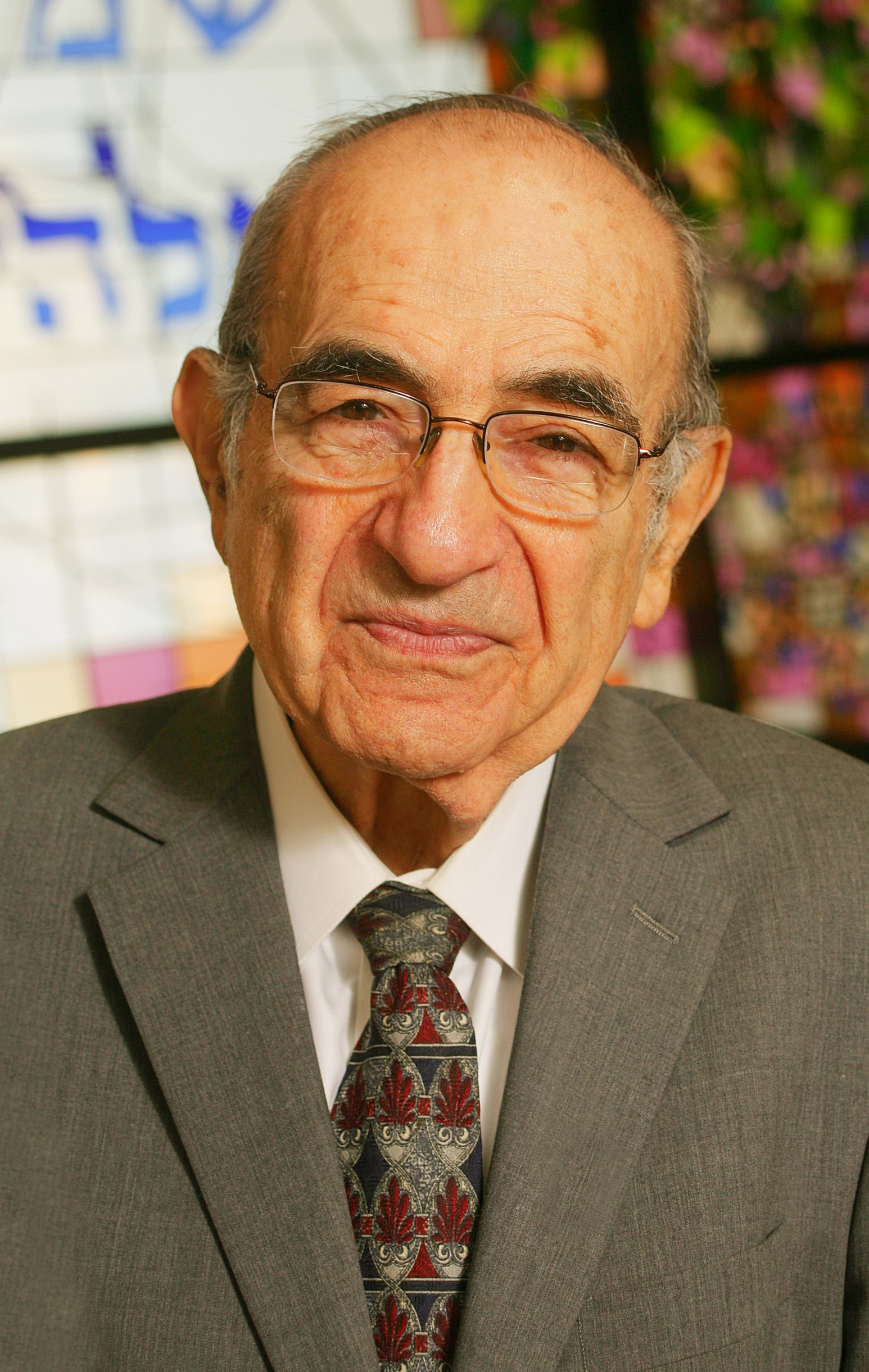
Rabbi Harold Schulweis

VBSLogo_Header_BLUE

Schulweis-retouched

Rabbi Harold M. Schulweis Passes Away at 89

Rabbi Harold Schulweis, regarded as the most influential synagogue leader of his generation, died at his home after a long struggle with heart disease. He was 89 years old.

Rabbi Uri Herscher, founding president and CEO of the Skirball Cultural Center, was a freshman at UC Berkeley when he first heard Schulweis speak at a Rosh Hashanah service, and became a friend and admirer for life. On a later occasion, Herscher introduced Schulweis to an audience, saying in part, “Harold Schulweis is a rabbi. This is a little like saying, a Rembrandt is a painting. Or a Stradivarius is a violin…He is a rabbi of rabbis…He has, as much as any rabbi in our time, given Judaism meaning, relevance and renewed purpose.”

Schulweis recognized the power of congregations to shape the lives of a generation of Jews isolated from community and alienated from their traditions by the rhythms of American life and the spiritually corrosive elements of American culture. In 1970, he was invited to the pulpit of Valley Beth Shalom in the burgeoning San Fernando Valley community of Encino. Under his leadership, the synagogue grew to become the largest Conservative congregation in the Western United States, and became a living laboratory of social activism and creative spiritual life introducing innovations that became staples for Jewish congregations across North America.

Responding to the loneliness and isolation of suburban life, Schulweis introduced synagogue-based “Havurot,” in 1971, gathering small groups of families to share religious life and family celebrations. His “Para-Rabbinic” initiative offered a revolutionary model of lay-professional synagogue leadership. Schulweis launched a para-professional Counseling Center within the synagogue, offering psychological and family support to the synagogue members and the wider communities. Each of these innovations has been replicated in congregations nationwide.

Schulweis opened the doors of his synagogue to all. He pioneered initiatives welcoming children and young adults with special needs into the synagogue’s educational and religious programs. He reached out to Jews-by-choice and unchurched Christians seeking a spiritual home. In 1992, Schulweis was among the first rabbis in the Conservative Movement of American Judaism to openly welcome gay and lesbian Jews into the synagogue.

Schulweis’ pulpit became a launching pad for his efforts to push contemporary Judaism beyond its narrow ethnic preoccupation. Judaism, he frequently preached, is a global religion, with concerns that embrace the world. “Our greatness as a religion,” he wrote, “is that we Jews conceived of ourselves as God’s allies, partners, and friends. We gave the world conscience. We gave to the world a sacred universalism that remains at the foundation of our relationship with the world.”

In 1966, Schulweis met a young math instructor at Berkeley who shared the story of his family’s rescue from the Nazis by a German Christian family. The family had never been recognized or thanked by the Jewish community. Thousands of rescuers, Schulweis learned, lived in poverty, receiving neither recognition nor aid. In response, he founded the Institute for Righteous Acts, which would become, in 1986, the Jewish Foundation for the Righteous (jfr.org), recognizing, celebrating and supporting thousands of Christians who rescued Jews during the Holocaust. Schulweis was profiled on “60 Minutes” for his unique vision, locating moral heroism in the darkest of historical moments.

With activist Leonard Fein, he founded Mazon (Mazon.org), in 1985 as a Jewish community response to hunger and poverty in America. Mazon ask Jewish families celebrating life moments to dedicate 3% of the cost to the hungry who live among us.

In 2004, Schulweis delivered a sermon on the Jewish high holidays calling for a Jewish response to genocide. He challenged the congregation:

“We took an oath, “Never again!” Was this vow to protect only Jews from the curse of genocide? God forbid that our children and grandchildren ask of us, ‘Where was the synagogue during Rwanda, when genocide took place and eight hundred thousand people were slaughtered in one hundred days?’”

According to Rabbi Ed Feinstein, Schulweis’ successor at Valley Beth Shalom, “Rabbi Schulweis found the presence of God in acts of moral courage, compassion, and human decency. He constantly reminded us that we are the hands of God in this world.”

Among those moved to answer the rabbi’s challenge was attorney Janice Kamenir-Reznik, who assumed the role of founding president of the Jewish World Watch (JewishWorldWatch.org), now a coalition of Jewish organizations dedicated to raising awareness and mobilizing resources in response to the on-going genocide in Darfur, Congo, and around the world. JWW has grown into the largest anti-genocide grassroots organization in the world, with some 30,000 to 40,000 donors. Schulweis’ challenge, and her friendship with the rabbi, “has transformed my life and has changed my philosophy of what it means to be a Jew,” said Kamenir-Reznik. “Nothing I have done in my life has been more meaningful and has had a larger impact.”

Schulweis’ concern for genocide around the world, led him to reach out to the large Armenian population in his San Fernando Valley neighborhood. In 2005, Schulweis officiated with Archbishop Hovnan Derderian of the Armenian Church of North America at the first joint commemoration of the Jewish and Armenian Holocausts. He joined band members of the rock band, System of a Down, all of them children of survivors of the Armenian Holocaust, in an educational program affirming the common responsibilities of Jewish and Armenian youth to remember their collective experiences of genocide, and to act to prevent its reoccurrence.

Schulweis was born in the Bronx, in 1925, the son of a ferociously anti-religious editor of the Yiddish daily “Forverts.” As a child, Schulweis never set foot in a synagogue, but grew up surrounded by Yiddish poets, nationalists, revolutionaries, and artists. At the age of 12, he happened upon a synagogue on Rosh Hashanah. Attracted by the music he heard from the street, he slipped in and was enraptured. He began studying Talmud with his pious, Hasidic grandfather, eventually enrolling at Yeshiva College where he graduated in 1945. An ardent student of philosophy, he became a disciple of Mordecai Kaplan at the Jewish Theological Seminary where he was ordained in 1950. At the same time he studied philosophy under Sidney Hook at New York University, receiving a masters degree in 1950 with the first English language thesis on Martin Buber’s philosophy. He subsequently completed a doctorate in theology at the Pacific School of Religion. Schulweis taught philosophy at City College of New York, and served pulpits in Parkchester, New York, and Oakland, California, before coming to Valley Beth Shalom.

As much public intellectual as pulpit rabbi, Schulweis authored nine books and hundreds of articles in which he offered a unique interpretation of post-Holocaust Jewish theology. Schulweis’ “Theological humanism” is rooted in the Biblical conviction that the human being bears the divine image, and in philosopher Martin Buber’s concept of God revealed in deep human relationships. Schulweis imagined God not above us, but within and between human beings. Prayer and religious observance, Schulweis instructed, are not directed above as a plea for supernatural intervention, but within – as an inspiration to individual and communal reflection, commitment and moral action. Building on the theology developed in his doctoral writing, Schulweis advocated “predicate theology,” identifying those aspects of human activity which are “Godly.” “God,” he frequently argued, “is not believed, but behaved.” Conscience is the living nexus between the divine and the human in everyday life. The cultivation of conscience is the central function of religious life and religious education.

Among Rabbi Schulweis’ greatest legacy is his vast library of publications that will live on and serve for generations to come in his memory. Just a few of note are: Evil and the Morality of God (Jersey City, N.J: Ktav Pub. House, 2010.); For Those Who Can’t Believe, Overcoming the Obstacles to Faith (1995, New York: Harper Perennial; Finding Each Other in Judaism: Meditations on the Rites of Passage from Birth to Immortality (2001, New York: URJ Press); In God’s Mirror, Reflections and Essays (2003, Jersey City, NJ: KTAV); Conscience: The Duty to Obey and the Duty to Disobey. (2010, Woodstock, VT: Jewish Lights); Embracing the Seeker (2010, Halperin, M., (Ed.) Jersey City, NJ: KTAV). The Schulweis Institute online library, www.hmsi.info, offers a collection serving as the living repository for over 750 audio, video and document copies of the Rabbi’s writings, sermons and teachings.

Among his numerous awards and honors are the Israel Prime Minister’s Medal, United Synagogue Social Action Award, and Los Angeles County’s John Allen Buggs Humanitarian Award, as well as honorary doctorate degrees from the Hebrew Union College and the Reconstructionist Rabbinical College.

Schulweis is survived by his wife of 64 years, Malkah, his children Seth Schulweis of West Los Angeles, Ethan (Cindy) Schulweis of Beit Hashita, Israel, and Alyssa (Peter) Reich of West Los Angeles, and eleven grandchildren. Contributions in Rabbi Schulweis’ memory can be sent to Valley Beth Shalom, Jewish World Watch and the Jewish Foundation for the Righteous.

Contributions can be made online via the following web sites:

Valley Beth Shalom: www.vbs.org/donations

Jewish World Watch: www.jewishworldwatch.org

Jewish Foundation for the Righteous: www.jfr.org

Multi-culturalism is the Source of America’s Wealth

The United States has a history of fear of an invasion by people who didn’t look, speak, or behave like the citizens of their time. It started with The Alien and Sedition Acts passed by Congress in 1798 fearing growing numbers of French and Irish. The Naturalization Act of 1798 increased the residency requirement for American citizenship from five to fourteen years, required aliens to declare their intent to acquire citizenship five years before it could be granted, and made persons from ‘enemy’ nations ineligible for naturalization. Aliens could be deported if they were deemed “dangerous to the peace and safety of the United States.” These laws were signed by our second president, John Adams.

There has been fear and hatred of Irish-12.5% of the total population reported Irish ancestry in 2013, Italians, Jews, Chinese, Japanese and other groups.

In every instance those groups have integrated into American society and made the United States the melting pot of the world. Out of those many groups have come some of our most valued Americans. President John F. Kennedy’s family from Ireland; the Gershwin brothers and Irving Berlin were Jews who brought America some of its most favorite music; Neapolitan immigrant Attilio Piccirilli and his five brothers carved the statue of Lincoln at the Lincoln Memorial; Frank Sinatra, Vic Damone (Vito Farinola); Dean Martin ( Dino Crocetti), Tony Bennett (Anthony Benedetto), Frankie Laine (Frank Lo Vecchio) all brought us wonderful entertainment; novelist Amy Tan (her first novel, The Joy Luck Club) is the daughter of Chinese parents who had immigrated to the United States three years before her birth; Hispanic Americans worthy of note are Alberto Gonzales (Attorney General of the United States under George W. Bush), Antonio Villaraigosa was mayor of Los Angeles, Sonia Maria Sotomayor is an Associate Justice of the Supreme Court.

The question is which group of people would you eliminate from those who should have the opportunity to migrate to the United States? In almost every instance their parents or grandparents spoke little or no English when they arrived at our shores. Multi-culturalism has made America the greatest country in the world.

Legal Bother

The Weekly Sift

If the moral calculation is simply, “Did the ends justify the means?” it’s hard to see why we even bother with laws in the first place.

Chris Hayes (Wednesday)

No exceptional circumstances whatsoever, whether a state of war or a threat of war, internal political instability or any other public emergency, may be invoked as a justification of torture.

The United Nations Convention Against Torture (1984)

Should any American soldier be so base and infamous as to injure any [prisoner] … I do most earnestly enjoin you to bring him to such severe and exemplary punishment as the enormity of the crime may require … for by such conduct they bring shame, disgrace and ruin to themselves and their country.

George Washington (1775)

This week’s featured post is “5 Things to Understand About the Torture Report“. A couple of Sift milestones: I moved the Sift…

View original post 2,238 more words

Jews Wrote the Most Beloved Christmas Songs

Lauren Markoe wrote this piece for the Religion News Service.  PBS also had a program on the contribution of Jewish composers to favorite Christian music.

Christians don’t seem to mind that so many beloved Christmas songs were written by Jews, and Jews tend to reel off the list with pride.

“White Christmas”; “Let It Snow”; “Santa Baby”; “I’ll Be Home for Christmas”; “Silver Bells”; “Rudolph the Red Nosed Reindeer”; “Chestnuts Roasting on an Open Fire” (popular line from “The Christmas Song”).

Those not mentioned here could fill an album.

But why didn’t the Jews write any similarly iconic songs for their holiday that falls around Christmas time: Hanukkah, the Jewish Festival of Lights?

“I Have a Little Dreidl”? Great song … if you’re 4.

There are reasons that Jews are good at Christmas songs and why so many of these songs became so popular. And there are reasons why Jews didn’t write similarly catchy tunes for Hanukkah – or any other Jewish holiday.

In the first half of the 20th century, Jews flocked the music industry.
It was one business here they didn’t face overwhelming anti-Semitism, said Michael Feinstein, the Emmy Award-winning interpreter of American musical standards.

“White Christmas,” written by Jewish lyricist Irving Berlin, topped the charts in 1942 and launched popular Christmas music, encouraging many others – Jews and non-Jews – to write more odes to the holiday.

And although celebrating the birth of Christ was not something these Jewish songwriters would want to do, they could feel comfortable composing more secular Christmas singles.

“The Christmas songs that are popular are not about Jesus, but they’re about sleigh bells and Santa and the trappings of Christmas,” Feinstein said. “They’re not religious songs.”

In their music and lyrics, Jews captured Christmas not only as a wonderful, wintry time for family gatherings, but also as an American Holiday.

What they drew on, said Rabbi Kenneth Kanter, an expert on Jews and popular culture at Hebrew Union College-Jewish Institute of Religion in Cincinnati, was their background as the children of European-born Jews, or as immigrants themselves, in the case of Russian-born Berlin and others.

Jewish songwriters’ own successful assimilation and gratitude to America pervades their mid-century Christmas and other songs, and appealed to a country that wanted to feel brave and united as it fought World War II.

“These songs made Christmas a kind of national celebration, almost a patriotic celebration,” Kanter said.

The nonreligious nature of these Christmas songs may not sit well with pious Christians, said Feinstein, who is Jewish and who cut “Michael Feinstein Christmas,” among many other albums.

But they are now part of the fabric of our larger culture, he said, and “any singer who is a singer of the American song book will sing Christmas songs,” said Feinstein.

“We all sing them.”

Have a Merry Christmas/Hanukkah

Hypocrites or Honest People?

The United States has a history of wanting to assure the world that we did something really bad and it won’t happen again. Other nations for the most part simply move on and say as little as possible about their previous misbehaviour. Turkey’s refusal to acknowledge the killing of millions of Armenians is the outstanding example. Germany is the one nation that stands out in trying to make amends for the Holocaust.

Look at the list of things we Americans champion that we once supported. In every instance America says “never again.” Today we lecture other nations about their behavior.

– Slavery: Pope Paul III forbade it in 1537. Great Britain abolished slavery in 1805.

– Massacre of indigenous people: Sand Creek Massacre in Colorado. The killing commenced on Nov. 29, 1864, when 700 members of the Colorado Territory Militia led by Col. John Chivington attacked a Native American encampment in southeastern Colorado, slaughtering between 150 and 200 Indians — mostly women, children and the elderly.

– Internment of people of Japanese descent in America during WWII.

– A Bomb use: The United States dropped it twice to end WWII. Justified or not, the United States does everything in its power to prevent other nations from obtaining the capability of building nuclear weapons.

– Torture of war prisoners: Abu Ghraib and Guantanamo and in other locations, prisons were places where there was extreme torture and mistreatment.

What all of these incidents have in common is the words “never again.” However, when the United States government believes it has “the right” to its actions all holds are bared. As a nation we panic. Ebola was not even close to becoming an epidemic in this nation. Still the public and the government behaved as if there was an issue of going shopping at your local market.

When the next event occurs, and it will, you can be sure that panic will bring out the worst in us. Since we choose to investigate and report our behavior, our enemies will use those reports to prove that the United States is a really bad country.