
Is the U.S. Constitution equivalent to the Bible?
It remains inexplicable that the most advanced country in the world honors a document written in 1789 as if it was handed down from God like the Ten Commandments.
Those wise men that wrote the United States Constitution recognized that the basic law they created might need to be amended as the world evolved. They provided for that situation in Article V. Despite that ability the conservatives on the Supreme Court and elsewhere in our nation defend the idea “that the meaning of the constitution does not change or evolve over time, but rather that the meaning of the text is both fixed and knowable. An originalist believes that the fixed meaning of the text should be the sole guide for a judge when applying or interpreting a constitutional provision.” Source of quotation
Thus we are all bound to the idea that our right to bear arms has no limits. Anyone can buy and own a gun. The NRA strongly advocates this belief in spite of the continuing loss of life caused by the deranged. They oppose all forms of weapons registration and the names of people who own them.
Thus on this fall day a high school student in Washington State killed one classmate and seriously injured three others before taking his own life. Meanwhile two Northern California deputies are dead another officer and a civilian were injured by another mad man.
I am quite sure there were other shootings today.
We all just change the television channel or block it out of our mind. Most people just say that is the way it is in America.
If it happens to someone in our family we cry, pray, and try to forget.
MOST OF US DO NOT HAVE THE COURAGE TO SAY “ENOUGH.” CERTAINLY NOT OUR ELECTED OFFICALS. THEY TOO ARE AFRAID OF THE NRA.
The Difference Between a Progressive and a Liberal
February 5, 2016
This posting was originally made on Oct 22, 2014. I believe both Hillary Clinton and Bernie Sanders meet the Teddy Roosevelt definition of a progressive. The difference between them is that Senator Sanders favors greater change at a rapid pace that he calls a “revolution.” Mrs. Clinton wants those changes at a slower pace that she calls “evolution.”
Watching The Roosevelts on PBS has helped me to identify my political and economic position. I am a Progressive as was Teddy Roosevelt.
- Progressives want laws that improve society.
- Progressives emphasize doing the most for the most – which is how we got socio-economic programs such as Sherman Anti-trust Act, Social Security, Medicare, Obama Care, the 40 hour work week, and a minimum wage.
- Progressives want businesses to thrive but do not want monopolies or near monopolies.
- Progressives pursue issues; liberals support candidates; so do conservatives.
- Progressives have new ideas.
David Sirota, Newspaper columnist and radio host in 1969, wrote this on the Huffington Post:
To put it in more concrete terms – a liberal solution to some of our current problems with high energy costs would be to increase funding for programs like the Low Income Home Energy Assistance Program (LIHEAP). A more “progressive” solution would be to increase LIHEAP but also crack down on price gouging and pass laws better-regulating the oil industry’s profiteering and market manipulation tactics. A liberal policy towards prescription drugs is one that would throw a lot of taxpayer cash at the pharmaceutical industry to get them to provide medicine to the poor; A progressive prescription drug policy would be one that centered around price regulations and bulk purchasing in order to force down the actual cost of medicine in America (much of which was originally developed with taxpayer R&D money).
Conservatives stand for no change. They want to maintain the status quo. They would turn the clock back if they could. That is the way of the religious members of society. The orthodox religious people want no changes to their practice. Look at those who oppose gay marriage and abortion. They usually hold orthodox religious views. They are part of the conservatives.
Progressives don’t simply support laws that bring about change. It’s just that progressives are willing to consider making changes that will improve life for everyone.
Fareed Zakaria: Obama needs to dial back his Syria strategy
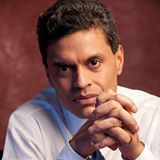 By Fareed Zakaria Opinion writer , 2014 in The Washington Post
From the start, President Obama’s Syria policy has foundered because of a gap between words and deeds. And he’s done it again. Having declared that the aim of U.S. policy is to “degrade and ultimately destroy” the Islamic State, Obama now finds himself pressured to escalate military action in Syria. This is a path destined for failure. In fact, the administration should abandon its lofty rhetoric and make clear that it is focused on a strategy against the Islamic State that is actually achievable: containment.
Escalation in Syria cannot meet American objectives and is almost certain to produce chaos and unintended consequences. The central reality is that Washington has no serious local partners on the ground. It is important to understand that the Free Syrian Army doesn’t actually exist. A Congressional Research Service report points out that the name does not refer to any “organized command and control structure with national reach.” The director of national intelligence has testified that the opposition to the Bashar al-Assad regime is composed of 1,500 separate militias. We call a bunch of these militias — which are anti-Assad and also anti-Islamist (we hope) — the Free Syrian Army.
Scholar Joshua Landis — whose blog Syria Comment is an essential source — estimates that the Assad regime controls about half of Syrian territory, though much more of the population. The Islamic State controls about one-third of the country, and the other militias control a little less than 20 percent. But the largest and most effective of these non-Islamic State groups are al-Qaeda-affiliated and also deadly enemies of the United States. The non-jihadi groups collectively control less than 5 percent of Syria. Landis writes that, according to opposition leaders, Washington is supporting about 75 of these groups.
A U.S. strategy of escalating airstrikes in Syria — even if coupled with ground forces — would wish that the weakest and most disorganized forces in the country somehow become the strongest, first defeating the Islamic State, then the Assad regime, all while fighting off Jabhat al-Nusra and Khorasan. The chance that all this will happen is remote. Far more likely, heavy bombings in Syria will produce chaos and instability on the ground, further destroying Syria and promoting the free-for-all in which jihadi groups thrive.
Critics are sure this policy would have been easy three years ago, when the opposition to Assad was more secular and democratic. This is a fantasy. It’s true that the demonstrations against the Assad regime in the initial months seemed to be carried out by more secular and liberal people. This was also true in Libya and Egypt. But over time, more organized, passionate and religious forces triumphed. This is a familiar pattern in revolutions — including the French, Russian and Iranian. They are begun by liberals and taken over by radicals.
For any strategy to work in Syria, it needs both a military and a political component. The military element is weak. The political one is nonexistent.
The crucial, underlying reason for the violence in Iraq and Syria is a Sunni revolt against governments in Baghdad and Damascus that they view as hostile, apostate regimes. That revolt, in turn, has been fueled by Saudi Arabia, the United Arab Emirates and Qatar, each supporting its own favorite Sunni groups, which has only added to the complexity. On the other side, Iran has supported the Shiite and Alawite regimes, ensuring that this sectarian struggle is also regional.
The political solution, presumably, is some kind of power-sharing arrangement in those two capitals. But this is not something that the United States can engineer in Syria. It tried in Iraq, but despite 170,000 troops, tens of billions of dollars and David Petraeus’s skillful leadership, the deals Petraeus brokered started unraveling within months of his departure, well before American troops had left. This is not a part of the world where power-sharing and pluralism have worked — with the exception of Lebanon, and that happened after a bloody 15-year civil war in which one out of every 20 people in the country was slaughtered.
The only strategy against the Islamic State that has any chance of working is containment — bolstering the neighbors (who are threatened far more than the United States) that are willing to fight militarily and politically. They include, most importantly, Iraq, Jordan, Lebanon, Turkey and the Gulf states. The greatest challenge is to get the Iraqi government to make serious concessions to Sunnis so that they are recruited into the fight, something that has not happened so far. All of this should be coupled with counterterrorism, which means strikes at key Islamic State targets, as well as measures to track foreign fighters, stop their movements, intercept their funds, and protect the neighbors and the West from a jihadi infiltration spilling over.
The Obama administration is pursuing many elements of this strategy. It should be forthright about its objectives and abandon its grander rhetoric, which is setting itself up for escalation and failure.
Cancer Research, Cures, and Making Money
Abigail “Nabby” Adams Smith (July 14, 1765 – August 15, 1813) was the firstborn of Abigail and John Adams, founding father and second President of the United States.
In 1810, Nabby was diagnosed with breast cancer, followed by a mastectomy in 1811. … The cancer continued to spread throughout her body, and she died, aged 48. That was 200 years ago.
ABCNews.com says that $415 Million is spent annually by Medicare for the treatment of breast cancer.
Total average Medicare spending per patient for initial phase care of breast cancer (2 months prediagnosis–365 days postdiagnosis) was $21,000 (2002 US$) in 2002 (Figure 2).4 Surgery and radiation cost little on a per-patient basis: $5700 and $4500 (2002 US$), respectively, and were used in 91% and 51% of patients, respectively. In contrast, chemotherapy and other inpatient services were used in about 25% of patients, but at a higher per patient cost ($12,800 [2002 US$]). If the data used for this analysis were expanded to include continuing care and end-of-life care, there would be a marked difference in spending patterns. The United States spent an estimated $62,900 to $94,300 per person for end-of-life breast cancer care during 2010 – See more at: http://www.ajmc.com/publications/evidence-based-oncology/2012/2012-2-vol18-n1/the-economics-of-cancer-care-in-the-united-states-how-much-do-we-spend-and-how-can-we-spend-it-better#sthash.BSrLsaip.dpuf.
So millions of dollars are spent treating people with this horrible disease. Billions more are spent on research for a cure. The National Cancer Institute’s (NCI) budget for FY 2013 was approximately $4.8 billion. Overall, NCI’s budget has been relatively flat in recent years. During the period from 2005 through 2013, the NCI budget averaged $4.9 billion per year.
Lots of people making lots of money.
How dare I suggest this thought? Isn’t cancer cures and cancer research an industry that makes large amounts of money? Lesley Stahl on 60 Minutes discovers the shock and anxiety of a cancer diagnosis can be followed by a second jolt: the astronomical price of cancer drugs.
If you had a cure for just one of those cancers, breast cancer, how many people would need to find another job? How many companies would be earning less money?
Ebola – Cartoonist’s Take

Trickle Down Economics
Just in case you didn’t know how it works!

Anti-Israel Demonstrations Happening Throughout the World
This YouTube video from StormCloudsGathering sent from YouTube.
Exaggeration of the Week
Today’s Los Angeles Times front page headline is “Latest Ebola case raises U.S. anxiety.” That makes a total of two cases. Hardly an epidemic. The news media loves to beat a story to death. CNN is especially good at this kind of “reporting.” They offered 24 hour a day coverage of the disappearance of Malaysia Airlines Flight 370. That reporting continued until ratings dropped off. Aren’t we all to blame?
As expressed in The Weekly Sift
From googling around and talking with my wife (who specializes in risk management), I’ve concluded that risk theorists do a bad job coming up with catchy names for common fallacies. Let me suggest that the principle in the opening quote be called “the Ebola fallacy”. (If you already know a name for this, please leave a comment.)
Wednesday was the first time a person died of Ebola in the United States. Thomas Duncan (who flew here from Liberia) was also the first person diagnosed with Ebola in the United States. (The handful of previous cases were Americans who contracted the disease in Africa, were diagnosed there, and returned to the U.S. for treatment.) Sunday, we got the first report of someone catching Ebola in this country: one of the people who treated Duncan at Texas Health Presbyterian Hospital in Dallas.
This is about what you’d expect from a hard-to-catch disease like Ebola. As CDC Director Tom Frieden explained: “Ebola has been in existence for decades—and has predominantly infected remote areas lacking basic health infrastructure.”
And yet, from the public reaction you’d think Ebola was the biggest health problem in the country. It’s all over the news. Lakeland Industries, which makes hazmat suits, has seen its stock soar 160% this month. Republican political candidates are citing the Ebola threat to support clamping down on the Mexican border. (So far there have been no Ebola cases in Central America. But when Republicans think about disease-carriers, Hispanics leap to mind.) And three Democrats joined 24 Republican members of Congress in calling for banning travelers from western Africa, and possibly quarantining Americans for three weeks after they return from western Africa .
And that’s just the reaction from people who are trying to look respectable. The conspiracy theorists are going completely crazy. “The CDC is working with Border Patrol authorities and the Department of Homeland Security to disappear potential Ebola victims attempting to cross the border into the United States.”
Meanwhile, about 700 Americans die in traffic accidents each week.
Want to be safer and live longer? Use seat belts. Don’t smoke. Don’t drink and drive. Eat better. Get the sleep you need. Exercise regularly. And if you need any additional motivation not to touch the bodily fluids of people who are visibly ill, maybe then you should think about Ebola. But stop obsessing about distant-but-horrible threats that have almost no chance of affecting you.
HELP ME PLEASE – I AM CONFUSED!
When it comes to Israel, the world seems to be upside down.
I always said that the true Palestinians are the Jews, always remembering in my youth that the Jerusalem Post was originally called the Palestine Post and we would always refer to Palestine when collecting funds for the Jews living in Palestine to defend themselves against the Arabs. נושא:הועבר: HELP ME PLEASE – I AM CONFUSED!
ISRAELI LEADERS:
BENJAMIN NETANYAHU,
Born 21 October 1949 in Tel Aviv, Israel (formerly Mandate of Palestine)
EHUD BARAK, Born 12 February 1942 in Mishmar HaSharon , British Mandate of Palestine
ARIEL SHARON, Born 26 February 1928 in Kfar Malal , British Mandate of Palestine
EHUD OLMERT, Born 30 September 1945 in Binyamina-Giv ‘ at Ada , British Mandate of Palestine
ITZHAK RABIN, Born 1 March 1922 in Jerusalem , British Mandate of Palestine
ITZHAK NAVON, Israeli President in 1977-1982. Born 9 April 1921 in Jerusalem, British Mandate of Palestine.
EZER WEIZMAN, Israeli President in 1993-2000. Born 15 June 1924 in Tel Aviv, British Mandate of Palestine
ARAB “PALESTINIAN” LEADERS :
YASSER ARAFAT, Born 24 August 1929 in Cairo, Egypt
SAEB EREKAT, Born April 28, 1955, in Jordan. He has Jordanian citizenship.
FAISAL ABDEL QADER AL-HUSSEINI, Born in1948 in Bagdad, Iraq.
SARI NUSSEIBEH, Born in 1949 in Damascus, Syria
MAHMOUD AL-ZAHAR, Born in 1945, in Cairo, Egypt.
So, if I understand this correctly, the Israeli leaders, who were born in Palestine, are called/considered “Settlers” or more accurately, “Occupiers.” While Palestinian Arab leaders who were born in Egypt, Jordan, Syria, Iraq and Tunisia are called “Native Palestinians”?
THAT makes perfect sense.
DAVID BANCROFT
 Coast Contact