California Propositions for November 4, 2014

This is all about the money spent on state propositions.  Does more money spent translate to an outcome that is contrary to the public interest?

To see the updated revised list that indicates current total contributions you can go to California Fair Political Practices Commission.

I have posted my position on each.


Proposition 1 – AB1471 Water Quality, Supply and Infrastructure Improvement Act of 2014

Supporting

Corrected

California Hospitals Committee on Issues, Sponsored by California Association of Hospitals and Health Systems* $250,000
Northern California Carpenters Regional Council Issues PAC*
$250,000
Reed Hastings*
$250,000
California American Council of Engineering Companies Issues Fund* $250,000
Southwest Regional Council of Carpenters Issues Committee* $250,000
Members’ Voice of the State Building and Construction Trades Council of California* $150,000
International Union of Painters and Allied Trades Political Committee* $100,000
District Council of Iron Workers Political Issues Committee* $100,000
George M. Marcus and affiliated entities* $50,000
Southwest Regional Council of Carpenters Legislative Improvement Committee* $50,000
Hilmar Cheese Company* $25,000
Leprino Foods* $25,000
Total from top contributors $1,750,000


Opposing

No committee opposing this ballot measure raised enough money to reach the reporting threshold for this list.

Notice who is supporting this bond issue. It’s the engineers, carpenters, iron workers, and construction trade groups. Why? This bond issue will provide lots of money for the construction industry. Will any of the money spent create one more drop of water? NO!

Over $13 Billion has been spent on water bonds since the year 2000. How was that money spent? This is more money that will be wasted.

Vote NO.


Proposition 2 – State Reserve Policy

No data posted by California Fair Political Practices Commission.

The argument against this proposal is that it may deny schools the support they need.

I am voting YES.


Proposition 45 – Approval of Healthcare Insurance Rate Changes. Initiative Statute

Supporting

Consumer Watchdog Campaign – Yes on 45 and 46, a coalition of consumer advocates, attorneys and nurses $1,243,529
California Nurses Association $1,000,000
Consumer Watchdog $235,000
Wylie A. Aitken and Affliliated Entity Wylie A. Aitken Law Corporation $100,000
Strumwasser & Woocher $50,000
Lieff, Cabraser, Heimann & Bernstein, LLP $50,000
Milstein, Adelman, Kreger LLP $25,000
Adler Law a Professional Corporation $25,000
Cotchett, Pitre & McCarthy, LLP $25,000
Paul Goldenberg $25,000
CA Federation of Teachers COPE/Prop Ballot Measure Committee $25,000
Shernoff Bidart Echeverria Bentley, LLP $25,000
Yes on Prop. 46, Your Neighbors for Patient Safety, a coalition of consumer attorneys and patient safety advocates $25,000
Total from top contributors $2,853,529


 Opposing

Kaiser Foundation Health Plan, Inc. $14,716,574
Wellpoint, Inc. and affiliated entities $12,896,224
Blue Shield of California $9,819,424
Health Net, Inc. $261,224
UnitedHealthCare Insurance Company $156,224
California Association of Health Plans $60,000
California Association of Health Plans PAC $10,000
California Hospitals Committee on Issues $10,000
Total from top contributors $37,929,670

Every other type of insurance has regulated rates in California. Thirty five other states also regulate health insurance rates.

Vote YES.

Proposition 46 – Drug and Alcohol Testing of Doctors. Medical Negligence Lawsuits. Initiative Statute

Supporting

Consumer Attorneys of California and its sponsored committees: Consumer Attorneys Issues PAC, ID 842149; Consumer Attorneys Initiative Defense PAC, ID 1275672 $1,183,000
Robinson Calcagnie Robinson Davis, Inc. $250,000
Cotchett, Pitre & McCarthy, LLP $150,000
Bisnar/Chase Personal Injury Attorneys, LLP $125,000
Panish, Shea & Boyle, LLP $125,000
Casey, Gerry, Schenk, Francavilla, Blatt & Penfield, LLP $115,000
Shernoff, Bidart, Echeverria, Bentley, LLP $115,000
Bruce G. Fagel, A Law Corporation $110,000
Law Offices of Walkup, Melodia, Kelly & Schoenberger $100,000
Kazan, McClain, Satterley, Lyons, Greenwood & Oberman $100,000
Lieff Cabraser Heimann & Berstein, LLP $100,000
Total from top contributors $2,473,000


 Opposing

Cooperative of American Physicians IE Committee $10,161,489
The Doctors Company $10,001,200
Norcal Mutual Insurance Company $10,000,000
California Medical Association Physicians’ Issues Committee $5,212,026
Kaiser Foundation Health Plan, Inc., and The Hospitals $5,000,000
Medical Insurance Exchange of California, Including Aggregated Contributions $5,000,000
California Association of Hospitals & Health Systems $2,500,000
California Hospitals Committee on Issues $2,500,000
California Dental Association $2,052,709
The Dentists Insurance Company $1,620,000
Total from top contributors $54,047,424

Wow! $2 Million being spent to support this proposition. $54 Million being spent to oppose this proposition.   I had no idea that drug and alcohol abuse is a major issue among doctors. As to medical negligence, incompetence is prevalent. As I understand the current law the limit to reimbursements is $250,000.  I once went to a dentist who seemed to be drunk. He was part of a dental group. I requested another dentist. There must be a problem if so much money is being spent.

Vote YES.


Proposition 47 – Criminal Sentences. Misdemeanor Penalties. Initiative Statute

Supporting

Open Society Policy Center $1,210,112
Hughes, B. Wayne $750,000
Atlantic Advocacy Fund $600,000
Munger, Molly $325,448
Hastings, Reed $246,664
Phillips, Steven C. $125,000
Parker, Sean $100,000
Drug Policy Action $100,000
Delaney, M. Quinn $100,000
California Federation of Teachers, AFT, AFL-CIO COPE Prop/Ballot $50,000
Total from top contributors $3,607,224


 Opposing

No committee opposing this ballot measure raised enough money to reach the reporting threshold for this list.

United States Senator and member of the Democratic party, Dianne Feinstein, came out against Proposition 47 in a column featured in the Los Angeles Daily News.  Feinstein said she found the proposition to be dangerous, especially the way it classifies at-risk individuals.

I have been a supporter of eliminating laws that penalize people who use drugs. Petty theft should not be a felony because we are short jail space.

 I respect  the senator’s opinion.  I was going to vote yes but now am on the fence.


Proposition 48 – Referendum to Overturn Indian Gaming Compacts

 Supporting

No committee opposing this ballot measure raised enough money to reach the reporting threshold for this list.

 Opposing

Table Mountain Rancheria $3,528,099
Brigade Capital Management, LLC through affiliated entities $2,666,780
Riva Ridge Recovery Fund LLC $226,232
DG Capital Management, LLC and affiliated entites $113,258
United Auburn Indian Community of the Auburn Rancheria $100,000
Chukchansi Economic Development Authority $25,000
Club One Casino, Inc. $15,000
Total from top contributors $6,674,369

This is something that I do not have enough knowledge to accurately judge.

The governor supports this change in the law. The argument is that this law will create jobs. Casinos are closing in Atlantic City. Isn’t it mostly the poor who waste their money in casinos? Over $6 Million to oppose this proposition should be a message. Probably those in this business don’t want any more competition. Indian tribes have benefited from their casinos.

 I am voting NO because the idea was to provide Indians with an income source.  More competition will harm that source.
Another Holocaust

Ron Rosenbaum wrote this piece in Slate.com. His point is the consequence of victory by Hamas. My question is who would come to the aid of Jews being slaughtered in Israel?

Israel’s most vehement critics like to accuse it of Nazi-like “genocide” in Gaza, said Ron Rosenbaum. Now, there’s a legitimate debate about whether Israel could have caused fewer civilian deaths in defending itself against Hamas’s rocket attacks and tunnel building. But genocide has a specific meaning, which is the deliberate, total annihilation of a people. “Where do we find actual genocide in Gaza”? In Hamas’s “Covenant”-its statement of its sacred mission. “Israel will exist and will continue to exist until Islam will obliterate it,” the Covenant states, adding, “The Day of Judgment will not come about until Muslims fight the Jews (killing the Jews).” When Hamas fired thousands of rockets into Israeli towns and cities, its leaders meant to kill as many Jews as possible and failed only because of the Iron Dome defense system. If these terrorists were to acquire more-sophisticated missiles or tactical nuclear weapons, they’d happily kill millions of Jews in a Second Holocaust. All critics of Israel are not anti-Semitic. But those who ignore Hamas’s genocidal intent and then hurl the word “genocide” at its intended victims “give themselves away.”

DAVID BANCROFT

The Richest and Poorest Members of Congress

Are there any poor members of congress?  How do you define rich?

The Washington Post listed the top 50 members.  The poorest in the group has assets totaling over $6 million.

This data was complied by Roll Call (http://www.rollcall.com) based on reports that members must file.

The ten richest:

  1. Rep. Darrell Issa. The California Republican tops the list for the second year in a row, with a net worth of $357 million. Source of his wealth is not disclosed.
  2. Rep. Michael McCaul. The Texas Republican is worth $118 million, according to his financial disclosure. Roll Call says his wealth is connected to his wife, Linda, the daughter of the founder of broadcast giant Clear Channel Communications.
  3. Rep. John Delaney. The Maryland Democrat’s net worth soared 64 percent from 2012 to 2013, to nearly $112 million, financial disclosure forms show. He made his fortune as chief executive of two publicly traded finance companies.
  4. Sen. John D. Rockefeller IV. The West Virginia Democrat — and heir of oil scion John D. Rockefeller — had a reported net worth of $108 million at the end of 2013.
  5. Sen. Mark R. Warner. The Virginia Democrat made his pile in telecommunications. His reported worth was $95 million.
  6. Rep. Jared Polis. The Colorado Democrat, with a listed worth of $74 million, has a blind trust and investments in senior housing in Japan and the world’s only aquaculture venture capital firm.
  7. Sen. Richard Blumenthal. The Connecticut Democrat reported a net worth of $62 million, which includes real estate holdings in New York and in Brazil.
  8. Rep. Scott Peters. The California Democrat made his cash representing businesses and government agencies as an environmental attorney. His wife made hers at a private equity firm established by her father. Their net worth: $45 million.
  9. Sen. Dianne Feinstein. The California Democrat and her husband, a private equity magnate, had a listed net worth of $44 million.
  10. Rep. Suzan DelBene. 2013 was a good year for the Washington Democrat, whose net worth rose more than 50 percent, to $38 million, primarily through the rise of Microsoft stock.

The ten poorest:

  1. David Valadao. -$4.10 million. Valadao, a California Republican who bears the dubious distinction of being poorest this year, actually lists more than $1 million in assets. The dairy farmer reports only three assets: his two family farms with a combined worth of at least $1.25 million and a bank account worth more than $1,000. His $5.35 million in liabilities are all farm-related, including a $1 million mortgage and multimillion-dollar lines of credit on the farm, its operating herd and animal feed.
  2. Alcee L. Hastings. -$2.23 million. A lawyer and former federal judge, Hastings is still paying off legal fees of more than $2 million that he incurred in a trial on charges of bribery while he was serving on a U.S. district court. The Florida Democrat was acquitted of the charges in 1983, but a federal panel later concluded he had lied and fabricated evidence. By 1989, he was removed from the court after votes by the House and Senate. He holds one other liability, a mortgage of more than $100,000 on his personal home that is comparable to the median home value for his district — $106,000.
  3.  Debbie Wasserman Schultz. -$1.04 million. The chairwoman of the Democratic National Committee, Wasserman Schultz has spent most of her career in political office, starting as a state legislator in her home state of Florida. She has two mortgages with a combined worth of at least $750,000, plus $350,000 in home equity and personal loans. She also carried more than $50,000 in credit card debt in 2012. Her assets include a spouse-held $100,000 stock in the community bank where her husband works and several small bank accounts including college savings plans for her children.
  4. Howard “Buck” McKeon. -$943,000. Before Congress, McKeon helped operate his family’s now-closed chain of Western-style clothing stores. The California Republican owes more than $1 million combined on two mortgages for homes in his district and Alexandria, Va., and has only $67,000 in assets composed of bank and life insurance accounts.
  5. Rubén Hinojosa. -$808,000. A family business in food-processing that filed for bankruptcy because of the recent economic recession, according to the Texas Democrat, has left him with an arbitration award of at least $1 million owed to a creditor, an additional $250,000 in business debt, and $35,000 in city and county property taxes overdue from 2010.
  6. Steve Israel. -$795,000. Israel has a mixture of mortgages, credit card debt and assumed student loans from his children that make up more than $800,000 in liabilities. The New York Democrat also has a small bank account worth less than $1,000 and a retirement account worth more than $15,000.
  7. Mike Quigley. -$765,000. The Illinois Democrat has a mix of mortgages and credit card debt totaling more than $800,000. But he also has a college savings plan for his children and a pension left over from his service on the Cook County Board of Commissioners.
  8. Joseph Crowley. -$762,000. Democratic House Caucus Vice Chairman Crowley has $850,000 in liabilities from two mortgages and a home equity line of credit. The New York Democrat counts a small retirement plan and some college savings plans for his children under his assets.
  9. Pedro R. Pierluisi. -$674,000. The resident commissioner for Puerto Rico’s wife’s consulting firm is listed as an asset worth at least $1 million, but some multimillion-dollar mortgages on his San Juan homes drops Pierluisi’s net worth into negative territory.
  10. Chaka Fattah. -$650,000. The Pennsylvania Democrat has $800,000 in mortgages and home equity loans for three properties in the greater Philadelphia area. But he also has a state retirement account worth at least $50,000 and GE common stock worth at least $100,000.

While these members appear to be in the most dire straits on paper, an alternative calculation would peg the seven members who report having no assets as the poorest. These seven members are: Democrats Kyrsten Sinema of Arizona, Gwen Moore of Wisconsin, John Conyers Jr. of Michigan and Gregory W. Meeks of New York, and Republicans Rick Crawford of Arkansas, Duncan Hunter of California and Louie Gohmert of Texas. These members do not have enough liabilities to drop into the 10 poorest, but their net worths range from -$15,000 (Sinema) to -$610,000 (Gohmert).

Democrat Debbie Stabenow of Michigan is the poorest member of the Senate, with a net worth of -$585,000. Fellow Democrat Mark Pryor of Arkansas is the senator with the smallest amount of assets; he has a bank account worth $1,000 to $15,000 and one for his children worth less than $1,000.

They’re Back!


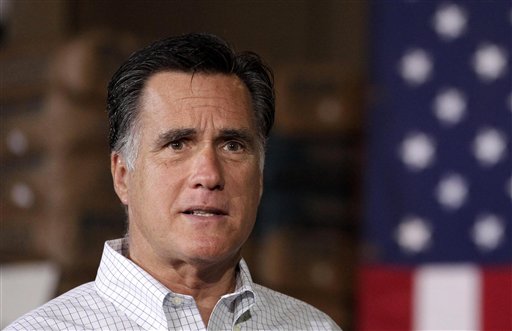
"0620_NWS_LDN-L-HILLARY-MB"Mitt Romney


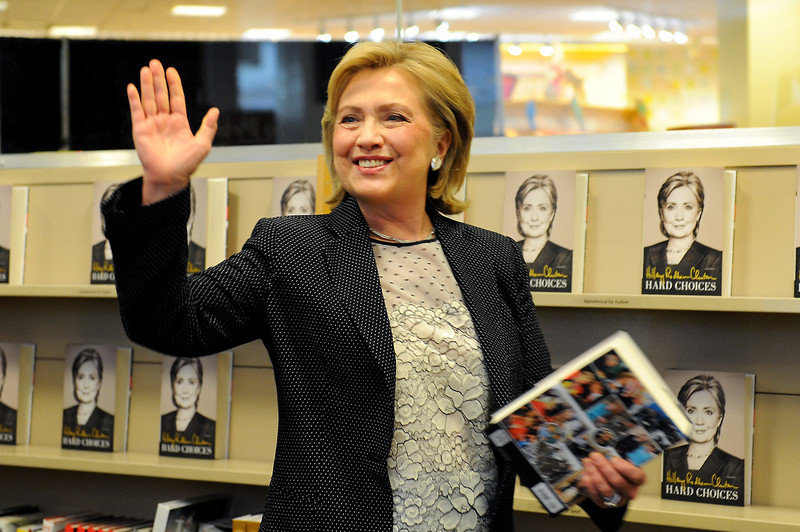
Hillary Clinton appeared in Iowa this past week and used the words “I’m back!” Mitt Romney appeared on Fox News Sunday. Neither has said they are running for president. Are they doing these reappearances just for fun? It’s unlikely.

Both of them had their chance to run for president and both lost. Why would we want to consider the loser as our next president? Richard Nixon proved that it can be done. Of course look at how his presidency turned out.

AOL conducted a poll of their readers and the results should be a message to both of them. Who would you pick for president in 2016? The choices Romney, Clinton, or Anyone else. The results should be the message. 61% chose Anyone else.

“In a match up between Hillary and Satan himself, I would have to go with Satan,” said Stacy Marston reports AOL.

Despite those cutting words it is obvious that Mrs. Clinton is planning another run for president. No one of consequence is likely to challenge her in the Democratic Party. Sorry Bernie Sanders.

With no clear front runner in the GOP, Mitt Romney is an odds on favorite in my view.

The question is who wants re-runs?

I believe both of them consider themselves able candidates for president. Are we likely to have a choice of “the lesser of two evils.” I fear the answer is yes.

The United States Constitution signed September 17, 1787

The work of some great men who envisioned a new form of government that represented all the people.  It begins with a preamble.

We the People of the United States, in Order to form a more perfect Union, establish Justice, insure domestic Tranquility, provide for the common defence, promote the general Welfare, and secure the Blessings of Liberty to ourselves and our Posterity, do ordain and establish this Constitution for the United States of America.

Obama’s Strategy for Fighting ISIS Isn’t All About Us

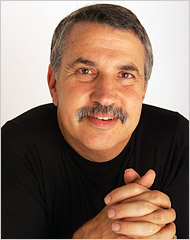
Thomas FriedmanBy Thomas L. Friedman in the N.Y. Times, September 14, 2014

THERE are three things in life that you should never do ambivalently: get married, buy a house or go to war. Alas, we’re about to do No. 3. Should we?

President Obama clearly took this decision to lead the coalition to degrade and destroy the Islamic State in Iraq and Syria, or ISIS, with deep ambivalence. How could he not? Our staying power is ambiguous, our enemy is barbarous, our regional allies are duplicitous, our European allies are feckless and the Iraqis and Syrians we’re trying to help are fractious. There is not a straight shooter in the bunch.

Other than that, it’s just like D-Day.

Consider Saudi Arabia. It’s going to help train Free Syrian Army soldiers, but, at the same time, is one of the biggest sources of volunteer jihadists in Syria. And, according to a secret 2009 U.S. study signed by then-Secretary of State Hillary Clinton and divulged by WikiLeaks, private “donors in Saudi Arabia constitute the most significant source of funding to Sunni terrorist groups worldwide.”

Turkey allowed foreign jihadists to pass into and out of Syria and has been an important market for oil that ISIS is smuggling out of Iraq for cash. Iran built the E.F.P.’s — explosively formed penetrators — that Iraqi Shiite militias used to help drive America out of Iraq and encouraged Iraq’s Shiite leaders to strip Iraqi Sunnis of as much power and money as possible, which helped create the ISIS Sunni counterrevolt. Syria’s president, Bashar al-Assad, deliberately allowed ISIS to emerge so he could show the world that he was not the only mass murderer in Syria. And Qatar is with us Mondays, Wednesdays and Fridays and against us Tuesdays and Thursdays. Fortunately, it takes the weekends off.

Meanwhile, back home, Obama knows that the members of his own party and the Republican Party who are urging him to bomb ISIS will be the first to run for the hills if we get stuck, fail or accidentally bomb a kindergarten class.

So why did the president decide to go ahead? It’s a combination of a legitimate geostrategic concern — if ISIS jihadists consolidate their power in the heart of Iraq and Syria, it could threaten some real islands of decency, like Kurdistan, Jordan and Lebanon, and might one day generate enough capacity to harm the West more directly — and the polls. Obama clearly feels drummed into this by the sudden shift in public opinion after ISIS’s ghastly videotaped beheadings of two American journalists.

O.K., but given this cast of characters, is there any way this Obama plan can end well? Only if we are extremely disciplined and tough-minded about how, when and for whom we use our power.

Before we step up the bombing campaign on ISIS, it needs to be absolutely clear on whose behalf we are fighting. ISIS did not emerge by accident and from nowhere. It is the hate-child of two civil wars in which the Sunni Muslims have been crushed. One is the vicious civil war in Syria in which the Iranian-backed Alawite-Shiite regime has killed roughly 200,000 people, many of them Sunni Muslims, with chemical weapons and barrel bombs. And the other is the Iraqi civil war in which the Iranian-backed Shiite government of Prime Minister Nuri Kamal al-Maliki systematically stripped the Sunnis of Iraq of their power and resources.

There will be no self-sustained stability unless those civil wars are ended and a foundation is laid for decent governance and citizenship. Only Arabs and Muslims can do that by ending their sectarian wars and tribal feuds. We keep telling ourselves that the problem is “training,” when the real problem is governance. We spent billions of dollars training Iraqi soldiers who ran away from ISIS’s path — not because they didn’t have proper training, but because they knew that their officers were corrupt hacks who were not appointed on merit and that the filthy Maliki government was unworthy of fighting for. We so underestimate how starved Arabs are, in all these awakenings, for clean, decent governance.

Never forget, this is a two-front war: ISIS is the external enemy, and sectarianism and corruption in Iraq and Syria are the internal enemies. We can and should help degrade the first, but only if Iraqis and Syrians, Sunnis and Shiites, truly curtail the second. If our stepped-up bombing, in Iraq and Syria, gets ahead of their reconciliation, we will become the story and the target. And that is exactly what ISIS is waiting for.

ISIS loses if our moderate Arab-Muslim partners can unite and make this a civil war within Islam — a civil war in which America is the air force for the Sunnis and Shiites of decency versus those of barbarism. ISIS wins if it can make this America’s war with Sunni Islam — a war where America is the Shiite/Alawite air force against Sunnis in Iraq and Syria. ISIS will use every bit of its Twitter/Facebook network to try to depict it as the latter, and draw more recruits.

We keep making this story about us, about Obama, about what we do. But it is not about us. It is about them and who they want to be. It’s about a pluralistic region that lacks pluralism and needs to learn how to coexist. It’s the 21st century. It’s about time.

TO WHOM DOES THE LAND OF ISRAEL BELONG??

An Israeli Sense of Humor at United Nations set the record straight.

An ingenious example of speech and politics occurred recently in the United Nations Assembly and made the world community smile.

A representative from Israel began:
‘Before beginning my talk I want to tell you something about Moses:
When he struck the rock and it brought forth water, he thought,
“What a good opportunity to have a bath!”

Moses removed his clothes, put them aside on the rock and entered the water.
When he got out and wanted to dress, his clothes had vanished.
A Palestinian had stolen them!

The Palestinian representative at the UN jumped up furiously and
shouted, “What are you talking about? The Palestinians weren’t there then.”

The Israeli representative smiled and said,
“And now that we have made that clear, I will begin my speech.”

Author of this piece is unknown

DAVID BANCROFT

Remember the Maine and other Reasons for Starting a War

History has taught us nothing!

Two Americans were beheaded and those acts, as horrible as they are, is about to lead the United States into another war. 

On June 28, 1914, Archduke Franz Ferdinand was assassinated. For some unknown reason, Austria-Hungary believed that Serbia was involved either directly or indirectly. Some people believe that Austria-Hungary was just looking for an excuse to start a war.

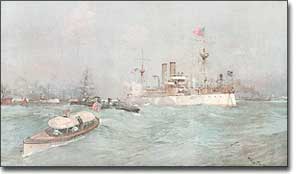
  U.S.S. Maine in Havana Harbor Jan. 1898 - US Naval Institute


“REMEMBER THE MAINE, TO HELL WITH SPAIN!” was the cry after an explosion on that ship caused it to sink with 260 American sailors on board. On April 11, 1898, McKinley asked the Congress for permission to use force in Cuba. To send a message to the rest of the world that the United States was interested in Cuban independence instead of American colonization, Congress passed the TELLER AMENDMENT, which promised that America would not annex the precious islands. After that conscience-clearing measure, American leaders threw caution to the wind and declared open warfare on the Spanish throne.

The Spanish-American War is often referred to as the first “media war.” During the 1890s, journalism that sensationalized—and sometimes even manufactured—dramatic events was a powerful force that helped propel the United States into war with Spain. Led by newspaper owners William Randolph Hearst and Joseph Pulitzer, journalism of the 1890s used melodrama, romance, and hyperbole to sell millions of newspapers–a style that became known as yellow journalism.

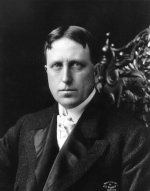
Willian Randolph HearstThe term yellow journalism came from a popular New York World comic called “Hogan’s Alley,” which featured a yellow-dressed character named the “the yellow kid.” Determined to compete with Pulitzer’s World in every way, rival New York Journal owner William Randolph Hearst copied Pulitzer’s sensationalist style and even hired “Hogan’s Alley” artist R.F. Outcault away from the World. In response, Pulitzer commissioned another cartoonist to create a second yellow kid. Soon, the sensationalist press of the 1890s became a competition between the “yellow kids,” and the journalistic style was coined “yellow journalism.”

Hearst created several schemes to spark U.S. intervention. The most well-known involved the imprisonment and release of Cuban prisoner Evangeline Cisneros. With his hand in her dramatic escape, Hearst successfully used publicity to rally U.S. interest for the Cuban struggle.


Perhaps the most famous anecdote surrounding Heart’s zeal for the war involves a legendary communication between illustrator Frederick Remington and Hearst. As the story goes, Remington, who had been sent to Cuba to cover the insurrection, cabled to Hearst that there was no war to cover. Hearst allegedly replied with, “You furnish the pictures. I’ll furnish the war.” More detail here.

Tune in to FOX, CNN, NBC, etc. today and you will see the images and hear the tales of ISIS soldiers now reportedly numbering 30,000 or more that are threatening Syria, Iraq, and adjoining nations with their very existence. “Contractors Ready to Cash In On ISIS War” is an article posted by Eli Lake on THE DAILY BEAST. “Islamic State’s rapid growth caught U.S. by surprise” is a headline of the Los Angeles Times.

Don’t you see how headlines and stories are fanning the flames of war? In the confusion the president calls his plans a war then call it an action against terrorists but not a war. “No boots on the ground” is repeated endlessly. What does that accomplish? Proof that the United States is not getting into another war.  – The confusion causes the president’s highest advisers to sometimes say the word “war” and then re-state that we are not going to war.

Even in his Wednesday night speech the president said there is no credible threat on the “homeland.”

When a president has no firm foreign policy he is impacted by the noisiest among us. Prepare for loss of life and other unintended consequences.

Another Sad Military Adventure for the U.S.A.


obama-address 09-10-2014

Our president has succumbed to the war mongers.

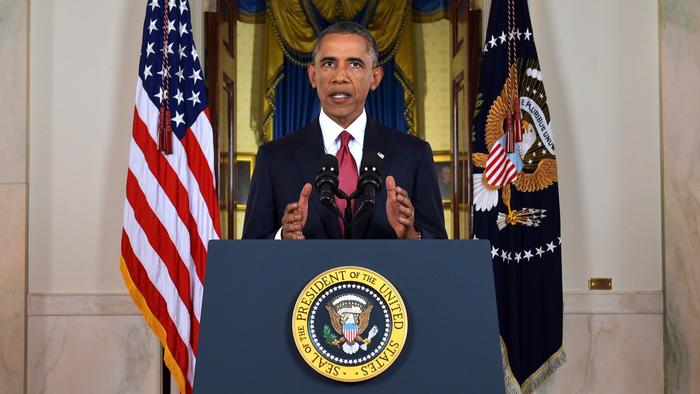
President Obama’s speech to destroy ISIS (or ISIL) was for the most part excellent. The latter part of the speech where he spoke of the United States recovering from the Great Recession was irrelevant.

He told us his plans to accomplish the goal. He placed only one condition on those plans. There will be no American army doing the ground fighting. Without spelling out every detail he implied that American forces would be used in Syria.

I have one big problem with this military adventure. The president did not tell Americans why we need to be involved in the effort. Other questions:
• Where is the evidence that America will be attacked if ISIS is not destroyed?
• What interests of the United States will be effected by the rise of ISIS?
• Who will do the ground fighting if it’s not Americans?
• How can we rely on the Iraqi army when they dropped their weapons and ran away in the face of attack by ISIS?
• Why hasn’t the Arab League lead this fight?
• Given our track record in the Middle East, why will the outcome of this war be any different?
• When will we know we have won the fight?

Two things we can be sure of is that the manufacturers of military hardware will be earning more money and American lives will be lost.

A Progressive Estate Tax in the United States

This idea won’t become law but it should.

By:  Sen. Bernie Sanders (I-Vt.)

Huffington Post

Monday, September 8, 2014

The founders of our country declared their independence from what they viewed as a tyrannical aristocracy in England. More than two centuries later, today’s tyrannical aristocracy is no longer a foreign power. It’s an American billionaire class which has unprecedented economic and political influence over all of our lives.

Unless we reduce skyrocketing wealth and income inequality, unless we end the ability of the super-rich to buy elections, the United States will be well on its way toward becoming an oligarchic form of society where almost all power rests with the billionaire class.

In the year 2014, the U.S. has by far the most unequal distribution of wealth and income of any major country on earth. This inequality is worse than at any time in our country’s history since 1928. Today, the top 1 percent owns about 37 percent of the total wealth in this country. The bottom 60 percent owns only 1.7 percent of our nation’s wealth.

At a time median family income is $5,000 less than it was in 1999, the net worth of the top 400 billionaires in this country has doubled over the past decade. The top 1 percent now owns more wealth than the bottom 90 percent of Americans and one family, the Walton family of Wal-Mart, owns more wealth than the bottom 40 percent of Americans. 

In terms of income, the top 1 percent earns more than the bottom 50 percent. Since the Great Recession of 2008, 95 percent of all income gains in the U.S. have gone to the top 1 percent. While the rich have become even richer, more Americans are living in poverty than at any time in our nation’s history. Today, half of Americans have less than $10,000 in savings. We have the highest rate of childhood poverty – 22 percent – than any major country on earth.

More than a century ago, President Theodore Roosevelt recognized the danger of massive wealth and income inequality and what it meant to the economic and political well-being of the country. In addition to busting up the big trusts of his time, he fought for the creation of a progressive estate tax to reduce the enormous concentration of wealth that existed during the Gilded Age.

“The absence of effective state, and, especially, national, restraint upon unfair money-getting has tended to create a small class of enormously wealthy and economically powerful men, whose chief object is to hold and increase their power,” the Republican president said. “The really big fortune, the swollen fortune, by the mere fact of its size acquires qualities which differentiate it in kind as well as in degree from what is passed by men of relatively small means. Therefore, I believe in … a graduated inheritance tax on big fortunes, properly safeguarded against evasion and increasing rapidly in amount with the size of the estate.”

Roosevelt spoke those words on Aug. 31, 1910. They are even more relevant today.

A progressive estate tax on multi-millionaires and billionaires is the fairest way to reduce wealth inequality, lower our $17 trillion national debt and raise the resources we need for investments in infrastructure, education and other neglected national priorities.

I will shortly introduce legislation that will:

• Call for a progressive estate tax rate structure so that the super wealthy pay their fair share of taxes. The tax rate for the value of an estate above $3.5 million and below $10 million would be 40 percent. The tax rate on the value of estates above $10 million and below $50 million would be 50 percent, and the tax rate on the value of estates above $50 million would be 55 percent.

• Include a billionaire’s surtax of 10 percent. This surtax on the value of estates worth more than $1 billion would currently apply to fewer than 500 of the wealthiest families in America worth more than $2 trillion.

• Close estate tax loopholes that have allowed the wealthy to avoid billions in estate taxes. Some of the wealthiest Americans in this country have exploited loopholes in the tax code to avoid paying an estimated $100 billion in estate taxes since 2000. My bill would close those loopholes.

• Exempt the first $3.5 million of an estate from federal taxation ($7 million for couples), the same exemption that existed in 2009. Under this legislation, 99.75 percent of Americans would not pay a penny in estate taxes. 

This legislation would exempt more than 99.7 percent of Americans from paying any estate tax while ensuring that the wealthiest Americans in our country pay their fair share.

I agree with former Labor Secretary Robert Reich who wrote, in support of this legislation, that America “is creating an aristocracy of wealth populated by heirs who don’t have to work for a living yet have great influence over how the nation’s productive assets are deployed.” He is right in calling the proposal that I’ve laid out “a welcome step toward reversing this trend.” Let’s fight together to see that it is implemented.