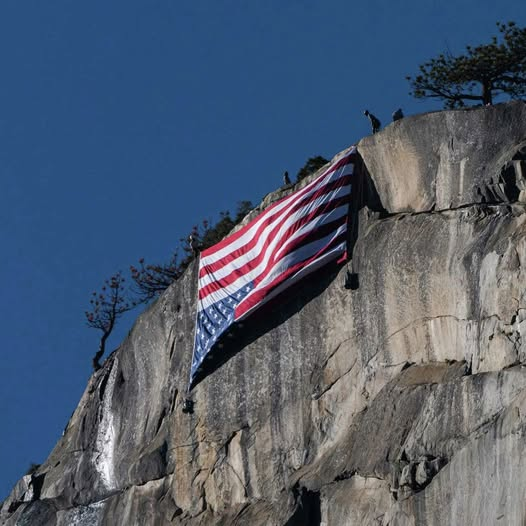
A brilliant action in Yosemite Park on El Capitan by deploying a massive American flag upside down in the traditional sign of distress or extreme emergencies.”
An Independent view of law, politics and social issues confronting Angelinos, Californians, and Americans
A brilliant action in Yosemite Park on El Capitan by deploying a massive American flag upside down in the traditional sign of distress or extreme emergencies.”
“Canadians are preparing to create a retail blackout on Feb 28 of all U.S retailers doing business here 9 (in Canada). For one day, show them we have the power when provoked. Absolutely no purchases from Walmart, Home Depot, Best Buy, Amazon, McDonald’s, Staples, Gap, Toys r Us , Costco or any other US retailers. For one day, support only small or large CANADIAN or MEXICAN producers and companies. It’s time to STAND UP for ourselves. BE STRONG AND BE PROUD. Spread the word!”
Imagine if, for just one day, Canadians chose not to spend a single dollar at U.S.-owned retailers operating in the country. What kind of impact would that have? Would it send a strong message, shake up the economy, or fizzle out as a symbolic gesture?
Three days until we find out!
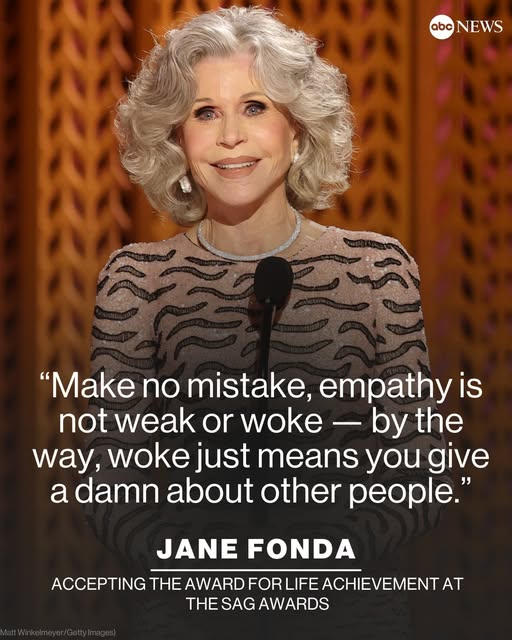
In her acceptance speech for Lifetime Achievement at the SAG Awards on Sunday night, Jane Fonda spoke about the current political state.
“What we actors create is empathy,” she said. “Our job is to understand another human being so profoundly that we can touch their souls. And make no mistake, empathy is not weak or woke — by the way, woke just means you give a damn about other people.”
Read more: https://abcnews.visitlink.me/LoZxf3
Click this link to see part of the 50th anniversary SNL 50th Anniversary show. This is a fun review of SNL (Saturday Night Live).
It appears that President Trump’s peace talks with Russian leader Vladimir Putin may take place without the full participation of Ukraine.
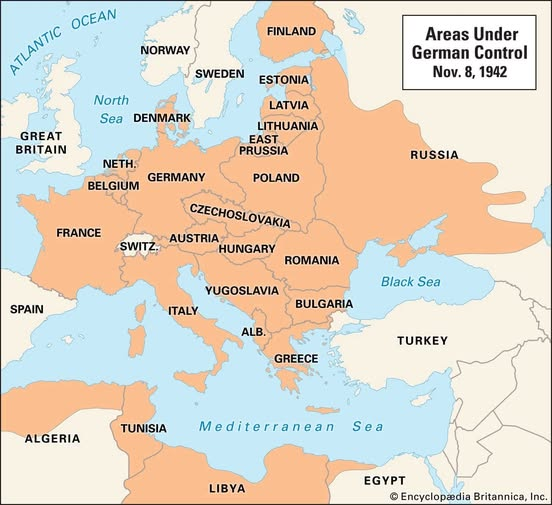
If so, there is a possibility of a sellout similar to what took place in 1938, when Great Britain and France approved of Adolf Hitler’s demand that the large German-speaking parts of Czechoslovakia be annexed by Nazi Germany. The Czech government was not present at negotiations.
Upon his return to Britain, Prime Minister Neville Chamberlain proclaimed that he had secured “peace in our time.” Winston Churchill, then a member of the House of Commons, harshly condemned this agreement as appeasement, as have historians since then.
In March 1939, Hitler seized all of Czechoslovakia. It was then that Chamberlain recognized the unlimited imperial greed of the German tyrant. What followed was the British and French guarantee of Poland’s security. In September 1939, when Hitler invaded Poland, Britain and France declared war on Germany, and World War II began.
In 2014, Putin occupied Crimea and backed separatists in the eastern provinces of Ukraine, areas in which Russian speakers make up a large proportion of the population. After the 2022 invasion of Ukraine, he annexed these provinces.
The U.S. government stance has been highly ambiguous. The current secretary of Defense has declared that those parts of Ukraine annexed by Russia would probably not be returned to Ukraine.
At the peace talks, will the U.S. appease Russia in the name of “peace”?
Thomas P. Bernstein, Irvine, California
The writer is a professor emeritus of political science at Columbia University. This was posted in the Los Angeles Times on February 19, 2025.

New York Times Editorial Board
Feb. 13, 2025, 5:03 a.m. ET
The U.S. Constitution established three branches of government, designed to balance power — and serve as checks on one another. That constitutional order suddenly appears more vulnerable than it has in generations. President Trump is trying to expand his authority beyond the bounds of the law while reducing the ability of the other branches to check his excesses. It’s worth remembering why undoing this system of governance would be so dangerous to American democracy and why it’s vital that Congress, the courts and the public resist such an outcome.
Among legal scholars, the term “constitutional crisis” usually refers to a conflict among the branches of government that cannot be resolved through the rules set out in the Constitution and the system of checks and balances at its heart.
Say, a president who openly disregards the 22nd Amendment’s two-term limit and asserts a right to remain in office indefinitely.
But there’s no need to get ahead of ourselves. Right now, in February 2025, only weeks into President Trump’s second term, he and his top associates are stress-testing the Constitution, and the nation, to a degree not seen since the Civil War.
A partial list would include flouting the express requirements of multiple federal laws, as though Congress were an advisory board and not a coequal branch of government. It would include feeding entire agencies into the “wood chipper” (their words), an intentionally gory metaphor for the firing of thousands of civil servants without the legally mandated congressional approval. It would include giving an unelected “special government employee” access to the private financial information of millions of Americans, in violation of the law. And it would include issuing an executive order that purports to erase one of the foundational provisions of the Constitution on Mr. Trump’s say-so.
There is also reason to fear that powers that solely rest with the president, and therefore don’t raise direct constitutional concerns, are being abused in ways that weaken the constitutional order. His mass pardon of Jan. 6 rioters, for instance, is technically legal, but it both celebrates and gives license to anyone who wishes to engage in violence to keep Mr. Trump in power.
Any one of these acts sets off major alarms. Taken as a whole, they are a frontal assault on the laws and norms that underpin American government — by the very people who are meant to execute the law.
So are we in a constitutional crisis yet?
The most useful way to answer that question is to focus less on discrete events and more on the process, in which one branch pushes the limits of its authority and then the others push back. When those in power understand that their first obligation is to the Constitution and the American people, this process can be normal, even healthy.
When they don’t — well, that’s what we are watching play out.
Voters gave Mr. Trump a Republican-controlled Congress, and those lawmakers are within their right to try to pass the president’s agenda through the legislative process. That doesn’t relieve either chamber of its constitutional responsibility to the American people to serve as a check on the power of the president.
With virtually no exception, Republican leaders in Congress have made clear through their inaction that as long as they and Mr. Trump hold power — until January 2027, at least — they will stay out of his way. One reason, however, that Mr. Trump is using executive orders so often is that many of his plans would find resistance from Congress because of the Republicans’ slim majorities and the Senate’s 60-vote filibuster threshold.
While it may seem that the Republican leaders in Congress are free to abdicate their power to the president if they choose, that is not the case. As the sole branch granted lawmaking authority, they can repeal a law only by passing another one — not by failing to complain when a president chooses not to follow the ones he doesn’t like. That ensures that every law passed has the support of a majority of members elected to represent this diverse, divided country.
The United States Agency for International Development, for example, is funded through the congressional appropriations process. Would the current Congress vote to cut that funding? Perhaps. But at the very least, the House speaker and Senate majority leader should be putting the question up for a vote.
And Congress plays another important role: When the president or his administration is believed to have broken the law, it’s up to Congress to investigate and, when appropriate, use its censure powers. There is no sign that lawmakers plan to hold Mr. Trump accountable in this manner.
The willingness of Republican congressional leadership to watch passively as its own rights and responsibilities as a coequal branch of government are undermined leaves only one other branch actively checking the excesses of this overreaching presidency: the federal courts, where nearly all intragovernmental disputes eventually wind up.
The courts exist to define the bounds of the Constitution and the laws and to tell the other branches when they have strayed past those bounds. They also tend to slow everything down — frustrating, perhaps, for those who are impatient to wield their power or who wish to see justice done quickly — but that deliberation is essential to the rule of law and due process. So far, the federal courts have done their job, blocking several of Mr. Trump’s more brazenly illegal moves, including his executive order ending the 14th Amendment’s guarantee of birthright citizenship. He has already refused to comply at least once: A Rhode Island judge ruled on Monday that the president has defied a federal court order to release billions of dollars in federal grants. This is a dangerous trial balloon that Mr. Trump is daring someone to pop.
It’s fine for presidents to disagree, even strongly, with court rulings. That’s part of America’s evolving constitutional conversation, and it can lead to important changes. But the way to handle such disagreements is through the appeals process or passing legislation or even an amendment. “That’s how the rule of law works,” one federal judge said last week in blocking Mr. Trump’s birthright citizenship order.
In short, change needs to happen through the established channels of litigation in, and obedience to, the courts. Chief Justice John Roberts emphasized this last December, when he warned of the dangers of disobeying court rulings. “Every administration suffers defeats in the court system,” he wrote, but until recently people didn’t dare ignore decisions they didn’t like. Now we live with “the specter of open disregard for federal court rulings.”
He did not name Mr. Trump, but it was clear whom he was talking about. Of course, Chief Justice Roberts and his colleagues made their jobs harder with their 2024 decision in Trump v. United States, which granted astonishingly broad presidential immunity — a decision that emboldened Mr. Trump and his allies to see how far he can expand his powers without resistance.
Some may argue that defying a lower court order is not as serious as defying a final ruling of the Supreme Court. The complication is that the judiciary depends on the executive branch to enforce its orders. When the executive branch is the defendant, as it is in these cases, and refuses to follow a court order, who can compel it to do so? This is the predicament Mr. Trump and his allies have put the nation in.
However it may play out, the refusal to obey a Supreme Court ruling — from which there is no appeal — would be the moment that America’s constitutional order completely fails. That is a clear red line separating countries that operate under the rule of law from those that do not. If he crosses it, Mr. Trump will have created the precise scenario the nation’s founders fought a war and established an entirely new government to avoid. And if that happens, no part of society can remain silent.
There is disagreement among even legal scholars about whether the country is all the way to a constitutional crisis yet. Regardless, the statements from the White House and the unwillingness of Republican leaders in Congress to even consider acting as a check should be taken as a flashing warning sign. If we have learned anything from the past decade of living with Donald Trump, it’s that when he tells you about what he will do with power, believe him.
Story by Ali Velshi of MSNBC. A 4 min read
Since entering office, President Donald Trump has been ambitious about territorial expansion. Sounding more like Donald the Conqueror, he’s insisted the United States take ownership of the Gaza Strip and the Panama Canal, he’s proposed buying Greenland from Denmark and he’s pitched Canada on joining our union as the 51st state. At his inauguration, Trump took America’s original expansionist slogan and blasted it skyward, “We will pursue our manifest destiny into the stars, launching American astronauts to plant the Stars and Stripes on the planet Mars.”
American history has seen the country grow in size and Betsy Ross’ flag grow in stars but Trump’s ideas ebb between delusions of grandeur and old-fashioned gunboat diplomacy.
There was Trump’s announcement that the United States would “own” Gaza, sending Palestinians to neighboring countries and establishing a “Middle East riviera.” With literally zero specifics laid out by the White House as to how exactly this would happen, this idea has received bipartisan and international condemnation as logistically impossible.
Trump has also set his sights on “seizing back” the Panama Canal, which was signed over to Panama by the late President Jimmy Carter in 1977. Trump has erroneously claimed that China is running the canal, which is actually operated by an independent authority in Panama. A subsidiary of a Hong Kong company runs two of the canal’s ports but doesn’t control access to the canal.
Trump has also floated the idea of purchasing Greenland from Denmark, a concept that, while not new in the grand scheme of American history, stands firmly against the interests of the people of Greenland, whose prime minister has said bluntly, “We want to be Greenlanders.”
Then there’s Canada, the second-largest country by land mass on the planet. It’s also my home country. While I can’t speak for Panamanians or Greenlanders, I do have a suggestion for my fellow Canucks on this:
Trump has offered Canada the chance to become the 51st state, but I say, why stop there? Canada has 41 million people, spread throughout 10 provinces and three territories. So, if Canada were to become part of America, some changes would be in order.
First of all, Congress would have to grow. That would mean Canada, as part of the new America, would net at least 54 seats in the House. For context, the 20 states with the smallest populations have just 46 House seats among them all.
But here’s problem No. 1: This little thing called the Permanent Apportionment Act of 1929. That act mandates that the House is no bigger than 435 members. So, if you did the math, combining Canada’s population with America’s and dividing it by 435, Canada would net 47 seats. Those seats would be taken away from states all over the country. Who’s going to tell voters that Trump gave their congressional representation to a guy in Saskatchewan?
That’s just the House of Representatives. What about the Senate? Trump is only offering for Canada to become one state with two senators. But Canadian provinces, like American states, compete with one another. They aren’t going to be interested in all snuggling up into one state.
Each province would have to be its own U.S. state. So Canada wouldn’t be the 51st state; it would be states 51 through 60, at the very least, meaning Canada would have 20 senators. It would be the largest reorientation of political power in America since women were given the right to vote in 1920.
Trump is specifically asking Canada to join as just one state for that reason. Statehood for Canada would likely swing power away from Republicans. That’s one of the reasons most Republicans have long opposed statehood for Puerto Rico and Washington, D.C. They assume both would become Democratic strongholds, increasing the Democrats’ control in Congress.
If the thought of a couple of senators from Puerto Rico representing people who are already American citizens scares Republicans, I wonder how 20 from the land of maple syrup, Mounties and “Anne of Green Gables” would go over?
While it’s difficult to compare American and Canadian politics directly, we have some sense of how Canadians, or what might come to be known as “Camericans,” might vote:
Canada has a multiparty parliamentary system but in 2003, the conservative parties united under one banner. Since then, the conservatives have received, on average, about 35% of the popular vote in each election. On average, the left-of-conservative parties have received a combined 63% of the popular vote.
Expansion from Canada to the Gulf of America might be a fun idea for Trump … until our nice neighbors up north kick his party oot of office and install a liberal supermajority. And we haven’t even talked about what this would do to the Supreme Court.
Of course, in typical Canadian politeness, Prime Minister Justin Trudeau said there’s “not a snowball’s chance in hell” that Canada joins America. But, Canada, if I were you, maybe the chance to take over your noisy neighbor from the inside isn’t the worst idea in the world.
What a despot can do.
 Coast Contact