A Dog’s Life

I am taking a short story writing class.  My intention is to add original short stories to the postings on this blog.   The class is just five weeks long.  That is enough time to obtain some exposure but little else.  The following story is about my dog Freddy. He is a friendly mixed terrier.  He looks like the dog in the Traveler’s Insurance television commercial.

Travelers Dog_edited-1I can’t remember the first year or so of my life.  When I started realizing something of life I saw that I was in a fenced area.  There were animals everywhere.  Mostly dogs that kept barking.  The barking noise kept me awake at night.  I needed to sleep all day just to recover from the nightly barking and howling.  Someone always came by to give me some food and water.  The food was really bad.  I had no choice.  Either I eat that horrible stuff or I die.

Then one day there was a puddle of water and in it I saw my reflection.  I just did not know it was my reflection.  I thought it was just another dog.  A dog standing near me said “That is your reflection.  That is what you look like.”  I was horrified.  For the first time I realized I was a dog.  I was depressed and curled up in a corner of the prison.

Was there no way out of this place?  How did I get here?  I couldn’t remember.  I thought all of us are doomed prisoners for the rest of our lives.

Every day human beings came by the prison to look at us.  Many dogs barked to get the human attention.  They spoke to each other but I did not understand a word they said.  As time passed some of the dogs in the prison were taken out and never seen again.  Those of us who remained wondered what had happened to them.

One morning a human came into the cell and put a leash on me.  I was taken to an open space outside the prison.  I was frightened.  Who are these beings?  What do they want to do with me?  I sat as far away from them as they would let me.  It wasn’t far enough.  The leash was still hooked onto me.  After what seemed like an eternity I was taken back to my cell.  The other dogs all wanted to know what had happened.  They all said I was lucky to be back in the cell.

Weeks went by and I continued to be bothered by the barking and howling.  Still it was better than what might have happened if I had not been put back into the cell.

The human beings continued to come by the prison every day.  They all seemed to be looking at everyone in the cell.  I never understood a word they said.

I prayed for my freedom.  There was nothing I could do to get of that jail.  The security was too good.

One day I was hooked to a leash and taken to an open area with a high wall.  The leash was removed.  There was still no escaping this place.  The wall was too high.  There were two human beings there.  They were talking but I could not understand a word they said.  Suddenly one said “Free the dogs.”  Or at least that’s what I thought.  At last my freedom was about to happen.  I ran up to the human and jumped up and down in excitement.

Later I was in a large moving box with the same person that said “Free the dogs.”  Then I realized she had said “Freddy.”  I have a great place to live now but when she says “Free the dogs” she doesn’t really mean it.
A Super Power Proves Its Strength

U.S. Secretary of State John Kerry Makes a Fool of Himself and the United States

This video has an indistinct sound track

The White House imposed asset freezes on seven Russian officials, including Putin’s close ally Valentina Matvienko, who is speaker of the upper house of parliament, and Vladislav Surkov, one of Putin’s top ideological aides. The Treasury Department also targeted Yanukovych, Crimean leader Sergei Aksyonov and two other top figures.

The EU’s foreign ministers slapped travel bans and asset freezes against 21 officials from Russia and Ukraine.

Somehow I don’t think that’s much of a problem. Not from the least threatening Secretary of State in American history. Hillary Clinton was more threatening in her sleep than John Kerry is after four cups of coffee and three Belgian snubs.

But still John “Unbelievably small strike” Kerry took the time out to reassure Vlad that America was not threatening him.

John Kerry, “We hope President Putin will recognize that none of what we’re saying is meant as a threat. It’s not meant as a – in a personal way. It is meant as a matter of respect for the international multilateral structure that we have lived by since World War II and for the standards of behavior about annexation, about secession, about independence and how countries come about it.”

“So we very much hope that President Putin will hear that we are not trying to challenge Russia’s rights or interests, it’s interest in protecting its people, its interests in its strategic position, its port agreement. None of those things are being threatened here. They can all be respected even as the integrity of Ukraine is respected, and we would hope that President Putin would see that there is a better way to address those concerns that he has that are legitimate, and we hope he will make that decision.”

Those are the words of the Secretary of State (Secretary of Foreign Affairs) of the one claimed super power in the world.  The United States apologizes to Russia for taking a minimal action.  It’s an action so small that no one will notice that it happened.

Is it any wonder that the world holds contempt for the United States?

Unemployed – Explained by two eminent economists

So how can over 873,000 people come off the unemployment line when there were only a little over 114,000 jobs created?

Luckily I found a transcript of a conversation between two eminent economists discussing this very
question!

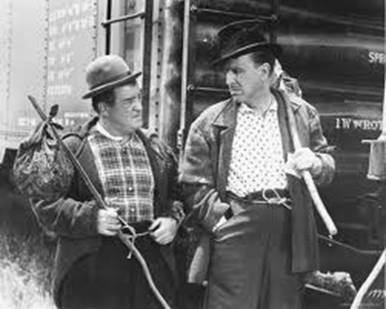
Abbott & Costello explain unemployment


Here we go, the recent unemployment report explained —

COSTELLO: I want to talk about the unemployment rate in America.


ABBOTT: Good Subject. Terrible Times. It’s 7.8%.


COSTELLO: That many people are out of work?


ABBOTT: No, that’s 14.7%.


COSTELLO: You just said 7.8%.


ABBOTT: 7.8% Unemployed.


COSTELLO: Right 7.8% out of work.


ABBOTT: No, that’s 14.7%.


COSTELLO: Okay, so it’s 14.7% unemployed.


ABBOTT: No, that’s 7.8%.


COSTELLO: WAIT A MINUTE. Is it 7.8% or 14.7%?


ABBOTT: 7.8% are unemployed. 14.7% are out of work.


COSTELLO: If you are out of work you are unemployed.


ABBOTT: No, Obama said you can’t count the “Out of Work” as the unemployed. You have to look for work to be unemployed.


COSTELLO: BUT THEY ARE OUT OF WORK!!!


ABBOTT: No, you miss his point.


COSTELLO: What point?


ABBOTT: Someone who doesn’t look for work can’t be counted with those who look for work. It wouldn’t be fair.


COSTELLO: To whom?


ABBOTT: The unemployed.


COSTELLO: But ALL of them are out of work.


ABBOTT: No, the unemployed are actively looking for work. Those who are out of work gave up looking and if you give up, you are no longer in the ranks of the unemployed.


COSTELLO: So if you’re off the unemployment roles that would count as less unemployment?


ABBOTT: Unemployment would go down. Absolutely!


COSTELLO: The unemployment just goes down because you don’t look for work?


ABBOTT: Absolutely it goes down. That’s how the current administration gets it to 7.8%. Otherwise it would be 14.7%. Our govt. doesn’t want you to read about 14.7% unemployment!


COSTELLO: That would be tough on those running for reelection.


ABBOTT: Absolutely.


COSTELLO: Wait, I got a question for you. That means there are two ways to bring down the unemployment number?


ABBOTT: Two ways is correct.

COSTELLO: Unemployment can go down if someone gets a job?


ABBOTT: Correct.


COSTELLO: And unemployment can also go down if you stop looking for a job?


ABBOTT: Bingo.


COSTELLO: So there are two ways to bring unemployment down, and the easier of the two is to have administration supporters stop looking for work.


ABBOTT: Now you’re thinking like the Economy Czar.


COSTELLO: I don’t even know what the hell I just said!


ABBOTT: Now you’re thinking like Obama.

O Canada, you sensible land!

You may already know that the U.S. dollar and Canadian dollar are almost identical in value . Currently the US dollar will buy about $1.10 Canadian. Just a few months ago the situation was reversed. Toronto and Vancouver homes are as expensive or more expensive than the same property in Los Angeles. Their housing boom tracked the U.S. boom before 2008. The exception is they did not experience the melt down. The price of homes has continued to rise throughout Canada. To quote the Financial Post: “Home ownership a passion for Canadians. It is a passion for ownership that has put Canada in the elite company of countries with estimates that more than 70% of households now own their own home.”

O Canada, you sensible land!

By Jay MacDonald · Bankrate.com
Monday, May 9, 2011
Posted: 9 am ET


What’s the best way out of our bubble-bust-bubble mortgage muddle that has resulted in a record 2.87 million  American foreclosures last year alone? The answer may lie due north.

O Canada, you have no doubt watched our housing-driven Great Recession with  the stern if sympathetic eye of a schoolmaster who well knows the fate of all  undisciplined schoolboys.

During our financial meltdown, not a single Canadian bank failed. Less  than 1 percent of Canadian mortgages are in arrears. And this in a land that  doesn’t even afford its homeowners the courtesy of a tax break on their mortgage  interest!

I was gob-smacked by a recent McClatchy report out of Toronto with the  headline, “Canada’s mortgage system works.” Of course, compared to our system,  falling as it does somewhere between a faulty pachinko game and three-card  Monte, most of the developed world could make the same claim.

Canada owes its housing stability in large part to a conservative regulatory  environment that holds its 71 federally regulated lenders to stricter  underwriting standards and larger reserve requirements for potential losses than  does its U.S. counterpart.

There is no Canadian equivalent of Fannie Mae and Freddy Mac, which purchase  mortgages from banks and bundle them into bonds. Did I mention that Fannie and  Freddy have been in government conservatorship since mid-2008?

As far as tax incentives go, Canadian homeowners are allowed an exemption on  capital gain from the sale of their primary residence, period. Yet their  homeownership rate is equal to or greater than ours here in Sud Moosejaw.

Stuart Gabriel, a finance professor at UCLA, sees it this way:

“They’ve insisted all along on the more rigorous mortgage underwriting, and  because of that never found themselves originating subprime and no-doc mortgages … some very basic items such as stringency of underwriting seem to go a long  way.”

Indeed. Now I’ll grant you, corralling a total of 71 lenders for 34 million  citizens may be a tad easier than wrangling 8,000-plus FDIC-insured lenders  serving 310 million. But it’s still ironic that Canada’s conservative mortgage  system is unfazed while our “free market” version – and I use those quotation  marks intentionally – has resulted in the largest financial meltdown since the  big one.

O Canada, please send some of your common sense our way as we attempt to  dismantle our house of cards and start over. Hopefully with  two-by-fours.

Read more:  http://www.bankrate.com/financing/mortgages/o-canada-you-sensible-land/#ixzz2vnqaMrGJ Follow us: @Bankrate on Twitter | Bankrate on Facebook

President Obama’s foreign policy is based on fantasy

When The Washington Post Editorial Board publishes a commentary critical of President Obama you have to take note. Accurately they point out the naivety of President Barack Obama.

Washington Post Editorial Board Opinion, March 2, 2014

FOR FIVE YEARS, President Obama has led a foreign policy based more on how he thinks the world should operate than on reality. It was a world which “the tide of war is receding” and the United   States could, without much risk, radically reduce the size of its armed forces. Other leaders, in this vision, would behave rationally and in the interest of their people and the world. Invasions, brute force, great-power games and shifting alliances – these were things of the past. Secretary of State John F. Kerry displayed this mindset on ABC’s “This Week” Sunday when he said, of Russia’s invasion of neighboring Ukraine, “It’s a 19th century act in the 21st century.”

That’s a nice thought, and we all know what he means. A country’s standing is no longer measured in throw-weight or battalions. The world is too interconnected to break into blocs. A small country that plugs into cyberspace can deliver more prosperity to its people (think Singapore or Estonia) than a giant with natural resources and standing armies.

Unfortunately, Russian President Vladimir Putin has not received the memo on 21st-century behavior. Neither has China’s president, Xi Jinping, who is engaging in gunboat diplomacy against Japan and the weaker nations of Southeast Asia. Syrian president Bashar al-Assad is waging a very 20th-century war against his own people, sending helicopters to drop exploding barrels full of screws, nails and other shrapnel onto apartment buildings where families cower in basements. These men will not be deterred by the disapproval of their peers, the weight of world opinion or even disinvestment by Silicon Valley companies. They are concerned primarily with maintaining their holds on power.

Mr. Obama is not responsible for their misbehavior. But he does, or could, play a leading role in structuring the costs and benefits they must consider before acting. The model for Mr. Putin’s occupation of Crimea was his incursion into Georgia in 2008, when George W. Bush was president. Mr. Putin paid no price for that action; in fact, with parts of Georgia still under Russia’s control, he was permitted to host a Winter Olympics just around the corner. China has bullied the Philippines and unilaterally staked claims to wide swaths of international air space and sea lanes as it continues a rapid and technologically impressive military buildup. Arguably, it has paid a price in the nervousness of its neighbors, who are desperate for the United States to playa balancing role in the region. But none of those neighbors feel confident that the United States can be counted on. Since the Syrian dictator crossed Mr. Obama’s red line with a chemical that killed 1,400 civilians, the dictator’s military and diplomatic position has steadily strengthened.

The urge to pull back – to concentrate on what Mr. Obama calls “nation­building at home” – is nothing new, as former ambassador Sestanovich recounts in his illuminating history of U.S. foreign policy, “Maximalist.” There were similar retrenchments after the Korea and Vietnam wars and when the Soviet Union crumbled. But the United States discovered each time that the world became a more dangerous place without its leadership and that disorder in the world could threaten U.S. prosperity. Each period of retrenchment was followed by more active (though not always wiser) policy. Today Mr. Obama has plenty of company in his impulse, within both parties and as reflected by public opinion. But he’s also in part responsible for the national mood: If a president doesn’t make the case for global engagement, no one else effectively can.

The White House often responds by accusing critics of being warmongers who want American “boots on the ground” all over the world and have yet to learn the lessons of Iraq. So let’s stipulate: We don’t want U.S. troops in Syria, and we don’t want U.S. troops in Crimea. A great power can become overextended, and if its economy falters, so will its ability to lead. None of this is simple.

But it’s also true that, as long as some leaders play by what Mr. Kerry dismisses as 19th-century rules, the United States can’t pretend that the only game is in another arena altogether. Military strength, trustworthiness as an ally, staying power in difficult corners of the world such as Afghanistan – these still matter, much as we might wish they did not. While the United   States has been retrenching, the tide of democracy in the world, which once seemed inexorable, has been receding. In the long run, that’s harmful to U.S. national security, too.

As Mr. Putin ponders whether to advance further – into eastern Ukraine, say – he will measure the seriousness of U.S. and allied actions, not their statements. China, pondering its next steps in the will do the same. Sadly, that’s the nature of the century we’re living in.

What Country Are We In?

The Ukraine was part of the Russian Empire since 1783. It became an independent nation as a result of the breakup of the USSR in 1989.

Alsace-Lorraine is a frontier area between Germany and France of about 5,000 square miles. It was ceded by France to Germany in 1871 after the Franco-German War. Then was retroceded to France in 1919 after World War I, was ceded again to Germany in 1940 during World War II, and was again retroceded to France in 1945. The area has a large German-speaking population.

The Mexican-American War (Mexico-United States [1846-48]) resulted in Mexico ceding California, Arizona, and New Mexico to the United States. Texas had previously won its independence from Mexico with the help of the United States.

At least 50% of today’s California population are Spanish speaking. Most are probably from Mexico. Using Russian logic Mexico should consider re-annexing Alta-California.

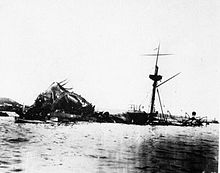
Maine wreakage 1898

Wreckage of USS Maine, 1898. The sinking of the Maine was not an action by the Spanish. Investigations revealed that more than 5 long tons (5.1 t) of powder charges for the vessel’s six and ten-inch guns had detonated, obliterating the forward third of the ship.

Should these regional boundary disputes be subject to approval of the entire world? Why is the United States the court of justice? Other than WWI and WWII America’s track record in policing the world has been dismal.

Continuing High Unemployment

Today’s employment report for February is another set of contradictory results.  175,000 jobs were added to payrolls.  The number of long term unemployed has remained stubbornly high at 37% (or even higher) of the total unemployed since January of last year.  There were two months when the number dropped below this level but they were most likely statistical errors as they were not consecutive months.

Other nations would be happy with the unemployment rate that the USA is experiencing, 6.7%. That is not a fair comparison.  Americans are used to an unemployment rate of 5%.   That is a number that was last seen in April 2008.

Despite government optimism there is nothing on the horizon that says we will see any number near 5% in 2014.

Two issues make changes in unemployment likely. 1) Low cost labor in other countries.  2) Technology has reduced the need for so many workers.  Those long term unemployed need re-training into new careers that are experiencing labor shortages.

Conservative politicians won’t allow government funding of those kinds of programs.  They complain about welfare and long term unemployment benefits but won’t allow themselves to see the benefits of re-training programs.  If there was a conservative president making a case for re-training a conservative congress would enact the needed legislation.  Since Barack Obama is a Democrat no programs will be enacted.  It’s all about politics.

Where do we go from here? No where as long as there is a divided government.  Look for changes in 2017.  It makes me sad and dismayed.

“You’ve got to be carefully taught”

Discrimination, bigotry, hatred of any other group seems to be ingrained in many Americans. There is no easy solution. As a fan of New York musicals such as Oklahoma, My Fair Lady, etc. I recall South Pacific and the message about hatred. South Pacific is a musical composed by Richard Rodgers, with lyrics by Oscar Hammerstein II and book by Hammerstein and Joshua Logan. The original stage date was Apr 07, 1949. It does not appear we have learned very much about hatred since then.

Words from “You’ve got to be carefully taught”

You’ve got to be taught to hate and fear,

You’ve got to be taught from year to year,

It’s got to be drummed in your dear little ear,

You’ve got to be carefully taught.

You’ve got to be taught to be afraid

Of people whose eyes are oddly made,

And people whose skin is a diff’rent shade,

You’ve got to be carefully taught.

You’ve got to be taught before it’s too late,

Before you are six or seven or eight,

To hate all the people your relatives hate,

You’ve got to be carefully taught!

Oregon attorney generalThus I applaud Oregon’s State Attorney General, Ellen Rosenblum, who says she would not defend it’s ban on same sex marriage. The Catholic church of Oregon has taken an unmistakable opposite position.

From the Los Angeles Times
By Maria L. La Ganga

March 1, 2014, 9:39 p.m.

PORTLAND, Ore. — When Jackie Yerby and a small band of devout Catholics go to the cathedral for Mass this Ash Wednesday, they will be sending an unmistakable message. Pinned to their lapels will be big white buttons that proclaim, “Catholic Oregonians for Marriage Equality.”

more here>> http://www.latimes.com/nation/la-na-oregon-gay-marriage-20140302,0,6705402.story#ixzz2uqkwnfEX