Democracy is on Decline in America

Rural America vs. Sensible Gun Control

Multiple opinion polls have shown that more than 80% of Americans support expanded background checks to make it more difficult for criminals and the mentally ill to obtain guns. Senators Joe Manchin (Democrat from West Virginia) and Pat Toomey (Republican from Pennsylvania) struck a bi-partisan deal to accomplish this objective.  The proposal failed 54 to 46.  You see passing anything in the Senate requires 60 votes of the 100 in that body.

It is accurate to say that those living in rural areas are more likely to need a weapon for protection.  Even those people in rural areas must worry about criminals and the mentally ill.  So why would they oppose an expansion of a regulation that already exists to gun shows?

The NRA and other pro-gun groups have won another round for no limits on gun ownership.  Democracy has lost.  This nation is less safe. This nation is less united.

Manufacturing Megatrends That Will Change Your World

How fast is the world changing?  This interesting article points out the rapidity. 

By Paul Tate on the http://www.manufacturing-executive.com web site on March 19, 2013.

 A quick snapshot of the companies listed in the Fortune 500 ten years ago is a sobering exercise. Over half of those organizations have now either disappeared off the list, or no longer exist, at least in their original form, notes Frost and Sullivan (A business consulting firm that offers market analysis, market research, and reports) vice president and Megatrends analyst Richard Sear.

So how do you avoid becoming one of the world’s lost companies over the next ten years?

The most critical role any business leader must perform is to identify and plan a successful path forward for the future of the enterprise. That means identifying and understanding the trends that are going to transform your business in the years ahead.

The problem is that anticipating the future in today’s world, where the speed of change is so rapid and sudden, innovative disruptions are so common, may seem like an impossible task.

There are essentially two approaches to grappling with this difficult task. The first is simply to sit back and allow new technology and business models to converge into your business and then react as best as you can. The second is a proactive stance to understand and embrace change, and therefore be in a position to capture growth opportunities faster and more fully. What’s your risk profile?

 Frost and Sullivan’s Sear has identified a series of global megatrends that he believes are set to fundamentally transform the world we live in over the next decade or so — and which will have a major impact on the future of manufacturing and its growth prospects.

They are:

 * The City as a Customer: The emergence of new megacities around the world, especially in Asia and Latin America, linked by highly urbanized corridors of development. These will become the world’s key centers of economic growth, creating new and different markets for manufactured products and creating significant logistics challenges for delivery to customers.

* Social Change: The combination of an aging workforce in many western economies, with the growth of demanding, impatient and tech-savvy Generation Y consumers who expect higher degrees of personalization in both products and services.

* Technology: The increasing development of virtual worlds, augmented realities, big data, and pervasive robotics will change the way both manufacturing companies and consumer markets operate and develop new ideas.

* Smart: Extensive embedded intelligence in physical assets and products – often call The Internet of Everything – will see a significant shift towards smarter, more connected products with vast supporting networks and real-time applications.

* New Business Models: These fundamental global shifts will require companies to re-assess how they do business, and how they deliver value in the future – resulting in more collaborative operating models with a greater emphasis on delivering ‘Value for Many’ and frugal engineering approaches.

 * Infrastructure: How will you be affected by a greater focus on how the world harnesses its energy resources, and creates new, more sustainable and lower cost ways to store and utilize future energy?

 * Beyond BRIC: The rapid rise in new markets and fast-growing emerging economies around the world in the decade ahead will create new markets, new global competitors, and new manufacturing opportunities that will force companies to re-asses their global production strategies and footprints. Where will the hot spots be and how will they change your future plans?

 Manufacturing seems destined to play a key role in both reshaping existing industries and enabling others to emerge as these megatrends push the world beyond the end of this decade.

The companies that make the effort to understand and plan effectively for this future, change the way they make decisions, redefine the value they create, and restructure how they deliver that value, are likely to be the ones that will survive and thrive.

So how are you now seeking to better understand the disruptive long-term trends that could determine the future of your business?

Are you adopting internal strategies that will make your enterprise more adaptable to the fundamental economic, social, technological and industrial changes ahead?

 What other megatrends do you think will impact your business future?

People Kill People – Not Guns

Student charged in Va. mall shootings; 2 wounded; Gunman fires at father, 6-year-old son in Costa Mesa; What do these two incidents have in common?  The answer: people killing people.  The NRA and other gun rights advocates have told us repeatedly that “guns don’t kill people, people kill people.”

If we agree with those rights groups then the issue is dangerous people.  Some of those people are felons who are not allowed own guns and some of those people are mentally imbalanced in some way that should result in them being denied the right to own a weapon.

Why would reasonable mentally competent people want to see guns fall into the hands of felons or the mentally incompetent?

A partial solution to this problem is background checks on all gun buyers.  That kind of law would not have stopped Adam Lanza in Newtown, Connecticut.  It might have stopped the killing in Aurora, Colorado and Tucson, Arizona.

Even in nations with stricter gun regulations killing does happen.  Shouldn’t our laws work to prevent those horrible tragedies?

I am asking for sensible regulation that will keep weapons out of the hands of dangerous people.

Lunch With The Girls … Over Time

A group of 15-year-old girlfriends discussed where to meet for dinner. Finally, they agreed to meet at the Dairy Queen, next door to the Ocean View restaurant, because they had only $6.00 among them and Brad Johnson, the cute boy in Social Studies, lived on that street.

10 years later, the group of 25-year-old girlfriends discussed where to meet for dinner. Finally, they agreed to meet at the Ocean View restaurant, because the beer was cheap, the restaurant offered free snacks, the band was good, there was no cover charge, and there were lots of cute guys.

10 years later, the group of 35-year-old girlfriends discussed where to meet for dinner. Finally, they agreed to meet at the Ocean View restaurant, because the cosmos were good, it was right near the gym and, if they went late enough, there wouldn’t be too many whiny little kids.

10 years later, the group of 45-year-old girlfriends discussed where to meet for dinner. Finally, they agreed to meet at the Ocean View restaurant, because the martinis were big, and the waiters wore tight pants and had nice buns.

10 years later, the group of 55-year-old girlfriends discussed where to meet for dinner. Finally, they agreed to meet at the Ocean View restaurant, because the prices were reasonable, the wine list was good, the restaurant had windows that opened (in case of hot flashes), and they served fish which is good for your cholesterol.

10 years later, the group of 65-year-old girlfriends discussed where to meet for dinner. Finally, they agreed to meet at the Ocean View restaurant, because the lighting was good, and the restaurant had a senior citizen discounts.

10 years later, the group of 75-year-old girlfriends discussed where to meet for dinner. Finally, they agreed to meet at the Ocean View restaurant, because the food was not too spicy, and the restaurant was handicapped-accessible.

10 years later, the group of 85-year-old girlfriends discussed where to meet for dinner. Finally, they agreed to meet at the Ocean View restaurant, because they had never
been there before.

Social Security is a Promise that will be Hard to Keep

Chained CPI is only the beginning of many other factors that will limit future payout.

Here is an unpleasant fact about Social Security.  The system was designed in the 1930s. Life expectancy at birth in 1930 was indeed only 58 for men and 62 for women, and the retirement age was 65.  Reported in USA Today, Social Security’s original retirement age of 65 was set in 1935 when life expectancy was 63. Today, life expectancy is 77 — and, for those who live to 65, life expectancy is 83. The system used to benefit financially from people who paid Social Security taxes but died before collecting any benefits.

When Social Security  was implemented almost 54% of men could expect to live to age 65 if they survived to age 21, and those who attained age 65 could expect to collect Social Security benefits for almost 13 years (and the numbers are even higher for women).  Men attaining 65 in 1990 can expect to live for 15.3 years compared to 12.7 years for men attaining 65 back in 1940.  This is data supplied by the Social Security Administration.

Some of the data is murky and can be interpreted to support your particular views.

I entered all of my Social Security contributions for my entire working years. I then calculated their future value in an Excel spreadsheet.   The calculation included the employer contributions.  I compounded the interest at 5% (Future Value Calculator for Single Payment-the annual contribution).  The results were enough money contributed to last 13 years.  But that calculation was made the year after I retired.  Since then my monthly SS income has increased.  As the increases continue my contributions may be consumed in ten years.

With growing numbers of people living into their 80s and 90s where will the money come from to pay their SS checks?  My guess is it will come from the general revenue of the United States.  That is the reason that chained CPI is inevitable as is a later retirement age.

Calling Criminals What They Are

Remember this from when you were a child: Sticks and stones my break my bones but names will never hurt me.  

The Associated Press has a style book that tells its reporters what words to use in specified situations.  It appears that the “word usage department” has determined the desire to not hurt anyone’s feelings has taken priority over reality.

Thus AP has decided the words “illegal immigrant” might be offensive to some people.  Therefore “undocumented workers” must be substituted for “illegal workers” arguing that the word “illegal” is dehumanizing and lumps border crossers with serious criminals. Some people even view the words “illegal immigrant” a form of hate speech.  They refuse to utter those words, referring only to the “I-word.”

 I must counter with the question, what do you call a petty thief?  After all he is a thief.  The answer is shop lifter, pick pocket, larcenist, pilferer, stick up artist, etc.  Sorry to say but at the end of the day a thief is a thief.

An illegal immigrant is someone who crossed the border without permission.  He has broken the laws regarding entry into the country.  It’s not just the United States.  Whether you drive into Canada or fly into Canada, the Canadian authorities ask where you are from, where you are going, and how long do you intend to stay in their country.

What should we call a murderer?  What should we call someone who has been unfaithful to their spouse?  Whatever we call them we won’t want to use a word that would hurt their feelings.  After all, words do matter.

Sex on the Sabbath

A man wonders if having sex on the Sabbath is a sin, because he is not sure if sex is WORK or PLAY.

So he goes to a Priest and asks for his opinion on this question.

After consulting the Bible, the Priest says, “My son, after an exhaustive search,

I am positive that sex is WORK and is therefore not permitted on Sundays.”

The man thinks, “What does a Priest know about sex? So he goes to a Minister, who after all is a married man, and experienced in  this matter. He queries the Minister and receives the same reply.

Sex is WORK, and therefore not for the Sabbath.

Not pleased with this reply, he seeks out the ultimate authority, a man of a thousand years of tradition and knowledge.

In other words, he goes to see a Rabbi.

The Rabbi ponders the question, then states, “My son, sex is definitely PLAY.

Shocked, the man replies, “Rabbi, how can you be so sure it is PLAY when so many others tell me sex is WORK?”

The Rabbi softly speaks, “If sex were WORK, ………..my Wife would have the Maid do it.

David Bancroft

Be Rich, Be Smart, Live Longer

Peter R. Orszag, the former director of the Congressional Budget Office, has written a column for Bloomberg.com that tells us nothing we did not already know.  Better educated Americans live longer than the rest of us and children of those rich people are getting more education than those that are poorer.  This is hardly news.  I would only disagree with one part of this article.  You will most likely live longer if you are better educated no matter how rich you are.  The riches enable you to buy the best health care and that will most likely extend your life.

Life among the wealthy is extended simply because they are wealthy.  An example of extended life is the still alive Zsa Zsa Gabor who turned 96 this past February.  Her health has seriously deteriorated in recent years but thanks to her wealth she is still alive.

I would have preferred that Mr. Orszag had discussed the primary benefit of ACA (the Affordable Care Act/Obama Health Care).  That would be more productive years of life for more people.

Thus Mr. Orszag ought to be promoting the benefits of ACA.  Similarly the President ought to be promoting the benefit of longer life thanks to the availability of health care.

Publishing World Helps Itself Into Its Grave

Magazines and newspapers are shrinking faster than anyone had anticipated.  Their survival is based upon advertising revenue.  That revenue is rapidly moving to the internet.  Thus Newsweek is now only on the internet.  U.S. News only publishes an occasional special edition.  Time Inc. with its multiple magazines has had two layoffs of 5% of its staff each time in the past two years.

My local paper, Los Angeles Daily News, is now in another of its never ending efforts to consolidate and reduce pages published in each edition.  Thus Al Martinez, an old guy who fought in the Korean War, has now been eliminated from that paper.  He worked for the Oakland Tribune of 16 years, the Los Angeles Times for 38 years, and the last three years for the Los Angeles Daily News where he has had a weekly column.

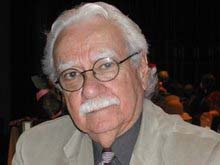
al_martinezMr. Martinez is a Pulitzer Prize–winning journalist.  He was named Bard of L.A. by the Huntington Museum.  So the Daily News had decided that his talent in no longer needed.  So as Newsweek gave notice to its best writers, reporters, and commentators, the Daily News has decided to follow in that magazine’s example.

Al Martinez has a WordPress blog.  I am proud to add a link.  Top right.

April 3, 2013

The subscription has been canceled.