Banks are Too Big To Fail! Is it true?

“SAN FRANCISCO(MarketWatch) — Moody’s Investors Service downgraded the ratings late Thursday of 15 financial firms with global capital-markets operations from one to three notches.”  The list included Bank of America Corp. BAC, Citigroup Inc. C, HSBC Holdings PLC.  These three are on the list of America’s largest banks.

Largest banks and thrifts in US by total deposits

Company                       City, State            Deposits in Billions of Dollars

JPMorgan Chase & Co.                            New York, NY            1,127.8

Bank of America Corp.                            Charlotte, NC              1,033.0

Citigroup Inc.                                          New York, NY                 865.9

Wells Fargo & Co.                                  San Francisco, CA           920.1

U.S. Bancorp                                          Minneapolis, MN             230.9

Capital One Financial Corp.                 McLean, VA                     211.2

Bank of New York Mellon Corp.         New York, NY                    219.1

PNC Financial Services Group Inc.     Pittsburgh, PA                    209.2

HSBC North America Holdings Inc.      New York, NY                   122.6

State Street Corp.                                Boston, MA                        157.3

This identical data was printed in Forbes and The WSJ.

Yes, you read it correctly, JPMorgan Chase & Co. has deposits of One Trillion, onehundred twenty eight Billion point eight dollars.

Moody’s says “All the banks affected by these rating actions have significant exposure to the volatility and risks inherent in the capital markets business, which have led many to fail or avoid it only through the receipt of support from a third party.”  We can all conclude that the third party is a government or government sponsored entity.

Banks receive aid but the aid to small business and home owners is minimal.  If it isn’t called welfare, what do you call government support for banks?

A New Frontier for Americans

Business Week June 11-17, 2012 offered a new consideration for everyone searching for employment.  Have you ever considered employment outside the United States?

Americans are most likely to look for work in their home country.  Even though you hear about many people traveling overseas, the number of Americans working elsewhere is relatively small.  Consider the fact that many people in other nations immigrate to the United States.  I know my father considered moving from Canada to England to obtain work in 1939 (near the end of the Great Depression).

Today the USA has a large population of Filipinos who still consider their home the Philippines.  Many Latin Americans still feel loyalty to their home country even though they have been in the United   States for years.  I base these statements on empirical evidence.  It’s the Filipino care givers and the Hispanics who fly their home country flags.

So where does Business Week suggest Americans move to obtain those jobs?

Brazil:

Why: Last year, Brazil became the world’s sixth largest economy. And according to a 2011 study by Manpower Group, 64 percent of employers there find vacancies hard to fill. Plus it may soon ease visa requirements.

Jobs: bankers, executives, hedge fund managers, lawyers, and engineers.

India:

Why: Outsourcing has led to a burgeoning tech industry, which has in turn created pockets of econom­ic opportunity. The number of Americans moving is still small, so be first among your friends!

Jobs: tech, mostly. But there are also positions at English ­language newspapers and schools.

Australia

Why: The Chinese demand for ore spurred a mining boom in Australia.  Because of its isolation, the coun­try has an inflexible supply of workers, which means that out­siders are needed. The cost has been rising, but still beats theU.S.

Jobs: mining.

Canada

Why: With a healthy economy, no language bar­rier, lower corporate tax rates, and free health care, Canada is drawing more Americans than before (though still far fewer than during the draft-dodging heyday of the 1970s).

Jobs: whatever you’re currently doing.

Russia

Why: Exxon Mobil’s newly expanded access to the country’s off shore Arctic.

Jobs: oil.

You could think of these places as more of the pioneering spirit that induced so many Americans to travel to our own western frontier in the 1800s.

doesn’t use?

The wife came home early and found her husband in their bedroom making love to a very attractive young woman.

And she was somewhat upset. ‘You are a disrespectful pig!’ she cried. ‘How dare you do this to me — a faithful wife, the mother of your children! I’m leaving you. I want a divorce right away!’

And the husband replied, ‘Hang on just a minute love, so at least I can tell you what happened.’ ‘Fine, go ahead,’ she sobbed,’ but they’ll be the last words you’ll say to me!’
And the husband began — ‘Well, I was getting into the car to drive home, and this young lady here asked me for a lift. She looked so down and out and defenseless that I took pity on her and let her into the car.
 

I noticed that she was very thin, not well dressed and very dirty. She told me that she hadn’t eaten for three days.

So, in my compassion, I brought her home and warmed up the enchiladas I made for you last night, the ones you wouldn’t eat because you’re afraid you’ll put on weight. The poor thing devoured them in moments..

Since she needed a good clean-up, I suggested a shower, and while she was doing that, I noticed her clothes were dirty and full of holes, so I threw them away.

Then, as she needed clothes, I gave her the expensive designer jeans that you bought a couple years back, but don’t wear because you say they are not the “in” name this year.

I also gave her the underwear that was your anniversary present, which you don’t wear because I don’t have good taste.

I found the sexy blouse my sister gave you for Christmas that you don’t wear just to annoy her, and I also donated those boots you bought at the expensive boutique and don’t wear because someone at work has the same pair .’

The husband took a quick breath and continued – ‘She was so grateful for my understanding and help that as I walked her to the door, she turned to me with tears in her eyes and said, ‘Please … Do you have anything else that your wife doesn’t use?’

The Koch Brothers

What You Need to Know About the Financiers of the Radical Right

from http://www.americanprogressaction.org/issues/2011/04/pdf/koch_brothers.pdf

The Koch brothers’ issue agenda

A list of the top policy issues in which the Koch brothers are engaged

Issue                                                  Koch brothers fighting?

Repealing health reform                                   Yes

Denying climate change                                   Yes

Fighting Wall Street reform                               Yes

Dismantling collective bargaining rights            Yes

Fighting reductions in carbon emissions           Yes

Keeping corporate money in elections              Yes

Fighting Internet neutrality                                 Yes

Supporting the NRA                                           Yes

Sponsoring the Tea Party                                   Yes

Forbes magazine ranks Charles and David Koch the fourth-richest people in the world, with a combined net worth of $44 billion. Charles is the chief executive of Koch Industries, Inc., the family’s oil-and-gas conglomerate started by their father, Fred C. Koch. David is vice president of the company.

From http://www.theshannonfiles.com/2011/02/some-of-koch-brothers-holdings.html

Some of the Koch Brothers Holdings…

Angel Soft toilet paper
Brawny paper towels
Dixie plates, bowls, napkins and cups
Mardi Gras napkins and towels
Quilted Northern toilet paper
Soft ‘n Gentle toilet paper
Sparkle napkins
Vanity fair napkins
Zee napkins

Bob Schieffer Fails the Hardball Test

He [Mitt Romney] has a great allergy to specifics and details

Rich Lowry
National Review

Bob Schieffer
Bob Schieffer

Most probably every Sunday morning political interview program wanted to be the first to interview Mitt Romney.  CBS won the honor but what did they agree not to ask in the interview?  Were the questions submitted in advance so that Romney had an opportunity to prepare his answers?

Mr. Schieffer threw one softball question after another.  Of course Romney was able to answer the questions.

Where were questions like:

  1. Considering that you are so wealthy how can you relate to the average American?
  2. Specifically what will you do as president to help re-employ millions of Americans?
  3. What are the industries that can continue to be the mainstay of the American economy?
  4. How will you reduce the national debt without reducing Medicare and Social Security benefits?
  5. Do we really need a military budget that is six times that of the next highest military budget in the world?
  6. What is your plan on dealing with the 12 million illegal aliens in this country?

Instead we learned nothing except that he will use military action, if necessary, to stop Iran from obtaining a nuclear capability.  He sustained his same positions, offered during the GOP debates, on every issue that Bob Schieffer introduced.

I did not expect too many worthwhile answers from Romney.  I did expect Schieffer to ask the hard questions.

Obama Plays Politics on the Issue of Illegal Aliens

“How can we win a majority of the Hispanic vote?” President Obama asks his staff.

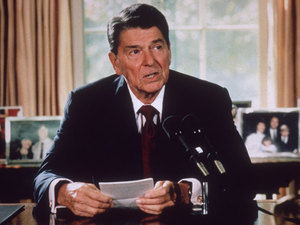
“I believe in the idea of amnesty for those who have put down roots and lived here, even though sometime back they may have entered illegally,” Ronald Reagan said in 1984.

According to NPR “The law (signed by President Reagan) granted amnesty to nearly 3 million illegal immigrants, yet was largely considered unsuccessful because the strict sanctions on employers were stripped out of the bill for passage.”

What that law did provide was an encouragement of another 12 million illegal immigrants.

What do you suppose Obama’s decision to issue work permits to grown children who came here as babies will do?  My expectation is that there will be another wave of illegal immigrants.  

5 Photography Techniques Everyone Should Know

from http://electronics.howstuffworks.com/

by

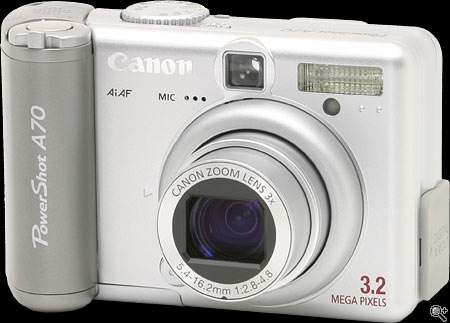
Photography has never been easier. Modern point-and-shoot cameras give amateurs access to many of the same techniques that professionals use to produce high-quality pictures.

And these cameras are growing more capable every year. High-capacity memory cards let you store hundreds of pictures. Zoom lenses offer versatility. Even 3-D cameras are starting to become available. Today, a relatively inexpensive point-and-shoot can give you all the tools you need to take top-notch photos. What’s more, digital-editing programs offer you a virtual darkroom on your computer.

Technology has made many aspects of photography automatic. Cameras focus for you, set the color balance and determine the exposure. Some adjust for your shaky hand or identify and focus on the faces of people in your picture.

But remember that photography is about more than equipment. It’s not your equipment that takes good pictures, any more than it’s your pots and pans that cook a great meal. You, the photographer, are what makes a good picture — or a bad one. How you use your camera’s features is more important than the technology itself, and your eye is the most valuable tool you have.

We’re going to be focusing on digital photography here for a simple reason: Taking pictures with film has become a thing of the past for most amateur photographers.  But remember that many of the same techniques apply whether you’re shooting digital or film.

Read on for five easy techniques that will make you a better photographer.

 1: Read Your User’s Manual

Reading the user’s manual or guide may not seem like much of a technique. Most of us would rather run out and shoot pictures rather than wade through 150 pages of instructions. But reading about and understanding the features of your camera can make you a far better photographer.

To begin with, it will familiarize you with all those buttons, dials and menus. Most cameras today have a host of useful functions. You’ll probably never use all of them, but many can be valuable for improving your picture taking:

  • Learning about aperture priority can help you to control the depth of field, bringing a large range into focus or blurring the background when you want to.
  • Changing the ISO setting can make your camera more sensitive to  light, and it can also reduce picture quality.
  • Adjusting the white balance will yield better pictures when you’re shooting in artificial or colored light.
  • Exposure bracketing means taking three pictures: one at      the correct exposure, one underexposed and one overexposed. This technique is helpful in difficult lighting situations.

Remember that just reading the manual is not enough. You need to experiment with each of the features and see how they affect the pictures you take. But don’t try to master the whole thing at once; read up on one feature and use it before moving on.

  2: Learn the Rule of Thirds

The rule of thirds is a technique that was developed long before photography was invented and is still used today in other visual arts, like painting.

It’s a basic skill for improving the composition of your pictures. And a thoughtful composition is the main difference between amateur snapshots and professional-quality photographs.

Imagine a grid of four lines, two horizontal and two vertical, that divides the picture plane into thirds.  You end up with nine equal sections. Try to place your main subject at one of the four spots where the lines intersect. That means not in the middle and a bit higher or lower than center.

When shooting a landscape, put the horizon at one of the horizontal lines. Use the upper one if you want to emphasize the foreground. Place the horizon at the lower line to make the background more prominent. Align buildings or other straight objects with one of the vertical lines.

You need to be aware of the rule of thirds, not obsess over it. Sometimes breaking the rule will give you a great picture, too. But knowing the principle lets you analyze pictures and see how they could be improved.

3: Learn to Use a Tripod

A tripod is one of the most valuable pieces of equipment for amateur photographers and, because they mean carrying around an extra piece of equipment, one of the most neglected.

Start using a tripod and you’re almost guaranteed to take better photos. There are many lightweight and inexpensive models to choose from, including tabletop varieties and ones that are little more than a clamp with a camera attachment.

One reason that tripods are useful is that digital camerasare generally quite light in weight. That’s handy, but it also makes them harder to hold absolutely steady when you press the shutter. And while some digital cameras can compensate for hand shake, a tripod lets you take the clearest pictures possible.

Tripods are great for shooting in low light. They let you take much longer exposures. This gives you crisper pictures and means you can increase your depth of field, the area that’s in focus, by narrowing the camera’s aperture. Taking pictures in low light without a flash can give you dramatic results.

A tripod also comes in handy when shooting with a telephoto lens, or when your zoom lens is on its maximum telephoto setting. A telephoto lens magnifies the image, but it also exaggerates any camera movement

Another big advantage of a tripod is that it forces you to slow down and look at the composition of your picture. You can set up the picture then adjust the lighting, change the focus or rearrange your subject. A tripod even enables you to get into the shot yourself, eliminating the “missing photographer” syndrome. Simply set the self-timer and move in front of the camera.

4: Master the Focus Lock

The feature that comes with most cameras makes picture taking easy. But it can ruin your photos as well as improve them. The problem is that the camera usually focuses on an area in the center of the scene you’re framing. If your subject happens to be off to one side, oops. Learn how your autofocus works. On many cameras, you can adjust the setting, moving the focus area off dead center. Then experiment with focus lock.  Point the camera at your main subject and depress the shutter release halfway. Hold it there. Move the camera until you have the composition you want. Push the button the rest of the way. Your subject will remain in focus and will be properly exposed. If you become adept at this technique, you will avoid those pictures in which the background is sharp but your main subject is fuzzy Focus lock also speeds picture taking. After you press the shutter to take a picture, there’s a slight delay while the camera adjusts the focus. Holding the button halfway down leaves you ready to take the picture instantly, which can be important with action shots. Make sure that you determine how far away the subject will be when you take the picture and lock the focus on that distance.

5: Adjust the Light

Think about it: What is a photograph? It’s a record of light, nothing more or less. Many amateur photographers take light for granted. In fact, judging and adjusting the light is the key to taking good pictures.
Diffuse light is better for picture taking than direct sunlight, which creates shadows and glare that can ruin a photo. Photographers love to shoot in early morning or evening when the sun is low. A cloudy day is better than a sunny one. If you have to shoot at midday, move your subject into the shade.

A flash can help if you use it properly. The pop-up flash on your camera is most valuable as a fill flash.  Use it to light your foreground subject when the background is already bright. It will eliminate shadows and give the subject the correct exposure. Be careful when using a flash in low light: It bleaches colors and washes out your subject. And keep in mind that the light from most built-in flashes reaches less than 15 feet (nearly 5 meters).


You can shoot indoors without a flash. Just move your subject near a window. A bright, north-facing room is ideal.  Use a piece of white poster board to reflect light onto the subject and improve your picture.

A Perfect Example of Economic Darwinism

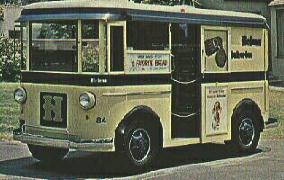
Do you remember the Helms Bakery delivery trucks in Los Angeles?  Almost everyone had started going to super  markets.  That change in behavior ended one of the largest bakery businesses in the country.


From The Wall Street Journal

Eastman Kodak Co.’s effort to draw interest in the sale of its digital patent portfolio is flagging, people familiar with the matter said, complicating the 132-year-old photography pioneer’s chances of emerging from bankruptcy court.

The people said the company hasn’t been able to attract what’s known as a stalking-horse bidder, one who agrees ahead of time to purchase the assets for a certain price, a tactic that can push prices higher. As a result, those people said, Kodak is preparing to hold a “naked” auction for the patents, one in which no suitor makes an opening bid before the auction begins.  More of this article here.

It is truly sad to watch a once proud vibrant company collapse. This is not the first American company to dissolve before our eyes.  I can think of a few others without any research. MGM(Metro Goldwyn Mayer), Bethlehem Steel, United States Steel, Douglas Aircraft, and Zenith Electronics are the ones I remember.  The list is much longer than this.  Remember Polaroid Camera?  How about Nash and Hudson that morphed into American Motors?

No one can change this reality.  No president, no congress, and no buy out specialist.

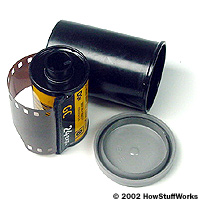
Kodak simply doesn’t have a product that substitutes for the income stream provided by the sale of millions of rolls of film.

The milk man is part of our past and so is Good Humor Ice Cream and Helms Bakery.

American Exceptionalism and the Reality of a Competitive World Economy

American exceptionalism is the theory that the United States is different from other countries.

Working class Americans (that is most of us) are in a perpetual struggle to live a comfortable life.  However, we are on the brink of a new reality.  We must compete with every other country in the world.  Will American exceptionalism prevail?

The Washington Post reports that American median income fell nearly 8 percent, to $45,800, in 2010. This is no surprise.  It is simply a validation of what we already knew.  It is not going to get better any time soon.  In that same article the Post said our wealth has declined by 40%.  That too is no surprise since home have values have dropped by 40% to 50% in most areas of the country.

Many will try to blame one of the two political parties.  That would be a mistake.  If you look at the laws passed and the trends of American business you will quickly realize that this state of affairs has been going on for decades but was accelerated by the Great Recession.

The painful reality is that Americans must become more ingenious in their struggle to earn the kinds of livings that has become part of the culture.  Our politicians keep telling us that Americans are unique, creative, and exceptional.


Today that all seem like a lot of baloney.

Self Annihilation

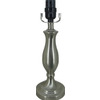
We visited a Loew’s Home Improvement store to check their table lamp selection.  My wife’s idea.  She found precisely what she wanted.  The price for each lamp was $14.97 and included a light bulb.  The shades cost about the same price.  The lamps and shades are made in China.  It is an astonishingly low price.  I would have been willing to pay twice that amount.

Can you imagine the pay rate for those working in the factory that manufactures those lamps and shades?  Probably on the order of 50 cents an hour.  That is the pay rate in Mexico.

So we Americans buy low cost products manufactured in China and that makes us feel good.  Think about this.  Those lamps and shades were formerly made in the U.S.A.  We get bargains that put our neighbors out of work.

What is the American policy (or for that matter the policy in any other country) regarding the export of our jobs?

Personally I would gladly pay more for the lamps if I knew that Americans have the income that takes them off the unemployment rolls and welfare rolls.  Am I wrong?