$ Ayn Rand, Goddess of the Market $

I just finished reading Jennifer Burns’ biography of Ayn Rand.   The exact title is “Goddess of the Market Ayn Rand and the American Right”.  The author is an Assistant Professor of History at the University of Virginia.  The 286 page book was printed in 2009 and its Epilogue includes opinion of our 2008 – 2011 Great Recession and how it relates to Rand.  Each chapter of the book starts with a dollar sign.

Ayn Rand was clearly irrevocably impacted by her childhood in Czarist and Communist Russia.  Her undying allegiance to a form of society that does not exist, except in theory, is the absolute opposite of some kind of free society that Karl Marx had envisioned.  Watch Youtube videos of Mike Wallace interviews of Ayn Rand and you will understand that she was unmovable by his reasonable questions about her allegiance to a theory.

The last sentence in the book tells it all. “…Rand lay facing the world in an open casket.  Next to her coffin was an enormous topiary, shaped into the sign of the dollar.”

Unfortunately too many American conservatives think such a society can exist.

Life Expectancy in America

Here is something that Barack Obama, John Boehner, Harry Reid, and other national leaders won’t address.  It’s hard to believe that the United States does not provide its citizens with the longest life expectancy of any country in the world. ABC World News reports we have the most expensive health care in the world.

Here we are in 36th place and tied with Cuba.  Postings of comments offer a variety of excuses for this ranking.  They range from our military involvements to gun use to long drives to work.  Canada is very similar to the United States but is in 11th place.  Israel is in 8th place but I wonder how many in that country are living with severe handicaps resulting from bombings.  Still,Israel’s ranking is quite surprising.      

The total number of U.S.lives lost in the Iraq and Afghanistanwars is 6,081.  The Census Bureau lists the 2008 number of death from auto accidents at 39,000 people.  Clearly the wars have not been the major contributor to America’s deaths.

The Los Angeles Times front page article today indicates that life expectancy for woman has declined in many rural areas.

Rank

Country (State/territory)

Life expectancy at birth (years)
Overall

Life expectancy at birth (years)
Male

Life expectancy at birth (years)
Female

1  Japan 82.6 78.0   86.1
2  Hong Kong 82.2 79.4   85.1
3  Iceland 81.8 80.2   83.3
4  Switzerland 81.7 79.0   84.2

In last place, 194th,  is Swaziland where life expectancy for both men and women is less than 40.

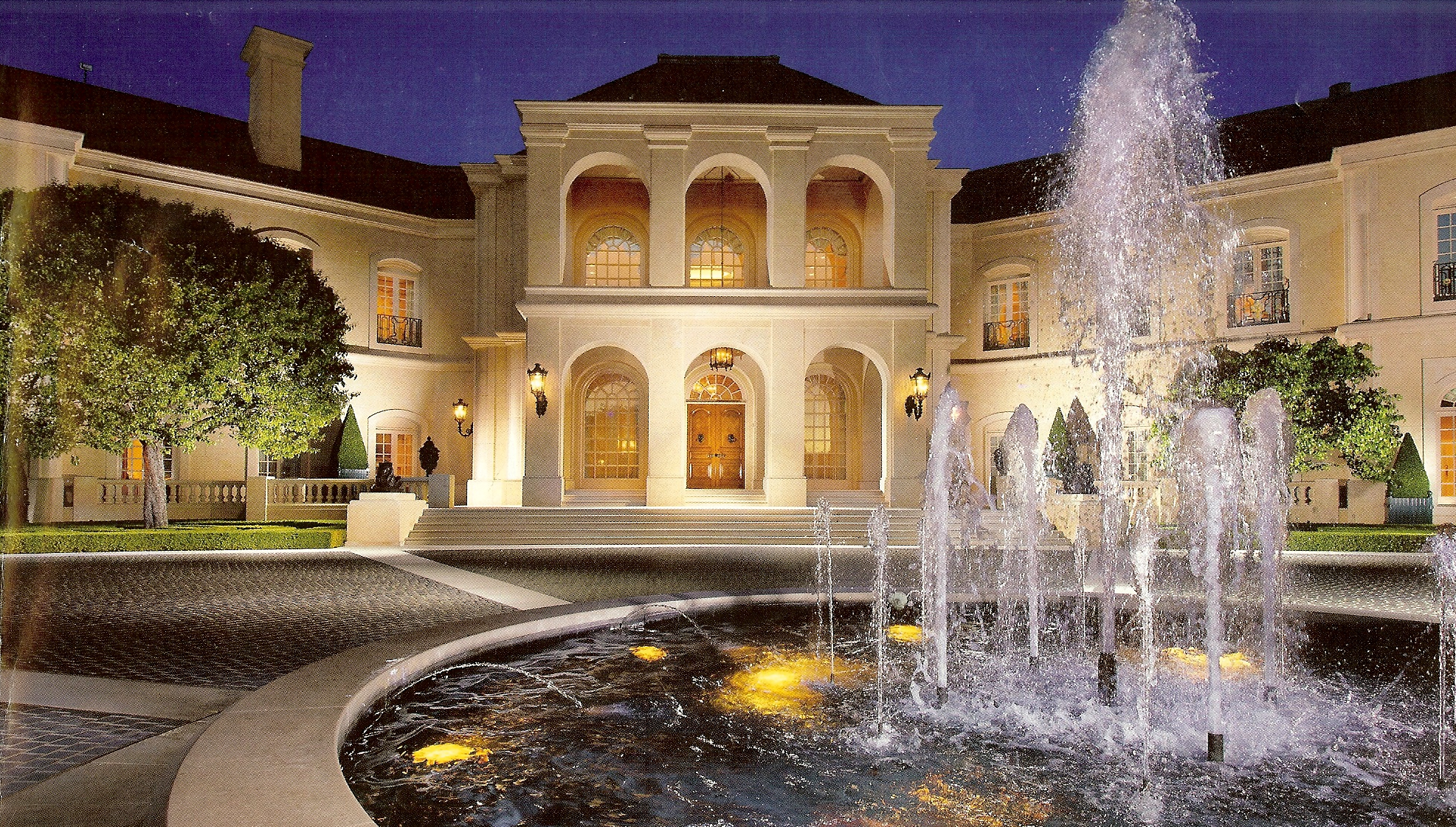
The Aaron Spelling Mansion

The asking price was $150 Million in August 2009.  Reported sold today at a mere $85  Million. 

The home was featured in Los Angeles Times View Real Estate magazine on August 22, 2009. This is the description:

The crown jewel of one of the most exclusive neighborhoods in Southern California, The Manor is recognized as one of the most famous mansions in the world. Built by entertainment royalty Candy and Aaron Spelling, the estate ­rests on approximately 4.7 acres of rare flat land in the Holmby Hills area of Los Angeles. Few, if any residences rival The Manor’s grand scale luxury and exclusivity. Originally named L’Oiseau (“wing of a bird”) for the unique W-shape of the French Chateau, The Manor blends visionary design, passionate attention to detail, and one-of-a-kind artistic touches to create a masterful opulence once only reserved for nobility. Every element of The Manor, from the immaculate gardens to sumptuous, custom-designed areas, reveals the intricate level of detail and extraordinary care applied to this estate throughout its historic existence.

Quite simply, The Manor cannot be matched in grandeur and scope. Forever forged in history, The Manor is truly designed for a modern day dynasty.   

Included is a picture of the front driveway, main entrance hall that looks like the staircase and paneled den in Aaron Spelling’s “Dynasty.”  The “Dynasty” house original is the Filoli House in Woodside, California.  That location is about 25 mile south of San Francisco near Palo Alto.  That house has served as the set for many Hollywood movies including Warren Beatty’s outdoor scenes in “Heaven Can Wait.”  That house is no longer a private estate and is open to the public.  I predict someday “The Manor” will be open to the public.

Are You Smarter Than a 12th Grader?

It’s hard to believe how poorly we are educated about our nation.   ABC News and the Associated Press both report our lack of knowledge about our country.  It’s no surprise.  Recently both Congresswoman Michele Bachmann and former Alaska Governor Sarah Palin recited incorrect information about America’s history.

Eighth Grade Sample Questions

1. Who was Thomas Jefferson and why was he important?

Refer to the passage below for questions 2 and 3:

“We hold these truths to be self-evident: That all men are created equal; that they are endowed by their Creator with certain unalienable rights; that among these are life, liberty, and the pursuit of happiness. That, to secure these rights, governments are instituted among men, deriving their just powers from the consent of the governed; that, whenever any form of government becomes destructive of these ends, it is the right of the people to alter or to abolish it, and to institute a new government. —1776

2. The quotation is from the:

A) Articles of Confederation B) Constitution C) Declaration of Independence D) Missouri Compromise

3. The primary author of the document was:

A) George Washington B) John Marshall C) Robert E. Lee D) Thomas Jefferson

4. What were the three main countries that made up the Axis powers in World War II?

A) Germany, Russia and Japan B) Italy, Japan and Russia C) Germany, Japan and Italy D) Germany, Japan and Great Britain

12th Grade Sample Questions

1. A consequence of Prohibition was

A) the failure of the Republicans in the 1928 presidential election B) the growth of organized crime C) the turning of public attention to pressing international issues D) widespread popular support for further moral reform

2. North Korea was helped by this ally during the Korean War:

A) Japan B) The Philippines C) Hong Kong D) China

3. President Franklin D. Roosevelt’s goal in supporting the Lend-Lease Act of 1941 was to

A) Encourage Japanese Americans to relocate voluntarily B) Use foreign investment as a way of stimulating the American economy C) Maintain an isolationist stance by providing only limited aid to both sides of the European conflict D) Assist Britain’s war effort without violating United States neutrality laws

4. Before the Vietnam War, the Vietnamese broke free from this colonizer:

A) Britain B) China C) France D) Russia

5. What main factors contributed to the growth of suburbs?

A) Increases in automobile ownership B) The building of a modern highway system C) Tax deductions for mortgage interest D) All of the above

6. In the 1970’s the United States economy was directly affected by

A) a sharp increase in the price of oil B) an increase in the cost of solar energy C) an overall decline in international trade D) a rapid decline in prices of consumer goods

7. The North Atlantic Treaty Organization (NATO) and the Warsaw Pact are best described as two

A) Organizations founded by the European Economic Community to promote trade between Europe and the United States B) Treaties negotiated between the allies and the Central Powers at Versailles after the First World War C)Bodies established by the United Nations to promote peace within multiethnic European countries such as Czechoslovakia and Yugoslavia D) Military organizations made up, respectively, of the United States and its allies and the Soviet Union and its allies during the Cold War

Answer Key

8th Grader Questions:

1. Thomas Jefferson was the third U.S. president and was the main author of the Declaration of Independence.

2. C

3. D

4. C

12th Grader Questions:

1. B

2. D

3. D

4. C

5. D

6. A

7. D

Republican’s New Hampshire Non-Debate

You had to be a political junky to watch the entire event. I am, so I did! I did not watch any of CNN’s after the debate appraisal because I know they have their jobs to protect. Frankly it was an uninformative event that focused on Barack Obama rather than focusing on the differences between the participants. Their unwillingness to define their differences makes a selection in a primary rather difficult.  Tim Pawlenty’s refusal to confront Romney after previously calling the Obama health care program “Obomney Care” certainly told us something about Mr. Pawlenty.

The most important impressions were associated with Mitt Romney and Michele Bachmann.

Bachmann offered short precise answers that will garner praise from her followers. Bearing five children and fostering 23 children certainly is an accomplishment that deserves significant praise. Her attacks on Obama were in line with Tea Party views.

Romney, with all his experience in the last campaign, fumbled many of his statements. He said, “It’s time for us to bring our troops home.” Then he said I meant to say “As soon as we possibly can, consistent with the, uh … the word that comes from our generals that we can hand the country over to the Taliban military in a way that they are able to defend themselves … excuse me, it should be the Afghan military to defend themselves from the Taliban.”

I won’t be watching anymore of these events if this is their idea of a debate.

Tim Pawlenty’s Better Deal

Tim Pawlenty is proposing “A Better Deal.”  This is not to be confused with FDR’s “New Deal” nor Teddy Roosevelt’s “Square Deal.”  The “Fair Deal” was the name given to Harry Truman’s domestic program.

My question is what makes Pawlenty’s ideas a better deal?  Pawlenty wants to “grow the economy by 5%.”  Who can argue with that objective?  The problem is he wants to do this by helping the rich grow even richer.

He says he wants to create just two tax rates, 10% and 25%.   A married couple earning above $100,000 would pay the higher rate.  He implies, but does not say, he would eliminate all deductions.  Would he eliminate business deductions as well as mortgage interest and property taxes?  He does not say.  Would he eliminate subsidies for agriculture, ethanol, oil drilling, and clean energy projects?  He does not say.

He does say “we should eliminate all together the capital gains tax, interest income tax, dividends tax and the death tax.”  I have a problem with this idea.  The wealthy of our nation earn most of their income as the result of capital gains, and interest and dividend income.  In other words, the rich who do not have a job would pay no taxes at all.  The current inheritance tax impacts estates with a value at more than $5 million.  According to the U.S. Census Bureau the median household net worth is $79,800 (most recent data is 2004).  Once again this is a benefit to the very wealthy.

He believes that if any service can be provided by private enterprise the government should not be involved.  That means no police, fire or child protective services.  Actually he said if you can “Google” the service then the government shouldn’t be providing it.  That means no more public schools.

He says we don’t need any bank regulations. The Glass-Steagall  Act was passed in the 1930s and protected us until 1999 when Democrats and Republicans revoked the law.  The consequence was the Great Recession.

He says no EPA.  Smog in Los Angeles burned our eyes and obliterated our view of the mountains.  Polluted rivers are still a problem but getting better.     

You can read all of Pawlenty’s ideas at his web-site.  You can read many of his thoughts at OnTheIssues.  You will agree with some of his ideas.  My opinion: Tim Pawlenty’s “A Better Deal” is a great deal for the rich.    

California’s New Political Map

I watched the California Citizens Redistricting Commission on-line presentation of the proposed new districts.  They said it is version one of what could result in modifications before the August 15 finalized maps are established.  It will come as know surprise if they are challenged in court. I looked at the maps posted on the internet and did grimace at some of their decisions.  However, The Los Angeles Times editorial seems on target.

Lines drawn by a citizens commission should put more power in the hands of voters.

SOME DEMOCRATS are bound to hate it, because it may jeopardize their party’s lock on a seat in Congress or slow their drive to capture two­thirds of each house in the Legisla­ture. Some Republicans may dismiss it, be-. cause it doesn’t reinventCaliforniaas a GOP stronghold. Politicos of all stripes will probably scoff at it, because it’s the result of a citizen-driven process and not a politi­cian-controlled backroom deal. And some reformers may even rail at it, because it doesn’t differ enough from the map of dis­trict linesCaliforniahas had for decades.

And that’s just fine. The preliminary re­port to be issued Friday by the California Citizens Redistricting Commission, which features new district maps for the state’s congressional and legislative districts, is both a work in progress and a triumph for citiZens no longer content to allow political parties to carve up the state for their own purpqses. The commission was created af­ter a painstaking and admittedly complex process mandated by two ballot measures thatCaliforniavoters adopted over the fierce objections of the political establish­ment. The goal was to strengthen the power of voters in the decennial redrawing of dis­tricts that follows each national census.

Recent redistricting efforts, handled by Democratic and. Republican party officials, too often resulted in districts in which politi­cians picked and chose their voters rather than the other way around. A Democrat in the Assembly, for example, might be re­warded for prodigious political fundraising by having a Senate district drawn to favor him and disfavor a more independent ­minded colleague. A Republican lawmaker might be similarly be rewarded with a con­gressional district drawn just for her: The parties may have struggled against one an­other to win a seat here or there, but for the most part they were only too happy to work together and cut deals to protect their own incumbents while drawing district lines.

The maps released Friday will not be per­fect, because perfection in drawing district lines is impossible. The initiatives require the commission to, as much as possible, keep “communities of interest” together, but there are many ways of defining such com­munities. Households might be· grouped by income, geography, lot size, propensity to vote, ethnicity or anyone of dozens of other criteria. Add to that the desire to make dis­tricts more competitive. Ballot measure lan­guage provides some guidance, but if there were no need for judgment calls, the lines could be drawn by computer. They can’t.

As part of the unprecedented public role, voters are invited to attend commission· meetings or suggest alternative lines at we­drawthelines.ca.gov. Participants may find the process less tidy than the old way: leav­ing the decisions to political parties. But the goal is not tidiness. The goal is a fair and functioning democracy.

America’s High Medical Costs

AstraZeneca recently set the price of its new Brilique blood thinner, which it hopes will become its next blockbuster drug, at €1.69 ($2.38) per pill in Ger­many.  Whether it will be allowed to maintain that price in Europe’s largest drug market remains to be seen.  You see Europe has a new pricing law that requires pharmaceutical companies to prove not just that a drug works but that it is actually worth more than older therapies. If a drug maker can’t convince German regula­tors that its compound has greater ef­ficacy or additional benefits, then it cannot charge more than rival medi­cines already on the market. The same or similar regulations are in place throughout Europe. (the source for this information is Businessweek June 6, 2011 edition)  

Compare this justification procedure with laws in the United States.  There are no such laws in this country. The government does not regulate pricing on any product or service with the exception of some insurance (California law demands justification of insurance rates for auto coverage).

Rather than not develop new drugs, the pharmaceutical companies have developed economic reviews of their products and plan to provide life impact justifications.  The review of the data will delay the initial release of new products but will help to control the cost of medical care.

A new study showing that the chemotherapy drug Vemurafenib can prolong the lives of people with malignant melanoma — the especially aggressive and dangerous form of skin cancer that kills about 8,700 Americans each year — has rightfully lifted the spirits of doctors and patients alike.  It was a feature item recently on ABC World News.   However the Los Angeles Times reports interviewing Tim Turnham, executive director of the Melanoma Research Foundation. He told the Times “There’s been a lot of hype in the news, but this is not a home run. It’s a really solid single.” An expensive single, at that. Vemurafenib will likely cost tens of thousands of dollars per year. (Turnham’s off-the-cuff guess is $50,000.)

Should Medicare or any insurance company pay for high-priced specialized care?  If it’s for your mother, your father, your brother the answer is YES.  Sadly society cannot afford everything.  Why can’t Medicare negotiate drug costs?  Perhaps capitalism is not always the right answer.