“Breaking News” is Entertainment News

I admit to watching and listening to too much talk radio and too much cable news.  It might even be called an addiction.  Most people end up listening to ideas and thoughts that are in agreement with their own basic ideas.  They are looking for commentators who support their own opinions. Those commentators, many are seeking elective office, say things that endear them to their base.  Thus, Mike Huckabee, who is a potential presidential candidate, says lots of foolish things that his base of followers wants to hear even if he knows his comments are completely false.

On CNBC on Saturday morning, co-host Becky Quick stirred things up by citing recent guests who pointed to inflation being a “big, big problem” and statements that yet another round of quantitative easing would be necessary to keep the economy from going “off a cliff” as consumers need more “assistance” due to high oil prices.

Of course, she didn’t cite guests who were calmer about what was going on due to the fact such guests don’t often appear on CNBC and because Quick’s job is to raise viewer anxiety. Such story lines are promoted to keep viewers tuning in for the latest developments and “breaking news.”

Local television news rarely reports anything about government activities, laws passed, or industries succeeding.  However, if you want to see the current car chase or the day’s violence then those television channels are the ones to watch.

So just remember that “breaking news” really is tabloid news.  Dull and incompetent speakers are rarely on the air.  If they are it will be very rare.  The will never be back for a second chance.

Obama’s Gas Price Migraine

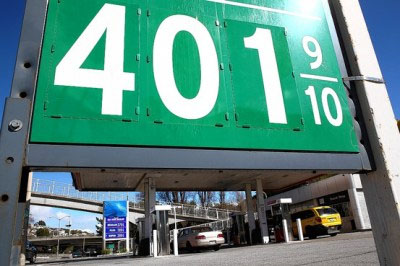
The price for gasoline in Los Angeles is almost exactly the same as pictured below.  This Wall Street Journal columnist is simply stating the facts.  Today’s report of the White House considering releasing oil from America’s emergency strategic oil reserve is a futile effort.  Past releases have had little impact on pricing.  There is no shortage of oil.  The real problem is that America has no plan for energy independence.


Posted price for a gallon of gasoline, San Francisco, Calif., Feb. 25

Obama’s Gas Price Migraine

By: Kimberley Strassel

The Obama administration has its share of headaches: a possible government shutdown, Arab unrest, the union uprising. The real migraine may be a firestorm over gasoline prices.

Oil last week topped $100 a barrel, and gas has hit $4 a gallon in pockets of the country. The price is expected to keep heading up. This pain is being felt by a public still dazed by recession.

An immutable fact of expensive gasoline: Americans will find someone to blame. We can expect in coming months to hear many sober analysts attempt to explain the complex reasons for rising oil prices: inflation, Middle East tremors, growing demand. Expect, too, for all those reasons to vanish behind what most Americans will see as the far more obvious (and graspable) cause: President Obama’s regulatory assault on domestic oil and gas production.

This is, after all, a White House that has put at the center of its domestic agenda its goal of a “green economy,” which hinges on making fossil fuels too expensive for Americans to purchase. In January 2008, candidate Obama told the San Francisco Chronicle that under his cap-and-trade plan, “electricity rates would necessarily skyrocket.” Steven Chu, now Secretary of Energy, told this newspaper in the same year: “Somehow, we have to figure out how to boost the price of gasoline to the levels in Europe.” That would be, oh, $10 a gallon.

In March of last year, Mr. Obama reversed or scaled back nearly every major offshore oil opportunity that has come about since the price spike of 2008—effectively reimposing a moratorium on drilling off the coasts. His administration has killed leases in developmentally crucial areas of Alaska. His EPA has refused to issue permits. The White House used the BP oil spill as an excuse to also shut down the deep-water Gulf.

Onshore? Interior Secretary Ken Salazar has revoked oil-and-gas leases. The EPA is suffocating the coal industry with regulation. One of the president’s only clear State of the Union proposals was to raise taxes on oil and gas. The White House’s energy policy, says Dan Kish of the Institute for Energy Research, is “embargoing our own energy supplies to drive up their costs.”

Democrats are already desperately spinning the press on why none of this will matter politically. Yes, the party took heat for its antidrilling policies in 2008, but it won’t be the same this time. Americans, they say, just witnessed an oil spill; they are okay with a drilling ban. And so long as economic recovery stays on track, no one will sweat an extra buck a gallon. And so on.

The Democrats are right about one thing: It won’t be the same as 2008. It will be politically worse. Nobody should forget the extraordinary public fury over $4 gas in 2008. The rage was enough to take Mr. Obama’s flailing presidential opponent, John McCain, and propel him ahead in the polls, where he stayed until the financial crisis. Remember also that when oil prices peaked in July 2008, the unemployment rate was 5.7%.

President Bush largely escaped public blame. How could anyone lay high oil prices on a guy the left had spent eight years slamming as an “oil man”? But President Obama’s anti-oil record is evident, and Republicans (who, unlike in 2008, run the House), will use their bully pulpit to directly connect prices to the Obama energy freeze.

This week we’ve seen the first rumblings of the oil-price political freight train that’s coming. Senate Minority Leader Mitch McConnell highlighted a Democratic proposal to raise gas prices with new levies on oil and gas, deeming it the “minivan tax.” Washington state Rep. Doc Hastings, chairman of the House Natural Resources Committee, grilled Interior Secretary Ken Salazar Wednesday about the administration’s de facto moratorium on deep-water drilling permits. Behind the scenes, GOP members are touching up energy bills, to provide a further contrast with the administration.

The White House sniffs trouble and this week rushed to issue its first Gulf deep-water permit since the spill. Yet the administration has so much wrapped up in its green-energy agenda—stimulus grants, subsidies, programs in every department—it seems unwilling to do more. The EPA has refused to budge on controversial carbon-emissions regulations. The president is now pushing for a “clean energy” mandate, the ugly stepchild of cap and trade. The White House is trying to recruit gullible Republicans to a “comprehensive” energy bill, though its goal appears to be to cloak a further renewable agenda behind the few bones it would toss to natural gas or nuclear.

The administration took a midterm election beating because the public saw it move to the left of reality on spending and health care. Rising gas prices now threaten to catch it out the same way on energy. If it wants to recapture public favor, it will have to make a major shift.

The Art on the Runways

My lovely wife has me hooked on “Project Runway”.  You know, it’s the television program that has designer contestants quickly coming up with extraordinary gowns, dresses, and other stuff that makes men stop and look.

On a recent visit to downtown Los Angeles we toured Fashion Institute of Design & Merchandising also called FIDM.  This is a very impressive school.  Actually the Project Runway program has been conducted there.  The tour gave me an entirely new appreciation for fashion design.

This has been scanned from the March 7, 2011 Newsweek.  Click to enlarge the scan.

How Many Americans Really Want Jobs?

via How Many Americans Really Want Jobs? – Daniel Indiviglio – Business – The Atlantic.

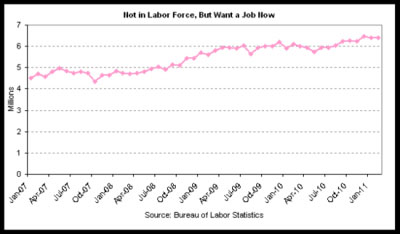
This morning, we learned that the economy added 192,000 jobs as the unemployment rate ticked down to 8.9%. That put the number of unemployed Americans at 13.7 million — but this doesn’t tell the entire story. This number does not take into account Americans who, for various reasons, are not considered in the labor force. Some of them still want jobs right now, even by the Bureau of Labor Statistics’ standards. What would the picture look like if we include these Americans?

For starters, how many were there? In February, BLS estimates 6.4 million Americans want jobs now, but are not considered part of the workforce. They are not included in the tally of unemployed Americans.

If you add these additional workers into the number of unemployed, you find that just over 20 million Americans want a job right now, but do not have one. That’s obviously a much grimmer picture than the 13.7 million that the headline number suggests — it’s nearly 50% higher.

This new calculation of Americans who want a job also shows a much larger portion of the nation struggling to find work, compared to the 8.9% unemployment rate. The portion of Americans who want a job was 12.6% in February.

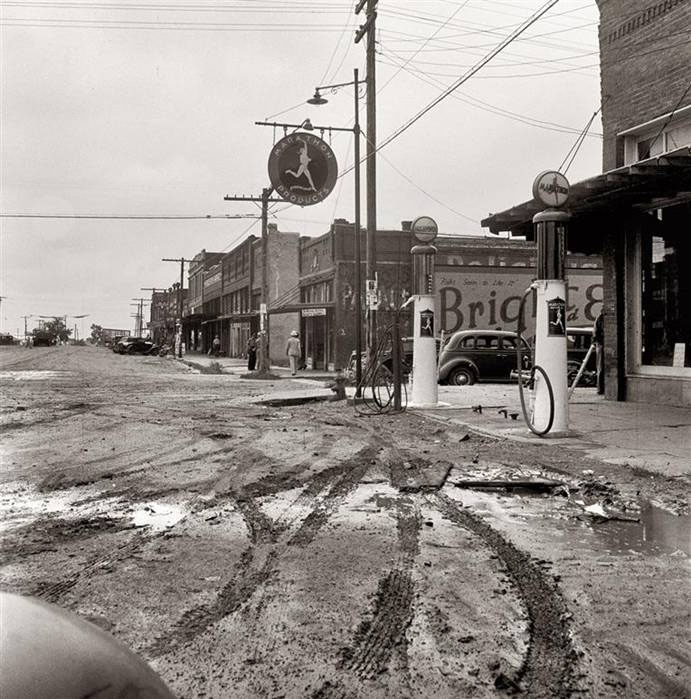
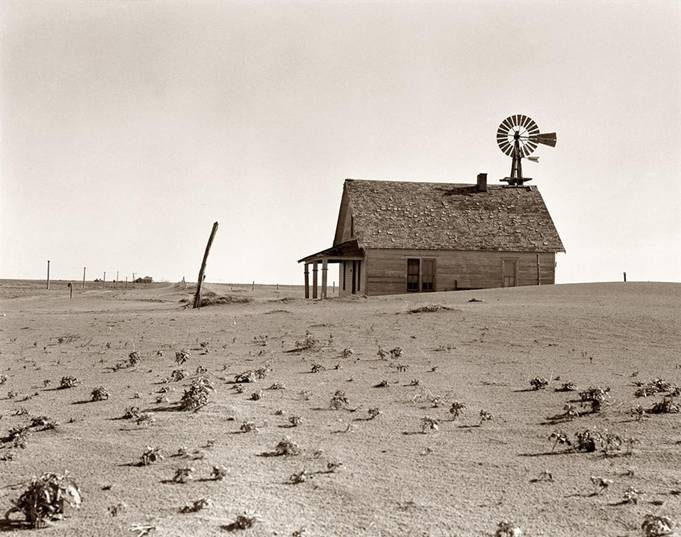
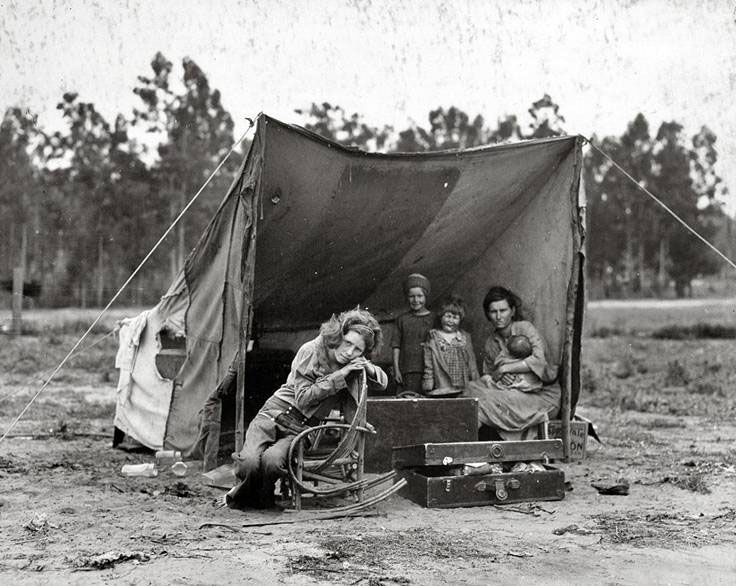
1935-1939 Pictures Of The United States

LOOK AT THE PICTURES!

WE ALL NEED A REMINDER!

America …during the years of 1935 – 1939

For those who have not read “Grapes of Wrath”

We are whining over $5.00 per gallon gasoline?


Meanwhile in Los Angeles, California there was a growing class of well to do.


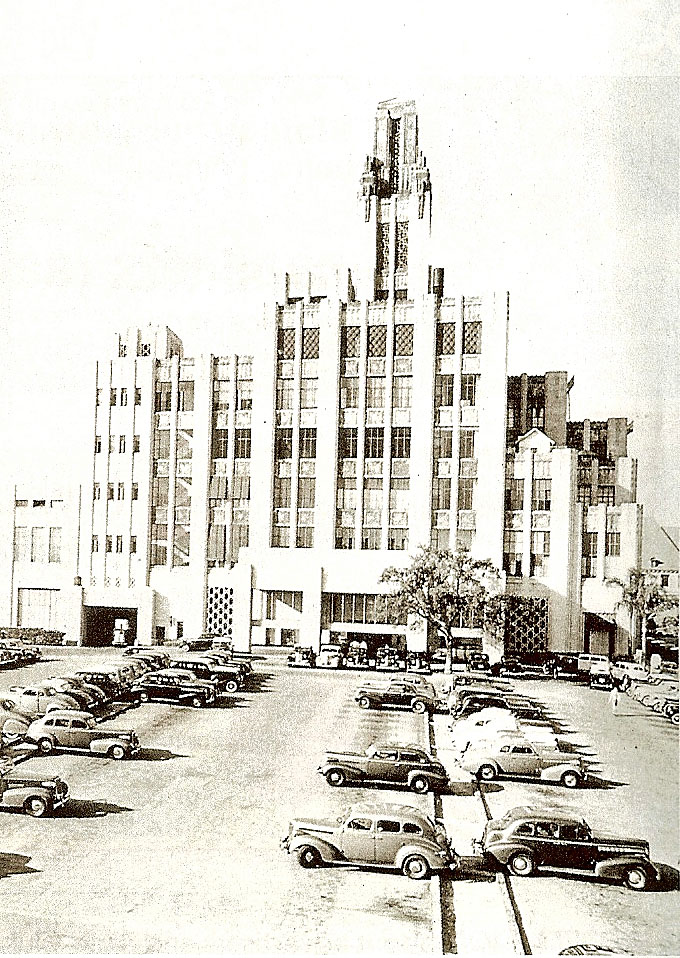
Scanned photo from Auto club of Southern California Westways magazine dated March/April 2011. the following explanation of the photo and a history.

Emporium Moderne

BY MORGAN P. YATES

Rising above its motor court of wheeled subjects, Bullock’s Wilshire (the apostrophewas later dropped) radiates high fashion and architectural panache in this 1938 image. When the store opened to the public a month before the stock market crash of 1929, the Los Angeles Times said that the art deco ziggurat, located at 3050 Wilshire Boulevard, about a mile-and-a-half west of downtown, added “a meaningful sentence to the poem of progress that is the Los Angeles skyline.”


In the 1920s, residential growth and congested downtown districts led many department stores to start opening branch stores in outlying areas to complement their flagship stores. When this part of Wilshire Boulevardwas rezoned from residential to commercial in 1926, the stage was set to transform the area into L.A.‘s own version of New York‘s Fifth Avenue. Bullock‘s led the way, and its success attracted further commercial development. By the late 1930s, the Wilshire corridor exemplified the apex of fine shopping in the region.


Retailers in the 1920s also increasingly recognized the importance of infusing distinctive architectural designs into their establishments to attract shoppers. Bullock‘ < s embraced the movement to synthesize art and commerce by construct­ing the building in art deco, a new and modern style ema­nating from France. Designed by Los Angeles father-and-son architects John and Donald Parkinson, type resulting structure—from its distinctive exterior to its eye–popping decor­ became a beacon visible for blocks around, announcing the city‘s coming–of–age on a national stage.

Best of all, the cathedral to commerce is still with us todayy thanks to its elegant transformation into a law library under the stewardship of the Southwestern School.

US Jobless Claims down 20K To 368K In Feb 26 Week

The number of U.S. workers filing new claims for unemployment benefits unexpectedly dropped last week, pointing to continued improvement in the jobs market as the economy picks up speed.

The S&P 500 and the Dow Jones Industrial average are up over 1.5%.  The rise was the result of the lower unemployment claims and higher than expected retail sales reports from such companies as Target, Macy’s, and Heinz (Heinz 3Q Profit Up 20% on Strength in North America).

We still have a long way to go but at last there is light at the end of this horrible recession.

The First Amendment Protects those we Despise

Christian Dior has fired head designer John Galliano over anti-Semitic and racist remarks he allegedly made on two occasions.  The AP reports that Paris prosecutors ordered Galliano to stand trial in the coming months over alleged racial insults.  Unlike France, that most of us think is a free country, in the United States you really do have Freedom of Speech!

Remember the KKK marches in Skokie, Illinois?  The ACLU defended the right to march and display hate.

Can you see any difference between these two videos?

Once again the right to hate has been upheld.  The Supreme Court has ruled that the First Amendment protects fundamentalist church members who mount anti-gay protests outside military funerals, despite the pain they cause grieving families.  The court voted 8-1 in favor of the Westboro Baptist Church of Topeka, Kansas.  Chief Justice John Roberts wrote the opinion for the court. Justice Samuel Alito dissented.

“Speech is powerful. It can stir people to action, move them to tears of both joy and sorrow, and — as it did here — inflict great pain. On the facts before us, we cannot react to that pain by punishing the speaker,” Roberts said. “As a nation we have chosen a different course — to protect even hurtful speech on public issues to ensure that we do not stifle public debate.”

Alito strongly disagreed. “Our profound national commitment to free and open debate is not a license for the vicious verbal assault that occurred in this case,” he said.

Drill Baby Drill!!

What ever happened to “Drill Baby Drill”?

John Hofmeister, founder and CEO of the non-profit group Citizens for AFFordable Energy and former CEO of Shell Oil, keeps sounding the alarm but no one seems to be listening. As recently as February 24 he appeared on Parker Spitzer saying what he has said before. In addition he said we have plenty of oil within the United States; we just don’t want to deal with the messy business of extraction.

John Hofmeister on FBN “Varney & Company” 2/28/2011
The price of gasoline continues to rise. So what is the Obama administration doing about it? What should it do? Listen to John Hofmeister’s comments on this and likelihood of $4 a gallon gasoline this year.


The AP reported today “Oil prices climbed Tuesday as Iran clamped down on anti-government protesters and unrest in the Middle East threatened to keep energy prices high for months to come.”

What will it take to change our objections to utilizing our own resources? Perhaps the answer is gasoline at $5.00 per gallon.