Black Friday and the Culture of Spending

I remember when my mother came home with a “charga-plate” from the May Company department store.  That was back in the 1950s and really was the beginning of the charge card era.  Charge cards and easy credit has been a big boon for retailers of all sorts.  From cars to clothes to food, we can now buy everything using that plastic card.  

Newsweek’s December 6, 2010 cover is titled Money to Burn – Why Americans Can’t Stop Spending.  The article contends that our spending habit and instant gratification culture will dominate our knowledge that the bill for all that spending will arrive at the end of the month. 

Despite the persuasiveness of that argument there is definitely a rising tide of those who have learned that you can’t have everything you want.  The Dave Ramsey radio program contends that “Cash is King and the Paid off Mortgage has replaced the BMW” as the new American idea of success. His three hour program seems to be in every part of the country from Portland, Oregon to Los Angeles, California to Nashville, Tennessee totaling over 350 outlets.

Now the “Great Recession” seems to have brought us to our senses.  Most of us have lost a job or know someone who has.  All of us have been alerted and frightened by that growing credit card debt.  The recession now denies us, what seemed the never ending offers to apply for more credit cards and easy credit terms.  Most of that has stopped.  According to a Businessweek October 2008 article credit card debt had reached $950 Billion.

From Creditcards.com

  • Total U.S. revolving debt (98 percent of which is made up of credit card debt): $852.6 Billion, as of March 2010 (Source: Federal Reserve’s G.19 report on consumer credit, March 2010).  That is a reduction of $50 Billion a year for the past two years.
  •  

  • Total U.S. consumer debt: $2.42 Trillion, as of June 2010 (Source: Federal Reserve’s G.19 report on consumer credit, August 2010)
  •  

Despite the reports of improved sales in the malls since Black Friday, I believe that our big spending days are behind us.

The Cost of Money

Our money is costing us too much money to mint.  Coin Update News posted an article this past February that advised that minting pennies costs 1.62 cents each and 5.79 cents to produce each nickel. The Canadians are considering doing away with the penny for the same reason. In addition many people believe inflation has made the lowly penny too inconsequential.

I personally do everything in my power to avoid having any pennies in my pocket because there isn’t anything left that costs just one penny.  A half gallon of milk costs $1.79 at Trader Joe’s.  If the price was $1.80 would anyone really care?  Gasoline is so expensive why not just price it in multiples of 5 cents?  After all, most of us buy gasoline in multiples of one dollar.  I hand the clerk a $20.00 bill and say “twenty on pump 3”.  I do not say “give me 10 gallons of gas on pump 3.”

This could be the start of an effort to make government more efficient and our lives a little simpler.

Should you Work until your Dying Day?

The question is: should you work until your dying day or should you retire and enjoy a few years of relaxation without working stress?

Richard Holbrooke, United States Special Envoy for Afghanistan and Pakistan died today as the result of a torn aorta.  He was 69 years old.  He became ill just this past Friday while working at the State Department.  I believe he really liked his work in foreign affairs but when did he just relax? Couldn’t he have focused on a golf course where the outcome was not crucial or perhaps become an amateur photographer traveling to distant places around the world?

Perhaps some of us really do love our jobs so much that we find it difficult to retire.  My Dad retired at the age of 70.  He was a structural engineer who held a masters degree from the University of Toronto.  His last full-time employment was at Ralph M. Parsons Company in Pasadena, California.  They had asked him to retire.  Following that he continued to work part-time, for another two years, on a contract basis at Atomics International.  He didn’t need the money but he loved the work.  Watching him in that transition to full retirement, I could see that he was unhappy with the spare time he had on his hands.  He was lonely for the office.

Now I have been retired for over four years and sometimes wish I had more things to occupy my life.  Then I recall, it was up at 5 AM for a one hour drive to an office.  Even as I wrote those words, I know it is fun to reminisce but never mind.  I enjoy reading Al Martinez’s (retired from the Los Angeles Times) bi-weekly column in the local newspaper (Los Angeles Daily News).  He doesn’t write anything complicated but seems to enjoy his work.

American Made – Not Anymore

We were walking down Colorado Boulevard in the Old Town sectionof Pasadena, California after lunch at a Cheesecake Factory restaurant. That ended our search for interesting craft stores.  My wife is an avid crafter. As I read the signs on each store there was one titled “American Apparel.”  Wow! I back tracked to the store and pulled my wife into a women’s clothing store where the clerk informed us that indeed everything sold is American made.  How novel!

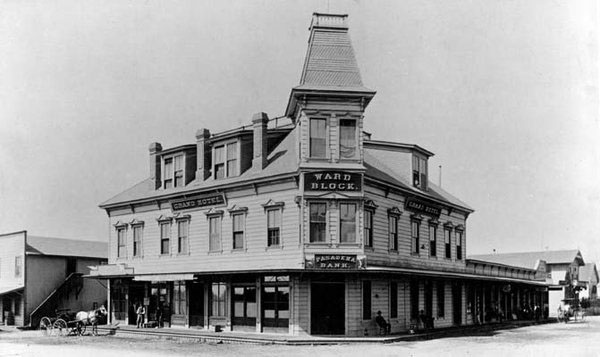
This is where the Cheesecake Factory is at on the corner in 2010

The Cheesecake Factory is on this corner in 2010.  The front of the building has not changes.

More of such stores ought to do well except what will it cost the consumer?  Apparently too much.  The last light bulb manufacturing company left the United States three months ago. Maytag and Whirlpool washing machines aren’t made here either.  The New York Post on line posted Not made in the USA on today’s web site edition. The essence of the article is “outsourcing, in this recession, has highlighted America’s most intractable problem: the permanent loss of blue collar jobs.” 

It’s not news.  We all know that most of the things we buy, with the exception of food, is made in another country.  The outsourcing has become so common that even the Los Angeles Times provides customer service from the Philippines.

What will happen to all those people laid off from factories and service companies?  If they lack a college education they will either find something to do that can’t be outsourced or they will become part of a new class of poor people in America.  The unemployment rate for college educated people, according to the U.S. Bureau of Labor Statistics is 5%.

Reality Check

I agree with Mr. Friedman’s opinion.  Will American Jews stay quiet and let this play out?, David Bancroft
 
From the New York Times on December 11, 2010

Reality Check By THOMAS L. FRIEDMAN

The failed attempt by the U.S. to bribe Israel with a $3 billion security assistance package, diplomatic cover and advanced F-35 fighter aircraft — if Prime Minister Bibi Netanyahu would simply agree to a 90-day settlements freeze to resume talks with the Palestinians — has been enormously clarifying. It demonstrates just how disconnected from reality both the Israeli and the Palestinian leaderships have become.

Oil is to Saudi Arabia what unconditional American aid and affection are to Israel — and what unconditional Arab and European aid and affection are to the Palestinians: a hallucinogenic drug that enables them each to think they can defy the laws of history, geography and demography. It is long past time that we stop being their crack dealers. At a time of nearly 10 percent unemployment in America, we have the Israelis and the Palestinians sitting over there with their arms folded, waiting for more U.S. assurances or money to persuade them to do what is manifestly in their own interest: negotiate a two-state deal. Shame on them, and shame us. You can’t want peace more than the parties themselves, and that is exactly where America is today. The people running Israel and Palestine have other priorities. It is time we left them alone to pursue them — and to live with the consequences.

They just don’t get it: we’re not their grandfather’s America anymore. We have bigger problems. Israeli and Palestinian negotiators should take a minute and put the following five words into Google: “budget cuts and fire departments.” Here’s what they’ll find: American city after city — Phoenix, Cincinnati, Austin, Washington, Jacksonville, Sacramento, Philadelphia — all having to cut their fire departments. Then put in these four words: “schools and budget cuts.” One of the top stories listed is from The Christian Science Monitor: “As state and local governments slash spending and federal stimulus dries up, school budget cuts for the next academic year could be the worst in a generation.”

I guarantee you, if someone came to these cities and said, “We have $3 billion we’d like to give to your schools and fire departments if you’ll just do what is manifestly in your own interest,” their only answer would be: “Where do we sign?” And so it should have been with Israel.

Israel, when America, a country that has lavished billions on you over the last 50 years and taken up your defense in countless international forums, asks you to halt settlements for three months to get peace talks going, there is only one right answer, and it is not “How much?” It is: “Yes, whatever you want, because you’re our only true friend in the world.”

Palestinian President Mahmoud Abbas, what are you thinking? Ehud Olmert, the former Israeli prime minister, offered you a great two-state deal, including East Jerusalem — and you let it fritter away. Now, instead of chasing after Obama and telling him you’ll show up for negotiations anywhere under any conditions that the president asks, you’re also setting your own terms. Here’s some free advice: When America goes weak, if you think the Chinese will deliver Israel for you, you’re wrong. I know China well. It will sell you out for a boatload of Israeli software, drones and microchips so fast that your head will spin.

I understand the problem: Israeli and Palestinian leaders cannot end the conflict between each other without having a civil war within their respective communities. Netanyahu would have to take on the settlers and Abbas would have to take on Hamas and the Fatah radicals. Both men have silent majorities that would back them if they did, but neither man feels so uncomfortable with his present situation to risk that civil war inside to make peace outside. There are no Abe Lincolns out there.

What this means, argues the Hebrew University philosopher Moshe Halbertal, is that the window for a two-state solution is rapidly closing. Israel will end up permanently occupying the West Bank with its 2.5 million Palestinians. We will have a one-state solution. Israel will have inside its belly 2.5 million Palestinians without the rights of citizenship, along with 1.5 million Israeli Arabs. “Then the only question will be what will be the nature of this one state — it will either be apartheid or Lebanon,” said Halbertal. “We will be confronted by two horrors.”

The most valuable thing that President Obama and Secretary of State Hillary Clinton could do now is just get out of the picture — so both leaders and both peoples have an unimpeded view of their horrible future together in one state, if they can’t separate. We must not give them any more excuses, like: “Here comes the secretary of state again. Be patient. Something is happening. We’re working on a deal. We’re close. If only the Americans weren’t so naïve, we were just about to compromise. … Be patient.”

It’s all a fraud. America must get out of the way so Israelis and Palestinians can see clearly, without any obstructions, what reckless choices their leaders are making. Make no mistake, I am for the most active U.S. mediation effort possible to promote peace, but the initiative has to come from them. The Middle East only puts a smile on your face when it starts with them.

It Seldom Rains in the Winter Time

My grass is greener in the winter thanks to Oregon Rye grass seed that I spread on the lawn every fall.  The hot summer sun usually turns the lawn to a pale green and spotty brown. 

From the Los Angeles Daily News today

It was beginning to look a lot like the holidays a couple of weeks ago when near-freezing mornings sent L.A. residents out in heavy coats to rake autumn leaves.

But in the latest twist in a year of weather surprises, the days turned warm again.

And now there’s this.

Temperatures in the area are expected to near 80 degrees today – before spiking into the mid-80s on Sunday, possibly beating Southern California’s record highs for mid-December.

“And it’s supposed to be Christmas,” sighed Hoshivah Wilson as he stood in short sleeves outside Walmart in West Hills on Friday, collecting donations for a local charity.

This weekend’s hot spell is likely to be brief, perhaps the last hurrah for fall, before winter arrives Dec. 21.

Annual average rain is about 16 inches in Los Angeles and it rarely rains from May to October.  Snow?  That is in the mountains.

Is this the Swindle of the Year?

This is the season for scare tactics.

Charles Krauthammer, writing in the Washington Post, says “In the deal struck this week, the president negotiated the biggest stimulus in American history, larger than his $814 billion 2009 stimulus package.”  He contends that the deal Obama made with one trillion borrowed dollars put into the economy and that will be the boost that will result in his re-election.  It just happens that the liberals of the Democratic party don’t get it.

Mr. Krauthammer’s view is definitely unique.  Perhaps this view will result in many Republicans from voting for the tax plan.  I will not be surprised if Rush Limbaugh and Sean Hannity jump on the Krauthammer theory. 

Meanwhile Lawrence Summers, the president’s chief financial advisor, has said that without this tax package the United States has a considerable chance of falling back into a recession.  The highly respected Bill Clinton appearing at the White House is most likely the winning card for Obama.

If the Tea Party is true to their values they will oppose extending these reduced taxes.  I agree with that position.  However the problem is the Obama agreement includes extended unemployment benefits, something I support.   If all the leaders were around the table we could reach a compromise. We need a No Labels solution to Washington gridlock.

The U.S. National Debt is $13.8 Trillion!

U. S. Treasury Department report to Congress: U.S debt to rise to $19.6 trillion by 2015.

Despite these unpleasant facts our government continues to spend as if it has extra money in the bank.

  • On Sept. 30, 2009, public debt subject to the limit totaled $11.9 trillion with a $12.4 trillion debt ceiling.
  • Last February, Congress raised the ceiling on the national debt from $12.4 trillion to $14.2 trillion.
  • Since then, the debt has risen to $13.8 trillion — which means Congress will have to raise it yet again within a few months.
  • Extension of the Bush tax cuts will add $900 Billion to the national debt (reported by the Assoicated Press).
  •  

I hate to be Mr. Scrooge just before Christmas but the national debt is $13.8 Trillion.  To avoid a government shutdown Congress will have to raise the current debt limit of $14.2 trillion within a few months.  Continuing Bush tax cuts will add to the amount we borrow from China and the rest of the world.  Currently the U.S. government borrows more than one-third of the money it spends.  America appears to be following the path of Greece and Ireland.

Barack Obama’s deal with the G.O.P. proves that neither political party is really interested in reducing the spending by the Federal government.
—
Visualizing Obama’s budget cuts.
This really puts it in perspective!
A student explains 100 Million Dollar Budget Cut

Trust me, you have to watch this one and I promise you’ll end up smarter in just a minute and thirty-eight seconds.

Recently Obama announced that over the next 90-days he is going to work to cut 100-Million dollars of spending out of the Federal Budget. 

A  university student explains.

VERY well done! 

 http://wimp.com/budgetcuts/ 

Elizabeth Edwards, Rest in Peace

Foolishly, I was a supporter of John Edwards.  This column was posted by Melinda Henneberger on Politics Daily.  You need to read this article to the end. 

—

 The most disarming, beloved and beleaguered woman in the American political arena died of cancer Tuesday, at age 61, at the Chapel Hill estate that Mary Elizabeth Anania Edwards once told me she’d built in part to compensate for the succession of modest homes she’d lived in as a Navy brat.

“From years of living in military housing, I like a big room,” the wife of then-presidential hopeful John Edwards said in an interview in front of her hotel lobby-sized Christmas tree three years ago. Because some of the bedrooms she’d had as a kid were so dinky you couldn’t fit the bed in and still close the door, “my dream was to turn in circles if you wanted to.” The 28,000-square-foot result was just one of the ambitions Elizabeth willed to life, brick by brick, along with a few heartfelt myths and the clear understanding that she did not want to be remembered as anybody’s cuckold, or some modern-day female Job.

Before their 16-year-old son Wade’s jeep was blown off the road in a freak storm in 1996, John and Elizabeth “had the storybook life and the storybook marriage,” his former law partner David Kirby told me as Edwards was preparing for his second presidential run. But like most pre-Disney fairy tales, it also included some dark and confusing turns in the woods. On the campaign trail, Edwards’ favorite fallback phrase was, “It’s not complicated!” — but the years they lived in public certainly were. For most of us, her story really only began on the worst day of her life, when the state troopers came to the door to say Wade had been killed and she promised herself that if her husband ever had to hear bad news again, it wouldn’t be from her. I’ve often wondered if any of what followed — his political career, the birth of his two younger children, her breast cancer, which was advanced even when she discovered an egg-sized lump six years ago, and his affair with Rielle Hunter, who bore him a daughter — would ever have happened if Wade had stopped for a Coke instead of being where he was, when he was.

But Elizabeth wouldn’t want me to start there, so I’ll begin where she often did, at the University of North Carolina at Chapel Hill School of Law, where she was the smartest girl in school — to the point of showing up the scariest professor on the first day of class. (When she knew answers others didn’t, he tried to shame them, but she answered that maybe if he’d write something comprehensible on the board, they’d catch on.) That’s when Edwards fell for her, he has always said, but she was not so sure that she wanted to go out with him; he was four years younger, not much of a reader, while she loved Henry James, and he came from a tiny town, while she had lived all over the world. When he finally did win her over, after their first dance under a disco ball at the Holiday Inn, it was when he kissed her goodnight on the forehead.

They married the Saturday after taking the bar exam, and she did some lawyering even while mothering their older children, Cate and Wade, to such extremes that she was forever taking on projects like growing an outfit made of grass for Wade’s Halloween costume or making Snickerdoodles for the entire neighborhood. After Wade’s death, she never went back to her office, even to pick up her things, which she sent for, and turned her attention to “parenting Wade’s memory,” as she called it, by opening a learning lab in his honor.

Because parenting was the thing that truly made the couple happiest, she always said, they were determined to have more children, and she gave birth to Emma Claire when she was 48 and Jack when she was 50. When John was elected to the U.S. Senate in 1998 and then became John Kerry’s vice presidential running mate in ’04, Elizabeth was not only at his side every step of the way but was widely seen as his greatest asset — proof of the depth some doubted — with an Everywoman appeal and policy chops that exceeded her husband’s. Behind the scenes, she could be hard on staff, and was far more protective of her husband’s image than he ever was — even suggesting at one point in the ’08 campaign that he introduce “Dr. Strangelove” as his favorite movie even though he’d never seen the film, because she thought it struck just the right anti-war message.

Traveling with her in ’04 in California as a reporter for Newsweek, along with just one young aide, I remember her hoisting her own bag into the overhead bin and apologizing for sitting in First Class; she needed the extra room because of poor circulation, she said. In the car between events, she told great stories, many of them of the mom-to-mom variety, yet chock-a-block with literary references. At the same time, though, she did not even try to hide her intensity about making sure she was doing absolutely everything she could for the Kerry-Edwards team.

At campaign stops, she frequently quoted a few verses from “The Cure at Troy” by Seamus Heaney:
Human beings suffer,
They torture one another,
They get hurt and get hard.
No poem or play or song
Can fully right a wrong
Inflicted and endured.
The innocent in gaols
Beat on their bars together.
A hunger-striker’s father
Stands in the graveyard dumb.
The police widow in veils
Faints at the funeral home.
History says, don’t hope
On this side of the grave.
But then, once in a lifetime
The longed-for tidal wave
Of justice can rise up,
And hope and history rhyme.

The poem had particular resonance because the couple’s personal loss was so entwined with his political plans, in her mind in particular. Her considerable drive, many of us who covered them thought, was in large part about extending Wade’s influence — in a sense, keeping him alive — through the public service that the couple always said Wade had urged his father to pursue.

Never in modern politics — not Hillary in 1992, not Michelle Obama in 2008 — has a spouse been more central to a presidential campaign than Elizabeth Edwards was in 2004. All big decisions were made in the living room of the D.C. home they were renting while their “dream home” in Georgetown was getting an upgrade. Whether it was interviewing top staffers or working out spending priorities for the primaries, Elizabeth was on the case. She was also an early adapter of the Internet in politics, and as a bit of an insomniac, would troll user-groups on the Web — which wasn’t usual back in 2002 — looking for all discussions of John Edwards.

On caucus night in Iowa in ’04, Edwards, with almost no organization, almost defeated John Kerry, losing by 38 percent to 32 percent, and for a minute it seemed like anything was possible. But of course, as it turned out, this and the vice-presidential nomination night in Boston that summer were the high points of Elizabeth’s political dreams for her husband.

At the very end of the ’04 campaign — 12 days before Election Day — Elizabeth was in the shower when she discovered a lump so large she called the friend who was traveling with her into the bathroom to feel it, too; it couldn’t be anything, right?

What she did not do, however, was tell her husband, who she worried might take it too hard, or else get distracted. In fact, he didn’t hear about it until more than a week later. How on earth had she managed that, anyway, I asked her in ’07, while reporting a story for Slate. Had she learned along the way that denial is not all bad? Yes, she answered, and repeated what I’d said back to me, but with a look I couldn’t quite make out.

As long as she didn’t tell John, she added, even she didn’t have to let what was happening sink in. And if he didn’t know it, how real could it really be? “I kept myself from thinking about it, too. … I thought I was going to be fine, even when I was in the doctor’s office” and he was telling her otherwise.

As long as she didn’t tell John, she added, even she didn’t have to let what was happening sink in. And if he didn’t know it, how real could it really be? “I kept myself from thinking about it, too. … I thought I was going to be fine, even when I was in the doctor’s office” and he was telling her otherwise.

In the acknowledgments of his ’04 campaign book, “Four Trials,” John Edwards wrote, “Finally, my thanks to my wife, Elizabeth. I have spent many years trying to live up to what she believed I could be, and I am the better for it. This book and this life would not have been possible without her.”

In the acknowledgments of his ’04 campaign book, “Four Trials,” John Edwards wrote, “Finally, my thanks to my wife, Elizabeth. I have spent many years trying to live up to what she believed I could be, and I am the better for it. This book and this life would not have been possible without her.”

She was less involved in the campaign in ’08, and my colleague Walter Shapiro says that the rawest and most wrenching public moment he can remember in politics occurred in a high school gym in Davenport, Iowa, in early April 2007 just after she returned to the campaign trail after learning that her breast cancer had returned. Because of the outpouring of sympathy for Elizabeth after the news — and the drama surrounding John Edwards continuing the race — their joint appearance in Davenport attracted more than 500 people to a lunchtime rally.

As they both took questions afterward, Elizabeth was asked about the need for more public education about mammograms, and as she answered, the gym was stunned into complete silence: “It had a chance to migrate because I sat at home doing whatever I thought was important and didn’t get mammograms. … I do not have to be in this situation. I am responsible for putting myself, this man” — here she gestured towards her husband — “my family and, frankly, all of you at risk, too. Because I think you deserve to vote for this man.”

What she was saying — and everybody there understood the implicit message — was: I am going to die before my children get to high school because I didn’t get a mammogram. But I refuse to allow my own negligence to prevent you from voting for this good man for president.

Of course, Elizabeth Edwards was not married to the classic definition of a good man, and a grand jury in Raleigh, N.C., is continuing its investigation into Edwards and his financial transactions back to the ’04 campaign. But in a June interview on NBC’s “Today” show, Elizabeth said that though they’d separated, she certainly didn’t regret her marriage, and still believed that she had married a wonderful guy who changed over time. “Maybe we all do,” she said. In July, the former couple and their children traveled together to Japan, where she’d lived as a child.

The last time I laid eyes on Elizabeth, three years ago this month, she threw her arms around me and said, by way of greeting, “I wish my makeup looked like that.” (I wasn’t wearing any.) Then she plopped down on the couch, drew her knees up to her chin the way she always did, and, though she knew at least some of the details of her husband’s affair at the time, tried to sell me, and perhaps even herself, on honesty as his finest trait, and the reason she knew he’d make a wonderful president. No one ever had a better partner.

And for all of the now well-known turns in their relationship — his infidelity, and her understandable anger — no one who knew her could have been surprised to hear that John was with her and their children at the end, or doubt that she would want the telling of her story to end as happily as possible.

A statement her family put out this afternoon said: “Today we have lost the comfort of Elizabeth’s presence but she remains the heart of this family. We love her and will never know anyone more inspiring or full of life. On behalf of Elizabeth we want to express our gratitude to the thousands of kindred spirits who moved and inspired her along the way. Your support and prayers touched our entire family.”

On her Facebook page just now, a friend wrote that she just knew that Wade had been waiting for her with open arms.

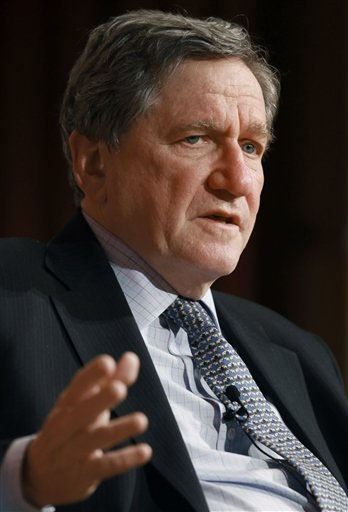
Conservative commentator David Brooks reveals his problem with Republicans

New York Times columnist David Brooks debated Republican Rep. Paul Ryan (R-Wis.) at an American Enterprise Institute forum Thursday and, amid a large degree of back-patting, the writer came to the conclusion that the GOP, in its current legislative form, is exhibiting a sort of obstinate “rigidity” that is damaging to the political process.

Here’s what Brooks had to say about the current debate over deficit control by cutting taxes and spending (transcript via ThinkProgress):

 
BROOKS: And my problem with the Republican Party right now, including Paul, is that if you offered them 80-20, they say no. If you offered them 90-10, they’d say no. If you offered them 99-1 they’d say no. And that’s because we’ve substituted governance for brokerism, for rigidity that Ronald Regan didn’t have.
And to me, this rigidity comes from this polarizing world view that they’re a bunch of socialists over there. You know, again, I’ve spent a lot of time with the president. I’ve spent a lot of time with the people around him. They’re liberals! … But they’re not idiots. And they’re not Europeans, and they don’t want to be a European welfare state. … It’s American liberalism, and it’s not inflexible. 


Brooks also explained his vision of the Democrats’ ideology.

“They have much greater faith in planning than I do, and the health care plan that came out of that, it reflected their faith in planning that bunch of smart guys sitting around in Washington can plan the health care system in this country,” Brooks said. “They want to have — if you read what they’ve written for the past 20 years — a more actively planned society which does a little more redistribution.”

David is really a moderate.  That will probably make him persona non grata at all future American Enterprise Institute forums.  That is the problem with both political parties.  Neither can handle disagreement with their primary view.