To Big To Fail

Bill Moyers Journal had two experts on the economy and the laws that regulate it on this week’s program.  Michael Perino a scholar of Law and Securities Regulation and Simon Johnson, former Chief Economist at the International Monetary Fund.


This one part of their discussion needs to be repeated here.

SIMON JOHNSON: I think the banks have control of the state, Bill. Not the state control of the bank. If the state had control of the banks, the banks wouldn’t be able to turn around and say, no on your Chrysler deal and no way on modifying the rules about mortgages and allowing bankruptcy judges to modify mortgages in bankruptcy. These are two hot issues this week. The banks are saying no to the government.

BILL MOYERS: Here are these people receiving billions of dollars in taxpayer money who are now raising fees on credit cards, who are resisting any more regulation of credit card interest rates, who are, you know, saying, “We’re going to get out of the game if you insist that we do something about executive compensation.” What is going there as you see it? Both of you.

SIMON JOHNSON: I think there’s an arrogance of power. They think they won, Bill.

BILL MOYERS: Even now–

SIMON JOHNSON: And actually they’re pretty confident they won…

BILL MOYERS: So, they’re not hearing any of this clamor? This rage? They’re not hearing this–

MICHAEL PERINO: I think they are hearing it. I don’t think it’s reached the level that it reached, anywhere the level it reached in that period that we’ve been talking about in the 1930’s. So, maybe it isn’t quite strong enough yet.


In this discussion was the talk about “to big to fail” and the attitude that the banks, investment houses, and auto manufacturers have held that belief.


Their view happens to coincide with mine.  We cannot allow companies to grow to the size that they must be protected by society. “To big to fail” is too big to exist.  

Elderly Road Trip

While on a road trip, an elderly couple stopped at a roadside restaurant for lunch. After finishing their meal, they left the restaurant, and resumed their trip. When leaving, the elderly woman unknowingly left her glasses on the table, and she didn’t miss them until they had been driving about forty minutes.  By then, to add to the aggravation, they had to travel quite a distance before they could find a place to turn around in order to return to the restaurant to retrieve the glasses.


All the way back, the elderly husband became the classic grouchy old man. He fussed and complained, and scolded his wife relentlessly during the entire return drive. The more he chided her, the more agitated he became. He just wouldn’t let up one minute. To her relief, they finally arrived at the restaurant.


As the woman got out of the car, and hurried inside to retrieve her glasses, the old geezer yelled to her, ‘While you’re in there, you might as well get my hat and the credit card!’

An End to the Drug Smugglers

Illegal drug consumption in the United States has remained consistent for many years according to government reports. Chronic users of Cocaine were over 3 million people in 1994 and had dropped to 2.7 million in 2000.  The number of occasional users had increased from 2.9 million to 3 million people in that same period.  Similarly the number of Marijuana users was 11.6 million in 1998 and had grown to 12.1 million users in 2000.


The conclusion that I make from this White House report is that we have a consistent non-growing group of Americans who are determined to keep using drugs no matter what the cost in dollars, relationships, or jail time.


The similarities to America’s fight against alcohol usage are overwhelmingly obvious.  Gangs were promoted by our banning of alcohol and today gangs are promoted by the ban of drug use.


As George Will pointed out in his February 23 Newsweek column, “Banning Sunday liquor sales pleases Baptists – and also pleases bootleggers by increasing demand for their services.”


Most of us will agree that the use of tobacco and alcohol is damaging to our lives but we do not ban either of those substances.  Instead our state and federal governments apply substantial taxes to both products but not enough to stop the revenue stream.


Many people will say we must not allow the use of Marijuana and Cocaine because it addles the brain and those effected will harm the rest of us when driving a car or operating machinery.  Those people are charged and convicted under DUI laws.  Many lives have been lost by the actions intoxicated people.   Obviously our laws have not deterred the users.


We are not solving the problem of Marijuana and Cocaine addiction.  The statistics support that fact.  We are now losing lives in the United States as the result of the drug smuggling.  Reports of slaying far from the Mexican border are becoming common place events.


The solution is simple and it will put an end to the cartels that are becoming an international problem.  We must legalize the use of all the currently illegal drugs.  Instead we should apply taxes on the sale of those currently outlawed drugs.  The benefits to this plan are obvious.  We reduce the impact of gangs in our cities, drug smugglers are put out of business,  our government has a new source of revenue,  and the killing is stopped.

T.E.A. Parties

Taxes Enough Already!!  We don’t like taxes!   Let’s do demonstrations to tell the government our views.  There is of course a few small details that the organizers of T.E.A. Parties have overlooked.  Lower taxes means we won’t have the where with all to provide all the services we want.  A few that come to mind are:

  • Money to pay for the wars in Iraq and Afghanistan
  • Money to pay for the FAA, FCC, FDA, and the many other important functions provided by the government
  • Unemployment insurance payments to all of those who have been laid off      
  • Public schools
  • Highway maintenance and construction
  • Police and fire protection


The list is too long to recite here but there is a myriad of services provided by our government.  Some are provided by local agencies and others are provided by the state or federal government.


At the beginning of April the federal government actually lowered withholding on our paychecks and lowered the actual income tax rates.


The complaint about our government ought to be about waste and inefficiency.  There are too many bureaucrats that do nothing to but add to the morass of functions that do not provide any worthwhile services.  Here in Los Angeles the city says it will have a $500million shortfall in its next fiscal year.  The solution will be in the elimination of unnecessary commissions and departments that provide very little to the welfare of most citizens.


President Obama has discussed improving the purchasing functions of the federal government.  Defense Secretary Gates has proposed eliminating unnecessary projects.  But wait, these actions will result in the loss of jobs. 


Everyone complains about the cost of government and “pork barrel” projects until the project is in their community.  Suddenly it’s not pork.  Oh yes, one other thing.  The Boston Tea Party was about taxation without representation.  If we don’t like our representatives we can vote them out office.

LEGACY

A legacy is an inheritance, a birthright, a bequest, or a heritage.  Some families have a heritage or tradition of participation in politics.  Some famous families have participated in the entertainment industry for many generations.  My family’s legacy is the belief in higher education.  Whatever the legacy, it is a word that is synonymous with something positive.  This word has become the victim of our government’s use of positive words to whitewash negative situations or laws.  “Toxic assets” are now “legacy assets.”


Doublespeak (sometimes called doubletalk) is language constructed to disguise or distort its actual meaning.  The U.S. government has become expert at covering up its actions with positive terminology.  The Patriot Act implies that it is a set of laws designed to protect patriotic Americans.  “Down sizing, right sizing and reduction in force” are corporate America’s positive spin when there are layoffs.


The term “toxic assets” was also a poor choice of words. Toxic implies those banks assets are poisonous, deadly, lethal, noxious, contaminated, or venomous.  Perhaps that may be true if applied to the banks’ balance sheets.   The truth is that those “toxic assets” do have value but the banks lent money inappropriately and now need to defend their behavior.  “Legacy assets” sounds so much better and implies they were inherited from some past evil doer.

Mis-fits Get Media Attention


The Media (Accidently?)
Missed this one!!!!


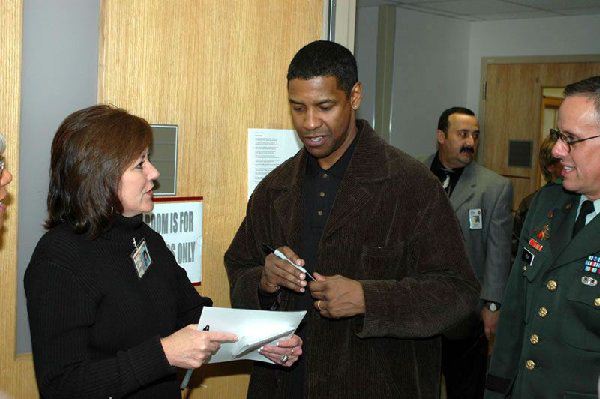
Don’t  know  whether  you  heard  about this  but  Denzel Washington  and  his family visited the  troops at   Brook   Army Medical Center ,  in  San  Antonio ,   Texas (BAMC) the other day. This is where soldiers who have been evacuated from Germany come to be hospitalized in the United States, especially burn victims.  There are some buildings there called Fisher  Houses.  The Fisher House is a Hotel where soldiers’ families can stay,   for little or no charge while their soldier is staying on base, but as you can imagine, they are almost filled most of the time.
  

While Denzel Washington was visiting BAMC, they gave him a tour of one of the Fisher Houses. He asked how much one of them would cost to build. He took his cheque book out and wrote a cheque for the full amount right there on the spot. The soldiers were amazed to hear this story and want to get the  word out to the American public, because it warmed their hearts  to hear it.  The question is – why  do mis-fits like Britney Spears, Madonna, Tom Cruise and others make front page news with their ridiculous antics and Denzel Washington’s charity  doesn’t even make page 3 in the Metro section of any newspaper except the local newspaper in  San  Antonio.

Recession Proof Jobs

According to Robert Half International these are careers that will “actually become more important to firms when the economy slows.”  Links are provided to Careerbuilder.com


1. Senior accountants
These professionals are being hired to handle projects ranging from maintaining general ledger systems to analyzing and preparing financial statements.

Career cues: Candidates for senior accountant positions should possess solid communication, technology, organizational and analytical skills. Companies hiring senior accountants generally look for a bachelor’s degree in accounting or finance as well as accreditations such as certified public account (CPA) or certified management accountant (CMA).

2. Senior auditors
Changes in legislation related to taxes, financial reporting standards, business investments, mergers and other financial events continue to fuel demand for senior auditors.

Career cues: Public accounting firms seek auditors who can manage the audit process and troubleshoot problems. Strong interpersonal, communication and project management skills also are a must for this position. Employers look for candidates who can think strategically and identify, research and resolve tax issues, as well as work with other corporate functions to implement business plans and projects.

3. Web developers
The rise of social media and the expansion of companies’ online presence, Web 2.0 initiatives and interactive Web functionality have fueled further growth in Internet technologies, creating a need for Web developers.

Career cues: Web developers should have an in-depth knowledge of Internet protocols and applications in addition to a solid understanding of business strategy. They need strong communication skills and the ability to work both individually and as part of a team. Employers typically seek individuals with a bachelor’s degree in computer science or a related field, plus at least several years of Web-related experience. Candidates should be well-versed in Web technologies and tools such as Java, XML, ASP, ColdFusion, HTML/DHTML and others.

4. Programmer analysts
IT professionals with knowledge of .
NET, SharePoint, Java or PHP are at a premium across companies in all industries, including health care, finance and manufacturing. These workers are needed to write code, test and debug software applications, and analyze business application requirements.

Career cues: Most employers look for a bachelor’s degree in computer science, information science or management information systems, in addition to relevant job experience. Programmer analysts must understand and conceptualize applications from both a technical perspective and a business point of view. They also need strong interpersonal and communication skills. Excellent programming abilities in common languages such as C++, Java and Unix are necessary for the coding aspects of the position.

5. Administrative health care positions
Even in a grim job market, the health care industry continues to grow and offer great career opportunities. Many medical facilities are seeking administrative professionals with health care experience. Positions in high demand include medical file clerks, medical secretaries, patient admissions clerks and credentialing specialists.

Career cues: Employers typically require previous office or business experience, a high school diploma or equivalent, and basic computer and general office skills. Because these positions usually require collaborating with other office staff, candidates should be cooperative and able to work as part of a team. In addition, applicants should have good communication skills and be detail-oriented and adaptable.

6. Project managers
Advertising agencies and marketing departments need project managers who can ensure that projects come in on time and within budget. Those with experience managing digital projects are especially valued.

Career cues: Because these professionals often serve as a liaison between creative staff and clients, and ensure customer satisfaction, quality control and timely delivery of final products, excellent communication and multitasking abilities are a must. Diplomacy also is helpful when assisting internal and external clients with production-related question and concerns.

We Still Need Free Trade

Today many Americans are upset with the free trade agreements that have been considered a hallmark success of most federal administrations since WWII.  The most well known of these agreements is NAFTA.  The North American Free Trade Agreement was implemented in December 1993.  I was a supporter of NAFTA because I believed it would benefit our neighbors at little cost to American workers or industry.  I must admit I was wrong.


NAFTA did not sufficiently improve opportunities for Mexican workers nor did it reduce the flow of illegal aliens into the United States.  Canada is the United States number one trading partner. Canada exported US$303.4 billion worth of merchandise to the United States in 2006, up 4.5% from 2005 and up 45% in just 4 years.  Canadian imports from the U.S. rose 8.7% to $230.3 billion in 2006, up 43.1% since 2002.  To learn more about trade  between Canada & America  go to http://internationaltrade.suite101.com/article.cfm/canadas_top_exports_imports#ixzz0C2OW5tCR.  Trade did triple in total dollars since implementation of NAFTA through 2007.  The dollar amount was approaching $1 trillion.  Outsourced Logistics reports that the recession has resulted in surface transportation trade falling by over 27% in year over year survey this past January.


The opposite of our trade relations with other countries is the Smoot-Hawley tariff laws enacted in 1930.  The U.S. Department of State explains the effects of different kinds of taxing laws.


This puts me in a difficult position.  I want to support international trade but I want a U.S. manufacturing base.  The government can develop laws that will encourage manufacturing to stay in the United States but gives free enterprise the right to manufacture their products in another country.  Unfortunately politics will play too big a part in the conclusion of this issue.

Americans Love Guns More Than Life

What’s wrong with this picture?  An outbreak of salmonella sickened 453 people, caused 5 deaths and resulted in a national uproar.   The Peanut Corporation of America was forced into bankruptcy.  Two hundred or more people are killed annually by deranged people and the reaction is a large portion of our population clinging to their weapons and restating their second amendment rights.  America has a fixation on gun ownership even if it means the loss of life.


Spring seems to be the time for killers to come out of their hives. 

– Virginia Tech –32 killed, killer committed suicide

– Binghamton, NY –13 killed, killer committed suicide

– North Carolina –at a nursing home, 6 killed, 3 wounded

– Pittsburgh PA –3 officers killed

– Oakland, Calif –4 officers killed

– Columbine, Colorado –April 20th, 1999, two boys, Eric Harris and Dylan Klebold, killed 12 students and a teacher before committing suicide


Presidential assassinations and attempted assassinations have had little impact on the public in controlling gun ownership.

Assassinations

Abraham Lincoln – Lincoln was shot in the head while watching a play on April 14, 1865. He died on April 15, 1865.

James Garfield – Charles J. Guiteau, a mentally disturbed government office seeker, shot Garfield on July 2, 1881. The president did not die until September 19th of blood poisoning.

William McKinley – McKinley was shot two times by anarchist Leon Czolgosz while the president was visiting the Pan-American Exhibit in Buffalo, New York on September 6, 1901. He died on September 14, 1901.

John F. Kennedy – On November 22, 1963, John F. Kennedy was mortally wounded while riding in a motorcade in Dallas, Texas. His apparent assassin, Lee Harvey Oswald, was killed by Jack Ruby before standing trial.     

Assassination Attempts

Andrew Jackson – On January 30, 1835, Andrew Jackson was attending a funeral for Congressman Warren Davis.

Theodore Roosevelt – An assassination attempt was actually not made on Roosevelt‘s life while he was in the office of president.

Franklin Roosevelt – After giving a speech in Miami on February 15, 1933, Giuseppe Zangara shot six shots into the crowd. None hit Roosevelt.

Harry Truman – On November 1, 1950, two Puerto Rican nationals attempted to kill President Truman to bring attention to the case for Puerto Rican independence.

Gerald Ford – Ford escaped two assassination attempts, both by women. First on September 5, 1975.  The second attempt on Ford’s life occurred on September 22, 1975.

Ronald Reagan – On March 30, 1981, Reagan was shot in the lung by John Hinckley, Jr.


Those of us who want stronger gun controls are in the minority.  I can only hope that this will change.