America is NOT in a recession. Unemployment is at a 50-year low and the Stock Market is at an all-time high!!!
History of Israel Palestinian Wars
If you believe that the latest cease fire in Gaza you need to think about the history of Israel’s fight for survival.
When the UN voted to partition the British Mandate on
November 29, 1947, Palestinian Arabs, with the help
from Arab states, launched attacks against Israel
to seize the entire Mandate. On May 14, 1948, Israel
declared independence and was immediately invaded
by the armies of five Arab nations: Egypt, Syria,
Transjordan, Lebanon, and Iraq. The newly formed
Israeli Defense Force (IDF) managed to prevail after
fifteen months of war.
THE SIX-DAY WAR (1967)
Israel was forced to defend itself when Syria, Egypt,
Jordan, and Iraq intensified their attacks and Egypt
illegally blocked Israel’s access to international waters
and expelled UN peacekeeping forces. Four Arab
countries mobilized more than 250,000 troops in
preparation for a full-scale invasion. Israel preempted
the invasion in a defensive war and managed to
capture the West Bank from Jordan; Gaza and
the Sinai Peninsula from Egypt; and the Golan
Heights from Syria

The focus of the RAND study was on the five-year period between the end of Operation Cast Lead in 2009 and the end of Operation Protective Edge in August 2014.
Dec. 27, 2008 – Israel launches a 22-day military offensive in Gaza after Palestinians fire rockets at the southern Israeli town of Sderot. About 1,400 Palestinians and 13 Israelis are reported killed before a ceasefire is agreed.
The Israel Defense Forces, or IDF, launched a ground invasion of the Gaza strip on Aug. 7, 2014, with the goal of destroying Hamas’ widespread network of underground tunnels that were being used to stow rockets.
In 2018 on May 29, Gaza’s Hamas rulers said they had agreed to a cease-fire with Israel to end the largest flare-up of violence between the two sides since a 2014 war.
Egypt mediated a ceasefire between Israel and Hamas, which came into effect on 21 May 2021, ending 11 days of fighting in which both sides claimed victory.
October 7, 2023 Hamas attacks Israel and Israel is at war with Hamas again.
When will this end?
My guess is NEVER!
Memorial Day
This Memorial Day, we honor and remember the service and sacrifice of those who bravely served and gave the last full measure of devotion to our nation. Thank you for protecting American freedom.

If He Wins
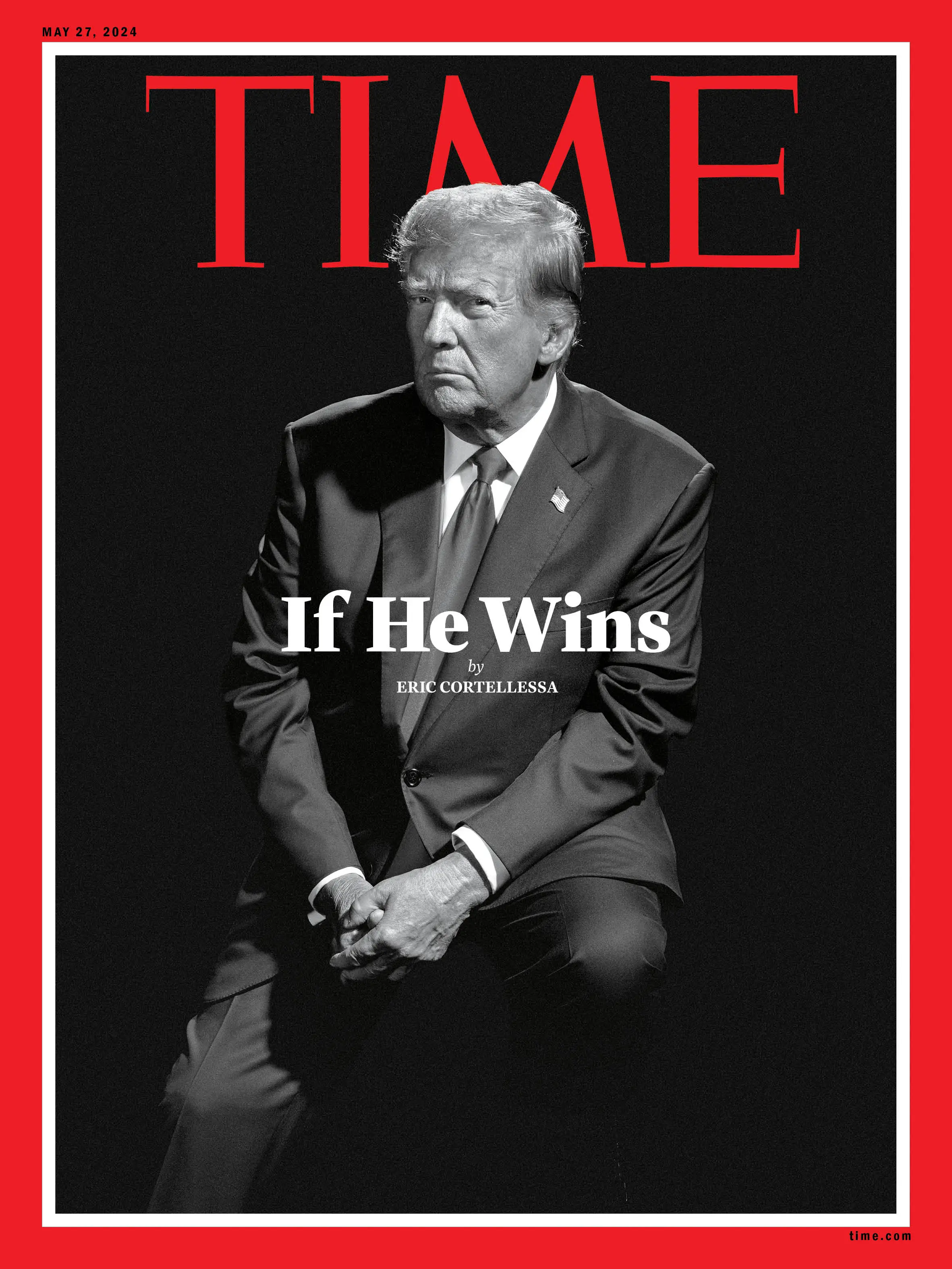
This article appears in the May 27, 2024 Time magazine
In exclusive interviews, the former President lays out a second-term agenda that would reshape America and its role in the world.
Donald Trump thinks he’s identified a crucial mistake of his first term: He was too nice.
We’ve been talking for more than an hour on April 12 at his fever-dream palace in Palm Beach. Aides lurk around the perimeter of a gilded dining room overlooking the manicured lawn. When one nudges me to wrap up the interview, I bring up the many former Cabinet officials who refuse to endorse Trump this time. Some have publicly warned that he poses a danger to the Republic. Why should voters trust you, I ask, when some of the people who observed you most closely do not?
As always, Trump punches back, denigrating his former top advisers. But beneath the typical torrent of invective, there is a larger lesson he has taken away. “I let them quit because I have a heart. I don’t want to embarrass anybody,” Trump says. “I don’t think I’ll do that again. From now on, I’ll fire.”
Six months from the 2024 presidential election, Trump is better positioned to win the White House than at any point in either of his previous campaigns. He leads Joe Biden by slim margins in most polls, including in several of the seven swing states likely to determine the outcome. But I had not come to ask about the election, the disgrace that followed the last one, or how he has become the first former—and perhaps future—American President to face a criminal trial. I wanted to know what Trump would do if he wins a second term, to hear his vision for the nation, in his own words.
What emerged in two interviews with Trump, and conversations with more than a dozen of his closest advisers and confidants, were the outlines of an imperial presidency that would reshape America and its role in the world. To carry out a deportation operation designed to remove more than 11 million people from the country, Trump told me, he would be willing to build migrant detention camps and deploy the U.S. military, both at the border and inland. He would let red states monitor women’s pregnancies and prosecute those who violate abortion bans. He would, at his personal discretion, withhold funds appropriated by Congress, according to top advisers. He would be willing to fire a U.S. Attorney who doesn’t carry out his order to prosecute someone, breaking with a tradition of independent law enforcement that dates from America’s founding. He is weighing pardons for every one of his supporters accused of attacking the U.S. Capitol on Jan. 6, 2021, more than 800 of whom have pleaded guilty or been convicted by a jury. He might not come to the aid of an attacked ally in Europe or Asia if he felt that country wasn’t paying enough for its own defense. He would gut the U.S. civil service, deploy the National Guard to American cities as he sees fit, close the White House pandemic-preparedness office, and staff his Administration with acolytes who back his false assertion that the 2020 election was stolen.
Trump remains the same guy, with the same goals and grievances. But in person, if anything, he appears more assertive and confident. “When I first got to Washington, I knew very few people,” he says. “I had to rely on people.” Now he is in charge. The arranged marriage with the timorous Republican Party stalwarts is over; the old guard is vanquished, and the people who remain are his people. Trump would enter a second term backed by a slew of policy shops staffed by loyalists who have drawn up detailed plans in service of his agenda, which would concentrate the powers of the state in the hands of a man whose appetite for power appears all but insatiable. “I don’t think it’s a big mystery what his agenda would be,” says his close adviser Kellyanne Conway. “But I think people will be surprised at the alacrity with which he will take action.”
The courts, the Constitution, and a Congress of unknown composition would all have a say in whether Trump’s objectives come to pass. The machinery of Washington has a range of defenses: leaks to a free press, whistle-blower protections, the oversight of inspectors general. The same deficiencies of temperament and judgment that hindered him in the past remain present. If he wins, Trump would be a lame duck—contrary to the suggestions of some supporters, he tells TIME he would not seek to overturn or ignore the Constitution’s prohibition on a third term. Public opinion would also be a powerful check. Amid a popular outcry, Trump was forced to scale back some of his most draconian first-term initiatives, including the policy of separating migrant families. As George Orwell wrote in 1945, the ability of governments to carry out their designs “depends on the general temper in the country.”
Every election is billed as a national turning point. This time that rings true. To supporters, the prospect of Trump 2.0, unconstrained and backed by a disciplined movement of true believers, offers revolutionary promise. To much of the rest of the nation and the world, it represents an alarming risk. A second Trump term could bring “the end of our democracy,” says presidential historian Douglas Brinkley, “and the birth of a new kind of authoritarian presidential order.”
Trump steps onto the patio at Mar-a-Lago near dusk. The well-heeled crowd eating Wagyu steaks and grilled branzino pauses to applaud as he takes his seat. On this gorgeous evening, the club is a MAGA mecca. Billionaire donor Steve Wynn is here. So is Speaker of the House Mike Johnson, who is dining with the former President after a joint press conference proposing legislation to prevent noncitizens from voting. Their voting in federal elections is already illegal, and extremely rare, but remains a Trumpian fixation that the embattled Speaker appeared happy to co-sign in exchange for the political cover that standing with Trump provides.
At the moment, though, Trump’s attention is elsewhere. With an index finger, he swipes through an iPad on the table to curate the restaurant’s soundtrack. The playlist veers from Sinead O’Connor to James Brown to The Phantom of the Opera. And there’s a uniquely Trump choice: a rendition of “The Star-Spangled Banner” sung by a choir of defendants imprisoned for attacking the U.S. Capitol on Jan. 6, interspersed with a recording of Trump reciting the Pledge of Allegiance. This has become a staple of his rallies, converting the ultimate symbol of national unity into a weapon of factional devotion.
The spectacle picks up where his first term left off. The events of Jan. 6, during which a pro-Trump mob attacked the center of American democracy in an effort to subvert the peaceful transfer of power, was a profound stain on his legacy. Trump has sought to recast an insurrectionist riot as an act of patriotism. “I call them the J-6 patriots,” he says. When I ask whether he would consider pardoning every one of them, he says, “Yes, absolutely.” As Trump faces dozens of felony charges, including for election interference, conspiracy to defraud the United States, willful retention of national-security secrets, and falsifying business records to conceal hush-money payments, he has tried to turn legal peril into a badge of honor.
In a second term, Trump’s influence on American democracy would extend far beyond pardoning powers. Allies are laying the groundwork to restructure the presidency in line with a doctrine called the unitary executive theory, which holds that many of the constraints imposed on the White House by legislators and the courts should be swept away in favor of a more powerful Commander in Chief.
Nowhere would that power be more momentous than at the Department of Justice. Since the nation’s earliest days, Presidents have generally kept a respectful distance from Senate-confirmed law-enforcement officials to avoid exploiting for personal ends their enormous ability to curtail Americans’ freedoms. But Trump, burned in his first term by multiple investigations directed by his own appointees, is ever more vocal about imposing his will directly on the department and its far-flung investigators and prosecutors.
Nowhere would that power be more momentous than at the Department of Justice. Since the nation’s earliest days, Presidents have generally kept a respectful distance from Senate-confirmed law-enforcement officials to avoid exploiting for personal ends their enormous ability to curtail Americans’ freedoms. But Trump, burned in his first term by multiple investigations directed by his own appointees, is ever more vocal about imposing his will directly on the department and its far-flung investigators and prosecutors.
Such moves would be potentially catastrophic for the credibility of American law enforcement, scholars and former Justice Department leaders from both parties say. “If he ordered an improper prosecution, I would expect any respectable U.S. Attorney to say no,” says Michael McConnell, a former U.S. appellate judge appointed by President George W. Bush. “If the President fired the U.S. Attorney, it would be an enormous firestorm.” McConnell, now a Stanford law professor, says the dismissal could have a cascading effect similar to the Saturday Night Massacre, when President Richard Nixon ordered top DOJ officials to remove the special counsel investigating Watergate. Presidents have the constitutional right to fire U.S. Attorneys, and typically replace their predecessors’ appointees upon taking office. But discharging one specifically for refusing a President’s order would be all but unprecedented.
Trump’s radical designs for presidential power would be felt throughout the country. A main focus is the southern border. Trump says he plans to sign orders to reinstall many of the same policies from his first term, such as the Remain in Mexico program, which requires that non-Mexican asylum seekers be sent south of the border until their court dates, and Title 42, which allows border officials to expel migrants without letting them apply for asylum. Advisers say he plans to cite record border crossings and fentanyl- and child-trafficking as justification for reimposing the emergency measures. He would direct federal funding to resume construction of the border wall, likely by allocating money from the military budget without congressional approval. The capstone of this program, advisers say, would be a massive deportation operation that would target millions of people. Trump made similar pledges in his first term, but says he plans to be more aggressive in a second. “People need to be deported,” says Tom Homan, a top Trump adviser and former acting head of Immigration and Customs Enforcement. “No one should be off the table.”
For an operation of that scale, Trump says he would rely mostly on the National Guard to round up and remove undocumented migrants throughout the country. “If they weren’t able to, then I’d use [other parts of] the military,” he says. When I ask if that means he would override the Posse Comitatus Act—an 1878 law that prohibits the use of military force on civilians—Trump seems unmoved by the weight of the statute. “Well, these aren’t civilians,” he says. “These are people that aren’t legally in our country.” He would also seek help from local police and says he would deny funding for jurisdictions that decline to adopt his policies. “There’s a possibility that some won’t want to participate,” Trump says, “and they won’t partake in the riches.”
As President, Trump nominated three Supreme Court Justices who voted to overturn Roe v. Wade, and he claims credit for his role in ending a constitutional right to an abortion. At the same time, he has sought to defuse a potent campaign issue for the Democrats by saying he wouldn’t sign a federal ban. In our interview at Mar-a-Lago, he declines to commit to vetoing any additional federal restrictions if they came to his desk. More than 20 states now have full or partial abortion bans, and Trump says those policies should be left to the states to do what they want, including monitoring women’s pregnancies. “I think they might do that,” he says. When I ask whether he would be comfortable with states prosecuting women for having abortions beyond the point the laws permit, he says, “It’s irrelevant whether I’m comfortable or not. It’s totally irrelevant, because the states are going to make those decisions.” President Biden has said he would fight state anti-abortion measures in court and with regulation.
Trump’s allies don’t plan to be passive on abortion if he returns to power. The Heritage Foundation has called for enforcement of a 19th century statute that would outlaw the mailing of abortion pills. The Republican Study Committee (RSC), which includes more than 80% of the House GOP conference, included in its 2025 budget proposal the Life at Conception Act, which says the right to life extends to “the moment of fertilization.” I ask Trump if he would veto that bill if it came to his desk. “I don’t have to do anything about vetoes,” Trump says, “because we now have it back in the states.”
Presidents typically have a narrow window to pass major legislation. Trump’s team is eyeing two bills to kick off a second term: a border-security and immigration package, and an extension of his 2017 tax cuts. Many of the latter’s provisions expire early in 2025: the tax cuts on individual income brackets, 100% business expensing, the doubling of the estate-tax deduction. Trump is planning to intensify his protectionist agenda, telling me he’s considering a tariff of more than 10% on all imports, and perhaps even a 100% tariff on some Chinese goods. Trump says the tariffs will liberate the U.S. economy from being at the mercy of foreign manufacturing and spur an industrial renaissance in the U.S. When I point out that independent analysts estimate Trump’s first term tariffs on thousands of products, including steel and aluminum, solar panels, and washing machines, may have cost the U.S. $316 billion and more than 300,000 jobs, by one account, he dismisses these experts out of hand. His advisers argue that the average yearly inflation rate in his first term—under 2%—is evidence that his tariffs won’t raise prices.
Since leaving office, Trump has tried to engineer a caucus of the compliant, clearing primary fields in Senate and House races. His hope is that GOP majorities replete with MAGA diehards could rubber-stamp his legislative agenda and nominees. Representative Jim Banks of Indiana, a former RSC chairman and the GOP nominee for the state’s open Senate seat, recalls an August 2022 RSC planning meeting with Trump at his residence in Bedminster, N.J. As the group arrived, Banks recalls, news broke that Mar-a-Lago had been raided by the FBI. Banks was sure the meeting would be canceled. Moments later, Trump walked through the doors, defiant and pledging to run again. “I need allies there when I’m elected,” Banks recalls Trump saying. The difference in a second Trump term, Banks says now, “is he’s going to have the backup in Congress that he didn’t have before.”
The War in Gaza
On the nights of March 9–10 1945 16 square miles of central Tokyo was destroyed by U.S. bombing during WWII, leaving an estimated 100,000 civilians dead and over one million homeless. Japan did not surrender so the U.S. dropped atomic bombs and an estimated 140,000 people in Hiroshima, and a further 74,000 in Nagasaki were killed. From 1965 to 1968. 214 tons of bombs were dropped by the U.S. over Cambodia killing an estimated 50,000 people or more during the Vietnam War.
Hypocrisy could not be more obvious. If the United States is killing innocent civilians that is OK. If others do it that is a war crime. War is brutal. Israel is fighting for its survival. “From the River to the Sea” is a Palestinian slogan declaring their intention to destroy Israel and drive every Jew from that land. Israel’s goal to destroy Hamas is a worthy goal and must be accomplished to protect the State of Israel.
President Joe Biden’s call for a cease fire means a win for Hamas. Biden has lost my vote.
Which cities have the fastest-growing millionaire populations?
Who cares? Just info of millionaires and billionaires. This was posted by Henley & Partners an investment advising company.
| City/Area | Country | HNWI growth % (2012 to 2022) | HNWIs (USD 1m+) | Centi-millionaires (USD 100m+) | Billionaires (USD 1bn+) | Residence by investment options | |
|---|---|---|---|---|---|---|---|
| New York City |  USA USA | 40% | 340,000 | 724 | 58 | Find out more | |
| Tokyo |  Japan Japan | -5% | 290,300 | 250 | 14 | ||
| The Bay Area | USA | 68% | 285,000 | 629 | 63 | Find out more | |
| London |  UK UK | -15% | 258,000 | 384 | 36 | Find out more | |
| Singapore |  Singapore Singapore | 40% | 240,100 | 329 | 27 | Find out more | |
| Los Angeles | USA | 35% | 205,400 | 480 | 42 | Find out more | |
| Hong Kong |  Hong Kong (SAR China) Hong Kong (SAR China) | -27% | 129,500 | 290 | 32 | Find out more | |
| Beijing |  China China | 70% | 128,200 | 354 | 43 | ||
| Shanghai | China | 72% | 127,200 | 332 | 40 | ||
| Sydney |  Australia Australia | 35% | 126,900 | 184 | 15 | Find out more | |
| Chicago | USA | 24% | 124,000 | 295 | 24 | Find out more | |
| Toronto |  Canada Canada | 29% | 105,200 | 193 | 18 | Find out more | |
| Frankfurt |  Germany Germany | 20% | 102,200 | 170 | 16 | ||
| Zurich |  Switzerland Switzerland | 35% | 99,300 | 250 | 12 | Find out more | |
| Houston | USA | 65% | 98,500 | 280 | 20 | Find out more | |
| Seoul |  South Korea South Korea | 30% | 97,000 | 229 | 24 | ||
| Melbourne | Australia | 42% | 96,000 | 123 | 10 | Find out more | |
| Paris |  France France | -3% | 93,000 | 126 | 16 | ||
President Joe Biden has a Problem
I previously predicted that Joe Biden will not run for re-election. My reasons revolved around the economy. Today young people are opposed to America’s support of Israel.
The turmoil we’re seeing on campuses today brings back memories of the widespread student protests of 1968 — a comparison that won’t be lost given that the Democratic National Convention this year will take place in Chicago. The 1968 Democratic Party convention was also held in Chicago.
On March 31, 1968, following the New Hampshire primary and Robert Kennedy’s entry into the election, the president made a televised speech to the nation and said that he was suspending all bombing of North Vietnam in favor of peace talks.
After concluding his speech, Johnson announced,
“With America’s sons in the fields far away, with America’s future under challenge right here at home, with our hopes and the world’s hopes for peace in the balance every day, I do not believe that I should devote an hour or a day of my time to any personal partisan causes or to any duties, other than the awesome duties of this office — the presidency of your country. Accordingly, I shall not seek, and I will not accept, the nomination of my party for another term as your President.”
After President Lyndon Johnson announced that he would not run for reelection, the party nominated his vice president, Hubert Humphrey. But Humphrey’s moment of coronation quickly turned into a moment of chaos. As Chicago police, unleashed by Mayor Richard Daley, confronted anti-Vietnam War protesters with tear gas and batons on the streets outside the convention, the televised images of violence greatly harmed Humphrey’s prospects in November.
President Joe Biden knows this history. The anti-war protests in the 1960s went on for years. Now, it remains unclear whether the protests — which are not yet nearly as large in scale or scope as were the anti-Vietnam protests — will continue to intensify or start to dissipate, especially as school lets out for the summer months. And in one recent Harvard Kennedy poll surveying young people between the ages of 18 and 29 in March, the findings showed the Israel/Palestine conflict ranked second-lowest in importance, coming in below gun violence as well as bread-and-butter issues such as inflation, health care and housing.
Will Biden’s belief that a Trump victory mean the end of the American democracy continue his run for re-election? I hope so when Trump says he will be a dictator on day one.
Why is Steve Garvey running for Senate?’
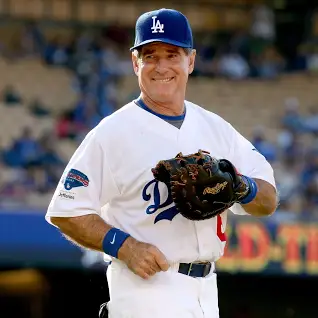
McClatchy News Service is asking the question. The answer is he needs a job. He has name recognition and baseball fans love their favorite players even if they have been long gone from the sport.
Garvey played four seasons for the Dodgers and one more with the San Diego Padres. All that ended in 1987.
What has he done since then? It appears the answer is nothing.
Garvey has made a living as a motivational speaker, local radio show host, celebrity endorser, sports commentator and founder of a marketing firm. At one point, his speaking fee was listed as $25,000.
His February 2024 federal disclosure form, required of all Senate candidates, shows he has income from four sources.
They include GEP Talent of Burbank, Fox News, the Topps Company and IPG DXTRA of Omaha. He lists Topps and IPG DXTRA as paying him for memorabilia signings and “corporate entertainment.”
To political strategists, Garvey had potential as the latest in a line of California celebrities with no need to explain who they were to a constituency smitten with fond memories of their triumphs.
Garvey, the thinking went, could be another George Murphy, the song-and-dance man who won a Senate seat in 1964, or Ronald Reagan, the TV and movie star first elected governor in 1966 and president in 1980. Or more recently, Arnold Schwarzenegger, the Terminator turned governor, the last Republican to win statewide in California.
Recently, Garvey has been actively tweeting, though he offers few concrete solutions to issues he raises.
“Unaffordable gas prices are hurting Californians’ quality of life every day. I see people putting $10 in at the pump instead of 10 gallons. Join my campaign if you believe California deserves better,” he said in a post on X April 5.
“I am driven by a commitment to every Californian’s dream for a better tomorrow. Let’s move onward together,” he said in another X post.
His speeches are filled with baseball references, stretched to show that he’s not tied to ideology. Just the nice guy who Californians cheered and celebrated on the ballfield.
“In a federal position like U.S. Senate you can get those answers. On that stage, on that platform, I’ll get answers,” Garvey said.
He had nothing specific.
The Homeless in California
California has failed to adequately monitor the outcomes of its vast spending on homelessness programs, according to a state audit released earlier this month. It was reported that $20 Billion in the past five years have been spent on the homeless. Much of that money was spent on shelters and subsidizing rent. Still, homelessness grew 6% in 2023 from the year prior, to more than 180,000 people. This was reported in the Los Angeles Times on April 9, 2024.
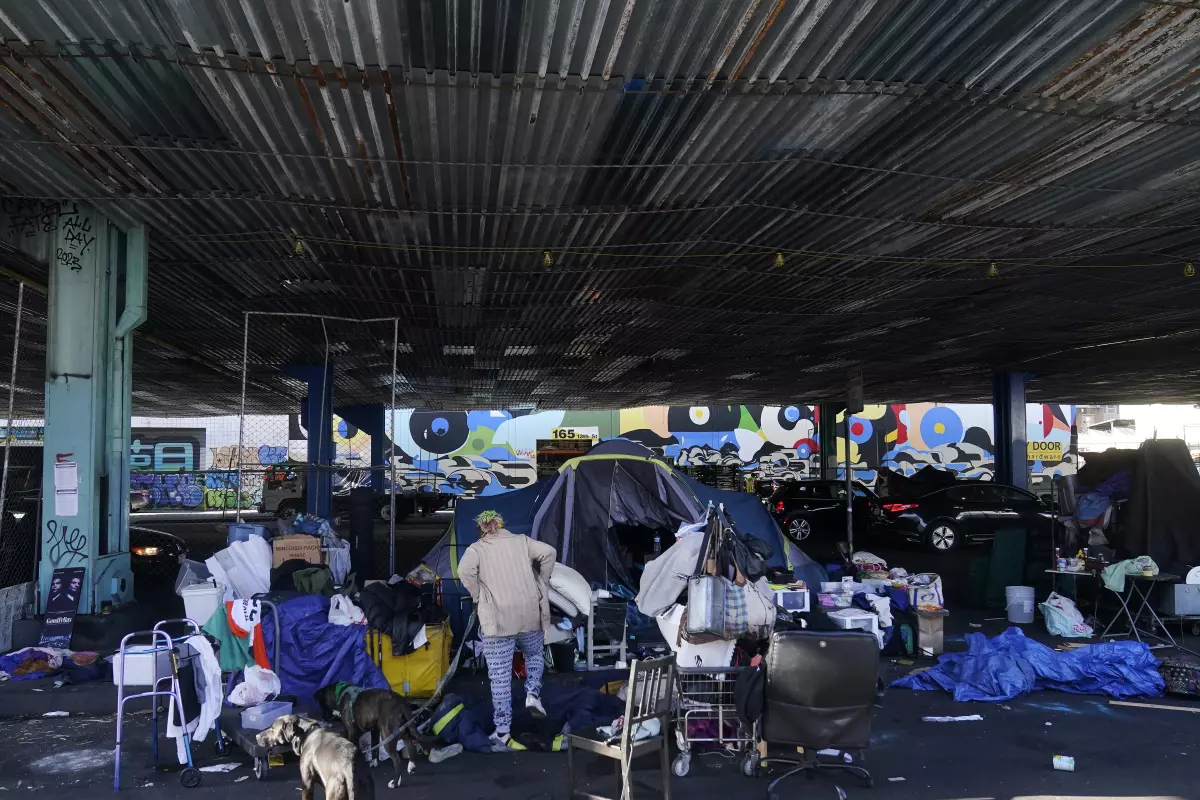
A homeless encampment in San Francisco in 2023. (Jeff Chiu / Associated Press)
Now, Los Angeles Mayor Karen Bass is asking L.A.’s wealthiest Angelenos for help. On Monday in her State of the City address, she unveiled a new campaign that asks business leaders, philanthropic organizations and others to donate millions of dollars to an effort to acquire buildings so they can be used as apartments for the city’s homeless population.
Clearly the programs to help the homeless have failed. More money for programs that have not worked is a waste of money. Who is asking what are the causes of homelessness? Publicly no one. Simply throwing more money at the problem in the same fruitless way will not stop this growing problem.
I do not know the answer. We do not need politicians taxing us for programs that do not work.
She didn’t look ‘pretty enough.’
Even in the year 2024 the author of this article says it all. Appearance makes all the difference for women of every age. Even plain doesn’t work! Beauty contests will never end. A little plastic surgery for women can make all the difference.
I’d never heard of the term #prettyprivilege until this week – apparently the hashtag has over 250 million views on Tik Tok, and it’s a phrase coined by the internet to describe the benefits of being the kind of ‘pretty’ that conforms to society’s so-called beauty ideals.
I first came across it after reading comments about a viral Tik Tok loaded by 30 year old New Yorker, Melissa Weaver. Melissa had gone for an interview for the job of her dreams. One that she knew she was qualified for, and one that she was told by the recruiter, fitted her skillset perfectly.
However, Melissa was rejected for the vice presidency role because she didn’t look ‘pretty enough.’
In the video, Melissa explains that after thinking that the interview was a huge success, she was told that she didn’t get the job because she hadn’t put enough effort into her appearance.
“I did a blowout for my hair. I had on a nice top, a blazer and some earrings, but I only had on Chapstick,” Melissa explains in the video. “I didn’t have any makeup on because I don’t really wear a lot of makeup – not to be quirky, I just don’t”.
Which begs the question as she asked her followers, does not wearing makeup really make it seem like women aren’t putting as much effort or care into their job?
I was astonished that as a society we are still conditioned to believe that we have to conform to a set of out of date beauty ideals that require us to look a certain way in a job interview. Yes, as a matter of respect – to ourselves as well as our colleagues – we should look presentable and of course be clean. But is a lack of lipstick really reason enough not to hire someone? Is corporate America still that behind?
This appearance-fixed society, makes me, yes even me, the de facto Beauty Editor, take a deep breath of dismay. And now add the barrage of overly perfect filters on Tik Tok and Instagram, I fear that the pressures of looking a certain way will just get worse.

In this so-called age of inclusivity and diversity, we should be putting those archaic societal beauty standards to bed. Do men get turned down for a job if they don’t use concealer to cover up their dark circles? Pah! Of course not!
Yes, wearing lipstick can make a lot of us feel better. Makeup often gives us a coat of armour. A spring in our step. An extra jolt of confidence. And of course, for that reason, wear it! But it should be about choice.
You might say that this opinion is a bit rich coming from a Beauty Editor, working in an industry that relies on lipstick sales. However, during my career, I have always worked hard to encourage women to celebrate what makes them unique and if that’s going makeup free, then so be it.
Lipstick or no lipstick, we should be looking at the traits that make us clever, caring, honest, brave…Not whether we look like a sexy, polished and glossy character from Suits.
It’s up to society to challenge these internalised biases. We must all be on a level playing field. Whatever we look like.
Pretty privilege? It’s time we made it stop!
Story by Donna Francis
 Coast Contact