The Jew Who Wrote America’s Most Beloved Holiday Songs

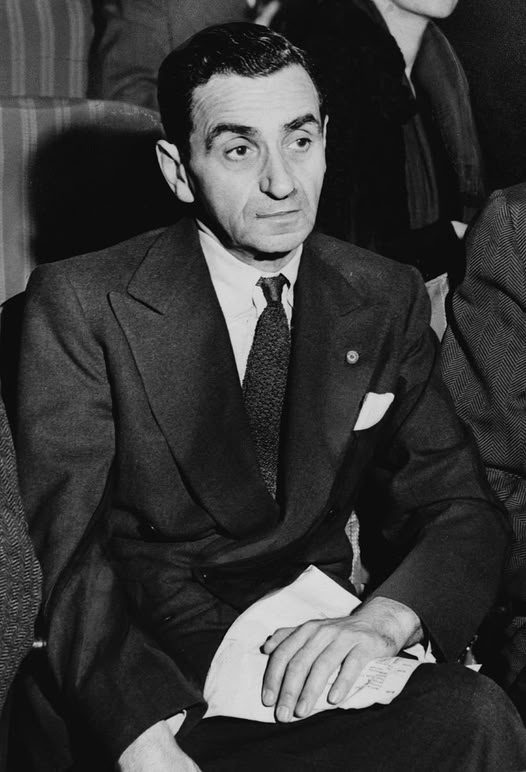
On this day in 1989, September 22, the world bid farewell to Irving Berlin, the self-taught musical titan born Israel Isidore Baline on May 11, 1888, in the Siberian town of Tyumen, Russia. As the youngest of eight children in a poor Jewish family, Berlin’s early life was upended by pogroms. At age 4, his family fled to New York City in 1893, seeking refuge in the tenements of the Lower East Side. Tragedy struck young. His mother died soon after arrival, and by 13, after his father, a cantor, passed away, Berlin dropped out of school to sing on street corners and hustle as a singing waiter in Chinatown dives. He never learned to read or write music, composing instead on a custom piano that transposed keys to fit his ear, but that didn’t stop him from penning over 1,500 songs, revolutionizing American popular music for more than seven decades.

Berlin’s genius lay in his uncanny ability to capture the American spirit: the grit of ragtime in “Alexander’s Ragtime Band” (1911), the romance of the Jazz Age in “Blue Skies” (1926), the showbiz dazzle of “There’s No Business Like Show Business” (1946 from Annie Get Your Gun), and the unyielding patriotism that defined his era. During World War I, he served in the Army and wrote the cheeky hit “Oh! How I Hate to Get Up in the Morning.” In the lead-up to World War II, he crafted “God Bless America” (1938) as a peace prayer, donating all royalties forever to the Boy and Girl Scouts, a gesture that continues to pour millions into youth programs today. His Broadway triumphs included Top Hat (1935 with Fred Astaire’s “Cheek to Cheek”), Call Me Madam (1950), and the Easter Parade film score. By his death at 101 in his Manhattan townhouse, Berlin had earned four Oscars, a Grammy Lifetime Achievement Award, and the Congressional Gold Medal, yet he remained humble, once quipping, “I’m a simple man. The only thing I know how to do is write songs.”

Perhaps Berlin’s most enduring gift is “White Christmas,” the wistful 1942 ballad from the film Holiday Inn that Bing Crosby made the best-selling single of all time, over 50 million copies. Inspired by his homesick troops during a 1942 USO tour and his own longing for the snowy holidays of his adopted home, Berlin stipulated it couldn’t be performed in color films to preserve its black-and-white nostalgia. It’s a song that tugs at the heartstrings of longing amid joy, profoundly American and profoundly ironic given its creator’s Jewish roots and aversion to schmaltz.

In a delicious twist of cultural assimilation, Jewish songwriters like Berlin dominated Tin Pan Alley’s holiday output, crafting the soundtrack to a Christian celebration they observed from afar. Of the top 25 most-performed Christmas songs tracked by ASCAP, at least 18 were penned by Jews, a testament to their outsized role in shaping American pop during the mid-20th century’s “Great American Songbook” era. Berlin kicked it off with “White Christmas,” but join him on the list: Johnny Marks gave us “Rudolph the Red-Nosed Reindeer” (1949) and “Rockin’ Around the Christmas Tree” (1958); Mel Tormé and Robert Wells dreamed up “The Christmas Song (Chestnuts Roasting on an Open Fire)” (1945); Sammy Cahn and Jule Styne delivered “Let It Snow! Let It Snow! Let It Snow!” (1945) and “The Christmas Waltz” (1954); Jay Livingston and Ray Evans teamed for “Silver Bells” (1951); and don’t forget “Santa Baby” (1953) by Joan Javits and Philip Springer or Felix Bernard’s music for “Winter Wonderland” (1934). These weren’t just tunes, they were bridges, born from immigrants’ ingenuity, turning December’s chill into evergreen warmth for everyone.

Berlin lived to 101, outlasting two world wars, the Depression, and his own hits. As he once said, “The song is ended, but the melody lingers on.” What’s your favorite Irving Berlin gem or Jewish-penned holiday banger that sneaks onto your playlist? Drop it below.

#IrvingBerlin#JewishSongwriters#WhiteChristmas#AmericanSongbook#OnThisDay#HolidayMusic#MusicHistory#TinPanAlley
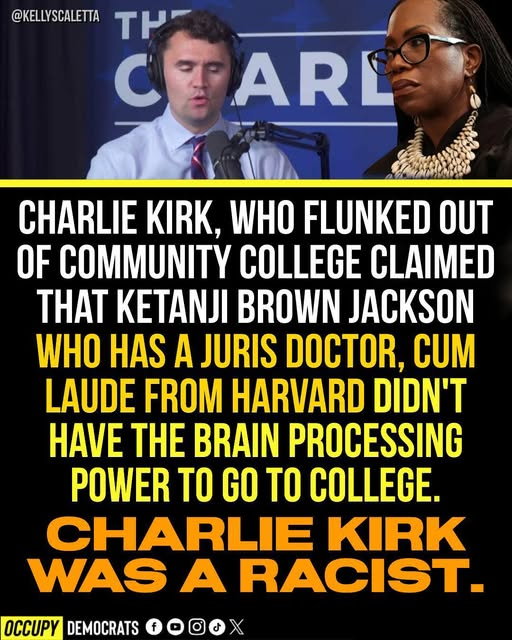
Charlie Kirk said Young Women Going to college should be there only for their “MRS”

What happened to Charlie Kirk was just awful but to treat the man like he was a saint is delusional lunacy.

Caitlin Berray shares her experience going undercover at Turning Point USA’s 10th annual “Young Women’s Leadership Summit,” a three-day event in which ultra-conservative speakers groom young women to vilify feminism and serve a Christian nationalist agenda. Should women “submit to a Godly man” and spend every waking moment looking for a husband? TP USA’s Charlie Kirk says yes!

I attended Turning Point USA’s Young Women’s Leadership Summit in Grapevine, Texas, a suburb of Dallas, on June 13–15,

Kirk’s messaging went well beyond glorifying marriage and motherhood — it resoundingly discouraged women from entering the workforce or pursuing education. At one point, Kirk professed that, “Husbands should do everything he can to not force his wife into the workforce.” But when he received an earnest question from a woman asking what federal policies he would back to make it possible for single-income households to survive financially, Kirk, predictably, did not have an answer. His solutions are not policy-based, but are instead rooted in indoctrination and unwavering obedience. In one of the two Q&A sessions Kirk led, as teenage girls lined up to ask for his wisdom on navigating school or balancing a career life with motherhood, Kirk stressed that women should not attend college and that high-school girls should prioritize marriage and children above all else. Kirk trumpeted that grades do not matter and that a true patriot should not care about them, suggesting that Christians get bad grades because they do not succumb to the “woke” teachings of the U.S. education system and the Left.

If girls do want to attend college, their end goal should not be a degree, but rather a husband, Kirk clarified. At one point, Kirk touted the idea that American society should “bring back” the “Mrs. Degree,” a concept dating back to the mid-19th century, in which women attended college with the intention of finding a husband. Kirk wants the reality for American women to be modeled after the 1950s — and a congregation of over 3,000 women and girls appeared to agree with him.

Lessons from Hitler

Ganja Granny sez How did the Nazis use censorship?

When the Nazis came to power in 1933, the German constitution guaranteed freedom of speech and freedom of the press. Through decrees and laws, the Nazis abolished these civil rights and destroyed German democracy. Starting in 1934, it was illegal to criticize the Nazi government. Even telling a joke about Hitler was considered treachery. People in Nazi Germany could not say or write whatever they wanted.

Examples of censorship under the Nazis included:

Closing down or taking over anti-Nazi newspapers;

Controlling what news appeared in newspapers, on the radio, and in newsreels;

Banning and burning books that the Nazis categorized as un-German;

Controlling what soldiers wrote home during World War II.

How did the Nazis use propaganda?

The Nazis used propaganda to promote their ideas and beliefs. Beginning in March 1933, the regime tried to centralize its propaganda efforts in a new ministry led by Joseph Goebbels. This ministry was called the Reich Ministry of Enlightenment and Propaganda.

The Nazis used a variety of propaganda tools to spread Nazi ideas. Examples of propaganda under the Nazis included:

Glorifying Adolf Hitler by using his image on postcards, posters, and in the press;

Spreading negative images and ideas about Jews in magazines, films, cartoons, and other media;

Making radios more affordable so that more Germans could listen to Nazi ideas and news;

Broadcasting Nazi speeches on the radio and public loudspeakers;

Organizing large and celebratory Nazi Party rallies;

Creating groups, like the Hitler Youth and League of German Girls, that fostered Nazi ideals….

Photo of Joseph Goebbels speaking at a Book Burning….

End of the United States Constitution

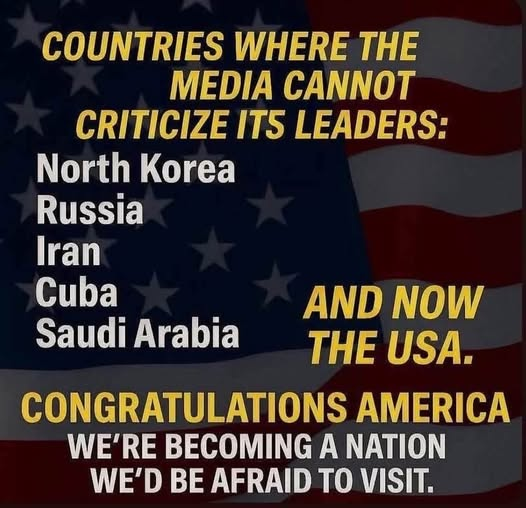
The war on the United States Constitution is now on full display. President Donald Trump is the leader of the war. Being no fool, Trump is chipping away rather than a full declaration that the Constitution is obsolete.  Why doing his plan this way he appears to believe he can accomplish his goal without an uprising of most people.  He is succeeding!

Trump’s attack on the free press began as he was running for his second term. The Washington Post and Los Angeles Times owners nixed their editorial boards endorsements of Kamala Harris. The Times went even further than the Post when it canceled its editorial board. Why did they block the endorsements? They feared the attacks that Trump would bring to their businesses if he was elected that they were anticipating.

Now that Trump has been elected that same fear is being felt among the communication corporations.  ABC, NBC, CBS are Trump’s targets and they too have decided that it is better to accede to Trump’s demands.

From todays news:

  • President Donald Trump suggested that the federal government might revoke the licenses of broadcast television networks that are “against” him.
  • Trump’s comment came a day after ABC suspended airing the “Jimmy Kimmel Live!” show because of comments its host made linking the alleged killer of Charlie Kirk to Trump’s MAGA movement.
  • Trump said it would be up to FCC Chairman Brendan Carr to decide whether to cancel networks’ licenses.

First Amendment

Congress shall make no law respecting an establishment of religion, or prohibiting the free exercise thereof; or abridging the freedom of speech, or of the press; or the right of the people peaceably to assemble, and to petition the Government for a redress of grievances.

So what is next? Laws about religion?

Trump is succeeding.

Today in History: September 17, U.S. Constitution signed

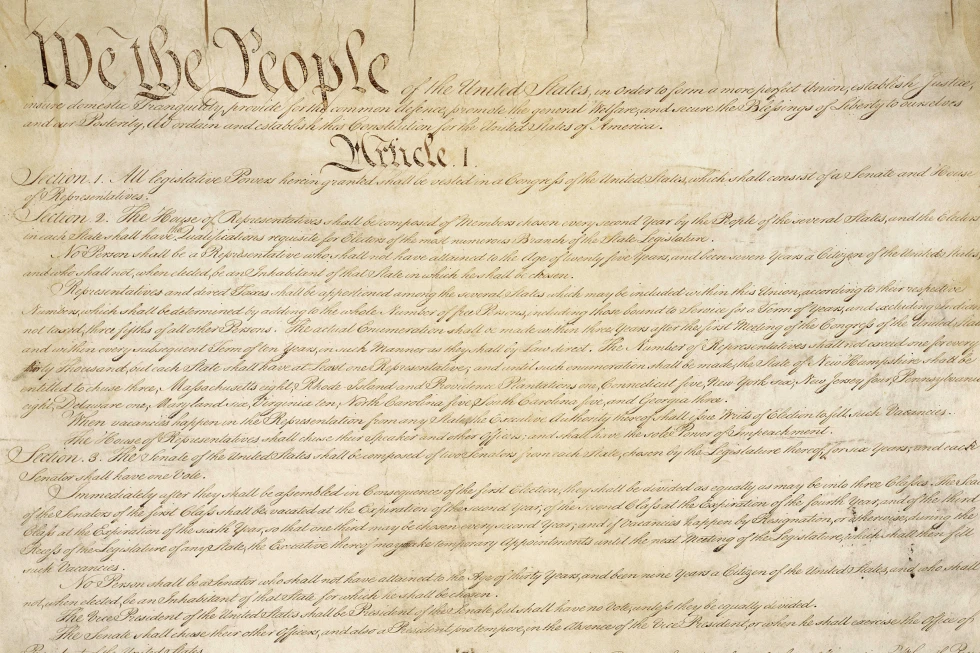
On Sept. 17, 1787, the Constitution of the United States was completed and signed by a majority of delegates attending the Constitutional Convention in Philadelphia.

Do Americans still honor the document? Does the president honor his pledge?

The oath of office of the president of the United States is the oath or affirmation that the president of the United States takes upon assuming office. The wording of the oath is specified in Article II, Section One, Clause 8, of the United States Constitution, and a new president is required to take it before exercising or carrying out any official powers or duties.

This clause is one of three oath or affirmation clauses in the Constitution, but it is the only one that actually specifies the words that must be spoken. Article I, Section 3 requires Senators, when sitting to try impeachments, to be “on Oath or Affirmation.” Article VI, Clause 3, similarly requires the persons specified therein to “be bound by oath or affirmation, to support this Constitution.” The presidential oath requires much more than that general oath of allegiance and fidelity. This clause enjoins the new president to swear or affirm: “I will to the best of my ability, preserve, protect and defend the Constitution of the United States.”[1]

Charlie Kirk’s supporters have declared him a ‘martyr.’ Some want vengeance.

  • The shooting death of conservative activist Charlie Kirk has triggered a range of reactions, from mournful sympathy to religious conspiracy theories.
  • Kirk spoke of what he called a “spiritual battle” being waged in the United States between Christians and Democrats.
  • Experts on faith and far-right extremism say they are troubled by the religious glorification of Kirk in an era of increased political violence.

In life, Kirk spoke of what he called a “spiritual battle” being waged in the United States between Christians and a Democratic Party that “supports everything that God hates.”

In death, Kirk, one of the Republican Party’s most influential power brokers, is being hailed by conservative evangelical pastors and GOP politicians as a Christian killed for his religious beliefs.

Kirk — who rallied his millions of online followers to vote for Trump in the 2024 election — declared that God was on the side of American conservatives and that there was “no separation of church and state.” He was also known for his vitriol against racial and religious minorities, LGBTQ+ people, childless women, progressives and others who disagreed with him.

Kirk called transgender people “a throbbing middle finger to God.” He said the Civil Rights Act of 1964 was “a huge mistake” and called the Rev. Martin Luther King Jr. “awful.” On his podcast, he called with a smirk for “some amazing patriot out there in San Francisco or the Bay Area [who] wants to really be a midterm hero” to bail out of jail the man who attacked then-House Speaker Nancy Pelosi’s husband with a hammer in their home in 2022.