I assigned myself the project of photographing the interesting buildings of Wilshire Boulevard in Los Angeles. The photo collection includes office buildings, theaters, and places of worship. Thus far I have a collection of photos in what is generally called the mid-Wilshire area that primarily is also called Koreatown. I have photos of the property once known as the Ambassador Hotel, that should have been preserved, the Wiltern Theater and the Bullock’s building (a famous upscale department store now long gone). It has taken three trips to the area and as I am quite old the walking has been difficult.
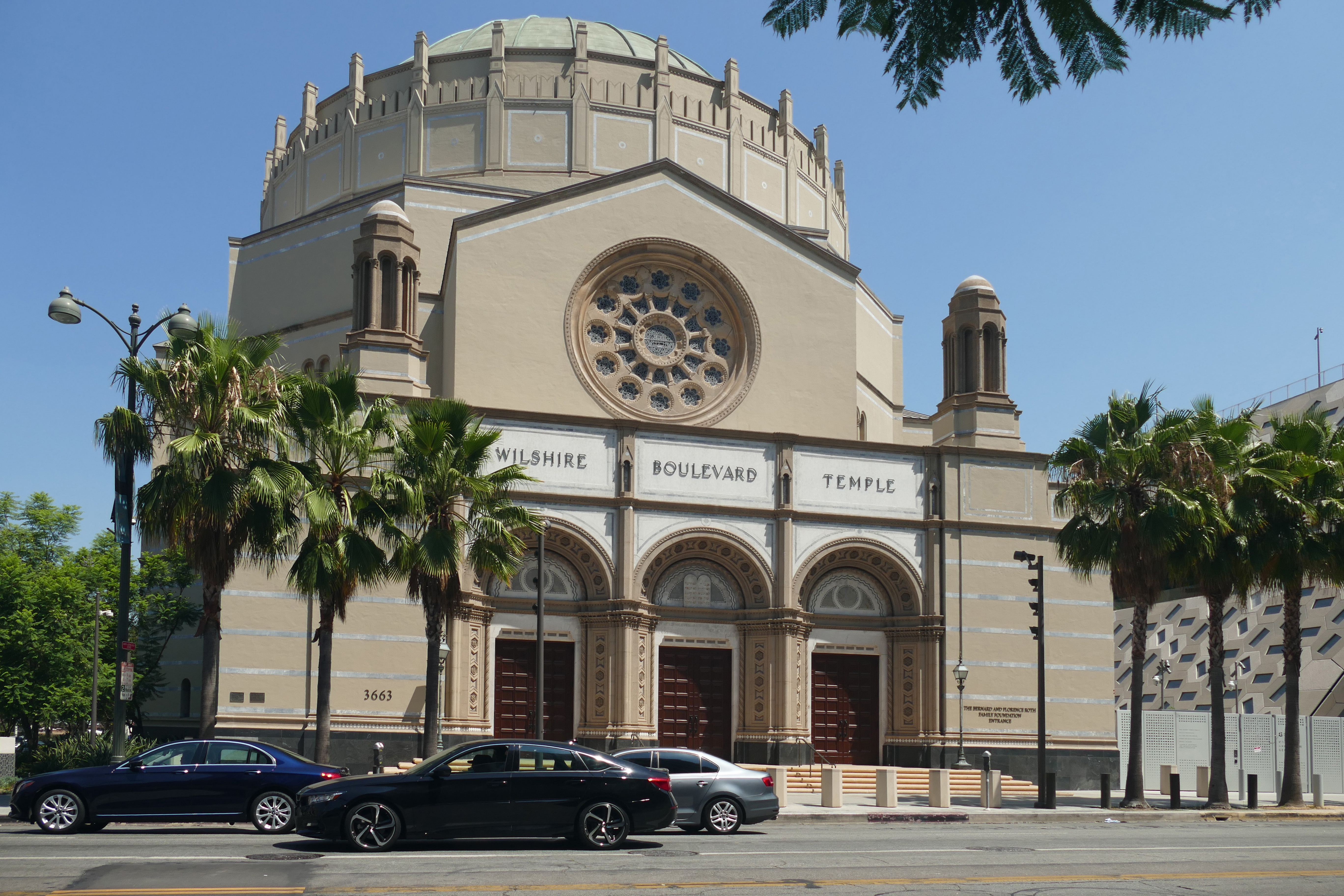
Included in that area is the Wilshire Boulevard Temple (Jewish Reform). The doors were locked and tours are by appointment only according to the temple’s website. It is an enormous structure topped by a large a Byzantine revival dome. Today’s Jewish community primarily lives in West Los Angeles and the San Fernando Valley although most areas of the city do have synagogues.
Wilshire Boulevard Temple serves as the third home of the Congregation B’nai B’rith, which was founded in 1862 and is the oldest Jewish congregation in Los Angeles. The congregation left each of its first two synagogues, both located downtown and both now demolished, as its size grew and as the city moved westward. The congregation purchased property at the corner of Wilshire and Hobart Boulevards in 1921.
At the time, the Mid-Wilshire area was an upper-class suburban enclave with great commercial promise, sometimes called the “Fifth Avenue of the West.” Religious organizations of all denominations followed their members here as they moved west from downtown, and most of the churches were grand and impressive. That accounts for the fact that other religious organizations also build beautiful churches in that immediate area.
Because the immediate surrounding community is now primarily Korean and Hispanic the synagogue has decided to retain the facility but provide services for the non-Jewish. The community outreach has been recognized by local leaders, who hope it will become a model for other organizations as well.
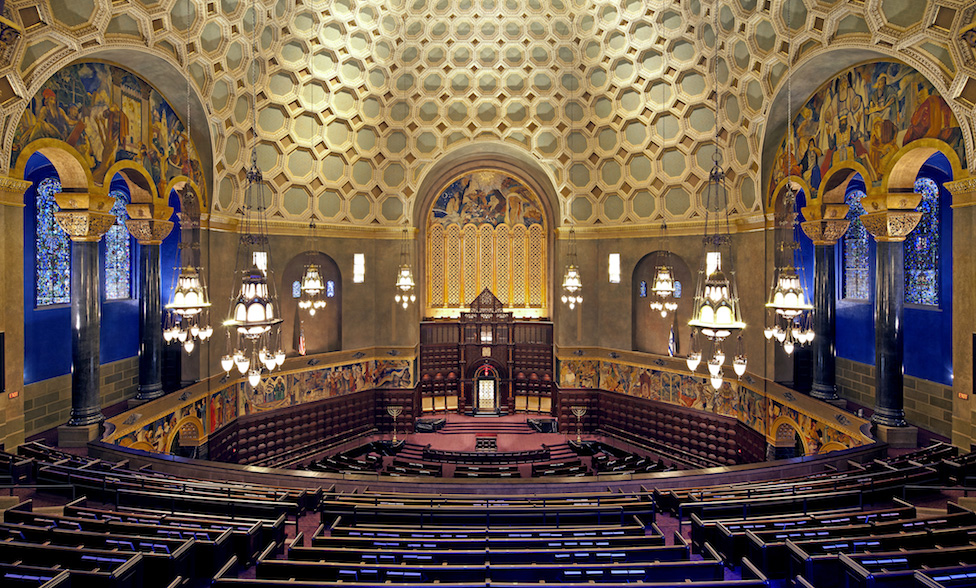
The photo of the exterior is mine. The interior photo posted by the temple.
This article written by James Rainey, Seema Mehta, Los Angeles Times was posted on the Times website this morning. It provides Governor Newsom a lot of ammunition in the recall election scheduled to take place September 14.
He has on occasion fueled climate change skepticism, depicting global warming as a “crock” and a “myth.” He said the medical establishment and “professional victims” have overblown the danger from secondhand tobacco smoke.
He offered no pushback when a doctor called into his nationally syndicated radio show last month to suggest that COVID-19 vaccines were dangerous and didn’t object when the physician then implied that Bill Gates might have backed the “experimental” immunizations as a form of “population control.”
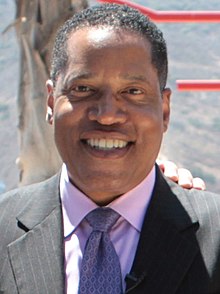
Larry Elder created a platform for those views in a more than 30-year career in the media, epitomizing the convention-defying persona that has helped him seemingly leapfrog other candidates in the race to replace California Gov. Gavin Newsom in next month’s recall election.
On issues like smoking, climate change and the best ways to treat COVID-19, he has sometimes given airtime to views outside the mainstream, simultaneously inspiring those who say he would be a maverick leader and alarming others who say his brand of libertarianism is too extreme for California.
Those conflicting realities have leapt to the fore, less than a month after the talk radio host entered the recall race and as journalists and rivals begin to dive into Elder’s three-decade record on the radio, as well as his books, newsletters and social media pronouncements.
Elder is being revealed as someone who has occasionally been comfortable standing outside the scientific consensus on issues like secondhand smoke and climate change, while fervently promoting dramatic measures to unravel some of the core policies and beliefs of liberal-leaning California.
He has called the U.S. Supreme Court’s Roe vs. Wade decision, which creates a legal right for women to have abortions, “one of the worst decisions that the Supreme Court ever handed down,” called abortion “murder” and said abortion rules should be left to the states.
He said he would have voted against the law that requires employers to offer workers 12 weeks of unpaid leave to bond with new children or to care for family members with medical emergencies. He has rejected the notion that women confront a “glass ceiling” in attempts at career advancement and embraced the libertarian truism that citizens have become too reliant on an overbearing government.
A recent interview with The Times suggested that his introduction to the California electorate will create even more provocative fodder. Elder implied that he might declare a state of emergency in order to fire “bad” teachers, estimating they make up somewhere between 5% and 7% of the California public school faculty of about 300,000.
He added that he could declare another emergency to “suspend” the California Environmental Quality Act, the law requiring environmental review of building projects. He depicted the law, known as CEQA, as part of a bureaucracy that is “treating contractors and developers like they are criminals.”
Such measures would undoubtedly face monumental legal and political hurdles and almost certainly alienate a large number of Californians. But they would also be sure to thrill those who view Elder — the self-proclaimed “Sage from South-Central” Los Angeles — as a blast of fresh air in a state foggy with liberal “political correctness.”
But it appears that, on at least one topic, he wants to make clear he has moved away from a past view. Elder told opinion editors for the McClatchy newspapers last week: “I do believe in climate change. I do believe our climate is getting warmer.”
Elder would not answer detailed questions and a campaign spokeswoman insisted that many of the past statements and positions highlighted by The Times were not pertinent to the recall.
“Some involve statements out of context, while others reflect prevailing notions of political bias,” spokeswoman Ying Ma said. “For instance, there is a clear inability [to] comprehend why a talk radio host might want to allow a caller to express views different from his own, or why anyone would consider unconventional assertions presented by reputable researchers.”
Ma said that the central recall issues should be “rampant crime, rising homelessness, out-of-control costs of living, water shortages, disastrous wildfires, rolling brownouts, and repressive COVID restrictions.” The spokeswoman said The Times was conducting “opposition research,” with some topics dating back “many years,” in a way she said mimicked “a (French) laundry list of attacks from the Newsom campaign.”
Under the unusual ground rules of California recall elections — where Newsom needs a simple majority of the vote to remain in office, while, if Newsom falls short, Elder needs only to defeat other would-be replacements, no matter how small his plurality — experts said Elder’s provocative views actually could advance his cause, and Newsom’s.
“These kinds of statements and issues benefit both Larry Elder and Gavin Newsom,” said Dan Schnur, a UC Berkeley and USC political scientist and previous adviser to numerous Republican candidates. “Elder needs only one more vote from conservative voters to prevail over other recall challengers. And his supporters will love these ideas.
“Meanwhile, it’s clear Newsom and his team have decided that — rather than motivating progressives by telling them good things about this governor — they are better off telling them frightening things about the person who might replace him.”
Schnur noted that some politicians viewed as extreme by large numbers of voters — like Donald Trump on the right and Bernie Sanders on the left — used their plain-spoken personas to push their way into the center of the political debate.
Elder, 69, jumped into the race in mid-July, months after some other candidates, and immediately changed the dynamic in the race. He became the front-runner in the polls and quickly raised significant sums of money, with a particularly strong showing among people who gave less than $100.
Between his entry into the race on July 12 and July 31, he collected nearly $4.5 million, according to fundraising disclosures filed last week with the secretary of state. That’s more than every other GOP candidate in the race except John Cox, who is largely self-funding his campaign.
A graduate of Brown University and the University of Michigan Law School, Elder leaves little doubt that he relishes a good debate. “I can articulate these issues in such a way that Joe and Joan Six-pack can go, ‘OK, now I get it,’” he told The Times in the recent interview.
He said the seed of his candidacy was planted by his talk radio mentor, conservative Dennis Prager. Elder initially demurred because he worried the state had become “ungovernable.” But further research convinced him he could make dramatic changes, partly by invoking emergency powers, he said.
Elder said he believes such an “education emergency” declaration would spur reform, particularly for inner-city schools. He said a tiny number of teachers have been fired annually, on average, from among the 300,000 who work in California public schools. “Unions are protecting bad teachers,” he said, “to the point where the worst ones get in the areas where the kids need them the most.”
Elder correctly notes that California removes fewer teachers than some other states, though the state’s practices around teacher performance and retention are complex.
Tenure offers strong protections for teachers against removal after two years on the job. But a significant number of teachers leave the profession anyway, sometimes under pressure because of substandard performance. Some experts argue the greater problem is the loss of effective teachers, many of whom protest a lack of support from their schools and communities.
“Someone told me that between 5 and 7% of public school teachers need to be fired,” Elder said, adding that the emergency declaration would provide “the power to get rid of bad teachers faster than the system allows.” He concluded: “Once you did that, automatically, education would improve overnight.”
Because Elder declined to field follow-up questions, it was impossible to know who had advised him on teacher terminations and exactly how he might weed out educators he judged to be underperforming.
Similarly, Elder said in interviews with The Times and opinion editors at McClatchy newspapers that he envisioned an emergency action on homelessness that would allow him to waive the state’s environmental review law “so that I can unleash the developers and contractors who would be able to build low-cost housing and low-cost apartments.”
He said many builders had moved their work out of California because CEQA “allows almost anybody to stop anything for any length of time.”
On the other most pressing issue of the day in California, the COVID pandemic, Elder subscribes to conservative view that the government and health officials should allow individuals to make choices about wearing masks. He has decried attempts to force people to get vaccinated.
He remained silent last month, neither agreeing nor disagreeing, when “Kathy,” a gynecologist who claimed no expertise in infectious diseases, claimed that vaccines could be a threat and asserted that unnamed individuals “are going to specifically target the minority areas first and lower income areas.”
But Elder has said he has been vaccinated (as an “old man” with “co-morbidities,” he told the McClatchy editors) and supports others who have done so. He added: “A lot of people have made the choice, rightly or wrongly, not to get a vaccine. And I think in America, you want to have that choice.”
As with other topics, Elder prefers to focus the COVID issue on Newsom, saying that the governor hadn’t followed his own mandates, as when he didn’t wear a mask while attending a party at the tony French Laundry restaurant. Elder’s website says COVID business shutdowns have gone too far and “inflicted unnecessary pain on ordinary Californians,” adding: “I will govern as your governor, not as your tyrant.”
He once maintained a page on his website devoted to “debunking the Gore-Bull warming myth.” (A reference to Al Gore, the former vice president who has made the battle against climate change his life’s work.) The web page contained links to a list of stories, several rejecting the consensus of mainstream science: that the planet is warming to dangerous levels and that humankind is responsible.
In a 2008 CNN interview, Elder called global warming “a crock” and disparaged Republicans, such as John McCain and George W. Bush, who disagreed. He rejected Bush’s contention that “global warming is this big peril to the planet,” concluding: “It is not.”
In his meeting with the opinion editors last week, Elder sounded a markedly different note, expressing his belief in a warming planet and adding, “I do believe that human activity has something to do with it.” He said he also believes that the warming is “a factor” in California’s worsening wildfires. But he added: “What I don’t believe in is climate-change alarmism.”
His 2000 book suggesting the dangers of secondhand tobacco smoke have been exaggerated puts his views outside the scientific consensus.
The Centers for Disease Control and Prevention and U.S. surgeon general have long warned of the magnitude of that threat. The CDC estimated in 2014 that 2.5 million people had died over the previous 50 years from health problems caused by secondary smoke exposure. That would average 50,000 deaths a year.
Elder’s provocative missives have been so frequent and over such a long span that many quickly blew over.
In 2017, he posted a picture on Twitter of three women attending the Women’s March in Washington to protest the inauguration of Donald Trump, who faced serial accusations of sexual assault and misconduct. Above the picture, he wrote: “Ladies, I think you’re safe.”
That drew immediate complaints that Elder was suggesting the women were too unattractive to be sexually assaulted. A member of the Nebraska state Senate retweeted Elder’s post, then, facing a storm of condemnation, resigned his post. The original tweet was apparently deleted.
In a 2000 column, Elder asserted that Democrats had an advantage over Republicans because they were supported by women and “women know less than men about political issues, economics, and current events.” In the piece for Capitalism Magazine, he added that women could be misled because “the less one knows, the easier the manipulation.”
In the column, Elder cited research done at the University of Pennsylvania’s Annenberg Public Policy Center on “gender gaps” in political knowledge.
Surveys have detected such gaps and no clear explanation for them, said Kathleen Hall Jamieson, director of the Annenberg policy center. She said related research has shown that women are “factoring in other information and consistently making decisions at the ballot box that are consistent with their self-interests.”
Elder’s late entry into the race, about two months before the Sept. 14 vote on Newsom’s future, leaves relatively little time for voters to examine the candidate with arguably the most voluminous record of public policy pronouncements.
“I mean, he has created his own opposition research for decades,” said Jessica Levinson, an election law professor at Loyola Law School. “On the other hand, he does have a shortened timeline here. I think what a lot of people just know is that he’s the Republican, leading in the polls, and a talk-show host. There’s not a lot of details that are filled in; it’s basically a sketch.”
“So has he been vetted?” Levinson asked. “Not in the way that we’re used to of candidates having to go through a process of showing up to town halls and press conferences, and respond to opponents, and provide answers and explanations for what they’ve said in their public life.”
In the 1850s, an anti-Catholic, anti-Irish, xenophobic movement burst on the political scene in the United States. At first a secret society, the Native American Party required its initiates to present proof of a Protestant pedigree, support mandatory Bible reading in public schools and a 21-year naturalization period for immigrants, use hand signals and passwords, and promise to respond to questions from outsiders by saying, “I know nothing.” Before it flamed out, the Know Nothing Party sent hundreds of its members to the U.S. Congress and state legislatures.
Their eyes wide shut, fingers stuck in their ears, Congressional Republicans are certain all they need to know is which way the wind is blowing – and that they shouldn’t do anything about the pandemic, the economy, voting rights or immigration because it might help Democrats.
Many Republicans support Donald Trump’s contention that he won the election. The Biden inauguration was based fraudulent counts. The January 6 insurrection was just a friendly group visiting the capitol. There was no riot.
What does it say about us that America’s 21st-century Know Nothing Party is unlikely to flame out as quickly as its 1850s ancestor?
The Labor Department’s Job Opening and Labor Turnover Survey (JOLTS) shows that by May, the economy had more than 9 million unfilled job openings, the highest number since the survey began in 2000, and double the number available as recently as 2014. The unemployment rate in July was 5.4 percent and presumably would have been lower if job seekers had taken some of the many available positions. Explain what is the reason for a rental eviction moratorium?
I feel badly for those who lack the skills to obtain nothing more than a minimum wage job but life isn’t fair. I cannot be a lawyer or doctor because I lack the ability to pass the bar or meet the standards to be a doctor. That is simply a fact.
Many people are receiving more unemployment benefit aid than the money they would earn in their previous job. Millions will lose pandemic unemployment in September—many have already been cut off. … The programs, which support people who’d normally fall through the cracks of the unemployment system, were established in the March 2020 CARES Act and extended until Labor Day 2021 through the American Rescue Plan.
Roughly 7.5 million workers who’ve relied on pandemic-era unemployment benefits will be cut off from jobless aid altogether when they are set to expire on September 6, according to estimates from The Century Foundation, a left-leaning think tank. Rising Covid cases due to the contagious delta variant make finding a job difficult but how difficult when retail and hospitality businesses are clamoring for workers?
A consequence of low paying jobs means a lack of affordable housing. This is not a Covid-19 issue. The poor have been confronted with this issue all of their lives. It begs the question: Is it the government’s responsibility to provide housing for everyone? I believe the answer is yes. Many cities do provide public housing. Most Democrats say the answer is YES and most Republicans say NO. But it’s not that simple. There are unfilled jobs available now. I won’t be surprised if many of those unwanted openings are filled after September 6.
The U.S. Bureau of Labor Statistics (BLS) monthly report was released today for the month of July. The total non farm payroll employment rose by 943,000 people. This increase follows an 850,000 increase in June. While the unemployment rate is 5.4% that number has dropped dramatically from the 6.7% rate at the beginning of the year.
The number of long-term unemployed (those jobless for 27 weeks or more) decreased by 560,000 in July to 3.4 million but is 2.3 million higher than in February 2020.
In July, the number of persons not in the labor force who currently want a job was 6.5 million the report says.
In July, notable job gains occurred in leisure and hospitality, in local government education, and in professional and business services.
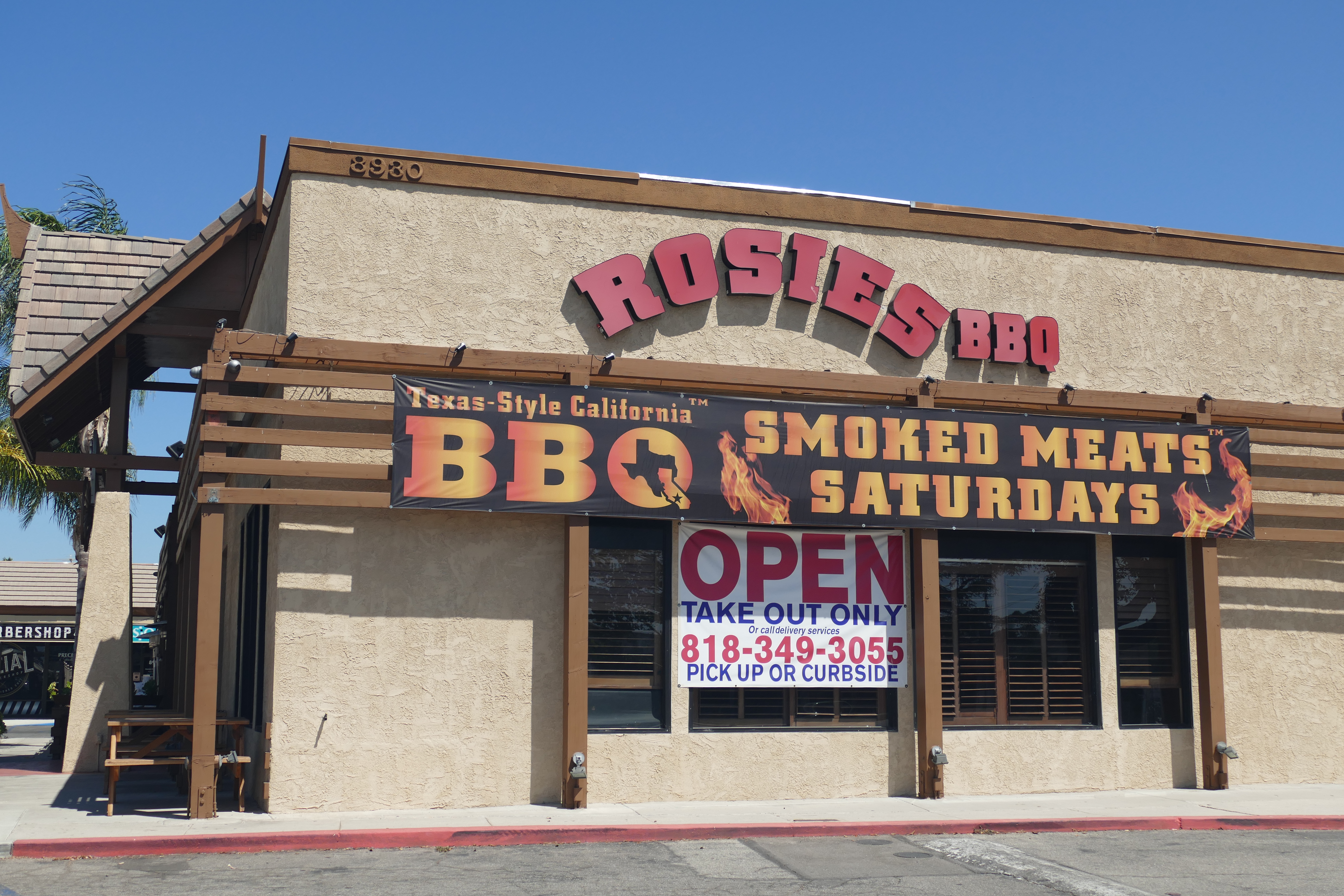
The contradictory information in the report causes many people to question its value. My nearby restaurants have large signs seen from the street inviting people to apply for jobs as cooks, servers and other duties. My favorite barbeque restaurant provides take out only because they cannot find sufficient help. The IHOP restaurants near me are all short of help. Perhaps the message is “we don’t want to work for you on the starvation wage you pay. We have managed to get along without those crummy demanding jobs.”
It all started for me when Richard Nixon was running for president against John F. Kennedy. Both men were saying similar words but with a twist. Years later when Nixon became president he imposed a wage and price freeze to control inflation. That was the sort of thing you would have expected from a Democrat. It made my head spin. Was that a god idea? The new car price was frozen (good idea). My next pay raise was limited to 1.5 percent (bad idea).
There really are four political major political parties in the United States. They coalesce to two every two years for congressional and presidential elections only because they can’t see a path to victory without a partner that at the very least holds some similar views. Third political party members of Congress and the Senate have been rare. Today there are two independents in the Senate (Bernie Sanders from Vermont and Angus King from Main) and two independentsin the House both from Michigan (Paul Mitchell and Justin Amash a Libertarian). Senator Lisa Murkowski of Alaska ran as an Independent write-in candidate in 2010 but has since joined the G.O.P.
The progressive wing of the Democratic Party is at odds with the moderate wing to the point that they oppose the currently proposed infrastructure law because they define infrastructure to include help for social services. They dream of the Green New Deal. Moderates define infrastructure as money for roads, bridges, railway and broadband services.
The battle in Ohio to fill the seat vacated by Marcia Fudge when she became the Housing and Urban Development Secretary involved 13 candidates but was seen as a contest mainly between former Ohio state Sen. Nina Turner and Cuyahoga County, Ohio, Councilwoman Shontel Brown. That 11th District primary became somewhat of a replay in microcosm of the battle between Biden and Sanders to secure the Democratic presidential nomination in 2020. Turner had been a national cochair for Sanders’ presidential run and often harshly criticized the eventual nominee, Biden. Brown, meanwhile, positioned herself as someone friendly to the Biden administration. Shontel Brown won that race.
Although Donald Trump is currently leading the Republican Party there is another part of the party that cling to the G.O.P.’s traditional values best personified by recent leaders Senator Mitt Romney of Utah and recently deceased Senator John McCain. It was Senator McCain who voted no to repealing Obama Care (Affordable Care Act). In the 2016 platform were the words “International trade is crucial for all sectors of America’s economy. Massive trade deficits are not. We envision a worldwide multilateral agreement among nations committed to the principles of open markets, what has been called a “Reagan Economic Zone,” in which free trade will truly be fair trade for all concerned.”
Today’s Republican party is divided between the Romney/Nixon/Eisenhower wing and the Trump wing that stands for insulating the United State from the rest of the world. Trumpians are the White nationalists who oppose everything as a gain for others thus a loss for them. This is also called Zero-sum game. They see things as If I gain you lose. If you gain I lose. We can’t both gain.
The best example of the Trump wing positions is former Trump White House advisor Stephen Millerwho suggested that legal immigration is just as bad for America as illegal immigration, and the country should just shut down immigration altogether at least temporarily. Who will clean hotel rooms, pick the crops or work in meat packing factories when there are fewer of “the other” is never discussed. Those White nationalists do not understand that is has been the immigrants who have made the United States a success. Steve Job a child of Lebanese immigrants, founders of Google, Chobani yogurt founded in 2005 by Hamdi Ulukaya, a Turkish immigrant, who had bought a plant in the town of South Edmeston, New York, that was being closed by Kraft Foods. What are Trumpians in favor of doing is unclear other than blocking every idea to “Make America Great Again.” There was no Republican platform presented at the last Republican convention in August 2020.
I will be holding my nose in November 2022 as I cast my ballot.
Candidates running to replace Gov. Gavin Newsom in the recall election include, clockwise from top left: businessman John Cox, former San Diego Mayor Kevin Faulconer, retired Olympian/reality TV star Caitlyn Jenner, Larry Elder, nationally syndicated conservative radio host, Assemblyman Kevin Kiley and billboard model Angelyne.
California’s next gubernatorial election will take place on November 8, 2022. Doing a recall in September of this year is really a waste of money. That recall vote will be on September 14. So the Republican Party is trying a run around the way we select our governor. I am guessing that they believe once elected in the recall Californians will re-elect that individual next year.
In October 2020, California had 22,047,448 registered voters, comprising 87.87% of its total eligible voters. Of those registered voters, 10,170,317 (46.10 percent) were registered Democrats, 5,334,323 (24.20 percent) were Republicans and, 5,283,853 were No Party Preference (24.00 percent). In that November 2022 election what is the likelihood that a Republican would win the governorship? Not very likely unless the GOP governor does a very good job.
There are many issues that should be front and center that Governor Gavin Newsom has not resolved and does not appear to have a plan. Here are my top concerns.
Homelessness
Affordable housing
Water shortage
Unemployment insurance system
If there is to be a Republican governor those are the issues that he/she will have to address. That means the GOP candidates have just 43 days to convince a majority of voters that they have solutions.
It is accurate to call me a DINO (Democrat in name only). I say I lean Democrat but I am really looking for solutions.
My favorite radio and television program when I was a boy (age 7 to 12). I accidentally saw this video on YouTube. I had no idea as a child that the closing theme music was the William Tell Overture. That exciting music and the words “High Ho Silver” always brought me back for the weekly program.




 Coast Contact