by Samuel G. Freedman, a professor of journalism at Columbia University, is the author of nine books, including “Jew vs. Jew: The Struggle for the Soul of American Jewry.” The views expressed in this commentary are his own. This commentary appeared on cnn.com
The Trump-Netanyahu bromance deepened American Jews’ divide on Israel.
A few weeks shy of 54 years ago, as Arab armies massed on its borders vowing extermination, Israel launched the preemptive attack that set off the Six-Day War. In that sudden transformation from looming genocide to military triumph, American Jews rallied behind the Jewish state as never before — with unprecedented cash donations and public demonstrations.
The spectacle of the Diaspora’s largest Jewish community mobilizing around the Jewish nation set a model to be repeated during the 1973 war and the suicide bombings of the second intifada in the early 2000s. When Israel was in trouble, American Jews spoke in a single voice.
Measured by that benchmark, the response of American Jewry to Israel during its current battle with Hamas represents a striking departure.
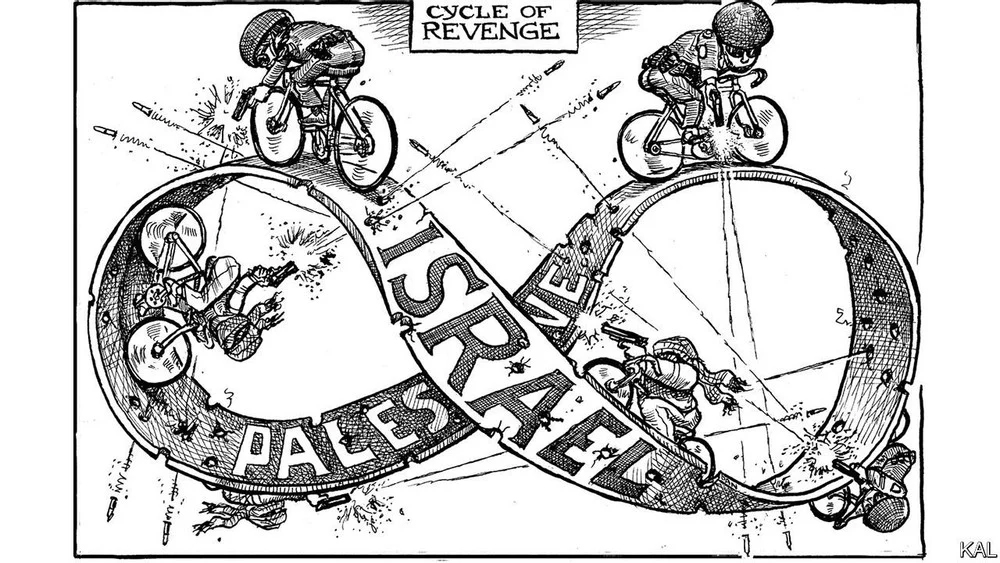
Two of the Jewish people serving in the US Senate — Sens. Bernie Sanders of Vermont and Jon Ossoff of Georgia — have taken leading roles in calling for evenhanded American policy on the Israeli-Palestinian issue and for an immediate cease fire, respectively. And the liberal Jewish lobbying group, J Street, has provided important political support for politicians, whether Jewish or not, to criticize Israel’s relentless bombing of Gaza in response to Hamas’ rocket attacks on Israel without the risk of being smeared as being anti-Israel or even anti-Semitic.
At the level of daily Jewish life in America, experts sense a distinctly muted mood. “There’s a fairly dramatic lack of urgency,” Dr. Kenneth Wald, an emeritus professor of American Jewish culture and society at the University of Florida in Gainesville, told me in a telephone interview. “I’ve been on our local Jewish Federation board for 20-something years and nobody has jumped up and said, ‘We’ve got to run an emergency campaign for Israel.’ It struck me that there’s an absence of calls for mobilization. And in shul last Shabbat, our rabbi, who does not normally talk about current affairs, gave a very nuanced talk — the need for us to stop thinking about the other as the other.”
It would be a historical mistake to view the American Jewish stance during this war as an anomaly. Despite the surges of mass grassroots advocacy for Israel during times of existential threat, the seeds of dissent took root during what might be described as volitional conflicts like the invasion of Lebanon in 1982 and the first intifada in the late 1980s.
Americans for Peace Now, one of the earliest hubs of American Jewish dissidence on Israeli militarism, took both its name and inspiration from the Israeli organization founded in reaction to the Lebanon war. Then, the revelation of secret peace talks between Israeli and Palestinian delegations in the Oslo process of the early 1990s gave American Jews permission to voice support for a two-state solution without being disparaged as disloyal. And, as early as 2001, the scholar Steven T. Rosenthal was warning of the “waning of the American Jewish love affair with Israel.”
And this trend is started to reflect in the polling of American Jews. A newly-released survey of American Jewry by the Pew Research Center found that, as of 2020, about one in five American Jews say the US is too supportive of Israel. Meanwhile, those who say the US is not sufficiently supportive of Israel declined to 19% — down 12 points since 2013.
There can be no doubt, however, that the relative estrangement accelerated due to the flagrantly divisive roles played by former President Donald Trump and Prime Minister Benjamin Netanyahu.
A year before Trump won the election, Netanyahu defied the second term American President, Barack Obama, by taking an invitation from Republican leaders to denounce Obama’s proposed nuclear deal with Iran before a joint session of Congress.
Once in the White House, Trump essentially gave Netanyahu everything for nothing. He moved the American embassy to Jerusalem, recognized Israeli sovereignty over the Golan Heights, reduced American diplomatic engagement with the Palestinian Authority — all without asking the Israeli prime minister to make genuine concessions to the Palestinians.
Whatever happened to Jared Kushner’s peace plan?
Then the so-called Abraham Accords brokered by Trump’s adviser and son-in-law Jared Kushner brought Israel diplomatic relations with four Muslim nations — Bahrain, United Arab Emirates, Sudan and Morocco — in return for the meager promise to pause new annexation in the West Bank. More treacherously still, the accords reinforced the notion on the right-wing in both Israel and America that somehow the century-long Palestinian national movement had all but disappeared.
We now know how self-deluding that fantasy was.
For all of Trump’s seeming courtship of American Jews based on his “bromance” with Netanyahu, he won only about 30% of the Jewish vote in 2020 — a proportion well within the norms for Republican presidential candidates over the past 50 years. And the Pew survey found only a minority of those polled approved of Netanyahu’s performance (40%) and considered Trump friendly to American Jews (31%).
Which, actually, should come as no surprise. For both Trump and Netanyahu, the moderate and liberal majority of American Jews were never their real audience. Rather, it was evangelical Christians. Ron Dermer, formerly Netanyahu’s ambassador to the United States, recently was caught saying the quiet part out loud at a conference hosted by the Israeli newspaper Makor Rishon: “People have to understand that the backbone of Israel’s support in the United States is the evangelical Christians. It’s true because of numbers and also because of their passionate and unequivocal support for Israel.” As for American Jews, not only are their numbers much smaller, he said, but they are overrepresented among Israel’s critics.
Americans for Peace Now, one of the earliest hubs of American Jewish dissidence on Israeli militarism, took both its name and inspiration from the Israeli organization founded in reaction to the Lebanon war. Then, the revelation of secret peace talks between Israeli and Palestinian delegations in the Oslo process of the early 1990s gave American Jews permission to voice support for a two-state solution without being disparaged as disloyal. And, as early as 2001, the scholar Steven T. Rosenthal was warning of the “waning of the American Jewish love affair with Israel.”
And this trend is started to reflect in the polling of American Jews. A newly-released survey of American Jewry by the Pew Research Center found that, as of 2020, about one in five American Jews say the US is too supportive of Israel. Meanwhile, those who say the US is not sufficiently supportive of Israel declined to 19% — down 12 points since 2013.
There can be no doubt, however, that the relative estrangement accelerated due to the flagrantly divisive roles played by former President Donald Trump and Prime Minister Benjamin Netanyahu.
A year before Trump won the election, Netanyahu defied the second term American President, Barack Obama, by taking an invitation from Republican leaders to denounce Obama’s proposed nuclear deal with Iran before a joint session of Congress.
Once in the White House, Trump essentially gave Netanyahu everything for nothing. He moved the American embassy to Jerusalem, recognized Israeli sovereignty over the Golan Heights, reduced American diplomatic engagement with the Palestinian Authority — all without asking the Israeli prime minister to make genuine concessions to the Palestinians.
Then the so-called Abraham Accords brokered by Trump’s adviser and son-in-law Jared Kushner brought Israel diplomatic relations with four Muslim nations — Bahrain, United Arab Emirates, Sudan and Morocco — in return for the meager promise to pause new annexation in the West Bank. More treacherously still, the accords reinforced the notion on the right-wing in both Israel and America that somehow the century-long Palestinian national movement had all but disappeared.
We now know how self-deluding that fantasy was.
For all of Trump’s seeming courtship of American Jews based on his “bromance” with Netanyahu, he won only about 30% of the Jewish vote in 2020 — a proportion well within the norms for Republican presidential candidates over the past 50 years. And the Pew survey found only a minority of those polled approved of Netanyahu’s performance (40%) and considered Trump friendly to American Jews (31%).
Which, actually, should come as no surprise. For both Trump and Netanyahu, the moderate and liberal majority of American Jews were never their real audience. Rather, it was evangelical Christians. Ron Dermer, formerly Netanyahu’s ambassador to the United States, recently was caught saying the quiet part out loud at a conference hosted by the Israeli newspaper Makor Rishon: “People have to understand that the backbone of Israel’s support in the United States is the evangelical Christians. It’s true because of numbers and also because of their passionate and unequivocal support for Israel.” As for American Jews, not only are their numbers much smaller, he said, but they are overrepresented among Israel’s critics.
By aligning Israel with both the Republican Party and the Christian right, Netanyahu tacitly associated it with a series of positions on American domestic issues that are anathema to the preponderance of American Jews who reliably vote Democratic — outlawing abortion, rolling back gay rights, eradicating Obamacare, suppressing voting, and, of course, attempting to seize power through insurrection.
By turning Israel into a partisan wedge issue, and alienating many American Jews in the process, those cynical siblings — Trump and Netanyahu — ensured that when the time came for Israel to need bipartisan support and a united front of American Jews neither would be readily available anymore.









 Coast Contact