President of the United States is a Killing Job


Barack Obama

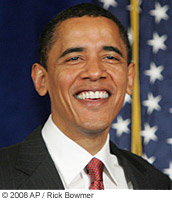
Barack Obama June 23, 2011

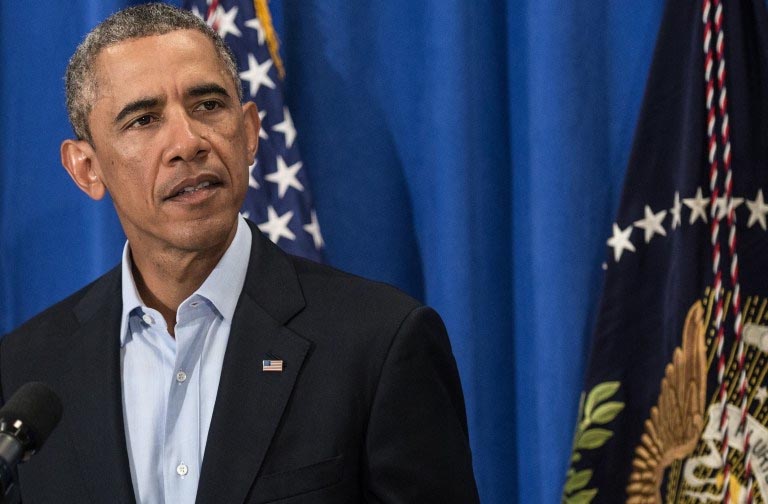
Barack Obama-August 20 2014

Barack Obama August 20, 2014

The job of President of the United States is a killer. Look at the impact on the appearance of President Obama. Look at other past presidents and you will observe the same impact. The world is a tough place. It’s bad enough that we have enemies in other nations but even worse is the beating the president takes from other political parties. You have to be a superman to withstand the constant barrage of verbal abuse. Add the many issues arising around the world and you have black hair turning gray and unknown effects on the many internal mechanisms.

President Obama is now 53 years old. Could a 70 year old handle the stress? Hilary Clinton is now 66. If elected president, she would enter office at 69. Why would she or anyone want the abuse the office must bear?

Obama: Skilled Politician, Lousy Manager

Doyle McManus’ column in today’s Los Angeles Times on-line edition identifies the reality of the Barack Obama presidency.   Given the history of past presidential failures can anyone do this job? What failures? Iran-Contra, Bay of Pigs, Hostages in Iran, Financial Meltdown, etc.

May 24, 2014

We don’t normally expect our presidents to pay close attention to how long veterans are being asked to wait for care in the vast medical system run by the Department of Veterans Affairs.

But we do expect presidents to appoint Cabinet officers and other aides who can run the federal government well — well enough, at least, to prevent full-blown scandals from erupting.

That’s what the VA’s long-running scheduling problems have turned into after reports that veterans died while waiting for medical care — and bureaucrats apparently manipulated records to make their performance look good when it wasn’t.

No one can read the stories of individual veterans who suffered at the hands of the bureaucracy — like Edward Laird, a 76-year-old Navy veteran who lost half of his nose because he had to wait two years for cancer tests — without feeling helpless fury.

And those stories are certain to keep coming.

It’s an especially dangerous scandal for President Obama because it fits into an established narrative about his presidency: that he’s a skilled politician and speechmaker but a lousy manager.

The biggest problems Obama has faced in the White House — aside from unrelenting opposition from Republicans in Congress — have come not from making policy but from trying to implement it. The calamitous launch of his healthcare plan last fall is the biggest and most painful example, but it’s only one of several.

The 2009 economic stimulus plan’s “shovel-ready” projects that took months to start, the confused response to the 2010 BP oil spill, the flap over IRS scrutiny of conservative organizations, even the State Department failures that led to the deaths of four Americans in Benghazi in 2012 — all were mainly lapses in management, not policy.

The president’s conservative critics have accused him, often wildly, of every sin they can think of, from diabolical conspiracy (in the case of the IRS) to dereliction of duty (Benghazi). But the charge that’s likely to stick is one that connects all those unrelated events to an underlying truth: Obama has never paid as much attention to the nitty-gritty of management as he has to making policy and campaigning for votes.

“Presidents get elected because of their rhetorical skills, but they succeed or fail based on their managerial skills,” warned Elaine Kamarck, a former White House aide to Bill Clinton who directs a center on public management at the Brookings Institution. “In this administration … somehow, there is no adequate communications system; the White House keeps getting hit by these unpleasant surprises.”

Until recently, Kamarck noted, the White House didn’t have a high-ranking aide assigned full time to monitoring how programs were being implemented. That’s one of the reasons for the failure of the healthcare website; the engineers foresaw it, but nobody high up was pulling that information out of them.

Bad management alienates even a president’s allies, Kamarck noted.

“His popularity can go down and stay down,” she said. “That’s what happened to Jimmy Carter in the last year of his presidency. That’s what happened to George W. Bush after Hurricane Katrina.”

And now “that’s the narrative about Obama. It’s the narrative even among Democrats. They’re beginning to say, ‘Oh, we love everything he says; we just wish he could get something done.'”

In the case of the VA health system, problems many of us are learning about now have long been evident but never quite got fixed.

“This has been building for 10 or 15 years,” said Phillip E. Carter, an expert on veterans affairs at the Center for a New American Security. He said demographic surges of aging Vietnam vets, plus returning vets from Iraq and Afghanistan, were straining the system.

Even the specific problems of excessive waiting times and bureaucrats manipulating records aren’t new.

The VA knew that some of its medical centers had piled up huge backlogs in patient appointments by 2011. The Government Accountability Office, Congress’ investigative arm, reported in 2012 that VA bureaucrats were fiddling with waiting time records. CNN reported in 2013 that at least six veterans died in South Carolina because of long delays in providing diagnostic tests. Charges of misconduct at the VA medical center in Phoenix, the incident that turned the problem into a scandal, have been percolating through the bureaucracy for more than a year.

So if Obama only learned of the depth of the problems from watching TV, as his spokesman said last week, something is amiss with his administration’s internal communications.

It’s possible to hold out some optimism amid these scandals.

“Every crisis is also an opportunity,” Carter said. “Fixes are available at the VA, and this is the time to put them in place.”

It’s even possible that the White House has learned some management lessons. After the healthcare website crashed last fall, Obama named a seasoned administrator, Jeffrey Zients, to take charge — and seven months later, the health insurance program appears to be working.

And two weeks ago, Obama created a White House post — deputy chief of staff for policy implementation — and filled it with Kristie Canegallo, an aide who worked with Zients on the healthcare crisis. “We have determined we need more senior-level focus on implementation and execution,” White House chief of staff Denis McDonough said in announcing her appointment.

Good call. Too bad it came too late to help some of those vets.

Copyright © 2014, Los Angeles Times

Opposition to the Involvement of the U.S.A. In Syria

I Oppose the Involvement of the U.S.A. In Syria.

Some event in the future could change my mind.  However, at this time there is no justification for our entry into the Syrian Civil War.  After writing this piece I read in the Los Angeles Daily News that there was a protest march in downtown Los Angeles that was objecting to the possible intervention of the USA in Syria.  For a change I am not alone.

On July 25, 2013 The number of dead in Syria‘s civil war had passed 100,000, according to a United Nations report.

200 missiles at $569,000 each is over $11 million.  Who said the military-industrial complex isn’t alive and well?  1,000 people have been killed by the use of chemical weapons but at least 40,000 civilians have been killed by conventional weapons.  If the United States is concerned about human rights why aren’t we concerned about those deaths?

So the first question is how will bombarding Syria for three days change their behavior?  No one that I have heard or read believes there will be any impact.

Is there a moral imperative that we become involved?  The United   States has taken on the mantle of “the right thing to do.”  It remains to be seen if President Obama will have the courage and the will to take steps that many American oppose.

The third question is if there is no impact of a three day missile attack what will the next move be for the United   States?

  • Will we invade? Probably not as most Americans are opposed to any involvement.
  • Will we resort to more bombardment?  Maybe.
  • Will we create no fly zones? Possibly.

Setting aside the morality issue the other question is what will Syria’s neighbors and Russia do if we involve ourselves in their civil war?  Are we prepared to face down those that would oppose our involvement?

The Assad regime has a faithful army.  The truth is that there are large numbers of Syrians who support the regime.  The opposition apparently consists of al Qaeda supported groups that are among the rebel’s most successful warriors.  If they win, enemies of the United States will be stronger and more emboldened.  So just exactly why are we taking any action to protect their insurgency?  The children?  Among the tens of thousands killed in Syria there have been many children.  We only care about those children killed by gas.  What kind of logic is this?

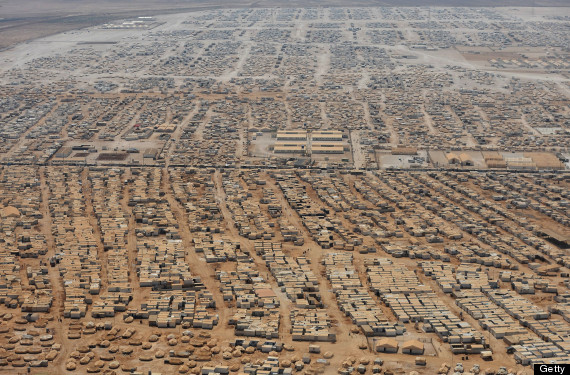
JORDAN-US-SYRIA-REFUGEES-KERRY

An aerial view shows the Zaatari refugee camp on July 18, 2013 near the Jordanian city of Mafraq, some 8 kilometers from the Jordanian-Syrian border. (MANDEL NGAN/AFP/Getty Images)

I see this civil war as an effort by Assad to drive those opposing him out of Syria.  Different reports vary but from 1 million to 2.5 million people have left the country.  There was even a televised report of Israeli hospitals treating some victims of the war.  Once opposition has been driven out the war will be over.

I do not have a solution.  No matter who wins this war, there are no benefits to the United States.  Chemical weapons are not a consequential part of this war.

Politicians Use Fear to Get Their Way

Politicians use fear to motivate each other and the general public.

The President is wrong to use fear to motivate Congress!

In California the governor, Jerry Brown, used fear to motivate voters to vote for a .25% sales tax increase and an income tax increase on the wealthy.  It worked!  Now there are indications that the state may be able to restore many programs that had been canceled and save others that were scheduled for major reductions.  The problem is that the additional state income may be spent on unnecessary new programs.

The city of Los Angeles wants voters to approve another .5% sales tax increase to bail out their shortfall.  Their fear motivation is that the city will go bankrupt without the higher tax. That will be decided in a March 5 election.

President Obama is using the same tactic in his campaign to stop sequestration.  The threat is long lines at airports, reduced food inspection, criminal illegal aliens will be let out onto our streets, companies doing business with the government may have to layoff half of their employees, we can’t send patrol ships to the Persian Gulf, etc.  All of this the result of a 2.4% reduction in this year’s budget that must be absorbed in the next seven month.

The stock market is not panicked and we can only hope that it doesn’t panic.  There are no demonstrations in the streets.  Mr. President, you are alienating the public when you use fear as a tactic to get your way!

Sequestration to Make You Feel Guilty

Barack Obama is a master politician!

Barack Obama #3

President Barack Obama wants to shock Congress into not implementing sequestration.  To motivate Congress he has directed cut backs in employment of workers and critical military support just to get your attention.

Federal spending for both 2012 and 2013 is planned at $3.8 Trillion for each year.  Ten percent of that number is $380 Billion.  The Budget Control Act (called sequestration) of 2011 imposed caps on discretionary programs that will reduce their funding by more than $1 trillion over the ten years from 2012 through 2021.  That does not mean $1 trillion in 2013.  It means one tenth of that amount each year or $100 Billion a year.

Somehow Congress decided the first year’s reduction must be $109.3 Billion.  That works out to 2.8763% of $3.8 Trillion budget.  Is this a big deal?  NO.  However to make it a big deal the administration has decided to do as much damage as possible by layoffs and furloughs that will make everyone in Congress feel guilty.  This is all in the hope that Congress will enact laws that will defer the cuts to some date in the distant future.

When hundreds of thousands of people receive their reduced paychecks in March, thanks to a four day work week, the anguished crying heard at congressional offices will receive immediate attention. Congress will cave into the Obama idea of finding another way to reduce spending.  Then again perhaps his objective is no reduced spending.  Either way he is likely to get his way.

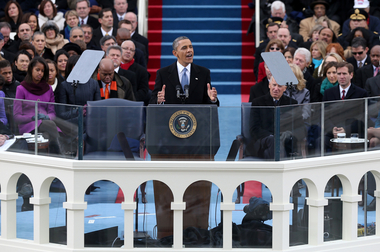
Inauguration Day 2013

  Inauguration Day 2013

President Barack Obama offered an inaugural speech calling for unification of purpose regardless of political party.  This is the sort of speech we all expect in an inaugural presentation.  Sadly political divisions in the nation are more like chasms.  He knows that there are major differences between the political parties and other groups in the country.  Listen to Bill O’Reilly or Sean Hannity and there is affirmation of the split between the political parties.

Thus he tried to put the best face on a country that is seriously broken by geographic, religious, and racial disagreements.  Never mind the breach between rich and poor or the labor unions battling the employers.  When state leaders voice intentions to nullify or just plain ignore federal law and many who voice desires to succeed from the union, the president’s job will be about holding the nation together.

This may seem as all too negative.  The president’s speech about one purpose was an “A” effort towards healing our differences.

Obama Wins in a Divided Nation

“Oh, somewhere in this favored land the sun is shining bright;

The band is playing somewhere, and somewhere hearts are light,

And somewhere men are laughing, and somewhere children shout;

But there is no joy in Mudville — mighty Casey has struck out.”

It appears that Barack Obama has won a second term as president of the United States.  While the final counts have not been recorded the popular vote is very close.  Barack Obama may have won the electoral count by a large majority the POTUS does not have a mandate to do anything.  In the popular vote count he won by a nose in a country of 311 million people.  It tells me how divided our nation is on so many issues.

Even as I write this post Mitt Romney has not agreed to concede defeat.  Perhaps his staff is looking for irregularities in the vote counts that could change the outcome.  Then again he came so close he may be having a difficult time accepting defeat.  It’s got to hurt.

So assuming the networks are correct the question remains; where will the president take this country in the next four years?

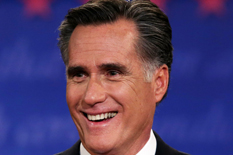
Presidential Debate One Goes to Mitt Romney

Even before tonight’s presidential debate was over I knew that Mitt Romney had won.  He strongly stated the case that Barack Obama had spent too much time on health care when jobs were the issue facing many Americans.

Romney’s ideas for creating jobs are full of holes.  However, he emphasized that he could provide the stimulus to create 12 million jobs in his first four years as president.  The president had no response.

The reporters and commentators on CNN agree with my assessment.  James Carville was part of the CNN panel and he too agreed that Romney was the winner.

This does not mean that Romney will win the election.  It does give the Republicans confidence that their man can win the White House.

“The time for change has come.”

Those are Barack Obama’s words in a clip from a speech that Chris Matthews plays in the introduction to his weekend program on NBC.  As we all know there has been no change.  Grid lock has come since the GOP won control of the House of Representatives.

Guests on Matthews’ show this past Saturday all agreed that while the president is well liked the public has grown weary of the words that have not brought a renewed economy.  John Heilemann, one of the members of that panel said, “Mitt Romney is never going to be likable” but acknowledged that the public might overlook that likability to see the economy in a recovery mode.  No one on the panel disagreed.  This is a panel of well respected Obama supporters.

Just last night Bill Clinton was in a NYC fund raiser for Obama.  He pointed out that the austerity of Europe, that is Romney’s plan, has resulted in even higher unemployment than we are experiencing in the United States.  However, today’s win of Wisconsin Gov. Scott Walker sent the message that Americans are not buying the Democratic Party arguments.

The argument that things could be worse just doesn’t cut it for most
Americans.  Desparate Americans want results.  Obama has not provided what Americans want.

A new president is on the horizon.  The race is Romney’s to lose.