
We Are Not Criminals
The Bureau of Labor Statistics (BLS) has again handed President Donald Trump a bleak set of jobs numbers, just one month after he fired the agency’s commissioner over weak employment data.
On Friday morning, the BLS reported that nonfarm payroll employment rose by only 22,000 in August. Analysts had forecast that the economy would add 75,000 jobs during the month. According to the agency, gains made in health care were offset by losses in federal government employment, as well as mining, quarrying and oil and gas extraction.
While July’s figures were revised up to 79,000 from 73,000, June’s numbers were revised down by 27,000, dropping from 14,000 to minus-13,000. Meanwhile, the unemployment rate edged up to 4.3 percent from 4.2 percent.
Lowering interest rates to stimulate the economy is known as expansionary monetary policy. This policy aims to reduce borrowing costs, encouraging households and businesses to increase spending and investment, which helps boost economic activity.
Given that the employment rose by only 22,000 in August it is likely that the Fed will lower the interest rate as Donald Trump has been pushing.
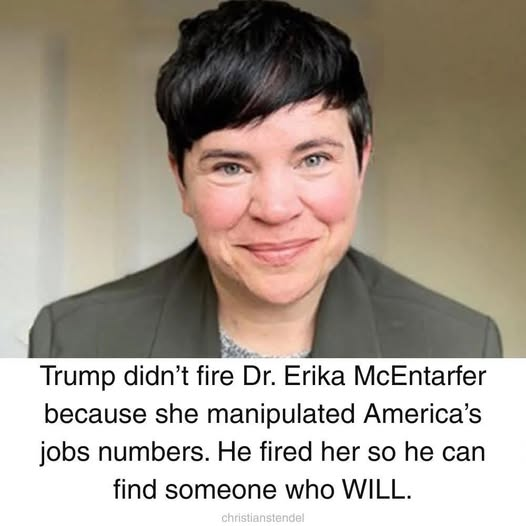
We all see what’s going on – Trump fired the Commissioner of Labor Statistics so he could replace her with someone who will lie for him.
By
David Culver, Norma Galeana, Evelio Contreras and Rachel Clarke, CNN reporters
Updated Aug 7, 2025
The Dalles, Oregon —
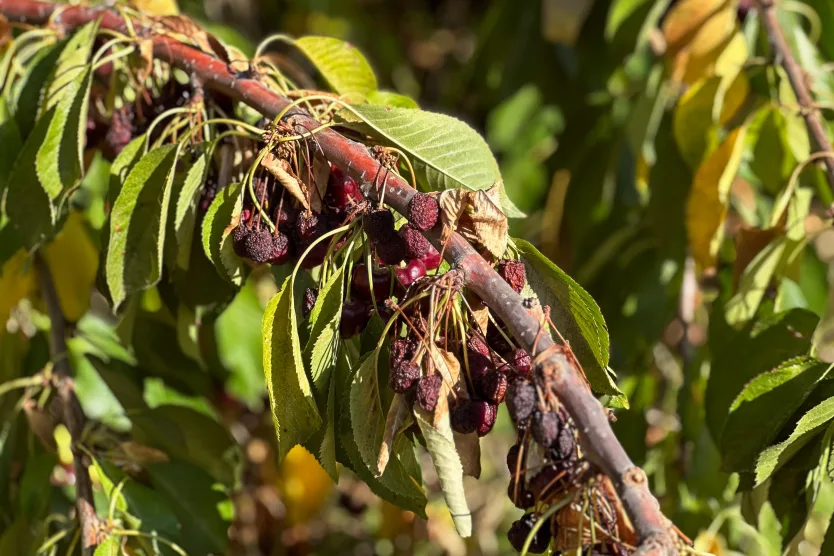
The cherries are rotting on the trees in Ian Chandler’s orchards. Branch after branch hang heavy with fruit the Oregon farmer calls “mummified” — dark, shriveled and unappetizing.
They should have been picked a couple of weeks ago to tempt shoppers at markets and stores, or processed to garnish Shirley Temple mocktails, shiny and fat, promising bursts of sweetness.
The lost harvest has hit almost a quarter of Chandler’s 125 acres of cherry trees — not because of bad weather, disease or blight, just because there was no one to pick the fruit.
“What you’re going to see is a bunch of fat, happy raccoons this winter,” Chandler said ruefully, standing amid his still burdened trees. “Unfortunately, we weren’t able to harvest these.”
He said he’s built up a loyal seasonal workforce for his Wasco County operation called CE Farm Management, about 90 minutes from Portland, with the same people coming year after year and staying in touch with birth announcements and Christmas cards in between. But this year half of them did not arrive, and many of his neighbors were scrambling for pickers too. All told, Chandler said he will lose $250,000-$300,000 of revenue, left to rot on the trees.
“It’s lost revenue for the operation, which is one thing, but it’s also lost revenue for the workers that would have been able to pick them had they been here,” he said.
“The beginning of the season, it coincided, unfortunately, with a lot of really strong immigration enforcement down in southern California, where our workforce comes from, and that had a chilling effect on people wanting to move.”
Chandler’s pickers are mostly Latinos who follow the harvests in the west and northwest. But with raids by Immigration and Customs Enforcement on cities and workplaces and detentions and even deportations ensnaring many with no criminal records, he has seen a dramatic drop-off in labor this year.
It’s a situation that’s being repeated across the nation as crops ripen for harvest. The US Department of Agriculture estimates 42% of hired crop farmworkers are undocumented immigrants, with no authorization to work. Another 26% are immigrants who have become citizens or permanent residents.
Since April, 1.4 million people have dropped out of the US labor force — 802,000 of whom were foreign-born, according to the Bureau of Labor Statistics. Farmworkers are not tracked in the official monthly jobs reports, but analysts agree immigration policy is having an impact generally across the nation.
The issue has come to the attention of President Donald Trump, who promised help for the agricultural sector in a Tuesday morning phone interview with CNBC. “I take care of the farmers. I love the farmers. They’re a very important part of this country, and we don’t want to do anything to hurt the farmers,” he said.
Vice President JD Vance has said his preferred solution is automation. But Chandler’s farm won’t be mechanized — he believes cherries are best harvested by hand, preferably an experienced one to not rip off next year’s crop that’s already showing as buds. He does hire locally, but he says Oregonians, whether they are students on summer break or adults looking for full-time employment, only last in non-picking positions, like scanning buckets of produce or driving a tractor.
“I worked in high school in the cherry industry back in the 90s and then got back into this industry back in 2011 until current. You do not find people who are normally born here in the United States, unless they’re children of immigrants who are already doing this work, who want to work in this kind of industry,” he said. “It just doesn’t exist.”
Nevertheless, everyone hired by Chandler provides identification and work authorization so he does not know who may be in the country illegally.
“We’ve had relationships with these workers for years,” he said. “You talk to a family, you get a good relationship with them, they recommend more family members, and that’s how you build up your workforce. You could have all the children born in the United States, but if mom’s still trying to work through the immigration system, and has an issue, the whole family might say, ‘Look, we’re not going to risk it, because we don’t want mom to get picked up, so we’re going to stay down in California.’ So, then we lose our workforce.”
One of those absent from Oregon farms this year is a woman who told us to call her Lisa. She has permission to work through the Deferred Action for Childhood Arrivals (DACA) program, but asked her actual name not be used for fear it might hamper her DACA renewal. Her three young children are all US citizens, but she worries about her mother and stepfather who have lived in the US for decades as undocumented workers and so she stayed in California.
“My parents are agriculture workers and seasonal workers, so every summer they will migrate to the state of Oregon to work the cherry season,” she said, adding that she and the children would often join them. “But this year, we decided to stay home just to be safe.”
While Chandler pointed out the financial loss he and his workers will suffer this season, Lisa highlighted the impact on small farmers like Chandler. And both said the federal government will also lose out.
“There is no shady under-the-table stuff. It’s all above board,” Chandler said, noting the deductions he made from each worker’s check to pay federal and local taxes and make contributions to Medicare and Social Security. “There seems to be a big disconnect when (opponents say,) ‘There’s this shadow economy of undocumented people being paid in certain ways.’ No, everything is above board. Everybody shows documentation to work.”
Lisa said about $150 was automatically deducted from her paycheck of some $900, and she thought the same was true for her parents even though they cannot file for a tax refund or use Medicare or Social Security, both of which they pay into.
The tax argument was raised by Trump too in his CNBC interview. “We’re going to be coming out with rules and regulations. I mean, you’ll see a farmer with the same person working for him for 20 years. The person’s even paying taxes and other things,” Trump said, drawing a distinction between hard-working undocumented immigrants who work on farms and those who commit violent crimes.
In President Donald Trump effort to rename everything he sees his opportunity to rename another prominent body of water.
Donald Trump Plans to Rename Another Gulf.

The Associated Press reported on Wednesday, May 7, that two senior White House officials have confirmed that — during his upcoming trip to Saudi Arabia— Trump plans to announce that the U.S. will officially be updating its lexicon to call the Persian Gulf the “Arabian Gulf” or the “Gulf of Arabia.”
While the U.S. military has referred to the body of water as the Arabian Gulf for years, the Persian Gulf name is more common among American civilians. For users in the United States, Google Maps currently lists the name as “Persian Gulf (Arabian Gulf),” while Apple Maps solely displays it as the “Persian Gulf.”
Here is the list of renamings Trump intends to do.
Gulf of Mexico becomes Gulf of America Persian Gulf becomes Gulf of Arabia November 11, Veterans Day becomes Victory Day for World War I May 8 as “Victory Day for World War II Denali, federally designated as Mount McKinley
NOT MAKING AMERICA GREAT
The U.S. economy shrank at a 0.3% annual pace from January through March, the first drop in three years, as President Donald Trump’s trade wars disrupted business. First-quarter growth was slowed by a surge in imports as companies in the United States tried to bring in foreign goods before Trump imposed massive tariffs.
The January-March drop in gross domestic product — the nation’s output of goods and services — reversed a 2.4% gain in the last three months of 2024. Imports grew at a 41% pace, fastest since 2020, and shaved 5 percentage points off first-quarter growth. Consumer spending also slowed sharply — to 1.8% growth from 4% in October-December last year. Federal government spending plunged 5.1% in the first quarter.

Forecasters surveyed by the data firm FactSet had, on average, expected the economy to eke out 0.8% growth in the first quarter, but many expected GDP to fall.
Financial markets sank on the report. The Dow Jones tumbled 400 points at the opening bell shortly after the GDP numbers were released. The S&P 500 dropped 1.5% and the Nasdaq composite fell 2%.
The surge in imports — fastest since 1972 outside COVID-19 economic disruptions — is likely to reverse in the second quarter, removing a weight on GDP. For that reason, Paul Ashworth of Capital Economics forecasts that April-June growth will rebound to a 2% gain.
“Trump’s ‘will he, won’t he’ tariff chaos is just one more con on working people.”
That’s what Melinda St. Louis, Global Trade Watch director at the watchdog group Public Citizen, said in a Wednesday statement after U.S. President Donald Trump announced a 90-pause for what he has called “reciprocal” tariffs, excluding China.
It seems Donald Trump wants a recession. Why? A recession will drive down the price of real estate, companies, and shares of stock. Trump and his fellow billionaires want o buy everything on the cheap and then enjoy the ride upward-no matter the cost to working people.
“OUR PLAN IS WORKING PERFECTLY AND IS JUST A NEGOTIATING TACTIC BUT IT IS ALSO GOING TO BE PERMANENT AND WE WILL BE THE WORLD LEADER IN TEXTILES AND NOW THERE IS A PAUSE AND EVERYONE NEEDS TO CHILL BUT ALSO WE WILL NEVER BACK DOWN AAAAAAHHHHHH.”

US stocks tumbled today after the White House clarified that its tariff on all Chinese goods was at least 145% — even higher than previously believed. This comes a day after US stocks skyrocketed following President Donald Trump’s announcement of a 90-day pause on all “reciprocal” tariffs, except for China. Beijing, meanwhile, implemented its own retaliatory tariffs of 84% on US goods.
• Trade negotiations: Trump just defended his tariff policy in a Cabinet meeting, saying his administration is “working on deals” with multiple countries. Earlier today, the EU announced it would pause its retaliatory US tariffs for negotiations. Even after Trump’s U-turn, economists say the damage is done.
DOW down 1,835.94, S&P 500 down 281.5 5.5% mid-day April 10,2025
A majority of Americans voted for Donald Trump!
US stocks opened on a grim note in New York, with the Morningstar US Market Index down as much as 3.6% in early trading. Stocks were briefly more than 2% in the green, seemingly on rumors of a pause in the implementation of tariffs, but they quickly fell lower again.
The Nasdaq 100 was 1.8% lower in midmorning trading, while the S&P 500 was down 2.0%. The “Magnificent Seven” stocks continued their declines from the previous week, with Nvidia NVDA down 1.9%, Tesla TSLA down 6%, and Apple AAPL down 4.5%.
Since the imposition of Trump Tariffs.
As of 10:19 AM Pacific Coast Time
37,447.63-5,096.59 (-11.98%)
4,973.86-907.77 (-15.43%)
17,165.05-3,847.12 (-18.31%)
Honda and Nissan have officially entered into talks to combine their companies by summer 2026, the companies announced Monday, a deal that would create the world’s third-largest automaker by sales.
A merger would bring the Japanese auto giants under a joint holding company, according to a news release. Mitsubishi, a longtime Nissan partner, also has agreed to join the negotiations.
I have owned Nissan cars for decades. The first was a Datsun 200SX. Mine was blue. The car was the size of a Ford Mustang. It took us to Las Vegas at least once and ran better than our Chevrolet on Highway 15.

I have also owned some Honda Accords and Honda Civics that were equally reliable.
Why these companies are negotiating is to giving them the muscle to compete with GM, Toyotal
The three brands already have a partnership to work on vehicle intelligence and electrification, which includes technological collaboration with the goal of achieving “carbon neutrality and a zero-traffic-accident society.”
The deal joins Japan’s second- and third-largest automakers, giving the combined company the scale to better compete in the tumultuous global auto market. Last year, Honda built nearly 4.2 million cars and sold nearly 4 million globally, while Nissan said it produced and sold about 3.4 million. By comparison, Toyota and General Motors sold about 10 million and 6.2 million vehicles in the same year respectively.
When is merger of two large competing businesses a restraint of trade? I say that this merger will impact the grocery business in a negative way. Finally I am not alone.
The proposed $25 billion Kroger-Albertsons grocery giant merger is already running into significant opposition from progressive lawmakers and others. It’s no wonder. Most of the grocery stores in Los Angeles are owned by Kroger and Albertsons.
Sen. Elizabeth Warren of Massachusetts on Wednesday called on the Federal Trade Commission to block the deal. “More mergers and less competition would mean even higher prices—and layoffs for employees,” Warren said on Twitter.
Sen. Bernie Sanders of Vermont has also urged the regulators to reject the deal. And the Senate Judiciary’s antitrust subcommittee announced Tuesday that it will hold a hearing next month to scrutinize the merger.
“We have serious concerns about the proposed transaction between Kroger and Albertsons,” Senators Amy Klobuchar of Minnesota and Mike Lee of Utah said in a joint statement. “We will hold a hearing focused on this proposed merger and the consequences consumers may face if this deal moves forward.”
Senators Klobuchar, Richard Blumenthal of Connecticut and Cory Booker of New Jersey urged FTC chair Lina Khan Tuesday to investigate the merger, saying it “raises considerable antitrust concerns.”
The proposed merger, which the companies expect to complete in 2024, would combine two of the largest grocers in the United States. Kroger currently owns nearly two-dozen chains, including Ralphs, Dillons, Food 4 Less, Fred Meyer, Mariano’s and QFC. Albertsons, meanwhile, owns 24, such as Safeway, Vons, Jewel-Osco, Shaw’s and Acme.
The companies contend a combination would help them compete with Walmart (WMT), Amazon (AMZN), Costco (COST) and other giants. The grocers are also facing increased pressure from Aldi, the fast-growing German discount supermarket chain.
The companies said the merger will benefit shoppers, workers and local communities and make the US food system more equitable.
With grocery prices already a concern for many shoppers, the companies said that they would be able to use $500 million in cost savings from the deal to reduce prices for shoppers and tailor promotions and savings. They also said they will invest $1.3 billion in Albertsons, which would include lowering prices.
But the new grocery empire would worsen the problem of grocery access, particularly in low-income areas in cities and rural towns, say some competition experts, small business advocates and researchers.
They believe the merger would drive out rival smaller grocers and independent stores, squeeze suppliers, and set off a vicious cycle of consolidation among supermarkets and suppliers, further entrenching the problem.
To satisfy regulators, Kroger and Albertsons have said they will divest hundreds of stores in areas where they overlap.
But FTC chair Khan has been critical of such divestitures in the past as a remedy for antitrust concerns, saying they were an ineffective remedy to preserve competition., and she has has pointed to Albertsons itself as a prime example.
In 2015, Albertsons merged with Safeway and sold off 146 stores to Haggen, a smaller chain, to appease regulators.
But Haggen struggled to integrate the Safeway stores and soon spiraled into bankruptcy. Albertsons then bought back dozens of the same stores it had previously sold to Haggen in bankruptcy court.
Khan, in a 2017 law review article, called it a “spectacular” failure and said the remedy was “[hard] to fathom.”
 Coast Contact