Your cost at the supermarket is about to go up

Albertsons in South Los Angeles on Friday afternoon. 

Get ready for higher food prices at your local supermarket!

Kroger Co. said it is buying rival Albertsons Cos Inc. in a deal that values the company at $24.6 billion, one of the biggest deals in the history of the grocery industry in the U.S.

That means that other than Walmart, Costco, and Trader Joe’s almost every food market in Los Angeles will be owned by Kroger. Smaller food chains are usually specialty stores that do not offer a complete choice of foods.

The effect is obvious. Less competition means higher prices. Jamie Court, president of Consumer Watchdog, a Santa Monica-based consumer advocacy group, called the proposed merger “a terrible idea. This would give too much market power to one big giant, especially in California,” Court said. “We would urge the administration to reject this merger.”

To overcome anticipated political and regulatory hurdles, Kroger and Albertsons said they would get rid of stores in markets where they overlap. The companies said they would spin off up to 375 Albertsons stores in a stand-alone public company or just close them. Or in other words less stores means less competition.

More Pageantry in the UK Sustains the Soap Opera

Guard at Buckingham Palace

This is a money maker. King Charles III of the UK is expected to be crowned on June 3 next year in a ceremony at Westminster Abbey.

Speaking on condition of anonymity before a public announcement, the government officials said plans are converging on that Saturday near the start of the summer although discussions over which other days will become official holidays are still going on. Buckingham Palace declined to comment.

This event is scheduled at the beginning of the summer season so that it will draw larger crowds of visitors. According to its annual report of 2019-20, a record 3,285,000 people visited the official residences, generating approximately £49,859,000. From a retail perspective, gift shop sales of the royal collection made £19,983,646 in a single year, making its total income of the year to be £71,526,000.

You Would Be Smiling Too!

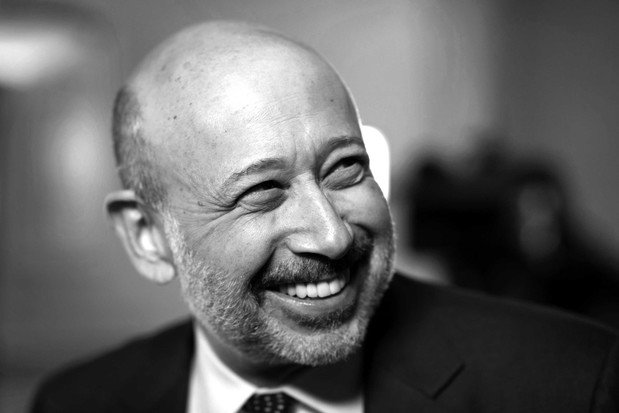
Lloyd Blankfein

Lloyd Blankfein is the CEO of Goldman Sachs.  The company cut 900 jobs last year.  He earned $26 million in 2012.   Wouldn’t you be smiling? But he is not alone!

John Stumpf, the head of Wells Fargo Bank was awarded $19.3 million in 2012.

The Capital One chief, Richard Fairbank, was the third highest-paid bank CEO in North America even after taking a 8.9 percent pay cut, dropping his compensation to a mere $17.5 million for 2012.

Poor Jamie Dimon, CEO of JP Morgan Chase, saw his 2012 compensation cut in half to $11.5 million after a loss of more than $6.2 billion on a failed bet on derivatives.

The pay of the top 20 bank CEOs increased an average of 7.7 percent for 2012 compared with a year earlier, according to data compiled by Bloomberg. The tally is based on salaries, stock, bonuses and long-term incentive pay awarded to the CEOs for 2012.

The annual earnings of the heads of America’s largest corporations average is over $28 million.

Meanwhile the United States BLS reported last September that Median family household income declined by 1.7 percent in real terms between 2010 and 2011 to $62,273.

In other words the leaders of our largest companies earn more than 456 times the average family household earnings.

Isn’t free enterprise a wonderful thing?

A Growing Welfare Class in the United States

I hear the constant drum beat that 47 million Americans pay no taxes.  That those people are on the dole.  All those people don’t really want to work.  The argument goes they are happy sitting in their homes doing nothing.

Is this all really true? If so, how did this happen?

A Google search [percentage of Americans paying income taxes] confirms that about one half of all Americans do not pay income taxes.  The sites How Stuff Works, Fox News, The Washington Post, Reuters, and others all offer their take on why this is fact and some offer arguments about changing the taxing system.  All the postings do affirm that everyone pays Social Security and Medicare taxes.

From How Stuff Works: So who are the 49 percent of Americans who don’t pay income taxes? The vast majority are the lowest income households, the elderly and young working families with children.

The reason this situation exists and is becoming worse was clearly defined in a Market Watch article posted on April 24, 2012.

Manufacturing employment as a fraction of total employment has been declining for the past half century in the United States and the great majority of other developed countries. A 1968 book about developments in the American economy by Victor Fuchs was already entitled “The Service Economy.”

Although the absolute number of jobs in American manufacturing was rather constant at about 17 million from 1969 to 2002, manufacturing’s share of jobs continued to decline from about 28% in 1962 to only 9% in 2011.

From CNN: A very large portion of U.S. apparel imports comes from Bangladesh. Many companies have been shifting orders there, because labor costs in the country are so low. Bangladesh is on track to surpass China within the next seven years as the largest apparel manufacturer in the world.

It is already the third biggest exporter of apparel to the U.S., behind China and Vietnam. The value of clothing imported from Bangladesh into the U.S. has quadrupled over the last decade to $4.5 billion annually, according to the apparel group.

Go into any store in the United States and you will find most products have been made in another country.  Talking to a lady at Trader Joe’s just yesterday and she complained that the fresh produce is primarily from Mexico.

Back in 2007 the total unemployed that included part time workers and those who have given up searching for a job was below 8.5% of the likely working population.  Today that number is 13.9%.  That is the BLS number referred to as U6 on the monthly reports.  It’s an improvement from the maximum number of 17.1% reached in October 2009.

I can’t prove it but I believe no one wants to live poorly when they see the things they can have with an income.  Unfortunately the poor are also the least educated.  That condition of poor education is partially lack of opportunity and partially lack of capability.  Not all of us are capable of working in Silicon Valley or performing surgery at the Mayo Clinic.  Those less technical jobs have been sent to the places where labor costs less.  Every company has the right to lower their costs.  Middle class and blue collar America has paid the price for those off shored jobs.

So the wealthy of America (they pay most of the taxes) have concluded that welfare is a cheap price to pay to keep peace in the United States.  It’s the thing the royalty of France and Russia did not understand.  We all know how that worked out.  There is no royalty in the United States but there is a wealthy class that is the equivalent of royalty.  Once again the U.S. leads the list with 442 billionaires the most of any nation in the world says Forbes magazine.  The New York Daily News reports that there are 9 million members of the millionaires club in the U.S.

My prediction is that the welfare class will continue to exist in the United States and is likely to grow throughout the 21st century. This is not negative. It is reality.

You Can Be Richer Too!

Stupid articles and papers telling us the obvious wastes our time.  Businessweek featured such a totally wasteful piece discussing someone named Justin Wolfers, a University of Michigan professor, who wrote an article titled “Economists Nail It: You Can Never Be Too Rich.”  Do I need someone to tell me that it is better to be rich than poor?  Even the reporter, Peter Coy, who is a primary commentator/reporter for the magazine offered the obvious remark, That may seem to deserve a Homer Simpson “Duh!” award for most obvious research finding of the month.  So why even post this report?  The answer must be that he has space to fill.

This has been a great year to be just a little bit richer.  If you were already rich you might have become a lot richer.

In just the four months of this year the Dow Jones Average increased by 14.3% and the S&P 500 increased by 13.2%.  Understand that you did not have to be particularly smart to choose the right stocks to have earned that money.  You simply had to buy an S&P 500 index account and your $1,000 would now be worth $1,132 today.  If that investment had been $10,000 you could sell your gains now and have $1,320.  Enough to buy that new giant TV or pay down a burdensome credit card.

So what’s the problem.  “Your Money” reported that 55% of the people surveyed did not believe this has been a good time to invest.

So when is a good time?

You see article after article crying about the wealth gap between the rich and everyone else.

Sad to say it but the average man on the street is unwilling to take the chances that the rich take.  Perhaps that is one of the reasons you may never be rich.

America’s Dying Industries

Shoe Manufacturing

This comes as no surprise.  Still it hurts to see these numbers.  As you read each of these items you know the reason for the decline in business.  This was published on Huffington Post.  The reasons are as follows:

  1. The photofinishing decline was the result of the digital camera era and the sharing of photos on internet web sites.
  2. The high cost of labor now makes appliance repair more expensive than buying a new item.
  3. Advertising revenue has declined at most newspaper and magazine publications thanks to the internet and smartphones.
  4. Manufacturing of consumer products is now cheaper in most other nations of the world.

Photofinishing

Revenue decline 2002 to 2012  -70%.  $15.509 million to $897 million

Recordable Media Manufacturing

Revenue decline 2002 to 2012  -53.6%.  $4.144 billion to $3.311 billion

Money Market and Other Banking

Revenue decline 2002 to 2012  -51.2%.  Industry revenue in 2012 $834 million

DVD, Game and Video Rentals

Revenue decline 2002 to 2012  -49.6%.  Industry revenue in 2012 $5.894 billion

Newspaper Publishing

Revenue decline 2002 to 2012  -48.1%.  Industry revenue in 2012 $29.302 billion

– Women’s/Girls’ Apparel Manufacturing

Revenue decline 2002 to 2012  -57.7%.  Industry revenue in 2012 $8.603 billion

Costume/Team Uniform Manufacturing

Revenue decline 2002 to 2012  -49.9%.  Industry revenue in 2012 $986 million

Appliance Repair

Revenue decline 2002 to 2012  -44.5%.  Industry revenue in 2012 $3.684 billion

Hardware Manufacturing

Revenue decline 2002 to 2012  -44.5%.  Industry revenue in 2012 $7.484 billion

Shoe/Footwear Manufacturing

Revenue decline 2002 to 2012  -39.6%.  Industry revenue in 2012 $1.712 billion

The 1% aren’t like the rest of us

This Op-Ed from the Los Angeles Times is really worth the read.   I admit to being part of the 47% that Mitt Romney mocked.  The findings of this survey confirm what I always knew.
Monopoly Game Box

The ultra-rich share few of the priorities of most Americans, but their access to policymakers is greater, a study finds.

By Benjamin I. Page and Larry M. Bartels

March 22, 2013

Over the last two years, President Obama and Congress have put the country on track to reduce projected federal budget deficits by nearly $4 trillion. Yet when that process began, in early 2011, only about 12% of Americans in Gallup polls cited federal debt as the nation’s most important problem. Two to three times as many cited unemployment and jobs as the biggest challenge facing the country.

So why did policymakers focus so intently on the deficit issue? One reason may be that the small minority that saw the deficit as the nation’s priority had more clout than the majority that didn’t.

We recently conducted a survey of top wealth-holders (with an average net worth of $14 million) in the Chicago area, one of the first studies to systematically examine the political attitudes of wealthy Americans. Our research found that the biggest concern of this top 1% of wealth-holders was curbing budget deficits and government spending. When surveyed, they ranked those things as priorities three times as often as they did unemployment — and far more often than any other issue.

If the concerns of the wealthy carry special weight in government — as an increasing body of social scientific evidence suggests — such extreme differences between their views and those of other Americans could significantly skew policy away from what a majority of the country would prefer. Our Survey of Economically Successful Americans was an attempt to begin to shed light on both the viewpoints and the political reach of the very wealthy.

While we had no way to measure directly the political influence of those surveyed, they did report themselves to be highly active politically.

Two-thirds of the respondents had contributed money (averaging $4,633) in the most recent presidential election, and fully one-fifth of them “bundled” contributions from others. About half recently initiated contact with a U.S. senator or representative, and nearly half (44%) of those contacts concerned matters of relatively narrow economic self-interest rather than broader national concerns. This kind of access to elected officials suggests an outsized influence in Washington.

On policy, it wasn’t just their ranking of budget deficits as the biggest concern that put wealthy respondents out of step with other Americans. They were also much less likely to favor raising taxes on high-income people, instead advocating that entitlement programs like Social Security and healthcare be cut to balance the budget. Large majorities of ordinary Americans oppose any substantial cuts to those programs.

While the wealthy favored more government spending on infrastructure, scientific research and aid to education, they leaned toward cutting nearly everything else. Even with education, they opposed things that most Americans favor, including spending to ensure that all children have access to good-quality public schools, expanding government programs to ensure that everyone who wants to go to college can do so, and investing more in worker retraining and education.

The wealthy opposed — while most Americans favor — instituting a system of national health insurance, raising the minimum wage to above poverty levels, increasing the Earned Income Tax Credit and providing a “decent standard of living” for the unemployed. They were also against the federal government helping with or providing jobs for those who cannot find private employment.

Unlike most Americans, wealthy respondents opposed increased regulation of large corporations and raising the “cap” that exempts income above $113,700 from the FICA payroll tax. And unlike most Americans, they oppose relying heavily on corporate taxes to raise revenue and oppose taxing the rich to redistribute wealth.

Some of the differences between the political views of the wealthy and other Americans may be explained by differences in the two groups’ economic experiences and self-interest. The wealthy are likely to have better information about the costs of government programs (for which they pay a lot of taxes) than about the benefits of those programs. They don’t usually have to rely on Social Security, for example, let alone food stamps or unemployment insurance.

Another possibility is that the wealthy — who tend to be highly educated, well informed and committed to charitable giving — seek the common good as they see it, and in fact know better than average Americans what sorts of policies would benefit us all. On the issue of federal deficits, for example, the public has come to see government debt as an increasingly important problem over the last two years, reducing the gulf between their views and those of the wealthy. Is that because the wealthy were ahead of the curve, or because their concern helped stimulate a steady drumbeat of deficit alarmism in the media and in Washington?

Our pilot study included a relatively small number of wealthy citizens, and they were all from a single metropolitan area. A larger-scale national study is needed to pin down more precisely the views of wealthy Americans about public policy. We need to understand how they formed the preferences they have, and how wealthy people from different regions, industries, and social backgrounds differ in their political views and behavior. We also need to understand more about their political clout.

Our initial results suggest the wealthy have very different ideas than other Americans on a variety of policy issues. If their influence is far greater than that of ordinary people, what does that mean for American democracy?

Benjamin I. Page is a political science professor at Northwestern University and co-author of “Class War? What Americans Really Think About Economic Inequality.” Larry M. Bartels is a political science professor at Vanderbilt University and author of “Unequal Democracy: The Political Economy of the New Gilded Age.”

// Copyright © 2013, Los Angeles Times

We Are Too Big to Fail!

The Senate passed the $700 billion bank bailout bill on October 3 2008. The guts of the bill was the same as the three-page document submitted on September 21 2008, by Treasury Secretary Henry Paulson. Paulson had asked Congress to approve a $700 billion bailout to buy mortgage-backed securities that were in danger of defaulting. By doing so, Paulson wanted to take these debts off the books of the banks, hedge funds and pension funds that held them. The goal was to instill confidence in the functioning of the global banking system, which had narrowly avoided collapse.

Then came the annual bank stress tests.  The official name is Comprehensive Capital Analysis and Review, or CCAR.  The results of these tests would be to identify those banks and associated companies that were adequately capitalized. Those not having sufficient funds would be required to take action to resolve the issue.  The test is required for all banking institutions with $50 billion in total capital assets.

No banks were split apart and nothing was done to confront the fact that the four largest banking organizations overwhelmingly impact the entire nation.

Largest banks and thrifts in US by total assets

Total                 Total

Company                         City, State                 assets            deposits

JPMorgan Chase & Co.        New York, NY            2,250.8          1,127.8

Bank of America Corp.        Charlotte, NC             2,129.0           1,033.0

Citigroup Inc.                      New York, NY          1,873.9              865.9

Wells Fargo & Co.               San Francisco, CA      1,313.9             920.1

If any of these banks failed the United   States would step in to protect their well being.

Federal Reserve press release dated March 14, 2013.  “The Federal Reserve on Thursday announced it has approved the capital plans of 14 financial institutions in the Comprehensive Capital Analysis and Review (CCAR). Two other institutions received conditional approval, while the Federal Reserve objected to the plans of two firms.”

As to breaking apart the behemoths, not a word.

I Don’t Shop at Wal-Mart

Not only do I not shop at Wal-Mart, I do not have my oil changed at Jiffy Lube.  Companies like Wal-Mart do bring low cost goods to America and the world but they also treat their vendors and their employees like dirt.  As to Jiffy Lube, I prefer the attention of a capable mechanic.  I will never forget my one time at a quick lube franchise.  I had to have my car towed to another garage.

I am willing to pay a little more for the competent workers that are employed by the independent stores and garages that really give me the kind of services I want.

Yes, I shop at Costco.  The reason is that they pay their employees so well that the employee turnover is low.  My next door neighbor, a Costco employee, bought his home at the bottom of the housing collapse but still paid $333,000.  His wife has a part time at home business.  The pay at Costco can’t be too bad.

JobsMeanwhile the working poor are employed by the big and very successful national chains.  Those chains depend on low wage workers.  The companies are Wal-Mart, Target, Pizza Hut, McDonald’s, etc. etc.  The top 50 executives at each of those companies were paid an average of $9.4 Million a year.  The typical worker at those companies has an adjusted gross income of $13,900 a year.

Focusing on Wal-Mart, it’s subsidized by the taxpayers of America.  It has the most workers on public assistance. In 2007, the company shifted from regular shifts to flexible shifts, a change labor activists said was designed to force full-time workers to downgrade their status to part-time, so they would not qualify for health insurance or other benefits. The result is that hundreds of thousands of Wal-Mart employees rely on state benefits or Medicaid. Most of the company’s warehouses are contracted out to temp agencies, so even if a warehouse loader works full-time in a Wal-Mart warehouse for years, he gets no benefits.  Wal-Mart has also spent at least $1 billion since 2005 settling lawsuits over unpaid wages or illegal working conditions. One study estimated that Wal-Mart workers cost taxpayers more than $1 Billion every year.

Source for part of this article is The Week magazine.

The Rich are Getting Richer

Ford Factory - It Looks Good

Workers build a Ford Focus on the assembly line at Ford Motor Co.’s Michigan assembly plant in 2011.  (Bill Pugliano, Getty Images /December 14, 2011)

—————————————————————————-

Let’s start with the positive news that 236,000 jobs were added to payrolls in the United States during February.  The most optimistic forecasts were 160,000 new jobs.  This was a marvelous wonderful surprise.  We can only hope that this is the beginning of a trend.

Meanwhile the 100 wealthiest people on the planet added $28.7 billion to their collective net worth this week after the Dow Jones Industrial Average surged to a record, according to the Bloomberg Billionaires Index.

It was not just Bloomberg that pointed out the discrepancy between us and the wealthiest.  Michael Hiltzik’s Los Angeles Times column hit the very same fact.  He wrote, “Wages peaked at nearly 53% of GDP in 1970, but they never saw that number again. Through expansions and recessions that percentage has fallen almost without surcease. As of the end of last year, it was below 44%.”

“Try to find a statistical measure that shows the middle class and working class keeping up with growth in corporate wealth and affluence at the top reaches of the income scale. Viewed in isolation, of course, growth in corporate wealth would be a good thing for everybody. But the figures show that the people most responsible for this growth — the workers who contribute their sweat and brainpower — are being mulcted of their fair share.”

Am I being too harsh on the richest in our society?  My view is that no society can thrive if everyone is not included.