40 million and counting

I admit to being a numbers wonk.

Twelve percent of the United States population lives in California. It was that way in the last national census. So we are not growing faster than the national population. California’s major cities have run out of space so they must either build taller apartment houses or simply resign to the fact that they have reached to maximum population limit. The consequence is the ever increasing price for rental apartments and individual homes.

California is within earshot now of 40 million residents — 39,256,000 — based on analysis of housing data and other measures. The way these surveys rely on slightly old data, in reality California is possibly already over 40 million.

The state Department of Finance’s estimate also pegs the city of Los Angeles at over four million population for the first time since the state has done this report. Or not quite triple the population of California’s second-largest city, San Diego. Here is the top 10:

  1. Los Angeles   4,030,904
  2. San Diego     1,391,676
  3. San Jose       1,042,094
  4. San Francisco  866,583
  5. Fresno             520,453
  6. Sacramento     485,683
  7. Long Beach     484,958
  8. Oakland          422,856
  9. Bakersfield      379,110
  10. Anaheim          358,136

Here is the full report if you like to peruse the stats.

California’s population was 10.7 million people in 1950. In 1960 at 15.8 million people it was behind Canada that had a population approaching 18 million. Today Canada’s population is lagging behind at 36 million and NYC has grown by about 1 million people since 1990.

We all ought to understand the reasons. They are the weather, arts and entertainment, high technology, outstanding colleges and universities.
California set for more exports, strong manufacturing


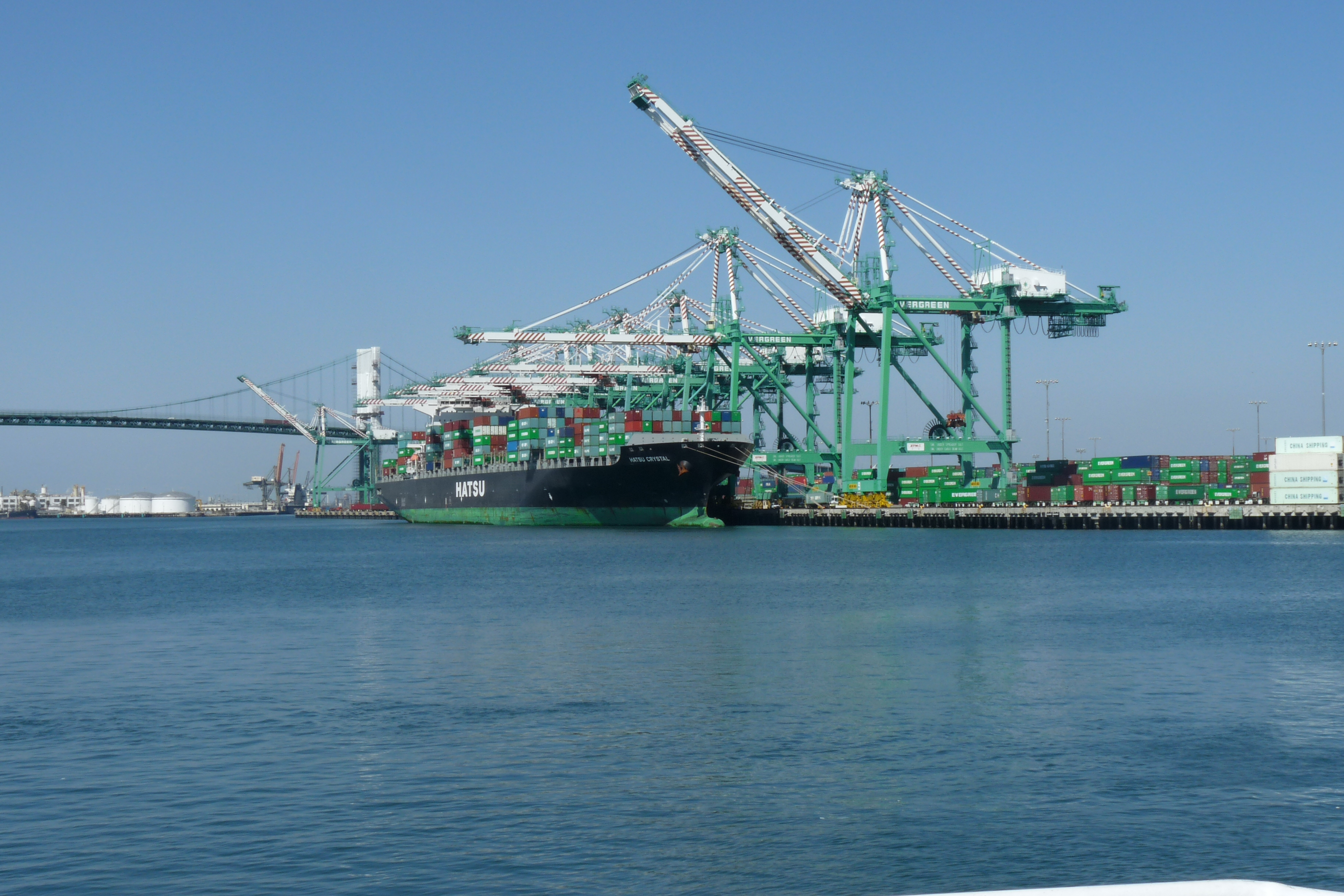
Los Angeles Harbor
Los Angeles Harbor

Click on above photo to see a full screen view of ship unloading operations

The outlook for growth in California is optimistic, according to a Beacon Economics report predicting expansion in manufacturing and exports and a job market recovery driven by more than low-wage work.

The report, conducted for City National Bank, notes that 56% of new jobs created in the state in the last year are in industries with average annual wages above $50,000. Most of those positions, according to the report, are full-time.

The findings seem to challenge other economists’ assertions that wages aren’t keeping pace with the job recovery. More low-wage positions will be created or opened by 2020 in Southern California than will mid-level or high-paying jobs, according to the Center for Continuing Study of the California Economy.

But according to Beacon, employers in the professional and business services field added 24,300 new jobs statewide since the fourth quarter. That’s more than half of the 44,200 net nonfarm job gains made in the state in the same period.

That’s more than half of the 44,200 net nonfarm job gains made in the state in the same period. The industry pays $29.11 an hour on average as of May, according to the Bureau of Labor Statistics.

The Beacon report also said that California’s 1.2% job growth in the first quarter trailed the 1.5% nationwide rate.

But Los Angeles and Orange counties each created 12,200 new jobs in the first quarter, helping pull the statewide unemployment rate down 0.3 percentage point from the fourth quarter to 8.1%.

And the Central Valley, often maligned as an economic dead zone, is showing surprising strength, according to Beacon.
The south San Joaquin Valley, which includes Fresno, Tulare and Kern counties, has boosted nonfarm employment by more than 50% in the last 25 years. The population has also swelled at nearly double the overall state rate.

The workforce participation rate in the state ticked up to 62.6% from 62.4% the previous quarter and the proportion of people working part-time due to economic reasons fell 0.6 percentage point to 6.8%, according to the report.

Beacon added that California’s growth slowed slightly in the first quarter due to the frigid, stormy weather bedeviling the rest of the country earlier this year.

Real gross state product, a metric of economic output, grew just 2.8% after surging 4.2% during the fourth quarter, according to the report. But manufacturing, thought by many experts to be a shriveling industry, continues to support a generous portion of the California economy.

The state is responsible for producing a quarter of the computers and electronics made in the country, according to the report. The products, which constitute nearly half of all California manufacturing output, are centered in Silicon Valley and, to a lesser degree, in the Los Angeles metropolitan area.

Beacon estimates that exports leaving California rose 2.8% in the first quarter from the fourth. The effects of a weak dollar, slower growth in China, Europe shaking off its recession and Japan emerging from a decade-long stagnancy will likely propel increasing outbound trade for the rest of the year.

Copyright © 2014, Los Angeles Times

Los Angeles Harbor