Canadian snowbirds love Palm Springs. But Trump is making them say: Sorry! We’re leaving

By Hailey Branson-Potts, Staff Writer for Los Angeles Times

This is an abridged article.

Since his reelection in November, Trump has upended the typically friendly relationship between the U.S. and its northern neighbor. He has mocked Canada by calling it America’s “51st state” and repeatedly referred to former Prime Minister Justin Trudeau as “governor.” And he has threatened to use “economic force” to annex the country, whose population of 40 million is about the same as California’s.

Trump in February invoked emergency powers to justify stiff new tariffs on Canadian imports, arguing in an executive order that the trafficking of illegal drugs — namely, fentanyl — across the northern border constituted a dire threat to American security.

After Trump’s separate 25% tariff on imported automobiles went into effect last week, Canadian Prime Minister Mark Carney, who called the levies a “direct attack” on his country, slapped a 25% retaliatory levy on vehicles imported from the United States.

In Palm Springs, the snowbirds who were already here before Trump took office are leaving for the season. The question is: Will they return?

Two Canadian airlines this spring ended their seasonal service to and from Palm Springs International Airport earlier than initially planned, airport spokesman Jake Ingrassia said in a statement to The Times.

“Flair Airlines and WestJet have slightly shortened their seasonal service to Vancouver and Winnipeg, respectively,” Ingrassia said. “The airlines have advised the airport that these adjustments are in response to the current operating environment and shifts in demand.”

Kenny Cassady, director of business development for Acme House Co., which manages vacation rental properties in Palm Springs, said Canadians often book stays of one to three months a full year in advance, returning to the same properties annually.

“But when it comes to rebooking for next year? They’re just declining,” said Cassady, who also is a board member for Visit Greater Palm Springs, a tourism marketing agency for the Coachella Valley.

Trump’s Destruction of the Country’s Economy

Tariffs Are a Self-Inflicted Economic Catastrophe that will make America hated by most of the world. Russia and its allies are loving this.

Dow drops over 1,400 as US stocks lead worldwide sell-off after Trump’s tariffs ignite

Financial markets around the world are reeling Thursday following President Donald Trump’s latest and most severe set of tariffs, and the U.S. stock market is taking the worst of it so far.

The S&P 500 was down 4% in midday trading, more than other major stock markets, and at its bottom in the morning was on track for its worst day since COVID struck in 2020. The Dow Jones Industrial Average was down 1,412 points, or 3.3%, as of 11:50 a.m. Eastern time, and the Nasdaq composite was 5.1% lower.

 In President Donald Trump’s first term, apparel and footwear makers shifted manufacturing out of China to avoid tariffs. Now they’re being pummeled as Trump targets the same nations they moved to. 

A tariff of 46% on goods from Vietnam is particularly painful for companies such as Nike Inc., Adidas AG and Lululemon Athletica Inc., which produce significant amounts of merchandise in the country. Levies of 49% on Cambodia and more than 30% on Indonesia and Thailand are also problematic. Trump says the tariffs will push companies to relocate manufacturing to the US. 

America’s biggest trading partners promised retaliation for President Donald Trump’s massive tariff announcement. The first major response has come in — from Canada.

Canadian Prime Minister Mark Carney said that Canada will levy a 25% counter-tariff on vehicles imported from the United States that are not compliant with the United States-Mexico-Canada Agreement (USMCA) in response to US tariffs on Canadian vehicles and auto parts that went into effect today.

“As I told President Trump during our call last week, Canada will respond to the US auto tariffs, and today, I’m announcing that the Government of Canada will be responding by matching the US approach with 25% tariffs on all vehicles imported from the United States that are not compliant with CUSMA, our North American Free Trade Agreement,” Carney told reporters in Ottawa, using the Canadian acronym for the USMCA.

The prime minister said there were no talks scheduled between him and Trump, but he would talk to the US president again “if appropriate.” Carney also said Canada’s counter-tariffs would not affect auto parts.

Though Carney said Canada still considers the US an ally in defense and security, his country “must be looking elsewhere to expand our trade, to build our economy and to protect our sovereignty.”

Where will all this end? Look for a World Wide RECESSION.

Buy Canadian movement starts to take a sizable bite out of U.S. business

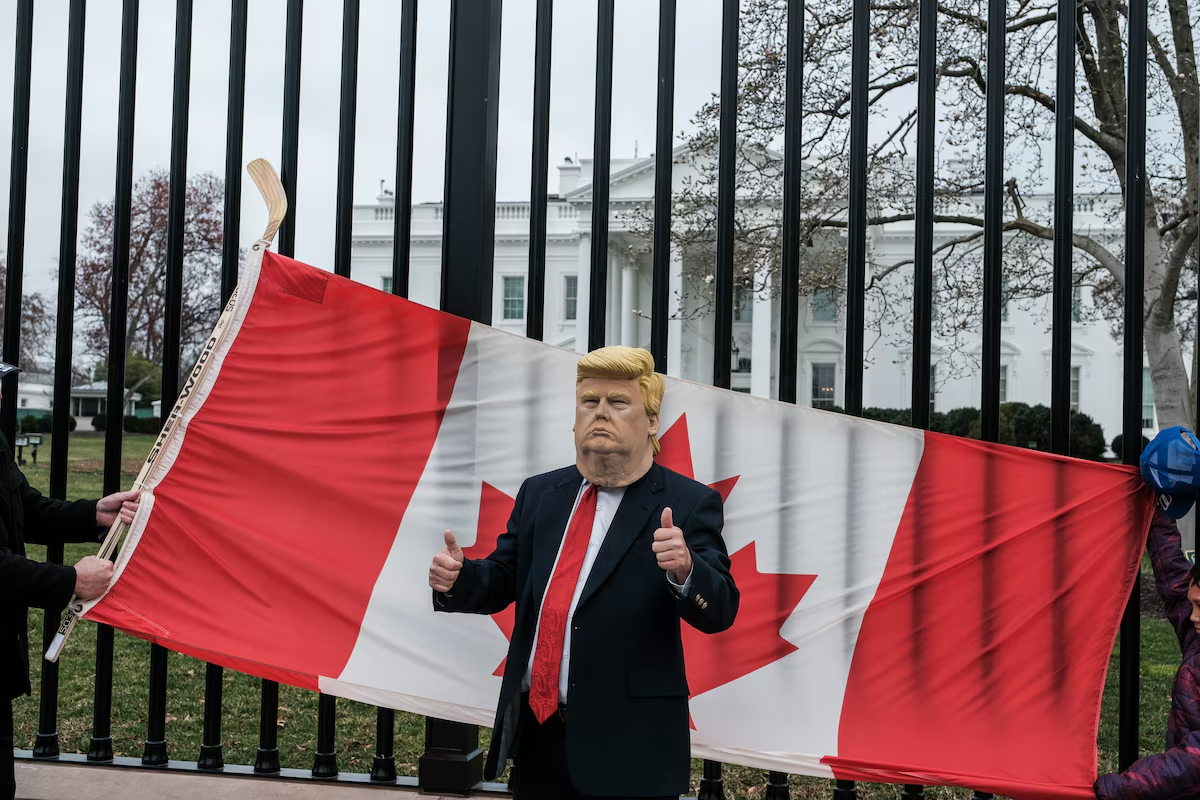
A man dressed as U.S. President Donald Trump poses for a photo near the White House in Washington on March 13. MICHAEL A. MCCOY/The New York Times News Service

The surge in patriotism among Canadian shoppers, fuelled by trade tensions with the United States, is already leaving a sizable mark on American business, early data from a variety of industries suggests.

U.S. tour operators are reporting booking declines of as much as 85 per cent, while American distilleries are losing major deals. Meanwhile, Canadian grocers are posting a bump in domestic product sales of up to 10 per cent.

Donald Trump’s jabs about annexation, along with a 25-per-cent levy on steel and aluminum from Canada and the U.S. President’s threats of a 25-per-cent tariff on most Canadian imports have prompted a rallying cry to “Buy Canadian” across this country.

While consumer boycotts – combined with government policy actions – are causing trouble south of the border, concerns are bubbling up about the toll on Canadian businesses, too.

“To use some of the words I hear from tour company members of the National Tour Association, the drop-off is ‘astronomical’ when speaking about Canadians booking group travel to the United States,” said Catherine Prather, president of the Kentucky-based organization, which specializes in group tours.

The exchange rate and fluctuating trade policies have had a “resounding effect” on Canadians’ travel cancellations, she said. But tour operators shared that the rhetoric about making Canada the 51st state is “perhaps even worse,” and in many cases, has been the “deciding factor” for customers.

Traffic across some major border crossings in tourism states such as New York has dropped by 12 per cent in the first two weeks of February alone, said Corey Fram, director at the Thousand Islands International Tourism Council. He cited data provided to him by the Bridge and Tunnel Operators Association for border crossings on the Thousand Islands Bridge between Alexandria Bay, N.Y., and southeastern Ontario.

Statistics Canada data also show that Canadian automobile trips to the U.S. are plummeting. About 1.2 million return trips were made into Canada by Canadians in February – a 23-per-cent drop from that period a year ago.

The U.S. Travel Association warned in February that even a 10 per cent drop in Canadian visitors would lead to more than $2.1-billion in spending losses and a threat to 14,000 jobs.

The Buy Canadian movement is also hitting the grocery aisles. Per Bank, CEO of Canada’s largest food retailer, Loblaw Cos. Ltd., said in February that the company saw about a 10-per-cent uptick in sales for Canadian products in preceding weeks.

Pierre Cléroux, vice-president of research and chief economist at the Business Development Bank of Canada, told The Globe and Mail that if every Canadian household redirected $25 a week from foreign products to Canadian ones, it would boost GDP by 0.7 per cent and create 60,000 jobs.

According to his modelling, if Canadians also cut international travel by 10 per cent and spent that money domestically, the combined effect would raise GDP by 1 per cent and create 74,000 jobs.

Another U.S. industry reeling from the “Buy Canadian” movement and its manifestation in public policy – including provincial moves to take American booze off the shelves – is American distilling.

Canada is a critical market for U.S. spirits, making up “a little over 31 per cent of all U.S. exports” of distilled spirits in 2024, said Stephen Gould, a Colorado-based alcohol trade consultant at Consulting Alchemist Ltd and former distillery owner.

In addition to bourbon, Canada is a crucial market for U.S. whisky and other spirits as well as wine and beer. Bartenders, waitstaff and retail clerks in the U.S. are among those who will face significant layoffs if trade tensions continue, said Mr. Gould.

“The American industry is suffering,” he said.

Victor Yarbrough, co-founder of Brough Brothers,Kentucky’s first Black-owned distillery, said his company was “deeply disappointed” after losing a lucrative deal to sell its bourbon to New Brunswick Liquor due to trade tensions. The deal was projected to increase company sales by 2.55 per cent in 2025.

“Canada’s a large export market for us,” said Mr. Yarbrough. “Let’s figure out ways to move forward and amicably.”

Abridged article from the Canadian Globe and Mail.

Canada and Greenland

Yes, I was born in Canada. My parents moved to the United States when I was 6 months old. As a boy I visited Winnipeg every summer until I was 10 years old to see my grandparents. I have cousins in Winnipeg, Vancouver, and other cities in Canada. I have visited Canada many times as an adult. Toronto and Vancouver are fun places to tour.

That being said, I am concerned about Canada’s future.

It appears Donald Trump is serious about annexing Canada and Greenland. The difference between Donald Trump and Vladimir Putin is that Trump wants to accomplish his goals without a war.

Earlier this month, Canadian Prime Minister Justin Trudeau publicly said of President Donald Trump, “What he wants is to see a total collapse of the Canadian economy because that’ll make it easier to annex us.”

Trudeau’s accusation was extraordinary and unprecedented. Here was the leader of Canada, one of America’s closest and longest-standing allies, accusing the U.S. president of engaging in economic warfare. More and more, however, it seems Trudeau wasn’t making this argument up. The evidence is piling up that Trump has declared economic war on Canada for the express purpose of making our Northern neighbor the 51st state.

Trump first referred to Canada as the 51st state in a December 2024 meeting with Trudeau. At the time, the Canadian Prime Minister assumed Trump was joking. But then, in January, he said it again publicly, this time threatening the use of “economic force” to pursue annexation. In addition, he began referring to Trudeau as “Governor” rather than “Prime Minister.”

By this point, one could easily chalk this up to Trumpian bluster. He couldn’t possibly be serious about annexing Canada? Could he?

But, two weeks after Trump’s inauguration, a private call between him and Trudeau, which was supposed to be about tariffs, took an odd turn. According to The New York Times, Trump told “Trudeau that he did not believe that the treaty that demarcates the border between the two countries was valid and that he wants to revise the boundary.” He also mentioned revisiting long-standing treaties between the U.S. and Canada regarding the sharing of lakes and rivers.

Even the Canadians were taken aback by Trump’s statement — and it slowly began to dawn on them that perhaps the president was serious (or as serious as one can be about an insane notion like the U.S. annexing Canada).

Publicly, Trump wouldn’t let the matter die. In an interview broadcast before the Super Bowl, on February 9, Trump told Fox News’ Bret Baier his plans to annex Canada were a “real thing.” And to magnify Canada’s economic vulnerability, Trump told reporters that Canada was “not viable as a country” without U.S. trade. 

The problem for Canada is that Trump isn’t wrong on this front. Canada is so dependent on cross-border trade that if the U.S. were to turn the screws on The Great White North it could crater Canada’s economy. 

In the current context of the emerging trade war between the U.S. and Canada, it seems more than reasonable to believe that this is precisely Trump’s intention. 

Consider for a moment how this trade war has unfolded. When Trump first declared his intention to slap tariffs on Canada, he used the smuggling of fentanyl across the Canadian border as a justification (never mind that 19 kilograms of fentanyl came across the Canadian border last year, compared to 9,600 kilograms that crossed the U.S.-Mexico border). After Trudeau reminded Trump of Canada’s plan for slowing the smuggling of fentanyl, which was introduced late last year, he backed down.

But then last week, Trump returned to the trade spat with Canada, but this time blamed Canada because of its protectionist trade policies on dairy, lumber and banking. After Ontario’s premier, Doug Ford, announced a 25% surcharge on electricity exports to Michigan, Minnesota and New York, in response, Trump upped the ante announcing a new 25% tariff on Canada’s exports of steel and aluminum (which is in addition to already planned tariffs on steel and aluminum).

In announcing the new tariffs, Trump didn’t mention fentanyl as a justification, but instead wrote on TruthSocial that “the only thing that makes sense is for Canada to become our cherished Fifty First State. This would make all Tariffs, and everything else, totally disappear.” In a follow-up post, he wondered why the U.S. “allow(s) another Country to supply us with electricity, even for a small area?”

Trump’s zigzagging has left markets and the business community flummoxed. For Canadians, the confusion is even worse. How can they end these trade tensions if the reason Trump is slapping tariffs on their country keeps changing?

But perhaps the obvious answer is staring us in the face, and we’re all too dumbfounded to acknowledge it. Trump has been remarkably consistent in stating that Canada should become America’s 51st state — he has said this repeatedly for months now. Moreover, he has openly espoused using U.S. economic power to achieve that goal — and is doing precisely that. 

Just so we’re clear, this is not a Trump-only phenomenon. Yesterday, when asked if the U.S. still considers Canada a “close ally,” White House press secretary Katherine Leavitt said that Canada would “benefit greatly” from joining the United States and pointed to its high cost of living as a reason for surrendering sovereignty.  

Commerce Secretary Howard Lutnick sounded a similar theme, noting that “Canada is gonna have to work with us to really integrate their economy, and as the president said, they should consider the amazing advantages of being the 51st state.”

In recent days, the Trump administration has further imposed its will on Canada by requiring Canadians who visit the country for more than 30 days to register with the U.S. government. 

The first 51 days of Trump’s presidency have been, for lack of a better word, an odyssey. Crazy has been dropped on top of more crazy. But  in the year 2025, an American president, with no pushback from his Cabinet or Congress, has declared economic war on our closest neighbor to annex its land (which is larger than America’s) and wants to make its 40 million citizens part of the United States. This is the craziest notion of all.

The first three paragraphs of this posting are my words. The rest of this article was originally published on MSNBC.com

Trump Versus Canada

Donald Trump wants to annex Canada and Greenland. To accomplish that goal without an invasion he is using tariffs. Trump doesn’t want to use the military to obtain his objectives. Vladimir Putin’s effort to annex Ukraine using his military is a message that Trump should not use military force to reach his objectives. 

Mr. Trump followed through on a threat at midnight Wednesday to slap 25-per-cent tariffs on aluminum and steel from all countries including Canada, Mexico, South Korea, Australia and Europe. The 27-nation European block joined Canada with retaliatory tariffs of US$28-billion on American goods.

“These tariffs are completely unjustified, unfair and unreasonable,” Canada Finance Minister Dominic LeBlanc told a news conference on Wednesday, warning U.S. protectionist measures will hurt American and Canadian consumers.

U.S. Commerce Secretary Howard Lutnick said the tariffs put in place Wednesday will stay in effect until there is a strong U.S. aluminum and steel industry. That is not a likely scenario.

Ontario premier Mr. Ford on Monday announced a 25-per-cent surcharge on electricity exports to three U.S. states, but suspended it Tuesday after a call with the Commerce Secretary. The Premier said Mr. Lutnick “extended an olive branch” to start a conversation about the future of the United States-Mexico-Canada Agreement.

Canadian Foreign Affairs Minister Mélanie Joly said she’ll once again told Mr. Rubio that Canadians are fed up with Mr. Trump’s call for the annexation of Canada. “Everything that has to do with the 51st state rhetoric is unacceptable,” she said.

The President also defended his whipsaw approach to tariffs, after weeks of threats followed by retreats – and then new rounds of levies.

“It’s called flexibility,” he said. “It’s not called inconsistency.”

Will the American congress assert itself? The authoritarian has control for now.

Trump’s push to make Canada the 51st state could backfire on Republicans

Story by Ali Velshi of MSNBC. A 4 min read

Since entering office, President Donald Trump has been ambitious about territorial expansion. Sounding more like Donald the Conqueror, he’s insisted the United States take ownership of the Gaza Strip and the Panama Canal, he’s proposed buying Greenland from Denmark and he’s pitched Canada on joining our union as the 51st state. At his inauguration, Trump took America’s original expansionist slogan and blasted it skyward, “We will pursue our manifest destiny into the stars, launching American astronauts to plant the Stars and Stripes on the planet Mars.”

American history has seen the country grow in size and Betsy Ross’ flag grow in stars but Trump’s ideas ebb between delusions of grandeur and old-fashioned gunboat diplomacy. 

There was Trump’s announcement that the United States would “own” Gaza, sending Palestinians to neighboring countries and establishing a “Middle East riviera.” With literally zero specifics laid out by the White House as to how exactly this would happen, this idea has received bipartisan and international condemnation as logistically impossible.

Trump has also set his sights on “seizing back” the Panama Canal, which was signed over to Panama by the late President Jimmy Carter in 1977.  Trump has erroneously claimed that China is running the canal, which is actually operated by an independent authority in Panama. A subsidiary of a Hong Kong company runs two of the canal’s ports but doesn’t control access to the canal.

Trump has also floated the idea of purchasing Greenland from Denmark, a concept that, while not new in the grand scheme of American history, stands firmly against the interests of the people of Greenland, whose prime minister has said bluntly, “We want to be Greenlanders.” 

Then there’s Canada, the second-largest country by land mass on the planet. It’s also my home country. While I can’t speak for Panamanians or Greenlanders, I do have a suggestion for my fellow Canucks on this:

Trump has offered Canada the chance to become the 51st state, but I say, why stop there? Canada has 41 million people, spread throughout 10 provinces and three territories. So, if Canada were to become part of America, some changes would be in order.

First of all, Congress would have to grow. That would mean Canada, as part of the new America, would net at least 54 seats in the House. For context, the 20 states with the smallest populations have just 46 House seats among them all. 

But here’s problem No. 1: This little thing called the Permanent Apportionment Act of 1929. That act mandates that the House is no bigger than 435 members. So, if you did the math, combining Canada’s population with America’s and dividing it by 435, Canada would net 47 seats. Those seats would be taken away from states all over the country. Who’s going to tell voters that Trump gave their congressional representation to a guy in Saskatchewan?

That’s just the House of Representatives. What about the Senate? Trump is only offering for Canada to become one state with two senators. But Canadian provinces, like American states, compete with one another. They aren’t going to be interested in all snuggling up into one state. 

Each province would have to be its own U.S. state. So Canada wouldn’t be the 51st state; it would be states 51 through 60, at the very least, meaning Canada would have 20 senators. It would be the largest reorientation of political power in America since women were given the right to vote in 1920. 

Trump is specifically asking Canada to join as just one state for that reason. Statehood for Canada would likely swing power away from Republicans. That’s one of the reasons most Republicans have long opposed statehood for Puerto Rico and Washington, D.C. They assume both would become Democratic strongholds, increasing the Democrats’ control in Congress. 

If the thought of a couple of senators from Puerto Rico representing people who are already American citizens scares Republicans, I wonder how 20 from the land of maple syrup, Mounties and “Anne of Green Gables” would go over? 

While it’s difficult to compare American and Canadian politics directly, we have some sense of how Canadians, or what might come to be known as “Camericans,” might vote:

Canada has a multiparty parliamentary system but in 2003, the conservative parties united under one banner. Since then, the conservatives have received, on average, about 35% of the popular vote in each election. On average, the left-of-conservative parties have received a combined 63% of the popular vote.

Expansion from Canada to the Gulf of America might be a fun idea for Trump … until our nice neighbors up north kick his party oot of office and install a liberal supermajority. And we haven’t even talked about what this would do to the Supreme Court. 

Of course, in typical Canadian politeness, Prime Minister Justin Trudeau said there’s “not a snowball’s chance in hell” that Canada joins America. But, Canada, if I were you, maybe the chance to take over your noisy neighbor from the inside isn’t the worst idea in the world.

The Decline of Department Stores

I did not write this. As a child I visited Winnipeg every summer as baby and until the age of 10 in 1948. My family stayed at my grandparent’s house at 136 Cathedral Avenue. I Remember visiting Eaton’s numerous times.

WHEN I WAS growing up in Winnipeg in the 1960s, there were essentially two places to shop: Eaton’s and the Bay. Eaton’s was the store my grandmother frequented, checking for bargains in its basement every week, eating lunch in the sedate Grill Room. The Bay was vaguely hipper. I remember it still had elevator operators then as well as its own library and post office, though the in-house orchestra was gone. Both stores had a kind of majesty to them, unaware they had peaked as retail ideas.

The decline of the downtown Winnipeg Bay store resembled Hemingway’s description of bankruptcy—gradual, then sudden. It was the company’s national flagship store until 1974, but with the advent of malls in that decade, it began to lose its currency. By 2019, the downtown core of Winnipeg had largely hollowed out, and some of the Bay floors were closing. What remained felt like a dismal Soviet-era shopping experience under gloomy lights. The store was built in 1926 at a cost of around $5 million; at the time of its closing, in November 2020, Cushman & Wakefield, a commercial real estate firm, valued the building at $0.

By Don Gilmore https://thewalrus.ca/author/don-gillmor/

Here in Los Angeles shopping malls have closed and many chains of stores have gone into bankruptcy. Eaton’s is gone in Canada and May Company in the United States is gone. Local California chains are now all gone.

Hudson’s Bay owns Sak’s Fifth Avenue they are now consolidating with Neiman Marcus.

Macy’s net income for the quarter ending April 30, 2024 was $0.062B, a 60% decline year-over-year.

So where did I buy my new sneakers (tennis shoes)? Amazon. It seems everyone is buying on line.

And that is why department stores are in decline.

Five Days in Canada

Yes it is very cold in most of Canada in the winter.  The exception is Vancouver, British Columbia on the Pacific coast where it rains in buckets.  So weather is not Canada’s best feature.  However, the people are super friendly, helpful, and caring. Over 20% of the population are immigrants and while the population is majority White the country has open to immigrants from everywhere.  Just half of Vancouver’s population is European White.

China is Invading North America

Will the presidential candidates talk about this?  Probably not!

China does not have an army off the coast of North America deciding what date an invasion will occur.  They do have the financial ability to impact the United States in a most unfavorable way.

The Chinese are in a search for needed natural resources and they will go almost anywhere to obtain access.  On  of their most recent foray has been in Australia where they are mining iron ore. Many Australians  aren’t happy about this situation.  Money talks louder than feelings.

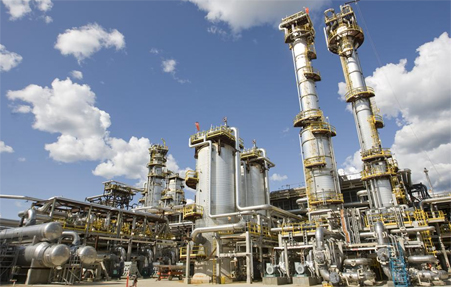
Now China sees an opportunity to obtain oil from North America.  Not in the United States, rather in Canada. Canada is Not Part of the U.S.A.  Canada has significant tar sands oil in Alberta and has wanted to ship their oil to Louisiana for processing and sale.  Since the United States has been saying No to building the Keystone XL pipeline the Canadian government is looking for another path.

As reported in Businessweek and the Washingon Times, CNOOC (a Chinese government controlled oil producer has agreed to pay $15.1 billion for Canada’s Nexen.  Chinese companies hasve spent over $53 billion in Canada over the past decade. This new deal gives CNOOC access to oil and gas fields in the North Sea, the Gulf of Mexico, and Nigeria, as well as the oil reserves in Alberta.

The likelihood of building the Keystone XL pipeline has been diminished.  This new deal with  CNOOC will make Canada even less dependent on the U.S. as a primary customer for its oil and gas.

Canada is Not Part of the U.S.A.

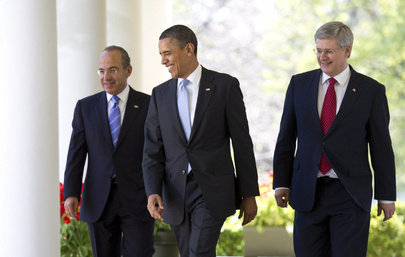
Mexican Pres. Calderon, Obama, Canadian P.M. Harper at the White House          Mexican Pres. Calderon, Obama, Canadian P.M. Harper at the White House

Reported in the Toronto Star, “Ottawa has no choice but to aggressively pursue other export markets to safeguard Canada’s economy in case Keystone is rejected, PM says in Washington.”

Let’s be honest. The Keystone oil was not destined for consumption in the United States. The benefit to the USA is that there will be construction jobs for laying the pipeline, maintenance jobs for keeping the oil flowing without any leaks, and refinery jobs on the Gulf of Mexico.

The additional major benefit is that if there was an oil embargo the United States would have access to the supply.

Canada has the benefit of many natural resources. The Canadian government’s first interest is in the well being of its own people. As it should. Exporting their resources has enabled that country to thrive. For some reason Americans think that Canada owes its total existence to them and should respond to American wishes and desires at Canadian peril. Despite that belief, Canada is not part of the U.S.A.