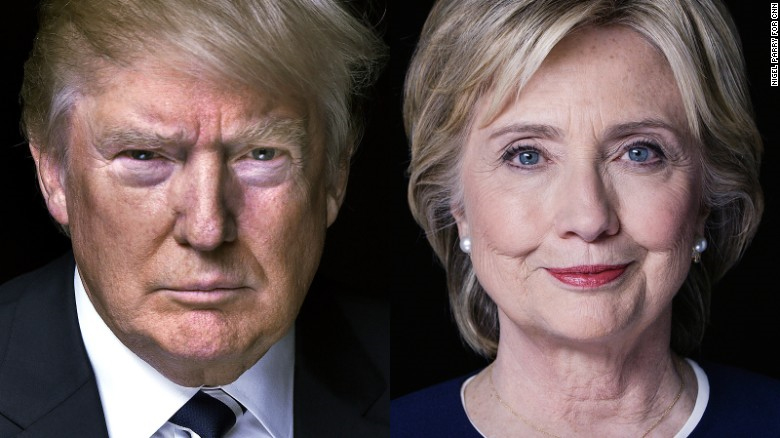
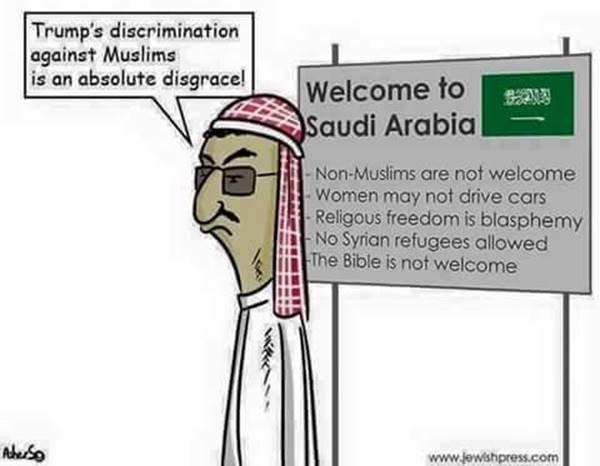
Could We be about to Inaugurate the last President of the United States?

Trump versus ClintonNeither Donald Trump nor Hillary Clinton should be the two leading candidates for president of the United States. I find it appalling that both the Democrats and Republicans would select these seriously flawed people to lead the world’s most powerful nation.

Donald Trump has never held any elected office anywhere. His knowledge of the operations of the federal government is based upon what he has read or seen on television. His ideas about getting along with the rest of the world are a series of contradictions. In one breath he says that NATO is obsolete and in the next breath he talks about NATO forces being used to fight ISIS. Somehow he believes that a 35% to 45% tariff would bring jobs back to America. He says he wants to lower the national debt but he also wants to spend whatever it takes to enlarge our military, improve our educational system, and rebuild our infrastructure. All of these things, he says, will be done while lowering our income tax.

Hillary Clinton wanted to over throw Gadhafi in Libya (and we did) and now that country lacks a functioning central government. Her explanation about Benghazi is shrouded in a mist that cannot make that issue go away. She talks about being proud of her part in the Iran nuclear agreement and her solution to the Ukraine invasion by Russia. And Finally there is her use of a private email server that caused FBI Director James Comey to come very close to calling for her to be charged with a crime. Comey said, “Although we did not find clear evidence that Secretary Clinton or her colleagues intended to violate laws governing the handling of classified information, there is evidence that they were extremely careless in their handling of very sensitive, highly classified information.” In the end, Comey, a deputy attorney general under President George W. Bush, said Clinton’s careless conduct fell short of a crime because there was no evidence of “clearly intentional and willful mishandling” of classified information and no sign of “disloyalty” or an effort to “obstruct justice.”

Am I supposed to be reassured by either of these two candidates that they can carry out the duties of president without taking the nation into a financial collapse or a war?

I am not confident that either Trump or Clinton will be a capable leader. Rather I fear that the winner of the November election could mean we will be inaugurating the last president of the United States.

The Power of the of Barnum and Bailey

The naivety of the public is astounding. Look at how many “smart” people believed Bernie Madoff.

Have you ever been offered a free vacation at some highly popular place like Las Vegas or Cancun? There is a group of us that accept those offers even though we know that nothing is free. Those people accepting those free trips will find themselves in rooms with other people being pressured to buy something. Usually it’s a time share unit or other expensive luxury. The technique is used because it is very successful.

The people of the U.K. were told that money saved as the result of exiting the European Union would be $325 Million Pounds a month that would be directed to national health care. The individual who made that claim now denies that result would happen.

Immigration of eastern Europeans and Muslims would be dramatically reduced if the U.K. was no longer part of the EU. That ascertain is now denied too.

Here in the United States G.O.P. candidate Donald Trump has promised to build wall along the Mexican border from the Gulf of Mexico to the Pacific Ocean. He has promised to bring millions of jobs that have left this country back. He said he would stop all Muslims entering the United States “until we find out what the hell is going on.”

Now, even before Donald Trump is the official candidate of the Republican Party he has changed some of his ideas. Muslims will only be banned from some countries he has yet to identify. He has not been repeating his intention to deport all illegal aliens.

Stay tuned for more of his changed ideas. Just remember the outrageous things he said before Paul Manafort became his campaign manager will be forgotten or reversed as he conducts his national campaign against Hillary Clinton.

Should we believe what he says now as he reads a teleprompter or the unscripted words he used in his fight to be the Republican Party nominee?

There is a growing list of highly respected Republicans who are saying they won’t support Donald Trump. Some have said they are supporting Hillary Clinton.

Actually Hillary Clinton has been part of the establishment since her husband became governor of Arkansas. The accusation that she has Wall Street ties has not been denied. She really is part of the “inside the beltway” crowd. She does represent the status quo and says so when she says she wants to continue the ideas of Barack Obama.

The two-party system so dominates the political spectrum that the Libertarian and Green Parties won’t be on the stage for the presidential debates. The rule is those minority parties must have 15% of recent polling data.

Donald Trump is the outsider with so many negatives that Americans favor Hillary Clinton in all of the national polls to date.

As it stand now we are likely to vote for Hillary Clinton as we hold our collective noses.

Donald Trump’s new favorite slogan was invented for Nazi sympathizers

Is Donald Trump a Fascist?  Is Donald Trump the next Hitler?  I am not willing to take a chance of electing him just to find out.  Donald Trump is frightening.

, The Washington Post, June 14 at 6:26 PM

Donald Trump greeted Twitter on Flag Day with two words in all caps: “AMERICA FIRST!

He has made this slogan a theme for his campaign, and he has begun using it to contrast himself with President Obama, whose criticism of Trump’s rhetoric on Tuesday was answered with a Trump statement promising, “When I am president, it will always be America first.”

He wasn’t quite promising “America über alles,” but it comes close. “America First” was the motto of Nazi-friendly Americans in the 1930s, and Trump has more than just a catchphrase in common with them.

Trump defines the “America” he wants to put “first” by saying who does not properly belong in it. That definition does not include certain people of foreign descent born in the United States, who are to him still foreigners and whom he labels accordingly (in the past few weeks, Trump has referred to native-born Americans as “Mexican” or “Afghan”). It does not include Muslim residents, whom he would “certainly” and “absolutely” force to register their presence with the U.S. government (asked how this proposed policy differs from Nazi laws regarding Jews, Trump replied, “You tell me“).

Trump wants his exclusionary America to cower behind walls. He would erect metaphorical barriers against immigrants (excluding Muslims from entry to the United States until they can be “properly and perfectly” screened) and trade. And of course, he would build a literal wall along the Mexican border. None of which is to say Trump’s isolated America would decline to fight wars: Trump would increase bombing of the Middle East and fight “fast and … furious for a short period of time” against the terrorist enemy.

This is what Trump’s “America First” means: a white America (committed, to be sure, to “take care of our African American people”), living behind higher walls and screens, lashing out to prove its strength and then retreating again — not a government suspiciously tolerant of foreign threats.

And this is also largely what “America First” has historically meant.

During the early 1930s, as the Nazis consolidated control over Germany, the U.S. media baron William Randolph Hearst began touting the slogan “America First” against President Franklin Roosevelt, whom he saw as dangerously likely to “allow the international bankers and the other big influences that have gambled with your prosperity to gamble with your politics.” Hearst regarded Roosevelt’s New Deal as “un-American to the core” and “more communistic than the communists” — unlike Nazism, which he believed had won a great victory for “liberty-loving people” everywhere in defeating communism.

With the beginning of World War II in Europe and the Germans’ swift conquest of the continent, Roosevelt began to commit his administration more firmly to the aid of the those fighting Nazism. He incurred the ire of various anti-intervention constituencies, ranging from committed religious or principled pacifists to American communists, who supported the Nazi-Soviet pact and therefore the notion that the United States should stay out of the European war.

But the most prominent of his opponents were the founders of the America First Committee, formed in September 1940. The committee opposed fighting Nazism and proposed a well-armed America confined largely to the Western hemisphere. It soon afterward adopted the noted aviator and enthusiast of fascism, Charles Lindbergh, as their favored speaker. Lindbergh accepted a medal from Herman Goering “in the name of the Fuehrer” during a visit to Germany in 1938, and “proudly wore the decoration.” He thought democracy was finished in Europe, that the western powers could not effectively resist the Nazi war machine and that the United States had better make terms with Adolf Hitler.

Lindbergh wasn’t against wars per se; he could support fighting if it came to “a question of banding together to defend the white race against foreign invasion.” His definition of the white race apparently had little room for Jewish people, about whom he thought Hitler had a point: “We are all disturbed about the effect of the Jewish influence in our press, radio, and motion pictures,” Lindbergh believed, though he allowed the country could benefit from “a few Jews of the right type” — just as Trump would presumably allow Muslims who could pass a perfect and proper screen. 

The famed automaker and celebrity anti-Semite Henry Ford also joined America First. Like many others, they fought against the “groups” who, Lindbergh said, were pushing the country into war: “the British, the Jewish, and the Roosevelt administration.”

As with the Trump campaign, not all America First Committee supporters in 1940 were so egregious as their most visible spokesmen. But also as with the Trump campaign, neither did the moderate anti-Roosevelt anti-interventionists quite repudiate their fascist-friendly leaders.

The subsidiary labels may have shifted, but the general idea of “America First” remains the same: The United States should arm itself against foreign threats and stay within carefully defined borders, using the might of the state only to defend a very specific, rather white idea of “America” that excludes certain racial and religious minorities. Then, as now, the phrase offered strength through cowardice. Defeating this defeatism was essential to victory over dictatorships in the 20th century, and it is essential to preserving the institutions of democracy today.

Consequence of the Pulse Nightclub Terrorist Attack

There are two obvious consequences of the Pulse night club terrorist attack combined with the terrorist attack in San Bernardino California.

  • There will be more invasion of privacy.
  • The fight against terrorism will be a major issue in the presidential election.

One day after the Boston Marathon bombing the FBI released pictures of the Tsarnaev brothers. That was thanks to the battery of cameras that were mounted to buildings and light poles in the area.

We may relish our freedom but the fear of more terrorist attacks will, I believe, cause many Americans to willingly surrender that desire to prevent attacks in the future.

The NRA’s contention that more guns will stop terrorist attacks has proven worthless. Florida, where this latest attack occurred, did not stop the attack simply because most people do not carry weapons. Concealed guns are permitted in Florida.

Donald Trump will be tempted to call for more surveillance of Muslims in the United States. If he does propose that surveillance, American’s fear might prevail.

I anticipate that no matter who wins the general election we will see more loss of personal freedom.

President Barack Obama offered this statement today. “We Have To Decide If This Is The Kind Of Country We Want To Be.  …To actively do nothing is a decision as well.”

Donald Trump is a Racist

June 10, 2016

Since posting The New York Times editorial numerous Republicans have spoken out against Donald Trump’s racist remarks. The best was said on June 7, 2016 by Paul Ryan.  “I disavow these comments. I regret those comments that he made.  Claiming a person can’t do their job because of their race is sort of like the textbook definition of a racist comment.” 

The following New York Times editorial reflects my views in words that I cannot construct in a better way.

Donald Trump’s Contempt for the Rule of Law

Federal judges have repeatedly and emphatically refused to recuse themselves from cases because of their race or ethnicity. These rulings were driven by two realizations: Ethnically based challenges would reduce every judge to a racial category, which would be racist in itself. And such challenges would make judges vulnerable to recusal motions — for reasons of race, ethnicity, gender or religion — in every case that came before them.

In other words, once these challenges were allowed, there would be no end to them.

The gravity of this matter has clearly eluded Donald Trump, who has cast aside the Constitution and decades of jurisprudence by suggesting both ethnic and religious litmus tests for federal judges. These pronouncements illustrate that Mr. Trump holds the rule of law in contempt.

Mr. Trump started down this road months ago, attacking a federal judge in California who is hearing a lawsuit against the now-defunct Trump University. Last week, he asserted that the judge, Gonzalo Curiel, had an “inherent conflict of interest” because he was “of Mexican heritage.” Mr. Trump implied that Judge Curiel — an American, born in Indiana — was biased against him because he intended to build a wall along the border to stop illegal immigration.

Republican leaders repudiated the remarks and hoped that the issue would disappear. But Mr. Trump went further on Sunday, when he said on the CBS News program “Face the Nation” that a Muslim judge might be similarly biased against him because he has proposed a ban on Muslim immigrants entering the United States.

When the interviewer, John Dickerson, reminded Mr. Trump that this country has a tradition of not judging people based on heritage, the presumptive Republican nominee responded, “I’m not talking about tradition, I’m talking about common sense.”

Republicans who say they disagree with Mr. Trump’s racialist statements have tried to assuage the public by arguing that he doesn’t really believe those views. But if that’s the case, it is pretty cold comfort. Cynically choosing to equate ethnicity with bias is hardly more appealing than simply being ignorant or bigoted.

Can a Racist be Elected President of the United States?

The answer to this question, sadly, is yes!

Who is that racist? Donald Trump.

Why would I believe that?

You can’t make this stuff up.

June 3, 2016 Redding, California (CNN) Donald Trump sought to tout his support among African-Americans on Friday by pointing out a black man in the crowd and calling him “my African-American.”

“Oh, look at my African-American over here. Look at him,” Trump said. “Are you the greatest?”

The remark didn’t generate a noticeable response from Trump’s audience.

June 3, 2016 Washington (CNN) Donald Trump on Friday vociferously defended his claims that a judge overseeing a lawsuit against Trump University is biased because of his Mexican heritage — pushing back against criticism that his objections are racist.

Speaking with CNN’s Jake Tapper on “The Lead,” Trump repeatedly referenced his plans to build a wall between the U.S. and Mexico and renegotiate trade agreements between the two countries.

Donald Trump, the presumptive Republican nominee for president, escalated his unprecedented verbal attacks on Federal District Judge Gonzalo Curiel on Thursday night. In an interview with the Wall Street Journal, Trump claimed the judge could not fairly preside over the Trump University cases because of Curiel’s “Mexican heritage.” (Curiel is from Indiana; his parents are Mexican immigrants.) “I’m building a wall, it’s an inherent conflict of interest,” he added.

From the American Heritage Dictionary

Racist

  1. Believes that race accounts for differences in human character or ability and that a particular race is superior to others.
  2. Discrimination or prejudice based on race.

According to Real Clear Politics the last poll was completed June 1 shows Clinton with a lead of 1.5. The previous poll completed May 30 shows Clinton with a lead of 1. In other words a win now is a 50/50 proposition. A bigot could be elected president.

If Donald Trump Becomes President of the United States

 I saw the above presentation by Donald Trump on Fox News channel this morning. It is apparent that he has not backed down on any of his opinions. That is a troubling possibility for the U.S.A.

 Just listen to his words!

Besides building a wall between the United States and Mexico he would impose a 35% tariff on goods manufactured in Mexico. The consequence of that would be 1) higher prices for all the consumer items bought in the United States from Mexico and 2) the United States has a positive trade balance with Mexico of $182 Billion and the million jobs created by that trade balance would be lost.

China holds $1.3 Trillion in U.S. treasury notes. A 45% tariff on those goods imported from China (his plan) would not only destroy their sales of consumer goods to America, it would create a trade war. China would most likely demand repayment of the notes. Donald Trump, who believes in bankruptcies when he doesn’t want to pay his debts, would do what? Refuse payment. That decision would cause worldwide economic panic and the destruction of the American economy.

Saudi Arabia would also demand payment on the notes it holds ($116.8 billion) and just might embargo the oil sold to American oil companies.

Japan holds $1.1 Trillion in American notes. You think they will simply pay 100% of the bill for our troops in their country?

Market Watch says on their web site that “45% of Americans pay no federal income tax” and that converts to 77.5 million households do not pay federal individual income tax.” So when Donald Trump on his web site says “If you are single and earn less than $25,000, or married and jointly earn less than $50,000, you will not owe any income tax. That removes nearly 75 million households – over 50% – from the income tax rolls”, what is he telling you?

When Donald Trump says we will have the most powerful military in the world, what is he telling you? Well actually nothing. You see America’s military is the most powerful in the world today.

There is no drought in California. The weatherman are all wrong. Donald Trump says so. So it must be true!

Think smoke and mirrors. Think of Alice in Wonderland. Think the powerful Oz. That would be someone behind a curtain who has no power at all.

You think we have problems now. Donald Trump will destroy in just a few years what has taken over 200 years to build. The United States is the greatest country in the world today!

Megyn Kelly, Donald Trump and The Media Circus

You may have thought that Megyn Kelly was a serious reporter when she challenged Donald Trump at the first GOP debate on August 6, 2015. That was where she challenged Mr. Trump on his treatment of women. You would be wrong. Her real intent, and the intent of Fox News, was to obtain attention grabbing headlines that would result in higher viewership of that cable station. The plan worked even better than they had anticipated.

How do I know this? Watch yesterday’s interview by Kelly of Trump. (the video appears to be blocked.  It can be found on Youtube) Not one serous question was asked about the campaign for president. Not one serious question was asked about anything. It was all fluff. Why now? Fox wants to continue the appearance of Mr. Trump on their programs. So they made nice. In addition the ending of the program was an advertisement for a Megyn Kelly written book. The new book about her year covering — and feuding — with presumptive Republican nominee Donald Trump.

Fox News and Megyn Kelly are not alone in their pursuit of the money that the election generates.  MSNBC and CNN have coverage every hour of the day and night on the election and of course their focus on Donald Trump. When it comes to in depth analysis DO NOT look for any of that, even on Sunday morning programs like Meet the Press and Face the Nation.

That leaves the citizenry of America to figure out who should receive their vote based upon the limited, media controlled information and the information posted on line by “independent” thinkers.  Is anyone really non-partisan?

President Donald J. Trump—It Could Happen

The following article was posted by The Nation magazine on February 23, 2016.  That is well before Donald Trump became the presumptive nominee of the Republican Party.  It now appears even more likely that Mr. Trump will be the next president of the United States.

His promise to protect jobs and change trade policies could win over blue-collar workers, especially in the industrialized swing states.

by John Nichols, in The Nation

February 23, 2016
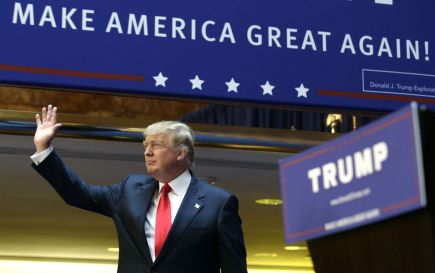
 

Donald_Trump_2016_rtr_imgIn the middle of the political food fight that was the ninth Republican presidential debate, the front-runner suddenly abandoned the petty politics of the moment and delivered a message that mattered less to the scramble for South Carolina primary votes and more to the November fight for the battleground states that ring the Great Lakes.

“This country is dying. And our workers are losing their jobs,” Donald Trump declared. Noting the announcement of plans by the air-conditioner company Carrier to transfer production (and 1,400 union jobs) from Indianapolis to Mexico, the billionaire said, “Carrier is moving. And if you saw the [workers]…. They were crying.” Promising a no-more-tears presidency, Trump said he’d renegotiate “trade pacts that are no good for us and no good for our workers” and tell corporations to keep production in the United States or “we’re going to tax you.”

The pundits and political insiders who have missed every other warning sign from the 2016 race missed that one as well. But Trump’s recognition of shuttered plants and crying workers struck Ohio Congresswoman Marcy Kaptur. “I heard him. I heard exactly what he was saying, and so did the people of Indianapolis and Indiana,” Kaptur said. “So did everyone else who has lost a job to offshoring and outsourcing, or who knows they are just one more trade deal away from losing a job.”

Kaptur, a Democrat who represents a multiethnic, multiracial district stretching from Toledo to Cleveland, has decried Trump’s divisive remarks as shameful deviations from the American promise of “unity, not hatred.” But she cautions Democrats against assuming that the revulsion to Trump’s hateful language and crude politics will immediately disqualify him in the eyes of scared and angry voters in states that have been essential building blocks for Democratic wins in presidential races of recent decades. Kaptur’s not alone in this view.

Service Employees International Union president Mary Kay Henry warns that Trump could win a good many union votes—and perhaps the presidency—if he secures the Republican nod. “I think this is a very dangerous political moment in our country,” said the head of the SEIU, which has endorsed Hillary Clinton for the Democratic nomination, during a January discussion of Trump’s appeal. “I think he’s touching this vein of terrible anxiety that working-class people feel about their current status, but more importantly, how terrified they are for their kids not being able to do as well as they have, never mind doing better.” Henry noted that internal polls of union members across the country reveal a “broken sense of the future” and raise the prospect of an emotion-driven election in which it is “easier [to] appeal to fear than to what’s possible.”

“I don’t think the Democrats are ready for this,” adds Ralph Nader, the consumer activist and former presidential candidate. “Once he gets these wildcats off his back, once he gets the Republican nomination, then Trump becomes the builder again. He’s already said he’s going to be the greatest jobs president in history. He hasn’t pushed that line too hard in the primaries because he doesn’t want to come off as something other than a conservative. But if he’s the nominee, watch out.”

“Watch out”? Really? Isn’t Trump supposed to be unelectable? Isn’t he too bigoted, too crude, to be taken seriously? That’s what Republicans told themselves for most of 2015. But since his big wins in the New Hampshire and South Carolina primaries, the GOP establishment has begun to adjust to the prospect of a billionaire nominee with a flair for grabbing media attention, shaping the debate, and shredding opponents.

Yes—watch out. “This is an unprecedented election in so many ways that we don’t know what electability is,” cautions Ilyse Hogue, president of NARAL Pro-Choice America, which has backed Clinton. “What we do know is that Trump is better positioned to pivot, to Etch-A-Sketch his message, than the other Republicans. That constitutes a threat.”

Trump has already proved to be competitive with Clinton and her insurgent challenger, Vermont Senator Bernie Sanders, in the polls from battleground states like Florida, North Carolina, and Colorado. Measures of hypothetical match-ups should always be considered with skepticism when the parties are in the midst of nomination fights—and when potential independent candidacies are being explored. But poll numbers and interviews with Democrats in key states like Ohio, Pennsylvania, and Wisconsin indicate that the 2016 Democratic nominee could face a fight for industrial states that provided vital support for Barack Obama in 2008 and 2012. And Trump has yet to make his play for those states.

Right now, Trump is still peddling the snake-oil blend of xenophobia and bigotry that plays well in Republican primaries (one recent survey in South Carolina found that 38 percent of his backers believe the Confederacy should have won the Civil War). If he’s the Republican nominee, however, he’ll be confident about South Carolina. And Trump is all but certain to have what Hogue refers to as his “Etch-A-Sketch” moment, pivoting toward economic-populist themes that, while still crudely nationalistic, might attract independents and Democrats in key states. Republican pollster Frank Luntz says that in the focus groups he’s conducted, he has regularly found people who voted for Obama twice but now say “they would consider Trump.” Why? Because Trump is speaking to the fears of Americans who have lost faith not just in establishment politics, but in establishment economics. And he is likely to do a lot more of that.

It’s in the industrialized swing states where Trump’s promise to protect jobs and change trade policies could resonate among blue-collar workers. AFL-CIO president Richard Trumka acknowledges that workers are “talking to me about Donald Trump.” Union leaders fret about internal surveys that show the billionaire is attracting greater support than is usually afforded Republicans. While much of it comes from white male voters, these union leaders say they’ve seen some evidence of a broader openness to Trump’s message. Luntz claims that his candidacy “would get the highest percentage of black votes since Ronald Reagan in 1980.” That’s not a high bar—exit polls gave Reagan 14 percent—but the prospect of losing any working-class votes in states like Wisconsin, Indiana, Michigan, Ohio, and Pennsylvania should be a wake-up call for Democrats.

“The two major parties will have to change, or they are likely to be changed by voters who have had enough,” argues the Rev. Jesse Jackson. But what if one party changes—however cynically or crudely—to address the fears of the moment, while the other does not? What if Trump turns up the volume on a populist message while the Democrats run a more cautious campaign?

Sanders supporters point to polls in some battleground states that show him faring better than Clinton in matchups with Trump. “Bernie’s where the Democrats need to be,” says RoseAnn DeMoro, executive director of the National Nurses United union, regarding Sanders, a longtime critic of corporate-friendly trade pacts. “He’s speaking to fears that working families have about the future, but he’s not dividing people the way Trump is.”

Kaptur, who has not endorsed a candidate in the Democratic race, made a similar point on a drive from Toledo to Lorain, where the steel mills are cutting production and in some cases shutting down. “These people have been hit over and over and over again. They’ve retrained. They’ve done everything they can to survive—but the plants keep closing. They’ve been battered, and they’re sick of it. They want security, and this country is not delivering security. When Bernie talks about this, I think it touches people. Clinton says a lot of the same things, but I don’t hear the same passion.”

That’s a fair critique. But the counter to Trump’s appeal can’t merely be to debate on his terms. “It won’t work to go ‘My populism is bigger than your populism,’” Hogue says. A smart challenge must involve a full-spectrum response to the billionaire’s appeal as “a builder and a doer,” Nader says. “He reaches millions of people by making them comfortable with their prejudices. The press sometimes goes after him on that, which is good. But the press never gets to his vulnerabilities—his tax returns. There’s so much there, but Trump has diverted attention from a real examination of his financial dealings. Progressives can’t get distracted the way conservatives have. They have to expose him.”

Exposing the billionaire as a crony capitalist means pursuing the question of whether a candidate who opposes a minimum-wage hike would really take on multinational corporations in order to save jobs in Flint and Youngstown. In addition to challenging Trump himself, savvy observers say, it is vital to challenge Trumpism—the politics of division that scapegoats, stereotypes, and appeals to bigotry. Trumka says that “a campaign fueled by contempt and exclusion is bad for working families,” and labor unions are preparing to make that point with an aggressive campaign similar to their 2008 push to get union members behind Obama’s candidacy.

The challenge to Trump must address economic anxiety while also emphasizing pluralism, says Hogue. “Where Trump’s weakness is, and where his opponent will have an advantage, is that the way this country genuinely experiences economic inequality has everything to do with your race, your gender, your treatment as an immigrant—all these issues.” Clinton has begun speaking to this. Even if Wall Street is reined in and economic challenges are addressed, she warned in the Democratic debate in Milwaukee, “we would still have racism holding people back. We would still have sexism preventing women from getting equal pay. We would still have LGBT people who get married on Saturday and get fired on Monday.” That’s smart—as was Sanders’s call in the same debate for “a political revolution in which millions of Americans stand up, come together, [and] not let the Trumps not let the Trumps of the world divide us.”

Clinton and Sanders are both evolving—and improving—as candidates. This is important, because if Trump is the GOP nominee, he will not be beaten with old talking points or a cautiously calculated message. “The Democrats have to get much better at making the connections between the water crisis in Flint and the closing of factories in Flint,” Kaptur says. “They have to make all the connections between trade and poverty, between deindustrialization and hollowed-out cities. People are hurting for a lot of reasons. Democrats have to recognize that hurt, and they have to explain that a politics of division is never going to address it.

“Dividing people doesn’t make positive change possible,” Kaptur adds. “Dividing people makes the changes that are necessary impossible.”