Fed is Likely to Lower Interest Rates

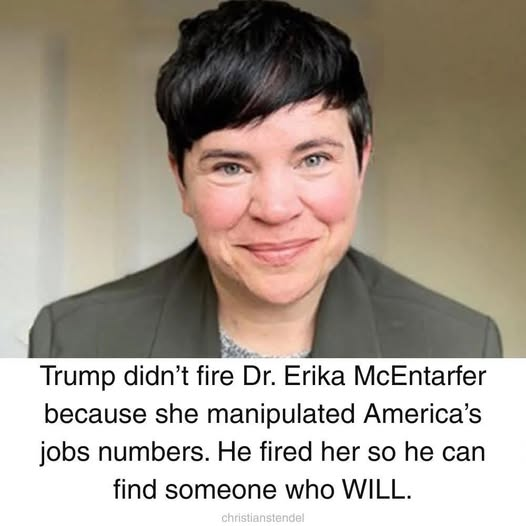
The Bureau of Labor Statistics (BLS) has again handed President Donald Trump a bleak set of jobs numbers, just one month after he fired the agency’s commissioner over weak employment data.

On Friday morning, the BLS reported that nonfarm payroll employment rose by only 22,000 in August. Analysts had forecast that the economy would add 75,000 jobs during the month. According to the agency, gains made in health care were offset by losses in federal government employment, as well as mining, quarrying and oil and gas extraction.

While July’s figures were revised up to 79,000 from 73,000, June’s numbers were revised down by 27,000, dropping from 14,000 to minus-13,000. Meanwhile, the unemployment rate edged up to 4.3 percent from 4.2 percent.

Lowering interest rates to stimulate the economy is known as expansionary monetary policy. This policy aims to reduce borrowing costs, encouraging households and businesses to increase spending and investment, which helps boost economic activity. 

Given that the employment rose by only 22,000 in August it is likely that the Fed will lower the interest rate as Donald Trump has been pushing.

Flag Day is Sad Day!

Today is Flag Day but it has turned into Sad Day as the president has an Army Parade, people are demonstrating calling this No Kings Day, and thousands of Hispanics have fear of arrest and deportation.

The lawn was not cut. I called the gardener. His wife said he feared for arrest and told me he is in hiding.

Hotel workers, restaurant workers, farm workers and many other groups are living in fear.

This is one Flag Day we will never forget.

Donald Trump dreams of controlling everything – he sees an opportunity to renaming everything

In President Donald Trump effort to rename everything he sees his opportunity to rename another prominent body of water.

Donald Trump Plans to Rename Another Gulf.

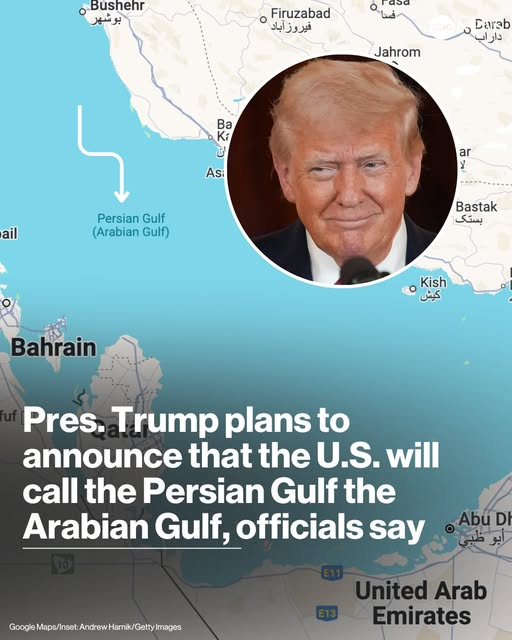
The Associated Press reported on Wednesday, May 7, that two senior White House officials have confirmed that — during his upcoming trip to Saudi Arabia— Trump plans to announce that the U.S. will officially be updating its lexicon to call the Persian Gulf the “Arabian Gulf” or the “Gulf of Arabia.”

While the U.S. military has referred to the body of water as the Arabian Gulf for years, the Persian Gulf name is more common among American civilians. For users in the United States, Google Maps currently lists the name as “Persian Gulf (Arabian Gulf),” while Apple Maps solely displays it as the “Persian Gulf.”

Here is the list of renamings Trump intends to do.

Gulf of Mexico becomes Gulf of America Persian Gulf becomes Gulf of Arabia   November 11, Veterans Day becomes Victory Day for World War I May 8 as “Victory Day for World War II Denali, federally designated as Mount McKinley

The U.S. Economy Shrank

NOT MAKING AMERICA GREAT

The U.S. economy shrank at a 0.3% annual pace from January through March, the first drop in three years, as President Donald Trump’s trade wars disrupted business. First-quarter growth was slowed by a surge in imports as companies in the United States tried to bring in foreign goods before Trump imposed massive tariffs.

The January-March drop in gross domestic product — the nation’s output of goods and services — reversed a 2.4% gain in the last three months of 2024. Imports grew at a 41% pace, fastest since 2020, and shaved 5 percentage points off first-quarter growth. Consumer spending also slowed sharply — to 1.8% growth from 4% in October-December last year. Federal government spending plunged 5.1% in the first quarter.

Forecasters surveyed by the data firm FactSet had, on average, expected the economy to eke out 0.8% growth in the first quarter, but many expected GDP to fall.

Financial markets sank on the report. The Dow Jones tumbled 400 points at the opening bell shortly after the GDP numbers were released. The S&P 500 dropped 1.5% and the Nasdaq composite fell 2%.

The surge in imports — fastest since 1972 outside COVID-19 economic disruptions — is likely to reverse in the second quarter, removing a weight on GDP. For that reason, Paul Ashworth of Capital Economics forecasts that April-June growth will rebound to a 2% gain.

Sad Destruction of U.S. Economy by Madman

The U.S. unemployment rate rose to 4.2% in March 2025, the highest level since November and slightly above market expectations of 4.1%.

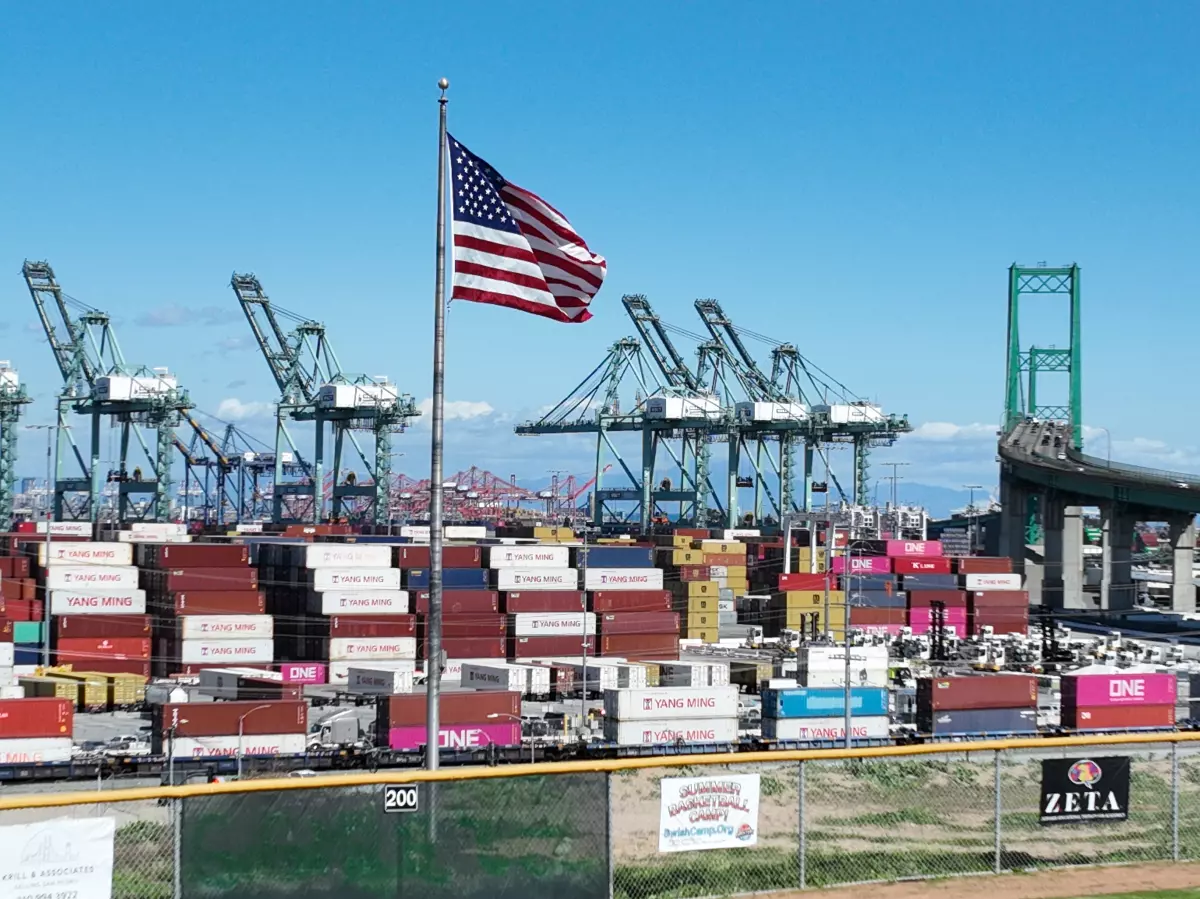
The Port of Los Angeles alone supports 136,000 jobs in the city. The combined Port of Los Angeles and Port of Long Beach support 186,000 jobs in the Los Angeles/Long Beach area. 

California Gov. Gavin Newsom on Wednesday announced a lawsuit contesting President Trump’s executive authority to enact international tariffs without congressional support, which he likened to the commander-in-chief taking a “wrecking ball” to America’s global reputation.

The legal action argues that the International Emergency Economic Powers Act that Trump cited to impose tariffs does not grant the president the ability to unilaterally adopt tariffs on goods imported to the U.S. The suit from California is the first challenge from any state against Trump’s trade policy.

California’s legal case rests on an argument that the International Emergency Economic Powers Act, which specifies the actions the president can take if he declares a national emergency in response to a foreign national security, foreign policy or economic threat, does not give Trump the authority to enact tariffs.

“The reality is the U.S. Constitution gives Congress the power of the purse,” Bonta said. “It’s Congress’ responsibility to set and collect taxes, duties and excises, including, yes, tariffs, not the president’s. Congress hasn’t authorized these tariffs, much less authorized imposing tariffs only to increase them, then pause them, then imminently reinstate them on a whim, causing our nation and the global economy whiplash. Trump is attempting to override Congress and steamroll the separation of powers.”

The tariffs appear to be on weak legal ground, given the president’s decision to rely on the International Emergency Economic Powers Act, said Stratos Pahis, associate professor of law and co-director of Block Center for the Study of International Business Law at Brooklyn Law School.

Donald Trump, an unsuccessful business man, with a high approval rating by the public, is destroying America’s economy and the G.O.P. is bowing to his wishes.

The question is where the people needed for all those manufacturing jobs come from?

An Eradic Behavior

“Trump’s ‘will he, won’t he’ tariff chaos is just one more con on working people.”

That’s what Melinda St. Louis, Global Trade Watch director at the watchdog group Public Citizen, said in a Wednesday statement after U.S. President Donald Trump announced a 90-pause for what he has called “reciprocal” tariffs, excluding China.

It seems Donald Trump wants a recession. Why? A recession will drive down the price of real estate, companies, and shares of stock. Trump and his fellow billionaires want o buy everything on the cheap and then enjoy the ride upward-no matter the cost to working people.

“OUR PLAN IS WORKING PERFECTLY AND IS JUST A NEGOTIATING TACTIC BUT IT IS ALSO GOING TO BE PERMANENT AND WE WILL BE THE WORLD LEADER IN TEXTILES AND NOW THERE IS A PAUSE AND EVERYONE NEEDS TO CHILL BUT ALSO WE WILL NEVER BACK DOWN AAAAAAHHHHHH.”

US stocks tumbled today after the White House clarified that its tariff on all Chinese goods was at least 145% — even higher than previously believed. This comes a day after US stocks skyrocketed following President Donald Trump’s announcement of a 90-day pause on all “reciprocal” tariffs, except for China. Beijing, meanwhile, implemented its own retaliatory tariffs of 84% on US goods.

• Trade negotiations: Trump just defended his tariff policy in a Cabinet meeting, saying his administration is “working on deals” with multiple countries. Earlier today, the EU announced it would pause its retaliatory US tariffs for negotiations. Even after Trump’s U-turn, economists say the damage is done.

DOW down 1,835.94, S&P 500 down 281.5 5.5% mid-day April 10,2025

A majority of Americans voted for Donald Trump!

Trump’s Destruction of the Country’s Economy

Tariffs Are a Self-Inflicted Economic Catastrophe that will make America hated by most of the world. Russia and its allies are loving this.

Dow drops over 1,400 as US stocks lead worldwide sell-off after Trump’s tariffs ignite

Financial markets around the world are reeling Thursday following President Donald Trump’s latest and most severe set of tariffs, and the U.S. stock market is taking the worst of it so far.

The S&P 500 was down 4% in midday trading, more than other major stock markets, and at its bottom in the morning was on track for its worst day since COVID struck in 2020. The Dow Jones Industrial Average was down 1,412 points, or 3.3%, as of 11:50 a.m. Eastern time, and the Nasdaq composite was 5.1% lower.

 In President Donald Trump’s first term, apparel and footwear makers shifted manufacturing out of China to avoid tariffs. Now they’re being pummeled as Trump targets the same nations they moved to. 

A tariff of 46% on goods from Vietnam is particularly painful for companies such as Nike Inc., Adidas AG and Lululemon Athletica Inc., which produce significant amounts of merchandise in the country. Levies of 49% on Cambodia and more than 30% on Indonesia and Thailand are also problematic. Trump says the tariffs will push companies to relocate manufacturing to the US. 

America’s biggest trading partners promised retaliation for President Donald Trump’s massive tariff announcement. The first major response has come in — from Canada.

Canadian Prime Minister Mark Carney said that Canada will levy a 25% counter-tariff on vehicles imported from the United States that are not compliant with the United States-Mexico-Canada Agreement (USMCA) in response to US tariffs on Canadian vehicles and auto parts that went into effect today.

“As I told President Trump during our call last week, Canada will respond to the US auto tariffs, and today, I’m announcing that the Government of Canada will be responding by matching the US approach with 25% tariffs on all vehicles imported from the United States that are not compliant with CUSMA, our North American Free Trade Agreement,” Carney told reporters in Ottawa, using the Canadian acronym for the USMCA.

The prime minister said there were no talks scheduled between him and Trump, but he would talk to the US president again “if appropriate.” Carney also said Canada’s counter-tariffs would not affect auto parts.

Though Carney said Canada still considers the US an ally in defense and security, his country “must be looking elsewhere to expand our trade, to build our economy and to protect our sovereignty.”

Where will all this end? Look for a World Wide RECESSION.

Trump consistently frames policy around ‘fairness,’ trading on American frustration

A long article worth reading.

By Kevin Rector, Staff Writer for the Los Angeles Times

In a sit-down interview with Fox News last month, President Trump and his billionaire “efficiency” advisor Elon Musk framed new tariffs on foreign trading partners as a simple matter of fairness.

“I said, ‘Here’s what we’re going to do: reciprocal. Whatever you charge, I’m charging,’” Trump said of a conversation he’d had with Indian Prime Minister Narendra Modi. “I’m doing that with every country.”

“It seems fair,” Musk said.

Trump laughed. “It does,” he said.

“It’s like, fair is fair,” said Musk, the world’s richest person.

The moment was one of many in recent months in which Trump and his allies have framed his policy agenda around the concept of fairness — which experts say is a potent political message at a time when many Americans feel thwarted by inflation, high housing costs and other systemic barriers to getting ahead.

“Trump has a good sense for what will resonate with folks, and I think we all have a deep sense of morality — and so we all recognize the importance of fairness,” said Kurt Gray, a psychology professor at University of North Carolina at Chapel Hill and author of the book “Outraged: Why We Fight About Morality and Politics and How to Find Common Ground.”

“At the end of the day,” Gray said, “we’re always worried about not getting what we deserve.”

In addition to his “Fair and Reciprocal Plan” for tariffs, Trump has cited fairness in his decisions to pull out of the Paris climate agreement, ban transgender athletes from competing in sports, scale back American aid to embattled Ukraine and pardon his supporters who stormed the U.S. Capitol on Jan. 6, 2021.

Trump has invoked fairness in meetings with a host of world leaders, including Japanese Prime Minister Shigeru Ishiba and British Prime Minister Keir Starmer. He has suggested that his crusade to end “diversity, equity and inclusion” programs is all about fairness, couched foreign aid and assistance to undocumented immigrants as unfair to struggling American taxpayers, and attacked the Justice Department, the media and federal judges who have ruled against his administration as harboring unfair biases against him.

Trump and Musk — through his “Department of Government Efficiency,” which is not a U.S. agency — have orchestrated a sweeping attack on the federal workforce largely by framing it as a liberal “deep state” that either works in unfair ways against the best interests of conservative Americans, or doesn’t work at all thanks to lopsided work-from-home allowances.

“It’s unfair to the millions of people in the United States who are, in fact, working hard from job sites and not from their home,” Trump said.

In a Justice Department speech this month, Trump repeatedly complained about the courts treating him and his allies unfairly, and reiterated baseless claims that recent elections have been unfair to him, too.

“We want fairness in the courts. The courts are a big factor. The elections, which were totally rigged, are a big factor,” Trump said. “We have to have honest elections. We have to have borders and we have to have courts and law that’s fair, or we’re not going to have a country.”

Before a meeting with NATO Secretary-General Mark Rutte this month, Trump complained — not for the first time — about European countries not paying their “fair share” to defend Ukraine against Russian aggression, and the U.S. paying too much.

“We were treated very unfairly, as we always are by every country,” Trump said.

Almost exclusively, Trump’s invocations of fairness cast him, his supporters or the U.S. as victims, and his critics and political opponents as the architects and defenders of a decidedly unfair status quo that has persisted for generations. And he has repeatedly used that framework to justify actions that he says are aimed at tearing down that status quo — even if it means breaching norms or bucking the law.

Trump has suggested that unfavorable media coverage of him is unfair and therefore “illegal,” and that judges who rule against him are unfair liberal activists who should be impeached.

The politics of feeling heard

Of course, grievance politics are not new — nor is the importance of “fairness” in democratic governance. In 2006, the late Harvard scholar of political behavior Sidney Verba wrote of fairness being important in various political regimes but “especially central in a democracy.”

Verba noted that fairness comes in different forms — including equal rights under the law, equal voice in the political sphere, and policies that result in equal outcomes for people. But the perception of fairness in a political system, he wrote, often comes down to whether people feel heard.

“Democracies are sounder when the reason why some lose does not rest on the fact that they are invisible to those who make decisions,” Verba wrote. “Equal treatment may be unattainable, but equal consideration is a goal worth striving for.”

According to several experts, Trump’s appeal is in part based on his ability to make average people feel heard, regardless of whether his policies actually speak to their needs.

Gray said there is “distributive fairness,” which asks, “Are you getting as much as you deserve?” and “procedural fairness,” which asks, “Are things being decided in a fair way? Did you get voice? Did you get input?”

One of Trump’s skills, Gray said, is using people’s inherent sense that there is a lack of distributive fairness in the country to justify policies that have little to do with such inequities, and to undermine processes that are in place to ensure procedural fairness, such as judicial review, but aren’t producing the outcomes he personally desires.

“What Trump does a good job at is blurring the line between rules you can follow or shouldn’t follow,” he said. “When he disobeys the rules and gets called out, he goes, ‘Well those moral rules are unjust.’”

People who voted for Trump and have legitimate feelings that things are unfair then give him the benefit of the doubt, Gray said, because he appears to be speaking their language — and on their behalf.

“He’s not just saying that it’s him. He’s saying it’s on behalf of the people he’s representing, and the people he’s representing do think things are unfair,” Gray said. “They’re not getting enough in their life, and they’re not getting their due.”

Lawrence Rosenthal, chair of the Center for Right-Wing Studies at UC Berkeley and author of “Empire of Resentment: Populism’s Toxic Embrace of Nationalism,” said Trump and his supporters have built him up as a leader “interested in fixing the unfairness to the working class.”

But that idea is premised on another notion, even more central to Trump’s persona, that there are “enemies” out there — Democrats, coastal elites, immigrants — who are the cause of that unfairness, Rosenthal said.

“He names enemies, and he’s very good at that — as all right-wing authoritarians are,” Rosenthal said.

Such politics are based on a concept known as “replacement theory,” which tells people to fear others because there are only so many resources to go around, Rosenthal said. The theory dovetails with the argument Trump often makes, that undocumented immigrants receiving jobs or benefits is an inherent threat to his MAGA base.

“The sense of dispossession is absolutely fundamental and has been for some time,” Rosenthal said.

John T. Woolley, co-director of the American Presidency Project at UC Santa Barbara, said Trump has “a remarkable capacity for constructing the world in a way that favors him” — even if that’s as the victim — and appears to be an “outlier” among presidents in terms of how often he focuses on fairness as a political motif.

“Certainly since his first term with impeachment, ‘the Russia hoax,’ ‘dishonest media,’ ‘fake news’ and then ‘weaponizing’ of justice — he’s constructed a kind of victim persona, in battle with the deep state, that is now really basic to his interaction with his core MAGA constituency,” Woolley said.

An idea for Democrats

In coming to terms with Trump’s win in November, Democrats have increasingly acknowledged his ability to speak to Americans who feel left behind — and started to pick up on fairness as a motif of their own, in part by zeroing in on mega-billionaire Musk.

In an interview with NPR last month, Rep. Alexandria Ocasio-Cortez (D-N.Y.) evoked the idea of unfairness in the system by saying American government is working for rich people like Musk, but not for everyone else. “Everything feels increasingly like a scam,” she said.

She and Sen. Bernie Sanders (I-Vt.) have since embarked on a nationwide “Fighting Oligarchy” tour, where they have blasted Musk’s role in government and questioned how his actions, or those of Trump, have helped average Americans in the slightest.

“At the end of the day, the top 1% may have enormous wealth and power, but they are just 1%,” Sanders wrote Friday on X. “When the 99% stand together, we can transform our country.”
Buy Canadian movement starts to take a sizable bite out of U.S. business

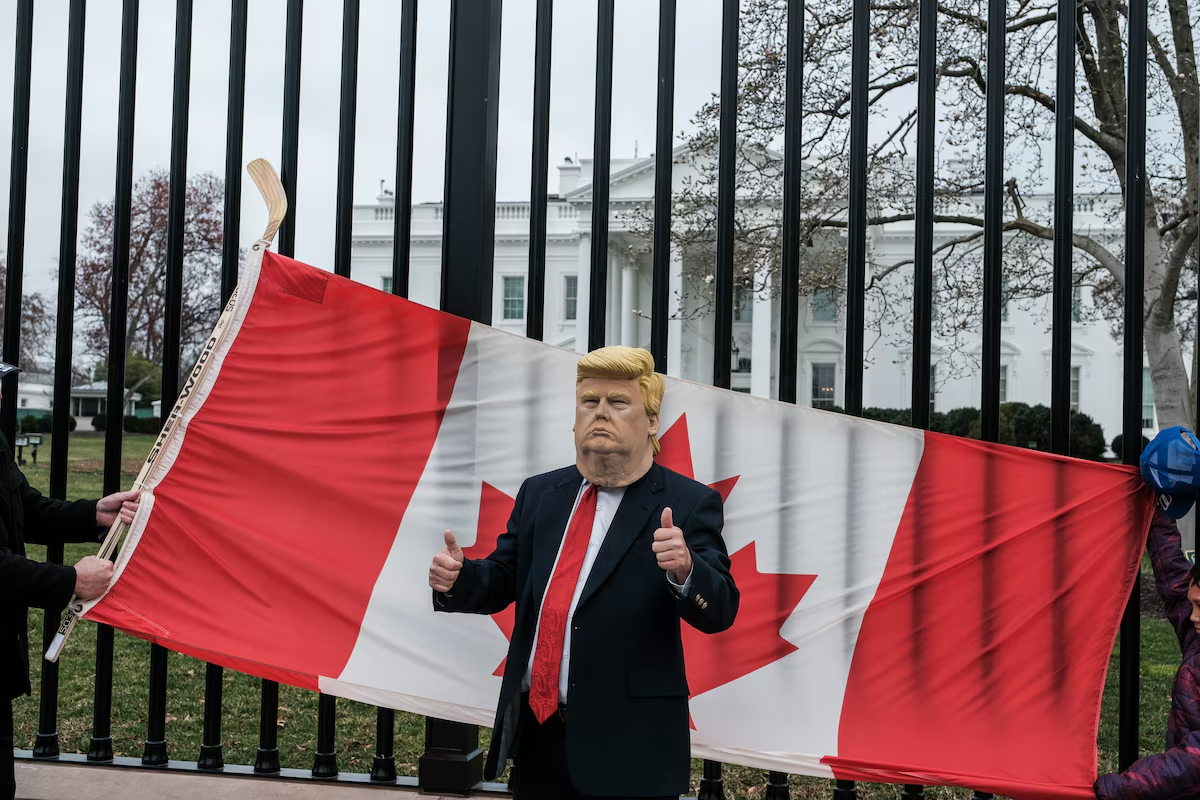
A man dressed as U.S. President Donald Trump poses for a photo near the White House in Washington on March 13. MICHAEL A. MCCOY/The New York Times News Service

The surge in patriotism among Canadian shoppers, fuelled by trade tensions with the United States, is already leaving a sizable mark on American business, early data from a variety of industries suggests.

U.S. tour operators are reporting booking declines of as much as 85 per cent, while American distilleries are losing major deals. Meanwhile, Canadian grocers are posting a bump in domestic product sales of up to 10 per cent.

Donald Trump’s jabs about annexation, along with a 25-per-cent levy on steel and aluminum from Canada and the U.S. President’s threats of a 25-per-cent tariff on most Canadian imports have prompted a rallying cry to “Buy Canadian” across this country.

While consumer boycotts – combined with government policy actions – are causing trouble south of the border, concerns are bubbling up about the toll on Canadian businesses, too.

“To use some of the words I hear from tour company members of the National Tour Association, the drop-off is ‘astronomical’ when speaking about Canadians booking group travel to the United States,” said Catherine Prather, president of the Kentucky-based organization, which specializes in group tours.

The exchange rate and fluctuating trade policies have had a “resounding effect” on Canadians’ travel cancellations, she said. But tour operators shared that the rhetoric about making Canada the 51st state is “perhaps even worse,” and in many cases, has been the “deciding factor” for customers.

Traffic across some major border crossings in tourism states such as New York has dropped by 12 per cent in the first two weeks of February alone, said Corey Fram, director at the Thousand Islands International Tourism Council. He cited data provided to him by the Bridge and Tunnel Operators Association for border crossings on the Thousand Islands Bridge between Alexandria Bay, N.Y., and southeastern Ontario.

Statistics Canada data also show that Canadian automobile trips to the U.S. are plummeting. About 1.2 million return trips were made into Canada by Canadians in February – a 23-per-cent drop from that period a year ago.

The U.S. Travel Association warned in February that even a 10 per cent drop in Canadian visitors would lead to more than $2.1-billion in spending losses and a threat to 14,000 jobs.

The Buy Canadian movement is also hitting the grocery aisles. Per Bank, CEO of Canada’s largest food retailer, Loblaw Cos. Ltd., said in February that the company saw about a 10-per-cent uptick in sales for Canadian products in preceding weeks.

Pierre Cléroux, vice-president of research and chief economist at the Business Development Bank of Canada, told The Globe and Mail that if every Canadian household redirected $25 a week from foreign products to Canadian ones, it would boost GDP by 0.7 per cent and create 60,000 jobs.

According to his modelling, if Canadians also cut international travel by 10 per cent and spent that money domestically, the combined effect would raise GDP by 1 per cent and create 74,000 jobs.

Another U.S. industry reeling from the “Buy Canadian” movement and its manifestation in public policy – including provincial moves to take American booze off the shelves – is American distilling.

Canada is a critical market for U.S. spirits, making up “a little over 31 per cent of all U.S. exports” of distilled spirits in 2024, said Stephen Gould, a Colorado-based alcohol trade consultant at Consulting Alchemist Ltd and former distillery owner.

In addition to bourbon, Canada is a crucial market for U.S. whisky and other spirits as well as wine and beer. Bartenders, waitstaff and retail clerks in the U.S. are among those who will face significant layoffs if trade tensions continue, said Mr. Gould.

“The American industry is suffering,” he said.

Victor Yarbrough, co-founder of Brough Brothers,Kentucky’s first Black-owned distillery, said his company was “deeply disappointed” after losing a lucrative deal to sell its bourbon to New Brunswick Liquor due to trade tensions. The deal was projected to increase company sales by 2.55 per cent in 2025.

“Canada’s a large export market for us,” said Mr. Yarbrough. “Let’s figure out ways to move forward and amicably.”

Abridged article from the Canadian Globe and Mail.