Ridiculously Resilient Ridge means No El Niño Rains

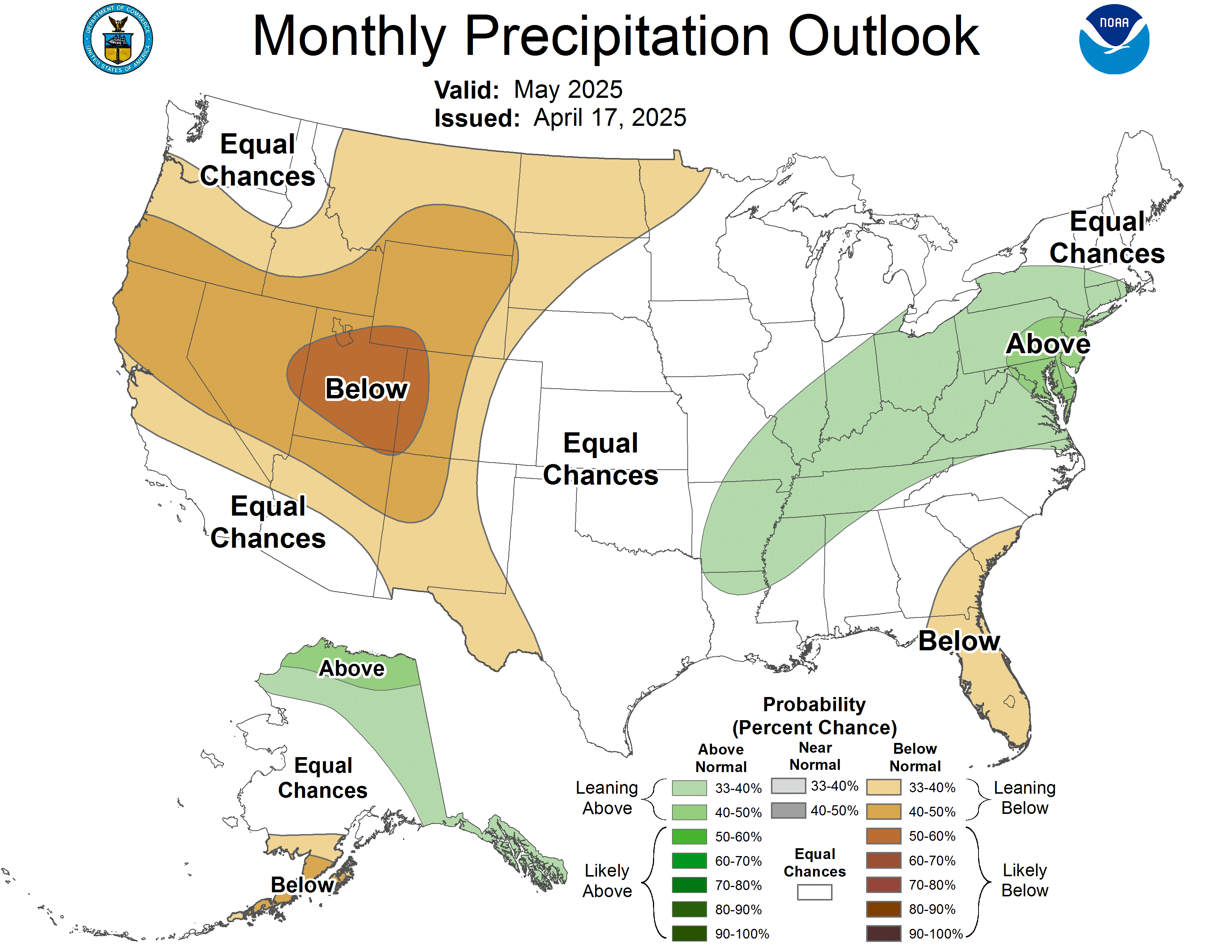
The “Ridiculously Resilient Ridge,” sometimes shortened to “Triple R” or “RRR,” is the nickname given to a persistent region of atmospheric high pressure that occurred over Southern California. Finally today there is an article about this condition in the Los Angeles Times. The well-known weather forecasters are all in agreement that as long as this condition continues there is a likelihood that the predicted El Niño rains for this part of the nation will not occur. Apparently they cannot predict when the high pressure ridge will dissipate sufficiently to permit consequential rain in the Los Angeles-San Diego region.

Yesterday the temperature was in the high 70s and low 80s in the Los Angeles area. Other than an expectation of 1 to 2 inches of rain on Sunday January 31 there is a forecast of moderately warm dry temperatures for the coming week. The condition will be caused by that RRR.

Local KABC-TV chief meteorologist Dallas Raines, certified by the American Meteorological Society, has been voicing doubts about El Niño for the last month. He does an excellent job of explaining air circulation and high pressure.

As an amateur rain collector since the last El Niño I can report that to date my rain gauge has collected just of 6.5 inches of rain compared to last year’s 8.4 inches of rain. Obviously 1 to 2 inches of rain this weekend won’t change the current trajectory of a very dry year.

Happily the storms in the Sierra Nevada Mountains are significant and that will ease the drought. Meanwhile Southern Californians will continue to lounge by their pools and spend their free time in the parks.
You Yellow Bellied Snake and Other El Niño Issues

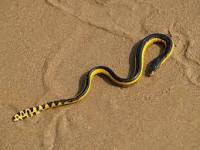
Yellow Bellied Sea Snake “Go ahead, make my day, you yellow-bellied varmint!” Yellow bellied varmint was an expression frequently used in American Western Movies. Or at least that is what I remember. It was meant to call someone as being afraid to confront or fight for their beliefs.

Now it turn out there is a yellow-bellied sea snake with highly poisonous venom that has washed ashore north of Los Angeles. The Pacific Ocean in Los Angeles is not known for its warm sea water. That snake’s arrival here definitely tell us we have a major dose of warm water. This species of sea snake is found in tropical oceanic waters around the world. That should put to rest the “yellow-bellied varmint” expression.

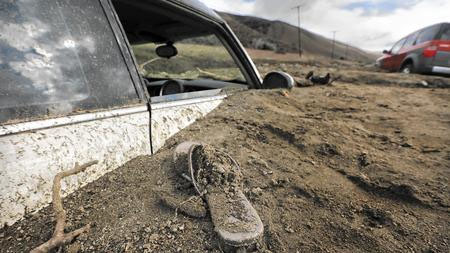
Rain Storm ins desert & mtns 10-15-2015

This photo taken in the Antelope Valley which is part of the Mojave Desert.  Happily I don’t live in the mountain or desert areas of Southern California.  4.99 inches of rain on December 6, 1997 on my rain gauge during the last El Niño did not flood the house but the backyard lawn was a wading pool and water did flow into the garage through a back door. Sand bags should stop that this time. I had the roof inspected last year and it is in excellent condition said the inspector.

We are not going to the beach searching for those yellow-bellied varmints. I believe we are ready.

‘Godzilla El Nino’ May Be Coming to California – a Big Maybe

There have been a total of eight seasons beginning in years (1952, 1953, 1958, 1969, 1976, 1977, 2004, 2006, 2013) classified as “weak” El Niños, eight years (1951, 1963, 1968, 1986, 1991, 1994, 2002, 2009) as “moderate”, four years (1957, 1965, 1972, 1987) as “strong” and two years (1982, 1997) as “very strong” El Niños.

Of the 10 costliest flood years in California since 1950, only four happened during a season when there was an El Niño. Two others occurred during seasons with La Niña, and the final four were when the temperature of the tropical Pacific was near normal.

I have been collecting rain measurement in my backyard since the beginning of the 1997 El Niño year. That year the rain accumulation was 48.3 inches in my backyard. That was the highest annual total since I started collecting data. However the highest single 24 hour period was March 11, 2011. In that year rainfall amounted to 26.2 inches of rain.  Heavy rain that previous December, 2010 totaled more than 9.6 inches and the news media called the heavy rain a “pineapple express.” That was not declared an El Niño year.

The annual rain fall in southern California is so erratic that averages are worthless. They predict nothing. The year following the 26.2 inches only 13.6 inches fell.

Let’s not hold our breath. We should plan for the worst. In other words plan for drought and hope for more rain.