Why are People Leaving California?

California climate is delightful. Many people or their parents move here to escape the humidity, the cold, the hurricanes and the tornadoes found everywhere else in the United States. The price we pay for this has finally become too much for most of us.

 In Central Phoenix, the average list price for single-family homes is $455 per square foot.

The median sale price of a home in Los Angeles is $1.1M, and the median sale price per square foot is $643, according to Redfin

Gasoline in California, according to AAA, which tracks national gas prices daily, costs an average of about $4.78, compared with $3.16 nationally. The cost of electricity in the state is now the highest in the continental U.S., at 30.22 cents per kilowatt hour.

The notoriously high cost of gas in the state is the result of a lot of factors — we tax gas to pay for road infrastructure and a less-polluting fuel mix in the summer months. Last year, Sacramento decided to move harder, faster toward its goal of a carbon-less future, adding disincentives for refineries and incentives for EVs that the California Air Resources Board has predicted will add 47 cents a gallon at the pump.

Overall, California’s zero-carbon climate policies — pushing EVs as your next car purchase and heat pumps to cool and heat your house — rely largely on electricity that in turn depends on expensive, and intermittent, energy sources, such as wind and solar. Come hell or high water, California’s leaders are trying to regulate, tax and incentivize their way to electricity that is 100% carbon-free by 2045.

In fact, recent analyses say California will face “acute electricity shortages” over the coming decade. Not least among the reasons: a dragged-out, exorbitantly expensive and unpredictable permitting process; the difficulty in finding appropriate locales for wind turbines and solar farms; and, ironically, objections from locals and environmentalists who don’t want renewable facilities in their backyards. Case in point: Moss Landing, where a toxic fire in a battery plant, coupled with plans for offshore wind turbines, have turned locals against green policies.

California can only prosper if it can develop affordable, reliable energy from all sources, including the state’s fossil fuel supplies. Without a change of direction, the trajectory is building toward a neo-feudal future — a state widely divided between the few rich and the many struggling.

Source for some of this article from a Joel Kotkin column in the Los Angeles Times.

“COP28 is now on the verge of Complete Failure”

This AP (Associated Press) article is worth displaying in full. The world has a problem that needs attention now.

DUBAI, United Arab Emirates (AP) — Countries moved closer to reaching what critics called a watered-down final deal on how to act on climate change on Monday, to the disappointment and anger of nations who called to phase out planet-warming fossil fuels as the United Nations summit in Dubai neared its culmination.

A new draft released Monday of what’s known as the global stocktake — the part of talks that assesses where the world is at with its climate goals and how it can reach them — called for countries to reduce “consumption and production of fossil fuels, in a just, orderly and equitable manner.”

The release triggered a frenzy of fine-tuning by government envoys and rapid analysis by advocacy groups, just hours before the planned late morning finish to the talks on Tuesday — even though many observers expect the finale to run over time, as is common at the annual U.N. talks.

Anger grew as people had more time to read the document.

In a closed-door meeting late Monday, some country delegation chiefs needled COP28 President Sultan al-Jaber’s frequent calling of the goal to limit warming to 1.5 degrees Celsius (2.7 degrees Fahrenheit) since preindustrial times his “north star,” saying the president’s proposal misses that star.

“It is not enough to say 1.5, we have to do 1.5. We have to deliver accordingly,” Norway minister Espen Barth Eide said.

A person inside the room said several negotiating blocs, including those for small island states, Latin American countries, the European Union and developing countries, all spoke against the new draft, saying its ambition wasn’t strong enough. The person spoke on condition of anonymity in order to speak without fear of affecting the negotiations.

Some Pacific Island nations argued the text amounted to a death sentence.

The proposed text “doesn’t even come close to delivering 1.5 as a north star,” Tuvalu’s delegation chief Seve Paeniu said. “For us this is a matter of survival. We cannot put loopholes in our children’s futures.”

Small island nations are some of the most vulnerable places in a world of rising temperatures and seas. Final decisions by COPs have to be by consensus and objections can still torpedo this. Activists said they feared that potential objections from fossil fuel countries, such as Saudi Arabia, had watered down the text.

German climate envoy Jennifer Morgan said Europe is “extremely unified” in opposing the COP presidency’s text, calling it unacceptable.

“We’re prepared to stay as long as it takes to get the course correction that the world needs,” Morgan told The Associated Press as she walked into the heads of delegation meeting.

Zhao Yingmin, China’s vice minister for Ecology and Environment, said at the meeting that “the draft fails to address the concerns of developing countries on some key issues” and in particular the idea that greenhouse gas emissions must peak by 2025.

United States climate envoy John Kerry says the language on fossil fuels in the text “does not meet the test” of keeping 1.5 alive.

“I, like most of you here, refuse to be part of a charade” of not phasing out fossil fuels, Kerry said. “This is a war for survival.”

Kerry’s remarks received a round of applause from the room.

A combination of activists and delegation members lined the entry into a special late-evening meeting Monday of heads of delegations, with their arms raised in unity as delegations walked through, creating a tunnel-like effect. A few activists told delegates passing by: “You are our last hope. We count on you.”

Negotiators broke well after midnight, and it wasn’t clear when talks would resume.

“We need to find a solution that has maximum ambition and maximum equity,” South Africa minister Barbara Creecy said as negotiators left the room. “One without the other will not solve the conundrum we face.”

In the 21-page document, the words oil and natural gas did not appear, and the word coal appeared twice. It also had a single mention of carbon capture, a technology touted by some to reduce emissions although it’s untested at scale.

Activists said the text was written by the COP28 presidency, run by an Emirati oil company CEO — Al-Jaber — and pounced on its perceived shortcomings. It fell fall short of a widespread push to phase out fossil fuels like oil, gas and coal altogether.

Al-Jaber skipped a planned news conference and headed straight into a meeting with delegates just after 6:30 p.m. It was the second time for him to cancel a press briefing on Monday.

“We have a text and we need to agree on the text,” al-Jaber said. “The time for discussion is coming to an end and there’s no time for hesitation. The time to decide is now.”

He added: “We must still close many gaps. We don’t have time to waste.”

Critics said there was a lot to do.

“COP28 is now on the verge of complete failure,” former U.S. Vice President and climate activist Al Gore posted on X. “The world desperately needs to phase out fossil fuels as quickly as possible, but this obsequious draft reads as if OPEC dictated it word for word. … It is deeply offensive to all who have taken this process seriously.”

Jean Su from the Center for Biological Diversity said the text “moves disastrously backward from original language offering a phaseout of fossil fuels.”

“If this race-to-the-bottom monstrosity gets enshrined as the final word, this crucial COP will be a failure,” Su said.

But Mohamed Adow of Power Shift Africa said the “text lays the ground for transformational change.”

“This is the first COP where the word fossil fuels are actually included in the draft decision. This is the beginning of the end of the fossil fuel era,” he said.

Also on Monday, the latest draft on the Global Goal on Adaptation — the text on how countries, especially vulnerable ones, can adapt to weather extremes and climate harms — was released on Monday.

The adaptation is “utterly disappointing” and “an injustice to communities on the frontline of the crisis,” said Amy Giliam Thorp of Power Shift Africa.

“The text is even weaker, more vague in many areas, and lacking in ambition,” she said. It’s “set to corrode trust between developed and developing nations. A framework focused on action without concrete targets, especially to support developing countries, is pointless and toothless.”

Cristina Rumbaitis del Rio, a senior advisor for adaptation and resilience at the U.N. Foundation said “the new text doesn’t have the strength that we were hoping to see.”

On Monday morning, visibly tired and frustrated top U.N. officials urged COP28 talks to push harder for an end to fossil fuels, warning that time is running out for action.

“We can’t keep kicking the can down the road,” U.N. Secretary-General Antonio Guterres said. “We are out of road and almost out of time.”

___

Associated Press journalists Olivia Zhang, Malak Harb, Bassam Hatoum and David Keyton contributed to this report.

___

Associated Press climate and environmental coverage receives support from several private foundations. See more about AP’s climate initiative here. The AP is solely responsible for all content.

Objections to Keystone XL Pipeline

11-18-2014: The number one issue in America is a growing economy. That means more good jobs. The president is WRONG on this issue. Perhaps today’s vote in the Senate will change his opinion.

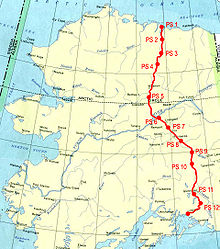
Oil Pipeline GraphicA quick review.  This is the proposed oil pipeline from Hardisty, Alberta, Canada to Houston, Texas and Port Arthur, Texas.

It now appears that the U.S. State Department sees no objection to approving the project.  However, the U.S. Interior Department warns of possible harm to wildlife.  Activists are primarily concerned with the possibility of oil spills.

Interestingly there is already a pipeline from Hardisty, Alberta to Cushing, Oklahoma.  While the reports of oil spills from that pipeline are rare there has been little in the news that confirms that fact.

Furthermore the Trans-Alaska oil pipeline, 800 miles long, had its largest oil spill involving the main pipeline on February 15, 1978, when an unknown individual blew a 1-inch (2.54-centimeter) hole in it at Steele Creek, just east of Fairbanks.  Approximately 16,000 barrels of oil leaked out of the hole before the pipeline was shut down.  Criminal mischief has been the primary cause of leaks.  There are no reports of impact on wildlife.

Trans_alaska_pipelineThe oil companies injected billions of dollars into the Alaska economy during the construction effort and the years afterward.

Of course environmentalists don’t want to hear the facts.

Moving Into the City

For the first time in a century, most of America’s largest cities are growing at a faster rate than their surrounding suburbs.  Just Google “relocating from the suburbs to the inner city” and you will find multiple articles including this Hartford Courant news item with the headline:  Great Reversion: Boomers and millennials are coming back to urban America. There is this headline on nbc.com: Cities grow more than suburbs, first time in 100 years.

 What is going on is a realization by people of all ages that central areas of cities have more things to do and see (art galleries, theaters, shopping), easier cheaper transportation, faster access to health care, educational opportunities, and some intriguing homes.  On top all this there are no more hour long commutes.

Even Los Angeles has seen a resurgence in central city population growth.  Old and mostly abandoned department stores in the Downtown and Hollywood area still have the same exteriors but have been remodeled into apartments and lofts.  Apartment house developments are along major boulevards and adjoining streets throughout the west side all the way to Venice Beach and Santa   Monica.  Central Long Beach has become a major redevelopment area on the southern perimeter of the city.

San Diego Montage
San Diego Montage

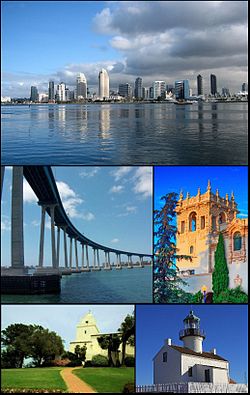
San Diego, my favorite city, has seen a rebuilt central city dominated by high rise condo and apartment developments.  Plenty of night life in the Gas Lamp district, a world class zoo, sports stadiums, and museums that are second to none.  Their light rail and bus system is outstanding.  Don’t send your children to their universities – they won’t return home; even back to Los Angeles.

Businessweek.com evaluated 100 of the country’s largest cities based on 16 criteria, which include: the number of restaurants, bars, and museums per capita; the number of colleges, libraries, and professional sports teams.  Those are some of the reasons living in major metropolitan areas outweighs the congestion and noise that is prevalent.  While you may not agree with their rankings (I don’t) the descriptions tell you the reasons that the suburbs are no longer the place to live.

Being Green

Checking out at the store, the young cashier suggested to the older woman, that she should bring her own grocery bags because plastic bags weren’t good for the environment.

The woman apologized and explained, “We didn’t have this green thing back in my earlier days.”

The young clerk responded, “That’s our problem today. Your generation did not care enough to save our environment for future generations.”
She was right — our generation didn’t have the green thing in its day.

Back then, we returned milk bottles, soda bottles and beer bottles to the store. The store sent them back to the plant to be washed and sterilized and refilled, so it could use the same bottles over and over. So they really were recycled.

But we didn’t have the green thing back in our day.

Grocery stores bagged our groceries in brown paper bags, that we reused for numerous things, most memorable besides household garbage bags, was the use of brown paper bags as book covers for our schoolbooks. This was to ensure that public property, (the books provided for our use by the school) was not defaced by our scribblings. Then we were able to personalize our books on the brown paper bags.

But too bad we didn’t do the green thing back then.

We walked up stairs, because we didn’t have an escalator in every store and office building. We walked to the grocery store and didn’t climb into a 300-horsepower machine every time we had to go two blocks.

But she was right. We didn’t have the green thing in our day.

Back then, we washed the baby’s diapers because we didn’t have the throwaway kind. We dried clothes on a line, not in an energy-gobbling machine burning up 220 volts — wind and solar power really did dry our clothes back in our early days. Kids got hand-me-down clothes from their brothers or sisters, not always brand-new clothing.

But that young lady is right; we didn’t have the green thing back in our day.


Back then, we had one TV, or radio, in the house — not a TV in every room. And the TV had a small screen the size of a handkerchief (remember them?), not a screen the size of the state of Montana . In the kitchen, we blended and stirred by hand because we didn’t have electric machines to do everything for us. When we packaged a fragile item to send in the mail, we used wadded up old newspapers to cushion it, not Styrofoam or plastic bubble wrap. Back then, we didn’t fire up an engine and burn gasoline just to cut the lawn. We used a push mower that ran on human power. We exercised by working so we didn’t need to go to a health club to run on treadmills that operate on electricity.

But she’s right; we didn’t have the green thing back then.

We drank from a fountain when we were thirsty instead of using a cup or a plastic bottle every time we had a drink of water. We refilled writing pens with ink instead of buying a new pen, and we replaced the razor blades in a razor instead of throwing away the whole razor just because the blade got dull.

But we didn’t have the green thing back then.

Back then, people took the streetcar or a bus and kids rode their bikes to school or walked instead of turning their moms into a 24-hour taxi service. We had one electrical outlet in a room, not an entire bank of sockets to power a dozen appliances. And we didn’t need a computerized gadget to receive a signal beamed from satellites 23,000 miles out in space in order to find the nearest burger joint.

But isn’t it sad the current generation laments how wasteful we old folks were just because we didn’t have the green thing back then?