What happened to majority rules? You take a vote on any subject and the majority wins. That is not the way it works in he U.S. Senate. 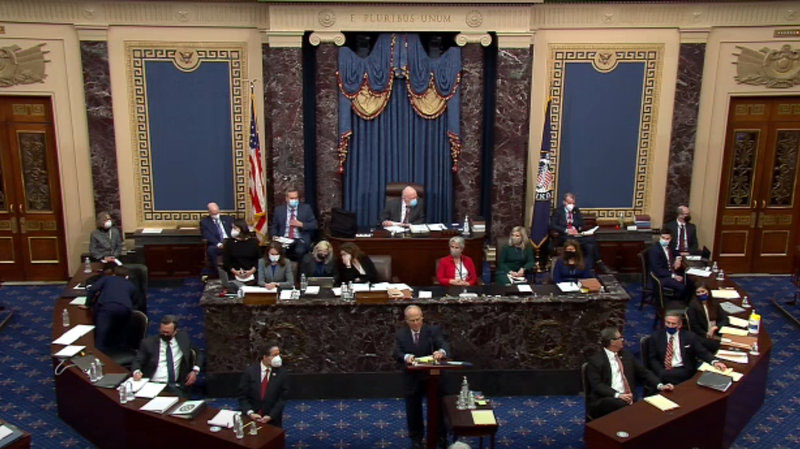
The U. S. Senate is on its way to ending the filibuster. Rather than doing so in one step they are eating away at the idea of 60 votes to end debate. The intent of this process was to bring about compromise. The rule as created by the senate and is not in the Constitution. This nightmare rule denies the majority the power to pass legislation.
While Senate rules still require just a simple majority to actually pass a bill, several procedural steps along the way require a supermajority of 60 votes to end debate on bills.
The filibuster is an Informal term for any attempt to block or delay Senate action on a bill or other matter by debating it at length, by offering numerous procedural motions, or by any other delaying or obstructive actions.
The most common form of filibuster occurs when one or more senators attempt to delay or block a vote on a bill by extending debate on the measure. Changes in 2013 and 2017 now require only a simple majority to invoke cloture (The cloture rule–Rule 22–is the only formal procedure that Senate rules provide for breaking a filibuster) on nominations, although most legislation still requires 60 votes.
The Senate has a number of options for curtailing the use of the filibuster, including by setting a new precedent, changing the rule itself, or placing restrictions on its use.
For many matters in the Senate, debate can only be cut off if at least 60 senators support doing so.
In 2013 the rules were changed under the leadership of Democratic Senator Majority Leader Harry M. Reid (D-Nev.) eliminated the 60-vote requirement to end a filibuster against all executive branch nominees and judicial nominees other than to the Supreme Court.
In 2017 the rules were again changed under the leadership of Majority Leader Mitch McConnell (R-Ky.) eliminated the 60-vote requirement to end a filibuster for approval of nominations to the Supreme Court formally by lowering the threshold for ending debate on a nomination to 51 votes from 60, paving the way for Neil Gorsuch to win confirmation to the Supreme Court.
It is time to end minority control.
 Coast Contact