Supreme Court Chief Justice John Roberts Surprises Everyone

ObamaCare Lives

John Roberts
John Roberts

How could Chief Justice John Roberts have voted with the liberal justices in favor of Obama care? Charles Krauthammer has written a piece for the National Review contending that the “Commerce Clause contained, constitutional principle of enumerated powers [has been] reaffirmed.”  “Law upheld, Supreme Court’s reputation for neutrality maintained.”  He suggests that Roberts was more concerned with the Court’s reputation than the outcome of this case.  I disagree.

George Will, also writing in the National Review offered similar analysis.

We may never know Roberts’ thinking.  Considering the far reaching consequences of his (Roberts) decision I cannot believe that he would not be more concerned with the impact this law will have on almost every American.

John Roberts said the law was legal under the right of the Federal government’s power to tax.  The Obama administration denied the penalty against the non-insured is a tax.  Roberts obviously had to search out his justification for voting in favor of the law.  It must have come as a great surprise in the White House when they heard Roberts’ reasoning.

One thing is obvious.  The media proved that even their smartest commentators could not conjure the outcome nor explain the logic of John Roberts.

Capitalism is the Dominant force in the U.S.A.

Why Barack Obama Cannot Re-Make America

The American system of free enterprise is designed for people to make money.  Those that are smartest find every way to earn money, as long as it is legal, no matter who it hurts.

Bain Capital is an asset management and financial services company that provides venture money for new and struggling companies.  Like any privately held company it is in business to earn the highest possible return for its investors.  There are many other companies like Bain Capital.  The Blackstone Group and the Carlyle Group to name just another two.  Sam Zell, a wealthy real estate investor in Chicago, bought the Tribune Company without investing a single dime of his own money (thanks to some ingenious financing) but the company is now bankrupt (you thought he bought it to prop up that company?).

John_Hancock
John_Hancock

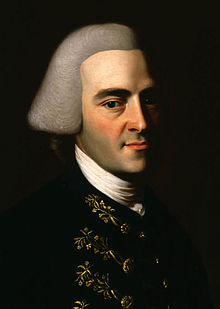
The system has always functioned that way.  The founding of the nation was all about free enterprise.  Those leaders in Philadelphia were mostly rich men who objected to taxation by the crown.  They invented the expression “taxation without representation” to rally the general public.  The best example is John Hancock.  Before the American Revolution, Hancock was one of the wealthiest men in the Thirteen Colonies, having inherited a profitable shipping business from his uncle.  John Adams was a well to do lawyer living in the Boston area.  Thomas Jefferson and George Washington were both wealthy land owners in Virginia.

If you do not agree with this form of economics you will have to live elsewhere.  You will not be successful in changing 200 plus years of a system that has built the wealthiest nation in the world.

Alternative countries that you ought to consider are Italy, France, Germany, Canada, UK, Australia, and New   Zealand.  You might notice that many of these countries are part of the British Commonwealth that Americans hated in 1776.  They do have capitalism but also make a greater effort at providing more social programs.

The choice is yours.  Just stop complaining about our system.  It is what it is!

In Mexicali, a haven for broken lives

An article in the Los Angeles Times titled “A Heaven for broken lives” is really meant to stir my sympathy for people who have broken our immigration laws. The article details stories of deported Mexicans who entered the United States illegally and subsequently committed crimes.  The article was extended for an additional two pages and the print version included supporting photography.

The laws may be flawed but they are in place because a majority in the congress voted them into practice. The current administration has even tried to show empathy by not fully enforcing the law and only deporting those who commit crimes.

 The error in our law enforcement is that employers of illegal aliens are rarely punished. Rigorous enforcement of current laws would end this tragic situation. “Bleeding hearts” in America will use this article as proof of our misguided legal system.

I don’t blame those who try to sneak into the country. I would do the same thing if I was living in a poor Latin American country. I blame our government for not enforcing the law.

Social Issues Will Now Be Consequential in the Presidential Race!

My theory!

Social Issues are not the really consequential topics in the presidential race!  However, President Obama and his re-election team see this as an opportunity to distract attention from the dismal condition of the economy  and his health care program.

A May 12 Associated Press article is titled “Gay marriage, abortion back in campaign spotlight“.  The first paragraph reads, “Abortion and gay marriage. For years, they’ve been lumped together as the paramount wedge issues of U.S. politics — hot-button topics in the vortex of sexuality, personal freedom and public policy.”

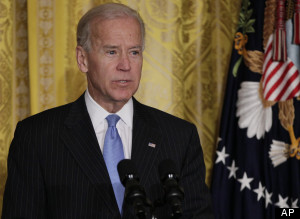
Vice President Joe Biden appearing on Meet the Press this past Sunday said he had no problem with two people of the same sex marrying.  That brought a substantial response from the news media but no remarks from the Republican Party.  The White House appeared to try to evade the issue even as the commentators quoted the president’s earlier statement that his views on gay and lesbian marriage were evolving.

Everyone thinks VP Biden is just a fool who can’t keep his mouth shut.  That is his reputation.  The president’s re-election committee is counting on you believing that.  So he appears on MTP this past Sunday and has the media mouths going.

What you do not realize is that the Obama team has accomplished a diversion.  Defending the president’s economic program is impossible.  They realized they needed to change the topic.  They have succeeded.  Obama’s ability to argue the social issues is his strong suite.

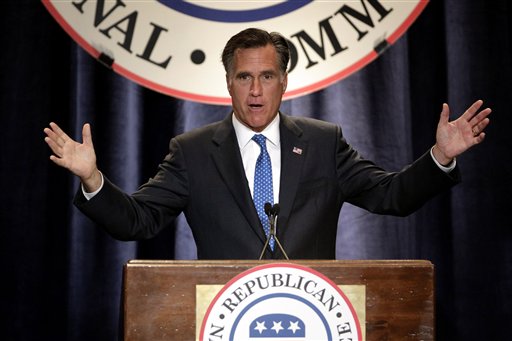
Romney’s strength is business and the economy.  The Republican Party wants to talk about social issues.  Obama wants to change the subject and the Republicans are giving him a gift.  The AP reports “Republicans controlling the House are pressing for cuts to food stamps, health care and pensions for federal workers as an alternative to an automatic 10 percent cut to the military next year.”  It’s a perfect diversion.

Barack Obama’s Failed Recovery

It seems the president’s likeability has remained high even though his success leading the country leaves a lot to be desired.  The number one issue facing him at his inauguration was the growing number of unemployed Americans.

It is accurate to say that the continuing increase in the number of unemployed has been stopped. The worst of the unemployment crises has passed.  However, the number of unemployed Americans has remained basically unchanged.  The apparent improved unemployment picture is the result of people giving up in searching for a job.  Those giving up aren’t counted.  It takes 150,000 new jobs a month to keep up with our growing population.  (The number of new jobs added in April was a horribly disappointing 115,000.)  Once you deduct that leveling number of 150,000 you see that real job growth has been small.

The one significant exception to this situation is the re-employment of people in the manufacture of automobiles.

Every country has something to sell to its own people and the rest of the world.  The United States has one major export, agricultural products.   Brazil has five. Oil, iron ore, soybeans, coffee, and steel. Brazil now holds 45% of the world’s steel production.

Meanwhile the U.S.A.has a $15 trillion economy but only has $1.5 trillion in exports.  Worse we import $2.4 trillion in goods.

Thanks to the ever growing number of free trade agreements most of the things we buy were manufactured in another country.  The auto industry and agricultural products are the only major industries that have not been entirely exported.  Here in Southern California Costco now has a variety of fruits and vegetables imported from Latin America.

Not only are there no plans to change this situation, but Obama has signed free trade agreements with Columbia and South Korea.

Retraining programs for the unemployed?  To do what?

You notice that Barack Obama never talks about the unemployed.  No wonder, his “hope and change” have brought hope there is enough food stamps to buy next week’s food and his change never happened at all unless adding to the federal debt is counted as change.

As bad a Mitt Romney may be is he as bad as four more years of Obama?  Isn’t it time for a change?  Democrats and independents hold your nose.

Economy is Job One!

May 4, 2012 Addendum.  The April jobs report confirmed my worst fears.  The U.S. economy added just 115,000 jobs and yet the unemployment rate is down another tenth of a percent to 8.1%.  In other words more people have given up the search.  This is another great day for Mitt  Romney.  Everything I wrote on April 28 remains valid.  The difference  is it has just been reinforced.    

Is the recession over? Not if you are unemployed. Over 12 million Americans are in that status. Most of those people have families that have been impacted. The impact is more likely on three to four times that number. Worse is that the number is not the real number because many more people are no longer counted as unemployed. Most economists add about 50% to the official numbers to reach that real number.

The Obama administration failed to address the primary issue facing the nation. That is the condition of our economy.

Where is the plan to change our course of outsourced jobs? It does not exist.

The latest pieces of economic data support the feeling that the economy is struggling to recover from the Great Recession. New claims for unemployment benefits dropped to 351,000 in the week ending February 11 of this year but have been increasing every week since then with one exception. Gross Domestic Product (GDP) for the first quarter of 2012 grew 2.2% versus a growth of 3% in the last quarter of 2011. The president can’t be held responsible for everything in our economy but there is little he has done or proposed to improve the situation.

 The problem is that Mitt Romney has not enunciated any actions he would take that would change our desperate employment situation. The number of unemployed reached over 14 million people and has now dropped to under 13 million. However the number of long term unemployed has not been significantly reduced and still remains over 5 million people. Obama’s policies did save the country’s auto manufacturers but too many products and services are now provided in other countries.

Americans are the employer of the president. We have the right to expect results. Barack Obama’s four year contract is almost up. Unfortunately the alternate candidate for the job has not told us what he would do to change our economic situation.

The Social Security Time Bomb

Rather than focusing on our broken political system this article is focusing on a solution to the Social Security time bomb. Only yesterday the Social Security Trustees said that the system will not have sufficient funds for the promised payouts in 2033.

Regular ongoing monthly Social Security benefits started in January 1940. Despite what some will claim we are experiencing longer lives. The system was counting on almost everyone dying within ten years of retirement. The problem for the program is that too many are living into their 80s and 90s.

The Democrats have not faced the reality of longer lives. The Republicans have but their solutions are unacceptable to most of us. Interestingly it was George W. Bush who tried to resolve the issue but the two parties seem bent upon disagreement even when they know there is a solution.

We all know that many people are relying on the system as their only source of income. Cutting benefits for the poorest is not a reasonable solution.

There are a few things we can do:
1. Establish a “means test” that would deny benefits to those with higher retirement income.
2. Raise the maximum taxable contributions from the current level.
3. Raise the retirement age.

To do these things will require courage. That is lacking in our representatives.

The Issue is Long Term Unemployment

From the Bureau of Labor Statistics report dated today, March, 9, 2012.
“The number of long-term unemployed (those jobless for 27 weeks and over) was little changed at 5.4 million in February. These individuals accounted for 42.6 percent of the unemployed.”

“The number of persons employed part time for economic reasons(sometimes referred to as involuntary part-time workers) was essentially unchanged at 8.1 million in February. These individuals were working part time because their hours had been cut back or because they were unable to find a full-time job.”

Perhaps this answers the question, why is one in seven Americans receiving aid to buy food?

Millions of people lost jobs in the last four years, and being plunged into poverty made them eligible for food assistance. “That’s the way this program is designed,” said Kevin Concannon, the head of the USDA’s Food and Nutrition Service. Some 15 percent of the population-the highest rate since 1993-now lives at or below the poverty level, which is defined as $19,090 per year for a family of three. The average food stamp household of 2.2 people receives $287 in monthly food-assistance benefits, or about $72 a week. That’s not a lot to feed two people, but food stamp spending adds up: It has quadrupled in the course of the last 10 years, to a total this year of $80.4 billion. Critics blame that cost explosion on relaxed eligibility standards that began under the Bush administration, and on a boost in monthly benefits put through by Obama as part of the 2009 stimulus package. Obama increased the amount of time people could stay on food stamps, and added about $80 to the monthly benefits of a family of four. “No program in our government has surged out of control more dramatically than food stamps,” said Sen. Jeff Sessions of Alabama.

The issue is the millions who are unemployed with no job opportunities on the horizon. Our nation’s leaders in both political parties have not offered any solutions. 

HAVE THEY?

Three Economic Misconceptions That Need to Die

Thought this article very interesting.  Especially with information cited coming from notable sources.  This among so many other issues can only leave us wondering how much misinformation we are fed . . . or simply on the face of it, how much we choose to believe.

Love the quote from Evan Thomas who said. . . “You are entitled to your own opinion, but you’re not entitled to your own facts.”  Hmmmm
Three Economic Misconceptions That Need to Die
By Morgan Housel, Columnist at The Motley Fool, USC graduate in Economics


At a conference in Philadelphia last October, a Wharton professor noted that one of the country’s biggest economic problems is a tsunami of misinformation. You can’t have a rational debate when facts are so easily supplanted by overreaching statements, broad generalizations, and misconceptions. And if you can’t have a rational debate, how does anything important get done? As author William Feather once advised, “Beware of the person who can’t be bothered by details.” There seems to be no shortage of those people lately.

Here are three misconceptions that need to be put to rest.

Misconception No. 1: Most of what Americans spend their money on is made in China.

Fact: Just 2.7% of personal consumption expenditures go to Chinese-made goods and services. 88.5% of U.S. consumer spending is on American-made goods and services. I used that statistic in a recent article, and the response from readers was overwhelming: Hogwash. People just didn’t believe it.


The figure comes from a Federal Reserve report. You can read it here.

A common rebuttal I got was, “How can it only be 2.7% when almost everything in Walmart (WMT) is made in China?” Because Walmart’s $260 billion in U.S. revenue isn’t exactly reflective of America’s $14.5 trillion economy. Walmart might sell a broad range of knickknacks, many of which are made in China, but the vast majority of what Americans spend their money on is not knickknacks.


The Bureau of Labor Statistics closely tracks how an average American spends their money in an annual report called the Consumer Expenditure Survey. In 2010, the average American spent 34% of their income on housing, 13% on food, 11% on insurance and pensions, 7% on health care, and 2% on education. Those categories alone make up nearly 70% of total spending, and are comprised almost entirely of American-made goods and services (only 7% of food is imported, according to the USDA).
Even when looking at physical goods alone, Chinese imports still account for just a small fraction of U.S. spending. Just 6.4% of nondurable goods — things like food, clothing and toys — purchased in the U.S. are made in China; 76.2% are made in America. For durable goods — things like cars and furniture — 12% are made in China; 66.6% are made in America.

Another way to grasp the value of Chinese-made goods is to look at imports. The U.S. imported $399 billion worth of goods from China last year, which is 2.7% of our $14.5 trillion economy. Is that a lot? Yes. Is it most of what we spend our money on? Not by a long shot.


Part of the misconception is likely driven by the notion that America’s manufacturing base has been in steep decline. The truth, surprising to many, is that real manufacturing output today is near an all-time high. What’s dropped precipitously in recent decades is manufacturing employment. Technology and automation has allowed American manufacturers to build more stuff with far fewer workers than in the past. One good example: In 1950, a U.S. Steel (X) plant in Gary, Ind., produced 6 million tons of steel with 30,000 workers. Today, it produces 7.5 million tons with 5,000 workers. Output has gone up; employment has dropped like a rock.


Misconception No. 2:We owe most of our debt to China.

Fact: China owns 7.6% of U.S. government debt outstanding.

As of November, China owned $1.13 trillion of Treasuries. Government debt stood at $14.9 trillion that month. That’s 7.6%.

Who owns the rest? The largest holder of U.S. debt is the federal government itself. Various government trust funds like the Social Security trust fund own about $4.4 trillion worth of Treasury securities. The Federal Reserve owns another $1.6 trillion.

Both are unique owners: Interest paid on debt held by federal trust funds is used to cover a portion of federal spending, and the vast majority of interest earned by the Federal Reserve is remitted back to the U.S. Treasury.

The rest of our debt is owned by state and local governments ($700 billion), private domestic investors ($3.1 trillion), and other non-Chinese foreign investors ($3.5 trillion).

Does China own a lot of our debt? Yes, but it’s a qualified yes. Of all Treasury debt held by foreigners, China is indeed the largest owner ($1.13 trillion), followed by Japan $1 trillion) and the U.K. ($429 billion).

Right there, you can see that Japan and the U.K. combined own more U.S. debt than China. Now, how many times have you heard someone say that we borrow an inordinate amount of money from Japan and the U.K.? I never have. But how often do you hear some version of the “China is our banker” line? Too often, I’d say.

Misconception No. 3:We get most of our oil from the Middle East. Fact: Just 9.8% of oil consumed in the U.S. comes from the Middle East.

According the U.S. Energy Information Administration, the U.S. consumes 19.2 million barrels of petroleum products per day. Of that amount, a net 49% is produced domestically. The rest is imported.

Where is it imported from? Only a small fraction comes from the Middle East, and that fraction has been declining in recent years. Last year, imports from the Persian Gulf region — which includes Bahrain, Iran, Iraq, Kuwait, Qatar, Saudi Arabia, and the United Arab Emirates — made up 9.8% of total petroleum supplied to the U.S. In 2001, that number was 14.1%.

The U.S. imports more than twice as much petroleum from Canada and Mexico than it does from the Middle East. Add in the share produced domestically, and the majority of petroleum consumed in the U.S. comes from North America.

This isn’t to belittle our energy situation. The nation still relies on imports for about half of its oil. That’s bad. But should the Middle East get the attention it does when we talk about oil reliance? In terms of security and geopolitical stability, perhaps. In terms of volume, probably not.