12 years ago, the World Health Organization released the World Health Report 2000. Inside the report there was an ambitious task — to rank the world’s best healthcare systems.
The results became notorious — the US healthcare system came in 15th in overall performance, and first in overall expenditure per capita. That result meant that its overall ranking was 37th.
The nation ranked number one is France. Italy is number 2, U.K. is number 18, Canada is number 30.
A 2012 report by Henry J. Kaiser Family Foundation provided results of a world wide study of Infant Mortality Rate (Total Deaths per 1,000 Live Births). Of 209 nations Afghanistan is in last place at 121.63. Bermuda is in first place at 2.47. Italy in 5th place at 3.36. France in 6th place at 3.37. United Kingdom in 27th place at 4.56. Canada is 33rd at 4.85. U.S.A. is 40th at 5.98. Details at http://kff.org/global-indicator/infant-mortality-rate/
CNN reports that Nearly 50 countries have attained universal or near-universal health coverage by 2008, according to the International Labor Organization. Several well-known examples exist like the UK, which has the National Health Service, and the Canadian public health care system. Wikipedia lists the countries.
Oh yes there are reasons to oppose universal / socialized medicine. Someone other than your doctor will have to decide if the procedure is appropriate. Currently In the United States it is your insurance company.
My health care plan is provided by Kaiser Permanente. It is an HMO. It also happens to be the top rated health plan of all kinds in the state of California. That includes PPO plans. This result based upon studies sponsored by Consumer’s Reports and another reported in Newsweek a few years back.
When I joined, it was thanks to an employer provided health care plan. I had no choice. At the time I thought this is care for the masses. The employer provides the least expensive plan but can say “we provide health care to our employees and their families.”
Over the years other employers offered other plans but honestly they really were not any better than Kaiser. So when it came to Medicare I re-joined Kaiser as it was the least expensive.
A few years ago Kaiser implemented their electronic records and communications system. That received my immediate attention. Why? You will ask.
1. Exchange secure e-mail with your doctor’s office in my message center. You also can go there to contact our Member Services and Web manager.
2. Wondering if you should book a visit? Consult our interactive symptom checker, or go straight to scheduling in the appointment center.
3. View your past visit information, plus get your latest test results, immunizations, health care reminders, and more in my medical record. The record shows the results of every test. It is a complete history of my health care.
4. Get the facts about your plan and benefits, download forms, and more in my plan and coverage.
5. You can manage your prescriptions here, or learn about specific medications in our drug encyclopedia.
6. Doctors send their prescriptions via the connected system directly to their pharmacy. No more hand written prescriptions unless you choose to fill the order at a non Kaiser pharmacy. Kaiser’s medications are as cheap as any place including Costco and Wal-Mart.
7. Orders for tests and x-rays are communicated to their labs. There are no paper documents.
In the June 25-July1 issue of BusinessWeek there is a five page spread in the subject of improved care and lower costs that can be achieved using computerized records.
The article opens with the care at the Kaiser hospital in San Jose, California. While in the outpatient area a man appeared to be having an epileptic seizure. Should the doctor send the man to neurology, as he would an epileptic patient, or to emergency? The doctor looked up the patient’s records on the hospital’s electronic health record (EHR) system. In an instant he saw that the man had a history of twitching episodes from which he recovered quickly. The patient was put on a cardiac monitor and confirmed that the man’s brain was not the source of his medical issues. The patient was outfitted with a pacemaker in a matter of hours. The doctor says that the man might have died if he had gone to a neurology clinic. The doctors there don’t have cardiac monitors and might not have diagnosed his condition in time. This situation was a perfect example of the benefit of EHR.
Then there is Mike Koriwchak an otolaryngologist who blogs at The Wired Practice. He posted this commentary on Kevinmd.com.
After 5 successful years with electronic medical records (EMR), I am convinced that the promise of EMR to improve physician practices and to improve the health care system is real.
No doubt, health care for all Americans is a wonderful idea.
I oppose this law for one single reason. There are no controls or limits on the cost of insurance. The explanations I have read say that insurance companies can make reasonable rate increases to cover their costs. What is “reasonable?” It appears that costs will increase for three reasons.
1) 10 to 15 million people will be added to insurance company rolls without adequate payments to cover their enrollment.
2) Those excluded from insurance because of pre-existing conditions will be now be added to the plans.
3) Insurance companies will be permitted to earn 20% of the fees they charge.
Without a plan to control medical costs no plan can survive.
Just today I received a plea from change.org to sign a petition addressed to Blue Cross of Idaho. The insurance company refuses to pay the bill for the chemotherapy drug, Avastin. It may prolong the life of a victim of stage four colon cancer for an additional three months. According to the New York Times the cost will be about $8,300 per month. It seems to be OK, in the minds of many people, for insurance companies to make these decisions but many people object to a government committee making the decisions. Why? What is the difference?
A better solution to this would have been a single payer system like Medicare. The plan that has been adopted (Patient Protection and Affordable Care Act) is one that was proposed many years ago by Republicans. It is the Massachusetts plan that was implemented by Mitt Romney.
Canada and most European nations seem to have addressed the issue of health care. Care is available for everyone. I am certain there are situations that their health care plans do not cover. Considering America is listed as the 41st in child mortality with the highest health care cost of any nation on Earth says we are doing a lousy job. Quite shocking when we consider that the USA is the wealthiest nation on earth.
How could Chief Justice John Roberts have voted with the liberal justices in favor of Obama care?Charles Krauthammer has written a piece for the National Review contending that the “Commerce Clause contained, constitutional principle of enumerated powers [has been] reaffirmed.” “Law upheld, Supreme Court’s reputation for neutrality maintained.” He suggests that Roberts was more concerned with the Court’s reputation than the outcome of this case. I disagree.
George Will, also writing in the National Review offered similar analysis.
We may never know Roberts’ thinking. Considering the far reaching consequences of his (Roberts) decision I cannot believe that he would not be more concerned with the impact this law will have on almost every American.
John Roberts said the law was legal under the right of the Federal government’s power to tax. The Obama administration denied the penalty against the non-insured is a tax. Roberts obviously had to search out his justification for voting in favor of the law. It must have come as a great surprise in the White House when they heard Roberts’ reasoning.
One thing is obvious. The media proved that even their smartest commentators could not conjure the outcome nor explain the logic of John Roberts.
 12 years ago, the World Health Organization released the World Health Report 2000. Inside the report there was an ambitious task — to rank the world’s best healthcare systems.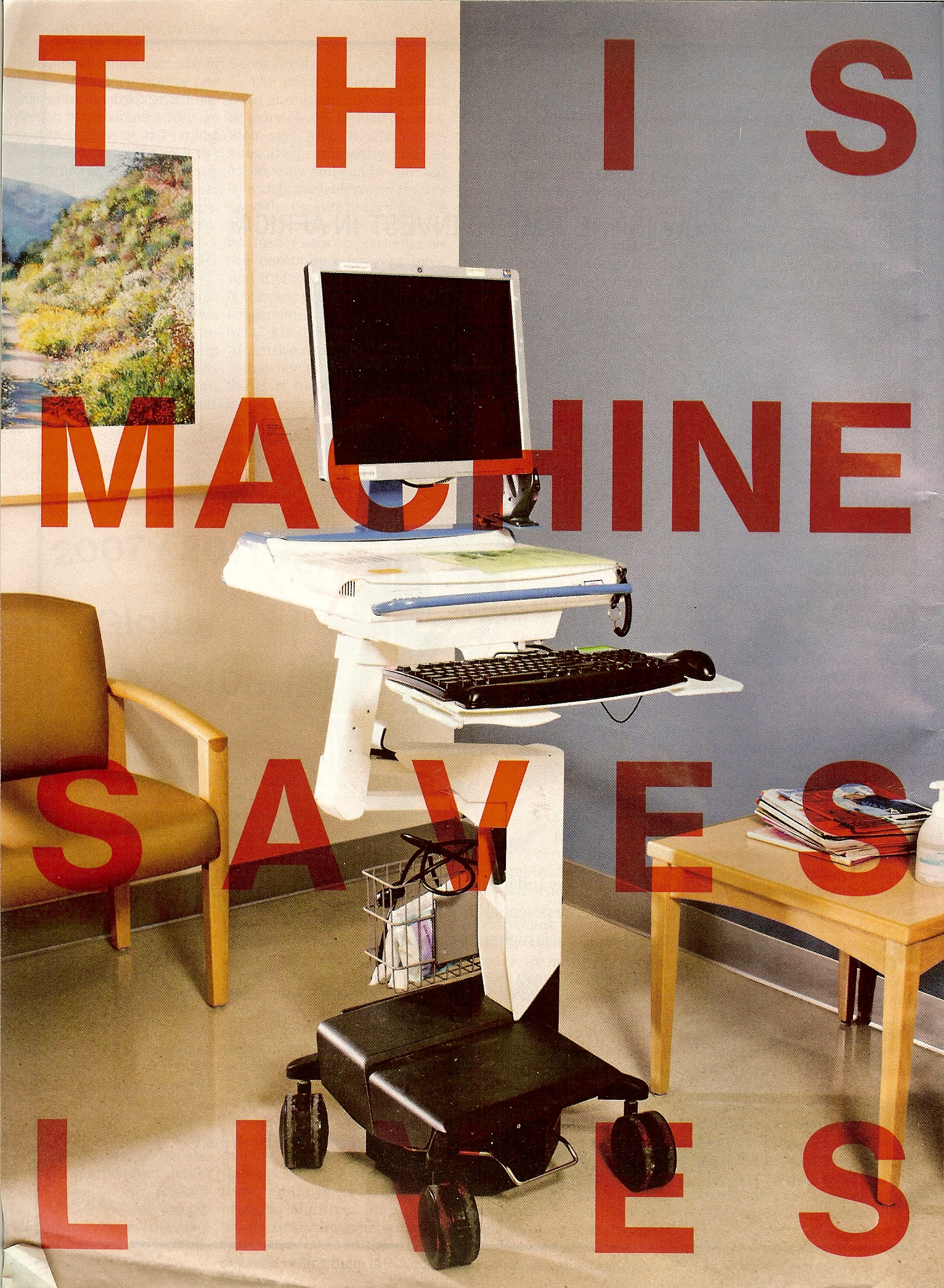

 Coast Contact