Have you forgotten?

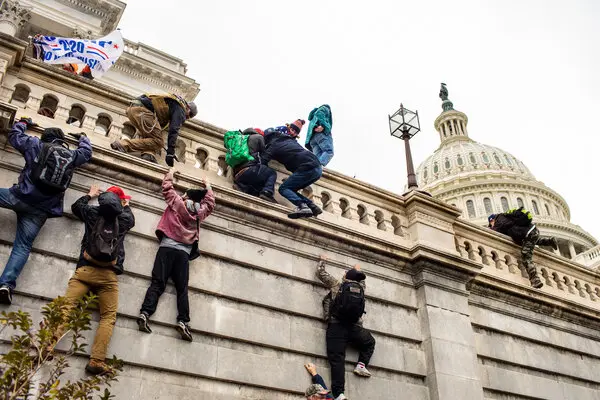
Former President Donald J. Trump has called the attack on the U.S. Capitol on Jan. 6, 2021, a “love fest” and the jailed rioters “hostages.” Credit…Jason Andrew for The New York Times

Trump falsely claimed that he had nothing to do with the assault, blaming it on former House Speaker Nancy Pelosi and the police officers who protected the building that day against a mob of his supporters.

On January 6, 2021, the United States Capitol Building in Washington, D.C., was attacked by a mob of supporters of then–U.S. President Donald Trump in an attempted self-coup d’éta  two months after his defeat in the 2020 presidential election. They sought to keep Trump in power by occupying the Capitol and preventing a joint session of Congress counting the Electoral College votes to formalize the victory of President-elect Joe Biden

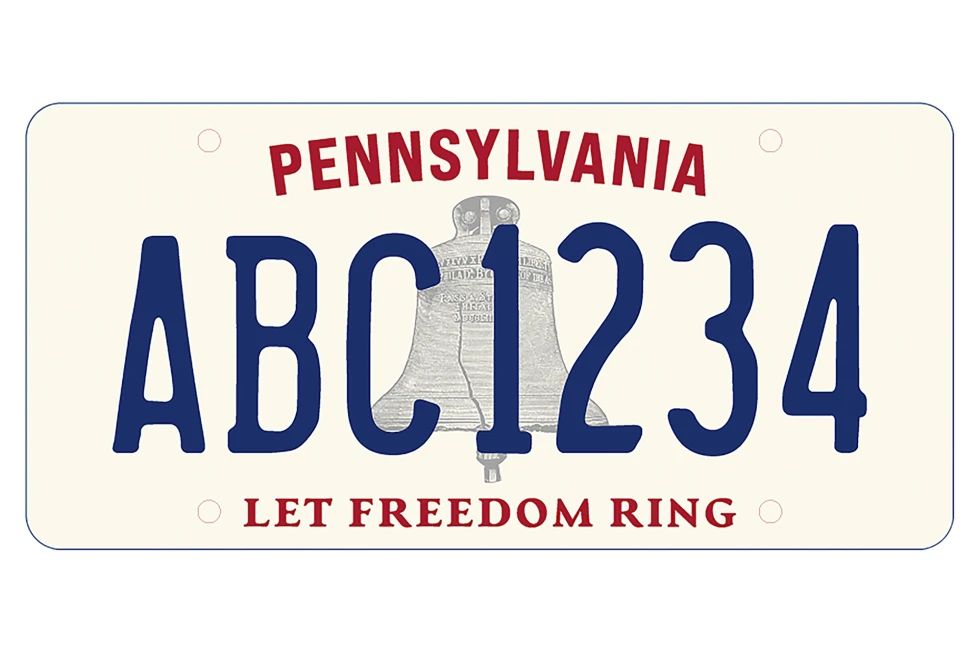
Pennsylvania is getting a new license plate that features the Liberty Bell

PHILADELPHIA (AP) — A new state license plate design refers to Pennsylvania’s critical role in establishing the United States’ independence from England and features the phrase “Let Freedom Ring.”

The red, white, and blue plate design announced this week includes an image of Philadelphia’s Liberty Bell. The design already appears on eight signs that welcome motorists where highways cross various state lines — with 29 more planned for the coming months.

“Let Freedom Ring” is a phrase in the early 19th century song “My Country, ’Tis of Thee.”

The Liberty Bell, inscribed with a Bible verse exhorting people to “Proclaim Liberty Throughout All the Land Unto all the Inhabitants thereof,” was in use in Philadelphia before the American Revolution. It became a rallying point for those fighting to abolish slavery in the United States and for supporters of giving women the right to vote and of civil rights.

Democratic Gov. Josh Shapiro, whose name is on the highway signs, said the license plates and welcome signs are being introduced ahead of the country’s 250th birthday celebration in 2026.

The welcome signs are at borders with Maryland on U.S. Route 15 near Gettysburg and Interstate 70 in Fulton County; with New Jersey on Interstate 295 in Bucks County and Interstate 80 in Monroe County; with Ohio on Interstate 90 in Erie County; and with New York on Route 449 in Potter County, Interstate 81 in Susquehanna County and Route 1015 in Tioga County.

Those interested in the new plates can sign up to be notified when they will available early next year.

The Decline of Department Stores

I did not write this. As a child I visited Winnipeg every summer as baby and until the age of 10 in 1948. My family stayed at my grandparent’s house at 136 Cathedral Avenue. I Remember visiting Eaton’s numerous times.

WHEN I WAS growing up in Winnipeg in the 1960s, there were essentially two places to shop: Eaton’s and the Bay. Eaton’s was the store my grandmother frequented, checking for bargains in its basement every week, eating lunch in the sedate Grill Room. The Bay was vaguely hipper. I remember it still had elevator operators then as well as its own library and post office, though the in-house orchestra was gone. Both stores had a kind of majesty to them, unaware they had peaked as retail ideas.

The decline of the downtown Winnipeg Bay store resembled Hemingway’s description of bankruptcy—gradual, then sudden. It was the company’s national flagship store until 1974, but with the advent of malls in that decade, it began to lose its currency. By 2019, the downtown core of Winnipeg had largely hollowed out, and some of the Bay floors were closing. What remained felt like a dismal Soviet-era shopping experience under gloomy lights. The store was built in 1926 at a cost of around $5 million; at the time of its closing, in November 2020, Cushman & Wakefield, a commercial real estate firm, valued the building at $0.

By Don Gilmore https://thewalrus.ca/author/don-gillmor/

Here in Los Angeles shopping malls have closed and many chains of stores have gone into bankruptcy. Eaton’s is gone in Canada and May Company in the United States is gone. Local California chains are now all gone.

Hudson’s Bay owns Sak’s Fifth Avenue they are now consolidating with Neiman Marcus.

Macy’s net income for the quarter ending April 30, 2024 was $0.062B, a 60% decline year-over-year.

So where did I buy my new sneakers (tennis shoes)? Amazon. It seems everyone is buying on line.

And that is why department stores are in decline.

Columnist reflects the specter of losing his landline

By DENNIS MCCARTHY, Los Angeles Daily News

PUBLISHED: February 16, 2024 at 4:33 p.m. | UPDATED: February 16, 2024 at 4:34 p.m.

When they came for my typewriter and replaced it with a word processor, I grumbled but said nothing.

When they took away my vinyl LPs and replaced them with CDs, I begrudgingly put my Sinatra albums in storage and bought his discs.

When bookstores began closing, I built more shelves in my home and started my own bookstore.

Now, AT&T wants to take away my landline, and I say enough, already! Keep your hands off Ma Bell.

Her rotary phones were our lifelines — our memories of when you could stay in touch with the world with a phone, a newspaper and Walter Cronkite.

Today, I’m paying AT&T and Verizon nearly $400 a month to stay in touch, and I don’t have a clue of what’s going on.

In case you missed it, AT&T wants out of the old copper wire business that delivers landline access to around 25% of the households in California that still have landlines and a cell phone. It drops to around 15% with landlines only.

With the speed and technology AT&T possesses, you’d think they’d have texted me with the news, but they chose good, old, reliable snail mail to let me know. How’s that for a shot of irony?

It’s asking the California Public Utilities Commission for a release from its obligation to provide landline phone service in a large portion if its service territory in the state. My portion.

If approved, AT&T will give us land liners six months before it cuts the copper wires and we have to move to a private, unregulated carrier to keep our landline. If no alternative voice services are available, it will hang on until there are.

Not so fast, though. I kind of like the government keeping an eye on my phone bills. It keeps an eye on everything else for me.

I still have an old rotary phone I keep at the end of my desk for personal therapy. The number’s University 6-3230.

Whenever I’m feeling down or stressed out, I stick my forefinger in one of the 10 holes — digits 1 through 9, and zero — on the rotary dial, and give her a whirl, cradling the receiver between my chin and shoulder, like I used to.

That familiar clicking noise when you turn the rotary dial is a glass of chocolate milk and Oreo cookies to me. I’m back in the old neighborhood calling my high school buddies and old girlfriends in my mind.

Ma Bell hung from our kitchen wall and sat on a side table in the living room in the 1950s when two-thirds of American households had at least one rotary phone, thanks to that old copper wiring it now wants to cut.

Ma couldn’t fit in our pocket or do all the things smart phones can do now, but somehow we made do.

Calendars told us what day it was and watches told us the time. Newspapers, TV and radio news kept us in the loop.

Ma couldn’t check our messages or text our friends for lunch, but she gave us great reception and that’s all we were asking for. She never died in the middle of a call.

By the 1970s, push buttons began replacing rotary dials, and that therapeutic clicking sound was gone forever. By the 80s, most rotary phones were being phased out as Ma Bell sang her swan song in 1984.

Today, when my cell phone rings in my house, it’s a mad dash to the window in my den where I get the only good reception in the place and don’t lose the call.

When my landline rings, I take my time walking over to answer it. It never loses a call.

Before the California Public Utilities Commission makes a decision in April on AT&T’s request, it’s asking for public comments.

Comments may be posted on a CPUC link: tinyurl.com/yvp6fb7n

Also, the California Public Utilities Commission is holding two in-person public forms — Feb. 22 in Ukiah, and March 14 in Indio.

One virtual meeting to be held at 2 and 6 p.m. March 19. Information about these meetings and other information on the issue on the CPUC page here: tinyurl.com/yx9sv9zw

For more information on the issue of AT&T’s request to be relieved of its “Carrier of Last Resort” obligations in certain areas of California go online to: https://www.cpuc.ca.gov/attcolr

Or, better yet, give them a call on your landline at 866-849-8390.

For Ma Bell.

American presidents who owned slaves

The United States may have been founded on the idea that all men are created equal, but during the late 18th and early 19th centuries, slaveholding was common among the statesmen who served as president.

Slavery was legal in the United States from its beginning as a nation. During the late 18th and early 19th centuries, slaveholding was common among the statesmen who served as president. In all, 12 chief executives enslaved people during their lifetime; of these, eight owned slaves while in office. The Thirteenth Amendment to the United States Constitution formally abolished slavery in 1865, but the history of the American presidency’s relationship to slavery remains an uncomfortable one. So, who are these White House incumbents that were also enslavers?

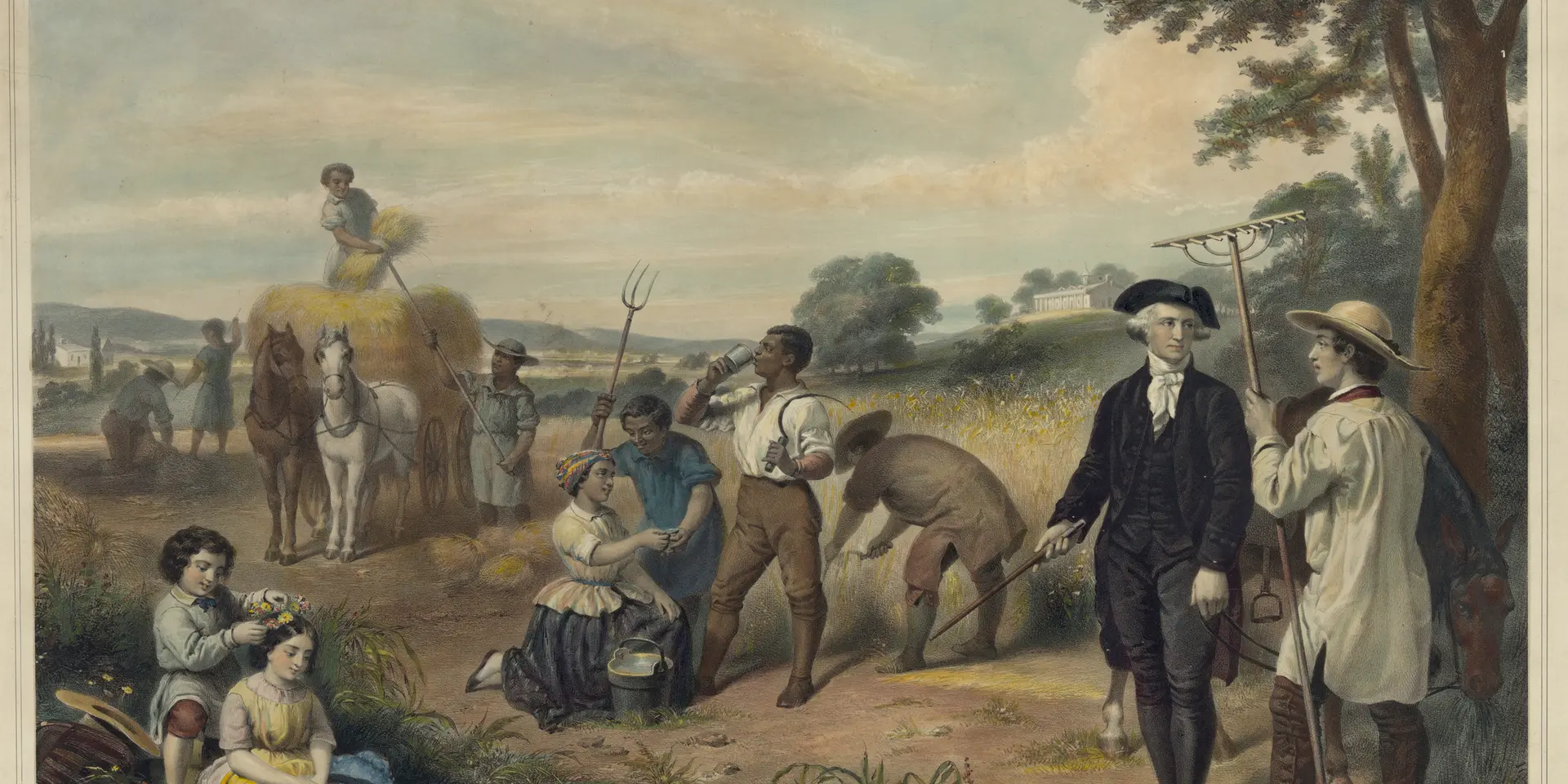
Picture from history.com

President George Washington

A Founding Father of the United States and the country’s first president, George Washington kept over 300 enslaved people at his Mount Vernon plantation.

As president of the United States, Washington oversaw the implementation of the 1787 Northwest Ordinance, which banned slavery north of the Ohio River. But in 1793 he signed the Fugitive Slave Law, which empowered a slaveowner or his agent to seize or arrest any enslaved person on the run. His views on slavery took another turn the following year, when he wrote into law the Slave Trade Act of 1794, which prohibited the export of slaves from the United States to any foreign place or country.

President Thomas Jefferson

Thomas Jefferson, the third president of the United States, owned more than 600 slaves during his adult life. Jefferson’s slaves were held captive at his main residence, Monticello, near Charlottesville, Virginia. It was here that he fathered several children with an enslaved woman called Sally Hemmings. 

President James Madison

James Madison kept several enslaved people—he came from a large slaveholding family. By 1801, Madison’s slave population at Montpelier, his plantation estate, was slightly over 100. That figure eventually numbered over 300.

Like Thomas Jefferson, James Monroe outwardly condemned the institution of slavery as evil, and advocated its gradual end. But he, too, still owned many slaves.

President Andrew Jackson

Like most planters in the South, Andrew Jackson used forced labor. Over his lifetime, he owned a total of 300 slaves, most of whom were put to work in the cotton fields of his plantation, The Hermitage, near Nashville, Tennessee.

President Martin Van Buren

Martin Van Buren was ensconced in the White House during the Amistad Case, a freedom suit that resulted from the successful rebellion of African slaves on board the Spanish schooner La Amistad in 1839. Van Buren viewed abolitionism as the greatest threat to the nation’s unity, and he resisted the slightest interference with slavery in the states where it existed. Later in life, Van Buren belonged to the Free Soil Party, which opposed the expansion of slavery into the Western territories, but not immediate abolition.

President John Tyler

William Henry Harrison owned several inherited enslaved people before becoming president in 1841.

John Tyler owned as many as 50 slaves throughout his lifetime, including during his tenure as White House incumbent. In 1845, Tyler oversaw the annexation of Texas as a slave state.

President James K. Polk

President James K. Polk was generally tolerant of slavery. He owned several plantations and even purchased enslaved people during his term in office. His will provided for the freeing of his slaves after the passing of his wife, Sarah Childress, though the Emancipation Proclamation and the Thirteenth Amendment to the United States Constitution ended up freeing them long before her death in 1891.

President Zachary Taylor

Zachary Taylor owned slaves throughout his life. In fact, of the other presidents who owned slaves, Taylor benefited the most from slave labor.

Taylor had enslaved servants in the White House, and it was in Washington where he also supervised his Mississippi plantation’s operations. As president, however, he generally resisted attempts to expand slavery in the territories, and he vowed to veto the Compromise of 1850, which granted enslavers greater authority to seize supposed fugitive slaves in Northern states, as well as other extremely controversial measures.

President Andrew Johnson

Assuming the presidency following the assassination of Abraham Lincoln, Andrew Johnson was one of the last US presidents to personally own slaves. Despite being an enslaver, Johnson had been chosen as vice president by Lincoln as a gesture of unification, with Johnson supporting many of Lincoln’s policies, although he did lobby for Lincoln to exclude Tennessee from the Emancipation Proclamation. But as President Johnson, his Reconstruction goals were to reunify the Union by readmitting former Confederates as citizens of the United States and to limit emancipated people’s civil rights.

President Ulysses S. Grant

The last president to personally own enslaved people was Ulysses S. Grant. As the former commanding general of the Union Army, Grant had kept one enslaved black man named William Jones. He was freed in 1859.

Abraham Lincoln and the Never Ending Civil War

Perhaps the title of this post should be “Is this the and of the United States?”

The American Civil War, also called War Between the States , fratricidal four-year war (1861–65) between the federal government of the United States and 11 Southern states that asserted their right to secede from the Union. The war ended 147 years ago.

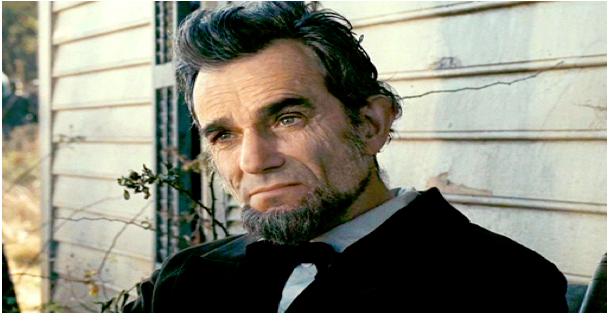
After all of these years since the end of the Civil War the South is still re-fighting every battle and every event connected with the confederacy. Steven Spielberg’s new movie simply titled Lincoln says we have not gotten over the war or the events that led up to the war.

The new Steven Spielberg movie is based upon the book Team of Rivals by Doris Kearns Goodwin. It’s an enthralling book. Even someone who is not particularly interested in reading history books will find this biography a compelling read.

The troubling part of this story is that citizens of all 50 states have submitted petitions to secede from the United States and that happened just this year. Seven southern state petitions have collected significant number of signatures. The leading is Texas with over 101,000. Major numbers of petition signers are residence of Texas, Louisiana, Tennessee, Alabama, North Carolina, Georgia, and Florida.

Happily Anti-Secession Petitions are Gaining Clicks, Too! The thought is that those wanting to secede should be stripped of their citizenship and deported. I would agree with that thought. Perhaps Mexico will take them.

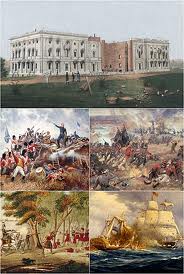
The War of 1812

I am glad the Canadians won the fight.

According to History.com The War of 1812 produced a new generation of great American generals, including Andrew Jackson, Jacob Brown and Winfield Scott, and helped propel no fewer than four men to the presidency: Jackson, John Quincy Adams, James Monroe and William Henry Harrison.” 

This was a war between England and the U.S.   Canada was a colony.  The U.S. did not see itself at war with Canada.  It was a war with the British Empire.  Americans learn in school that the war was about British attempts to restrict U.S. trade and to a lesser extent a continuation of the American Revolution.  For us Americans the fight settled the question of America’s independence from Great Britain.

Canadians in Ontario seem to want to celebrate their victory over American forces.  Johns Hopkins University professor Eliot Cohen supports this view. He writes in his just-published book Conquered Into Liberty that, “ultimately, Canada and Canadians won the War of 1812.”

 Americans don’t want to be bothered celebrating that war.  The only thing Americans gained was the “Star Spangled Banner.”  It is a terrible song that celebrates the flag.  “America the Beautiful” or “God Bless America” are far better songs that celebrate everything that is good about this country.

Interestingly it is Canada that has shown more openness than the United States on the subject of accepting all people equally.  Read the Toronto Star newspaper and you learn more about the world than reading many American newspapers.  Walk down the streets of Toronto and you have the feeling you are in the United Nations.  Or is it my imagination?  No, I don’t think so.  There really is a feeling of acceptance that is difficult to find elsewhere.

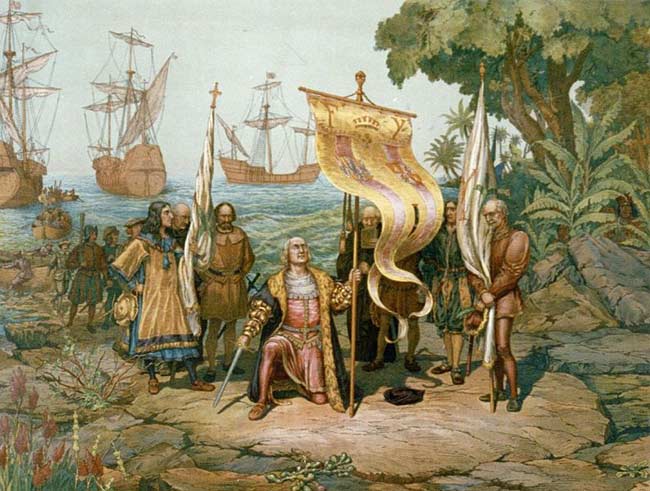
Was Christopher Columbus a Jew?

Hypothèse très intéressante et instrutive!……

The question: Was Columbus secretly a   Jew?

Today marks the 508th anniversary of the death of   Christopher Columbus.

Everybody knows the story of Columbus, right?  He was an Italian explorer from Genoa who set sail in 1492 to enrich the Spanish monarchs with gold and spices from the orient.  Not quite.

For too long, scholars have ignored Columbus’ grand passion: the quest to liberate Jerusalem from the Muslims.

During Columbus’ lifetime, Jews became the target of   fanatical religious persecution.  On March 31, 1492, King Ferdinand and Queen   Isabella  proclaimed that all Jews were to be expelled from Spain.  The edict especially targeted the 800,000 Jews who had never converted, and gave them   four months to pack up and get out.

The Jews who were forced to renounce Judaism and embrace Catholicism were known as “Conversos,” or   converts.  There were also those who feigned conversion, practicing Catholicism   outwardly while covertly practicing Judaism, the so-called “Marranos,” or swine.

Tens of thousands of Marranos were tortured by the Spanish   Inquisition. They were pressured to offer names of friends and family members,   who were ultimately paraded in front of crowds, tied to stakes and burned   alive. Their land and personal possessions were then divvied up by the church and crown.

Recently, a number of Spanish scholars, such as Jose Erugo,   Celso Garcia de la Riega, Otero Sanchez and Nicholas Dias Perez, have   concluded that Columbus was a Marrano, whose survival depended upon the   suppression of all evidence of his Jewish background in face of the brutal,   systematic ethnic cleansing.

Columbus, who was known in Spain as Crist   bal Col n and didn’t speak Italian, signed his last will and testament on May   19, 1506, and made five curious — and revealing — provisions.

Two of   his wishes — tithe one-tenth of his income to the poor and provide an   anonymous dowry for poor girls — are part of Jewish customs. He also decreed to give money to a Jew who lived at the entrance of the Lisbon Jewish Quarter.

On those documents, Columbus used a triangular signature of   dots and letters that resembled inscriptions found on gravestones of Jewish cemeteries in Spain. He ordered his heirs to use the signature in perpetuity.

According to British historian Cecil Roth’s “The History of   the Marranos,” the anagram was a cryptic substitute for the Kaddish, a prayer   recited in the synagogue by mourners after the death of a close relative.   Thus, Columbus’ subterfuge allowed his sons to say Kaddish for their crypto-Jewish father when he died. Finally, Columbus left money to support the   crusade he hoped his successors would take up to liberate the Holy Land.

Estelle Irizarry, a linguistics professor at Georgetown   University, has analyzed the language and syntax of hundreds of handwritten   letters, diaries and documents of Columbus and concluded that the explorer’s   primary written and spoken language was Castilian Spanish. Irizarry   explains that 15th-century Castilian Spanish was the “Yiddish” of Spanish Jewry, known as “Ladino.” At the top left-hand corner of all but one of the 13   letters written by Columbus to his son Diego contained the handwritten Hebrew   letters bet-hei, meaning b’ezrat Hashem (with God’s help). Observant Jews have   for centuries customarily added this blessing to their letters.  No letters to   outsiders bear this mark, and the one letter to Diego in which this was   omitted was one meant for King Ferdinand.

In Simon Weisenthal’s book,   “Sails of Hope,” he argues that Columbus’ voyage was motivated by a desire   to find a safe haven for the Jews in light of their expulsion from Spain.   Likewise, Carol Delaney, a cultural anthropologist at Stanford University,   concludes that Columbus was a deeply religious man whose purpose was to sail   to Asia to obtain gold in order to finance a crusade to take back Jerusalem and rebuild the Jews’ holy Temple.

In Columbus’ day, Jews widely believed that Jerusalem had to be liberated and the Temple rebuilt for the   Messiah to come.

Scholars point to the date on which Columbus set sail as further evidence of his true motives. He was originally going to sail on   August 2, 1492, a day that happened to coincide with the Jewish holiday of   Tisha B’Av, marking the destruction of the First and Second Holy Temples of   Jerusalem. Columbus postponed this original sail date by one day to avoid   embarking on the holiday, which would have been considered by Jews to be an   unlucky day to set sail. (Coincidentally or significantly, the day he set   forth was the very day that Jews were, by law, given the choice of converting,   leaving Spain, or being killed.)

Columbus’ voyage was not, as is   commonly believed, funded by the deep pockets of Queen Isabella, but rather by   two Jewish Conversos and another prominent Jew.  Louis de Santangel and Gabriel  Sanchez advanced an interest free loan of 17,000 ducats from their own pockets   to help pay for the voyage, as did Don Isaac Abrabanel, rabbi and Jewish  statesman.

Indeed, the first two letters Columbus sent back from his   journey were not to Ferdinand and Isabella, but to Santangel and Sanchez,   thanking them for their support and telling them what he had found.

The   evidence seem to bear out a far more complicated picture of the man for whom   our nation now celebrates a national holiday and has named its capital.

As we witness bloodshed the world over in the name of   religious freedom, it is valuable to take another look at the man who sailed the seas in search of such freedoms — landing in a place that would   eventually come to hold such an ideal at its very core.

This entire discussion was on CNN Opinion.  I thought others would find it interesting

David Bancroft