Story by The Editorial Board, The Orange County Register
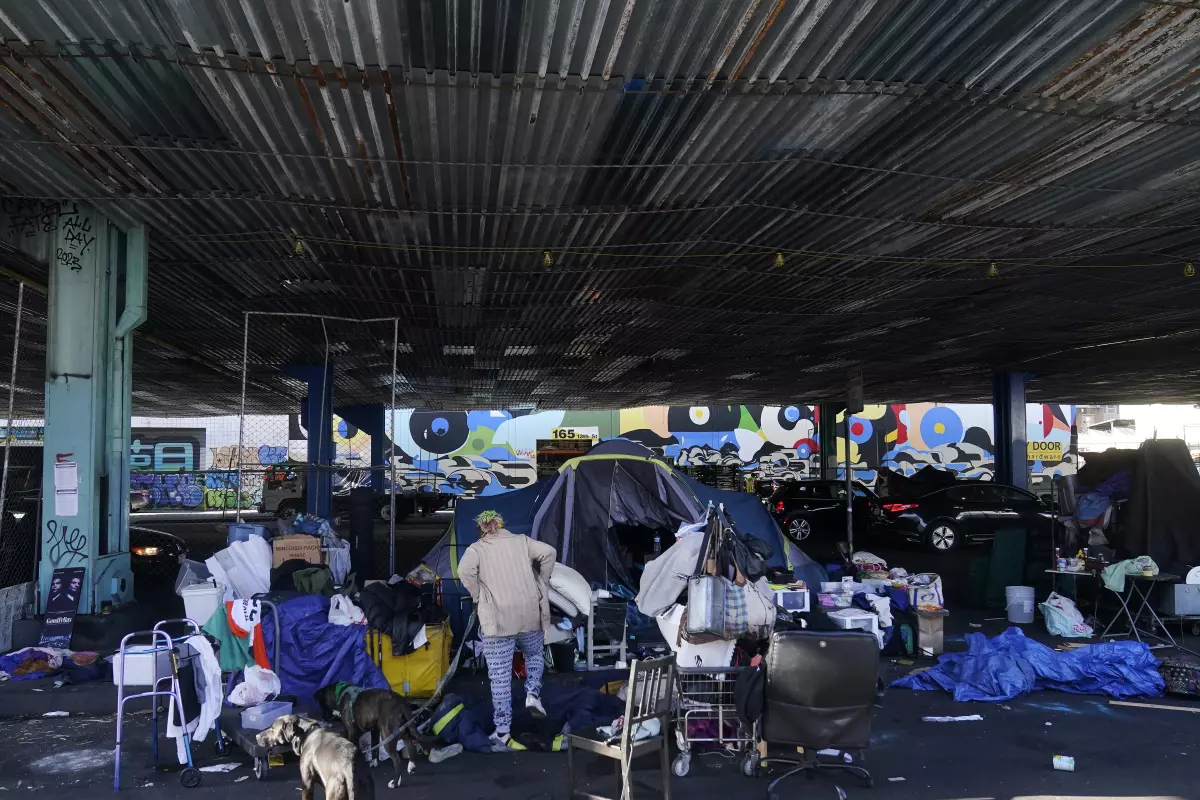
No one disputes that California is struggling to deal with a spiraling homelessness crisis. Our state has more than 181,000 homeless people — a number that has increased a mind-bending 40% since 2019, per a CalMatters report. Whatever the state government is doing, it’s not working.
And what it’s doing, mainly, is throwing money at the problem. Figures from last year peg state homeless spending at $7.2 billion a year, or $42,000 per homeless person. That number accounts only for state spending and not the myriad local costs, including the amount of public-safety and public-works budgets that pay for related costs.
Instead of rethinking the state’s failed approach, Gov. Gavin Newsom wants to throw more money at the problem and give state agencies — rather than local governments, which generally have done a better job — more power to control funding. He wants voters to approve Proposition 1.
Modeled on Los Angeles’ failing Project Roomkey, the March 5 ballot initiative would run up $6.38 billion in debt to fund specific mental-health-related services. The general approach is understandable, given most homeless people suffer from mental-health and addiction issues. As always, details matter.
And Prop. 1’s details can make one’s head spin. As AP reported, it is “one of the most complicated and lengthy measures in recent years” and “takes up 68 pages” of the voter guide. As this editorial board explained, Prop. 1 is a “bureaucratic power grab that robs counties of mental health services funding” and runs up debt — even though a lack of funding isn’t the main problem.
Other news outlets are echoing these concerns. Another AP report quoted local officials who fear the measure “would worsen the problem.” That’s because it empowers the state to meddle in how counties spend nearly $3 billion in annual revenue funded by a 2004 tax on millionaires. If Prop. 1 passes, the state would take 10% of these mental-health funds, leaving less for programs that keep people out of homelessness.
Nearly a third of the Prop. 1 money would fund local-government efforts to build affordable housing via motel conversions and new construction. But that money would have to conform to California’s official — and misguided — “Housing First” policy that prioritizes construction of permanent housing, rather than temporary housing combined with social services.
The bottom line: “Housing First” diverts money from programs that could help the homeless get back on their feet toward a utopian concept that views homelessness mainly as a housing matter. Given the mental-health and addiction issues that are a main reason many people are homeless, it’s unwise to base state policy on the idea that the main solution is just giving them a permanent home. Even if it were a sound approach, the state has shown itself incapable of building affordable housing quickly and cost effectively, with many projects costing $800,000 or more a unit. There’s not enough money in the state budget to make a dent in homeless numbers at that rate.
There is no easy fix for California’s homelessness crisis, but the starting point, as always, is to do no more harm. Proposition 1 is a big-spending blank check that could indeed worsen the situation. By voting no, voters will help prod state officials to embrace programs that might actually work.
 Coast Contact