I subscribed to The Atlantic.
Here Are the Attack Plans That Trump’s Advisers Shared on Signal
The administration has downplayed the importance of the text messages inadvertently sent to The Atlantic’s editor in chief. By Jeffrey Goldberg and Shane Harris
So, about that Signal chat.
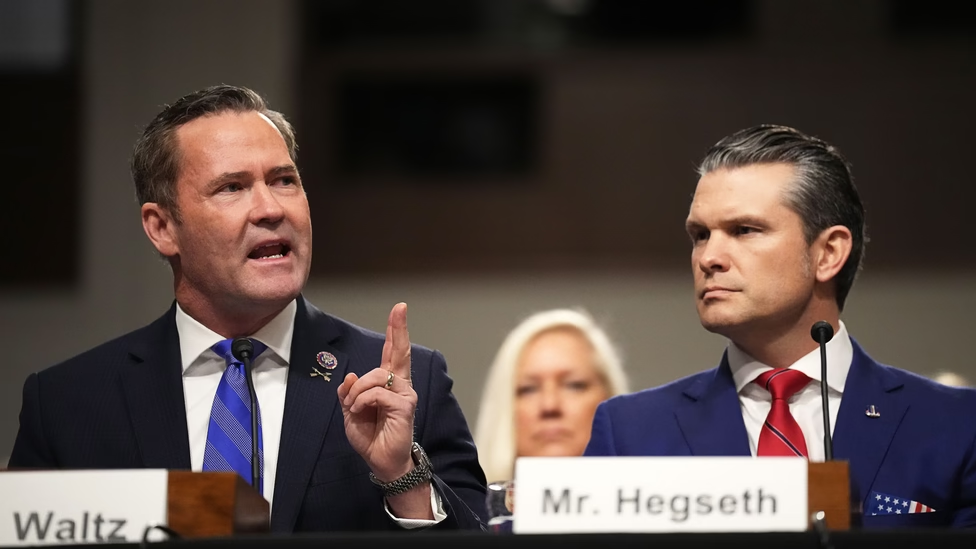
On Monday, shortly after we published a story about a massive Trump-administration security breach, a reporter asked the secretary of defense, Pete Hegseth, why he had shared plans about a forthcoming attack on Yemen on the Signal messaging app. He answered, “Nobody was texting war plans. And that’s all I have to say about that.”
At a Senate hearing yesterday, the director of national intelligence, Tulsi Gabbard, and the director of the Central Intelligence Agency, John Ratcliffe, were both asked about the Signal chat, to which Jeffrey Goldberg, the editor in chief of The Atlantic, was inadvertently invited by National Security Adviser Michael Waltz. “There was no classified material that was shared in that Signal group,” Gabbard told members of the Senate Intelligence Committee.
Ratcliffe said much the same: “My communications, to be clear, in the Signal message group were entirely permissible and lawful and did not include classified information.”
President Donald Trump, asked yesterday afternoon about the same matter, said, “It wasn’t classified information.”
These statements presented us with a dilemma. In The Atlantic’s initial story about the Signal chat—the “Houthi PC small group,” as it was named by Waltz—we withheld specific information related to weapons and to the timing of attacks that we found in certain texts. As a general rule, we do not publish information about military operations if that information could possibly jeopardize the lives of U.S. personnel. That is why we chose to characterize the nature of the information being shared, not specific details about the attacks.
The statements by Hegseth, Gabbard, Ratcliffe, and Trump—combined with the assertions made by numerous administration officials that we are lying about the content of the Signal texts—have led us to believe that people should see the texts in order to reach their own conclusions. There is a clear public interest in disclosing the sort of information that Trump advisers included in nonsecure communications channels, especially because senior administration figures are attempting to downplay the significance of the messages that were shared.
Experts have repeatedly told us that use of a Signal chat for such sensitive discussions poses a threat to national security. As a case in point, Goldberg received information on the attacks two hours before the scheduled start of the bombing of Houthi positions. If this information—particularly the exact times American aircraft were taking off for Yemen—had fallen into the wrong hands in that crucial two-hour period, American pilots and other American personnel could have been exposed to even greater danger than they ordinarily would face. The Trump administration is arguing that the military information contained in these texts was not classified—as it typically would be—although the president has not explained how he reached this conclusion.
Yesterday, we asked officials across the Trump administration if they objected to us publishing the full texts. In emails to the Central Intelligence Agency, the Office of the Director of National Intelligence, the National Security Council, the Department of Defense, and the White House, we wrote, in part: “In light of statements today from multiple administration officials, including before the Senate Intelligence Committee, that the information in the Signal chain about the Houthi strike is not classified, and that it does not contain ‘war plans,’ The Atlantic is considering publishing the entirety of the Signal chain.”
We sent our first request for comment and feedback to national-security officials shortly after noon, and followed up in the evening after most failed to answer.
Late yesterday, White House Press Secretary Karoline Leavitt emailed a response: “As we have repeatedly stated, there was no classified information transmitted in the group chat. However, as the CIA Director and National Security Advisor have both expressed today, that does not mean we encourage the release of the conversation. This was intended to be a an [sic] internal and private deliberation amongst high-level senior staff and sensitive information was discussed. So for those reason [sic] — yes, we object to the release.” (The Leavitt statement did not address which elements of the texts the White House considered sensitive, or how, more than a week after the initial air strikes, their publication could have bearing on national security.)
A CIA spokesperson asked us to withhold the name of John Ratcliffe’s chief of staff, which Ratcliffe had shared in the Signal chain, because CIA intelligence officers are traditionally not publicly identified. Ratcliffe had testified earlier yesterday that the officer is not undercover and said it was “completely appropriate” to share their name in the Signal conversation. We will continue to withhold the name of the officer. Otherwise, the messages are unredacted.
As we wrote on Monday, much of the conversation in the “Houthi PC small group” concerned the timing and rationale of attacks on the Houthis, and contained remarks by Trump-administration officials about the alleged shortcomings of America’s European allies. But on the day of the attack—Saturday, March 15—the discussion veered toward the operational.
Listen: Jeffrey Goldberg on the group chat that broke the internet
 Coast Contact