America’s Defense Posture is out of Touch with the 21st Century

The United States is unlikely to be invaded by the military of another nation.
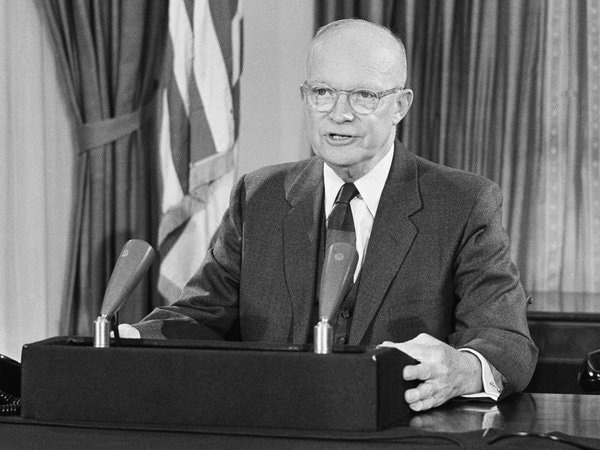
In his final speech from the White House, President Dwight D. Eisenhower warned that an arms race would take resources from other areas — such as building schools and hospitals.

Despite that conclusion under President Donald Trump there was a build up of America’s military might. It’s true that under President Obama military spending did decline.

Microtrends itemized American military spending during the past four years

U.S. military spending/defense budget for 2019 was $731.75B, a 7.22% increase from 2018.
U.S. military spending/defense budget for 2018 was $682.49B, a 5.53% increase from 2017.
U.S. military spending/defense budget for 2017 was $646.75B, a 1.08% increase from 2016.
U.S. military spending/defense budget for 2016 was $639.86B, a 0.95% increase from 2015.

It’s nice to know we are well protected. But from who?

USA Today asks the question is this really necessary? America outspends every other nation in the world. Almost three times the money spent by the second largest military in 2019. The USA spent $731.8 Billion. China spent $261.1 Billion. The sum of military spending for the next ten largest military spenders is less than the US military budget.

In Germany, about 45,000 Americans go to work each day around the Kaiserslautern Military Community, a network of U.S. Army and Air Force bases that accommodates schools, housing complexes, dental clinics, hospitals, community centers, sports clubs, food courts, military police and retail stores. About 60,000 American military and civilian personnel are stationed in Japan; another 30,000 in South Korea. More than 6,000 U.S. military personnel are spread across Africa, according to the Department of Defense.

About 220,000 U.S. military and civilian personnel serve in more than 150 countries, the Defense Department says. But in today’s world it is not military invasion that is the issue. It’s the cyber invasion that is in process now.

David Sanger of the New York Times reported on December 13, 2020, “The Trump administration acknowledged on Sunday that hackers acting on behalf of a foreign government — almost certainly a Russian intelligence agency, according to federal and private experts — broke into a range of key government networks, including in the Treasury and Commerce Departments, and had free access to their email systems.”

Remember the cyber attack on Sony Pictures in 2014. The FBI blamed a North Korea scheme to retaliate for the comedy ‘The Interview.’

More recently Business Insider reported on February 25, 2021 SolarWinds, a major US information technology firm, was the subject of a cyberattack that spread to its clients and went undetected for months. US agencies — including parts of the Pentagon, the Department of Homeland Security, the State Department, the Department of Energy, the National Nuclear Security Administration, and the Treasury — were attacked. So were private companies, like Microsoft, Cisco, Intel, and Deloitte, and other organizations like the California Department of State Hospitals, and Kent State University, the Wall Street Journal reported.

The military Industrial complex that President Eisenhower warned about is still a reality. Jobs manufacturing military hardware are consequential in almost every state. Is President Joe Biden prepared to face the 21st century world? He must or the United States will be overwhelmed by its enemies.
The United States is the Arms Maker for the World

When you want the very best in military hardware buy American. Ours is the highest quality and most reliable. Our arms are the equivalent of Lexus, BMW, and Mercedes Benz high quality cars.

President Dwight Eisenhower famously warned the U.S. about the “militaryindustrial complex” in his farewell address. To this day armament manufacturers have provided thousands of well-paying jobs to Americans. With the wind down of the wars in Iraq and Afghanistan and reduced military budgets there has been a significant reduction in those arms purchases.

The Los Angeles Times reports that “Three days after the U.S. fired 47 cruise missiles into Syria last week, the Pentagon signed a $251-million deal to buy more missiles from Raytheon Co.”

Thanks to the president’s “no boots on the ground” plans we are all happy to know that our children will have limited exposure to the Middle East war zone.

Why are we in this war at all? Congress won’t vote money for America’s infrastructure or other domestic spending proposals. However, given any threat abroad and the need for more jobs at home, why not keep shooting those GPS guided bombs? After all the cost of those guidance systems is a mere $25,000 each.

Make war, make money, and no boots on the ground. Perfect! Something both Democrats and Republicans can both agree on.

The militaryindustrial complex is alive and well.

Military-Industrial Complex Equals Jobs

The 223rd and final C-17 cargo plane was delivered to the Air Force last week. The plane was manufactured at Boeing (the old Douglas Aircraft facility) in Long Beach, California.  That’s the last airplane manufacturing facility in Southern California.  The plant will be closed by 2015 and will result in the loss of 3,000 jobs.

Here is the problem. While Boeing cited sequestration, the Pentagon has made it clear for several years that it didn’t require more C-17s. However, lawmakers pushed through more orders to preserve jobs.

As reported in Businessweek, October 29, 2009, “Every year since 2006, the Pentagon has said that it has enough C-17s. And every year, Congress overrules the military and authorizes funds for additional planes. In October the Senate approved $2.5 billion in the 2010 budget for 10 more C-17s, which would bring the fleet to 215.”

The United States has created high paying jobs by ordering complex technology and other aerospace/biotech products from American companies.  To a great extent the military-industrial complex has been the driver of jobs.

We give $1.3 billion of aid to Egypt in the form of military hardware.  We even gave Russia $126 million in aid in 2010.

 Top Recipients of U.S. Military Aid, FY2010

Country $ U.S.   millions
Afghanistan

6,800.3

Israel

 2,799.5

Egypt

 1,301.9

Iraq

 1,006.0

Pakistan

 913.9

Jordan

 303.8

Somalia

 204.0

Colombia

 185.8

Russia

126.8

Sudan

104.9

Mexico

96.0

Poland

 55.6

Is this the only way we can provide our citizens with good jobs?

Companies that Benefit from War

A Review of an Aug 28, 2013 post. Look at all the money those war material manufacturers will be making. Is this Obama’s job stimulus program? Green is for m-o-n-e-y.


It was no surprise that the stock market dropped yesterday.  A 1.59% drop in one day on the S&P 500.  After all the threat of the United States at war in Syria could have an additional impact on our country.  Most likely it will impact every country as the cost of oil and other commodities increases.

Then today the stock markets in the United   States have risen by .3%.  How can that be? Why would the stock market rise when the threat of war is still so prominent?

MSN Money seems to have the answer. “Sales for the world’s 100 largest arms producers amounted to $411 billion in 2010, according to the Stockholm International Peace Research Institute. That was up 1% from the year before, a modest rise that was held in check by the drawdown of foreign forces in Iraq.”

The top ten listed below.

United Technologies

  • Arms sales in 2010 $11.4 billion

L-3 Communication

  • Arms sales in 2010 $13.1 billion

Finmeccanica

  •  Arms sales in 2010 $14.4 billion

EADS

  •  Arms sales in 2010 $16.4 billion

Raytheon

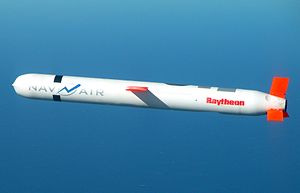
Tomahawk_300px_Block_IV_cruise_missile_-crop

Arms sales in 2010 $23 billion.

  • Raytheon’s web site says, “The combat-proven Tomahawk is the world’s  most capable cruise missile and is ideally suited for critical long-range, precision-strike missions against high-value with minimal collateral damage.”
  • Arms sales as percent of total revenue: 91%.
  • Total Number of Employees: 72,400.

 General Dynamics

  • Arms sales in 2010 $23.9 billion

Northrop Grumman

  • Arms sales in 2010 $28.2 billion

Boeing

  • Arms sales in 2010 $31.4 billion

BAE Systems

  • Arms sales in 2010 $32.9 billion

Lockheed Martin

  • Arms sales in 2010 $35.7 billion
  • Among Lockheed’s major products are the Trident missile and the F-16 and F-22 fighter jets.
  • Arms sales as percent of total revenue: 78%

Is this the impact of the Military–industrial complex?

Edging Towards War

Iran threatens Strait of Hormuz

US warns Iran against closing Hormuz oil route

Oil price falls as Saudis trump Iran threat

Is it saber rattling or is Iran and the United States moving towards war?  All of this is the consequence of American opposition to nuclear weapons development in Iran.  American politics is also pushing the Obama administration towards more assertive behavior when Republican candidates say that Brack Obama is too timid and apologetic when addressing the Iranian threat.

This is not the only place in the world where the United States has become more militarily assertive.  This past November at an economic Asian conference President Obama announced that “ About  250 U.S. Marines will begin a rotation in northern Australia starting next year, with a full force of 2,500 military personnel staffing up over the next several years.”  This is confrontation with China.  “Defense Secretary Leon Panetta has said that the goal of the new security pact is to signal that the U.S. and Australia will stick together in face of any threats.”  What threats have there been?

America’s military-industrial complex couldn’t be happier.  More war means more weapons.  The factories that hire thousands or people will be humming.  What a great way to boost our economy.