BREAKING: Democratic star Congressman Jamie Raskin delivers a show-stopping takedown of Donald Trump’s lawless mass pardon of violent January 6th insurrectionists.
This is exactly what all of us are thinking right now…
“The chairman began by saying that the point here is to restore the rule of law… restore the rule of law… Can you even pretend to do that if you stand by and support Donald Trump who on day one — as the chairman of the committee just said — day one of his presidency, pardoned fifteen hundred insurrectionists including hundreds of people who violently assaulted and attacked American police officers?” said Raskin during a hearing of the Judiciary Committee’s Subcommittee on Immigration Integrity, Security, and Enforcement.
“Let’s just take one person who is free today, Julian Khater, who had been convicted after having every due process protection, the right to counsel, the right to cross-examine witnesses, the right to introduce evidence, but they had him completely,” said Raskin.
“They knew exactly what happened. Most of this was videotaped so the whole world could see it,” he continued. “Well, Julian Khater repeatedly violently assaulted our officer protecting us in Congress, Officer Brian Sicknick, who then proceeded to have several strokes and died on January the 7th, 2021, the next day.”
“The family of Officer Sicknick is absolutely devastated and demolished by what’s just happened,” Raskin went on. “I invite any of my colleagues, including the members new to this committee who maybe weren’t here on January 6th and didn’t experience the trauma of that violent insurrection when we saw a mob marauding through here yelling ‘Hang Mike Pence! Hang Mike Pence!’ and looking to assassinate Nancy Pelosi.”
“And now you have the temerity to come forward and say this is about public safety? How much safer are we now with these fifteen hundred criminals at large in Washington D.C. and going out into the country?” asked Raskin.
“Are you vouching that these people are not going to be attacking any other police officers?” he added. “Are you vouching that they’re no longer a threat to public safety? What an outrage! What a scandal!”
The truth is that there is no defending Trump’s pardons on anything other than purely partisan grounds. He released these criminals because they support him. He doesn’t care that they attacked police officers. He doesn’t care that they might do it again. All that matters is that they’re in his MAGA cult.
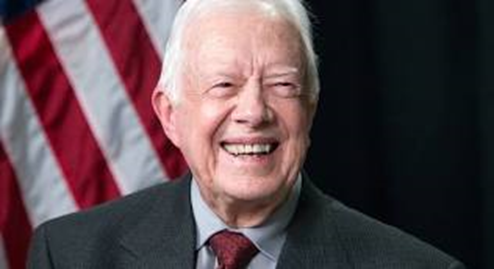
After a year in hospice care former President Jimmy Carter has died at 100.
Carter’s achievements were few. Carter was sworn in as the 39th president of the United States. On his first full day in office in January 1977, he pardoned most Vietnam-era draft evaders. He signed treaties to return the Panama Canal back to Panama in 1999. Senate narrowly ratifies them in 1978. In September 1978: Egyptian President Anwar Sadat, Israeli Prime Minister Menachem Begin and Carter signed Camp David accords, which lead to a peace deal between Egypt and Israel the following year.
Sadly he did little to rescue 52 hostages that Iranian militants took when storming the U.S. Embassy in Tehran. The inflation rate hit a record high of 14.6% in March and April of 1980.
It was the high inflation and his failure to rescue the hostages held in Iran that led to Carter’s defeat in that fall’s election.
In my opinion Jimmy Carter was the worst president since Herbert Hoover.
It might be easier to make sense of the recent fatal shooting of an insurance CEO, an act with ominous overtones about health care costs and insurance coverage, if any one aspect of health-care finance in America had gotten dramatically worse.
But what if there is no one thing?
Everything in American health care seems to cost more, across the board, year after year. Millions of insurance claims get denied. Medical debt routinely drives patients into bankruptcy. And patients see no relief in sight.
“Americans forgo necessary health care every single day, because they can’t afford it,” said Caroline Pearson, executive director of the nonprofit Peterson Center on Healthcare.
Americans spend more out of pocket on health care than people in most comparable countries, the health policy nonprofit KFF found. In the United Kingdom, for example, out-of-pocket health care costs totaled $764 per person in 2022.
“We don’t consume a lot more health care than other countries,” said Dr. Atul Grover, executive director of the nonprofit AAMC Research and Action Institute. “We just pay a lot more for each thing.”
United Healthcare reported net income of $22.3 billion last year, had net income of $20.6 billion in 2022 after making $17.3 billion in 2021 and $15.4 billion in 2020. Before the pandemic United Health made $13.8 billion in 2019.
Delay, Deny, Defend: Why Insurance Companies Don’t Pay Claims and What You Can Do About It is a 2010 book by Rutgers Law professor Jay M. Feinman
Luigi Mangione Has Become A Social Media Folk Hero. The Glorification of Luigi Mangione Is Disturbing – But Not Surprising
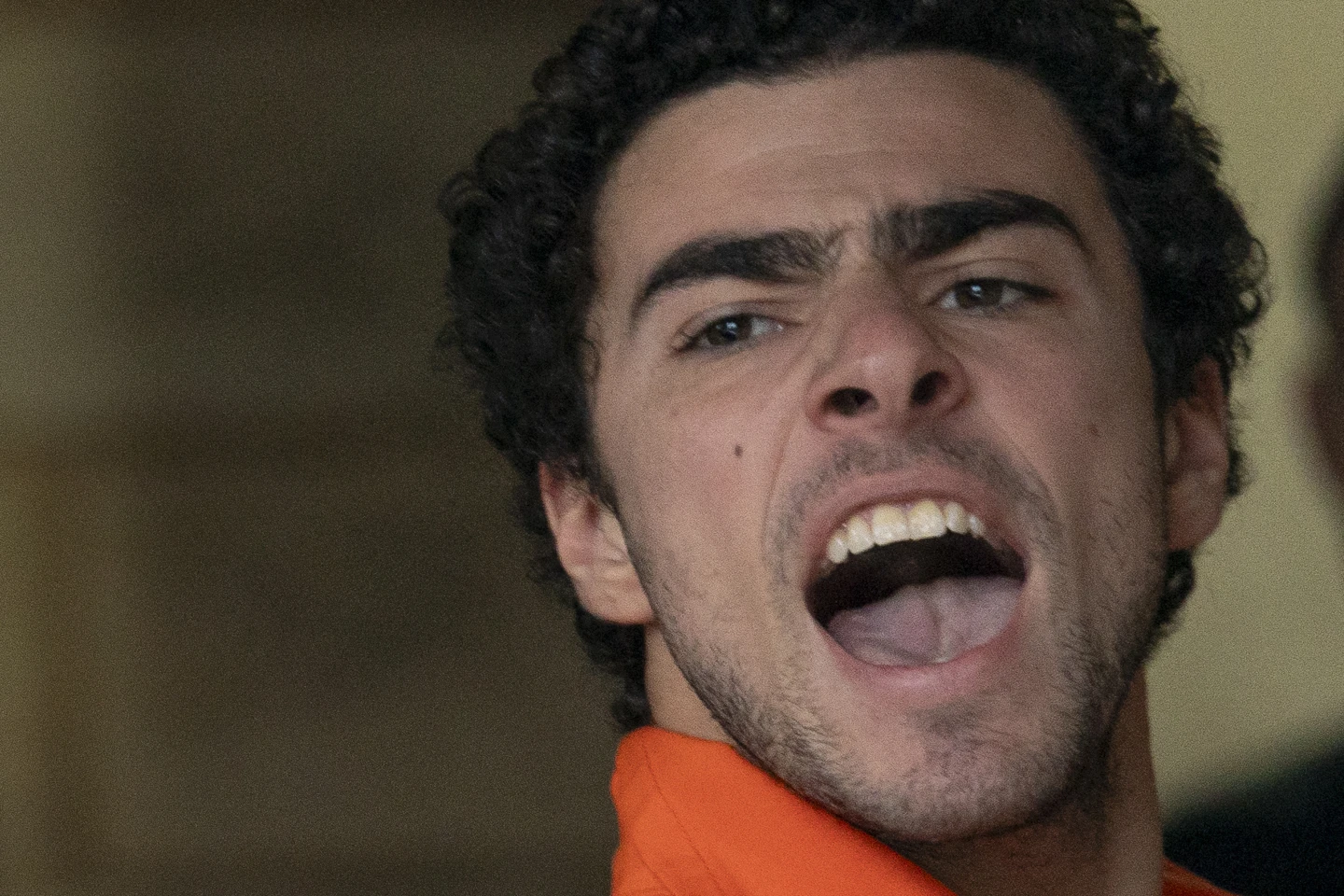
Luigie Mangione is escorted into Manhattan Criminal court for his arraignment in the killing of UnitedHealthcare CEO Brian Thompson, Monday, Dec. 23, 2024, in New York.
Honda and Nissan have officially entered into talks to combine their companies by summer 2026, the companies announced Monday, a deal that would create the world’s third-largest automaker by sales.
A merger would bring the Japanese auto giants under a joint holding company, according to a news release. Mitsubishi, a longtime Nissan partner, also has agreed to join the negotiations.
I have owned Nissan cars for decades. The first was a Datsun 200SX. Mine was blue. The car was the size of a Ford Mustang. It took us to Las Vegas at least once and ran better than our Chevrolet on Highway 15.
I have also owned some Honda Accords and Honda Civics that were equally reliable.
Why these companies are negotiating is to giving them the muscle to compete with GM, Toyotal
The three brands already have a partnership to work on vehicle intelligence and electrification, which includes technological collaboration with the goal of achieving “carbon neutrality and a zero-traffic-accident society.”
The deal joins Japan’s second- and third-largest automakers, giving the combined company the scale to better compete in the tumultuous global auto market. Last year, Honda built nearly 4.2 million cars and sold nearly 4 million globally, while Nissan said it produced and sold about 3.4 million. By comparison, Toyota and General Motors sold about 10 million and 6.2 million vehicles in the same year respectively.
The polio vaccine developed by Dr. Salk and colleagues is licensed in the U.S. Before the polio vaccine, the disease had been a major cause of disability in children. About 16,000 cases of polio (paralytic poliomyelitis) occurred each year in the U.S. in the 20th century compared with none in 2020.
An attorney connected to Robert F. Kennedy Jr., President-elect Donald Trump’s nominee to lead the Department of Health and Human Services, filed a petition on behalf of an activist group asking the Food and Drug Administration to suspend or withdraw approval of a polio vaccine for children.
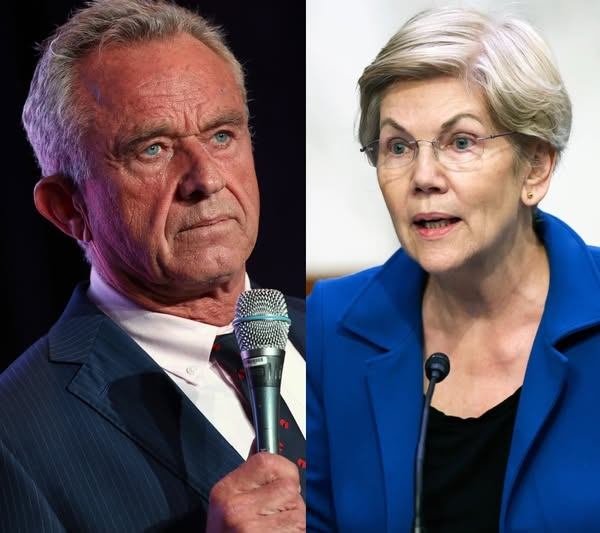
Senator Elizabeth Warren sounds the alarm about Donald Trump’s idiotic decision to put conspiracy theorist RFK Jr. in charge of the Department of Health and Human Services.
She didn’t pull any punches…
“Say goodbye to your smile and say hello to polio — that’s what’s on the horizon if Robert F. Kennedy Jr. becomes the Secretary of Health and Human Services,” Warren wrote on X along with a video.
“You know I would laugh if it weren’t so scary,” she said in the clip. “Donald Trump just picked RFK Jr. to lead the Department of Health and Human Services. This is a man who wants to stop kids from getting their polio and measles shots.”
“He’s actually welcoming a return to polio a disease we nearly eradicated,” she continued. “But it doesn’t stop there. RFK Jr. also doesn’t believe fluoride should be in your water and that’s what keeps your teeth from rotting.”
Luigi Mangione, the 26-year-old Ivy League graduate accused of gunning down UnitedHealthcare CEO Brian Thompson in front of a New York City hotel last week is probably guilty.
Mangione’s hatred for the health insurance industry and health care in the United States has brought people cheering him as a folk hero. Singers have posted songs about him. On TikTok, folk singer Joe DeVito posted a song. Merchandise, including sweatshirts, wine tumblers and hats emblazoned with the words, began making their way around online storefronts, though some have since been removed, the Washington Post reported.
For as many jokes internet users cracked casting the suspected shooter as a “folk hero,” others pointed to the systemic wealth inequality governing a society in which UnitedHealthcare reported over $16 billion in operating profits in 2023.
On a personal side my daughter’s healthcare (California Care – part of ACA) has denied coverage repeatedly. The cost of her Dexilant is $500 a month but by accident we learned that she can buy the medication from a Canadian pharmacy for $92 a month. It’s not a generic.
At the very least Luigi Mangione has brought the health care industry to a forefront. Will anything change? Probably not. Making money is more important than affordable health care.
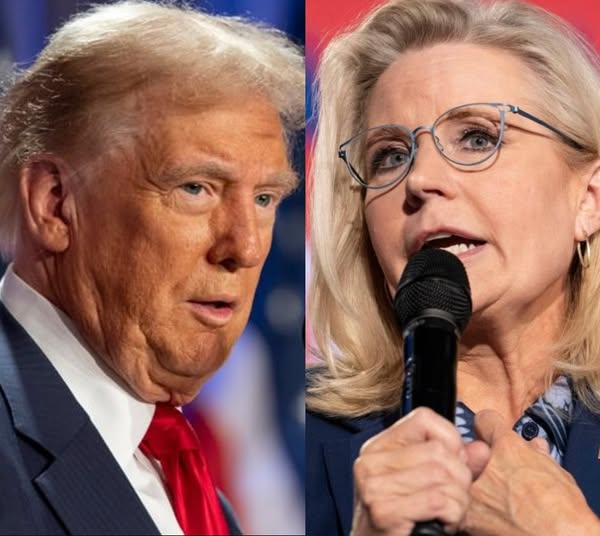
BREAKING: Republican Liz Cheney hits back hard at Donald Trump for his “assault on the rule of law” after he threatens to imprison those like her who served on the House January 6th committee.
And she wasn’t done there…
“Here is the truth: Donald Trump attempted to overturn the 2020 presidential election and seize power,” Cheney said in a statement provided to several outlets.
“He mobilized an angry mob and sent them to the United States Capitol, where they attacked police officers, invaded the building and halted the official counting of electoral votes,” she went on.
“Trump watched on television as police officers were brutally beaten and the Capitol was assaulted, refusing for hours to tell the mob to leave,” Cheney continued.
“This was the worst breach of our Constitution by any president in our nation’s history,” she stated. “Donald Trump’s suggestion that members of Congress who later investigated his illegal and unconstitutional actions should be jailed is a continuation of his assault on the rule of law and the foundations of our republic.”
Over the weekend, Trump told Meet the Press that Cheney’s actions were “inexcusable” and said “honestly, they should go to jail” of the members of the January 6th committee.
The fact that these people have done nothing wrong and were simply trying to protect our democracy matters not to Trump. He’s beginning his revenge tour.
Los Angeles Times owner Patrick Soon-Shiong, who blocked the newspaper’s endorsement of Kamala Harris and plans to overhaul its editorial board, says he will implement an artificial intelligence-powered “bias meter” on the paper’s news articles to provide readers with “both sides” of a story.
Soon-Shiong, the biotech billionaire who acquired the Times in 2018, told CNN political commentator Scott Jennings – who will join the Times’ editorial board – that he’s been “quietly building” an AI meter “behind the scenes.” The meter, slated to be released in January, is powered by the same augmented intelligence technology that he’s been building since 2010 for health care purposes, Soon-Shiong said.
“Somebody could understand as they read it that the source of the article has some level of bias,” he said on Jennings’ “Flyover Country,” podcast. “And what we need to do is not have what we call confirmation bias and then that story automatically, the reader can press a button and get both sides of that exact same story based on that story and then give comments.”
Soon-Shiong said major publishers have so far failed to adequately separate news and opinion, which he suggested “could be the downfall of what now people call mainstream media.”
The comments prompted a rebuke from the union representing hundreds of the Times’ newsroom staffers, which said Soon-Shiong had “publicly suggested his staff harbors bias, without offering evidence or examples.”
“Our members – and all Times staffers – abide by a strict set of ethics guidelines, which call for fairness, precision, transparency, vigilance against bias, and an earnest search to understand all sides of an issue,” the Los Angeles Times Guild said in a statement Thursday. “Those longstanding principles will continue guiding our work.”
The contentious moves from the paper’s owner also led to the resignation of Harry Litman, a senior legal affairs columnist for the Times’ Opinion page.
“My resignation is a protest and visceral reaction against the conduct of the paper’s owner, Dr. Patrick Soon-Shiong. Soon-Shiong has made several moves to force the paper, over the forceful objections of his staff, into a posture more sympathetic to Donald Trump,” Litman wrote Thursday. “Given the existential stakes for our democracy that I believe Trump’s second term poses, and the evidence that Soon-Shiong is currying favor with the President-elect, they are repugnant and dangerous.”
Litman’s resignation comes days after Kerry Cavanaugh, the Times’ assistant editorial page editor, also announced her exit, Status first reported. In addition to his sweeping changes to the editorial board, a person familiar with the matter said Soon-Shiong has begun reviewing the headlines of all opinion pieces before publication. A spokesperson for the Times did not respond to CNN’s request for comment.
The moves come as Soon-Shiong looks to restructure the newspaper’s editorial board, telling CNN last month that he plans to balance the paper’s opinion section with more conservative and centrist voices in the wake of President-elect Donald Trump’s victory.
“If we were honest with ourselves, our current board of opinion writers veered very left, which is fine, but I think in order to have balance, you also need to have somebody who would trend right, and more importantly, somebody that would trend in the middle,” Soon-Shiong told CNN in November.
The restructuring follows Soon-Shiong’s divisive decision to block a drafted endorsement of Vice President Harris two weeks before Election Day, which resulted in the resignation of several members of the paper’s editorial board, staff protests, and thousands of readers canceling their subscriptions. Just three of the editorial board’s eight members now remain, according to the Times website. On Wednesday, Soon-Shiong told Jennings that when the editorial board shared it had “pre-packaged” a presidential endorsement “without having met with any of the candidates,” he was “outraged.”
“I did not want our paper to be part of that method of providing information or misinformation or disinformation,” he said.
“Everybody has a right to an opinion, that’s fair,” Soon-Shiong said, underscoring that the paper needs to “actually create some level of balance when it comes to opinion and columnist, and then we need to actually let the reader know this is opinion.”
In his resignation Thursday, Litman called the owner’s decision to spike the presidential endorsement a “deep insult to the paper’s readership.”
“Trump has made it clear that he will make trouble for media outlets that cross him,” Litman wrote. “Rather than reacting with indignation at this challenge to his paper’s critical function in a democracy, Soon-Shiong threw the paper to the wolves. That was cowardly.”
I have been a contributor to the Los Angeles Times op-ed page in some fashion for more than 15 years. For the last three years, I have been the Senior Legal Columnist, writing regular weekly columns about Trump’s legal troubles, the Supreme Court, and a wide range of other topics. The Times also permitted me to cover Trump’s trial in New York and the 2024 Democratic convention.
My editors have been skilled, quick, and fair. I have been able to write whatever I like, including blistering criticism of Donald Trump.
I’ve been proud of my work and proud to be part of the Times, the most prominent and storied newspaper west of the Mississippi. It’s got gravitas—and 45 Pulitzers to show for it—combined with a California flair that complements the constant variety and zaniness of my adopted state.
But I have written my last op-ed for the Times. Yesterday, I resigned my position. I don’t want to continue to work for a paper that is appeasing Trump and facilitating his assault on democratic rule for craven reasons.
My resignation is a protest and visceral reaction against the conduct of the paper’s owner, Dr. Patrick Soon-Shiong. Soon-Shiong has made several moves to force the paper, over the forceful objections of his staff, into a posture more sympathetic to Donald Trump. Those moves can’t be defended as the sort of policy adjustment papers undergo from time to time, and that an owner, within limits, is entitled to influence. Given the existential stakes for our democracy that I believe Trump’s second term poses, and the evidence that Soon-Shiong is currying favor with the President-elect, they are repugnant and dangerous.
Soon-Shiong’s most notorious action received national attention. The paper’s editorial department had drafted an endorsement of Democratic presidential candidate Kamala Harris. Soon-Shiong ordered them to spike it and make no endorsement in the election. (Soon-Shiong later implied he had just ordered up a factual analysis of both candidates’ policies, but that’s at best a distortion: he plainly blocked an already drafted Harris endorsement.) It is hard to imagine a more brutal, humiliating, and unprofessional treatment of a paper’s professional staff. Three members of the editorial page resigned in protest and 2,000 readers canceled their subscriptions.
Owners participate in setting overall editorial direction. But it’s a grave insult to the independence and integrity of an editorial department for an owner to force it to withdraw a considered and drafted opinion. And of course, this was no ordinary opinion. The endorsement of a presidential candidate is an editorial department’s most important decision, so the slight was deep.
It was also a deep insult to the paper’s readership. Like any major paper, the Times has a coherent and consistent line of reasoning to its editorial decisions. That can include idiosyncratic departures on particular issues. Where Trump was concerned, the paper had presented to its readers a long series of opinions that set out, with force and nuance, the great dangers of his return to office. That line of analysis culminated logically in the endorsement of Harris. For the Times to lead its readers to the finish line only to step off the track was bizarre and disrespectful.
By far the most important problem with Soon-Shiong’s scrapping of the editorial was the apparent motivation. It is untenable to suggest that Soon-Shiong woke up with sudden misgivings over Harris’s criminal justice record or with newfound affection for Trump’s immigration proposals. The plain inference, and the one that readers and national observers have adopted, is that he wanted to hedge his bets in case Trump won—not even to protect the paper’s fortunes but rather his multi-billion-dollar holdings in other fields. It seems evident that he was currying favor with Trump and capitulating to the President-elect’s well-known pettiness and vengefulness.
Trump has made it clear that he will make trouble for media outlets that cross him. Rather than reacting with indignation at this challenge to his paper’s critical function in a democracy, Soon-Shiong threw the paper to the wolves. That was cowardly.
And his decision had a sort of force multiplier effect with the similar conduct by Washington Post owner Jeff Bezos, who rammed a similar non-endorsement decision down the throat of his editorial staff. There as well, there was no argument that the intervention was based on sensible policy contrast between Trump and Harris. History will record it as a self-serving protection of other holdings, which, as in the case of Soon-Shiong’s, dwarf the newspaper itself.
Before joining the Times, I was a contributing commentator for the Post. We used to say there, tongue-in-cheek, that our billionaire was better than their billionaire, meaning Bezos was more aware of his public responsibility and more hands-off in his oversight. As it turns out, both billionaires flinched when the chips were down, choosing to appease, not oppose, a criminal President with patent authoritarian ambitions.
Before he has even taken office, Trump has faced down two of the country’s most prominent newspapers, inducing them to back off longstanding, well-reasoned editorial opposition. That is terrifying.
As a commentator, especially one dedicated to constitutional norms and the rule of law, I have spent much of the last couple of years arguing that Trump is a genuine menace to our constitutional system. November 5 showed that a narrow majority of Americans who voted disagree or don’t care.
Yet here in Southern California and in Washington, D.C., we have evidence of tangible erosion of social guardrails in real time. Trump is in the process of commandeering and corrupting institutions of government and civil society that we have always counted on to nurture our democracy.
Look closely at this already deeply eroded landscape: all the electoral branches are not only Republican but firmly within Trump’s fist and dedicated to loyalty to him over any principle of governance. The Supreme Court has assisted his authoritarian initiatives in ways that the legal profession and society as a whole have condemned. His current nomination process is seeking openly to cut the Senate, even its Republican members, out of their constitutional advice-and-consent role.
For the moment, the best hopes for desperately needed pushback lie with federal law enforcement, the lower federal courts, the military, and (an economically weakened) mainstream media. All this is material for another Substack, but Trump has taken dead aim at imposing loyalty to him as the defining feature of the first three, including a proposal to permit him to discharge generals who are not, as he put it, sufficiently like “Hitler’s generals.”
So the role and responsibility of the media have never been greater. And if major outlets can be bought off and made to cower, the impact on our liberty—and freedom of thought—is in grave jeopardy.
Thus far, I have analyzed only Soon-Shiong’s most notorious and visible action of scuttling the endorsement. That put him in lock step with Bezos. But he has combined it with a general program of cozying up to Trump, especially since the election. Soon-Shiong ordered the shelving of a multi-part series, intended to run with the endorsement but broader and of a piece with the editorial page’s opinion over the last several years, which had been entitled, “The Case Against Trump.” His spiking of the series was part of the explanation given by the editorial board members who resigned.
There is more: Soon-Shiong went on Fox News after the election to talk about the paper’s editorial direction. He advocated “diverse perspectives” in the editorial pages and voices from across the political spectrum to avoid creating an “echo chamber.” Most alarmingly, and escaping the notice of no one, he pandered to Fox and Trump by saying he wanted to make the Times more “fair and balanced.”
Soon-Shiong followed up by hiring a noted pro-Trump commentator, Scott Jennings, for some as yet ill-defined role of “balancing out” the views on the editorial page. Then most recently, during an interview on CNN in which he was asked about the Jennings hire, the normally mild-mannered Soon-Shiong went full Trump, labeling the CNN correspondent a “so-called reporter” before abruptly ending the interview.
Soon-Shiong’s argument for all these moves is to create “balance” on the editorial page, which still remains unstaffed and in chaos, and a neutral, “just the facts” approach to news. It sounds banal, but in fact, it is pernicious; and it goes to the heart of my reasons for leaving.
First, the idea of balance is fundamentally misplaced when on one side of the balance is a sociopathic liar like Donald Trump. The media has struggled for years to figure out how to call out Trump’s incessant lies while still covering the contentious issues of the day. There’s good reason to think that the propagation of those lies, some of which Trump simply picks up from fringe social media sites and Fox News, influenced the results of the election. The people who voted for Trump were fed a relentless false account of issue after issue, including Trump’s signature distortions about immigrants (eating pets, committing a disproportionate number of violent crimes), which Fox News and right-wing social media parroted relentlessly.
In that context, the bromide of just being balanced is a terrible dereliction of journalists’ first defining responsibility of reporting the truth. Soon-Shiong apparently would have the Times deliver an on-the-one-hand, on-the-other-hand presentation to readers. But there is no “other hand.” Trump is an inveterate liar, and journalists have a defining responsibility to call that out.
These are not normal times. Look around. We are in the political, cultural, and legal fight of our lifetimes. Trump’s conduct since winning the election only reinforces his determination to replace constitutional rule with some form of authoritarian rule. That needn’t be 1933 Germany, an analogy that typically draws counter-charges of excessive drama (though the existence of certain overlapping features is inescapable). There are other models of democratic demise, ones that Trump obviously wants to emulate, such as Hungary’s slide toward authoritarianism over the last 20 years.
So the neutral posture that Soon-Shiong uses to justify his violence to the paper is exactly, fundamentally wrong. This is no time for neutrality and disinterest. It’s rather a time for choosing. And a choice for true facts and American values is necessarily a vigorous choice against Donald Trump.
I don’t pretend that my resignation is any kind of serious counter-blow to the damage of Soon-Shiong’s cozying up to Trump. And I see, and I thought about, the argument that my most constructive role would be to stay on and continue to use my one voice as forcefully as I could to explain to Times readers the grave dangers on the horizon.
But the cost of alliance with an important national institution that has such an important role to play in pushing back against authoritarian rule, but declines to do so for spurious and selfish reasons, feels too great. And Soon-Shiong’s conscious pattern of détente with Trump has in fact recast the paper’s core identity to one of appeasement with an authoritarian madman. I am loath to affiliate with that identity in any way.
My growing misgivings about the Times are one of the reasons I started this Substack two weeks ago. I’ve been blown away by the response and the number of followers and subscribers in just the first two weeks: thank you to everyone. Having this outlet for my thoughts about where Trump 2.0 is taking us makes it easier to leave.
I’m not going anywhere. I will continue to do my best to identify and analyze the dangers that might be hard to see, but for now, here on Substack. I may surface elsewhere, too. Stay tuned! I hope you will follow me here and think about becoming a subscriber.
I’ll close by quoting admiringly my former colleague and the former editorial editor at the Times, Mariel Garza: “I want to make it clear that I am not OK with us being silent. In dangerous times, honest people need to stand up. This is how I’m standing up.”
Let me be clear. I marked by ballot for Kamala Harris. I was not a supporter. I did vote against Donald Trump. I believe many other people were of the same mind.
Now that Donald Trump has won my fears of what will happen to my country are becoming true.
Look at his appointments and you should be appalled. Following are four that should alarm everyone.
Attorney General: Matt Gaetz: Accused of sex with a minor. In 2020, he was accused of child sex trafficking and statutory rape. Following an investigation, the United States Department of Justice (DOJ) decided not to pursue charges against him. Prior to his resignation as representative, Gaetz was also under ethics investigation by the House Ethics Committee for allegations of underage sexual abuse, illegal drug use, sharing inappropriate images and videos on the House floor, misusing state identification records, converting campaign funds for personal use, and accepting impermissible gifts. Gaetz has denied all of the allegations.
Before being elected to the Florida House of Representatives in 2010, he briefly served as an attorney with the Keefe, Anchors & Gordon law firm, reported the Pensacola News Journal, part of the USA TODAY Network. He was shortly suspended from practicing law in 2021 due to unpaid fees in 2021 but was later reinstated.
Attorneys general usually have experience as federal prosecutors. During Trump’s first presidency, some top lawyers in his administration threatened to quit over his proposal to elevate someone without prosecutorial experience to attorney general, USA TODAY previously reported.
Defense Secretary: Pete Hegseth: The Army National Guard veteran and Fox News host nominated by Donald Trump to lead the Department of Defense, was flagged as a possible “Insider Threat” by a fellow service member due to a tattoo on his bicep that’s associated with white supremacist groups.
Hegseth told radio host Hugh Hewitt in June that he believes roughly a third of the military’s most senior officers are “actively complicit” in the politicization of the US military. Speaking about his new book, Hegseth railed against what he described as “woke, CRT, DEI things, gender stuff” that has “seeped into” the military.
Just last week, he echoed much of the same complaints in an interview on a podcast hosted by Shawn Ryan, a former Navy SEAL, saying one of the first actions the Trump administration should take is to fire the Joint Chiefs chairman.
“Well first of all you’ve got to fire the Chairman of the Joint Chiefs, and you’ve got to fire — I mean obviously you’ve got to bring in a new Secretary of Defense, but any general that was involved — general, admiral, whatever — that was involved in any of the DEI woke shit has got to go,” Hegseth said.
Director of National Intelligence: Tulsi Gabbard: She has been accused of amplifying Russian propaganda and would come to the job having never worked in the intelligence world or served on a congressional intelligence committee.
Reported by NBC that she has been accused of amplifying Russian propaganda and would come to the job having never worked in the intelligence world or served on a congressional intelligence committee.
Health and Human Services: Robert F. Kennedy Jr.: Kennedy’s baseless claims have included that Wi-Fi causes cancer and “leaky brain”; that school shootings are attributable to antidepressants; that chemicals in water can lead to children becoming transgender; and that AIDS may not be caused by HIV. He’s also long said that vaccines cause autism and fail to protect people from diseases. Barry Popkin, professor of nutrition at the UNC Gillings School of Global Public Health fears if Kennedy is confirmed as HHS head, “thousands of children may die of measles and many other infectious diseases for which children have been vaccinated for many decades.” (Kennedy recently told NPR that he won’t “take vaccines away from anybody.”)
Unfortunately, a GOP controlled Senate that is supplicant to Trump, his selections will be approved.



 Coast Contact