J.D. Vance warns calling a candidate a ‘fascist’ can lead to violence but doesn’t mention that’s what Trump calls Harris. Trump also called Harris a communist.
Presidential historian on Monday’s CNN NewsNight panelist Tim Naftali suggested in the aftermath of the second assassination attempt on Donald Trump that Trump made himself a bigger target by “using the rhetoric of the 30s.” Fortunately, New York Post reporter Lydia Moynihan and CNN commentator Scott Jennings were also there to recall the violent rhetoric and “bunch of lies” directed towards Trump over the past several years.
Naftali declared, “I remember so well July 13th. And I remember the conversations in the days that followed. I remember President Biden’s speech about toning down the rhetoric, and I saw the rhetoric toned down on both sides and then 20 minutes into his acceptance speech, Donald Trump turned up the volume.”
Both Vance and the former president, who said Democrats calling him (Trump) a “threat to democracy” is “what is causing me to be shot at,” have been cited for the hypocrisy of their pleas to deescalate incendiary discourse.
Could someone get shot and killed? The answer is YES! There has already been two efforts to kill Donald Trump.
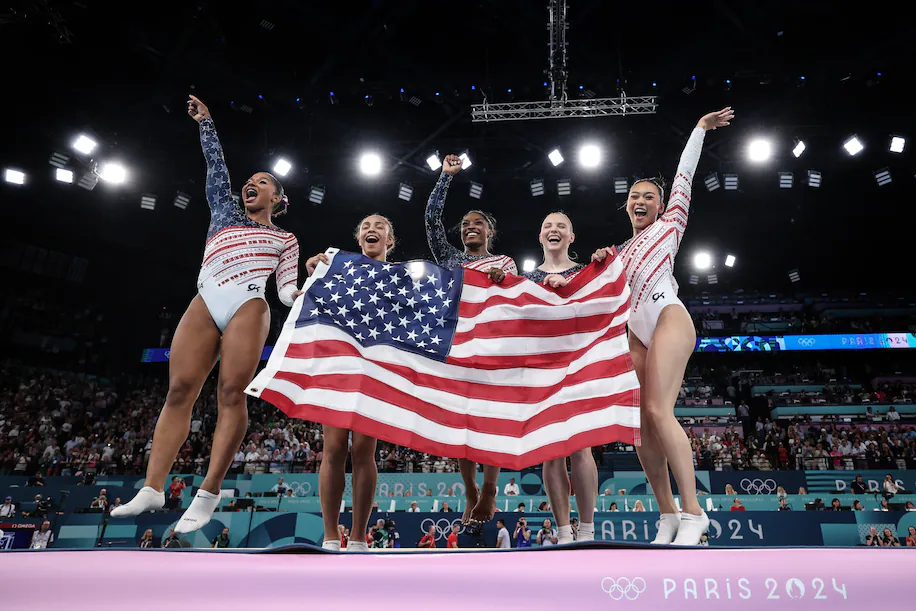
Diversity shows its value in the makeup of Team USA
By Michele Norris, Washington Post
August 10, 2024 at 1:24 p.m. EDT
Right-wing warriors can rail against diversity, equity and inclusion all they want. But the same so-called patriots who aggressively wrap themselves in the flag and claim America as their country cannot be blind to what is on display for all the world to see at the Paris Olympics.
Diversity is now a core part of America’s brand. In gymnastics and swimming. In fencing and rugby. In skateboarding, tennis, boxing, basketball and so much more. In commentary from Snoop Dogg and Flavor Flav. In the massive billboards all over Paris from U.S.-based companies like Nike and Ralph Lauren that feature brown-skinned models. And let’s not forget the music that’s played to pump upthe audience at all the events — whether or not Americans are competing. I was at the Paris Olympics for a few days,and at every venue I visited, American music with a funky beat was the go-to choice to fire upcrowds and athletes from all over the world. As we watch Americans rack up medals, that retrograde Trumpian Make America Great Again message seems silly; America is clearly pretty great right now.
You cannot cheer for the United States in this moment without also cheering on the diversity born of merit. And that is an important point because the ammunition used to instill fears about diversity in a changing America are based on the false notion that Black and Brown people are getting something they don’t deserve.
That is the fib at the heart of the orchestrated effort to dismantle diversity programs. It assumes that the only way to achieve diversity is by bringing on people of color who have lesser skills or qualifications than White candidates. This is what feeds the idea —no, make that the lie — that under credentialed people of color are pushing White candidates out of their rightful place.
Diversity is not about lowering standards. It’s about widening the aperture to make sure an organization can find the best talent available. It’s about reaching beyond one’s comfort zone or personal network to look for talent and potential in areas that might be unfamiliar. So often, access to opportunity is based on something sociologists call “homosociality” – friendship, mentoring, social circles and cliques based on commonality and comfort. It’s the jolt of reassurance or even relief at finding someone who appears to be the right fit because they have the right background and the right skin color, they went to the right school, they engage in the right sports (golf or sport fishing, for instance), or they speak in the right vernacular. People drift to the familiar. It’s human nature.
This is why the world of sports provides a useful antidote. While sports teams and athletic organizations may have limited their scope of recruitment in the past — based on tradition, bias or the belief that certain kinds of people lacked certain innate characteristics — that line of thinking has eroded faster in sport than other sectors. Remember: It wasn’t that long ago that Black men were not considered quarterback material.
Coaches and recruiters will go where the talent is and cast an ever-widening net to find it. Why? Because they know that talent is equally distributed but opportunity is not. They know that the potential for greatness percolates in all kinds of places, and if they spot it early, they can nurture it toward victory without lowering standards. And they know that staying in their personal socio-economic comfort zonescould keep them from winning.
The Olympic Games are about winning — and so much more. I’ve always loved watching the Games on TV with my family in part because of the learning experience it provides: calmness under pressure. Grace in defeat. People from all over the world coming together to chase their dreams. After a year of pugilistic politics and attacks on diversity programs, the Olympics once again deliver an avalanche of life lessons.
At a time when members of one political party will not commit to accepting the outcome of the upcoming election, it is heartening to watch top athletes shake hands with the competitors who beat them and step aside so the victors can bask in their earned glory. And the mosaic of diverse athletes — often in sports that until recently did not include many people of color — is also a reflection of American values and the cultural diversity at the core of this multiethnic country.
You can’t have it both ways. You can’t cheer on Team USA without cheering on the diversity that makes Team USA great.
When President Biden courageously ended his reelection bid, he gave Democrats a golden opportunity to win in November. Now, many Democratic leaders and delegates seem intent on squandering that opportunity by rushing to make Vice President Harris the party’s nominee.
Their aim is to coalesce quickly around Ms. Harris as the heir apparent and forestall a nomination fight at the party’s convention next month. But for all her achievements and admirable service, Ms. Harris carries all the baggage of the Biden administration.
She, like Mr. Biden, has been trailing Donald Trump in polling and is unlikely to carry the handful of states — Michigan, Wisconsin, Ohio and Pennsylvania — where this election will be decided. Democrats should take a deep breath and consider their options. If they are guided by data and political instinct, they can choose the candidate most likely to defeat Mr. Trump.
Name calling like saying Trump and Vance and their supporters are “weird” is playground nonsense.
I have yet to hear one thing that a President Harris will do once she is elected.
This nation was founded on a simple yet profound principle: No one is above the law. Not the president of the United States. Not a justice on the Supreme Court of the United States. No one.
But the Supreme Court’s 6-3 decision on July 1 to grant presidents broad immunity from prosecution for crimes they commit in office means there are virtually no limits on what a president can do. The only limits will be those that are self-imposed by the person occupying the Oval Office.
If a future president incites a violent mob to storm the Capitol and stop the peaceful transfer of power — like we saw on Jan. 6, 2021 — there may be no legal consequences.
And that’s only the beginning.
On top of dangerous and extreme decisions that overturn settled legal precedents — including Roe v. Wade — the court is mired in a crisis of ethics. Scandals involving several justices have caused the public to question the court’s fairness and independence, which are essential to faithfully carrying out its mission of equal justice under the law. For example, undisclosed gifts to justices from individuals with interests in cases before the court, as well as conflicts of interest connected with Jan. 6 insurrectionists, raise legitimate questions about the court’s impartiality.
I served as a U.S. senator for 36 years, including as chairman and ranking member of the Judiciary Committee. I have overseen more Supreme Court nominations as senator, vice president and president than anyone living today. I have great respect for our institutions and the separation of powers.
What is happening now is not normal, and it undermines the public’s confidence in the court’s decisions, including those impacting personal freedoms. We now stand in a breach.
That’s why — in the face of increasing threats to America’s democratic institutions — I am calling for three bold reforms to restore trust and accountability to the court and our democracy.
First, I am calling for a constitutional amendment called the No One Is Above the Law Amendment. It would make clear that there is no immunity for crimes a former president committed while in office. I share our Founders’ belief that the president’s power is limited, not absolute. We are a nation of laws — not of kings or dictators.
Second, we have had term limits for presidents for nearly 75 years. We should have the same for Supreme Court justices. The United States is the only major constitutional democracy that gives lifetime seats to its high court. Term limits would help ensure that the court’s membership changes with some regularity. That would make timing for court nominations more predictable and less arbitrary. It would reduce the chance that any single presidency radically alters the makeup of the court for generations to come. I support a system in which the president would appoint a justice every two years to spend 18 years in active service on the Supreme Court.
Third, I’m calling for a binding code of conduct for the Supreme Court. This is common sense. The court’s current voluntary ethics code is weak and self-enforced. Justices should be required to disclose gifts, refrain from public political activity and recuse themselves from cases in which they or their spouses have financial or other conflicts of interest. Every other federal judge is bound by an enforceable code of conduct, and there is no reason for the Supreme Court to be exempt.
All three of these reforms are supported by a majority of Americans— as well as conservative and liberal constitutional scholars. And I want to thank the bipartisan Presidential Commission on the Supreme Court of the United States for its insightful analysis, which informed some of these proposals.
We can and must prevent the abuse of presidential power. We can and must restore the public’s faith in the Supreme Court. We can and must strengthen the guardrails of democracy.
In America, no one is above the law. In America, the people rule.
Next week, for the third time in eight years, Donald Trump will be nominated as the Republican Party’s candidate for president of the United States. A once great political party now serves the interests of one man, a man as demonstrably unsuited for the office of president as any to run in the long history of the Republic, a man whose values, temperament, ideas and language are directly opposed to so much of what has made this country great.
It is a chilling choice against this national moment. For more than two decades, large majorities of Americans have said they are dissatisfied with the direction of the country, and the post-Covid era of stubborn inflation, high interest rates, social division and political stagnation has left many voters even more frustrated and despondent.
The Republican Party once pursued electoral power in service to solutions for such problems, to building “the shining city on a hill,” as Ronald Reagan liked to say. Its vision of the United States — embodied in principled public servants like George H.W. Bush, John McCain and Mitt Romney — was rooted in the values of freedom, sacrifice, individual responsibility and the common good. The party’s conception of those values was reflected in its longstanding conservative policy agenda, and today many Republicans set aside their concerns about Mr. Trump because of his positions on immigration, trade and taxes. But the stakes of this election are not fundamentally about policy disagreements. The stakes are more foundational: what qualities matter most in America’s president and commander in chief.
Mr. Trump has shown a character unworthy of the responsibilities of the presidency. He has demonstrated an utter lack of respect for the Constitution, the rule of law and the American people. Instead of a cogent vision for the country’s future, Mr. Trump is animated by a thirst for political power: to use the levers of government to advance his interests, satisfy his impulses and exact retribution against those who he thinks have wronged him.
He is, quite simply, unfit to lead.
The Democrats are rightly engaged in their own debate about whether President Biden is the right person to carry the party’s nomination into the election, given widespread concerns among voters about his age-related fitness. This debate is so intense because of legitimate concerns that Mr. Trump may present a danger to the country, its strength, security and national character — and that a compelling Democratic alternative is the only thing that would prevent his return to power. It is a national tragedy that the Republicans have failed to have a similar debate about the manifest moral and temperamental unfitness of their standard-bearer, instead setting aside their longstanding values, closing ranks and choosing to overlook what those who worked most closely with the former president have described as his systematic dishonesty, corruption, cruelty and incompetence.
That task now falls to the American people. We urge voters to see the dangers of a second Trump term clearly and to reject it. The stakes and significance of the presidency demand a person who has essential qualities and values to earn our trust, and on each one, Donald Trump fails.
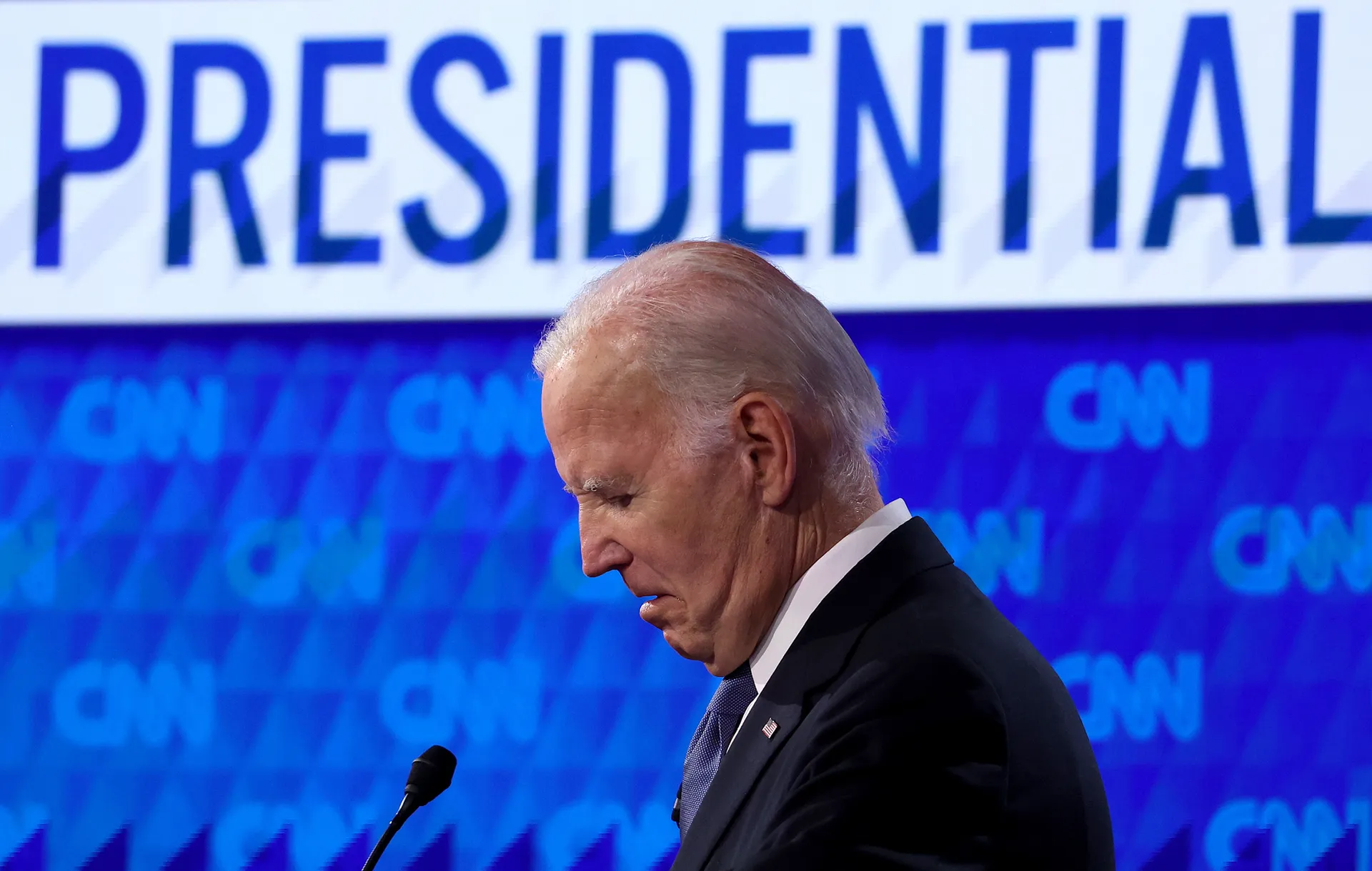
If I were a relative or close confidant of President Biden, I’m pretty sure I’d give him a hug, thank him for his service, and tell him to seriously consider walking away.
I’d tell him that after a life of service, he can pass the torch with pride, with dignity, and with grace.
Someone probably should have done this months ago, out of love or duty, and out of the concern that Biden’s health is likely to get worse in coming years.
But we’re not very good at this sort of thing — at summoning the courage it takes to confront a loved one or a boss who’s in decline and being totally honest about it. To be courteous but firm. I had trouble telling my own father it was time to give up driving. He resisted, unaware of or unwilling to accept the reality of his obvious shakiness behind the wheel, and unwilling to surrender his keys or his pride.
By many accounts, people close to Biden have been aware of a decline but have not pressed him to step aside. The New York Times reported on Tuesday that in “the weeks and months” before last Thursday’s presidential debate, “several current and former officials and others who encountered him behind closed doors noticed that he increasingly appeared confused or listless, or would lose the thread of conversations.” There are also reports that people are encouraging him to keep going.
There are some analogies to California‘s Sen. Dianne Feinstein, who died last year at the age of 90 after more than 30 years in office. If there was any inner-circle effort to persuade her to leave the Senate due to her obvious cognitive and physical decline, that effort failed. She died in office after announcing she would not run again.
In some cases, stepping aside is the right thing to do.
This might sound odd to those who’ve followed my Golden State column over the last 28 months. One of my driving principles has been to stand firm against the notion that we’re incapable of contributing as we age, or that our value diminishes.
In recent columns, I’ve been pointing out, with the help of experts, that you can’t diagnose dementia from afar, though many people have tried to do so in Biden’s case, especially after his debate performance.
I’ve also written that whatever the cause of his foggy gaze and occasional meandering phrase (the medical possibilities are numerous), Biden seemed lost and unsteady. He may still have some gas in the tank, but time is working against him. A year from now, or two, or three or four, how will he be?
The world population is aging rapidly, and more people are staying on the job longer — and while the benefits are many, the risks are real. Bodies and minds break down. It’s OK, when they do, to punch out and move on.
Since the debate, I’ve been thinking about something USC gerontology professor Caroline Cicero said to me last year, when I wrote about whether Biden or Feinstein should step aside.
“I’m very concerned about ageism in the workplace, but I’m also concerned about people who think they have to work forever,” said Cicero. “Giving people permission to retire is something I think we need to do.”
She picked up on that line of thinking this week.
“In recent decades, society has told us that we can have it all. In a battle against ageism, we tell people they can work as long as they want,” she said. “In a battle to prove ourselves, we tell ourselves we can beat normal slowdowns that come with the passage of time.”
But most of us can’t.
Mick Jagger and Paul McCartney, each north of 80, are still holding a tune, and Warren Buffett, at 93, seems to be doing OK. But that’s the thing about aging, as I‘ve said before: You can be old at 60 and young at 85.
Biden has obvious strengths, chief among them experience, wisdom, decency, civility and the empathy that comes with crushing loss. It may be that those in his inner circle, knowing what he’s made of, can’t bring themselves to question his strength and resolve, even in the face of obvious decline. Sure, his family knows him better than we do, but maybe they can’t see what we see from afar.
Some of you might be wondering, right about now, that if I’m all about frank discussions on knowing when it’s time to go, then how come I’m not bringing the Trump family into this.
I would, but their task is even harder than the Biden family’s. What would be the point of saying to a convicted felon who continues to insist he won the 2020 election, “Hey Pop, the fact-checkers are still recovering from the workout you gave them in the last debate”? It takes a bit of humility to see the truth about yourself, and when you begin listing the qualities that define Donald Trump, humility and truth do not make the cut.
iden may be having trouble seeing himself as anything other than what he is now — a public servant at the top of the flow chart. You can’t be president of the United States without a healthy ego, and in jobs that people are passionate about — that become their very identity — they often can’t imagine what or who else they could be in retirement, provided they can afford to retire, which many cannot.
These people may not be able to imagine that anyone waiting in the wings is as up to the task as they are, and perhaps that’s part of Biden’s calculation. If he takes the next exit, who would take his place? And is there enough time for Vice President Kamala Harris or any of the other potential last-minute candidates to find traction?
It never should have come to this.
The late Supreme Court Justice Ruth Bader Ginsburg comes to mind as Exhibit A for lessons on the price of stubbornly holding on. She refused to surrender her position as her health faded, and women’s reproductive rights suffered a blow as a result.
“I see it with entrepreneurs who created a business and have hard time letting go,” said Helen Dennis, who started a support group called Renewment — combining the words “renewal” and “retirement” — 25 years ago for successful women who had trouble imagining the next versions of themselves. The group now includes “teachers, nurses, doctors, several attorneys,” all of them leaning on each other as they learn “how to navigate the next chapter.”
Work is not life, and life is not work, USC’s Cicero once said to me. That must be a foreign concept to a sitting president, but I’m thinking of former President Jimmy Carter as one of the best examples of those who have found ways to contribute after leaving office. He took up a hammer and went to work for Habitat for Humanity — and he won the Nobel Peace Prize for working on peaceful solutions to world conflicts.
“People often fear retirement because they don’t want to be labeled as old, invisible or unimportant,” Cicero said. And many of those who are “addicted to routine don’t know how they will spend their time without the rigors of a work schedule,” she added — but that “does not mean they need to keep working to have a satisfying later life.”
Biden, after his debate stumble, was quickly back on the stump, telling supporters that when you’re knocked down, you get back up and keep fighting.
But Father Time, as they say, is the one who’s undefeated.
I’d remind Biden that the country and the world have problems neither he nor Trump can fix, and that if he’s reelected he will be subjected to four more years of unrelenting judgments about his fitness to hold office.
I’d tell him that, at 81, when you’re knocked down, you’ve earned a rest.
There are two issues that are upper most in my mind right now and will motivate my choice of president in November. Guns and abortion rights. This abridged article I have taken from the Associated Press today highlights America’s out of control right to own a gun.
BY JOHN SEEWER AND SHARON JOHNSON Updated 9:18 AM PDT, June 24, 2024
The first weekend of summer brought a tragic yet familiar pattern for American cities wracked by gun violence as mass shootings left dozens dead or wounded at a party in Alabama, an entertainment district in Ohio and a grocery in Arkansas.
It was the second straight weekend that saw an outbreak of mass shootings across the U.S., prompting mayors in places marred by the violence to plead for help.
In Michigan, a deputy was fatally shot while pursuing a suspected stolen vehicle in what the county sheriff described as an ambush. A Philadelphia police officer was critically wounded Saturday after pulling over a car with four people.
Police in Montgomery, Alabama, said hundreds of rounds were fired at a crowded party early Sunday, leaving nine people wounded. Interim Police Chief John Hall said investigators recovered more than 350 different spent shell casings.
Gunfire also broke out early Sunday on the main street of a popular restaurant and entertainment district near downtown Columbus, Ohio.
One person was killed and seven were injured in Dayton, Ohio, after a shooting early Monday in a neighborhood where a large crowd had gathered, police said. Six people were wounded early Sunday at a park in Rochester, New York, after police said at least one person started shooting into a crowd.
“Sleepy Joe” is no more. At the State of the Union address on Thursday night, the 81-year-old president set out to defuse his biggest liability: deep-seated fears among millions of Americans that he’s too old to serve a second term.
The New York Times reported “Verbal swings at Donald Trump, though not by name. A spirited back-and-forth with G.O.P. lawmakers. And a loud and feisty delivery.”
Reuters reported “President Joe Biden on Thursday laid out his case for re-election in a fiery State of the Union speech”
Associated Press reported “President Joe Biden delivered a defiant argument for a second term in his State of the Union speech”
CBS posted “In defiant 2024 State of the Union, Biden fires opening salvo in likely rematch with Trump”
Can the president keep up this start of the campaign in the defiant and feisty way he started all the way to November 5? He will have to if he hopes to win.
Special Counsel Robert Hur was appointed to oversee the investigation of President Biden’s alleged mishandling of classified documents during his time as Vice-President.
Hur described President Biden as a “sympathetic, well-meaning, elderly man with a poor memory,” and said he would bring no criminal charges against the president after a months-long investigation into his improper retention of classified documents related to national security.
Hur’s report was made public Thursday afternoon.
Hur has been investigating Biden’s improper retention of classified records since last year. Those records included classified documents about military and foreign policy in Afghanistan, among other records related to national security and foreign policy which Hur said implicated “sensitive intelligence sources and methods.”
Hur, in the report, said the special counsel’s team “also considered that, at trial, Mr. Biden would likely present himself to a jury, as he did during our interview of him, as a sympathetic, well-meaning, elderly man with a poor memory.”
“Based on our direct interactions with and observations of him, he is someone from whom many jurors will want to identify reasonable doubt,” the report states. “It would be difficult to convince a jury that they should convict him—by then a former president well into his eighties—of a serious felony that requires a mental state of willfulness.”
Biden’s “memory also appeared to have significant limitations” according to the report, and during conversations with his ghostwriter, recorded in 2017, his conversations were “painfully slow, with Mr. Biden struggling to remember events and straining at times to read and relay his own notebook entries”
Hur’s report pointed out that Biden’s memory was “worse” during an interview with the Special Counsel’s office.
During the interview, Biden “did not remember when he was vice president, forgetting on the first day of the interview when his term ended (‘if it was 2013 – when did I stop being Vice President?’), and forgetting on the second day of the interview when his term began (‘in 2009, am I still Vice President?’)”
“He did not remember, even within several years, when his son Beau died. And his memory appeared hazy when describing the Afghanistan debate that was once so important to him. Among other things, he mistakenly said he ‘had a real difference’ of opinion with General Karl Eikenberry, when, in fact, Eikenberry was an ally whom Mr. Biden cited approvingly in his Thanksgiving memo to President Obama,” Hur’s report said.
One GOP representative Rep. Claudia Tenney is calling for the Cabinet to “explore” the use of the Constitution’s 25th Amendment to remove President Biden from office, following Special Counsel Robert Hur’s “alarming” report.
Of course Democrats will rally around the president. But should they?
Harvard University President Claudine Gay resigned Tuesday January 2, 2024 amid plagiarism accusations and criticism over testimony at a congressional hearing where she was unable to say unequivocally that calls on campus for the genocide of Jews would violate the school’s conduct policy.
Obviously she was pressured to resign after many well off Jewish alumni demanded her removal.
More than 1,600 alumni of Harvard Universitysay that they will withhold donations to the school until Harvard takes urgent action to address antisemitism on campus, part of a wave of challenges to colleges across the county in addressing hate speech sparked by the Israel-Hamas war.
High-profile billionaire alumni like Pershing Square founder Bill Ackman and former Victoria’s Secret CEO Leslie Wexner have already said that if Harvard doesn’t take steps to fix the problem they could face a donor exodus, but now the largest group yetof alumni — most of whom do not have billionaire status — are threatening to withdraw their donations.
Addtionally more than 70 U.S. lawmakers demanded the governing boards of three of the country’s top universities remove their presidents, citing dissatisfaction with their testimony at a hearing about antisemitism on campuses, according to a letter seen by Reuters.
In the letter, Republican Representative Elise Stefanik and Democratic Representative Jared Moskowitz demanded that the board of governors at Harvard University, the University of Pennsylvania, and the Massachusetts Institute of Technology oust their presidents or risk committing “an act of complicity in their antisemitic posture.”
 Coast Contact